


 Claim Ownership
Chasing Nature
Subscribed: 0Played: 34
Subscribe

© Bryan Pfeiffer
Description
Dispatches on wildlife, wild places, and the human condition brought to you by a field biologist and boyish explorer.
chasingnature.substack.com
chasingnature.substack.com
6 Episodes
Reverse
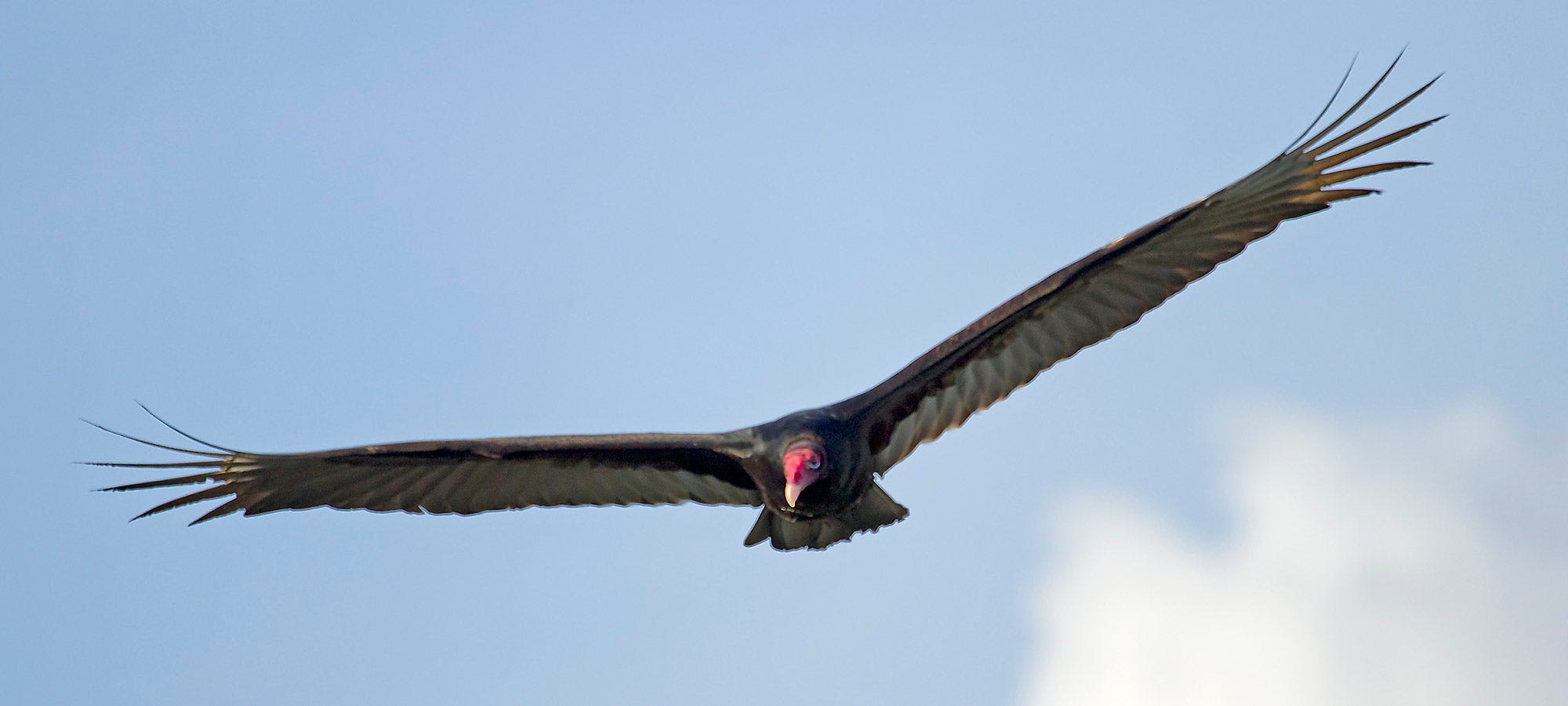
On this edition of the Chasing Nature podcast, I bring you the most hilarious bird song I know, a summertime poem from the mind of a vulture, and my appearance on Erica Heilman’s RumbleStrip podcast, where we discuss my fascination with a crazy parasite.Some of you might recall my essay about the parasite, a flatworm that lives entirely inside a bird’s gut and a snail’s body — and basically never sees the light of day. At one point, Erica asks me whether I find hope in the parasite. Spoiler alert: I do. You’ll also hear some housekeeping, including my request for paying subscribers to send me questions for an AMA — an Ask Me Anything episode. And I provide an update on a series of essays now in the works about technology and humanity’s fading bond with the living world.Thanks for listening.Show Notes* You can read my essay, titled “A Parasite, Clickbait, and Honesty,” either before or after listening (WARNING: there’s a graphic video.)* For the AMA, send your questions to me at [email protected]. That e-mail address works only for paying subscribers.* If you harbor any interest whatsoever in the human experiment — why we’re here and how we might understand the world — subscribe to Erica Heilman’s RumbleStrip wherever you get your podcasts.* Inspiration for “The Vulture’s Memoir” comes from Charles Finn, who is, for me, among our most impactful writers. Finn’s poetry breathes with the living world of nature and human companionship. Find him online and buy his books (I own all of them). At the very least, buy On a Benediction of Wind. Finn is originally from Vermont. Although we’ve never met, it turns out I knew his dad. Small state. (Gratitude to Antonia Malchik for turning me on to Finn.)* Willow Ptarmigans and Wood Thrush recordings courtesy of Xeno-Canto: https://xeno-canto.org/246551, https://xeno-canto.org/269477, https://xeno-canto.org/503405, https://xeno-canto.org/135138.* Record-scratch sound effect from Freesound.org by kwahmah_02 / https://freesound.org/s/269476/. (I’m a proud contributor to Freesound.)* Music is by Dee Davis and the Faerie Godbrothers.Thanks for listening and reading. I’ll see you soon with another essay. Get full access to Chasing Nature at chasingnature.substack.com/subscribe

The Chasing Nature podcast returns with birdsong and a recitation of my short essay titled “Sunlight and Warfare.” But this episode mostly comes by way of writer and birder Nathaniel Bowler, who interviewed me for his podcast Ten Birding Questions.Nate and I wander in conversation to cover, among other topics, my birding origin story, birds in decline, why I write, the virtues of Vermont, field guides and gadgets, birdwatching’s carbon problem, why I’m a reluctant participant in holiday bird counts, and the fireworks of a Ruby-crowned Kinglet.-------This podcast is a production of Bryan Pfeiffer, who writes at Chasing Nature on Substack. Our theme music comes from D. Davis and the Faerie Godbrothers. Some of the birdsong for this episode is from Xeno-Canto and Creative Commons:- Thomas Magarian, XC544962. Accessible at www.xeno-canto.org/544962- Stanislas Wroza, XC1012495. Accessible at www.xeno-canto.org/1012495.- Greg Irving, XC1045826. Accessible at www.xeno-canto.org/1045826.- Jim Berry, XC793408. Accessible at www.xeno-canto.org/793408.- XC805390 - Carolina Wren - Alex Lin-Moore-XC805390.wav Get full access to Chasing Nature at chasingnature.substack.com/subscribe

In its enchanting song, the Black-faced Solitaire stops the world from spinning too fast. So listen here for this songbird — and perhaps stick around for insights on nature, harmony, conservation, hope, gadgets, and writing.Although this episode is for everyone, it’s the AMA, the “Ask Me Anything,” in which I take questions from paying subscribers — you make Chasing Nature happen for all of us.After my brief reflection on the solitaire, I drift into questions about learning in nature, birds at the feeders, and whether humans might live more in harmony with the natural world (including how I myself balance the digital and the natural), among other topics. I wrap up with perspective on the challenges of writing here on Substack. Get full access to Chasing Nature at chasingnature.substack.com/subscribe
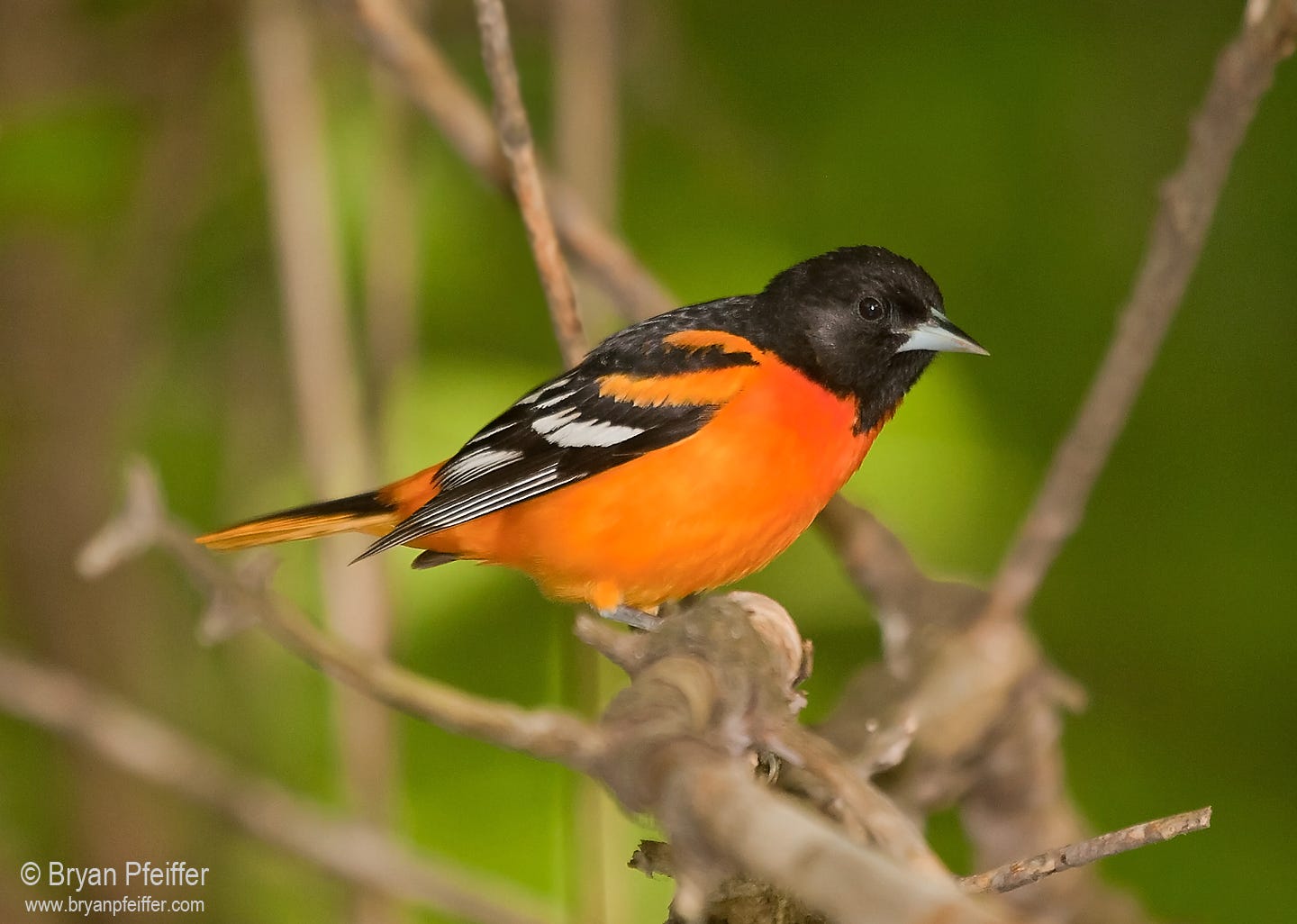
Should you have any interest whatsoever in exploring the meaning of life, or your place in the world, or even the joy of birdwatching, you might do well to read some philosophers. I dunno, maybe Kant, Nietzsche, Camus, or other dead guys. Or you could check in with Erica Heilman, creator of the podcast Rumble Strip. Better yet, go birding with her.Which is what I did one spring morning. With her mic and curiosity switched on, Erica and I enjoyed the full-frontal glow of a Yellow Warbler, the antics of a Baltimore Oriole at a nest, and the shake and shudder of an ordinary Song Sparrow beckoning a mate. But as you’ll hear in this episode of the Chasing Nature podcast, Erica is nothing if not inquisitive about how any of us might find our place in the culture — and in nature. Only Erica could get me to admit, for example, that, yeah, “I think I would want to die in a bog.” (Which might say a lot about how I see myself in the culture.)Erica Heilman brings inquisitiveness and perspective to the human condition — our fears and frailties, our strengths and shared ideas, and how we might come together (or not) as communities and neighbors. Which is why she and Rumble Strip have won best podcast honors from the likes of The New Yorker, The Atlantic, The New York Times, and the folks who give out the prestigious Peabody awards. Erica is also my friend — and for that, whenever we spend time together, I learn about myself, about her, and about the many dimensions and vagaries of being alive.Having first aired on Rumble Strip a few years ago, this birdwalk episode ran this past Sunday (April 28) on Vermont’s public radio stations, after which lots of listeners checked in with me to say they really enjoyed listening to it. Although some of you may have already heard a version, today I’m sharing a “director’s cut” of the episode on my podcast, especially now that spring bird migration is moving into high gear across much of Northern Hemisphere.What’s NextI have three essays in the works for you:* Next up will be my own take on a woodpecker breaking glass in Massachusetts because The New York Times, I’m pleased to report, missed a good angle on this story. You’ll read it here first next week.* After that, I’ll report on the immorality of the Trump administration’s predictable assault on the U.S. Endangered Species Act, express in a little butterfly you’ve never heard of called Poweshiek Skipperling.* And then a new take on some earlier writing and ideas of mine about the most effective way to learn stuff in nature — from birds to butterflies to botany. Although there is a place for apps on your phone, this will dispatch will be nothing less than tribute to artistry and knowledge expressed in books — printed field guides.* Accordingly, all this writing has delayed the “Ask Me Anything” episode of the podcast, which will be dedicated to paying subscribers. Fear not: I’m still working on that one. Get full access to Chasing Nature at chasingnature.substack.com/subscribe
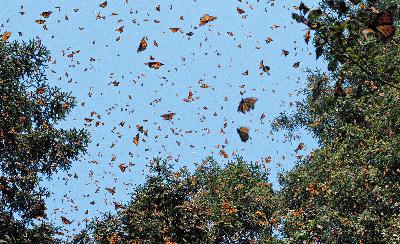
The Chasing Nature podcast launches today with butterflies — my essay and an interview about the fate of the Monarch (Danaus plexippus). Ernest H. Williams and I discuss why a familiar and widespread butterfly warrants new protection under U.S. law. But I begin the episode with some joyful noise from my neighborhood and then read a short essay titled “Butterflies and Terror” (included for you here below). If you’re new to basic Monarch ecology, my December 18 essay titled The Grace and Force of a Butterfly would be worthy reading before this episode. And for more about the podcast, here’s a trailer (including my poem read aloud to you from snowy woods).* More detail on the state of the Monarch, including a summary of its dual life in the U.S. and Mexico, is in my December 18 essay titled The Grace and Force of a Butterfly.* My podcast guest Ernest H. Williams also sits on the board of the Monarch Butterfly Fund. Two of his research subjects (pictured below) are Gillett’s Checkerspot (© Olivia Bergeron via iNaturalist Creative Commons) and Frosted Elfin (© Bryan Pfeiffer).* The USFWS’s 55-page proposal is packed with information; but the FAQs at the Services’s Monarch resource page are easier to understand.* Podcast music courtesy of guitar virtuoso D. Davis here in Vermont. Get full access to Chasing Nature at chasingnature.substack.com/subscribe

Comments

Download from Google Play

Download from App Store
 United States