DiscoverChat Lounge
Chat Lounge

Chat Lounge

Author: China Plus

Subscribed: 456Played: 3,777
Share

Description

A place to unpack reactions to major events and hot issues in a casual setting.
260 Episodes
Reverse
China's new rule to seal public-security violation records is being hailed as historic, yet nothing has stirred more controversy than the plan to seal drug-use records. Why this issue? How justified are the public's concerns? And with millions speaking out online, could public pressure reshape how the rule is ultimately implemented? Or, if not, what can be done to reduce potential risks? Host TU Yun joins Mr. Bai Xianyue, Partner of Grandall Law Firm Tianjn Office, Professor Josef Mahoney, Professor of Politics and International Relations, East China Normal University and Professor Qu Qiang, Fellow, Belt and Road Research Center, Minzu University of China for a chat.
India has fully restored global visa services for Chinese travelers. What's behind the policy change? Can they realistically expect a quick rebound in Chinese tourist numbers? What are the biggest factors holding Chinese travelers back? And could this full restoration of visas become a genuine turning point in China–India relations? Host TU Yun joins Professor Zhang Wenjuan of Jindal Global Law School, India, Subramania Bhatt, Founder and CEO, China Trading Desk, and Gao Xirui, a Political Science PhD candidate, Department of Politics and Public Administration, University of Hong Kong for a chat.
Tesla is accelerating its shift away from components made in China. It's pushing suppliers to eliminate China-made auto parts for cars built in the United States within the next year or two. Is this strategy due to political pressure from Washington, or is it preparation for a more aggressive trade environment? Is the change even possible? How could this reshape Tesla's business in China, where the company has long enjoyed policy support and unmatched efficiency? And how may this push for de-Sinicization affect U.S. automakers' global edge? Host TU Yun joins Yan Liang, Professor of Economics, Willamette University, Warwick Powell, Adjunct Professor, Queensland University of Technology, and Joseph Siracusa, Professor of Global Futures, Curtin University for a closer look.
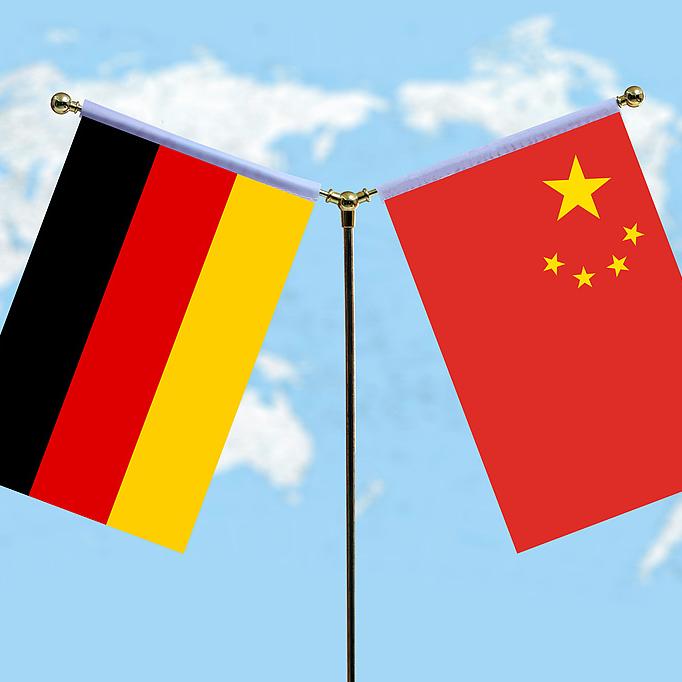
Berlin is setting up a committee to re-examine its security-related trade policies towards Beijing. This comes as China just overtook the United States to become Germany's No. 1 trading partner. What's driving this sudden rethink? Is it politics, pressure, or protectionism? How will Germany's biggest companies, from autos to chemicals, react as the rules of engagement shift? And where will a possible new phase of Sino-German relations lead, and what might it mean for Europe and the world? Host TU Yun joins Professor Klaus Larres, the Richard M. Krasno Distinguished Professor at the University of North Carolina at Chapel Hill, Professor Josef Gregory Mahoney, Professor of Politics and International Relations, East China Normal University, and Dr. Zhou Mi, the Deputy Director of the Institute of American and Oceania Study, Chinese Academy of International Trade and Economic Cooperation for a close look.
China's massive import fair is back, and it's bigger than ever. Over 4,100 companies from 155 countries and regions have set up shops at this year's China International Import Expo, where opportunity meets open markets. What's fueling the CIIE's magnetic pull? And how is China's open-door approach reshaping global trade? Host Xu Yawen is joined by Dr. Zhou Mi, Senior Research Fellow at the Chinese Academy of International Trade and Economic Cooperation; Prof. Josef Gregory Mahoney, Professor of Politics and International Relations at East China Normal University; and Prof. George Tzogopoulos, Director of EU-China Programs and Senior Research Fellow at the European Institute of Nice.
European carmakers are facing the risk of production stoppage as a result of the Dutch government's abrupt seizure of chip company Nexperia from its Chinese owner. What's behind the Nexperia drama? Has the Netherlands overplayed its hand? Who ultimately stands to lose the most? And what does it mean for Europe's industries? Host TU Yun joins Dr. Zhou Mi, the Deputy Director of the Institute of American and Oceania Study, Chinese Academy of International Trade and Economic Cooperation, Andy Mok, a professor at Beijing Foreign Studies University, and Dr. Eric Harwit, a professor of Asian Studies at the University of Hawaiito for a close look.
The annual APEC Economic Leaders' Meeting is just days away. This year, all eyes are on Gyeongju, South Korea, where leaders will gather under the theme "Building a Sustainable Tomorrow: Connect, Innovate, Prosper." What's the mood heading into this year's APEC? Can innovation and AI really drive shared prosperity? And in an era of shifting alliances and rising protectionism, can APEC still connect a divided world? Host TU Yun joins Mela Lesmoras, a TV reporter from PTV News, the Philippines, Ben Norton, the Editor of the Geopolitical Economy Report, from the United States, Warwick Powell, an Adjunct Professor of the Queensland University of Technology and active figure on X and Substack, and Dr. Sanjay Kumar, a journalist at The Korea Herald to unpack what's at stake.
To buy or not to buy — that's the question. China is easing property restrictions and loosening cross-border financing rules to draw more foreign buyers. Is this a last resort to boost its sluggish housing market? How much appetite does foreign capital have for Chinese real estate? Which cities are likely to stand out for overseas investors? And what further reforms are needed to bring in capital without tipping the balance? Host TU Yun joins Professor Qu Qiang, Fellow, Belt and Road Research Center, Minzu University of China, Professor Kwan Ok Lee, Deputy Head, Department of Real Estate, National University of Singapore, and Chen Jiahe, Chief Investment Officer, Novem Arcae Technologies to break down the changes that may reshape China's property market.
Top U.S. business leaders are quietly fuming. They say Washington's policies hurt innovation, raise costs, and undermine competitiveness. But why won't they say so openly? What risks do they fear? Under what conditions could the White House reverse course? Host TU Yun joins Harvey Dzodin, Senior Fellow, Center for China and Globalization, David Blair, Senior Economist, Alliance of Global Talent Organizations, and Alex Sili Zhou, Associate Professor of Economics and Finance, University of Macau to dig into the closed-door frustrations of American CEOs, explore the global ripple effects, and ask what it all means for U.S.–China business ties.
The U.S.–China chip rivalry is heating up. Beijing has launched two new probes—one on analog chip dumping, the other on U.S. trade restrictions. What's behind China's move? And how could they reshape China's chip market, the trajectory of the chip conflict, or even the broader tech rivalry between the two countries? Host TU Yun joins Yan Liang, Professor of Economics, Willamette University, Dr. Zhou Mi, Deputy Director, Institute of American and Oceania Study, Chinese Academy of International Trade and Economic Cooperation, and Warwick Powell, Adjunct Professor, Queensland University of Technology for a close look.
China is preparing for its first-ever planetary defense mission. It will send a spacecraft to crash into an asteroid and nudge it off course, becoming the second nation after the United States to do so. Why does this matter? What risks and opportunities does it bring? And beyond science, how could this mission reshape China’s growing space economy and global role? Host TU Yun joins Dr. Zhang Fan, Associate Professor of Astronomy, Beijing Normal University, Professor Quentin Parker, Director, Lab for Space Research, University of Hong Kong, and Xu Yansong, Director-General, Asia Pacific Space Cooperation Organization to break down the mission, the science, the stakes, and the money behind it.
Beijing has welcomed U.S. President Donald Trump's decision to issue 600,000 Chinese student visas. But questions remain: Is the U.S. president's move a genuine shift, or just political maneuvering? Can the promises be trusted when Chinese students still face interrogations and deportations at U.S. airports? Host TU Yun joins Jonathan Aronson, Professor of International Communication and International Relations, School of Communication and Journalism, University of Southern California, Warwick Powell, Adjunct Professor, Queensland University of Technology, and Li Lun, Assistant Professor of Economics, Peking University to explore the backlash, the stakes for American universities, and what it means for the future of education exchanges.
2025 marks the 80th anniversary of China’s victory in the War of Resistance against Japanese Aggression and the World Anti-Fascist War. As the primary battleground in the East during WWII, China’s immense sacrifice—over 30 million military and civilian casualties—played a crucial role in holding off the Japanese forces, giving the Allies the strategic advantage they needed to turn the tide in Europe and the Pacific. In this episode of Chat Lounge, we take a step back and reflect on how these pivotal moments in history have shaped our present, the lessons we can draw from them, and how we can all play a part in building a more peaceful world moving forward. Joining Host Xu Yawen are Dou Hongyu, a CGTN Radio reporter; Wes Cabangon, an Operations Advisor and journalist at Business Mirror in the Philippines; and Garland Nixon, a Radio Talk Show Host and Political Analyst from the U.S.
China's A-share stock market has hit a decade-high, crossing a historic 100 trillion yuan value. What's behind this surge? Does the rally have the makings of a durable bull run, or are we looking at the makings of another bubble? And what does it mean for global investors? Host Tu Yun breaks it down with Chen Jiahe, the Chief Investment Officer of the Beijing-based Novem Arcae Technologies, Professor Hans-Peter Burghof, the Chair of the Banking and Finance Department, University of Hohenheim in Germany, and Frank Liu, an Associate Professor of Finance of the Business School, University of Western Australia.
The 2025 SCO Summit will be held in Tianjin, China, on August 31 and September 1. The summit will mark the largest gathering in the Shanghai Cooperation Organization's history, with leaders from over 20 countries and heads of 10 international organizations coming together to discuss pressing regional and global issues. How will the "Shanghai Spirit" be brought to life at the SCO Tianjin Summit? What key role does media play in fostering SCO cooperation? Where is it heading in the future, and what is its significance for global cooperation? Host Xu Yawen joins Wang Mengjie, CGTN Reporter, Özgür Altınbaş, Chief of the Foreign News Service at Aydinlik, Muhammad Zamir Assadi, editor at the China Desk of Internews Pakistan, and Henry Kuvin, a contributor at The Times of Central Asia, to take a closer look.
Beijing is demanding answers from Nvidia just weeks after Washington lifted the export ban on its AI chips. China's cyberspace regulator has summoned the U.S. company, raising concerns that its H20 chips contain backdoors. What exactly is a hardware backdoor? Are China's worries about chip security justified? How difficult is it to prove a chip is truly secure? And if backdoor functions are validated, what could this mean for Nvidia's business in the world's second-largest market? Host Tu Yun joins Prof. Toby Walsh, the Chief Scientist of the AI Institute, University of New South Wales, Australia, Andy Mok, a senior research fellow at the Center for China and Globalization, and Professor Qu Qiang, a fellow of the Belt and Road Research Center, Minzu University of China to take a close look.
Despite "constructive" talks, no deal was reached between China and the U.S. on extending the 90-day tariff truce, and the August 12 deadline is fast approaching. What's holding both sides back? What are the hidden costs for consumers if tariffs snap back into place? How might the outcome of the China-U.S. trade talks influence Washington's negotiations with other economies? And could this diplomatic dance set the stage for a summit between the two state leaders later this year? Host Tu Yun joins Harvey Dzodin, Senior Fellow, Center for China and Globalization, Dr. Zhou Mi, Deputy Director, Institute of American and Oceania Study, Chinese Academy of International Trade and Economic Cooperation, Prof. Qu Bo, Director, Institute of International Relations, China Foreign Affairs University, and Warwick Powell, Adjunct Professor, Queensland University of Technology, Australia for a close look.
China has broken ground on the world's largest hydropower station high on the Qinghai-Xizang/Tibet Plateau, a new engine for green energy. But beyond clean power, what will the massive project on the Yarlung Zangbo River mean for China's vast west and its South Asian neighbors? What challenges lie ahead, and could it reshape regional cooperation? Host Tu Yun joins Dr. Qu Qiang, a fellow of the Belt and Road Research Center at Minzu University, Zoon Ahmed Khan, a research fellow, Center for China & Globalization, and Gao Xirui, a Political Science PhD candidate, Department of Politics and Public Administration, University of Hong Kong for a close look at the facts, the controversy, and the high-stakes engineering behind this mega project.
Global sovereign wealth funds are warming to China again, just as the country posts another quarter of better-than-expected growth. What's fueling the optimism? Which sectors are showing resilience amid global uncertainty? While second-quarter growth outpaced annual targets, it slowed from the first quarter. Is this a sign of fading stimulus or just a natural rebalancing? And looking ahead, does China have what it takes to sustain momentum through the rest of the year? Host Tu Yun joins Dr. Yan Liang, a Professor of Economics, Willamette University in the United States, Dr. Li Lun, an Assistant Professor of Economics, Peking University in China, Professor Hans-Peter Burghof, Chair of the Banking and Finance Department, University of Hohenheim in Germany for a close look.
TikTok has denied reports that it's developing a separate app for the U.S. market. So how can the company resolve its prolonged standoff with Washington? Washington says a deal with Beijing is nearly done. But Beijing isn't exactly on the same page. Is this really just a business move or a high-stakes political gamble? What's the likely endgame? And what could it mean for the future of global tech? Host Tu Yun joins Dr. Zhou Mi, the Deputy Director of the Institute of American and Oceania Study, Chinese Academy of International Trade and Economic Cooperation; Edward Lehman, Founder and Managing Director of China-based law firm Lehman, Lee & Xu; and Warwick Powell, an Adjunct Professor at Queensland University of Technology in Australia for a close look.
loading
Comments