DiscoverClimate Confident
Climate Confident
Claim Ownership

Climate Confident

Author: Tom Raftery

Subscribed: 46Played: 1,958
Share

Description

Climate Confident is the podcast for business leaders, policy-makers, and climate tech professionals who want real, practical strategies for cutting emissions and building a resilient low-carbon future.

Every Wednesday at 7am CET, I sit down with the people doing the work, executives, engineers, scientists, founders, and policymakers, to unpack what’s actually driving climate progress across energy, transport, industry, supply chains, food, finance, and more.

This isn’t about vague pledges or greenwash. It’s about what’s working, what isn’t, and what leaders need to understand now to make better decisions faster.

Expect conversations on:

  • scalable solutions in energy, mobility, food, industry, and finance
  • the politics, markets, and policies shaping the transition
  • the technologies and tools improving climate accountability, resilience, and risk management
  • hard truths, hidden bottlenecks, bold ideas, and real-world success stories

Subscribers also get Bonus episodes, including highlight reels, analysis, emerging themes I’m seeing across conversations, and other subscriber-only extras.

You can still listen to the most recent episodes for free, and if you want to go deeper, subscription gives you more Climate Confident in your feed.

Want to shape the conversation? Drop me a line anytime at Tom@tomraftery.com
, whether it’s feedback, a guest suggestion, or just a hello.

Ready to stop doomscrolling and start climate-doing? Hit follow and let’s get to work.

265 Episodes
Reverse
Send me a message AI may be booming, but the real bottleneck to it's growth may be turbines. And if firm power can’t scale fast enough, parts of the energy transition hit a wall. In this episode, I’m joined by Brad Hartwig, Co-founder and CEO of Arbor Energy, to unpack a part of the climate tech and energy transition story that gets far too little attention: the physical machinery needed to deliver reliable, round-the-clock power. Arbor is developing modular supercritical CO2 turbines with in...
Send me a message What if one of the biggest climate problems in our buildings isn’t power generation, but the fact we’re still burning fuel in the basement? In this episode, I’m joined by Dan Yates, CEO of Dandelion Energy, to unpack why geothermal may be one of the most overlooked tools in climate tech today, and why building decarbonisation deserves far more attention in the wider energy transition debate. If we’re serious about net zero and real emissions reduction, we need to stop treati...
Send me a message What if the real barrier to climate action isn’t a lack of science, but a lack of pressure? And what happens when climate risk collides with political instability, fossil fuel dependence, and public anger in real time? In this episode, I’m joined by Professor Dana Fisher of American University, author of Saving Ourselves and one of the sharpest thinkers on climate activism, policy, and public mobilisation. We get into what she calls apocalyptic optimism: being brutally hones...
Send me a message What if the biggest climate lever in fashion isn’t better materials, but simply wearing clothes longer? The fashion industry accounts for roughly 10% of global carbon emissions and 20% of industrial water pollution. In this episode of Climate Confident, I’m joined by Phoebe Tan, co-founder of Taelor, a menswear rental subscription service using AI-driven styling and real-world garment data to rethink how we consume clothing. The challenge isn’t just fabric choice. It’s overp...
Send me a message Coal produces 4,000–8,000x more waste per MWh than wind. But you can’t take a photo of CO₂, so we ignore it. In this episode, I’m joined by climate futurist and long-term decarbonisation modeller Michael Barnard. We cut through headlines to examine where the energy transition is actually heading - from electrification and maritime shipping to mass timber, industrial relocation, and grid efficiency. The stakes? Whether we build a cheaper, cleaner energy system, or cling to fo...
Send me a message AI’s energy demand isn’t a future problem. It’s straining grids today. And most companies aren’t ready. In this episode, I’m joined by Beatrice Clark, Vice President of Sustainability and Social Impact at Turtle and Hughes, a North American electrical distributor and systems integrator working at the sharp edge of the energy transition. We unpack what surging AI and data centre growth means for infrastructure, resilience, and real-world decarbonisation - not in theory, but o...
Send me a message What if the biggest mistake in climate action is that we’re still designing buildings for a climate that no longer exists? In this episode of the Climate Confident Podcast, I’m joined by David Sellers, principal architect at Hawaii Offgrid Architecture & Engineering. David designs net-zero and off-grid buildings on Maui, not as an experiment, but because the climate he’s designing for is already shifting. Faster than most regulations, models, or assumptions can keep up. ...
Send me a message Heating cities by opening windows is not a joke. It’s how many buildings still control temperature in winter, and it’s a climate disaster hiding in plain sight. In this episode, I’m joined by Drew Maggio, Technical Director at Highmark Building Efficiency, to unpack why buildings are one of the biggest, most underestimated levers in the climate transition, especially in dense cities like New York. Buildings account for roughly 70% of New York City’s emissions, yet much of th...
Send me a message Europe is drowning in cheap clean power, and still wasting it. The problem isn’t renewables. It’s what happens when the grid can’t cope with abundance. In this episode of the Climate Confident Podcast, I’m joined by Oonagh O’Grady, Vice President of International Origination at Hydrostor, a global leader in long-duration energy storage. We dig into one of the most under-discussed blockers of the energy transition: what happens after wind and solar scale, but before the grid ...
Send me a message Europe doesn’t have a clean energy problem. It has a grid problem. Solar is cheap. Batteries are scaling. Demand is exploding. The system in the middle is cracking. In this episode, I’m joined by Rob Stait, Managing Director of Alight’s behind-the-meter business, to unpack why the energy transition is now being held back less by technology and more by infrastructure, regulation, and outdated thinking. Alight develops and owns onsite solar and battery systems for large energy...
Send me a message 8% of global emissions come from the material we barely talk about. Concrete. Cement. The literal foundations of modern life, and one of the hardest climate problems we face. In this episode, I’m joined by Ana Luisa Vaz, VP of Product at Paebbl, to unpack why construction is such a stubborn emissions hotspot, and what it would take to genuinely change that. Ana explains why cement emits CO₂ by design, not by accident. Half its emissions come from chemistry, not fuel. You can...
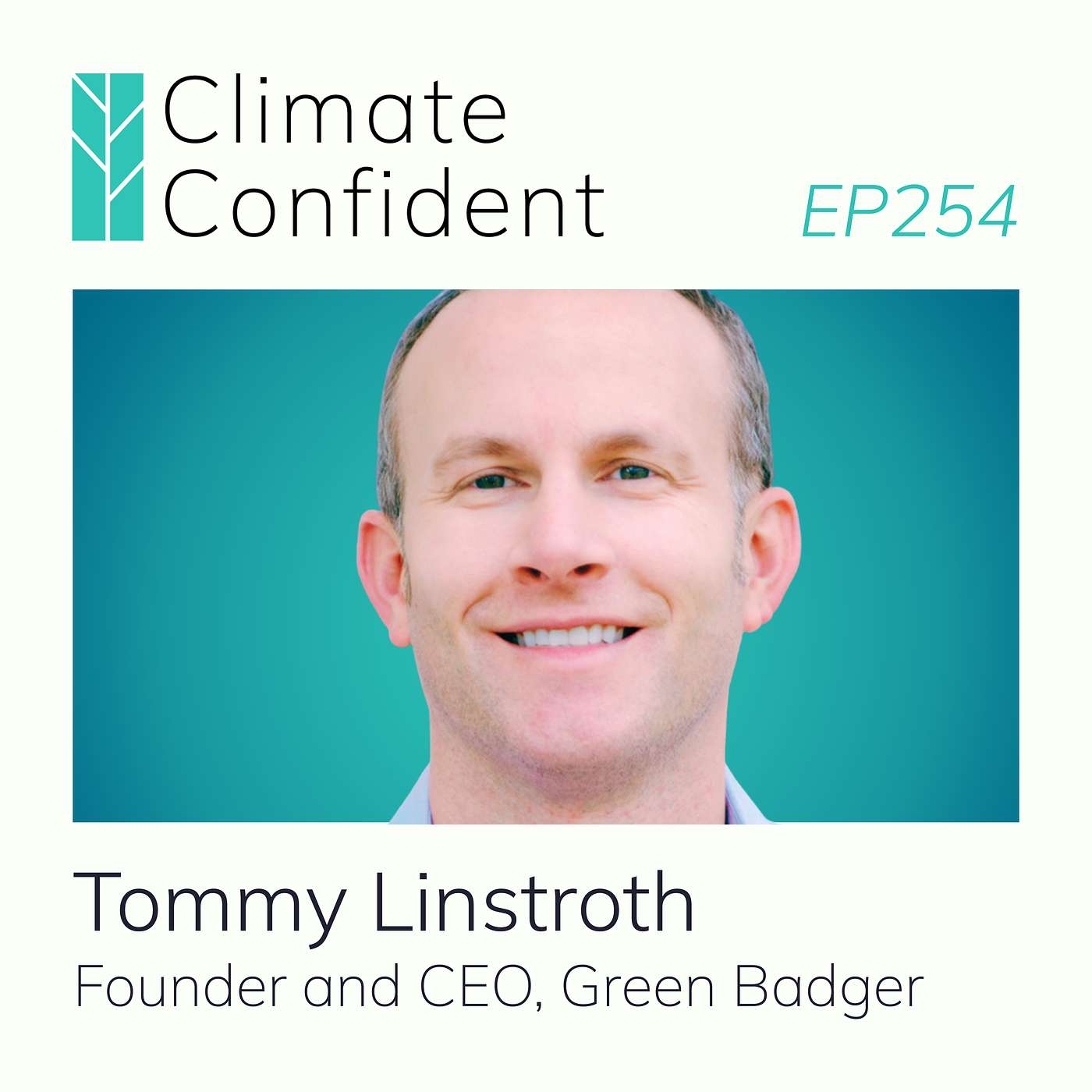
Send me a message What if the biggest barrier to decarbonising buildings isn’t technology, cost, or ambition - but sheer complexity? The built environment produces nearly 40% of global emissions, yet we still make low-carbon construction harder than it needs to be. In this episode, I’m joined by Tommy Linstroth, founder of Green Badger, to unpack why construction remains one of the most overlooked climate battlegrounds, and why that’s a mistake. We dig into LEED v5, embodied carbon, and the g...
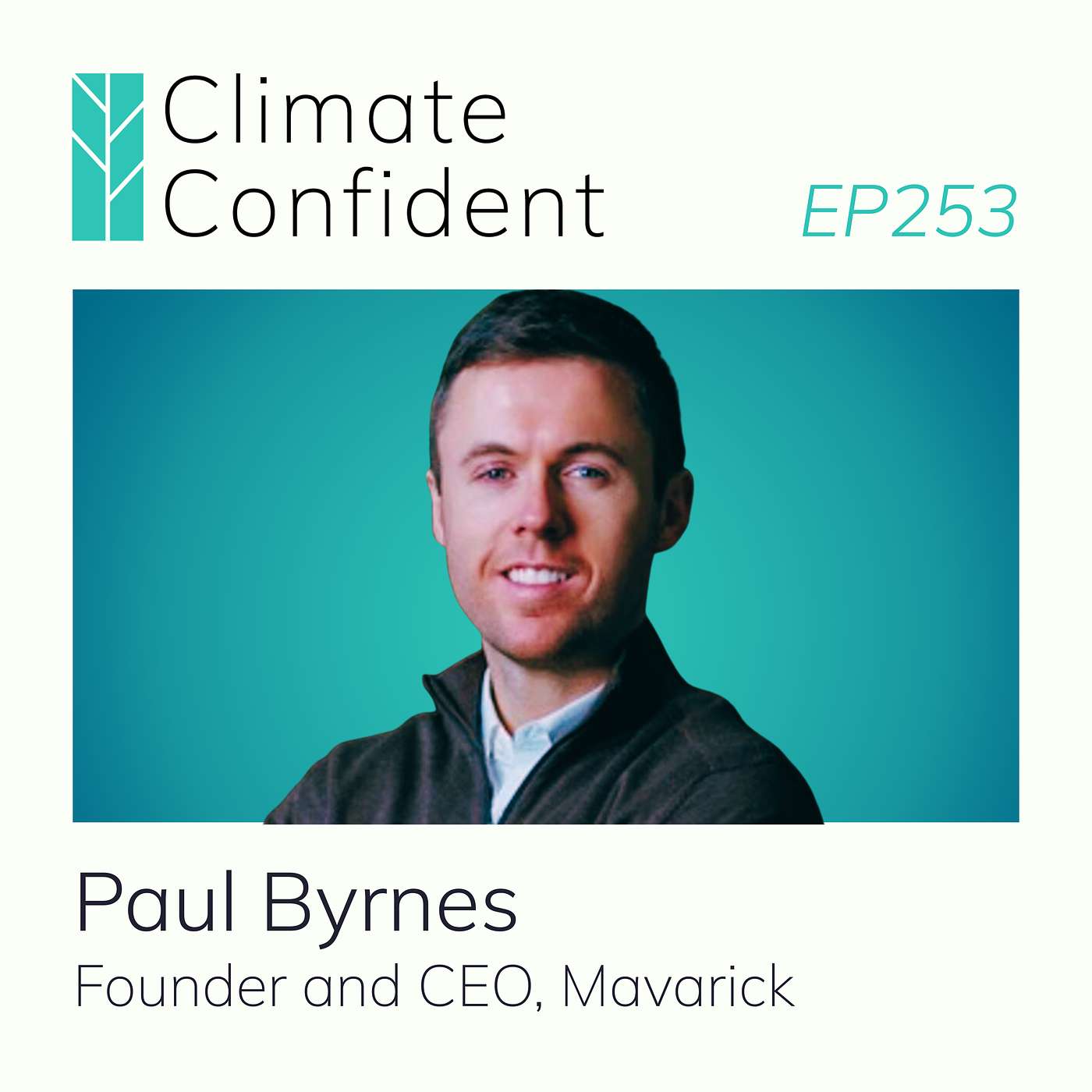
Send me a message Most companies say they’re tackling Scope 3. Then they rely on averages and hope for the best. That’s not decarbonisation. That’s denial with spreadsheets. In this episode, I’m joined by Paul Byrnes, CEO of Mavarick AI, to dig into one of the most stubborn blockers to real emissions reduction: bad data across global supply chains. Paul brings a rare mix to the table. Deep manufacturing roots, serious machine learning expertise, and a refreshingly low tolerance for AI theatre...
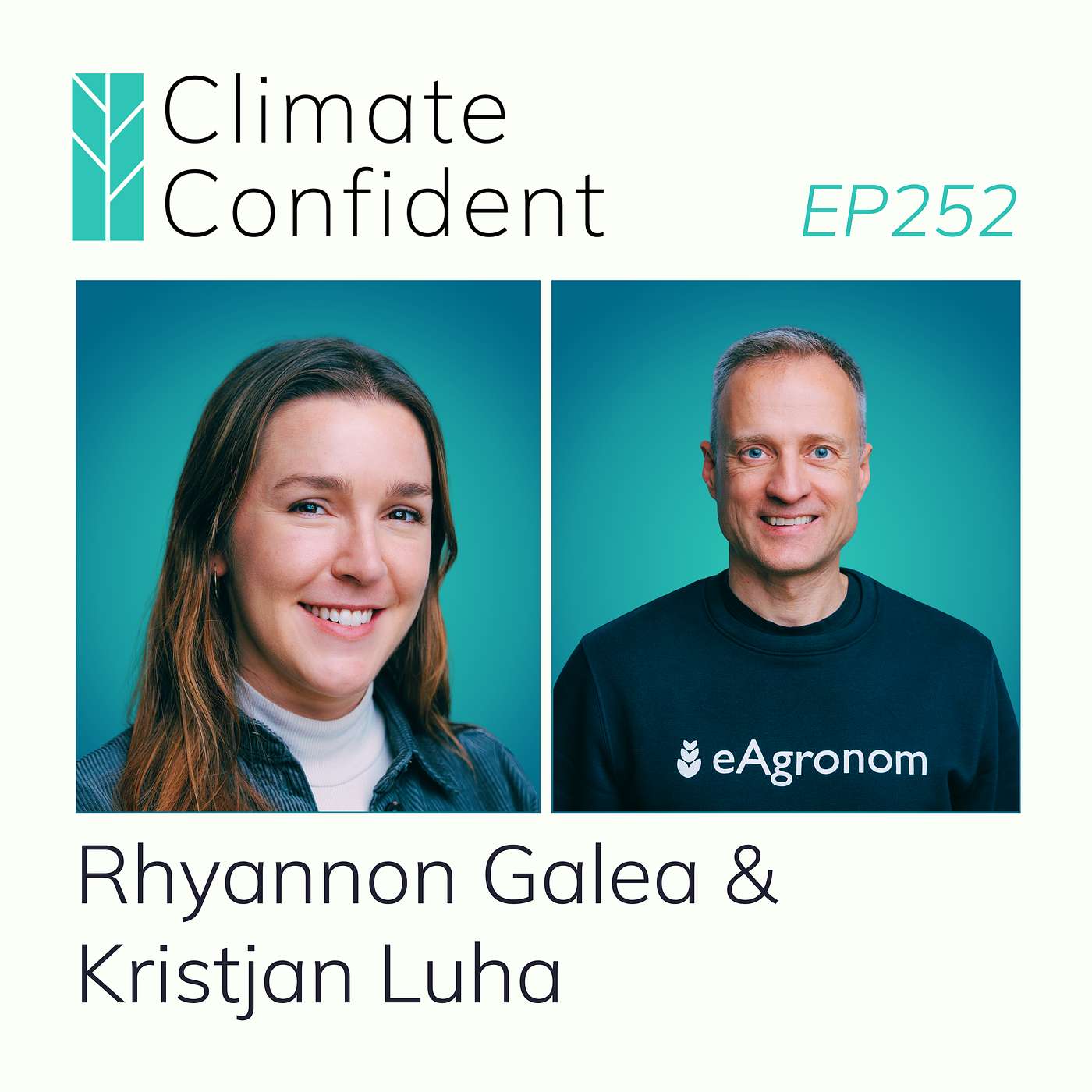
Send me a message What if the biggest lever for food-system decarbonisation isn’t factories or fleets, but soil you’ll never see on a corporate balance sheet? In this episode, I’m joined by Rhyannon Galea and Kristjan Luha from eAgronom to unpack one of the hardest climate problems to solve: Scope 3 emissions in food and agriculture. This conversation was originally recorded for my Resilient Supply Chain podcast and I’m republishing it here because it cuts straight to the heart of real-world ...
Send me a message What if the fastest way to decarbonise shipping isn’t a shiny new fuel, but the waste it’s already throwing away? Shipping moves 90% of global trade, yet it’s still one of the hardest sectors to decarbonise. In this episode, I’m joined by Nicholas Ball, CEO and founder of XFuel, to unpack why cost, physics, and adoption matter more than climate theatre when cutting emissions at scale. Nicholas leads a company turning difficult waste streams, including oily residues from ship...
Send me a message What if the clean energy transition depended on potato-sized rocks four miles under the Pacific, and we’ve barely started talking about it? In this episode I’m joined by Oliver Gunasekara, CEO and co-founder of Impossible Metals, to tackle one of the most uncomfortable truths in climate tech: there is no net zero without mining. We dig into how deep sea polymetallic nodules, AI-driven underwater robots and smarter policy could reshape the energy transition, emissions reducti...
Send me a message What happens when solar stops being just “cheap” and becomes game-changingly efficient as well, pushing past 30% and reshaping global power economics? In this episode, I sit down with Aaron Thurlow, a 25-year solar veteran and commercial lead at Caelux, to unpack how perovskite-silicon tandem modules could transform not just clean energy - but the resilience, cost base, and strategic footing of every organisation betting on electrification. With AI, manufacturing, and data c...
Send me a message What if the real disruption in solar isn’t the technology — but the business model behind it? This week I’m joined by Scott Therien, Director of Strategic Partnerships at REC Solar, to unpack one of the most important, and least discussed, shifts in the energy transition: the move from one-off construction projects to long-term, risk-bearing power-purchase agreements. It’s a change that’s quietly reshaping who owns energy infrastructure, who carries the financial risk, and h...
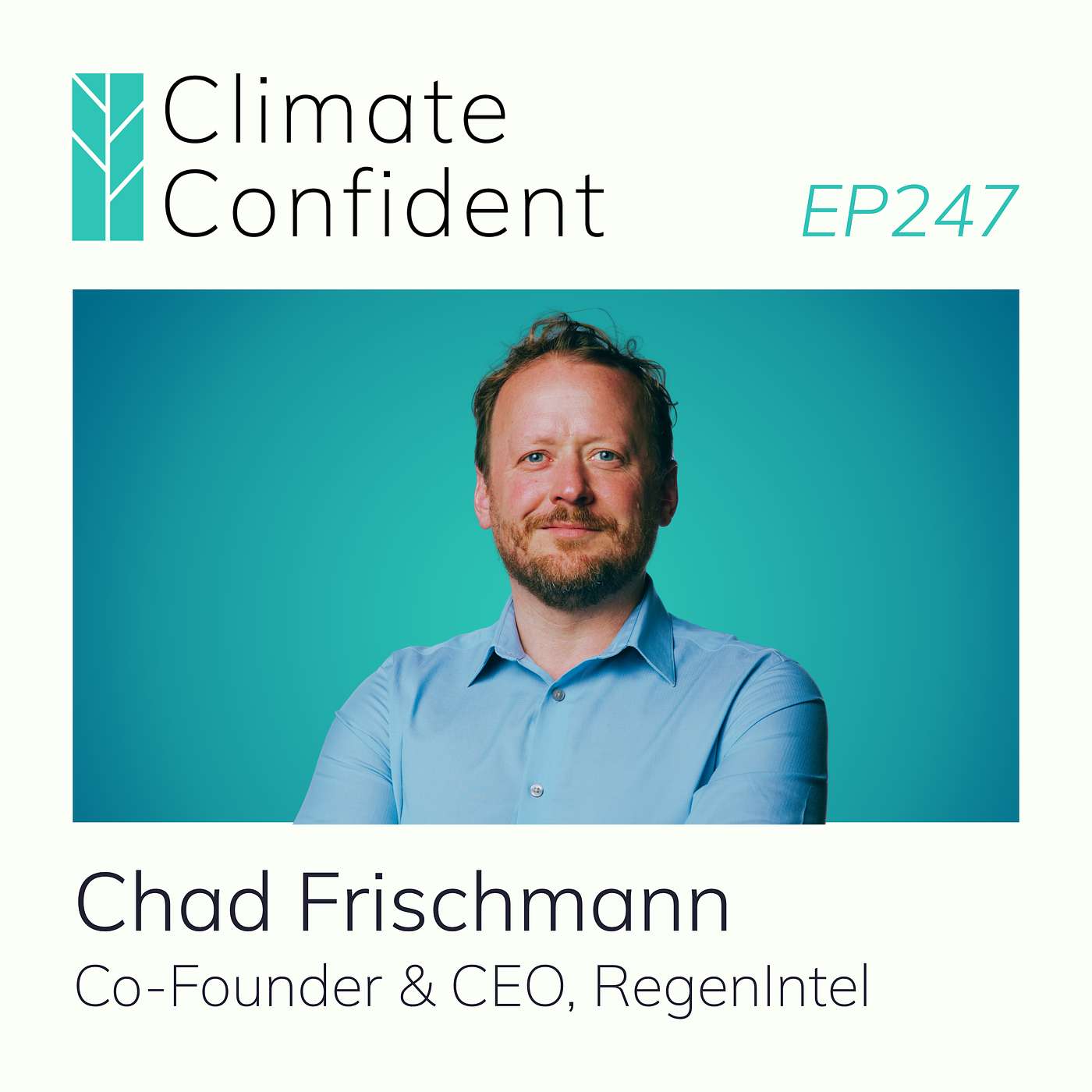
Send me a message What if cutting emissions isn’t enough, and never was? And what if the real lever we’ve been ignoring is regeneration, not reduction? This week I’m joined by Chad Frischmann, co-creator of Project Drawdown and founder of Regenerative Intelligence, for a conversation that goes right to the core of what the climate movement keeps getting wrong. We dig into why stopping global warming requires more than technology, pledges, or net-zero spreadsheets. It demands a full systems sh...
Send me a message Most people never think about industrial heat. Yet half of all manufacturing emissions come from it. My guest this week, Addison Stark, CEO and co-founder of AtmosZero, is on a mission to electrify one of the dirtiest, most overlooked pieces of infrastructure on Earth: the steam boiler. In this episode, Addison and I uncover how a technology unchanged since the 1860s can finally go clean. We talk about the hidden carbon footprint of steam, why “waste heat recovery” can actua...
loading
Comments 
loading