


 Claim Ownership
Coaching with Confidence and Care
Subscribed: 2Played: 7
Subscribe

© Copyright 2024 All rights reserved.
Description
About
The “Coaching with Confidence and Care” podcast, hosted by Luba Diasamidze, offers weekly episodes that provide reflections, practical insights, and answers to common questions in coach training, mentoring, and supervision.
I am Luba Diasamidze, the founder of UpThink Coaching, an ICF-accredited provider of coach training programs, mentoring, and supervision. I am passionate about helping coaches unlock their superpowers and be the best they can be for their clients.
This podcast is designed to support aspiring and new coaches, as well as those engaged in ongoing professional development. If you’re looking for ways to grow, experiment, gain insights into delivering impactful coaching sessions to shape your own confident and caring coaching style, this podcast is for you!
Please subscribe if you enjoy the content. Connect with me on LinkedIn to share ideas or suggest topics for future episodes.
Explore Our Resources:
• If you are new to coaching: download our Signature FREE Guide on coaching: https://upthinkcoaching.com/the-ultimate-guide/
• Coaches: download our reflective practice workbook:
https://upthinkcoaching.com/for-coaches/
• Find our coach training programs at https://upthinkcoaching.com/coach-training-development/
• Check out our YouTube channel – we post interviews with coaches coaching in different niches: https://www.youtube.com/@UpThinkCoaching/
• Connect with Luba as your mentor coach or coaching supervisor: https://www.linkedin.com/in/luba-diasamidze/
The “Coaching with Confidence and Care” podcast, hosted by Luba Diasamidze, offers weekly episodes that provide reflections, practical insights, and answers to common questions in coach training, mentoring, and supervision.
I am Luba Diasamidze, the founder of UpThink Coaching, an ICF-accredited provider of coach training programs, mentoring, and supervision. I am passionate about helping coaches unlock their superpowers and be the best they can be for their clients.
This podcast is designed to support aspiring and new coaches, as well as those engaged in ongoing professional development. If you’re looking for ways to grow, experiment, gain insights into delivering impactful coaching sessions to shape your own confident and caring coaching style, this podcast is for you!
Please subscribe if you enjoy the content. Connect with me on LinkedIn to share ideas or suggest topics for future episodes.
Explore Our Resources:
• If you are new to coaching: download our Signature FREE Guide on coaching: https://upthinkcoaching.com/the-ultimate-guide/
• Coaches: download our reflective practice workbook:
https://upthinkcoaching.com/for-coaches/
• Find our coach training programs at https://upthinkcoaching.com/coach-training-development/
• Check out our YouTube channel – we post interviews with coaches coaching in different niches: https://www.youtube.com/@UpThinkCoaching/
• Connect with Luba as your mentor coach or coaching supervisor: https://www.linkedin.com/in/luba-diasamidze/
19 Episodes
Reverse
This episode takes a careful look at the Revised ICF Core Coaching Competencies released in 2025 as a professional reflection on what these changes signal about the maturity of our field and the evolving role of the coach.
I walk through each competency and highlight where language has shifted, where expectations have deepened, and where the emphasis has moved.
We explore why some competencies remained unchanged, why others expanded, and what this tells us about how ICF now understands coaching practice in a global, complex, and increasingly relational context.
In this episode, we cover:
What remained stable and why that stability matters for the profession
What’s really new in Competency 2 (Coaching Mindset), and why supervision and reflective practice are no longer optional
What it means to have bias, culture, technology, and well-being explicitly named as professional responsibilities
What the addition of “knowledge” in Competency 7 means and what it does not mean.
Throughout the episode, I share reflections from my work as a coach, coach educator, mentor coach, and supervisor, including how these changes intersect with relational dynamics and the often-unseen impact a coach has on the learning space.
If you’re preparing for an ICF credential, mentoring other coaches, supervising practitioners, or simply trying to stay up-to-date about how coaching is evolving, this episode may provide some food for thought about what is being asked of us now professionally.
If the conversation resonates, feel free to share it with a colleague you’re already discussing these changes with.
Coming up next:
I’ll choose a final topic to close out the year. The theme is still taking shape. Join me for one more episode before the end of 2025.
Would you like to support the podcast?
Here’s a donation link: https://www.paypal.com/paypalme/LiubovDiasamidze
Explore My Other Resources to Deepen Your Coaching Skills:
Mock ICF Credentialing Exam (https://upthinkcoaching.podia.com/mock-icf-credentialing-exam-pcc-mcc )
PCC Marker Demo (https://www.youtube.com/watch?v=Jr9Layk-py8)
Conversations with Credentialed Coaches about Various Coaching Niches and Approaches (https://www.youtube.com/@upthinkcoaching )
Let’s Connect.
DM me on LinkedIn or visit upthinkcoaching.com to explore supervision, mentor coaching, or our accredited coach training programs.
If you’re deepening your coaching practice and want accredited training that integrates emotional intelligence, relational depth, and intercultural awareness, visit https://upthinkcoaching.com/coach-training-development/
Our next PCC Path (Level 2) and ACC Path (Level 1) cohorts begin in spring of They are designed for coaches who care about coaching beyond the tools and techniques. If that’s you, reach out to schedule a call and explore.
Every coach bumps into these questions: “How do I structure my practice? Which business model actually works for me and for my clients?”
This episode takes a practical look at the most common B2C coaching business models and what it takes to make them sustainable.
We walk through one-off sessions, fixed-term packages, retainers, tiered offers, and group programs. You’ll hear the pros and limitations of each model, along with the ethical nuances not to be overlooked.
In this episode, we cover:
The difference between one-off sessions and long-term work;
What makes fixed-term packages predictable and effective and where they can get messy;
Common ways to make retainers work;
How group programs can help you scale your impact;
Practical questions to help you choose a model aligned with your energy, values, financial goals and long-term vision.
You’ll also hear about the emotional and operational load that affects your sustainability as a coach.
If you’re a newer coach designing your practice, or an established coach rethinking how you want your business to run, this episode will help you make a grounded, informed decision rather than guessing or copying what others do.
And if this conversation sparks ideas for you, feel free to pass it along to another coach who might be reimagining their business model too.
Coming up next:
We’ll look at the Revised ICF Core Coaching Competencies introduced in 2025: what’s changed, why the updates matter, and how to integrate the new logic into your coaching and mentor coaching practice. This one’s going to be important.
Would you like to support the podcast?
Here’s a donation link: https://www.paypal.com/paypalme/LiubovDiasamidze
Explore My Other Resources to Deepen Your Coaching Skills:
Mock ICF Credentialing Exam (https://upthinkcoaching.podia.com/mock-icf-credentialing-exam-pcc-mcc )
PCC Marker Demo (https://www.youtube.com/watch?v=Jr9Layk-py8)
Conversations with Credentialed Coaches about Various Coaching Niches and Approaches (https://www.youtube.com/@upthinkcoaching )
Let’s Connect.
DM me on LinkedIn or visit upthinkcoaching.com to explore supervision, mentor coaching, or our accredited coach training programs.
If you’re deepening your coaching practice and want accredited training that integrates emotional intelligence, relational depth, and intercultural awareness, visit https://upthinkcoaching.com/coach-training-development/
Our next PCC Path (Level 2) and ACC Path (Level 1) cohorts begin in spring of They are designed for coaches who care about coaching beyond the tools and techniques. If that’s you, reach out to schedule a call and explore.
Every coach has faced that subtle tension “Am I doing enough for my client?” or “Should I feel responsible if they don’t act?” In this episode, we unpack the delicate balance between care and over-responsibility in coaching.
Coaches often enter the profession because they genuinely want to help people grow. Yet that same empathy can quietly lead to blurred boundaries, such as extending sessions, feeling guilty about charging fees for cancellations, or taking on the client’s motivation as your own. Drawing on the ICF and EMCC Codes of Ethics, this episode explores what true professional responsibility means and what it doesn’t.
You’ll hear about:
Common ways coaches unintentionally take on too much responsibility;
What professional codes actually say about coach and client responsibilities;
How over-functioning affects the coaching relationship and client agency;
Practical ways to stay grounded and trust the coaching process.
If you’ve ever hesitated to remind a client of an agreement, felt guilty enforcing boundaries, or wondered how to hold care and professionalism at once, this episode is for you.
We also touch on the inner work behind these dynamics: self-trust, validation, and the fear of not being “enough.” At its heart, sustainable coaching isn’t about doing more, but about doing what’s ours.
If this conversation resonates, share it with another coach who might need the reminder that caring deeply doesn’t mean carrying the client.
Coming up next:
In the next episode, we’ll shift from what happens in sessions to the outer structure of your coaching business and various business models. We’ll look at how to design coaching engagements and fee structures that honor your time, reflect your values, and create clarity for clients from the start.
You might find this useful:
Episode 15 “Three-Party Agreements”: https://upthinkcoachingpodcast.podbean.com/e/three-party-agreements-coaching-in-organizations/
Would you like to support the podcast?
Donation link (China-based): https://yoopay.cn/event/78450053
International: Paypal.me
Explore My Other Resources to Deepen Your Coaching Skills:
Mock ICF Credentialing Exam (https://upthinkcoaching.podia.com/mock-icf-credentialing-exam-pcc-mcc )
PCC Marker Demo (https://www.youtube.com/watch?v=Jr9Layk-py8)
Conversations with Credentialed Coaches about Various Coaching Niches and Approaches (https://www.youtube.com/@upthinkcoaching )
Let’s Connect.
DM me on LinkedIn (Luba Diasamidze) or visit upthinkcoaching.com to explore supervision, mentor coaching, or our accredited coach training programs.
If you’re deepening your coaching practice and want accredited training that integrates emotional intelligence, relational depth, and intercultural awareness, visit https://upthinkcoaching.com/coach-training-development/
Our next PCC Path (Level 2) and ACC Path (Level 1) cohorts begin this fall, designed for coaches who care about coaching beyond the tools and techniques.
Working with Emotions in Coaching
If you’ve ever found yourself unsure about what to do when a client gets emotional (whether to explore it, hold space, or turn the client’s attention back to the content) this episode is for you. Many coaches hesitate around emotions, afraid of crossing into therapy or “doing it wrong.” Yet emotions are not off-limits. They’re essential to understanding who the client is and what truly matters to them.
In this episode, we explore the real role of emotions in coaching and how to approach them confidently and ethically. You’ll hear about:
Why emotions matter in coaching conversations;
How to distinguish between coaching and therapeutic territories when emotions arise;
What the ICF Core Competencies and MCC standards say about working with emotion;
Non-directive ways to acknowledge and explore emotions without overstepping;
How to stay grounded and present when clients express strong emotions;
Why cultural awareness is key to understanding emotional expression in global coaching.
We also touch on supervision and reflective practice as essential tools for developing your emotional presence as a coach.
If this episode resonated, share it with another coach who’s learning to navigate emotion work with more ease and confidence.
Explore My Other Resources to Deepen Your Coaching Skills:
Mock ICF Credentialing Exam
PCC Marker Demo
Conversations with Credentialed Coaches about Various Coaching Niches and Approaches
Let’s Connect.
DM me on LinkedIn or visit upthinkcoaching.com to explore supervision, mentor coaching, or our accredited coach training programs.
If you’re deepening your coaching practice and want accredited training that integrates emotional intelligence, relational depth, and intercultural awareness, visit upthinkcoaching.com.
Our next PCC Path (Level 2) and ACC Path (Level 1) cohorts begin this November. They are designed for coaches who care about coaching beyond the tools and techniques.
Three-Party Agreements: Coaching in Organizations
If you’re stepping into organizational coaching (or thinking about it) one of the first big questions is: how do you navigate a coaching engagement when there’s more than just you and the client at the table? That’s where three-party agreements come in.
In this episode, I break down the essentials of three-party (or sponsored) engagements: what they are, why they matter, and how to set them up in a way that protects trust while also aligning with organizational goals. Whether you’re new to corporate coaching or looking to strengthen your contracting skills, this conversation will give you practical tools for building clarity, safety, and alignment from the start.
You’ll hear about:
Why a three-party agreement is best approached as a conversation first, document second;
The must-have elements to include, from goals and confidentiality to feedback protocols and exit clauses;
How to balance organizational expectations with the coachee’s autonomy and professional growth;
What to watch out for when hidden agendas or performance management creep into the process;
The role of culture and diversity in shaping agreements that actually work across contexts.
If you found this episode helpful, please share it with a fellow coach who’s navigating organizational coaching or preparing for it. And if you haven’t yet, hit subscribe so you don’t miss future episodes, especially the next one, where we’ll dive into one of the most powerful aspects of coaching: working with emotions.
Want to deepen your coaching practice with more confidence and clarity? I’d love to connect.
DM me on LinkedIn (https://www.linkedin.com/in/luba-diasamidze/) or visit www.upthinkcoaching.com
When a Client Does Not Make Progress in a Coaching Session
If you’ve ever left a coaching session wondering, “Was that enough?” or “Did my client actually make progress?” this episode is for you. Whether you’re a new coach or an experienced practitioner, the pressure to “deliver results” can lead to performance mode, second-guessing, and even subtle missteps in the coaching relationship.
As a mentor coach and supervisor, I see this all the time. Coaches confusing visible “aha” moments with meaningful progress, or missing deeper signs of transformation that don’t look dramatic on the surface.
In this episode, we unpack what progress actually means in a coaching session, how to sense it, and what to do when you’re not seeing it.
You’ll hear about:
The myth of the “big aha” and how it trips coaches into performance mode;
How to notice when the client is circling around a surface topic to avoid something deeper;
The coach’s role in creating psychological safety for emotional honesty and real insight;
What to do when you feel you’re working harder than your client — and how to hand the process back;
The link between progress and trust, and why emotional transparency matters more than perfectly framed questions.
If this episode helped, please share it with a fellow coach who might need to hear it.
And if you haven’t yet, hit subscribe so you don’t miss future episodes, especially if you’re curious about the deeper, relational side of coaching.
Let’s connect!
Want to bring more presence, confidence, and clarity to your coaching? I am here for that.
DM me on LinkedIn or visit upthinkcoaching.com to explore supervision, mentor coaching, or our accredited coach training programs.
Our next PCC Path (Level 2) - "Beyond the Tools: Advanced Coaching in Emotional, Intercultural & Relational Spaces"- begins in September: https://upthinkcoaching.com/coach-training-development/the-path-to-excellence-for-certified-coaches/
ACC Path (Level 1) opens in November: https://upthinkcoaching.com/coach-training-development/become-a-coach/
Looking forward to supporting you on your journey.
Many coaches associate a “coaching mindset” with being positive, open, or reflective. But in practice, it’s something deeper and more disciplined. In this episode, we unpack what it truly means to embody a coaching mindset, beyond ICF definitions and into the psychological habits that shape how we show up.
For coaches who and coaching leaders who have ever felt:
Uncertain whether you're being present or subtly performing
Caught between curiosity and the urge to fix
Drained from maintaining “the right attitude” session after session
This episode offers clarity, evidence, and honest reflection.
You’ll learn:
What lies beneath ICF’s “Embodies a Coaching Mindset” competency
How curiosity, emotional regulation, and non-directiveness influence client outcomes
Why a mindset shift often matters more than a new tool or question
Common traps and how to work through them
Simple practices to reset and return to presence
Let’s stay in touch:
Follow the show, connect with me on LinkedIn, or reach out if something in this episode sparked a reflection. And join us next time as we explore what to do when a client doesn’t make progress.
If this episode helped, share it with a fellow coach who's in the same boat.
Here's More:
Do you want to bring more presence, confidence, and clarity to your coaching? I am here for that.
DM me on LinkedIn (https://www.linkedin.com/in/luba-diasamidze/) or visit upthinkcoaching.com to explore supervision, mentoring, or our accredited coach training programs.
Our next PCC Path (Level 2) program begins in September, and the ACC Path (Level 1) program opens in November.
Download our FREE workbook "Reflective Practice For Coaches" at https://upthinkcoaching.com/for-coaches/
Looking forward to supporting you on your journey.
If you're a coach-in-training, a freshly certified practitioner, or simply someone who feels stuck between wanting to help and fearing you’re not “ready” yet, this episode is for you. You probably have a lot of questions about how to find clients, how to talk about your coaching, and whether it’s okay to charge for your services yet.
As a coach educator, mentor and supervisor, I have worked with many coaches navigating these exact challenges. In this episode, I share honest, practical advice based on experience. Just the things that work.
It is ok to be new. Being clear and transparent builds trust more than pretending to be an expert ever will.
You’ll hear about:
Ways to collect evidence of your skills, even early in your training;
How to introduce yourself and your coaching authentically and ethically, with practical examples of phrases you can use;
How to deal with rejection and why that’s not about you personally;
Using CustDev interviews to connect and really understand what your future clients need;
Practical ways to set your fees and offer packages that make sense for you and your clients.
If this episode helped, share it with a fellow coach who's in the same boat.
Let’s connect!
Do you want to bring more presence, confidence, and clarity to your coaching? I am here for that.
DM me on LinkedIn (https://www.linkedin.com/in/luba-diasamidze/) or visit upthinkcoaching.com to explore supervision, mentoring, or our accredited coach training programs.
Our next PCC Path (Advanced Cohort) begins in September, and the ACC Path (Level 1) opens in November.
Download our FREE workbook "Reflective Practice For Coaches" at https://upthinkcoaching.com/for-coaches/
Looking forward to supporting you on your journey.
What does it really mean to coach the “Who” and why do we talk about that often in coaching?
In this episode of Coaching with Confidence and Care, I’m addressing one of the most frequently discussed ideas in coach training: coaching the whole person. You’ve probably heard the phrase in mentor feedback, ICF performance assessments, or coach training sessions. My goal for this episode is to explain it in a clear and practical way.
If you’re working toward your PCC credential, or simply want to have more meaningful conversations with clients, I hope you’ll find this episode useful.
We’ll explore:
What “coaching the Who” really means and how it differs from "coaching the What";
The psychological foundations of identity and their connection to the “Who”;
Reasons to do the Who work in coaching;
Common traps that keep coaches stuck at the “What” level;
Skills coaches need to develop to work at the level of identity
Tune in and let’s explore it together.
Get in touch:
LinkedIn: https://www.linkedin.com/in/luba-diasamidze/
Email: Luba@upthinkcoaching.com
Website: www.upthinkcoaching.com\
Explore ICF-accredited coach training programs, mentor coaching and supervision: https://www.upthinkcoaching.com/coach-training-development
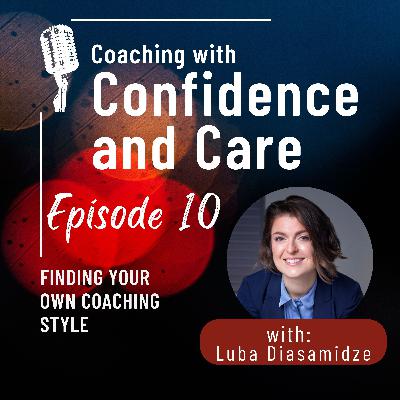
In this episode, we dive into one of the most personal and relatively common puzzles in coaching: “How do I find my own coaching style?”
It’s the question that emerges during the certification, resurfaces during tricky sessions, and shows up again when we compare ourselves to other coaches. We explore what holds coaches back from showing up with authenticity, how our training might sometimes wire us to sound like someone else, and how to go about finding your voice (spoiler: this isn’t just about technique).
I will also unpack what “inner permission” means in this context. The kind that lets you bring more of yourself into the session: your intuition, your language, and your edge. We’ll talk about a possible tension between being present and being polished, between being yourself and being “professional.” And we explore how you can bring your full presence to coaching without losing sight of yourself or your client.
If you’ve ever found yourself wondering whether it’s okay to sound less like a textbook and more like you, then this episode is for you. Your coaching voice might be closer than you think.
Get in touch:
LinkedIn: https://www.linkedin.com/in/luba-diasamidze/
Email: Luba@upthinkcoaching.com
Website: www.upthinkcoaching.com
Explore ICF-accredited coach training programs, mentor coaching and supervision: https://www.upthinkcoaching.com/coach-training-development/
Let’s face it — disappointment happens in coaching. Maybe your client expected more progress, or perhaps you feel coaching does not work for them. Something just does not feel right!
In this episode of Coaching with Confidence and Care, I’ll talk about what might be causing that disappointment and how you can turn those tricky moments into opportunities for growth. We’ll explore how to address these feelings head-on, validate your client’s experience, and keep communication open to ensure that both you and your client are on the same page. I’ll also share some questions you can ask to keep your coaching relationship strong and aligned.
This episode is for:
Coaches who want to navigate those awkward moments with clients with empathy and confidence.
Mentors looking for fresh insights to share with their mentees.
Anyone curious about personal development and emotional dynamics in relationships.
And don’t miss our next episode, where we’ll dive into balancing your unique coaching style while keeping the spotlight on your clients.
Get in touch:
LinkedIn: https://www.linkedin.com/in/luba-diasamidze/
Email: Luba@upthinkcoaching.com
Website: www.upthinkcoaching.com
Explore ICF-accredited coach training programs, mentor coaching and supervision: https://www.upthinkcoaching.com/coach-training-development
In this episode of Coaching with Confidence and Care, I invite you to slow down with me and reflect on the year — not just on your coaching practice, but on yourself as a person and a professional After all, our coaching style is about how we show up, bringing into each session exactly what we carry within us — no more and no less.
I’ll share my December tradition: a Reflective Advent Calendar. It is a playful yet meaningful way to connect with your experiences, both personal and professional. You’ll hear about five of my favorite reflection prompts, and these prompts will be my invitation to you to step back and appreciate the lessons this year has offered.
Grab your favorite pen, settle in, and let’s reflect together.
By the way, we have a wonderful free Reflective Practice Workbook for coaches. You can get your copy here:
https://upthinkcoaching.com/for-coaches/
Connect with me on LinkedIn:
https://www.linkedin.com/in/luba-diasamidze/
Explore Our Coach Training Programs, Mentoring and Supervision with Me:
https://upthinkcoaching.com/coach-training-development/
In this episode of Coaching with Confidence and Care, I’m inviting you to explore a topic that comes up often in my work as a coach trainer, mentor, and supervisor: creating a smooth flow in coaching sessions.
As coaches, we’ve all experienced sessions that feel like a seamless dance, and others that seem scattered or disjointed. What makes the difference?
You will discover:
The deeper role of trust in the coaching process—trust in the client, the session, and yourself.
How to anchor insights within the client’s larger narrative for impactful outcomes.
Practical ways to weave a cohesive session through clear agreements, presence, partnership and working with emerging insights.
Whether you’re a newly trained coach or looking to refine your skills, this episode may offer some food for thought and actionable strategies to balance spontaneity with intentionality and help your clients achieve lasting results.
Tune in.
Connect with me on LinkedIn:
https://www.linkedin.com/in/luba-diasamidze/
Explore Our Coach Training Programs, Mentoring and Supervision with Me:
https://upthinkcoaching.com/coach-training-development/
Episode 6: Global Listening
Seeing the Forest, Not Just the Trees
In this episode of Coaching with Confidence and Care, I’m talking about a skill that can take your coaching to the next level: global listening.
As coaches, we’re all familiar with active listening — it’s a foundational skill. But have you ever felt overwhelmed by a client’s lengthy story, unsure of which thread to follow? That’s where global listening comes in. It’s about stepping back, shifting your perspective, and tuning into the bigger picture.
I’ll share my view on how global listening complements detailed listening, helping you avoid getting lost in the weeds and instead attune to the themes, patterns, and unspoken elements of a client’s narrative. You’ll also hear practical tips for cultivating this skill.
If you want to refine your active listening, this episode will provide insights to help you hold space for complexity and bring more depth to your coaching conversations.
Ready to expand your listening repertoire? Tune in!
Connect with me on LinkedIn:
https://www.linkedin.com/in/luba-diasamidze/
Explore Our Coach Training Programs, Mentoring and Supervision with Me:
https://upthinkcoaching.com/coach-training-development/
In the next episode, we’ll explore how to create a fluid and seamless session flow.
See you then!
Hi! In this episode of Coaching with Confidence and Care, I’m talking about cultural sensitivity and cultural humility for coaches. Coaching across cultures is such an exciting opportunity, but let’s be real — it’s not always straightforward. How do we navigate differences in communication styles, build trust, and manage our own biases while doing our best work at that?
I’ll share stories from my years of intercultural coaching and coach training, with clients from over 45 countries, and break down what I’ve learned along the way. You’ll hear about handling cultural nuances, like how trust is built differently across cultures, or why “direct” feedback isn’t always a universal win. I’ll also offer practical tips — like using Hofstede’s Cultural Dimensions to understand where clients are coming from and shaping a coaching approach that feels respectful and inclusive.
Whether you’re coaching globally, working with culturally diverse teams, or just curious about how cultural sensitivity and humility can enhance your practice, this episode brings you some insights and tools you can use right away.
Tune in!
Useful Links:
https://geerthofstede.com/ - The 6-D model of national culture
https://upthinkcoaching.com/for-coaches/ - Our free workbook "Reflective Practice for Coaches".
Connect with me on LinkedIn:
https://www.linkedin.com/in/luba-diasamidze/
Explore Our Coach Training Programs, Mentoring and Supervision with Me:
https://upthinkcoaching.com/coach-training-development/
In today’s episode, we explore a common question among coaches: where does deep coaching end and therapy begin? Whether you're a new coach or preparing for your advanced PCC credential, we’ll dive into the overlaps and distinctions, and how to navigate emotional conversations while staying true to your coaching role.
www.upthinkcoaching.com
Luba@upthinkcoaching.com
Connect: https://www.linkedin.com/in/luba-diasamidze/
Have you ever had a client bring a topic so big it feels like too much for one session? It can make you wonder where to start. In this episode, we'll explore what to do in such situations. Knowing how to handle these moments is what helps you stay grounded and deepen your client’s trust.
www.upthinkcoaching.com
Connect on LinkedIn
This episode is about the delicate balance between addressing challenges and highlighting strengths in coaching sessions. Get some ideas about how to help your clients harness both their optimistic and pessimistic tendencies to foster growth, resilience, and a stronger belief in their abilities.
Key points:
0:04 - 0:58: I will introduce myself, the podcast, and my motivation.
1:28 - 2:24: Why many trained coaches struggle to pursue a career.
5:00 - 7:03: Defining self-confidence and its significance.
9:20 - 10:42: Reflecting on care, humility, empathy, and relationships.
Next time: Use a positive lens in coaching to help clients build self-efficacy. Don’t miss it!
Comments

Download from Google Play

Download from App Store
 United States