


 Claim Ownership
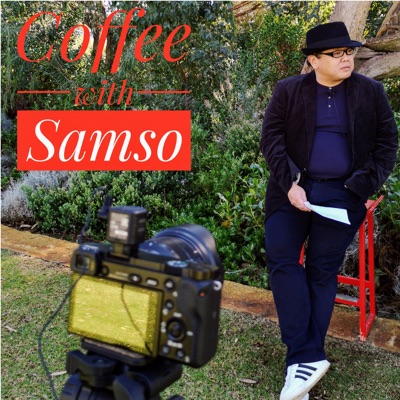
Coffee with Samso
Subscribed: 24Played: 825
Subscribe

Description
This is Coffee with Samso. Samso will have a coffee with someone about something that is interesting and from a different perspective in business. It is a simple coffee conversation with no formalisation of style.
115 Episodes
Reverse

Coffee with Samso Episode 226 is with Brad Underwood, Chairman and Managing Director of Galileo Mining Limited (ASX: GAL). Brad was last with us for Episode 168 in January 2023, when Galileo was drilling out its Callisto palladium deposit near Norseman in Western Australia. Callisto now has a resource of 17.5 million tonnes at 1.04 g/t 4E, 0.20% nickel and 0.16% copper (2.3 g/t palladium equivalent). Galileo is drilling again, looking for the next deposit along about 20 km of the Callisto host sill and about 12 km at the Mission Sill prospect. We talk about the new flotation tests on Callisto core, which recovered 79.0% to 85.1% of the palladium, what 3E, 4E and palladium equivalent mean for investors, how Callisto was found in the rock above a nickel target, the Mission Sill RC drilling Galileo announced on the day we recorded, and how Galileo spends its cash, about A$6.9 million at 30 September 2026, in repeated drill campaigns. Recorded at the University Club, UWA, Crawley, Western Australia, on 9 November 2026. In the words of Samso, get your favourite beverage and sit and listen to another great insight from Coffee with Samso. Coffee with Samso - Episode 226 | Galileo Mining Limited (ASX: GAL) | The University Club | Crawley | Western Australia Chapters 00:00 Start 00:10 Introduction 01:09 What is Galileo Mining and where are its projects? 02:13 What has changed since Episode 168 and the Callisto resource? 04:04 Is Norseman a new platinum group metals province? 05:03 Are you chasing the motherlode or building on what you have? 07:55 What did the October flotation tests show? 12:04 Is Callisto's chemistry like South Africa's? 14:01 How should investors read 3E, 4E and palladium equivalent? 16:50 How was Callisto discovered? 18:06 What keeps Galileo chasing PGMs at Norseman? 22:06 When is North Callisto being drilled? 23:21 Is Mission Sill the same system as Callisto? 26:35 How does the palladium market work? 28:21 What should investors watch over the next six months? 30:29 What question should investors ask more often? 31:53 What would you say to investors on the fence? 32:41 Conclusion Watch on YouTube: https://youtu.be/W8XVzhkUl-c Read the article: https://www.samso.com.au/post/galileo-mining-asx-gal-palladium-norseman-coffee-with-samso General information only, not financial product advice. Do your own research.

Coffee with Samso — with Dr Tobias Schlegel, Senior Research Scientist, CSIRO We're back at Samso HQ at the University Club, on the UWA campus in Crawley, and this is a conversation that has been a few years in the making. I first came across Tobias Schlegel at an IOCG workshop in Adelaide. He was up the front talking about how these deposits actually form, and I remember thinking, I need to talk to that guy. It has taken two or three years, but here we are. Tobias is a Senior Research Scientist at CSIRO, where he has spent close to seven years, and he has been working on Iron Oxide Copper Gold (IOCG) systems since around 2009 — including his doctoral work on Prominent Hill. If you want someone who has spent well over a decade staring at the rocks behind Australia's most important copper story, he is the man. "Geochemistry Isn't the Silver Bullet" Why this conversation matters Copper is on everyone's lips. Investors want to know where the next tonne is coming from. And in Australia, the answer keeps pointing back to IOCGs. Globally, porphyries are the elephant in the room — Tobias puts them at roughly 60% of world copper supply. But IOCGs are where Australia lives. In South Australia and Queensland, they are the dominant copper producer. And they carry a quiet advantage: where porphyries typically run somewhere around 0.4–0.6% copper, IOCGs tend to scrape around 1%, particularly the hematite-dominated ones. When you are exploring undercover — as we increasingly are in this country — that grade difference matters. The thing that stopped me in my tracks Here is the part of the conversation that I keep coming back to. We spend our entire exploration lives assaying for metals. Copper. Gold. Rare earths. That's what we want to find, so that's what we measure. Tobias's point is that the metals are only half the story. Metals travel in a fluid as cations — copper plus, iron two plus. But a fluid cannot just dump cations into a rock and walk away. Something has to balance the charge. So the anions come along too: chlorine, hydroxide, sulfur, phosphate. And when that fluid hits the rock, it doesn't only deposit metal — it also rebuilds the mineralogy, turning feldspars into hydrous minerals like chlorite and muscovite. You may have thirty metals sloshing around in the system. But they are charge-balanced by a handful of anions. And as Tobias puts it, the signature of the anions is sometimes far clearer than the signature of the metals. Which means the alteration mineralogy can be telling you something your assay sheet simply cannot. From geochemistry to mineralogy This is why, over the last five or six years, Tobias has drifted away from whole-rock geochemistry and towards mineralogy — measuring surface chemistry with automated SEM-based systems and translating it into minerals, sample by sample, down a drill hole. What emerges is not the presence or absence of some magic indicator mineral in a single sample. It is the systematic change in mineral abundance through space. And it tends to behave predictably: broadly speaking, the bigger and more intense the alteration zone, the better the copper intersection at the end of it. He is careful — and I respect him for it — not to sell this as a silver bullet. Geochemistry is still the method of choice, still the thing companies use to publish a resource, and it works especially well in homogeneous host rocks like granites. But when the host rock gets messy, and when the first hole finds smoke rather than fire, this is where the toolbox needs to get deeper. What else we covered Why IOCGs are complex — but not as chaotic as they look. Olympic Dam, Prominent Hill and Oak Dam West sit in completely different host rocks, of different ages, yet the alteration zoning tells a strikingly similar story: a hematite-quartz core, with the copper wrapped around it. Hematite versus magnetite. Why the hematite-dominated systems in South Australia carry the chalcocite, bornite and chalcopyrite everyone wants, while magnetite-dominated systems tend to run lower grade with more pyrite. The breccia debate. Were these bodies blown apart, or are they structural jogs that later became plumbing for mineralising fluids? At Prominent Hill, Tobias argues the breccia was there first. Rare earths as a clue. The unusual lanthanum and cerium signature in South Australian IOCGs, and cerium's role in the magnetite-to-hematite transformation. The carbonatite question. With the Arunta throwing up hybrids, is there a real link between carbonatites and IOCGs? The idea has been around for about 25 years. Work at Carrapateena with the Geological Survey of South Australia shows carbonates replacing chlorite at depth — and the copper grade going up where they do. A hint, Tobias says, not a proven link. AI in exploration. A refreshingly honest answer, and a warning worth writing on the wall: if we feed the system what we already know, we will tend to find what we already know. Exploration is not a data-rich space. Advice for the next generation. Stay curious. The learning doesn't stop at graduation. The takeaway Geochemistry is not just about the element itself. It's about how that element moves through the system, and what it leaves behind on the way. The assay tells you what arrived. The mineralogy tells you how it got there — and, if you read it properly, which way to point the next hole. And if you're stuck? Tobias's parting thought was simple: reach out. CSIRO, the universities, the geological surveys — they are there to help industry solve exactly these problems. Grab a coffee. This one is worth your time.

There are discoveries that change a region's prospectivity forever. The Challenger Gold Mine in the Gawler Craton is one of them. In this episode of Coffee with Samso, I sat down with David Edgecombe, the geologist who was instrumental in the discovery of the Challenger Gold Deposit in outback South Australia. David is not simply a man who happened to drill a good hole. He is a geologist's geologist — one who understood the rocks, trusted the science, and applied a methodology that was, at the time, genuinely groundbreaking in this part of the world. At 1.2 million ounces of gold, Challenger remains an enigma in the Gawler Craton. There is nothing comparable within a radius of several hundred kilometres. And yet, as David explains, the discovery almost didn't happen. A single calcrete sample — one out of more than 3,600 collected — came back at 180 parts per billion gold. Move that sample 200 metres in either direction, and the number drops below 20 ppb. The story of Challenger is as much about luck as it is about the brilliance of the exploration strategy. What makes this conversation particularly compelling is that David takes us back to the very beginning — the regional sampling programs, the calcrete geochemistry methodology that Dominion Mining pioneered in South Australia, the moment that anomalous result came through on the fax machine late one evening, and the drilling program that confirmed one of the more significant gold discoveries in Australian exploration history. This is a conversation about discovery methodology, about what works and what doesn't, about the value of good science over noise, and about what the next generation of explorers should be looking for in one of Australia's most underexplored terrains. In the words of Samso, get your favourite beverage and sit and listen to another great insight from Coffee with Samso. Coffee with Samso - Episode 219 | The Discovery of the Challenger Gold Mine | Adelaide | South Australia Chapters 00:00 Start 00:10 Introduction 03:12 Introduction of David Edgecombe 04:32 The South Australian Connection 05:31 The South Hilda Project - The Beginning of Interest in Gold Exploration 06:08 - The Introduction of Exploration in the Challenger Area and Calcrete Sampling 06:58 The Realisation of Gold and Calcrete - Bounty Gold Mine 07:40 Adelaide Resources - Andromeda Metals Limited - Realisation of the Potential - Calcrete Sampling. 08:42 The Calcrete Sampling Program 10:29 Tightening of the Regional Sampling Program. - Initiating the Drilling Program. 11:22 The Discovery Hole - The Sixth Hole 12:37 Confirmation Hole - The Seventh Hole 13:02 The Mother Lode - Drilling the Lode Plunge 13:54 The Complication of Corporate Activities 14:33 Did David Think It was Going to As Big As It was? 16:29 Does David think Challenger is still feasible? 17:04 Is Challenger a Geochemical or Geophysical Discovery? 17:39 Geophysical was not Impactful in the Exploration 18:40 No Outcrop - Surface Description 19:27 Modern Explorers should go back to Calcrete Sampling 20:29 New Thoughts on Exploration - XRF 21:25 The Importance of Regolith 22:09 Did the MMI work ? 23:04 The XRF Sampling Potential 23:56 The Mystery of Sampling Points 24:28 Sampling the calcrete and soils with XRF. 25:21 The Naming of Challenger 27:09 Mineral Exploration takes time. 28:06 Was there a sliding doors moment that meant Challenger was not Discovered? 28:36 Timing of the Discover soil sample. 29:09 Was It a Eureka moment? 29:21 Closest Sampling result 29:41 Infill Discussion 30:37 Latest Gold Potential in Gawler 31:19 Could the same exploration style work today in 2026? 32:16 Should we go back to Calcrete sampling ? 34:15 Was there much Iron in the Challenger Area? 35:57 Is Challenger Alone ? 37:17 The Element of Luck 38:22 How close were you to missing the target ? 39:33 Other Sampling Techniques ? 40:37 Interpretation of the Other sampling Techniques ? 42:09 What Would David Tell A Younger Geologist? 44;03 The Wisdom of Age ? 44:34 Any last minute Wisdom to share? 45:20 The Myth of Geologist Destroying the Environment 46:29 David The Geologist. 47:20 Conclusion 47:20 Conclusion

Coffee with Samso – John Anderson and the Thinking Behind the Paris Silver Discovery There are mining discoveries, and then there are stories about why discoveries happen. The difference matters. In this episode of Coffee with Samso, I sat down with John Anderson, the geologist most closely associated with the discovery of the Paris Silver Deposit on South Australia's Eyre Peninsula. John is not just another explorer who drilled a successful hole. He represents a generation of geologists who built discoveries through persistence, pattern recognition, and the willingness to challenge accepted geological thinking. This conversation was less about one silver deposit and more about how discoveries are made when ideas are allowed to mature over decades. The Geologist Behind the Discovery John Anderson was born in South Australia and developed an early fascination with rocks, fossils, and the natural world. He graduated from the University of Adelaide in 1975 with studies in geophysics and geology before starting a career that would take him through some of Australia's most important mining districts. His early years included underground work at Broken Hill, nickel exploration around Kalgoorlie, tin projects, and later senior exploration roles with major mining groups. These experiences shaped a style of thinking John repeatedly referenced in our discussion — understanding how systems form, not simply where anomalies sit on a map. That distinction is critical. Many people talk about targets. Fewer talk about mineral systems. In the words of Samso, get your favourite beverage and sit and listen to another great insight from Coffee with Samso. Coffee with Samso - Episode 217 | The Discovery of the Paris Silver Deposit | Adelaide | South Australia

Coffee with Samso – Echo IQ Limited: AI Diagnostics, Mayo Clinic & the Path to a Cardiovascular Platform A much awaited Coffee with Samso conversation with Dustin Haines from Echo IQ Limited (ASX: EIQ)is all about a clear investment narrative: this is not just an AI story, but a proven data-driven healthcare business building a scalable diagnostic platform anchored in real clinical need. The main business for Echo IQ is in the cardiovascular diagnostics space, using artificial intelligence to analyse echocardiograms and assist physicians in identifying complex conditions such as aortic stenosis and heart failure. For those that are familiar in this space, this is where underdiagnosis remains a documented global issue. The business is built around clinical validation, regulatory pathways, and integration into hospital workflows, rather than purely theoretical AI capability. The discussion in this epoisode of Coffee with Samso does highlight the realisation of the business model, which lays out the following: Clinical-grade AI with regulatory validation (FDA pathway) Access to a large, longitudinal echocardiography dataset (~2.2 million records) A clear commercial pathway into hospitals via existing diagnostic infrastructure The Echo IQ story is no longer a "build it and hope" model. The recent news and what appears to be even more validation when the current FDA approval gets the tick, is that the business is now a measured progression from validation → approval → integration → revenue, which is what the market is valuing its future. This is often where many early-stage AI healthcare companies fall short. In the words of Samso, get your favourite beverage and sit and listen to another great insight from Coffee with Samso.

Comments

Download from Google Play

Download from App Store
 United States