


 Claim Ownership
Comparesoft Podcast
Subscribed: 0Played: 1
Subscribe

Description
The Comparesoft Podcast hosts conversations with enterprise software users, sharing their experiences in finding, implementing, and using transformational enterprise software.
58 Episodes
Reverse
Adileh Mountain, Founder at Strat Scale Advisory, joins the Comparesoft ERP Podcast to explore what causes ERP programmes to go off the rails, what a real recovery plan looks like in practice, and why field adoption is the make-or-break factor in construction ERP. Drawing on 15 years in construction and EPC operations and her experience leading ERP transformation and recovery work at Deloitte, Adileh explains how she diagnoses failing programmes, what construction firms actually need from ERP, and what leaders must get right to make transformation stick beyond go-live. In this episode, Adileh talks about: What triggers the call for help, and who makes it (CFOs, COOs, and project directors) The 10 dimensions of implementation health she uses to diagnose a failing programme Why leadership absence and incomplete requirements are the most common root causes of failure A real recovery case: $4M in avoided costs and 85% field adoption on a programme six months behind schedule What construction firms actually need from ERP, and why field data capture is consistently underweighted Why field adoption is the single most important success factor in construction ERP What CFOs and COOs should do in the next 30 days if their programme is drifting
Daniel Hughes, Facilities Manager at a 61-unit industrial estate, joins the Comparesoft Facilities Management Podcast to share how he broke into the FM profession without a degree or traditional career path. Drawing on a career that started with forklift driving and street wardening before a mentor and an IOSH qualification opened the door, Daniel explains what the transition into facilities management really involves, where communication skills matter more than formal qualifications, and how treating contractors and tenants as partners shapes better outcomes across the board. In this episode, Daniel talks about: The non-traditional route into facilities management and why practical experience builds the strongest foundation Why 70% of an FM's job is communication and relationship management, not technical work How face-to-face conversations and a tenant newsletter prevent issues from escalating What 'good' looks like when evaluating contractors — and why attitude matters more than price Why landscaping is arguably a higher priority than security on an industrial estate The FM tools and workflows he relies on, and where they break down
John Cusick, President of Echo Park Consulting, joins the Comparesoft ERP Podcast to give software buyers a practical rundown of AI-native ERP: what it is, how it compares to traditional systems, and what to watch out for. With a career spanning NetSuite implementations and subscription billing, John now helps companies adopt modern AI-native platforms. He explains how implementations work differently, where the real-time savings are, and directly addresses the fears around data quality, hallucinations, and handing over critical finance processes to AI. In this episode, John talks about: The practical difference between AI-native and AI-enabled ERP, and how buyers can tell them apart Where AI-native ERPs sit in the market and who they best serve today Why companies are migrating from QuickBooks, spreadsheets, and legacy ERPs to AI-native systems What an AI-native ERP implementation looks like, and where the biggest time savings come from How AI-native systems handle hallucination risk, data governance, and post-go-live drift What requirements buyers should prioritise when shortlisting AI-native ERP software 🔗 Listen and read more at Comparesoft: https://comparesoft.com/erp-software/ai-artificial-intelligence/ai-native-systems/
Lee Wachter, ERP & AI Supply Chain Advisor at Interactive Ingenuity, joins the Comparesoft ERP Podcast to unpack what it really takes for manufacturers and CPG companies to fix broken supply chain operations, make ERP decisions that hold up under pressure, and layer AI in a way that actually delivers value. With senior leadership experience at Olympus and Diageo, work with companies like Pepsi and Citibank, and time spent inside an ERP vendor, Lee brings a rare dual perspective on ERP selection and supply chain performance. He explains where supply chains start to break down, how to pressure-test ERP systems in regulated environments, and why AI only works when the foundation is already stable. In this episode, Lee talks about: The early warning signs that a manufacturer's supply chain is losing control How to pressure-test traceability, shelf life, and compliance in food, beverage, and regulated industries What the 20% of ERP capability that actually differentiates supply chain outcomes looks like What buyers misunderstand about the ERP vendor's role in implementation success How to layer AI on top of a stable ERP to improve forecasting, inventory, and decision-making The non-negotiable guardrails leadership must have before going live with AI
Kerry Boyce, Director of Maintenance at the University of Warwick, joins the Comparesoft Maintenance Podcast to explore what it truly takes to maintain a 710-acre university estate with over 500 buildings, thousands of student residents, and more than a million assets. In this episode, Kerry discusses: The real scale and diversity of assets across a major university estate from research laboratories to student residences and theatre spaces How she built asset visibility from day one, combining desktop data review with boots-on-the-ground faculty visits The unique operational challenges of higher education compared to transport and performance venues How to prioritise maintenance under constrained budgets using safety, compliance, and operational resilience as guiding lenses Her practical framework for deciding whether to repair, refurbish, or replace an asset What the reactive-to-PPM ratio tells you about the sustainability of your maintenance operation The three actions any maintenance leader should take first when moving from reactive to lifecycle-led strategy
Tanya Last joins the Comparesoft ERP Podcast to explain how an ERP project manager keeps large-scale ERP programs on track from early delivery through to post-go-live stabilisation. Drawing on around 15 years of leading ERP and wider transformation programmes, particularly in complex public sector environments, Tanya breaks down what the ERP project manager role actually involves in practice and why successful ERP delivery depends on much more than technology. She explores the realities of governance, decision-making, change management, delivery discipline, and how to spot when a programme is starting to drift before it becomes a bigger problem. In this episode, Tanya talks about: What an ERP project manager actually does in practice Where the role begins across the ERP lifecycle The most common reason large-scale ERP programs derail What to tighten first when ERP delivery starts to feel loose How to judge whether an organisation is truly ready to go live What to measure after go-live to know ERP has really landed Tanya's key advice for first-time ERP project managers
Bryan Oak joins the Comparesoft ERP Podcast to explain how ERP Phase 0 prevents scope creep, governance drift and data chaos, and why many programmes struggle before selection even begins. Drawing on decades of advising leadership teams across complex operational environments, Bryan breaks down what Phase 0 actually is, what good looks like in practice, and why organisations often rush into vendor selection when they are searching for a "silver bullet". He also shares a real-world scenario from a multi-site international manufacturer that skipped Phase 0 in their last ERP journey, and the consequences that followed. In this episode, Bryan talks about: Where to start when an ERP programme needs correction What ERP Phase 0 is and what it must achieve before selection How manufacturers get scope right inside and outside the "four walls" ERP failure from a Phase 0 and outcomes perspective The difference between an 'okay' and an outstanding ERP system and why partners matter
James Robertson, ERP troubleshooter and author of The Critical Factors for IT Investment Success, joins the Comparesoft ERP Podcast to unpack what ERP failure really looks like today, and why so many organisations fail to get value from systems that technically went live. Drawing on decades of ERP remediation work and an engineering-led approach, James explains why ERP failure is rarely a software problem, why accountability must sit with the CEO, and how most failing ERP programmes can be fixed without replacement. Using Lidl's abandoned SAP programme as a real-world example, James walks through how he would diagnose and correct a doomed implementation in just two days. In this episode, James covers: What 95% ERP failure actually looks like in practice Why ERP needs an engineering mindset, not a technology-first approach How accountability certificates prevent ERP failure Why ERP training should never be time-limited How Lidl's ERP failure could have been avoided
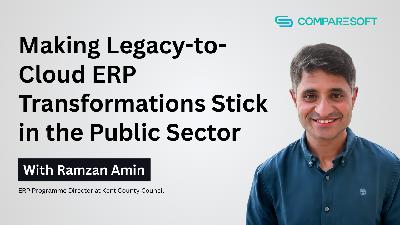
Ramzan Amin, Founder and CEO of SIM Consulting, joins the Comparesoft ERP Podcast to explore why public sector organisations are being pushed to replace ageing ERP systems. Rising costs, security risks, and systems no longer fit for modern service delivery are forcing councils and public bodies to move from legacy ERP to cloud platforms. Drawing on his experience as ERP Programme Director at Kent County Council, Ramzan explains why many public sector ERP programmes lose control early, how governance and change management shape success, and what leaders must do to make legacy-to-cloud ERP transformations stick beyond go-live. In this episode, Ramzan talks about: The real drivers behind legacy-to-cloud ERP transformation in the public sector What happens when the wrong ERP system is selected, and how to deal with pushback Why change management, not technology, defines ERP implementation failure rates How public sector ERP shortlisting differs from private sector procurement The unique pressures facing councils compared to commercial organisations Lessons from Birmingham City Council's widely reported ERP implementation challenges How SIM's no-code, AI-based Testify platform is reducing risk and the skills gap in ERP delivery
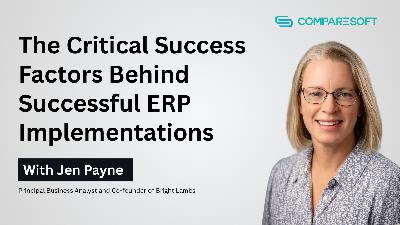
Jen Payne, Co-founder of Bright Lambs, joins us to break down the critical success factors behind successful ERP implementations and why so many projects fail before they even reach go-live. Drawing on her Master's research into ERP critical success factors and her experience across manufacturing, engineering, and military logistics systems, Jen explains what matters most in the early stages of an ERP programme. The conversation covers why listening to real pain points comes before solutions, how to think about messy data and spreadsheets, and why leadership support, governance, and systems thinking still outweigh software choice.
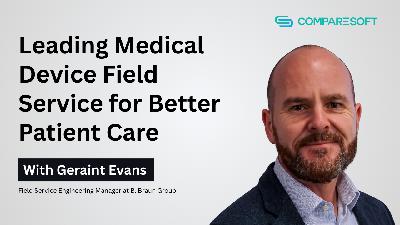
Geraint Evans, Field Service Engineering Manager at B. Braun, joins the Comparesoft Field Service Management Podcast to explore what field service looks like when equipment uptime directly impacts patient care. Drawing on experience across industrial service and medical devices, Geraint explains why healthcare field service carries a different level of responsibility, and how compliance, preventative maintenance, and people-first leadership shape day-to-day decision making. In this episode, Geraint talks about: Why medical device field service is fundamentally different from industrial service How uptime and compliance link directly to patient outcomes Why first-time fix matters more than speed in regulated environments Early signs of burnout in field service engineers How preventative maintenance reduces pressure on NHS clinical teams Why predictive maintenance is becoming critical in healthcare service delivery What engineers should practise now if they want to move into leadership
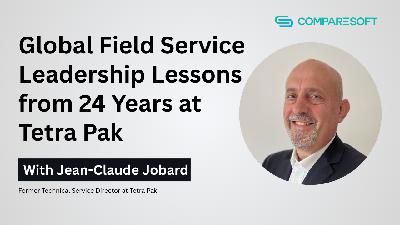
Jean-Claude Jobard, former Technical Service Director at Tetra Pak, joins the Comparesoft Field Service Management Podcast to share leadership lessons from 24 years of operating large, distributed field service teams at Tetra Pak, with his experience spanning Europe, Africa, and Asia. Jean-Claude talks about: What 24 years at Tetra Pak taught him about leading global field service teams Why trust matters more than change in the first 90 days of a leadership role Which field service KPIs are overrated, and which ones actually reflect customer value Why time to restore often matters more than first-time fix How to balance commercial service pressure with long-term customer outcomes Preventing engineer burnout in high-pressure, customer-critical environments Where technology and automation genuinely help, and where they do not
Debbie Vaughn, Director of Field Services Delivery at Denali Advanced Integration, breaks down why traditional SLA reporting often fails in real-world, multi-site field service delivery. Drawing on enterprise rollout and managed services experience, she explains why communication, transparency, and shared success metrics matter more than speed alone. She covers operational interlocks, OLAs behind SLAs, translating technical risk for executives, preventing engineer burnout, and why green dashboards can still hide customer dissatisfaction.
Project Director and VP of Field Services, Sandy Laird, joins the Comparesoft Field Service Management Podcast to unpack a challenge every fast-moving infrastructure programme faces: quality and reliability versus speed. Sandy talks about: What it really takes to manage 27 projects at once Why limited training time is widening the skills gap on-site Balancing energisation deadlines with installation quality in renewables Data centre demand: building fast, but still lasting 25–30 years The KPIs that matter: revisits, install volume per crew, and delivery quality Where robots and AI can help O&M (and where caution is needed) Why accountability is the biggest issue on large-scale projects Practical insight for female field service leaders
Regional Field Service Manager Allan Fairhurst joins the Comparesoft Field Service Management Podcast to share his journey from Army logistics and plant operations to leading large fibre delivery teams across the UK. Allan talks about: What really happens on major infrastructure projects like HS2 and the Commonwealth Games Critical KPIs and metrics for empowering high-performance service teams Cutting utility strikes with better pre-site surveys and training Building a genuine safety culture in the field Turning great technicians into confident leaders

In this episode, we sit down with Claire Ford, Head of Field Service Channel, Rest of World (ROW) at ABB E-Mobility, to explore what it takes to lead field operations during one of the fastest-growing periods in EV infrastructure. Claire shares her journey from the early days at EVBox - when the UK's charging network was still in its infancy - to overseeing service operations across the UK and Germany. She discusses how her experience building teams through COVID, managing exponential growth, and integrating systems like Salesforce and SAP shaped her leadership approach. From recognising the "unsung heroes" in logistics and back-office functions to the realities of remote team culture and cross-border collaboration, Claire offers a grounded perspective on what keeps large-scale EV field operations running smoothly.
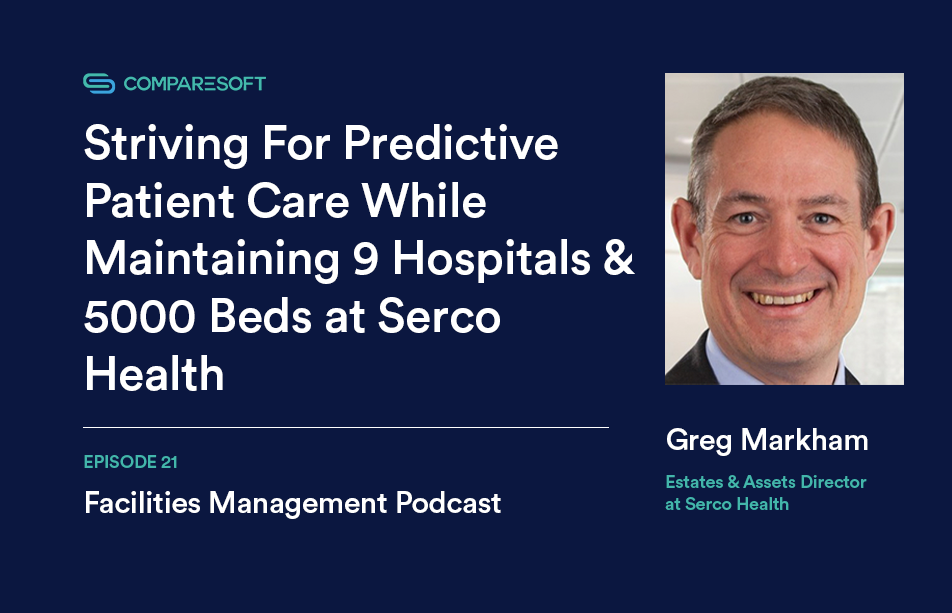
Greg Markham, Estates & Assets Director at Serco Health, explains how the reality of working on the frontline can open your eyes to appreciating the work of FM teams and how predictive technology is being readied to improve patient care in healthcare facilities.
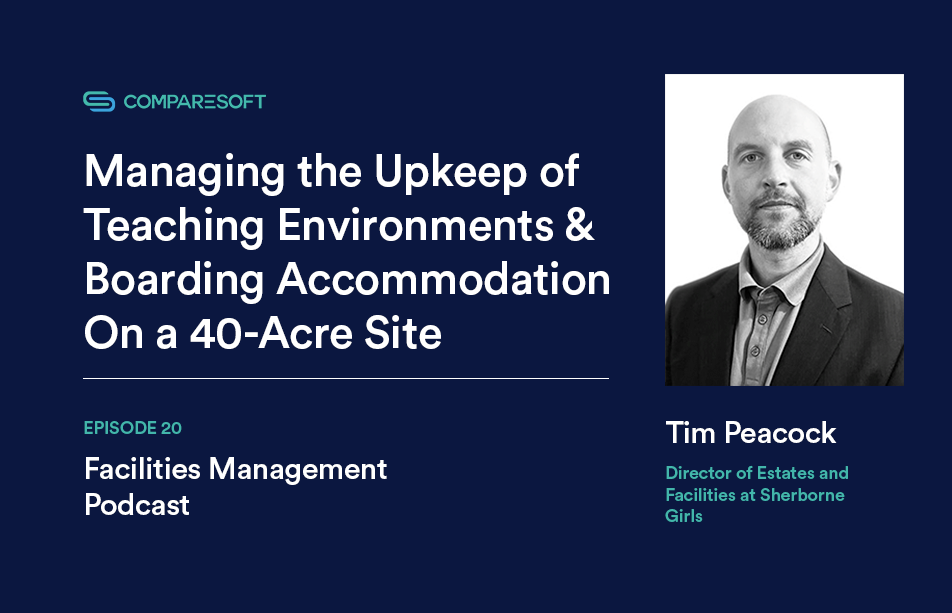
Tim Peacock, the Director of Estates and Facilities at Sherborne Girls School, explains how working with the pathology and history of older buildings is key to managing and maintaining the upkeep of a 40-acre site with both educational buildings and boarding accommodation.
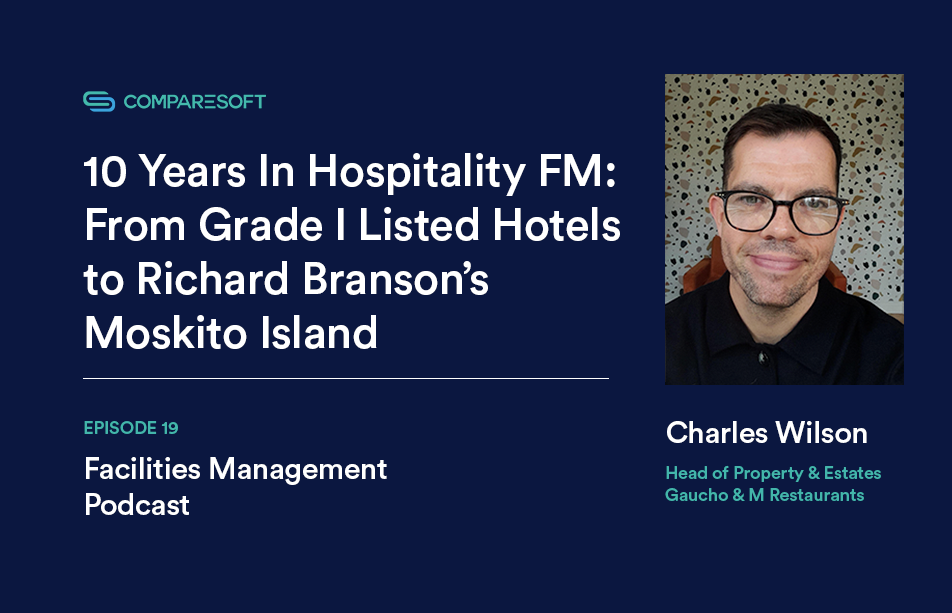
Charlie Wilson, the Head of Property and Estates at Gaucho and M Restaurants, talks us through the post-pandemic challenges in the hospitality industry, the risks associated with FM in Grade I listed buildings, and why you should never ignore your LinkedIn messages.
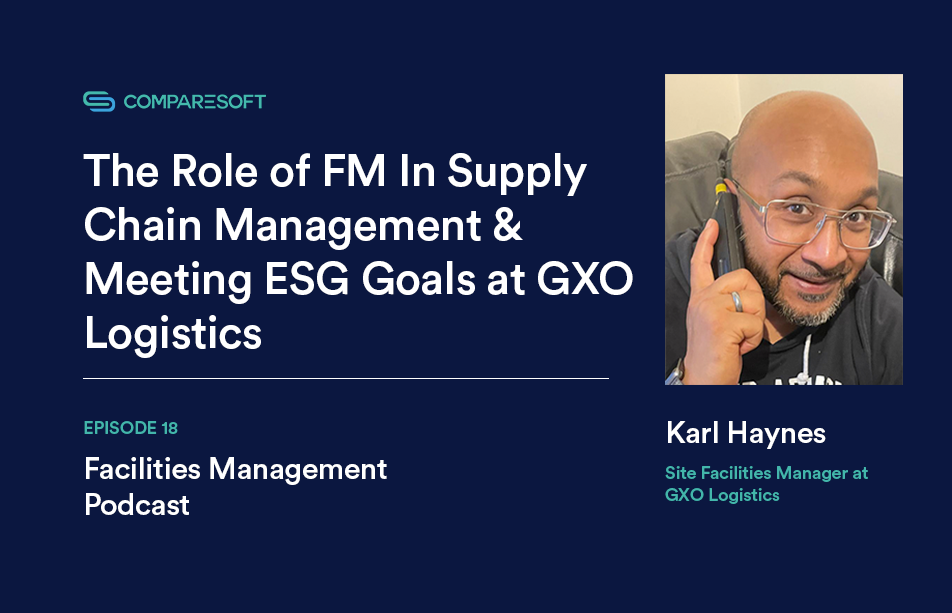
Karl Haynes, the Site Facilities Manager at GXO Logistics, explores the importance of customer service in supply chain management and setting ESG goals in innovative digital warehouses.

Comments

Download from Google Play

Download from App Store
 United States