


Conscious Chatter
Subscribed: 516Played: 10,659
Subscribe

© Conscious Chatter
Description
The first global sustainable fashion podcast, Conscious Chatter opens the door to conversations about our clothing + the layers of stories, meaning and potential impact connected to what we wear. Hosted by Kestrel Jenkins, Conscious Chatter tackles nuanced topics that intersect with sustainability, fashion, systems of oppression, health, and wellbeing through a curiosity-driven lens. Through deep dive monthly themes, the focus is on making the conversation more circular.
340 Episodes
Reverse
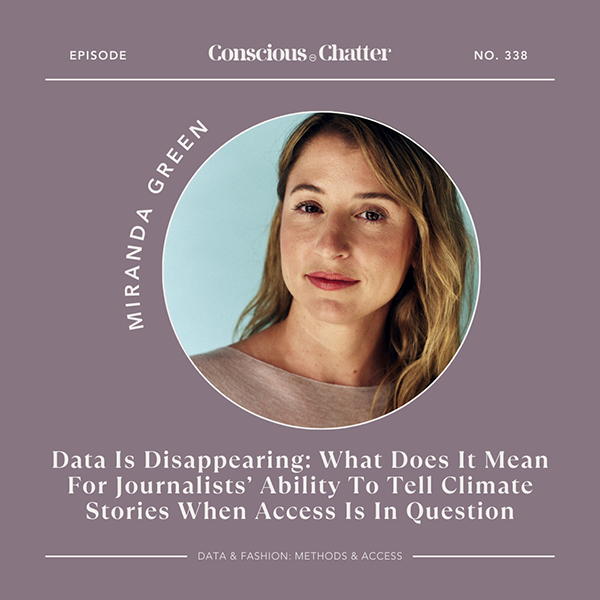
In Episode 338, Kestrel welcomes Miranda Green, an investigative journalist focused on politics and climate change, to the show. As the author of Atmos Magazine's weekly newsletter, The Understory, Miranda takes a weekly look behind the climate headlines to question how decisions are made, why they matter, and what they reveal about this moment. "I think data to me is, they're facts. It's hard facts. It's looking at points that have been, you know, they're determined by scientists. They've been measured. They are proven points that then, I can use as building blocks to tell my story." -Miranda THEME — DATA & FASHION: METHODS & ACCESS This week, we're taking a bit of a pulled back lens, exploring data amidst the current volatile political landscape, with a focus on climate data. Also, to note, this episode was recorded in December of 2025 – as things are changing so rapidly in these times, I want to clarify that detail. We are in this period of so-called misinformation and an era in which DATA MANIPULATION, as this week's guest articulates, is very real. But it's not only the way the data is being adjusted to fit the user's agenda - there's also the reality that scientifically-backed data is disappearing. The article that led me to this week's guest is called – "Big Gov Wants To Take Away Your Climate Data" (link below) and in it, she talks about how she always anticipated when the EPA would release its annual tally of corporate polluters and the fines they would have to pay when the pollution was too high. BUT, under Trump, these corporations are no longer required to report their emissions. And that means we don't know what the baseline is for these big polluters, moving forward – we no longer have the comparison data. This is just one blip in the labyrinth of climate and emissions data that this administration is finding ways to bury or delete. For this week's guest, an investigative journalist, the erasure of climate and emissions data by the Trump administration is making it harder to do her job, and to write stories about what's truly going on. On the show, we regularly talk a lot about the desire to understand where we're at when it comes to data in the fashion space, in order to determine the best way to move forward. With fashion being one of the most underregulated industries, having a complicated history with so-called data, and with big fashion players being some of the most notorious polluters out there, this reality of disappearing data is highly concerning. But people are fighting back – scientists and advocacy groups are finding ways to monitor the situation and challenge the Administration's actions. And this week's guest has ideas as well of how we can all get more engaged in ways to resist the continued erasure of significant climate data. "Big Gov Wants To Take Away Your Climate Data", article by Miranda on Atmos "I think out of sight out of mind is essentially what we are seeing happen right now and it does make it hard to determine what the truth is because what it ends up becoming is essentially, as you just described, is a marketing battle." -Miranda (23:11) Follow Miranda on Instagram Follow Atmos on Instagram

In Episode 337, Kestrel welcomes Gail Gallie, the founder of THE NAT, to the show. A new convening force for Nature, THE NAT is primarily focused on galvanizing the private capital needed to close the nature finance gap; they just held their inaugural NAT Gala "Night For Nature" in September 2025. From working in advertising to co-leading the creation of the UN Global Goals Campaign, Gail has an extensive background in global advocacy and campaigning. "I was pretty blown away that you could quantify the amount of money that was needed to fix where we are now to where we need to get to in order to be in harmony and sustainably working with the planet's resources…and then she said the number and it was $711 billion a year. And I was like, OMG that's enormous…And at the same time, this guy next to me lent in and he said, did she just say the nature finance gap is $711 billion? I said, yeah, I had like sad face, like boo, thumbs down, it's loads. And he said, no, he said, that's like not that bad." -Gail THEME — BRINGING NATURE BACK INTO THE FASHION FOLD In our last episode, I talked about how this 2-part episode theme – BRINGING NATURE BACK INTO THE FASHION FOLD – was inspired by Carry Somers' new book The Nature Of Fashion and the importance of reminding ourselves that we are Nature and fashion has the potential to be more of a reflection of Nature. This episode approaches this narrative from an ENTIRELY different lens – one that involves finance, luxury and creating a spectacle – which is why I really love the juxtaposition of these two conversations. If you hadn't heard yet, there is an actual number that has been calculated – an amount of money that if invested annually into nature-positive projects – could halt biodiversity loss and support a reset for the earth, enhancing life on this planet for years to come. It's called the nature finance gap – and according to estimates in 2020, the number was $711 billion dollars. If you're like me, hearing that number made me sink deeper into my seat, feeling the overwhelm wash even further over me. But turns out, for folks working in the investment space, this number's not actually that astronomical. It's somewhat accessible — according to this week's guest, if just 2% of global capital is redirected into nature, we could close that gap. So how does that happen? Considering that about 80% of current conservation funding comes from public sources like governments and multilateral institutions – that leaves a ton of space to galvanize private capital to bridge that gap. This week's guest has set out to make this happen by creating a luxurious spectacle in celebration of Nature. Anyone ever heard of The Met Gala? Right. Of course you have. If you work in sustainability, have you ever felt annoyed that everyone is paying attention to this one over-the-top night? And have you felt irritated that so much money is being funneled into the tickets and often very unsustainable attire for the evening? You're not alone. Yet so many of us still pay attention to it all. It's a spectacle and we are drawn to it. This week's guest, Gail, generally shared similar feelings. But a couple of Met Galas back, she shifted her perspective and decided to thinking about copying the concept, instead of fighting it — creating a sparkly night focused on generating more funding for Nature – to push toward closing that Nature Finance Gap. Maybe if we *feel* the power and intrigue of particular cultural moments, we should question how to replicate and reimagine them — instead of finding ourselves caught in the hamster wheel of complaining about the negative impact they may leave behind. Global Biodiversity Framework THE NAT's Website THE NAT on LinkedIn Gail Gallie on LinkedIn Get in touch with THE NAT Follow THE NAT on Instagram

In Episode 336, Kestrel welcomes author and visionary changemaker, Carry Somers, to the show. Co-founder of Fashion Revolution, the world's largest fashion activism movement, and the author of a new book – The Nature Of Fashion: A Botanical Story Of Our Material Lives, Carry has worked across the fashion space in various capacities, advocating for a shift towards transparency, fairness, and sustainability in supply chains. "Textiles reflect our connection with the natural world, but they're not just about utility. They're definitely about beauty as well. But they're also really an echo of our disconnection from it. And I realized during my research that that rift actually started far earlier than I'd ever realized." -Carry THEME —BRINGING NATURE BACK INTO THE FASHION FOLD There are various theories on what has led to the so-called disconnect between humans and nature – not only physically, but also ideologically. Amidst the fashion conversation, it's not necessarily prioritized. We may hear environmental advocates pushing for an expansion in the narrative to ensure humans are included as an integral part of nature. Or we may hear discussions about why we must reconnect with nature in order to better care for it. As this week's guest, Carry, teaches us – textiles are an integral part of this story – and they can tell us far more about our relationship with nature than we ever imagined – from both a historical and future-oriented lens. This two-part focus of the podcast is inspired by her new book – The Nature Of Fashion: A Botanical Story Of Our Materials Lives. The theme is: BRINGING NATURE BACK INTO THE FASHION FOLD. If you know me, you know I get very nerdy about words and their layered meanings. Which is why reading this segment from Carry's pulled me deep into the pages that followed – "The Latin verb texere, meaning to weave or construct with elaborate care, reminds us that both textiles and texts stem from acts of creation. Textiles and texts, born of the same etymological thread, are entwined with our histories, our cultures, our lives." The beautiful thing is that these overlaps between textiles and texts – materials and stories – goes far beyond just Latin. As our guest shares, they both evoke texture and encode memory, and through her research, she discovered that across various cultures around the world, there are parallels in both language and meanings, connecting textiles with texts. So, it becomes more and more clear that textiles have something significant to teach us about our collective history and future. At the same time, as my guest reminds us, the inequity of the archives became glaringly obvious the deeper she got into her research. So, in her book, *data collection* meant something more expansive than what we might be used to. For her, it was rooted in research, while also welcoming imagination and prioritizing oral traditions. As she poses in the book – "what if the story of humanity could be told through a single thread?" "Balance is not a place to reach, but a rhythm to feel." -Carry in her book Buy The Nature Of Fashion Carry's Website Follow Carry on Instagram
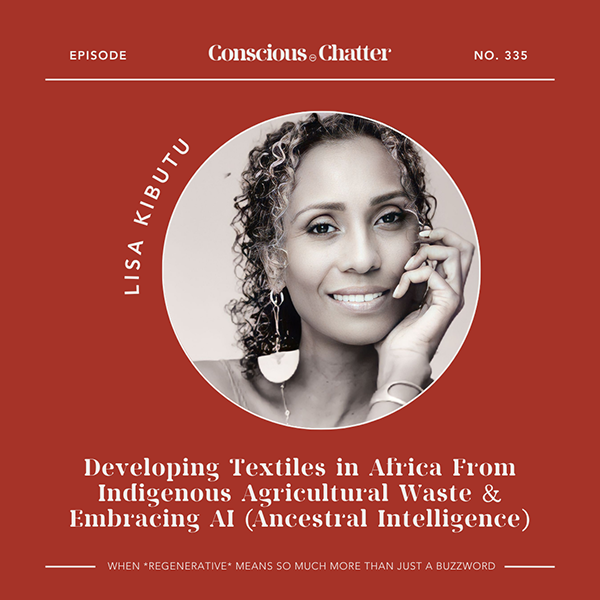
In Episode 335, Kestrel welcomes Lisa Kibutu, the founder of Regenerative Fashion Collaborative Exchange (REFACE) and Regenerative Textile Development Institute (RTDI), to the show. A tech-led social enterprise, REFACE was created to holistically address the negative impact of the global fashion industry on climate change, biodiversity, and the environment in Africa. With RTDI, she is building a pioneering research and development institution that leverages blockchain technology, zero waste operations, and regenerative agriculture to transform agricultural waste from Indigenous grain crops into high-quality textile yarn. "You're standing in this space, the gap between what society is expecting of you and what your soul insists on you to become. And it influences all my work and my obligation to the sacrifice of our ancestors, the sacrifice that they made to the colonizers, which is why we are where we are today. I sit on ancestral intelligence, which is the blueprint and the foundation of everything that I do. A little bit more than a blueprint to me – I am actually just going to claim my inheritance from the ancestors. And that claiming of the inheritance has become my purpose." -Lisa THEME —WHEN *REGENERATIVE* MEANS SO MUCH MORE THAN JUST A BUZZWORD The following is a very important statistic that is rarely centered in the so-called sustainability and fashion conversation — as reported by the UNEP, Africa contributes less than 3% of global greenhouse gas emissions. At the same time, the continent has been disproportionately impacted by the changing climate. With this in mind, in conjunction with her knowledge in fashion, design, anthropology and regenerative agriculture – Lisa founded a powerful two-prong approach to not only address the negative impact of the global fashion industry on climate change, biodiversity, and the environment in Africa, but also – to strategically research and develop innovative textiles made from the waste of Indigenous crops, and to maintain ownership of these technologies within the continent. Africa has a unique potential at this point in our history – especially when it comes to regenerative agriculture, with 80% of all the food production in Africa being run by smallholder farmers. The opportunities across Africa are expansive. And as Lisa reminds us, it's not about empowerment. It's about following the blueprint from AI – that is ancestral intelligence – and focusing on enriching communities across the continent. "You're right. Fashion is cultural. Cause you've moved from the basic need of covering according to weather patterns, and then you advance to the space where – you need to appeal to aesthetics. That's the next level. But aesthetics are particular to what you find in your environment and then it becomes artistic expression, personal expression of yourself. And I think those are the pieces now, when we talk about fast fashion – those are the pieces that are missing." -Lisa RTDI Website Follow REFACE on Instagram
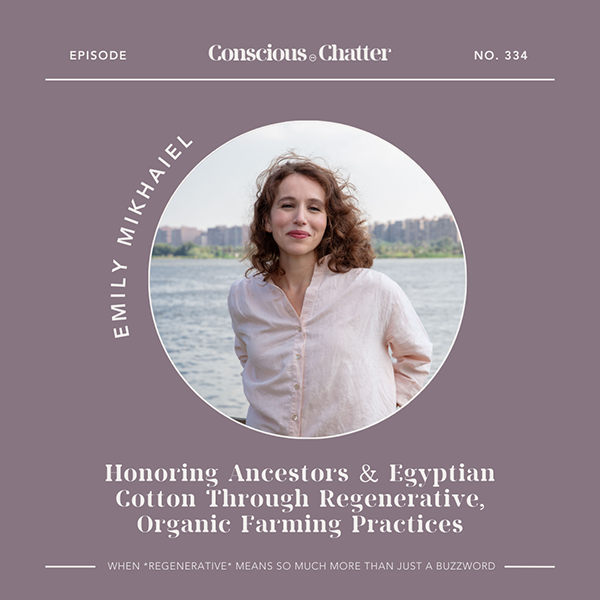
In Episode 334, Kestrel welcomes Emily Mikhaiel, the cofounder and creative director of Nazeerah, to the show. A clothing brand inspired by the legacy of her grandmother, Nazeerah supports organic and regenerative farming practices to honor Egyptian cotton, and produces locally in Egypt to maintain direct relationships with their suppliers and reduce their carbon footprint. "There really wasn't waste while my father was growing up. Everything was either composted or if it was metal, it was recycled or reused or repurposed. If a garment was no longer wearable, they'd cut it up into strips and weave carpets out of it. And once the carpet was no longer usable, they'd cut it up again and compost it. So using that knowledge and thinking, you know, as a society, we've existed without plastics for millennia. Why can't we return to that and draw inspiration from that in our design?" -Emily SEPTEMBER THEME —WHEN *REGENERATIVE* MEANS SO MUCH MORE THAN JUST A BUZZWORD This week's episode is focused largely on a regenerative approach to making clothes – one that includes thinking about the end of life of the garment at the design process, where organic cotton farming is centered, not only to help maintain soil health, but also to enhance biodiversity and restore carbon to the soil, and where local production is prioritized. Without sounding like a broken record, it's important to acknowledge how this word – regenerative – has undoubtedly become another buzzword that's taken fashion by storm. We've seen countless brands integrate it into their marketing messaging, and it's becoming more and more utilized across the space as the "new way" to talk about building a more sustainable brand. HOWEVER – it's very key to note that regenerative is by no means a new concept. As we've touched on in past episodes, it is rooted in Indigenous knowledge, in traditional ways of farming and ancestral ways of growing plants and being in conversion with the Earth. This week's guest has deep family ties to cotton and garment making in Egypt. As she shares with us, Egypt has a unique history connected to cotton farming that for generations, was intrinsically linked to the natural rhythms of the Nile River. Through her brand, she is not only honoring her ancestors' connection to the land, but also supporting farmers who are reclaiming what regenerative cotton farming can look like today. Nazeerah Website Follow Nazeerah on Instagram
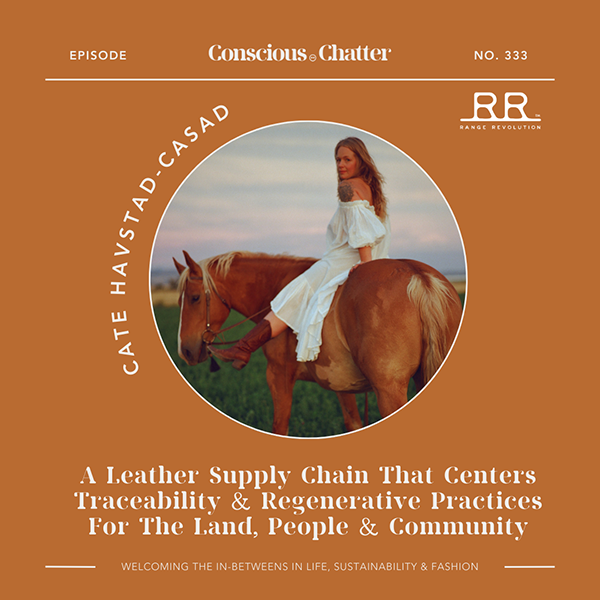
In Episode 333, Kestrel welcomes Cate Havstad-Casad, a designer, entrepreneur, and first-generation regenerative rancher, to the show. Cate's work as a designer and land steward has evolved a great deal since she founded Havstad Hat Company in 2014. Today she manages Casad Family Farms with her husband, while building Range Revolution, a luxury leather goods brand focused on using 100% American, regeneratively sourced hides. "I love the idea of having things forever. I love the idea of a great leather boot being resoled again and again. My work in hats, I'm like the anti-growth capitalist. I'm like, you should have two hats, maybe three and that should be it for your whole life and you send it back to me and I will re-block it and clean it up and reshape it for you. That is the world of craft that I come from and so I bring that ethos to this work with Range Revolution and leathers." -Cate AUGUST THEME — WELCOMING THE IN-BETWEENS IN LIFE, SUSTAINABILITY & FASHION This week's episode touches on a discourse that often fuels a lot of really intense reactions. I remember moderating a panel discussion about it in Berlin during fashion week that got very heated, and even recently, I hosted an Earth Day event in San Francisco, where the conversation suddenly got intense when this topic arose. If you guessed it – I'm talking about the oh-so-familiar LEATHER debate. There's a recurring dispute in the sustainability and fashion space that pins animal-based leather against vegan leather. It's often very this vs that oriented, and focuses on claiming which is quote unquote more "sustainable" than the other. A lot of the time, things get heated because leather is intrinsically linked to peoples' belief systems and values, which can leave very little space for the in-between. And I totally get where that passion stems from. At the same time, if you've been listening to Conscious Chatter over the years, you know there are no simple answers when it comes to the complexities of making products. And I don't think there is ever only one solution – we need to discover multifaceted approaches, considering the challenges we face with the climate crisis. From her lens as a craftsperson, designer and regenerative rancher, this week's guest is dedicated to rethinking waste in the animal agriculture space. One significant stat we learn from her is that – almost 5 million hides are wasted or thrown away annually in the United States alone. *source: Agriculture Utilization Research Institute With a mindset that "the most radical fibers are the ones that already exist" – she is pushing to disrupt the leather industry. For her, it's all about centering traceability, rethinking waste, and expanding the meaning of regenerative to not only include the land health, but also the health and wellbeing of the surrounding community. "We don't have regenerative outcomes on land if the people working within the systems. whether it be the land stewards or the people within the community that support those land stewards — if the community dynamics, if the economic dynamics are not also regenerative." (15:40) Range Revolution Website Follow Cate on Instagram Follow Range Revolution on Instagram This week's episode is brought to you by Range Revolution. Enjoy 15% off at RangeRevolution.com with code CHATTER.
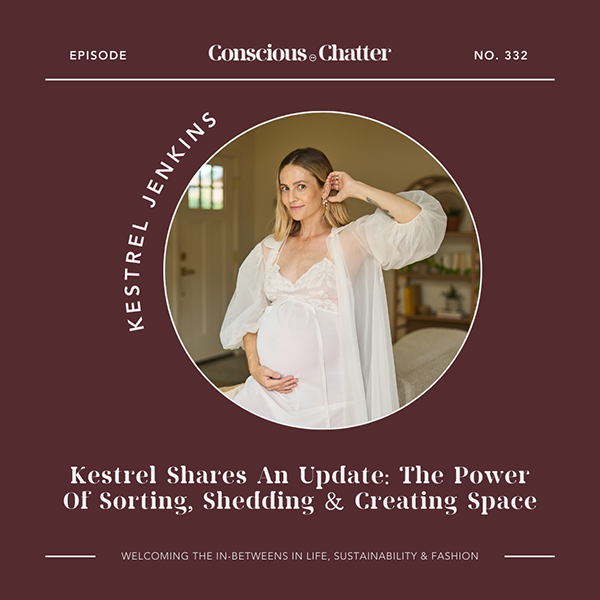
Episode 332 features Kestrel (just me!) in the second-ever solo episode of the show. With a focus on Kestrel's reemergence after having her second child, she shares some of the things that have been on her mind during this postpartum era, the power of sorting, what "release" has meant to her over this last year, what she's shedding and what's she's embracing. It's very personal, raw and vulnerable — one of the ways Kestrel always loves to connect with you all. "Maybe this whole episode is sounding disconnected from what you generally hear in the sustainability and fashion realm. But – if you've been around for a while, you know that I am not exactly the voice of the typical narrative. I like to push beyond binaries. I want to explore the nuances. I don't want to put people, things or ideas into boxes. These in-betweens are where SO MUCH can thrive, if we let it and give it space to breathe." -Kestrel August THEME — WELCOMING THE IN-BETWEENS IN LIFE, SUSTAINABILITY & FASHION When I started the show back in 2016, I never thought I would be into doing solo episodes. My mind was clear that I wanted to welcome guests onto the show and to really focus on learning, listening and sharing multifaceted ideas from solutionists working at the intersections of fashion and sustainability. And that general intention hasn't wavered. BUT surprisingly, in moments of change or transition, I have felt pulled to connect with you all on my own – just me and my thoughts. It gives me the chance to connect in a really honest, personal, and vulnerable way. It's maybe weird, but I almost feel like having a podcast – a space to dump my thoughts, musings, learnings, challenges – it's really cathartic, and at times, healing as well. Throughout this brief episode, you'll hear: + Welcoming a new baby + Honoring the mothers in Gaza + Postpartum shifts — the importance of sorting, releasing, and closing doors + Creating space — what prioritizing looks like with two kids + Rooting more deeply into my truth — a new endeavor & a book project Links & quotes from the show: Gaza on my mind — IG post by Evelyn Escobar (@evelynnworld) that Kestrel highlights Organizations and resources to support mothers and families in Gaza — The Sameer Project Healing Our Homeland Free Kitchen Gaza We Feed Gaza Heal Palestine Medical Aid For Palestine USA For UNFP Anera "THANK YOU FOR BEING HERE. The fact that we can have this space to share openly about so many things that make us human is an absolute blessing. When I initially started this show to simply talk about fashion and sustainability – I never imagined I would learn so much about who I am and who I want to be in the world. Turns out – sustainability starts with each one of us. Looking in the mirror and getting clear about ourselves, tuning into our communities that surround us, leading with curiosity and care, and above all – thoughtfully questioning everything along the way." Follow Kestrel (Conscious Chatter) on Instagram
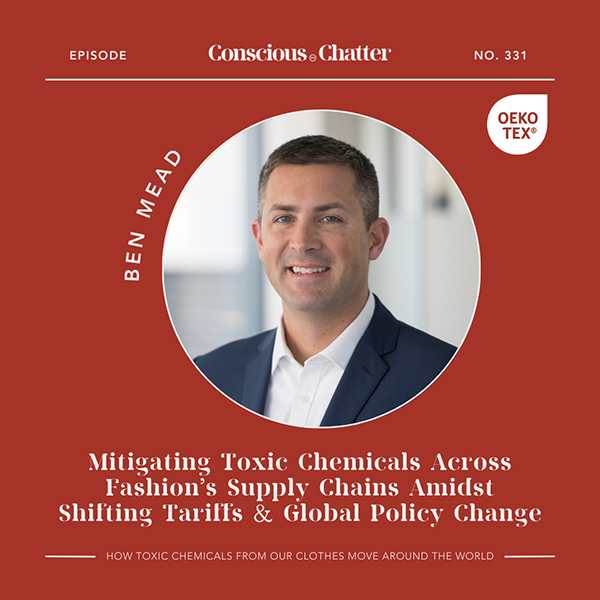
In Episode 331, Kestrel welcomes Ben Mead, the Managing Director of Hohenstein Institute America, to the show. In Ben's role, he serves as the company's liaison with government agencies, industry collaborations and trade associations, and he also oversees OEKO-TEX® responsibilities for the U.S. "You can't make any real good decision around chemistry or you know how a product is made, if you don't know who's making it and what's going into it." -Ben MAY THEME — HOW TOXIC CHEMICALS FROM OUR CLOTHES MOVE AROUND THE WORLD It is a tumultuous time when it comes to policy, and policy that is specifically impacting global supply chains. Not only immediately, when we think about tariffs and the unclear, yet very real, impacts they will have on fashion businesses, but also legislation across the world that has either passed or is on the table, and requires fashion companies to be more tuned in to the actual impacts of their supply chains. These bills have without a doubt brought fear and stress to many fashion brands, because if they haven't been mapping their supply chains previously, it's going to prove very difficult for them to comply with some of these new requirements. What should brands know about these changing regulations? How can they navigate the shifting landscape, and what should they be doing now? As this week's guest reminds us, there's no one-size-fits-all answer, but there are things brands can be doing to rethink their supply chains and expand their approach to sustainability. OEKO-TEX® Website OEKO-TEX® MADE IN GREEN OEKO-TEX® Label Check Follow OEKO-TEX® on Instagram This week's episode is brought to you by OEKO-TEX®. For over 30 years, OEKO-TEX® has set global standards for chemical safety, responsible production, and supply chain transparency, ensuring that textiles and leather products are tested for harmful substances. Learn more about their MADE IN GREEN label here >
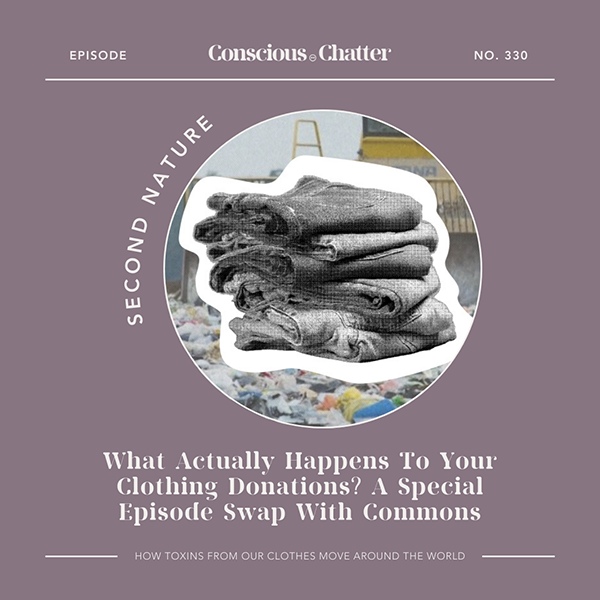
This episode is a little different than what you're used to, as it's a special swap with Commons and their Second Nature podcast. It's an amazing listen and I'm stoked to share it with y'all! "I think this is inspiring people to move away from being passive consumers to instead becoming stewards of their belongings and have that sense of responsibility and it goes beyond this individual action…For us, democratizing repair isn't just a luxury or a trend, it's something essential to creating this future where sustainability and equity guide the way forward." -Sumaq Alvarado del Aguida, Suay Sew Shop This month's theme is – HOW TOXIC CHEMICALS FROM OUR CLOTHES MOVE AROUND THE WORLD. This episode by Second Nature gets into the layers around donated clothing, how BIG of an issue it is, and how global it truly is. From talking about the recent devastating fire in Kantamanto Market in Accra, Ghana, to the onslaught of clothing donations that overwhelmed facilities in Los Angeles after the wildfires in January this year, this episode explores some interested parallels and disturbing realities around the low quality of so much of the clothing that ends up in the donation cycle, as well as the harmful impacts that toxins within those clothes can have on the communities where they land. You'll hear from Sumaq of Suay Sew Shop in LA on the excess of crappy clothing that was donated to them amidst the wildfires, and how they are working to get creative with those textiles. One thing I want to highlight is how Sumaq shares that we need to become "stewards of our belongings". Passing it over to Katelan, the host of Second Nature, who will share more with you in this special episode! Second Nature Episode Follow Second Nature on Instagram

In Episode 329, Kestrel welcomes Jennine Jacob, a personal stylist and Instagram phenom, to the show. You may know Jennine from viral videos that explore the many layers of nuance connected to the power of finding your own style. "Anytime I see people quote unquote dressing for their body type, those outfits that look good, they can all be explained through style principles. The rule of thirds, contrast, proportion, texture, color theory. So why do we have to attach a value to a person's body shape when that's not even necessary? I really want to call into question why we use certain language because there's a lot of dismissal of visual language not just in fashion but also in the arts and architecture, and in the spaces that we move that have tremendous impact in how we navigate the world." -Jennine MARCH THEME — PERSONAL STYLE IS SO MUCH MORE THAN *VANITY* This month, we're shifting the narrative a bit toward the conversation around style. I recently did a post on Instagram about why I post daily outfits and how it's not about vanity, and instead – it's about storytelling, sustainability and branding. It resonated so much with folks and made me feel optimistic amidst a time that can be pretty gloomy lately. I talked about the power of knowing the stories connected to your garments and how that storytelling can come through in the way you wear them. I talked about how when you have intimate connections with your garments, you tend to take care of them so they last longer. I talked about how identifying your personal style is a key part of building your brand, and honing in on the colors you consistently wear can play into determining or realizing your aligned visual identity. I even mentioned the whole "fashion is frivolous" annoying narrative, and how it's totally ridiculous considering how much your clothing choices do actually truly matter. Turns out, that's one of the many topics we crack open with this week's guest. "Is The Internet Messing With Your Style?", IG reel Kestrel mentions "The Power Dynamics Of Comfort", IG reel Kestrel mentions "Quiet Luxury Helps The Oligarchy", IG reel Jennine mentions "Focus in on not just how you want to look, but what you want to say with your style, and why you want to say it." (40:06) -Jennine Jennine's Website Follow Jennine on Instagram

In Episode 328, Kestrel welcomes Dana Zhaxylykova, an environmental scientist & microplastics researcher, to the show. Originally from Kazakhstan, Dana is currently based in Germany — through her Instagram platform, she shares practical and actionable tips about microplastics through a scientific lens. "As a scientist, I want to assure you that every little action in avoiding plastic, it can have an impact. And as scientists and as a scientific community, we expect people, not only the governments and corporations (they have a huge responsibility, of course), but we as people, we also can have an impact as individuals, we can help these problems to get solved faster."-Dana This month, we're focusing on diverse ways to combat fast fashion. I don't know about you, but whenever I think of fast fashion, my brain automatically goes to issues around MICROPLASTICS. Considering that over 60% of global fiber production is synthetic materials – derived from fossil fuels – it's hard not to make that connection, especially given some of the intimate experiences I've had watching scientists from 5 Gyres literally collect microplastics from the water and air around us, and hear them talk about how so many of the microplastics they collect have come from fabric and clothing. As this week's guest highlights, with nylon, polyester and acrylic fabrics flooding the fast fashion market, these fibers are actually releasing microplastics in every stage of the process – from production, to wearing the garments, to washing and drying them. Basically, there are microplastics being shed into our environment from every single stage of a fast fashion garment's lifecycle. That feels overwhelming, I know, but I love how this week's guest really puts things into perspective, not only from a scientific lens, but also from a practical hands-on point of view, offering us suggestions on the things we can actually control, when it comes to microplastics in our lives. "Seasonal variation and removal of microplastics in a central Asian urban wastewater treatment plant", Dana's research paper "Effect of microplastics deposition on human lung airways: A review with computational benefits and challenges", paper Dana mentions "Environmental exposure to microplastics: an overview on possible human health effects", paper Dana mentions "Effects of microplastic exposure on human digestive, reproductive, and respiratory health: a rapid systemic review", paper Dana mentions "Polystyrene microplastics exacerbate systemic inflammation in high-fat diet-induced obesity", paper Dana mentions
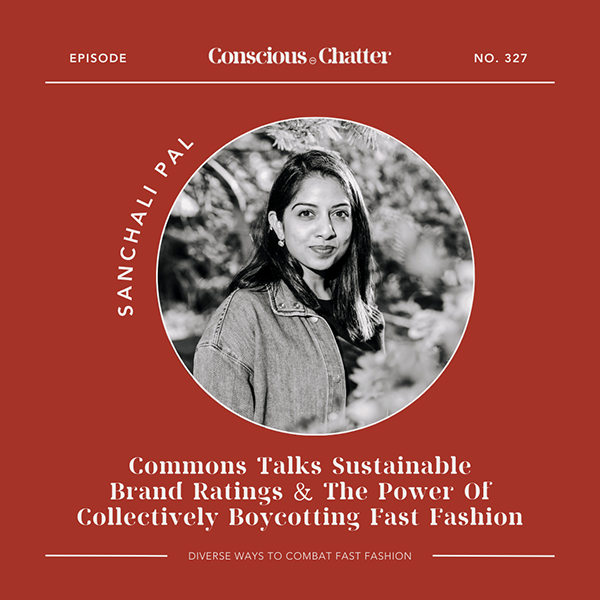
In Episode 327, Kestrel welcomes Sanchali Pal, founder and CEO of Commons, an app that rewards you for living and spending sustainably. On Commons' app, you can get rewarded for shopping sustainable brands and for taking climate actions like thrifting, taking public transportation or eating plant-based. "When people think about the actions they can take that are sustainable, the most obvious ones are things like flying less or recycling or eating more plant-based. People don't always think about their clothing habits, but I think that's really changing with the conversation around fast fashion. I mean, the fashion industry has a greater environmental impact than the airline industry. It's like two to three times as much, which is pretty crazy. And so it is really exciting to start to see that conversation happen and start to think through what part we can all play in shifting that industry together." -Sanchali FEBRUARY THEME — DIVERSE WAYS TO COMBAT FAST FASHION This week's episode is brought to you in collaboration with Commons. As a cohost of their Anti Fast Fashion Challenge, I'm stoked to share more about how you can get involved to boycott (in many different ways) harmful fast fashion brands this month. While it can be challenging to fathom, especially being so deep within the sustainability and fashion conversation, fast fashion is booming. From the H&Ms and Zaras, to the more recent addition of ultra fast fashion brands like Shein and Temu, our culture is addicted to fast fashion. From the cheap prices to the convenience factor to the instant gratification, the allure of fast fashion is real. But as many of you know, buying fast fashion comes with an intense environmental and human impact. Fast fashion aligns itself with disposability and waste, boasting crazy low prices. The materials are predominantly synthetic and often lose their shape after a couple washes. The synthetic materials shed loads of microplastics into the environment. Garment workers face exploitation and non-livable wages. All the while, social media and marketing continue to drive us to think we need another new piece of clothing to stay relevant. It's a lot. And that's why I am so excited for this conversation – and to be cohosting this month's Anti Fast Fashion Challenge. A way for us all to collectively come together to challenge that intense urge to buy another cheap item, and instead – not shop, mend something, get something tailored, shop secondhand, or invest in a brand that centers sustainability. "Our spending is the best data source we have on our emissions." (14:26) -Sanchali "It Starts At Home?" — research Sanchali mentions on household spending Join The Anti Fast Fashion Challenge Commons Sustainable Spending Tool / Brand Ratings How Commons Rates Brands Commons Website Listen To The Second Nature Podcast Follow Commons on Instagram
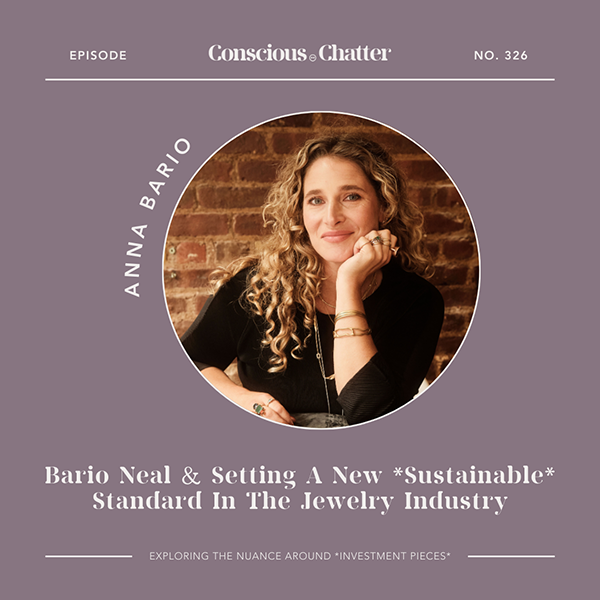
In Episode 326, Kestrel welcomes Anna Bario, the cofounder of Bario Neal, to the show. Bario Neal creates stunning jewelry while being committed to respecting human rights and environmental sustainability. Anna cofounded the brand alongside Page Neal, in 2008, with an interest in bringing sustainability into the discourse surrounding creativity, fine jewelry and craft. An exceptional designer and also a specialist in responsible gold and gemstone sourcing, Anna's work in sustainable initiatives and social impacts defines the framework for Bario Neal's ethical jewelry roadmap. "I think [for] jewelry especially, the investment question becomes entangled with presentation … we also see that culturally come through jewelry trends. Just like in fashion, pant legs get shifted and there's so many ways we could interpret that as a reflection of the culture. And in jewelry, after the 2008 recession, jewelry got really small. Part of that was because of what people could afford, but also it was sort of like socially, what do we want to present?"-Anna JANUARY THEME — EXPLORING THE NUANCE AROUND INVESTMENT PIECES This episode is part of a partnership with Bario Neal. One of the pieces included in this collab was a redesign of my wedding and engagement rings. If you're wondering why I would redesign my wedding rings? They felt a little too traditional for my aesthetic, especially as I've matured, and also – the prong setting of the lab grown diamond just wasn't practical – it was always getting caught doing all the things connected to mom life. In this episode, we not only get an intimate look behind the scenes of what building an ethical jewelry roadmap means to Bario Neal, we also dive deeper into this month's theme of investment pieces. One thing Anna brings up that is such an important and often left out layer of this discussion is how "investment" in the jewelry space can easily become entangled with the performance of economic resources and privilege. In jewelry, and other areas of fashion as well, this can mean the designs showcase a blatant reflection of the economic realities around us at any given time. For example, when the economy isn't doing well, often, jewelry trends will reflect that in favoring smaller stones and more quote unquote modest styles. And even if folks have the economic means to choose something with a higher price point or bigger stones, they may choose not to, based on what they feel comfortable presenting to the world in that moment of time. We unpack this and more in this special jewelry-focused episode. Turning To Stone, book by geologist Marcia Bjornerud that Anna mentions Mercury Free Mining Website Ethical Methalsmiths Website Bario Neal's Website Follow Bario Neal On Instagram This week's episode is brought to you in partnership with Bario Neal, a jewelry industry leader in ethical sourcing and progressive manufacturing. GET 15% OFF PERSONALIZED JEWELRY WITH CODE CONSCIOUSCHATTER15 AT BARIO-NEAL.COM
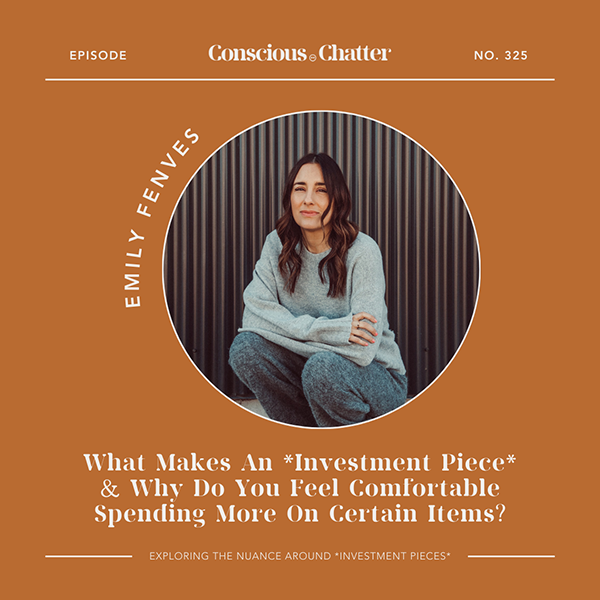
In Episode 325, Kestrel welcomes Emily Fenves, the founder of lander line - a platform she created in September 2021 - after feeling burnt out with her own consumption habits. As a regular shopper, Emily found herself spending an exhaustive amount of time browsing, buying, returning, and purging. She embarked on a journey to learn more about the "why" behind her overconsumption, and decided to help others do the same. "I think a lot of people assume that investment pieces mean luxury. For me, specifically, I always think about – can I pass this down to my daughter? Investment pieces can be secondhand, too. Whether I'm shopping new or secondhand, I'm always asking myself that question – is this something I can pass down to her?" -Emily JANUARY THEME — EXPLORING THE NUANCE AROUND *INVESTMENT PIECES* This month, we're going all in on – investment pieces. What does that really mean? Well, that's one of the aspects we unpack. But if you google around and start diving into the discussion online, you'll find a lot of people talking about things like: LONGEVITY, JUSTIFYING HIGHER TICKET ITEMS, HIGHER QUALITY, HIGHER COSTS, and EVERGREEN STYLES. We touch on cost per wear, the idea of fewer better things, and recommendations when you're searching for investment pieces. It's also personal – so remember to take that into account as you listen to this week's guest. What you deem an investment piece may not necessarily be what someone else identifies as an investment piece – and to me, that's some of the fun of it. Speaking of this week's guest – she self identifies as a former overconsumer-turned-fair-fashion-advocate who loves secondhand and influencing others to quit fast fashion. RealReal's 2024 Resale Report lander line's Substack Follow Emily on Instagram
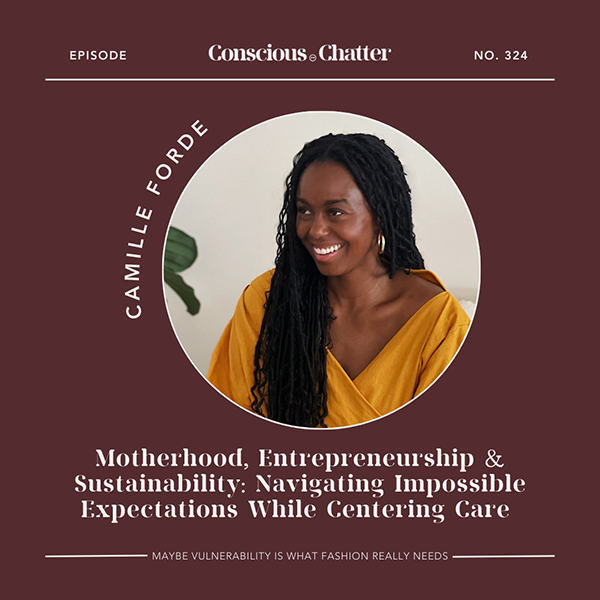
Episode 324, Kestrel welcomes Camille Forde, a mother and entrepreneur working at the intersection of business, sustainability, and community-centered solutions, to the show. With over a decade of experience, Camille has led corporate responsibility efforts at top professional services firms, earned an MBA from UC Berkeley with a focus on sustainable business, and spearheaded seller and brand partnerships at one of the largest fashion resale platforms. As a mother of two, Camille is deeply committed to building a more equitable and sustainable future that prioritizes community care. "Vulnerability, at least for me, it's a practice. It's not: you're vulnerable once, and then you're done. I've had to make being vulnerable a regular practice that I chase even though I don't want to all the time." -Camille OCTOBER THEME — MAYBE VULNERABILITY IS WHAT FASHION REALLY NEEDS Last week, I got vulnerable. I shared a lot about my personal story over the last year – the challenges I've faced, personally with my health, professionally, financially, with continuing to push an independent media platform forward – I'd say I shared a lot in a short amount of time. It blew me away to see the response – so many folks reached out, shared their personal challenges, and were vulnerable with me about things they've faced. I don't know – it felt like it opened a bit of a portal to somewhere new. To a more connected realm, where we could actually be honest with each other. A place where we could not only talk about transparency being important in supply chains and messaging, but also in our personal lives and realities. It felt big. And I want to thank you for allowing that real emotion in, and sharing your own vulnerabilities – because as this week's guest reminds us, so often what we receive with vulnerability is GROWTH (not in production volume, but in ourselves). This episode is really about a lot of challenges I've faced, mental struggles I have grappled with, and questions I've asked myself while working at the intersections of caring for people and the planet, and caring for my own child. When I was thinking about this episode idea as a way to build on this vulnerability discussion, one mom stood out immediately. I thought – I want to talk to Camille about this - it's who I want to hear from, who I want to learn from, and I just felt like she would have a lot of valuable insight into these crossovers. Turns out, Camille went beyond. This episode is about sustainability, but not your typical approach to that conversation. It's about caring for yourself, for your family, for your community, while building things that center care. "The perfectionism and shaming that happens both in motherhood or just parenthood and the sustainability space — it's just beyond." -Camille "The reality is we're not going to be perfect at any of it, but you know, if you're not careful, there's so much shame that can enter the conversation and really slow you down." -Camille Camille's Website Follow Camille on Instagram
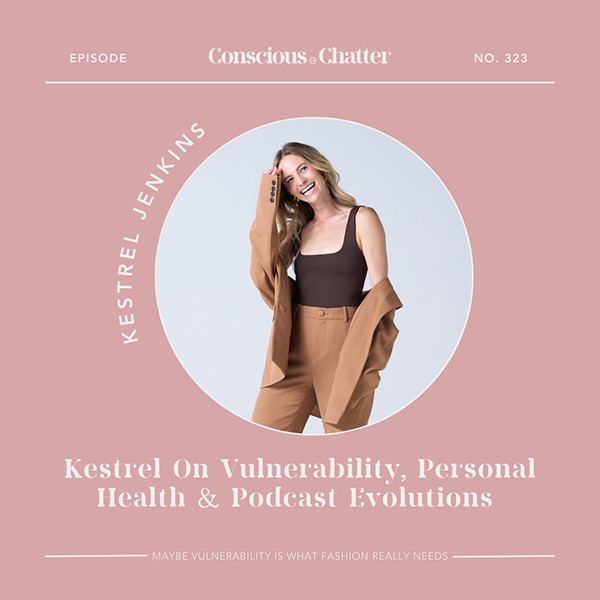
Episode 323 features Kestrel (just me!) in the first-ever solo episode of the show. With a primary focus on vulnerability, Kestrel shares some of the rollercoasters she has faced personally over the last year (from health to finances), why she and Nat are parting ways when it comes to regularly hosting the show, the true costs of producing a podcast, as well as a question on whether performative vulnerability is what we are seeing too often from the industry. "To all of you interested in sustainable fashion or those of you who work in the industry - I want to ask you a question: are you ok!?"-Kestrel OCTOBER THEME — MAYBE VULNERABILITY IS WHAT FASHION REALLY NEEDS As you can see, Nat is not here. It's super bittersweet, as doing the show hand-in-hand with someone I love, a best friend, and someone I admire deeply was truly magical. At the same time, realities happen, things shift, and sometimes what you anticipate doesn't actually work out in the end. Being honest about the journey is, and always has been important to me. Nat is amazing as many of you already know. Moving forward, she won't be cohosting with me on a regular basis, but she will jump back in as a guest or cohost on the show on and off down the line. I know this might be confusing for you since there have been a lot of shifts on and off throughout the year. First of all, thanks for sticking around, for caring deeply about the show, and believing in the potential power of change in the fashion space. This episode is all about vulnerability — I hope you can feel my hope to tear down some of the curtains that often separate us for connecting on a deeper level. Here's what you'll hear from me: A bit about my person health stuff I've gone through over the last year Why it wasn't possible for Nat and I to continue co-hosting together - hint, hint: independent media is hard A little insider info on what it costs to run a podcast Some musings on whether it's possible for the sustainable fashion / fashion realm as a whole to get vulnerable and what that could look like
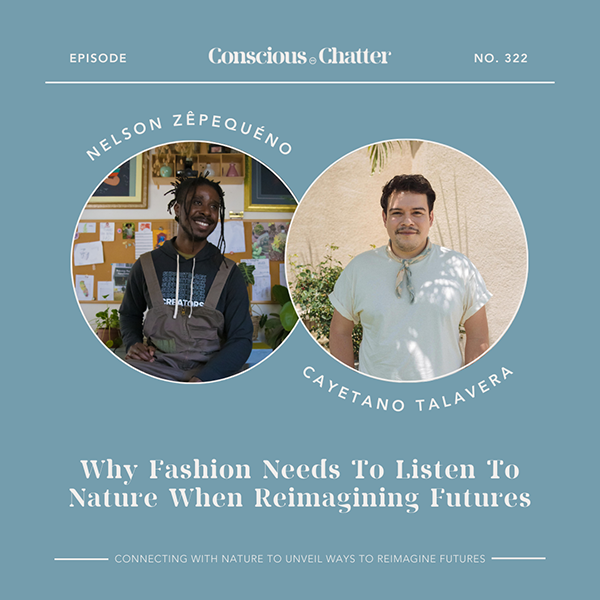
Episode 322 features Nelson ZêPequéno, a Ghanaian-American Artist and the founder of Black Men With Gardens and Sustain Creative, alongside Cayetano Talavera, a fiber artist, zero waste fashion designer, and the creative force behind HECHO BY CAYE. Through 'Black Men With Gardens', a digital and print publication, Nelson spotlights the connection Black and Brown communities cultivate with nature through agriculture and the arts. He further exploring cultural identity and environmental stewardship through his Los Angeles-based studio 'Sustain Creative', his current body of works offer a fresh perspective on sustainable contemporary design. Based in Los Angeles, Cayetano transforms foraged plants, homegrown flowers, insects, and even food waste into natural dyes, for his designs in the cocina de su mamá. His journey into the world of sustainable design was shaped by his humble upbringing, where he discovered the importance of resourcefulness and waste reduction. "Creativity is a way of looking at life differently, and by stepping outside of the way that we're seeing life or our own perceptions and experimenting, we're able to open up those new neural pathways and to reach these new places in life. For me specifically, I like to think that creativity is actually the solution not only to the mental health crisis that we're all dealing with, but to actually the sustainability challenges that we're facing. We need to embolden creativity in our culture and our communities so that people can look at the challenges that we have and come up with different ways of approaching it. We can't essentially just fix the problems that we face now with the same thought processes that led us here, and the only way to get outside of that actually is to be creative." -Nelson "The rhythmic movement that comes from making a craft — I find it to be very therapeutic. Whether it's stirring a dye pot, painting strokes, I think also just the physical aspect that goes into being creative plays a role in ... it's almost like you get so into what you're creating that you kind of escape from your worries and anxieties for a bit. Once I start working, I totally forget whatever is going on around me, even if it's for a split second. I am always encouraging people to just be creative; and don't let the insecurities take over. I host natural dye workshops and a lot of adults tend to be like 'but this isn't for me'; 'my tie dye bandana is going to come out super ugly'. And I'm like "'no, everyone's piece ends up looking really good and unique in their own way'. And so I think there's fear that comes from being creative and I think people need to get over that hurdle first." - Cayetano MAY THEME — CONNECTING WITH NATURE TO UNVEIL WAYS TO REIMAGINE FUTURES Narratives today often separate humans from nature – think of statements like "we need to protect nature" as if we aren't a part of nature. But we are. Even though we often live and spend a lot of time inside buildings somewhat "separated" from nature, we are still intrinsically linked and woven into the natural world around us. As we have learned through so many of our guests this season, being connected to the world around us is not something new – it's something that has been cultivated by Black and Brown Indigenous communities across the world through culture and tradition and a reverence for the ecosystems that we as humans are a part of. This week's guests both interact with nature through their unique creative avenues – in very different yet overlapping ways. One works more directly with *fashion* through sewing and natural dyes, and the other not so directly with fashion but rather with plants and repurposing. The myriad of ideas they share remind us of the many things we can learn from nature (when we slow down enough to listen). What can fashion learn from nature to reimagine a better today and a more thoughtful tomorrow? Fashion folks, nature is calling, and it's time we tune in … Links from the conversation: Hecho By Caye Website Sustaining Creative Website Fast Fashion AD on SNL that Kestrel mentions Follow Nelson on Instagram Follow Black Men With Gardens on Instagram Follow Cayetano on Instagram
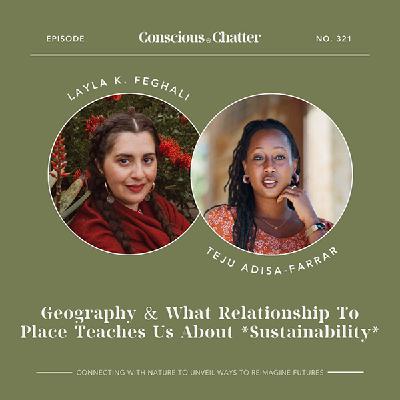
Episode 321 features Teju Adisa-Farrar, the founder and co-creator of the Black Fiber & Textile Network and the creator/host of the Black Material Geographies podcast, alongside Layla K. Feghali, the founder of River Rose Remembrance, a Plantcestral & Ancestral Re-Membrance practitioner, cultural worker, author & story re-collector (archivist). Teju is currently the Director of Outreach & Programs for the Fibers Fund, and co-creates with members of BFTN. Layla's book, The Land In Our Bones, showcases an exploration of the herbs & land-based medicines of Lebanon & Cana'an, highlighting the power of culture's relationship with land. "I think of culture as a way of relating to your environment, including those around you, making sense & beliefs based on your environment, & creating a sense of a shared identity based on the place that you are in. With the creation of colonialism & the transatlantic slave trade, and this very globalized neoliberal world, now culture is less connected to a place & more connected to what and how we consume." -Teju "I feel like that relational way of existing or of relating is kind of what ultimately yields or inspires I guess what folks would call a sustainable way of navigating things. Because it requires a conversation beyond the self and with the entirety of the living world that I dwell in and that I'm a part of and that I impact and that impact me, and the ways that they're alive." -Layla MAY THEME — Connecting With Nature To Unveil Ways To Reimagine Futures As the sustainability conversation continues to evolve, we often will hear mention of regionality, or the importance of thinking more locally in supply chains or manufacturing. While this is a great aspect to explore further, it only touches the surface of the depth connected to geography, location and place. This week's guests each approach education and storytelling through place-oriented lenses. While they are each uniquely different, these geography-oriented avenues teach us so much about what is often missing from the conversation. As we've explored through various angles this season, culture is integral to sustainability. Our guests this week shed light on the many ways that culture can teach us about land, history and legacy. How understanding the land, its history and the cultures woven into it, can lead us toward restorative justice and regenerative practices. As one of our guests so beautifully writes in her book: "The real focus of sustainability should be to recenter these Indigenous technologies rooted in multigenerational relationships to place, and teach younger generations how to harvest in ways that ensure the life of these plants will not only continue but spread per this ancestral knowledge." Links from the conversation: Teju's Website Black Fiber & Textile Network River Rose Remembrance Website Follow Teju on Instagram Follow Layla on Instagram

Episode 320 features Wafa Ghnaim, a Senior Research Fellow at The Metropolitan Museum of Art, Curator for the Museum of the Palestinian People and Founder of The Tatreez Institute, alongside Dr. Tanveer Ahmed, a Senior Lecturer in Fashion and Race at Central Saint Martins and also Course Development Lead for MA Fashion and Anthropology at London College of Fashion. "Inherently, just by being Palestinian and by teaching about Palestinian life and history, and including oral history in my work as a foundational aspect of my research, I am threatening these kinds of structures, in and of itself. And so, simply my existence is resisting that colonialism and the normalization of destruction and death of Palestinian bodies." -Wafa "Translating lots of decolonial thought around the canon and Eurocentrism and what shapes our ideas of art and design is really crucial to understand how we then deconstruct the canon. It's not just a question about changing reading lists or to me, about representation and bringing in more Black and Brown academics into our institutions, although that is part of the equation. I think what we need to do and what I think is the most important role for me is to undue the harms that coloniality has done to our disciplines and within our institutions." -Tanveer APRIL THEME — COMING TOGETHER TO BUILD A BETTER FASHION FUTURE Decolonizing fashion, intersectionality, identifying the knowledge holders, cultural inheritance and systems change were some of the key themes we explored in this week's episode. We take a look at some of the areas that fashion educators are dismantling when it comes to heteronormative and Eurocentric views on fashion education and design. And how this knowledge can translate from the classroom or across cultural communities into practical ways. Building off of our last episode, we question – what are the biggest challenges we still face and how can we work toward more transformation? We learn from one of our guests that this focus and lens on decolonising fashion where marginalization and othering is built into the foundation, is very different to the offerings of cultural preservation, which holistically exists to share lived experience, pass over craft practice, history, culture and honor the hands and bodies of the people at the center of this. As our guest shares, what else is there if we cannot honor the people preserving culture. Fashion as it exists, still has a ways to go in embracing this at its roots, but our guests give us hope as they move through the world, sharing their wisdom and truth, and teaching us the meaning of how to be good custodians and stewards, so we can uphold this legacy with care and intention and continue to center Indigenous craft, culture and practice. Links from the conversation: Tatreez & Tea Website Tanveer's Work Profile Follow Wafa (@tatreezandtea) on Instagram
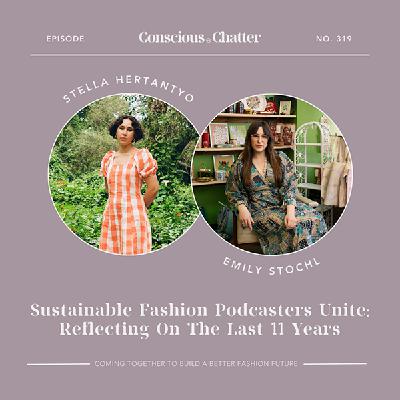
Episode 319 features guests Stella Hertantyo, the co-host of the Conscious Style Podcast, alongside Emily Stochl, the host and creator of Pre-Loved Podcast. Stella also works as writer and communications coordinator, while Emily also works as the Vice President of Advocacy & Community Engagement at Remake. "There are so many painful roots when you look back at the way that certain dyes came about and you know, cotton farming — there are so many different legacies of colonialism that existed and still exist. But I also want to take the word painful out of that sentence and say that we have also learned to acknowledge the roots of sustainability because not all of them have pain at the center. And I think what I've learned with so much interest and joy is the different textile heritages that exist across the continent — from natural dyes to hand looming to the ways that people grow certain crops, and yeah, just different ways of expressing and using textiles as ways to archive and also to preserve culture. And there are so many people that do this incredible work and I think that that is a really, really important acknowledgment that I had to come to realize in my own journey." -Stella "Labor rights are the foundation of what we know to be fashion activism in general, if we think back to the Triangle Shirtwaist Factory, which I know that something here in the United States, folks maybe learn about in school. This was another fashion industry-related disaster that led to a swath of movement-building around how we advocate for safer workplaces for people working inside the fashion industry. You know, roots to International Women's Day, roots to some of the labor protections that we know and understand today, like the 40-hour work week. These are all things that if you look at the fashion industry from a history perspective, labor and the fashion industry, it is totally intertwined." -Emily APRIL THEME — COMING TOGETHER TO BUILD A BETTER FASHION FUTURE Whether it's legislation, science research & innovation, transformation in language, the storytelling tools & platforms in which we use to communicate, the evolution of definitions, the popularization of the second hand economy or labor rights advocacy – so much has changed within the sustainable fashion movement over the last decade. This week, we really put our new round table format to work. We dissect the sustainable fashion industry through a timeline of events, paying homage to Fashion Revolution Day – a movement that, in conjunction with many others, has brought more mobilization and change to the space. Join the four of us – all podcasters & storytellers – for this expansive breakdown. Links from the conversation: "What Is Extended Producer Responsibility in Textiles — and What's Missing From Current Policies?", article on Conscious Life & Style by Stella Become a Good Ancestor Podcast by Layla Saad (mentioned by Stella) Conscious Style Podcast Website Pre-Loved Podcast Website Follow Stella on Instagram Follow Conscious Style Podcast on Instagram Follow Emily on Instagram Follow Remake on Instagram

Comments

Download from Google Play

Download from App Store
 United States