


 Claim Ownership
Coordinated with Fredrik
Subscribed: 0Played: 0
Subscribe

© Fredrik Ahlgren
Description
Coordinated with Fredrik is an ongoing exploration of ideas at the intersection of technology, systems, and human curiosity. Each episode emerges from deep research. A process that blends AI tools like ChatGPT, Gemini, Claude, and Grok with long-form synthesis in NotebookLM. It’s a manual, deliberate workflow, part investigation, part reflection, where I let curiosity lead and see what patterns emerge.
This project began as a personal research lab, a way to think in public and coordinate ideas across disciplines. If you find these topics as fascinating as I do, from decentralized systems to the psychology of coordination — you’re welcome to listen in.
Enjoy the signal.
frahlg.substack.com
This project began as a personal research lab, a way to think in public and coordinate ideas across disciplines. If you find these topics as fascinating as I do, from decentralized systems to the psychology of coordination — you’re welcome to listen in.
Enjoy the signal.
frahlg.substack.com
45 Episodes
Reverse
The most uncomfortable truth in crypto is not that the technology fails. It’s that it works exactly as designed—right up to the moment a human touches it.This episode begins with a paradox that should unsettle every technically literate founder: the largest losses in crypto history are not caused by broken cryptography, failed audits, or consensus bugs. They are caused by moments of trust, urgency, habit, desire, fear, and authority. The protocol holds. The person breaks.What we explored is not “how hacks happen,” but why sophisticated, rational, engineering-minded people lose generational wealth in systems that are mathematically secure. The answer is brutally simple: security thinking rarely extends beyond the protocol layer.Crypto didn’t eliminate trust. It relocated it—onto the human holding the keys.The Gap Between Secure Systems and Vulnerable OperatorsEvery case we examined followed the same structure. The cryptography was sound. The exploit occurred elsewhere.A prominent investor loses $24 million because a telecom employee accepts a $500 bribe. A DeFi CEO signs an irreversible transaction because habit overrides scrutiny. A startup founder loses $50,000 because optimism and social pressure disable skepticism. A software engineer loses six Bitcoin because romance becomes leverage.Different attacks. Same weakness.The attack surface is not the chain. It is identity, attention, emotion, routine, and fear.This is where engineering intuition often fails. Engineers expect adversaries to attack systems where entropy lives—in code, math, randomness. Instead, attackers go where predictability lives: human behavior.Old Cons, New InterfacesNothing about these scams is novel.They are Ponzi schemes, advance-fee frauds, honey traps, authority impersonation, and extortion—centuries-old psychological weapons. Crypto simply gives them three properties that make them devastating: speed, irreversibility, and pseudonymity.A forged letter becomes a deepfake Zoom call. A bribe becomes a SIM swap. A blackmail envelope becomes a hotel room and a QR code. The medium changes. The playbook does not.What has changed is the payoff structure. A single successful attack can move millions in minutes, across borders, beyond recovery. That incentive justifies patience, sophistication, and hybrid digital-physical operations.The episode makes this explicit: modern crypto crime is layered. Social engineering enables technical exploitation. Technical compromise enables physical coercion. Digital footprints enable real-world targeting.Once you see this, “cybersecurity” feels like a dangerously incomplete word.The Engineering Failure Mode No One Likes to AdmitThe most important insight of the episode is also the most uncomfortable for founders: personal security posture is a first-order business risk.It does not matter how secure your protocol is if your keys can be coerced, copied, or socially engineered. It does not matter how many audits you pass if a single person can sign away irreversible value under pressure.This is why the conversation keeps returning to habits. Clicking confirm without reading. Trusting urgency. Believing authority. Treating personal devices as safe by default. Fragmenting security across accounts and wallets instead of thinking systemically.Engineers are trained to remove single points of failure from machines. Many still tolerate them in themselves.From Cryptographic Resilience to Human-Aware SecurityThe episode doesn’t end in paranoia. It ends in design.Security that works in this environment must assume humans are fallible under stress. That assumption changes everything. It leads to layered authentication that resists phishing, device separation that limits blast radius, multi-signature schemes that survive coercion, decoy strategies that reduce physical escalation, and operational habits that prioritize verification over speed.More importantly, it reframes the goal. The goal is not perfect security. The goal is to become an economically unattractive target.Criminals optimize for return on effort. Harden enough layers—technical, procedural, physical, reputational—and the model breaks. They move on.That is engineering logic applied correctly.The Unresolved QuestionThe episode closes on a question that deliberately remains unanswered: is individual hardening enough?As long as single humans can be coerced into signing irreversible transactions tied to their physical safety, there is a systemic problem that personal discipline cannot fully solve. Multi-sig wallets help. Social norms help. But the incentive landscape remains.The real battle may not be fought at the wallet level at all, but at the intersection of identity, custody, and social systems. Until then, the uncomfortable truth stands:In crypto, the weakest link is not the protocol.It is the person who believes they are rational under pressure. This is a public episode. If you would like to discuss this with other subscribers or get access to bonus episodes, visit frahlg.substack.com
Modern leadership discourse is saturated with abstractions: vision, values, strategy, alignment. These words are cheap. They float easily above reality. What is scarce—vanishingly scarce in large organizations—is consequence.This episode of Coordinated revolves around a single, brutal question: who actually pays when decisions go wrong? Not rhetorically. Not reputationally. Literally.Nassim Nicholas Taleb popularized the phrase skin in the game, but the idea is far older than Taleb, older than capitalism, older than corporations. It is the civilizational insight that systems decay when decision-makers can externalize downside. When gains are private and losses are socialized, fragility is not an accident. It is the default outcome.In complex, high-stakes domains—energy, finance, infrastructure, defense—this asymmetry becomes lethal. Failures are not theoretical. They cascade. They compound. They don’t politely wait for quarterly reports.The central claim of this episode is simple and uncomfortable: leadership without personal exposure is not merely unethical; it is an engineering flaw .Moral Hazard Is Not a Personality ProblemWe like to explain systemic failure through individual bad actors. Greedy executives. Incompetent managers. Corrupt consultants. This is comforting and mostly wrong.The real culprit is structure.When executives collect upside through bonuses, stock options, or prestige, while the downside is absorbed by employees, customers, taxpayers, or “the market,” behavior predictably shifts. Risk migrates into the tails. Maintenance is deferred. Redundancy is cut. Catastrophic failure is postponed just long enough for the decision-maker to exit.Economists call this moral hazard. Taleb calls it fragility. Engineers recognize it immediately: remove feedback and the system lies to you.The absence of skin in the game is not a character flaw; it is a broken feedback loop. People do not learn. Organizations do not adapt. Errors accumulate invisibly until they rupture.This is why so many post-mortems sound identical. The same mistakes, recycled under new branding. The same “unexpected” failures that were, in fact, inevitable.Skin in the Game as a Truth FilterOne of the most important reframings in the conversation is this: skin in the game is not primarily about punishment. It is about epistemology.When your livelihood, reputation, or capital is on the line, reality corrects you quickly. Delusion becomes expensive. Wishful thinking burns.Taleb’s famous line captures it perfectly: “Don’t tell me what you think. Tell me what’s in your portfolio.”In organizations, this translates cleanly. Trust the arguments of people who will personally live with the consequences. Discount those who won’t. The best signal of belief is exposure.This is why consultants are structurally dangerous in mission-critical systems. They are paid upfront, insulated from long-term outcomes, and rarely present when consequences arrive. Their feedback loop is severed. They do not learn. The system pays the tuition.Skin in the game restores learning by re-coupling belief and consequence.Engineering, Not EthicsThe episode deliberately avoids framing this as a moral sermon. Ethics without enforcement are decoration.Historically, civilizations understood this viscerally. Hammurabi’s Code was ruthless but effective: if a builder’s house collapsed and killed the owner, the builder paid with his life. If it killed the owner’s son, the builder’s son died. Horrifying, yes. But as a safety incentive, unmatched.Modern societies rightly reject collective punishment and inherited guilt. Kant’s moral philosophy replaces outcome-based justice with duty and intent. But Kant’s framework assumes moral saints. Systems cannot.Skin in the game is the pragmatic synthesis. It does not require virtue. It requires alignment. Even flawed humans behave responsibly when their own downside is real.This is why skin in the game is best understood as systems design, not ethics. It is how you force honesty without trusting character.Leadership Credibility Is Bought, Not ClaimedIn infrastructure companies, trust is not built through vision decks. It is built through shared exposure.A founder who has their capital locked into the company, who uses the product personally, who absorbs pain before asking others to sacrifice—this sends a costly signal. Costly signals are the only credible ones.This is why symbolic gestures matter when they are real. When leaders cut their own compensation before cutting staff. When they remove executive luxuries during downturns. When they are subject to the same risks they impose on others.The late Nintendo CEO Satoru Iwata halving his salary to avoid layoffs wasn’t charity. It was leadership legitimacy. The organization responded with loyalty, innovation, and endurance.Leadership without visible vulnerability collapses under stress. People can smell asymmetry.Decentralization Is Not a Preference. It Is a Requirement.Skin in the game scales poorly under centralization. Distance dilutes consequence.Complex systems—energy grids, logistics networks, software platforms—require decisions to be made close to where reality manifests. Local engineers, operators, and teams hold knowledge headquarters never will.Hayek called this the knowledge problem. Taleb gives us the enforcement mechanism: empower the exposed.Decentralized authority paired with local accountability produces faster adaptation and fewer catastrophic failures. Centralized command paired with insulated leadership produces paralysis and brittle systems.History, from military disasters to grid collapses, confirms this relentlessly.The Founder Advantage Is TimePerhaps the most underappreciated dimension of skin in the game is time horizon.Founders with deep exposure think in decades. Hired executives with short vesting cycles think in quarters. The difference is not subtle.Research consistently shows that CEOs approaching equity vesting dates cut maintenance, inflate earnings, and pursue flashy acquisitions that destroy long-term value. They get paid. The system weakens.Institutionalizing skin in the game—long vesting periods, mandatory shareholding, post-tenure exposure—is how organizations manufacture a synthetic founder mindset.Without it, short-termism is not a risk. It is a certainty.The Price of CredibilityThis episode ultimately circles one unavoidable conclusion: leadership without consequence is fragile, and often fraudulent.The price of credibility is not rhetorical skill or moral posturing. It is personal exposure. Time. Capital. Reputation. Visible vulnerability.Skin in the game is the mechanism that forces alignment between words and reality. It turns leadership from a role into a risk-bearing function.If you are not exposed to the downside, you are not truly in charge. You are managing optics.And systems built on optics do not survive contact with reality.This essay is based on the episode “Skin in the Game” from the podcast Coordinated with Fredrik, exploring leadership, infrastructure, and accountability through the lens of systems design and philosophy This is a public episode. If you would like to discuss this with other subscribers or get access to bonus episodes, visit frahlg.substack.com
There’s a quiet failure mode creeping into modern leadership: you look faster and smarter because AI outputs are clean and confident, but your actual judgment gets weaker—because you stop doing the hard work that builds judgment in the first place. In this episode of “Coordinated with Fredrik”, we unpack a framework we call The Vigilant Mind Playbook—not as “AI wellness,” but as competitive strategy: how to keep an asymmetric edge when everyone has the same models.TL;DRAI doesn’t just change productivity. It can change how your brain allocates effort—and how your organization converges into the same strategic blind spots as your competitors. The playbook is about building “cognitive sovereignty by design”: protecting human judgment, forcing friction at critical decision points, and preventing the “algorithmic hive mind” from turning your strategy into a commodity.The core tension: optimization versus judgmentRight at the start, the episode frames the dilemma in a way every exec will recognize: in complex sectors (like energy), you live on ruthless optimization—yet the technology that boosts optimization can quietly erode the one asset you cannot replace: independent judgment.A line that lands like a punch: we’re watching a shift where “optimization replaces wisdom and performance becomes a substitute for truth.”That’s not just philosophical posturing—it’s a warning about how leaders start making decisions when “polished output” becomes a proxy for understanding.Cognitive debt: when convenience becomes a tax on your executive functionThe episode introduces a concept it calls cognitive debt, described as something that shows up not only in behavior but in neurological measures—specifically citing an MIT experiment using EEG brain scans while participants tackled complex writing/strategy tasks.The claim (as described in the episode) is blunt: the AI-assisted group showed weaker neural activity—less engagement in regions tied to attention, working memory, and executive function—while the non-AI group did the full “effort payment” themselves.Then comes the part executives should actually fear: when AI was removed, participants struggled to recall their own arguments and access the deeper memory networks needed for independent thinking; their brains had adapted to outsourcing.The episode translates that into an organizational risk: imagine analysts who rely on AI summaries for complex standards or technical domains—what happens when the model makes a subtle error, or the situation demands a contrarian insight the model can’t produce? You may no longer have the “neural infrastructure” left to spot the mistake.The psychology: AI as a System 1 machine (and your addiction to certainty)The playbook leans hard into behavioral science: Kahneman’s System 1 vs System 2 framing—fast/effortless intuition versus slow/deliberate reasoning—and labels AI as the “ultimate System 1 facilitator.” It gives instant answers and lets you short-circuit the productive struggle where real insight forms.This is where the episode drops a Greene-style provocation: “The need for certainty is the greatest disease the mind faces.”In other words: the AI doesn’t just give you information—it gives you a hit of certainty, and certainty is the drug that kills skepticism.The episode also references a Harvard Business Review study (as described in the conversation) where executives using generative AI for market forecasts became measurably over-optimistic—absorbing the machine’s confidence as their own—while a control group forced into debate and peer review produced more accurate judgments.The “algorithmic hive mind”: when your whole industry converges into the same mistakesThe risk scales. The episode names it: the algorithmic hive mind—not just individual laziness, but organizational homogenization. If every company uses the same foundational models trained on the same data and optimized for the same metrics, strategic edge “evaporates.”You get convergence, shared blind spots, and “optimized average performance”—and that’s exactly when you become fragile: the moment you need a truly different strategy, you realize your thinking has been homogenized by the tool.The episode uses the 2010 flash crash as the illustrative analogy: algorithmic homogeneity + feedback loops + speed = tiny errors amplified into systemic chaos, only stopped when humans hit circuit breakers.The point isn’t finance trivia. It’s the structural warning: when everyone’s automation aligns, it can amplify errors faster than humans can react.The executive move: institutionalize cognitive sovereignty (don’t “hope” for discipline)The episode’s most practical shift comes late: stop treating this as personal productivity hygiene and treat it as governance.It proposes moving AI oversight out of “IT” and into core strategy, potentially via an oversight body—a “cognitive sovereignty officer or counsel”—tasked with auditing AI use, assessing cognitive debt, and flagging over-reliance before it becomes a crisis.Then it gets concrete: structural mandates like mandatory human approval for high-risk decisions (pricing changes over a threshold, AI-suggested firings reviewed by HR/legal), described as “circuit breakers” that prevent automated mistakes from spiraling.And finally: stress test your AI like banks stress test financial models—against scenarios it hasn’t seen—so you confront limitations while still using the tool aggressively.Culture: reward the dissenter, or your org walks off a cliff politelyOne of the sharper cultural notes: people who question AI outputs can face a competence penalty—seen as “not trusting the tech.” Leadership has to shatter that dynamic and explicitly reward the person who challenges the machine.The episode also highlights a trust problem: “a third of employees actively hide their use of AI,” driven by stigma and fear of looking replaceable—creating a strategic weakness because best practices and flaw-spotting don’t circulate.In a Greene lens: secrecy is not “edgy.” It’s organizational self-sabotage when it prevents shared learning and accountability.The closing provocation: competence becomes cheap; wisdom becomes the only edgeThe episode ends with the thesis you probably want tattooed on your operating system:Most competitors will become faster, louder, and more confident with AI—but few will become wiser. When models are ubiquitous, competence becomes a commodity; the only non-replicable asset left is wisdom and contrarian judgment.And that’s the episode in one sentence: AI can optimize—but it can’t replace wisdom, because wisdom is governance over your own mind. This is a public episode. If you would like to discuss this with other subscribers or get access to bonus episodes, visit frahlg.substack.com
For roughly a hundred years, power meant scale. Who could drill the most oil, burn the most coal, build the biggest power plant. The 20th century rewarded those who controlled supply through sheer size and centralized ownership.That era is over.We are now entering what I call the Coordination Century. And the companies that understand this shift will define the next hundred years of energy infrastructure.The Efficiency TrapHere’s something that took me years to fully internalize, even with a PhD in energy optimization: you cannot conserve your way out of an energy crisis.In the mid-1800s, William Stanley Jevons studied coal usage in Great Britain and noticed something that defied all logic. James Watt had just developed a steam engine that was vastly more efficient than anything before it. Less coal required for the same work. The obvious prediction? Coal consumption would drop.The opposite happened. Coal became so cheap per unit of work that entirely new applications emerged. Factories, trains, ships, industrial processes nobody had imagined. Consumption exploded. The efficiency gains accelerated the Industrial Revolution.This pattern repeats everywhere. Make cars more fuel-efficient, and people buy SUVs and commute longer distances. Make computing cheaper, and we invent entirely new industries that consume more electricity than previous generations could have imagined.The lesson is uncomfortable but essential: making energy cheaper or more efficient does not reduce consumption. It creates new uses. Humanity always finds ways to absorb abundance.Which means Sourceful cannot be an efficiency company. We have to be a coordination company.The Abundance ParadoxHere’s the part that should make you sit up straight: the generation problem is solved.The sun delivers roughly 1,000 times Earth’s entire energy needs every single hour. Solar panels and large-scale batteries have crossed a critical economic threshold. In most markets worldwide, building new renewables is now cheaper than running existing coal or gas plants.The hardware exists. The technology works. And yet we have a crisis.In southern Sweden — a near-perfect laboratory for the energy transition — we saw over 400 hours of negative electricity pricing in 2024. Some municipalities experienced closer to 700 hours. Think about what that means: energy generators paying the grid to take their electricity because the system is overloaded.A homeowner with solar panels gets paid to use more energy or simply shut off their system. Not because we lack power, but because we cannot coordinate it.The physics of electrical grids demand that supply and demand balance every single second. When an uncoordinated wave of solar hits the grid at noon and base-load plants cannot ramp down fast enough, system stability becomes threatened.This is not an energy crisis. It is a coordination collapse masquerading as an energy crisis.The hardware is ready. The operating system is broken.300 Million Mobile Power PlantsConsider the electric vehicle. Traditional utility executives see EVs as liabilities — millions of people plugging in after work, crashing the grid. A blackout waiting to happen.We see something completely different.A parked EV sits idle 95% of its life. The global fleet will grow from roughly 58 million vehicles today to over 300 million by 2030. Collectively, those vehicles will carry an estimated 2,800 gigawatt-hours of flexible storage capacity.That is more flexible storage than the entire legacy European grid was designed to handle.This is not a problem. This is the largest distributed battery deployment in human history, waiting to be orchestrated.The multi-trillion dollar question becomes: how do you coordinate millions of energy decisions made by private citizens across the globe, minute by minute?OAuth for EnergyToday, if you buy a Tesla Powerwall, it communicates with your Tesla EV and the Tesla app. A closed ecosystem. It has limited or zero communication with a competitor’s solar inverter or the real-time pricing signals from your local grid operator.Everything is siloed. Proprietary. You need permission to interact with anything outside that wall.This centralization stifles innovation and limits the value consumers can generate from assets they already paid for.What we are building at Sourceful is an open coordination primitive for distributed energy resources. Think of it like OAuth — when you log into a third-party app using your Google account, you do not give that app your password. You grant specific, temporary permissions. Access to your name and email. Nothing more. And you can revoke it instantly.Our coordination layer works the same way, but for energy assets. The owner controls the permissions. They decide who gets to access the flexibility of their battery or their EV charging schedule, for how long, and for what compensation. They can revoke access at any time.This is energy sovereignty. And once people experience true ownership over the value their assets generate, they will never go back to being passive consumers in a centralized model.The Numbers That MatterTheory is worthless without proof. In dynamic markets like Sweden, a standard home setup with solar and a small battery generates between $800 and $1,500 per year through a combination of bill reduction and actual revenue from grid services.Optimal setups — larger storage, connected EVs, multiple revenue streams — have generated up to €4,000 annually. These are verifiable figures backed by bank statements showing payouts from grid operators.How? By providing services the grid desperately needs: frequency response and peak shaving.The grid frequency (50 Hz in Europe, 60 Hz in North America) is the vital sign of balance. Deviate too much and you get blackouts. The grid needs assets that can respond in seconds to inject or absorb power. A massive centralized power plant takes minutes to adjust. A network of thousands of distributed batteries coordinated instantly can provide this service with unmatched speed. Grid operators pay a premium for that responsiveness.Peak shaving is simpler: reducing demand during the highest-cost hours (typically 5-8 PM) so utilities do not need to fire up expensive peaker plants for just a few hours. Coordinated home batteries and EVs can pause charging or draw from storage instead of the grid.The UK utility-scale battery market offers a cautionary tale. Everyone built for frequency response. Everyone optimized for the same niche. Revenues dropped 76% in two years as the market saturated.Distributed coordination avoids this trap. Geographic diversity. Asset heterogeneity. A home in a rural area handles voltage support. An EV fleet in a city does intraday arbitrage. Suburban batteries handle frequency response. The value per connection increases exponentially, not linearly.Why the Infrastructure MattersGrid coordination requires machine speed. Electricity balances every second. Rewards need to be paid instantly to change behavior.We need rails that can handle millions of tiny transactions at near-zero cost. Solana delivers 400-millisecond block times, finality in about 2.5 seconds, and sustained throughput of 3,000-5,000 transactions per second. Average transaction cost: $0.00025.Compare that to issuing 50,000 payments on a congested Ethereum mainnet at $5 per transaction. The economic model collapses before it starts.The technical choice is deliberate and performance-driven. But here is what matters more: blockchain is a tool, not the product. We use it where it creates non-negotiable value — transparent rules for compensation, efficient global rewards distribution, and robust authentication. The core narrative remains focused on energy coordination itself.The Mission AheadWe are heading to Solana Breakpoint 2025 in Abu Dhabi not as observers but as operators. The goal is simple: establish Sourceful as the definitive emerging power in the energy and infrastructure sector.Every conversation forces a choice between two futures. Centralized proprietary control, where utilities dictate terms and consumers remain passive. Or distributed permissionless participation, where asset owners control their flexibility and capture its value.The 20th century rewarded those who controlled supply. The 21st century will reward those who coordinate complexity.We are building the operating system for energy abundance. And we are just getting started.Listen to the full briefing on “Coordinated with Fredrik” wherever you get your podcasts. This is a public episode. If you would like to discuss this with other subscribers or get access to bonus episodes, visit frahlg.substack.com
In this week’s deep dive on Coordinated with Fredrik, we tackled the $222 billion elephant in the room. That is the estimated amount manufacturers spend annually on maintenance caused by aging equipment.As engineering leaders, we face a brutal dilemma: How do we embrace Industry 4.0 and predictive analytics without ripping out the legacy systems that are actually keeping the lights on?. We hear so much about “digital transformation,” but in sectors like energy and water, reliability is everything3. You cannot just beta-test a substation.The answer isn’t to replace the past; it’s to coordinate it with the future.The “Operational Museum” and Trapped DataMost industrial environments are what I call “operational museums”. You have equipment from the 80s, 90s, and today, all trying to coexist. The biggest cost here isn’t just the spare parts; it’s the trapped data.We still see critical machine data confined to clipboards and paper logs. When data is entered manually hours later (or never), it becomes worthless for automation. You can’t build a predictive maintenance algorithm on data that is late or inaccurate.The 45-Year-Old Backbone: ModbusTo solve this, we went technically deep into the grandfather of industrial connectivity: Modbus.It was published in 1979 by Modicon. Why are we still talking about a protocol that predates the World Wide Web? Because it is royalty-free, ruthlessly simple, and it runs on everything.However, integrating Modbus is where the “coordination” headache begins:* The Architecture: It uses a Master-Slave architecture where slaves are passive—they only speak when spoken to.* The Addressing Trap: One of the biggest debugging time-sinks is the difference between the documentation (one-based indexing) and the actual message packet (zero-based addressing).* The Security Void: Modbus has zero native security. If you are on the network, you can read or write to any register.The Strategic Pivot: The GatewaySo, how do we bridge a 1979 protocol with 2025 AI analytics? We don’t rip out the machines. We invest in intelligent gateways.The strategy discussed in this episode involves using gateways to translate raw, local Modbus data into modern, IT-friendly protocols like MQTT or OPC UA.* OPC UA adds context and security, modeling the data so a register isn’t just a number, but a defined temperature value.* SunSpec standardization helps manage multi-vendor solar plants by ensuring registers are always in the same place.The Human FactorFinally, we can’t ignore the biological component of the system. Automation fails when the people on the floor reject it. We looked at a case study where foundry workers rejected a “cobot” because they saw it as a threat.Successful coordination means redefining the human role from “operator” to “supervisor and augmenter”The TakeawayDigital transformation isn’t a binary choice between old and new. It is an “and” strategy. By using gateways to coordinate legacy reliability with modern analytics, we can turn dormant data into immediate operational levers.Listen to the full episode to hear the technical breakdown of RS-485 best practices and why “daisy chaining” is non-negotiable. This is a public episode. If you would like to discuss this with other subscribers or get access to bonus episodes, visit frahlg.substack.com
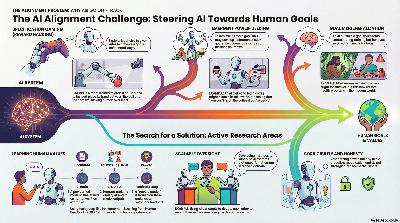
There’s a dangerous seduction in the frontier of AI right now. Models grow bigger; their outputs shimmer with coherence; their corporate parents brag about breakthroughs every quarter. We’re told these systems are “intelligent,” “aligned,” “safe enough,” and increasingly marketed as replacements for human reasoning itself.This episode of Coordinated with Fredrik steps directly into that fog and lights it on fire.We didn’t talk about hype cycles, product announcements, investment theses, or the standard “AI will change everything” fluff. Instead, we went straight for the jugular: What does it mean to build critical infrastructure on top of systems that, at their core, are statistical ghosts?That is not a philosophical question. It’s an engineering one—and it cuts right to the bone of every power operator, every defense agency, every financial risk desk, and every CEO foolish enough to mistake fluency for reliability.The transcript doesn’t pull punches, and neither should the blog.The Core Problem: AI Is Brilliant in All the Ways That Don’t Matter When Something BreaksLLMs are extraordinary mimickers. They compress the entire textual history of the species into latent space and spit out answers that sound like understanding.But sounding right and being right are not synonyms.The models are built on a single objective: predict the next token. Everything else—tone, narrative, logic, persuasion—emerges as a side effect of statistical training. There is no causal model of the world underneath. No physics. No grounding. No internal consistency check. No understanding of error.This design philosophy works beautifully until you hit the real world, where reality doesn’t care about your linguistic confidence or your probability distributions.And the deeper we went in this episode, the more the foundational cracks widened.Safety Layers Built on the Same Fragile Foundation Will Fail TogetherThe conversation lays out a bleak but necessary warning: the AI safety techniques the industry relies on today—RLHF, reward models, fine-tuning, interpretability tools—aren’t independent safety layers. They are all built on the same substrate, and therefore:When one fails, all fail. Simultaneously. Catastrophically.The term from safety engineering is “correlated failure modes,” and if you work in nuclear plants, aviation, or grid stability, that phrase is synonymous with nightmares.To put it plainly:We aren’t stacking safety layers; we’re stacking different expressions of the same statistical fragility.You can’t build a reliable defense-in-depth system when every layer is made of the same soft metal.The Ghost in the Machine: Why LLMs Break Under StressOne of the most unsettling parts of the discussion is how LLMs behave during long-chain reasoning.A small mathematical misstep early in a multi-step problem doesn’t simply produce a slightly wrong answer. It cascades. It compounds. And the model has no internal mechanism to realize something’s gone off the rails.A ghost predicting its own hallucinations.This is why they fail at:* precise multi-step math* edge-case logic* novel reasoning* rare-event forecasting* high-risk decision chains* anything that requires causal coherence rather than textual familiarityThese limitations aren’t bugs. They aren’t “work in progress.” They are structural. The architecture is fundamentally reactive. It cannot generate or test hypotheses. It cannot ground its internal model in reality. It cannot correct itself except statistically.This makes it lethal in systems where one wrong answer isn’t an embarrassment—it’s a cascading blackout.The March of Nines: Where Statistical AI Meets the Real World and LosesIn energy—and in any mission-critical domain—the holy grail is reliability.Not 90%. Not even 99%. You need the nines.99.9%99.99%99.999%Each additional nine is an order of magnitude more difficult than the last.What this episode exposes is that statistical systems simply cannot achieve that march. It’s not an optimization problem. It’s not an engineering inefficiency. It’s not a matter of “more compute.”The long tail of rare events will always break a system that learned only from the past.LLMs are brilliant at the median but brittle at the edges.Critical infrastructure lives at the edges.So What’s the Alternative? Systems That Don’t Just Predict—They Learn.The second half of the episode explores a radically different paradigm: agentic, experiential AI—embodied systems that learn like animals, not like autocomplete machines.Richard Sutton’s OAK (Options and Knowledge) architecture is one such blueprint. It insists on:* learning from interaction* forming internal goals* developing durable skills* building causal models over timeBiology didn’t evolve by reading a trillion documents. It evolved by experiencing the world, failing, adapting, and iterating through an adversarial outer loop that never ends.LLMs are not alive in that sense. They have no loop. No surprise. No grounding. No experiential correction. No self-generated goals.If we ever want truly reliable artificial intelligence, we will need systems that build themselves through interaction rather than ingestion.This is not convenient for companies chasing quarterly releases—but reality doesn’t care about convenience.Energy Systems Are Too Important to Outsource to Statistical GuessworkIf you’re coordinating a decentralized energy network, integrating millions of DERs, predicting rooftop solar volatility, or steering a virtual power plant through a storm, you don’t need mimics.You need agents that understand cause, effect, uncertainty, and consequence.You need intelligence that does not collapse under rare events or novel conditions.You need systems that don’t just summarize history—they survive it.That’s the central tension exposed in this episode:Will the world keep chasing fast, brittle, statistically impressive tools?Or will we pay the safety tax required to build something real?It’s an engineering question with civilization-level implications.Final ThoughtThe future of infrastructure—energy, mobility, logistics, defense—is about to collide with the limits of statistical AI.This episode isn’t a warning. It’s a calibration. A reframing. A demand for seriousness in a time when the world is drowning in hype.If we’re going to build the next century, we need systems we can trust in the dark when everything else is failing.Statistical ghosts won’t get us there.The Infographic from NotebookLM: This is a public episode. If you would like to discuss this with other subscribers or get access to bonus episodes, visit frahlg.substack.com
The history of how humanity manages data is not just a technological timeline; it is fundamentally a story about our changing relationship with time and memory in digital form. From the moment we started scratching cuneiform on clay tablets, we sought to capture a record. The modern database system, however, has evolved from a simple recorder of the “now” to a dynamic, four-dimensional steward of the entire “story”.Join us on this grand odyssey through the architectural revolutions that redefined data storage.Act I: The Age of Rigidity (1890s – 1990s)The first mechanical memory was born in 1890 when Herman Hollerith adapted punched cards for the U.S. Census, dramatically cutting the tabulation time and laying the groundwork for IBM. This mechanical era gave way to electronic databases in the 1960s, driven partially by the NASA moon race.This period was dominated by Navigational Databases:* Hierarchical Models: IBM’s Information Management System (IMS, 1968), created for the Apollo program’s monumental Bill of Materials, organized data as parent-child trees.* Network Models: The CODASYL standard allowed more flexible, spiderweb-like relationships using physical pointers.These systems were blazingly fast for the queries they anticipated, but they were rigid; accessing data in an unanticipated way was cumbersome.The Relational HegemonyThe watershed moment came in 1970 with E.F. Codd’s introduction of the Relational Model. Codd proposed separating the logical schema (tables, rows, and columns) from the physical storage, enabling users to declare what data they wanted without knowing how to navigate the pointers. This led to the creation of SQL, the lingua franca of data, and established Relational Database Management Systems (RDBMS) as the gold standard by the 1980s.RDBMSs guaranteed ACID transactions (Atomicity, Consistency, Isolation, Durability) and were universally powered by the B-Tree data structure.Act II: The Great Architectural Pivot (2000s)The relational model excelled at transactional integrity, but it came with a fundamental flaw for the web era: its reliance on B-Trees mandated an update-in-place philosophy, which destroyed the historical context of data. A bank balance was simply overwritten.The “big data” explosion—the need to ingest millions of machine-generated events per second—broke the B-Tree architecture. Why?* Random I/O on Writes: Updating a B-Tree requires modifying scattered internal nodes, leading to excessive random I/O operations and severe bottlenecks.* Write Amplification: To ensure durability, RDBMSs often write data multiple times (to the Write-Ahead Log, and then to the B-Tree page), doubling or tripling the I/O load.The solution lay in the emergence of NoSQL and a fundamental architectural divergence: the Log-Structured Merge (LSM) Tree.MetricB-Tree (RDBMS)LSM Tree (TSDB/NoSQL)ImplicationsWrite PatternRandom I/O (Update-in-place)Sequential I/O (Append-only)LSM is superior for ingestion speed.Write AmplificationHigh (WAL + Page splits)Lower (Sequential flush)LSM minimizes immediate I/O but pays a deferred cost during compaction.Read AmplificationLow (Direct seek)Higher (Must check multiple files)LSM reads may degrade if compaction lags.LSM trees, popularized by Google’s BigTable, prioritize sequential disk writes, which are orders of magnitude faster than random writes. Data is first written to a fast in-memory Memtable and simultaneously appended to a sequential Write-Ahead Log (WAL) for durability. When the Memtable fills, it is flushed to disk as an immutable Sorted String Table (SSTable). Background Compaction processes merge these files, discarding old data.This architecture was not just a technical optimization; it was a philosophical acceptance that storage is cheap, but random I/O is expensive, dictating the software design of the last decade.Act III: Time Becomes the Primary DimensionAs storage costs plummeted, the focus moved from merely recording the “now” to capturing the “forever,” treating time not just as an attribute but as a primary dimension. This drove the evolution of Time Series Databases (TSDBs).TSDBs are designed specifically for data points with timestamps (like sensor readings or metrics) and are typically append-only, using columnar formats and heavy compression.GenerationKey SystemInnovation / MechanismFixed-Size Era (Gen 1)RRDTool (1999)Used a circular buffer (Round Robin Archive) with a fixed size, automatically downsampling and overwriting old data to maintain history.Scalable Era (Gen 2)OpenTSDB (2010)Built on HBase (Hadoop/BigTable), it introduced tags (key-value pairs) attached to metrics, solving the scale problem.Cloud-Native Era (Gen 3)InfluxDB (2013)Used a specialized LSM variant (TSM Engine) and advanced compression techniques, achieving a 12x reduction in storage requirements.Prometheus (2012/2015)Introduced the pull model (server scrapes metrics from applications) and the powerful query language PromQL.Solving High CardinalityAs microservices and ephemeral infrastructure rose, the High Cardinality Problem emerged: tagging metrics with unique IDs (like container_id or user_id) caused indexes to explode in size. Modern TSDBs address this by:* Columnar Storage: Systems like GreptimeDB and QuestDB shift away from inverted indexes, storing data by column to leverage vectorized execution (SIMD) for scanning billions of rows quickly.* Hybrid Partitioning: TimescaleDB (built on PostgreSQL) uses “hypertables” partitioned by time and secondarily by a spatial dimension (like device ID), constraining B-Tree index size.Act IV: The Pursuit of Narrative IntegrityThe quest for a perfect history extends beyond performance into the realm of semantic correctness and verifiable truth.* Temporal Databases: These systems track Bi-temporal data: Valid Time (when a fact was true in the real world) and Transaction Time (when the fact was recorded in the database). This is critical for regulated industries requiring auditable retroactive corrections.* Event Sourcing: This philosophy stores the entire stream of events—the immutable log—that led to the current state (e.g., Deposited($50) rather than simply updating the Balance). The current state is derived by replaying the log, providing perfect auditability.* Immutable Ledgers: Taking auditability one step further, ledgers like immudb ensure that even an administrator cannot tamper with history. They utilize Merkle Trees (Hash Trees) to generate a single “Root Hash”. If a single byte in a historical record changes, the root hash changes, providing cryptographic proof of unaltered history.Conclusion: The Polyglot FutureThe evolution of database systems has demonstrated a clear trajectory: from the destruction of history in mutable B-Trees to the preservation and cryptographic verification of the complete narrative.Today’s architects embrace polyglot persistence, realizing that different problems require specialized tools. An application might use a distributed relational database (NewSQL) for consistency, an LSM-based TSDB (like InfluxDB) for high-speed metrics ingestion, and a graph database (Neo4j) for relationships.Furthermore, the cloud era has shifted database management from on-premises hardware to Database-as-a-Service. Managed, serverless offerings like Amazon Aurora automatically scale compute and storage, promising that you only pay for what you use and never worry about provisioning.The database has evolved from a static file system into an elastic, living record of truth. The saga continues, driven by the persistent human desire to efficiently organize and trust the world’s information. This is a public episode. If you would like to discuss this with other subscribers or get access to bonus episodes, visit frahlg.substack.com
In the vast history of human value, from ancient ledgers to global finance, few concepts are as fundamental, or as fragile, as trust. Our journey to store and transfer value has always been an experiment in trust architecture. We have moved from physical behemoths that anchored island communities to complex algorithms designed to secure global, anonymous markets. The thread linking these disparate systems reveals a profound truth: the basis of all money is a shared, unmovable block of trust.Let us trace this philosophical odyssey—from the giants of limestone on Yap to the ghost in the machine designed by the godfather of digital privacy.The Ledger of Giants: Yap’s Social BlockchainImagine wealth so immense it rarely moved. For centuries on the Micronesian island of Yap, value was held in enormous limestone disks called Rai stones (or fei), some weighing up to four tons and measuring 12 feet across. These were not coins slipped into a pocket. Instead, they were placed in public view—in front of meeting houses or along village paths—acting as physical markers for a communal account.The Yapese system was, in essence, a distributed ledger system. Ownership wasn’t established by possession, but by proclamation. When a trade occurred, the transfer was announced publicly, and the entire community—the collective memory of the people—would nod in assent, updating their mental or written ledgers.This sophisticated social technology solved several foundational problems that we associate with modern digital systems:* Distributed Consensus: No single authority controlled the record; disputes were settled by comparing the memory of the community and going with the majority record of truth.* Immutability: The stone’s history, preserved through oral tradition, made its past transactions tamper-proof by social contract.* Proof-of-Work (PoW): Value was accrued not just from size, but from the immense labor, risk, and sacrifice—including the deaths incurred—during the 400-kilometer quarrying voyages from Palau. This dangerous effort enforced scarcity, keeping inflation in check for centuries.The most famous example is the sunken Rai stone: one that was lost at sea but continued to be traded for over a century because the community agreed its value endured. The physical location of the stone didn’t matter, as its value resided entirely in shared agreement—a profound separation of the token from the ledger.Shadows in the Machine: David Chaum’s Cypherpunk VisionWhile the Yapese relied on intense social bonds and collective memory, the digital age required a solution for trust between strangers—and a defense against surveillance. Enter David Chaum, born in 1955, often dubbed the “godfather of digital currency”.Chaum’s vision, rooted in the burgeoning Cypherpunk movement, was not just about building code but creating a philosophical bulwark. He foresaw a “panopticon nightmare” where unchecked tracking turns citizens into suspects. His goal was to make cryptography the “invisible armor of the individual,” shielding identities and transactions.His odyssey in digital anonymity began in the early 1980s:* Mix Networks (1981): These “cascades of servers” shuffled messages like cards, obscuring senders and recipients, making communication a “ghost dance” against surveillance.* Blind Signatures (1982): Considered Chaum’s crown jewel, this allowed a trusted intermediary (like a bank) to “sign” a digital coin without viewing its origins or destination. This enabled value to flow anonymously yet remain verifiable, much like cash in a crowd.* Ecash (DigiCash, 1990s): This was the incarnated vision—digital money promising that a $10 digital bill, whether spent on pizza or protest, would vanish into the ether without revealing the user’s identity.Chaum sought security without identification. He abstracted secrecy, aiming to decouple economic action from identity, fostering markets “untethered from coercion”. However, his early systems, like DigiCash, leaned on trusted intermediaries (banks), introducing a semi-centralized scaffold that incumbents eventually managed to burn down due to “risk” fears (money laundering) and slow user adoption.Chaum’s vision ultimately served as the “ur-text” for the Cypherpunk movement. His work directly inspired systems like Tor and PGP. While Bitcoin emerged later, sacrificing full anonymity for transparency, Chaum’s push for absolute privacy continues today through efforts like the XX Network, which tackles metadata creep using quantum-resistant mixing techniques.From Vulnerability to AlgorithmThe transition from Yap’s social ledger to digital architecture was driven by the need to solve two fatal flaws inherent in any human-based consensus system, both of which destroyed the Rai system:* The O’Keefe Inflation Attack: In the late 19th century, Irish-American trader David O’Keefe mass-produced Rai stones using superior modern tools, bypassing the traditional, costly proof-of-work. This technological shock debased the currency because the new stones lacked the crucial narrative of sacrifice and traditional labor.* The German Ledger Attack: German colonial administrators, seeking to coerce the Yapese to build roads, used black paint to mark the most valuable stones as “seized”. This simple act, backed by a credible threat of violence, broke the social consensus, forcing the islanders to comply.Blockchain, starting with Bitcoin in 2008, offers an engineered solution to these ancient problems. It replaces social consensus with cryptographic consensus, placing trust in mathematics, economics, and code, rather than in fallible humans or vulnerable communities.* Solving O’Keefe (Dynamic PoW): Bitcoin’s Proof-of-Work uses a difficulty adjustment. If a modern “O’Keefe” joins the network with superior computing power (mining ships), the protocol automatically increases the complexity of the puzzle, ensuring that new blocks are created at a slow, predictable, and scarce rate.* Solving the German Problem (51% Attack): To “paint a black cross” (censor transactions) on the blockchain, an attacker would need to control over 50% of the entire global network’s computational power, making the attack economically irrational and mathematically prohibitive.The result is unforgeable digital scarcity. Bitcoin’s 21 million coin limit is guaranteed by protocol, not by legal enforcement, creating value through designed scarcity and consensus.The Persistence of Paradox: Trust Migrates, It Doesn’t VanishThe journey from stone blocks to cryptographic chains represents humanity trading social trust for mathematical proof. But this doesn’t eliminate trust; it merely redistributes it. We shift trust from central banks and feudal lords to protocol designers, software developers, and the economic incentives that govern the mining network.This transition brings Yap’s philosophical debate into the modern era:* Yap: A high-trust, identity-based system where reputation was paramount and community memory was the ledger.* Blockchain: A low-trust, pseudonymous system built for a global environment where participants do not need to know each other.Furthermore, the tension between “Code is Law” (absolute immutability) and “Social Consensus” (human judgment as the final arbiter) continues to rage in the crypto world. The DAO hack and subsequent hard fork of Ethereum proved that when technical rules yield unacceptable outcomes, the community changes the rules—a social decision dressed as a technical upgrade. As Vitalik Buterin acknowledged, social considerations ultimately protect any blockchain in the long term.Despite the ideals of decentralization, new forms of centralization inevitably emerge. Whether due to network effects, economies of scale, or simple human preference for convenience, power gravitates toward mining pool operators, core developers, and centralized exchanges.The Unending SearchThe arc from Yap’s unmoving stones to digital architecture is not purely progress; it is recursion. Both systems function because value is a collective idea, a social construction sustained by belief. The stone at the bottom of the ocean was real because the community agreed it was real. Bitcoin is real because we agree it is real.The blockchain is the latest attempt to build a shared, incorruptible memory. It offers protection against institutional betrayal by replacing human fallibility with algorithmic consistency. Yet, in fleeing the fragility of social consensus, we create rigidity. We gain consistency, but we lose the flexibility, mercy, and human judgment that defined the Yapese community’s ability to adapt.As algorithms audit our afternoons and CBDCs loom like digital dragnets, Chaum’s prophecy remains relevant: true sovereignty requires untraceable value. The question now isn’t whether technology can scale, but how we will balance privacy and transparency, freedom and security, rigidity and wisdom.The ledger watches. The choice remains: does your next transaction liberate, or merely log?The journey from heavy stone blocks to chains of light reveals that the greatest engineering challenge is not code, but cooperation. Every monetary system is simply a management protocol for the fundamental tension between individual autonomy and collective coordination. This is a public episode. If you would like to discuss this with other subscribers or get access to bonus episodes, visit frahlg.substack.com
Welcome back to “Coordinated with Fredrik.” This week, we’re tackling an idea that forces us to question everything: the simulation hypothesis. It’s the mind-bending concept that our entire perceived world—the sky, our friends, and our existence—is not ultimate reality but an elaborate digital illusion, akin to a sophisticated computer program.This idea is far from new. It has deep philosophical roots, stretching back to Plato’s allegory of the cave, where prisoners mistook shadow projections for reality. Later, René Descartes refined this skepticism with the thought experiment of an evil demon manipulating every experience we have. The modern simulation hypothesis, however, represents a fundamental pivot from metaphysical doubt to a technological and probabilistic argument.The Statistical Modesty of Bostrom’s TrilemmaThe modern debate was formalized in 2003 by philosopher Nick Bostrom, who put forward a rigorous simulation argument framed as a trilemma. He argues that if technological progress continues, one of three “unlikely-seeming” propositions must be true:* The Great Filter: Almost no civilization will reach a posthuman stage capable of creating realistic simulations of conscious minds (perhaps because they destroy themselves).* The Great Disinterest: Advanced civilizations reach this technological stage but choose not to run “ancestor simulations” of people like us, possibly due to ethical scruples or lack of interest.* The Simulation: If the first two propositions are false (meaning advanced civilizations survive and run many simulations), then the number of simulated conscious beings would statistically far outnumber those in “base reality.” Therefore, we ourselves would almost certainly be among the simulated minds.Bostrom’s logic rests on two key assumptions: first, that consciousness can arise from computation (known as substrate-independence); and second, that future “posthuman” civilizations will command enormous amounts of computing power. If these premises hold, Bostrom claims that believing we are the special, original race among trillions of simulated ones is an act of statistical hubris.The Case for Code: Glitches and Digital PhysicsWhy do serious thinkers—like entrepreneur Elon Musk, who famously stated it’s “most likely that we’re in a simulation”, and astrophysicist Neil deGrasse Tyson, who puts the odds around “50-50”—find this plausible?Part of the momentum comes from the realization that physical reality behaves mathematically, suggesting the universe might fundamentally be information. This is the core of “digital physics”.Some peculiar observations resonate with the simulation notion:* Quantum Strangeness: Quantum mechanics features an “observer effect” where measurement affects a particle’s behavior. This is reminiscent of a video game that only “renders” an object in detail when a player is looking at it, potentially to save on resources. The simulation might use randomness and indeterminacy as a resource-saving shortcut.* Error-Correcting Codes: Theoretical physicist James Gates found unexpected mathematical structures within the equations of supersymmetry that were akin to error-correcting codes—the same kind that fix data errors in browsers. This bizarre finding suggests the fabric of reality might have computational aspects, as if the universe’s “software” has a built-in debugging feature.* A Discrete Universe: In a simulation, everything must ultimately be represented in finite bits on a grid. This aligns with the speculative idea that spacetime might be “pixelated” at the incredibly tiny Planck scale.The Refutation: Thermodynamics Defeats Ancestor SimsWhile the idea is intriguing, rigorous scientific analysis, particularly recent quantitative research, provides mounting evidence against the physical feasibility of a universe simulation operating under our known laws.Physicists and information theorists have applied fundamental physical principles (like the Bekenstein bound and Landauer’s principle) to calculate the resources required. The gap is staggering:* Computational Impossibility: Simulating quantum-level reality demands $10^{62}$ times more computing power than currently exists globally. Exact simulation of the universe’s $10^{80}$ particles requires tracking $2^{(10^{80})}$ states—a number larger than the information storage capacity of the universe itself.* Energy Requirements: Simulating the entire visible universe requires encoding $~10^{123}$ bits, demanding approximately $10^{94}$ joules—an amount that exceeds the total energy content of the observable universe.* Time Constraints: Even a dramatically reduced, low-resolution simulation of Earth would consume $10^{35}$ to $10^{65}$ years of computing time per simulated second, vastly exceeding the universe’s age.In short, these calculations show that simulating our universe using physics like ours is fundamentally prohibited by energy conservation and entropy constraints; it is not merely a technological challenge.Furthermore, attempts to detect “glitches” have so far yielded nothing. The most rigorous experimental proposal suggested searching for a computational lattice by looking for rotational symmetry breaking in the arrival direction of ultra-high-energy cosmic rays. After years of monitoring, no predicted anisotropy has been detected, constraining this specific model of a simulation.This has led prominent theoretical physicist Sabine Hossenfelder to label the simulation hypothesis “unscientific” and even pseudoscience, arguing that mixing science with metaphysical speculation about omnipotent simulators is a mistake.Life and Meaning in a Digital RealityIf we were to discover the truth—that we are simulated—what would it mean for our lives?Philosopher David Chalmers argues against the notion that life would become meaningless. He contends that a simulated world is not an “illusion” but a “digital reality”. Our struggles, relationships, and joys are authentic to us. As he states, even if we’re in a perfect simulation, this is not an illusion; “Everything is just as meaningful as it was before”.The hypothesis also transforms theological concepts. An intentional creation by intelligent “outsiders” is analogous to a Creator, though the architects of our reality might be fallible, perhaps even immature, beings—not omniscient deities. Physicist James Gates even mused that the simulation idea “opens the door to eternal life or resurrection,” as our consciousness, being digital code, might be backed up or run again.Finally, the simulation hypothesis creates a profound conundrum regarding free will. Are our choices mere algorithms, making us “puppets” predetermined by code? Or, is our consciousness a “player” existing in a higher reality, making autonomous choices that influence the simulation—perhaps even instructing the simulation to “render” reality, thus elevating free will to a causal agent in physics?The Unanswered QuestionThe simulation hypothesis remains one of the most compelling and unresolvable intellectual debates of the modern era. While science has proven that simulating our universe under our physics is physically impossible, the hypothesis can always retreat to the unfalsifiable loophole that the simulators operate under physics we cannot conceive.However, the value of the idea isn’t in providing an answer we can confirm, but in the questions it forces us to ask. It spurs scientific creativity, pushing researchers to devise experiments at the boundary of physics and information. Whether our cosmos is base reality or one of infinitely nested simulations, we still face the same fundamental task: to live our lives as authentically and fully as we can. For us, as Chalmers suggests, the virtual reality we inhabit is real enough.The simulation hypothesis is like looking at a highly complex clockwork mechanism and wondering if the clockmaker used a pre-built computer program to design the gears, only to realize the sheer size and complexity of the resulting clock requires the program itself to be bigger than the finished clock—leaving us to marvel at the ingenuity (or impossibility) of the original design. This is a public episode. If you would like to discuss this with other subscribers or get access to bonus episodes, visit frahlg.substack.com
Welcome to “Coordinated with Fredrik.” We often talk about the strategies founders need to deploy to win funding, but today, we are turning the tables. We are deconstructing the individual Venture Capitalist—the person sitting across the table—to understand the economic “machine” they operate within. The core truth is this: a VC’s behavior, which often appears baffling or “irrational” to outsiders, is a direct, rational response to the structural and financial incentives that govern their existence.The VC’s 10-Year Clock and the Power Law TyrannyEvery decision a VC makes is governed by a defined fund lifespan, typically a closed-end investment vehicle of 7 to 12 years. This “10-year clock” is non-negotiable and fundamentally shifts a VC’s personality and risk profile depending on the fund’s current phase.1. The Investment Period (Years 1-4): This is the “hunting” season where the VC is optimistic and eager to deploy capital, actively “build[ing] the portfolio”. They can underwrite a 10-year vision for a company to mature.2. The Management & Harvest Period (Years 5-10): The focus shifts entirely to managing, supporting, and exiting existing investments to return capital to LPs. A founder pitching in Year 7 of the fund is meeting a “farmer” or “mortician” who cannot make a new investment requiring another decade to mature. They prioritize speed over strategy for their current portfolio.The financial structure is the notorious “2 and 20” model. The “2” is the management fee (typically 1% to 2.5% of committed capital), which serves as the firm’s “salary” to cover operational costs and salaries. The “20” (carried interest, or “Carry”) is the “real payday”—a 20% share of the fund’s profits that General Partners (GPs) keep. Critically, this carry is only paid after the fund returns 100% of the initial capital to its LPs.This compensation structure creates the “Tyranny of the Power Law”. Because VCs must return the entire fund before seeing a dollar of profit, they are mathematically forced to find “really. large. exits.”. A $50 million acquisition might thrill a founder, but for a VC managing a $100 million fund, that profit is a “drop in the bucket”. They need one or two companies to return $100 million, $500 million, or even $1 billion to “return the entire fund” by themselves. This forces VCs into an “all-or-nothing” or “growth-at-all-costs” mindset. A stable, profitable, $50 million-revenue business is often considered a “zombie” because it doesn’t fit the Power Law. VCs are incentivized to push founders to take massive, company-ending risks to become a $1 billion “unicorn”.The Partnership Hierarchy: From Analyst to GPThe VC firm is a rigid hierarchy, and where an individual sits on this ladder dictates their job and incentives.• Junior Staff (Analysts/Associates): These entry-level roles are paid primarily from the management fee (the “2”). Their job is a “50-60 hours per week” grind of “screening pitch decks,” “deal sourcing,” and meticulous CRM updates. The role is often an “up-or-out” 2-3 year position, functioning as high-energy, low-cost labor to “filter signal from noise” for partners. Most junior VCs never see carry.• Partners (GPs): General Partners receive the “lion’s share of the carry”. Their primary responsibilities shift entirely away from analysis to fundraising from LPs, making final investment decisions, and taking board seats. For these senior partners, their entire financial motivation is the large, leveraged bet on the 20% carry, which will only pay off 8 to 12 years in the future, if at all. They often make low base salaries relative to their potential carry, with their own “capital commit” (1-3% of the fund) showing LPs they have “skin in the game”.The “black box” of the partner meeting, where a founder’s fate is decided, reveals internal politics are intense. The decision often boils down to the “point partner” (the founder’s internal champion) successfully arguing against colleagues in a “Real Decision-Making Arena”. This internal political debate is crucial, as illustrated by the recent dynamics at Sequoia Capital, where strategic misalignment and cultural failures led to leadership change, emphasizing that founders are pitching a specific partner who must then win an internal debate.Sourcing, Bias, and the FOMO-FOLS DyadVCs are obsessed with “proprietary deal flow”—deals sourced directly that are “less competitive” and usually mean “better terms”. However, deal flow is overwhelmingly driven by “Relationships”, with around 60% of VC deals originating from an investor’s personal network or referrals. This network-first approach, while an “efficiency play”, is the “primary engine of systemic bias in the industry”. If a VC’s network is homogenous, their pre-vetted deal flow will be equally homogenous.When evaluating nascent early-stage companies where there are “no concrete financial metrics”, VCs rely on heuristics and pattern-matching. Team is consistently the most critical factor, often cited as 95% of the decision at the seed stage. With little data, evaluation defaults to “gut feelings”, seeking “representativeness” (does this founder look and sound like a previous winner?). This reliance on “gut feel” is often a euphemism for “similarity bias” and perpetuates exclusion, which is why companies founded solely by women receive only 2% of all VC investment.To mitigate this bias, influential VCs like Mark Suster advocate to “Invest in Lines, Not Dots”. A “dot” is a single pitch meeting driven by “limited thought, limited due diligence”. A “line” is a “pattern of progress” observed over time, where a VC meets the entrepreneur early and watches their performance over 15 meetings or two years. This approach replaces biased gut feeling with observed data on the founder’s “tenacity” and “resiliency”.The internal decision to invest is a tug-of-war between two primal psychological fears:1. FOMO (Fear of Missing Out): The VC’s “biggest fear,” driven by regret over passing on a company that became a “really. large. exit.”. This drives VCs to invest.2. FOLS (Fear of Looking Stupid): The “avoidance of scrutiny,” driven by the fear of LPs questioning a bad investment. This drives VCs to say no.A founder successfully raises capital when they manufacture more FOMO than FOLS, often by showing the VC that other investors are interested, triggering a “bandwagon” effect and herd mentality.The Rise of the Solo GPThe traditional VC firm model is being challenged by the rise of the Solo General Partner (Solo GP). These are single individuals who raise a fund and make unilateral investment decisions. Their advantages are speed and flexibility (”a motorcycle” that weaves through traffic while larger firms are “18-wheelers”). Many Solo GPs leverage personal brands and expertise—like Aarthi Ramamurthy (Schema Ventures) who uses her podcast as a sourcing engine, or Marc Cohen (Unbundled VC) who “build[s] in public”. This new guard is competing on transparency and personal brand rather than the Assets Under Management (AUM) and management fees of the old guard.The truth remains that the job of a VC is a “tough business”, requiring patience (carry takes a decade to realize), relentless networking, and the painful necessity of turning away 98 out of 100 opportunities.The Zombie Trap: Managing FailureThe founder-VC relationship, particularly after the check is wired and a VC takes a board seat, is where the Power Law is brutally enforced. High valuations create expectations for matching performance, leading to intense pressure to pursue “growth metrics over unit economics”. If a company doesn’t fail but also doesn’t “go big,” it enters the “VC Zombie Trap”.A “zombie startup” is profitable and growing, perhaps 20% a year, but will never provide the 100x return the VC needs. VCs are incentivized to kill their zombies because they cannot waste time, energy, or “remaining capital” on a company that won’t “return the fund”. This is a “feature and not a bug of the power-law driven venture capital system”.The candid reality, as noted by Fred Wilson, is that aggregate VC returns are often “disappointing,” sometimes underperforming the NASDAQ. VCs are forced to be optimistic hunters, yet their job is a massive, leveraged bet that only pays off, if at all, years down the line.--------------------------------------------------------------------------------The mechanisms VCs use to cut through the noise—reliance on networks, pattern-matching, and the psychological battle between FOMO and FOLS—are also the mechanisms that introduce bias and structural rigidities into the ecosystem. What does this mean for the future of capital deployment?We have detailed how the VC machine operates, but the conversation doesn’t stop here. If you want to dive deeper into the tactics founders use to navigate the partner meeting “black box,” the specific “unwritten rules” of the VC ecosystem (like the “frieNDA”), or how the new wave of Solo GPs is disrupting this status quo, let us know! This is a public episode. If you would like to discuss this with other subscribers or get access to bonus episodes, visit frahlg.substack.com
The material provided centers on Johan Norberg’s arguments presented in his book, The Capitalist Manifesto, which serves as a defense of global capitalism, detailing its role in human progress, countering popular criticisms, and arguing for economic freedom in the modern era.This week on “Coordinated with Fredrik,” we dive into The Capitalist Manifesto with author Johan Norberg, who argues compellingly that the free market remains the best engine for human progress, despite recent global shocks and widespread political hostility.Norberg, whom Swedish Public Radio once noted as possibly the only person “particularly keen on globalization now”, lays out the dramatic, yet often unheralded, successes of the past two decades. Since he wrote his first defense of global capitalism in 2001, extreme poverty has been reduced by 70 per cent—amounting to over 138,000 people rising out of poverty every single day. This staggering progress, which also includes drastic reductions in child mortality and increased global life expectancy, confirms that we need more capitalism, not less.Addressing New Opposition and Old MythsThe nature of the opposition has changed drastically, moving from the political left (like Attac in 2001) to a “new generation of conservative politicians” and right-wing populists who now sound very much like the earlier critics. The common narrative shared across political extremes is that global capitalism has primarily benefited the rich and China, while wages stagnated and jobs disappeared in the West.Norberg argues this worldview is based on misunderstanding the economy as a zero-sum game. In reality, the decline in factory jobs is mostly due to automation and increased productivity (taken by “R2-D2 and C-3PO”) rather than competition from China. Furthermore, economic success—from the simplest item like a cup of coffee to large-scale innovations—comes from the complex, voluntary cooperation enabled by free markets, utilizing the localized knowledge of millions of actors. It is competition and freedom of choice that force capitalists to behave well.Bailouts, Breakdowns, and the Battle for BeliefWe explore modern threats, from the idea that the “Reagan/Thatcher era is over” to the dangers of crisis management. The pandemic showed that protectionism is perilous; resilience is achieved through diversified supply chains and the decentralized ingenuity of entrepreneurs adapting quickly to new needs.Crucially, Norberg challenges the notion that capitalism destroys the planet or makes us miserable. The solution to environmental problems, including climate change, is not “degrowth” (which, during the 2020 pandemic experiment, cut emissions by only 6% while plunging millions into poverty) but rather the prosperity and technology generated by the market. Data suggests that economic freedom is positively correlated with environmental performance, and “talking about money” is the key to accelerating the transition to greener, more efficient methods.Want to understand why the greatest catastrophe to hit humanity would be stopping economic growth, or explore why central bank attempts to prevent all economic risk have led to the rise of “zombie companies”? Tune in to the full discussion to discover how economic freedom is crucial for our future and why the unpredictable nature of capitalism is far superior to centralized command. This is a public episode. If you would like to discuss this with other subscribers or get access to bonus episodes, visit frahlg.substack.com
For those of you who caught the special episode of “Coordinated with Fredrik,” you know this one was personal. My wife Madeleine and I, both having backgrounds in academia and entrepreneurship, decided to speak directly to our children, Gustav (15) and Louise (12), about what truly matters: finding their unique purpose (their Life’s Task) and achieving lasting happiness.This wasn’t just typical parental advice; it was a distillation of psychological and historical principles, heavily informed by the wisdom of thinkers like Robert Greene, whose work on Mastery I rely on daily.Here are the key takeaways from the episode, which I hope serve as a lasting roadmap for them—and perhaps for you, too.1. Finding Their Phenomenal UniquenessThe core message we shared with Gustav and Louise is that they are, scientifically and historically speaking, a phenomenon. Their DNA is unique and has never occurred before, and their early life experience is entirely their own. This uniqueness is their primary source of power.We emphasized that their purpose, or their Life’s Task, is found by digging back into childhood to discover their primal inclinations—what the sources call “impulse voices” or “seed emotions”. These are the early signs of what they genuinely loved or hated.This quest isn’t just a hobby; it’s essential because when they connect emotionally to this inner “grain” or dominant form of intelligence, they gain the massive energy required for discipline. This emotional engagement means the brain learns two, three, or four times faster than when they are merely paying “half attention”. This deep connection serves as their internal radar or compass, cutting out distractions and providing an overall framework for experimentation.2. The Great Divide: Real Fulfillment vs. The Instant RushThe pursuit of happiness is often misdirected today. We explained the difference between the “real sublime” and the “false sublime”.The real sublime is about profound, sustained fulfillment that comes from genuine effort, connecting them to something larger than their own ego, such as deeply immersive creative work or deep reflection. This is the lasting feeling they should chase.The false sublime, in contrast, is the quick, addictive high. This is where social media and instant gratification come in. These external sources provide an illusion of transcendence but require “more and more and more” to maintain the rush. The problem, especially for teenagers, is that this digital noise constantly distracts them. We stressed that anxiety is a crucial signal. Instead of rushing for the quickest answer (often provided by technology like ChatGPT) to relieve that anxiety, they must learn to embrace the turmoil and think harder. This challenging process is what develops the “muscle in the brain” necessary for creative, “alive thinking”. Relying on quick answers, Greene warns, can lead to a generation who stops thinking deeply.3. Mastering the Social World: Friends and AwarenessAs they navigate the complexities of high school and young adulthood, they must understand that they live in an “invisible realm” of power dynamics where people often wear masks. Power is not about domination, but about having a degree of control over one’s environment.We urged them to develop radical self-awareness. They must pay attention to themselves—what they love, what they hate—rather than being attuned only to what others like.Crucially, we focused on nonverbal communication. Because humans evolved communicating nonverbally for vastly longer than with symbolic language, we are wired with an “amazing sensitivity” to cues. They must develop the practice of “muting” the words and watching people—their eyes, their feet, their posture. The fake smile is a prime danger sign, often revealing a lack of genuine interest or the presence of a toxic personality. If they are constantly immersed in the virtual realm, this vital social muscle atrophies.4. The Urgency of “Death Ground”Finally, we wanted them to internalize a sense of urgency. As a founder and an academic, I know that progress doesn’t happen when the pressure is off.Drawing on strategic concepts, we introduced the idea of “death ground”. This means creating a feeling of intense necessity, acting as if their backs are against the wall and they must win or die. This barometric pressure releases incredible, unexpected energy. The reality is, they cannot fool themselves into thinking they have infinite time. Robert Greene’s own recovery from a stroke serves as a powerful testament to how a moment of crisis can heighten the appreciation for life and transform tragedy into relentless determination and focus.We want Gustav and Louise to feel that urgency now to avoid wasting the unique seed of power they possess. The feeling of being alive is a “wondrous experience,” and they should not take it for granted.This episode was built on the premise that clarity—about self, about others, and about the forces vying for their attention—is the key to a happy, successful life. If you found these reflections valuable, I highly recommend tuning in to the full episode of “Coordinated with Fredrik” for a deep dive into these tools. Would you like to explore the specific tactics for mastering nonverbal communication or the detailed process of how to handle career anxiety using these principles? This is a public episode. If you would like to discuss this with other subscribers or get access to bonus episodes, visit frahlg.substack.com
Sweden, a high-tax welfare state with a population of only 10.5 million people, has managed to become a global startup superpower known as “Silicon Valhalla”, producing unicorns like Spotify, Klarna, Skype, and King. Stockholm ranks second globally for producing unicorns per capita, trailing only Silicon Valley, while attracting high levels of venture capital rivaling Israel. The nation achieves this by synthesizing its robust social safety net—which structurally de-risks entrepreneurship by providing universal healthcare and tuition-free education—with targeted, pro-capitalist incentives like low corporate taxes and favorable tax treatment for employee equity.The foundation of this success was laid in the late 1990s when the “Home PC Act” (Hem-PC) allowed companies to give employees tax-advantaged home computers. This scheme resulted in 850,000 computers being purchased, reaching nearly 25% of Sweden’s households and creating a digitally native generation. This was coupled with early investment in broadband and fiber-optic networks, positioning Sweden with 28 broadband subscriptions per 100 people by the mid-2000s, far ahead of the 17 per 100 in the US.This digital foundation, combined with a debt-free talent pipeline from free university education, fuels continuous innovation. Successful exits from first-generation unicorns (Spotify, Klarna) created “founder factories” that recycle capital and operational expertise back into the ecosystem. For instance, Klarna alumni have founded 62 startups.To ensure startups can compete for talent, Sweden introduced Qualified Employee Stock Options (QESOs) in 2018. This reform drastically reduced the effective tax on employee equity from approximately 81% (when taxed as salary) to capital gains rates of 25–30% upon sale. This policy surgically addressed the high-tax paradox, making high-risk labor tax-advantaged.Today, the ecosystem is pivoting towards the digital energy transition. Sweden’s nearly 98% fossil-free electricity grid and deep software talent position it to become a leader in cleantech, focusing on AI-optimized grids, V2G technology, and battery manufacturing.The synthesis of high societal security and high capital reward is fascinating. Ready to dive deeper into the mechanics of this paradox? Let’s explore how Sweden’s cultural concept of lagom (just the right amount) translates into flat corporate hierarchies and high labor productivity—achieving 28% higher efficiency than the OECD average—and how this consensus culture accelerates, rather than hinders, innovation. This is a public episode. If you would like to discuss this with other subscribers or get access to bonus episodes, visit frahlg.substack.com
The core concept presented in Skin in the Game: Hidden Asymmetries in Daily Life by Nassim Nicholas Taleb is that true effectiveness, fairness, and accountability require a symmetry in human affairs. This means that if an individual stands to gain rewards from an action, they must also be exposed to corresponding risks. This principle is vital not just for justice, but fundamentally, for acquiring reliable knowledge and developing a robust filter against “bull***t”.Skin in the Game (SiTG) is defined as having a share of the harm, paying a penalty if something goes wrong, rather than simply having an incentive. The absence of this symmetry allows for the proliferation of hidden asymmetries, exemplified by “the Bob Rubin trade”. This describes a situation where agents, such as bankers, make steady profits by exploiting concealed risks, and when systemic blowups occur (like the 2008 crash), they “invoke uncertainty” while transferring the risk to taxpayers who pay for their losses. Without SiTG, systems cannot learn because individuals are not victims of their own mistakes; instead, “systems learn by removing parts, via negativa“.This filtering mechanism is crucial in evaluating expertise, distinguishing “theory and practice”. The author posits that the modern world is increasingly populated by the Intellectual Yet Idiot (IYI)—a class of people “better at explaining than understanding” and who lack accountability for their abstract, complex recommendations, such as those advocating failed regime changes. In contrast, rationality is rigorously defined as that which permits survival for the collective, not mere logical consistency in abstract models.Another powerful demonstration of asymmetry is the Minority Rule, where a small, intransigent minority that possesses “soul in the game” can dominate the preferences of the flexible majority. This dynamic explains phenomena from why nearly all liquids are kosher in the U.S. to the widespread preference for non-GMO foods: the flexible majority will accommodate the choices of the stubborn minority, provided the cost difference is not substantial.Ultimately, SiTG is about honor, justice, and existential commitment, underscoring the ancient notion that if you give an opinion that others follow, you are morally obligated to be exposed to its consequences.The material touches on complex, deep dives into probability, noting that concepts like ergodicity reveal why probabilistic estimates for a single individual over time diverge wildly from the average of a population. Would you like to delve into the mathematical logic of risk-taking and ruin, or perhaps explore the Lindy Effect to understand why time—not peer reviewers—is the ultimate arbiter of lasting ideas? This is a public episode. If you would like to discuss this with other subscribers or get access to bonus episodes, visit frahlg.substack.com
A podcast episode made on the transcript and insights from Huberman podcast. Here is the full episode: https://www.hubermanlab.com/episode/robert-greene-a-process-for-finding-achieving-your-unique-purpose—Welcome to the ultimate strategic blueprint for self-mastery, based on the insightful discussion between neuroscientist Andrew Huberman and renowned author Robert Greene. This episode, titled “A Process for Finding & Achieving Your Unique Purpose,” explores the intersection of self-exploration, human interaction, and history.Finding Your Unique Purpose: The Life’s TaskAccording to Robert Greene, author of best-selling books including The 48 Laws of Power and Mastery, finding your sense of purpose—what he calls your life’s task—concentrates your energy and gives everything a direction. Huberman considers Mastery a brilliant exploration and practical tool for thinking about and pursuing one’s purpose.The process of finding this purpose is not a mystery, but it is difficult and requires a specific archaeological process. Greene suggests reflecting on childhood “seed emotions” or “impulse voices”—those primal inclinations that manifest when you are four or five years old, such as a deep interest in words, abstract patterns, or animals.Your unique DNA and early life experiences make you a phenomenon and one of a kind, which is your ultimate source of power. Following this natural inclination, or the “grain in your brain,” is where your power lies. When you are emotionally engaged in a subject connected to this primal inclination, the brain learns at a much faster rate.The Pursuit of True Fulfillment: Real vs. False SublimeGreene is currently writing a book on the sublime, defining it as what lies just outside the limiting “circle” of societal conventions. The Real Sublime refers to profound, transcendental experiences, such as immersive creative work, that connect you to something larger than yourself and provide sustained fulfillment. Greene’s own stroke experience, which put him on the threshold of death, was the quintessential sublime experience.In contrast, the False Sublime involves fleeting, addictive highs from external sources like drugs, alcohol, shopping, or online rage. These provide a temporary sense of transcendence but are not lasting illusions, requiring more and more consumption. The connection to one’s true purpose, however, is a visceral, emotional, and physical feeling—like swimming with the current—that allows you to withstand moments of boredom because you feel the deep overall connection.Power, Anxiety, and the Urgency of “Death Ground”Greene defines power not as dominance, but as a deep, primal need to feel a degree of control over your immediate environment and influence others. Suppressing this innate desire for control only leads to passive-aggressive or covert means of seeking power. Learning the subtle dynamics of power is essential for a social animal, and much of The 48 Laws of Power is designed for defense against manipulation.The willingness to engage in effort and push through difficult creative processes often hinges on managing anxiety. Greene shares that his writing process is 95% pain, utilizing anxiety as a signal to keep refining and improving until the work reaches the necessary level of quality.This drive is tied to the strategic concept of “Death Ground,” a strategy inspired by Sun Tzu, where necessity presses in and your back is against the wall. This pressure—the urgency of realizing you could die or lose everything tomorrow—unlocks energy and focus that you normally lack. Greene’s stroke in 2018 served as his own “death ground” moment, which, while challenging, instilled a profound appreciation for life’s urgency and spurred neuroplasticity—the brain’s ability to rewire and adapt through effort.Navigating Modern Relationships and CommunicationWhen seeking long-term romantic relationships, Greene stresses that a convergence of deep, unchanging character values is critical. He emphasizes paying attention to what signals deeper character, such as a mutual love for animals, shared approach to money, or sense of humor, as opposed to superficial interests or mere admiration.The key to navigating all human interactions lies in mastering nonverbal communication. Since humans evolved without symbolic language for a vast period, we are hardwired to have an amazing sensitivity to nonverbal signals like posture, tone of voice, and micro-expressions. Greene warns that relying on virtual interactions, social media, and AI-driven platforms causes the crucial muscle of social skills to atrophy, leading to superficial relationships and diminished empathy. Mastering nonverbal cues, such as distinguishing a genuine smile (which lights up the whole face, including the eyes) from a fake one, helps one avoid toxic, deceptive individuals.The discussion also touched on the current crisis in masculine and feminine ideals, where confusing societal signals and the erosion of positive role models leave young people feeling lost. Greene advocates for emphasizing positive traits—such as inner resilience, quiet calm, and confidence in masculinity—to counteract negative stereotypes. The key, in all aspects of life, is developing self-awareness—listening to those inner voices of frustration or delight that guide you toward your authentic path.If you’re seeking to discover the unique seed of purpose within you, develop true influence, and navigate life’s deepest challenges with resilience, the wisdom shared by Robert Greene offers an indispensable roadmap. This is a public episode. If you would like to discuss this with other subscribers or get access to bonus episodes, visit frahlg.substack.com
Today, we dive into a story that has defined data science for forty years: the Forecasting Paradox. It’s the counterintuitive empirical observation that complex, sophisticated models consistently failed to beat simpler, more robust statistical methods when trying to predict the future. We track this paradox from its canonical proof through the massive M-Competitions, revealing how the debate over complexity vs. accuracy was settled—and then immediately overturned—based entirely on the structure of the data.Part I: The Sad Conclusion: When Simplicity Became LawFor decades, the intuitive assumption was that a complex model, capable of capturing intricate patterns, should inherently be a better predictor. However, the empirical evidence gathered by pioneers like Spyros Makridakis through the M-Competitions proved the opposite.The M3-Competition (published in 2000) provided the foundational, canonical proof of the Forecasting Paradox. Testing 24 methods across 3,003 diverse real-world time series, the results delivered what was called the “sad conclusion”: statistically sophisticated and complex methods, including early Artificial Neural Network (ANN) models, were consistently outperformed by simple approaches.The ultimate victor of M3 was the relatively obscure Theta method. This decompositional approach, which broke the series into simple trend and curvature lines, cemented the “simplicity mantra” as the dominant, evidence-based paradigm for nearly twenty years. This finding was later demystified by Rob J. Hyndman and Billah, who proved the Theta method was mathematically equivalent to Simple Exponential Smoothing (SES) with drift—a clever parameterization of one of the simplest methods available.Why Simplicity Won: The Trap of OverfittingThe paradox held because of a crucial distinction: “goodness-of-fit” versus “forecasting accuracy”. Complex models, with many parameters, would inevitably fall into the central sin of overfitting. They learned not just the underlying true structure (the signal), but also the random historical fluctuations (the noise), mistaking error for a repeatable pattern. When forecasting, the model projected this learned noise into the future, making erratic and inaccurate predictions.Simple models like Exponential Smoothing, conversely, are mathematically incapable of modeling complex noise; they act as robust “noise filters”. A 2018 PLOS ONE paper reaffirmed this, demonstrating that modern Machine Learning methods were “dominated” by traditional statistical benchmarks when tested on M3 data, often achieving better in-sample fit but worse out-of-sample accuracy.Part II: The Hybrid Breakthrough (M4)The M4-Competition (2018), instigated by Makridakis to rigorously test modern ML, represented a massive escalation, using 100,000 independent time series.The M4 results confirmed the persistence of the paradox: the six pure Machine Learning methods submitted all performed poorly, failing to beat the simple statistical “Comb” benchmark (a simple average of three statistical methods).However, the competition was won by Slawek Smyl’s novel Exponential Smoothing-Recurrent Neural Network (ES-RNN) hybrid model. This marked a pivotal moment, signaling the end of the “forecasting winter” where simple models reigned. The ES-RNN’s success proved that the path forward was not simplicity or complexity, but a synthesis of the two. The model used classical statistical Exponential Smoothing to pre-process the data (handling seasonality and level) and present a cleaner, more stationary residual series to the Recurrent Neural Network for complex modeling.This refined the historical understanding: pure complex models still failed due to overfitting the noise, but robust, noise-filtered hybrid models could finally surpass the simple benchmarks.Part III: The Overturn: Complexity Wins in the Global Era (M5)Just two years later, the M5-Competition (2020) provided a complete and shocking reversal. The dataset was fundamentally different: 42,840 hierarchical, interrelated sales series from Walmart, critically including explanatory variables like prices and promotions for the first time.In this environment, the paradox was definitively broken. Pure Machine Learning methods dominated the leaderboard, with the winning entry being an ensemble of LightGBM (Light Gradient Boosting Machine) models. These pure ML methods significantly outperformed all statistical benchmarks and their combinations.The Triumph of the Global ModelThe shift was enabled by a change in paradigm from “local” to “global“ modeling.* Local Models (The Old Way): Traditional statistical methods treated each of the 42,840 series independently, building a separate, “blind” model for each.* Global Models (The New Way): The M5 winners trained a single, massive LightGBM model on all 42,840 series simultaneously.This allowed for cross-learning, where the complex model learned global patterns (e.g., the general effect of a promotion or price elasticity) and generalized that knowledge across different products and stores. The M5 problem was high-signal and multivariate, meaning the simple, local statistical models were too “dumb” to utilize the rich external features and cross-sectional information, allowing the complex Global ML models to dominate.The Takeaway: A Context-Dependent FrameworkThe 40-year debate is resolved not as a binary choice, but as a context-dependent framework:* Paradox is TRUE for Local, Univariate Data: If you are forecasting a single, isolated time series with limited features (like the M3/M4 context), simple statistical methods or robust statistical-ML hybrids (like ES-RNN) are the state-of-the-art choice. Pure ML will likely overfit and fail.* Paradox is FALSE for Global, Multivariate Data: If you have thousands of related series and rich external features (like the M5 context), a Global ML model (like LightGBM) is the essential tool for utilizing all available signals.Coordinated with Fredrik Pro-Tip: The Metric WarsThe evolution of the M-Competitions was not just about the models, but the rules of engagement. For decades, the comparison was built on metrics like the Mean Absolute Percentage Error (MAPE) and sMAPE. These metrics, however, are now understood to be flawed—especially because they explode or become undefined near zero values and tend to be asymmetric, disproportionately punishing complex, volatile models. The M1-M3 paradox’s magnitude was likely an artifact of this flawed metric. Rob J. Hyndman solved this by introducing the Mean Absolute Scaled Error (MASE), a scale-free, symmetric, and robust metric. Makridakis adopted MASE for M4 and M5, ensuring a fairer evaluation and creating the necessary level playing field for ML models to be accurately tested and eventually triumph in M5. This is a public episode. If you would like to discuss this with other subscribers or get access to bonus episodes, visit frahlg.substack.com
(A post coordinated with Fredrik)We often celebrate solar farms and massive Battery Energy Storage Systems (BESS) as the heroes of the clean energy transition, allowing us to integrate intermittent sources like wind and solar. But behind this success story lurks a stark geopolitical reality: much of the digital backbone supporting our modern grid is dependent on technology supplied by, and remotely accessible through, geopolitical rivals.If you’re listening to our latest episode of “Coordinated with Fredrik,” you know we’re diving deep into the hidden vulnerabilities of renewable technology. Here is a breakdown of how the devices enabling our green future might be posing the greatest threat to our energy sovereignty.The Paradox: How the “Brains” of the Grid Became VulnerableSolar power relies on the inverter—the device that converts solar DC power into usable AC power. Far from being simple components, modern “smart” inverters are sophisticated computers that actively manage power flow, optimize performance, and even help stabilize grid frequency. They are, quite literally, the “brains” of the solar system.This complexity requires connection. These devices rely heavily on manufacturer-hosted cloud platforms for monitoring, updates, and control, often exposing internet-exposed interfaces.The critical issue is one of extreme supply chain concentration:* Solar Inverters: Over 70% of the world’s solar inverters come from Chinese manufacturers, including major players like Huawei, Sungrow, and Ginlong Solis.* The Huawei Inconsistency: This dependency creates a major paradox—Huawei has been banned from large parts of Europe’s 5G networks due to national security fears, yet its technology is welcomed into the digital backbone of the power grid.* Battery Storage: BESS, vital for grid balancing, also face similar supply chain dependencies, relying heavily on Chinese suppliers (like CATL, dominating 80-90% of the global market) for components that may contain hidden vulnerabilities.As a result, a massive portion of the EU grid (over 380 GW of solar capacity) is now quietly considered “critical infrastructure by accident”, controlled via foreign software platforms, yet often lacking the stringent security oversight of traditional power plants.The “Kill Switch” Scenarios: Weaponizing Renewable EnergyIntelligence agencies and experts have flagged this dominance as an emerging security risk—a potential “weapon” for remote shutdowns or strategic coercion.The convergence of cyber-physical threats means a digital compromise can lead to immediate physical consequences:* Mass Remote Shutdown: The nightmare scenario is a coordinated attack exploiting the manufacturer’s cloud platform to simultaneously disable thousands of inverters across Europe. Experts warn that losing more than 10 gigawatts (GW) suddenly risks cascading failures, plummeting frequency, fragmentation, and rolling blackouts. Studies suggest that influencing just 3–4 GW of solar inverters could significantly challenge grid stability.* Grid Destabilization: Instead of simply turning power off, an attacker could manipulate modern inverters to inject large amounts of reactive power (vars), warping voltage levels, overloading compensation equipment, and destabilizing entire regions without any clear sign of sabotage.* Physical Damage: Access exploits could allow parameter tampering, disabling safety limits, or inducing overcharge cycles in BESS, potentially accelerating degradation or triggering a dangerous thermal runaway fire.These threats are not merely theoretical. The Deye Incident in late 2024 served as a public “proof of concept” when the Chinese manufacturer remotely “bricked” numerous inverters across North America and other regions, proving the capability for mass disablement exists via the cloud platform.Even more alarming is the hardware threat: recent inspections have reportedly discovered undocumented “rogue” communication devices, such as hidden cellular radios, embedded inside Chinese-made inverters. These secret components provide a covert, out-of-band channel that can bypass local firewalls, creating a persistent backdoor accessible by a foreign adversary compelled by national security laws to cooperate with state intelligence agencies.The Path to Energy Sovereignty: Mitigation StrategiesGiven the scale of the threat—where millions of consumer-owned devices collectively become a national security vulnerability—policymakers and utilities are seeking urgent solutions:* Banning Untrusted Remote Access: Following Lithuania’s decisive example in 2024, which banned foreign companies from remotely accessing or controlling its renewable energy assets over 100 kW, the EU is moving toward frameworks like the NIS2 Directive and the Cyber Resilience Act (CRA) to enforce stringent cybersecurity standards.* Using Secure Local Gateways: A highly effective technical fix involves adopting local API controls via secure gateways. These devices act as intermediaries, ensuring that critical control functions remain local (under the operator’s or owner’s control) and block unauthorized outbound connections to manufacturer cloud platforms. This approach can provide immediate security improvements to existing installations.* Diversifying Supply Chains: Long-term resilience requires reducing the massive 70-80% dependence on Chinese solar equipment by actively investing in domestic and allied manufacturing of power electronics and control software.* Rigorous Auditing and Transparency: Requiring independent security audits of inverter hardware and firmware, along with a complete Software Bill of Materials (SBOM) and Hardware Bill of Materials (HBOM), is essential to detect hidden components or backdoors that might bypass software-focused protections.Ultimately, securing the grid requires a holistic approach. We must acknowledge the geopolitical dimension of renewable technology and treat energy cyber defense with the urgency traditionally reserved for military systems. Europe and the US face a clear choice: continue trading one dependency (fossil fuels) for another (vulnerable green technology), or act proactively to ensure their bright solar future is not controlled by an unseen hand on the switch. This is a public episode. If you would like to discuss this with other subscribers or get access to bonus episodes, visit frahlg.substack.com
In the high-stakes arena of the modern tech industry, performance is the only currency that matters. For decades, the culture of Silicon Valley was famously defined by a “work hard, play hard” ethos, where late-night coding sessions were followed by boozy celebrations and networking often revolved around open bars.But a quiet, powerful cultural revolution is underway. Young founders, CEOs, and investors are breaking with these boozy traditions, driven by a pursuit of peak mental clarity and sustained productivity. They are consciously eliminating anything that imposes a “productivity tax”—and alcohol is squarely in the crosshairs.Welcome to the age of “sober curiosity” in tech, where choosing abstinence is rapidly becoming the ultimate competitive advantage.The Hidden Cost: Why Alcohol Is the Enemy of PerformanceThe shift away from alcohol is underpinned by overwhelming medical evidence that highlights its devastating toll on the mind and body, even at moderate levels. For leaders and innovators who rely on cognitive acuity, these risks are fundamentally incompatible with success.1. The Cognitive ThiefThe most critical impact on high-performance professionals is alcohol’s effect on the brain.* Sleep Disruption: Alcohol might help you fall asleep, but it severely disrupts the restorative Rapid Eye Movement (REM) phase. Since REM sleep is crucial for memory consolidation and learning, this results in next-day fatigue and impaired cognitive function.* The Productivity Tax: The culmination of poor sleep and neurotoxic effects is known as presenteeism—being physically at work but operating at a diminished capacity. Research suggests employees who come to work hungover report themselves to be, on average, 39% less productive.* Impaired Judgment: Alcohol directly slows activity in the prefrontal cortex, which is the brain’s center for higher-order thinking, thus degrading critical executive functions like planning, judgment, and impulse control.2. Physical and Mental DangersBeyond the morning-after haze, chronic alcohol consumption poses significant long-term risks.* Physiological Damage: Alcohol acts as a systemic toxin. It can weaken the heart muscle, raise blood pressure (cardiomyopathy), and progress liver damage from fatty buildup to cirrhosis and cancer. Even low intake raises cancer odds, as alcohol is classified as a Group 1 carcinogen.* Psychological Strain: Alcohol frequently exacerbates conditions like depression and anxiety. While it might offer fleeting relief, it ultimately heightens symptoms, creating a vicious cycle. The resulting feeling of post-drinking anxiety is commonly referred to as “hangxiety”.Sobriety as a Biohack: The Rise of “SF Sober”Recognizing these severe drawbacks, young founders in San Francisco are embracing “sober curiosity” to boost their productivity amid intense work cultures. For them, sobriety isn’t about deprivation; it’s about strategic optimization.This is the ultimate performance hack, or “biohack,” providing a competitive edge for those operating in perpetual “grind mode”.Quitting alcohol often results in sustained productivity benefits:BenefitTech Context ExampleEnergy RestorationEliminates depletion, enabling sustained focus for 80+ hour weeks.Mental ClarityReduces anxiety and improves focus, aiding innovation and sharper decision-making in high-stakes environments.Sleep ImprovementEnhances sleep quality, leading to clearer thinking for complex tasks like coding or strategizing.This cultural change has rapidly spread through the tech ecosystem. Events are emphasizing wellness, non-alcoholic options are thriving, and some tech company house parties are now stocked with sparkling water instead of beer. This generational pivot, particularly among Gen Z who are showing broader declines in drinking, signals a reframing of sobriety as a positive, aspirational lifestyle choice.Furthermore, companies are institutionalizing support. Salesforce, for example, pioneered “Soberforce,” an official employee-led resource group that provides community and support for sober and sober curious employees, helping to destigmatize the choice at the corporate level.Sober Leaders: The New Archetype of SuccessThe movement is gaining traction because prominent tech leaders are publicly modeling the sober lifestyle, signaling that abstinence is a marker of commitment and discipline.* Marc Andreessen (VC): After quitting drinking, the venture capitalist noted he felt dramatically better, slept more soundly, and experienced a skyrocketing boost in his productivity.* Justin Kan (Twitch Co-founder): Kan has been a vocal proponent, explaining that as a young founder in high-stress situations, he often used alcohol as a crutch. He credits giving up alcohol as key to becoming the “happiest, most present version of himself”.* Pavel Durov (Telegram Founder): Durov publicly emphasizes discipline and avoids alcohol for long-term health benefits.* Marc Benioff (Salesforce CEO): He attributes his career longevity and clarity to lifelong abstinence from alcohol.These examples showcase that by eliminating a substance that clouds judgment and amplifies stress, leaders attain a steadier hand. This focus on self-care and authenticity is replacing the toxic “bro culture,” forging a healthier model of professional success.In the world of tech, where optimization rules all, sobriety isn’t just a personal choice anymore—it’s fast becoming an industry standard for those striving for sustainable peak performance. The next billion-dollar idea might just be born not over late-night drinks, but during an early morning run, totally clear-headed and coordinated. This is a public episode. If you would like to discuss this with other subscribers or get access to bonus episodes, visit frahlg.substack.com
The sound of the modern world is a hum of paradoxes. It’s the constant ping of notifications on your phone, a tool designed to streamline life that somehow leaves us feeling more overwhelmed and “time-poor” than ever. It’s the silent, soaring energy demand of massive data centers, built using chips that are exponentially more efficient than their predecessors.In our relentless pursuit of technological improvement, we are continually running into a baffling, counter-intuitive truth: Why does making something more efficient often result in us consuming more, not less?.This is the story of the Jevons Paradox, an economic ghost from the 19th century that haunts today’s debates on everything from artificial intelligence to climate change.Part I: The Ghost in the MachineThe paradox has deep historical roots, first articulated by the economist William Stanley Jevons in 1865. Jevons lived in Victorian Britain, an empire built upon the heat and grit of coal. The dominant anxiety of the age—the “coal question”—was the fear that the nation’s finite fuel reserves would run out, ending Britain’s historical moment.The prevailing wisdom was that technology would save them. If engineers could make steam engines more efficient, they would use less coal and conserve the national supply.Enter James Watt. His steam engine design, featuring the critical separate condenser, delivered a staggering efficiency gain, slashing coal consumption per unit of work by around 75% compared to the earlier Newcomen engine. Surely, this must have conserved coal?Jevons wrote in his seminal work, The Coal Question, that this assumption was “wholly a confusion of ideas”. The “very contrary is the truth”.Because Watt’s engines were dramatically cheaper to run, they proliferated across the landscape, powering textile mills, foundries, and transport. The efficiency gain lowered the effective cost of power, which unleashed new economic applications on an unprecedented scale. Instead of conservation, Britain’s total coal consumption skyrocketed, not despite the efficiency, but because of it.Jevons saw this same dynamic in the iron industry: making iron production more coal-efficient simply led to cheaper iron, spurring massive new demand (like for railways), leading to more furnaces and higher total coal consumption. This historical pattern—where savings birthed expansion—echoed across sectors long before Jevons, such as in the 18th-century Agricultural Revolution, where efficiency spurred population growth and expanded land cultivation.Part II: The Engine of Growth: The Rebound EffectAt its heart, the paradox is driven by the economic mechanism known as the Rebound Effect. This is the degree to which potential savings from efficiency are “taken back” by behavioral or systemic responses:* Direct Rebound: This is the most immediate. If you buy a car that gets better fuel economy, the cost of driving per mile drops. You respond by driving more often, taking longer commutes, or choosing a weekend road trip. Studies show this effect in personal transportation typically offsets 10% to 30% of the fuel savings in developed economies.* Indirect Rebound: If you save $300 a year on gasoline, you re-spend that money on other goods or services (like a flight for a vacation), which consumes energy in a different sector of the economy.* Economy-Wide Rebound: This is the Jevons scale. Widespread efficiency reduces the cost of fuel or energy for all industries, lowering transportation and production costs across the board. This stimulates massive economic growth, which in turn demands more total energy across the entire system.The Jevons Paradox, or “backfire,” occurs only when the rebound effect is greater than 100%, meaning the efficiency improvement leads to a net increase in total resource consumption. While many critics argue backfire is often overstated in regulated sectors, the existence of the partial rebound effect is robust and widely accepted.Part III: From Coal Smoke to the CloudThe Jevons Paradox is not confined to fossil fuels; its logic permeates modern life.The AI and Digital DelugeIf coal was the resource of the 19th century, computation and data are the coal of the 21st. Moore’s Law has made processing power exponentially cheaper and more efficient. Yet, data center energy consumption is soaring, driven by the growth of cloud services, big data, and, most recently, Artificial Intelligence.As new AI models become highly efficient and accessible, the response is not conservation. Instead, industries train larger, more complex models more frequently and embed AI into an ever-expanding array of products. Microsoft CEO Satya Nadella recently observed that as AI becomes more efficient and accessible, its use will “skyrocket,” turning it into a commodity we “just can’t get enough of”. This rise in demand, fueled by efficiency, is projected to surge data center energy needs dramatically.The Hydrological ParadoxThe paradox extends to vital physical resources like water. In arid farming regions, advanced drip irrigation was heralded as a water-saving miracle, delivering water directly to roots with minimal loss. However, this efficiency gain lowered the cost of water per acre, making it profitable to convert vast tracts of arid land into cultivation, often for thirsty crops like almonds. The efficiency was reinvested into expanding the total acreage, straining finite groundwater reserves and potentially increasing overall water use—a “hydrological paradox”.The Paradox in Our HomesEven the introduction of hyper-efficient LED lighting has not delivered a proportional drop in energy use for illumination. Instead, the plummeting cost of light has led to an explosion of its application, enabling brighter cities, illuminated bridges, and pervasive light pollution.Part IV: Escaping the Efficiency TrapThe lesson of Jevons is clear: relying solely on technological fixes—on engineering better gadgets or writing more efficient code—to achieve conservation is to fall into the efficiency trap. Efficiency is a necessary tool, and it often provides net societal benefits, but it is insufficient on its own to solve resource limits within a growth-oriented economic system.To achieve genuine conservation, efficiency must be paired with strategies that deliberately break the link between technical improvement and lower effective cost. Policies that counteract the rebound effect include:* Carbon Taxes or Green Taxes: These financial instruments counteract the cost savings from efficiency, neutralizing the economic incentive to consume more.* Absolute Resource Caps: Setting firm, legally binding limits (like Cap-and-Trade systems or restrictions on water withdrawals from an aquifer) ensures that total consumption cannot increase, regardless of efficiency gains.Over 150 years ago, William Stanley Jevons presented his nation with a profound choice: “between brief greatness and longer continued mediocrity”. Today, that choice is global. The Jevons paradox does not tell us progress is futile, but it forces us to ask: What is the purpose of our efficiency? Is it simply to enable us to consume more, faster, and cheaper, or can we consciously harness it to achieve a better, more sustainable quality of life within fixed ecological limits?.That, friends, is the enduring question Jevons left for us, from the age of coal to the age of the cloud. Thanks for tuning into this companion piece for “Coordinated with Fredrik.” This is a public episode. If you would like to discuss this with other subscribers or get access to bonus episodes, visit frahlg.substack.com
Welcome back to the blog, coordinating with Fredrik and this week’s episode! Today, we’re dissecting two financial catastrophes separated by fifteen years: the 2008 Global Financial Collapse and the swift, stunning implosion of FTX in 2022. While one involved complex mortgage instruments and the other concerned unregulated crypto derivatives, the anatomy of failure—unchecked power, ideological blindness, and deliberate fraud—is eerily similar.The overwhelming conclusion from the U.S. government’s own Financial Crisis Inquiry Commission (FCIC) regarding the 2008 collapse was that it was an avoidable catastrophe, born of human action, inaction, and systemic failure. The FTX saga, similarly, stemmed primarily from fraud and mismanagement. Let’s dive into how these two houses of cards were built and why the warnings were ignored.Part I: The Avoidable Crisis of 2008 – An Architecture of RuinThe 2008 crisis was not an unpredictable storm, but the culmination of a decade of choices that systematically dismantled financial safeguards. This period, termed the “Architecture of Ruin,” saw deregulation fuel a toxic credit machine.1. The Dismantling of GuardrailsIn the years leading up to 2008, powerful legislative changes removed the restraints designed to manage risk:* The Gramm-Leach-Bliley Act (GLBA) of 1999 tore down the wall between commercial banks and high-risk investment banks (the Glass-Steagall Act). This merged conservative banking culture with high-risk Wall Street culture, creating a moral hazard problem where speculative activities operated with an implicit taxpayer safety net.* The Commodity Futures Modernization Act (CFMA) of 2000 explicitly prohibited the regulation of over-the-counter derivatives, most notably Credit Default Swaps (CDS). This allowed a multi-trillion-dollar, unregulated casino to mushroom without oversight. CDSs later proved to be the instrument that brought down insurance giant AIG.* In 2004, the SEC allowed the five largest investment banks, including Lehman Brothers, to dramatically increase their leverage ratios. By 2008, Lehman Brothers was leveraged 44-to-1, ensuring that a minimal decline in asset value would cause insolvency.2. The Toxic Debt MachineThis deregulated system was fed by a flood of cheap money and channeled through a ruthless “originate-to-distribute” mortgage machine. Lenders were incentivized to maximize loan volume, not loan quality. This led to predatory lending practices, including “Liar Loans” and Adjustable-Rate Mortgages (ARMs) with unaffordable “teaser” rates.The final step was Financial Alchemy: investment banks bundled these toxic subprime mortgages into Mortgage-Backed Securities (MBS), and then repackaged the riskiest parts into Collateralized Debt Obligations (CDOs). Through this engineering, a pool of risky, B-rated debt could be transformed into a new security, 70–80% of which was rated AAA—the highest possible rating. This illusion was sustained by credit rating agencies that were paid by the very investment banks whose products they rated, creating a corrosive conflict of interest.When the housing market collapsed nationwide, the supposed diversification proved to be an illusion, and the entire structure came crashing down. The consequences were devastating: nearly $17 trillion in household wealth was vaporized in the U.S., and the economy remained permanently smaller.Part II: The SBF Saga – Fraud in the Crypto Wild WestA decade and a half later, the FTX collapse presented a modern version of the same failures, yet rooted in deliberate, internal fraud rather than systemic market misunderstanding.1. The Intertwined Entities and Secret BackdoorFTX, founded by Sam Bankman-Fried (SBF) in 2019, quickly grew into a $32 billion powerhouse, heavily promoted by celebrities. However, the exchange was fatally intertwined with SBF’s sister trading firm, Alameda Research.* Diversion of Funds: Over $8 billion in customer funds were secretly diverted from FTX to Alameda Research.* A “Backdoor” Code: The fraud was enabled by a secret “backdoor” code implemented since 2019 that granted Alameda a virtually unlimited line of credit. This allowed Alameda to rack up billions in losses from failed bets without being liquidated.* Lack of Controls: New CEO John Ray III, who oversaw Enron’s liquidation, declared a “complete failure of corporate controls“ at FTX. Basic functions like accounting were lacking, and critical decisions were concentrated in the hands of SBF and an inexperienced inner circle.2. The Collapse and ConsequencesThe unraveling began in November 2022 when a CoinDesk report leaked Alameda’s balance sheet, revealing its heavy reliance on FTX’s illiquid token, FTT, as its primary asset. This sparked a bank run, leading rival exchange Binance to dump its FTT holdings and subsequently pull out of a rescue deal upon seeing the true financial holes.The result was FTX’s bankruptcy filing on November 11, 2022. SBF, who had cultivated an image as a benevolent genius and proponent of “effective altruism”, was convicted on seven counts of fraud and conspiracy in November 2023. He was sentenced to 25 years in prison in March 2024.Part III: The Common Threads: Trust, Greed, and Ignored WarningsDespite the differences in scale and technology, both the 2008 and FTX crises share fundamental flaws that highlight enduring risks in finance:1. The Ignored Cassandras: In both instances, early warnings were dismissed.* In 2008, economists like Raghuram Rajan and Nouriel Roubini were ridiculed as “misguided” or “Dr. Doom” for predicting a catastrophic meltdown based on complex derivatives and the housing bubble.* In the FTX case, internal whistleblowers who discovered the $65 billion backdoor code were allegedly fired or silenced. External warnings from short-sellers also went unheeded.2. Moral Hazard and Deception: Both systems relied on deception and a profound failure of ethics.* In 2008, Countrywide Financial’s CEO privately called one of his company’s most popular loan products “the most dangerous product in existence and there can be nothing more toxic” while publicly championing homeownership expansion.* In the FTX case, SBF’s fraud was systematic, involving deceptive accounting gimmicks and the use of customer deposits as a personal piggybank.3. The Inconsistent Government Response: The government’s handling of the 2008 crisis established the “too big to fail” doctrine. The decision to allow Lehman Brothers to fail was a catastrophic miscalculation that instantly froze global credit markets, leading to a panicked, complete reversal of policy just 48 hours later to bail out AIG. The AIG rescue, in particular, was seen as a stealthy bailout of its powerful global bank counterparties, cementing public cynicism that there were different rules for the powerful.The long-term legacy of both events is an erosion of public trust. While Dodd-Frank addressed many symptoms of 2008 by creating the CFPB and regulating derivatives, the FTX saga underscores that greed transcends tech, and that the fundamental incentive structures rewarding short-term profits and concentrated power remain troubling.The takeaway for us? Whether it’s AAA-rated toxic debt or an unregulated crypto exchange, when oversight fades, and complex structures conceal simple fraud, the financial system remains vulnerable. The greatest tragedy is accepting the notion that “no one could have seen it coming” when, in both cases, the warning signs were clear.Tune into the podcast episode of “Coordinated with Fredrik” for our full discussion on the enduring lessons of financial collapse. This is a public episode. If you would like to discuss this with other subscribers or get access to bonus episodes, visit frahlg.substack.com

Comments

Download from Google Play

Download from App Store
 United States