


 Claim Ownership
Cortes Currents
Subscribed: 3Played: 223
Subscribe

© All rights reserved
Description
Cortes Currents is a news platform that asks what's current in Cortes and the Discovery Islands. Web articles & radio podcasts: Cortes Island, Quadra Island, Discovery Islands, Campbell River: news, lifestyle, local politics, affordable housing, economy, food security, health, ferries, tourism, history, culture, environmental issues, sustainable forestry, oyster farming, the arts, First Nations, energy, climate change, overshoot
1780 Episodes
Reverse
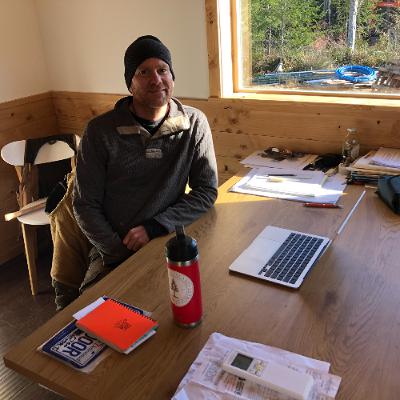
Roy L Hales/Cortes Currents - If everything goes as planned, the first two rental suites at Rainbow Ridge Affordable Rental Project on Cortes Island will be ready in June, and six units could be occupied as early as January. In this morning's interview, Mark Lombard, the Construction Manager, provides an overview of how the work is progressing at Rainbow Ridge, as well as updates from the Cortes Housing Society's other housing sites—Orchard Village and the Makerspace.
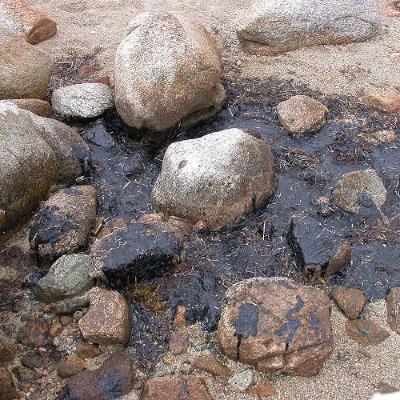
Roy L Hales/ Cortes Currents - Green party leader, Elizabeth May claims it's safer to move bitumen by rail than through pipelines. She has mentioned this in the House of Commons, written about it in her blog and told reporters. 'In a marine environment, diluted bitumen is, impossible to clean up.'
To which Michael Lowry from Western Canada Marine Response Corporation, responds, "The biggest spill we've ever cleaned up was a diluted bitumen spill."
Elizabeth May: "It wasn't dilbit." (DILuted BITumen)
They were actually referring to two different products. Lowry's company was cleaning up SynBit (SYNthetic BITumen), which is lighter, more likely to float, and thus easier to clean up than dilbit. They're both diluted bitumens that are shipped through pipelines, but SynBit is a 50/50 blend of bitumen and synthetic crude oil, whereas dilbit usually consists of approximately 70% bitumen and 30% diluent.
Lowry is the only one who means something other than dilbit when they mention diluted bitumen in this story.
Elizabeth May: "Since it's a solid, to put it in a pipe to get it to flow, they stir in fossil fuel condensate, naphtha, butane. Imagine that they stir in lighter fluid, stir in anything they can to get this solid tar called bitumen to flow through a pipeline, but unlike upgrading, this is not a step in the process of getting to a refineable product. This is only about getting it to flow through a pipeline. At its ultimate destination, a refinery, the diluent has to be removed."
May isn't endorsing the further expansion of Canada's fossil fuel sector. Her position on that is quite clear:
Elizabeth May: "Don't promote fossil fuel use. Don't build fossil fuel infrastructure - full stop - because of the climate crisis."
However if you are going to do it anyway:
Elizabeth May: "Our coastal waters are very, very much more at risk if we put bitumen in a pipeline."
"When Alberta and Federal fossil fuel supporters attempt to characterize British Columbia as a province or British Colombians and First Nations, as objectors to pipelines, they frame that objection as these people, these first nations, these environmentalists, this provincial government whatever, are trying to stop Alberta getting its resources to market."
"That's a quite familiar framing; That is completely false. Nobody would ever object to carrying solid bitumen to market, that's not the issue. The issue isn't keeping bitumen from going overseas."
"If you really want to get your product to market without getting British Colombians up in arms about destroying our ecosystems, threatening the 800 stream crossings between the Alberta border and the Burnaby Turnable terminal. If you want to ship that bitumen to buyers elsewhere in the world, you can put it on a train."
Manda Aufochs Gillespie/ Folk U - Listen in on February 20th, 2026 to this episode of FolkU, which features a recording of Dr. Michael De Danann Datura's discussion of the spectacular (in the Guy Debord sense of the word) nature of ideology in late 20th and early 21st century culture. This included an exposé of the layered and concealed aspects of commodities via Kinder Surprise eggs; a critique of Hollywood’s authoritarian master fantasies as embodied in Christopher Nolan’s Batman trilogy, and a brief foray into what it might mean to embrace desire without stuff.
Folk U Radio is taking old school viral every Friday at 1 p.m. and Mondays at 6:30 p.m./Wednesday at 6 a.m. @CKTZ89.5FM or livestreamed at cortesradio.ca. Find repeats anytime at www.folku.ca/podcasts.

Roy L Hales/ Cortes Currents - In this morning's interview Manda Aufochs Gillespie, Executive Director of the Cortes Island Community Foundation, discusses a fund called Communitas and explains how the Cortes Foundation doubled the money for this year’s Grant in Aid.
The Cortes Island Community Foundation's roots go back to 2018 when, operating under the charitable umbrella of the Cortes Island Seniors Society, it raised $1.2 million for the downpayment on the 51 acre parcel in Mansons Landing now owned by the Cortes Housing Society. The Foundation obtained charitable status in 2021. Unlike more traditional foundations, it does not rely on a long-standing endowment to fund its work.
Manda Aufochs Gillespie: “As some people know, because I like to say it a lot, we’ve only been around (as a charity) for four years and we’re from a new breed of foundation that does not have money sitting in an endowment. We’re a new foundation and we don’t want to wait to help the community organizations and groups and volunteers and neighbours that are doing good things. There’s so much to be done now.”
They’ve been fortunate in that, over the past four years, the government and Community Foundations of Canada have provided funding to distribute directly through community foundations to local groups. So the Cortes Foundation was able to distribute $100,000 to different Cortes organizations doing COVID recovery and between $200,000 and $300,000 to issues related to gender equity.
"We also have been practicing community granting by helping adjudicate and advise what we thought the Grant in Aid should be used for. Mark Vonesch, our Regional Director, has taken those recommendations to the Strathcona Regional District (SRD) Board for final decision making. But every year there are projects that come forward that we are not able to fund because they’re not eligible for Grant in Aid, or there’s just not enough money. The Grant in Aid has more or less stayed the same for years, and $25,000 does not go that far."
“We were really lucky this year because a donor came to us and said, ‘Hey, we want to direct some funds into the community for our greatest need.’ And we said, ‘Well, if you would trust us, what we would love to do is put this into a new fund called Communitas, where we would use it to do community granting and to engage in the process where we get community input and look at needs.’”
“So when Grant in Aid came around this year, we were so excited because, for the first time ever, we had our own funds! We could give out as we wanted and leverage the Grant in Aid funds that the SRD was giving out. We used that process that we were going through anyway, and we were able to make more with what was already there. It wasn’t just having more money. We could fund organizations such as the Cortes Island School Parent Advisory Committee (PAC), which had not been eligible for our Grant in Aid funding.”
“The total pot we were able to give away this year was $25,000 that came from the Community Foundation via the Communitas Fund and $25,000 that came via the SRD through the Grant in Aid process, which is taxpayer dollars coming back to your community.”

Roy L Hales/ Cortes Currents -Once again, the polls suggest Mark Carney's government could win a majority if there were an election right now. 338Canada suggests the Liberals could win as many as 185 seats, while the Conservatives shrink back to 125. In North Island–Powell River, Aaron Gunn is still projected as the winner with 36% of the popular vote, according to 338Canada, but the Liberals and NDP are right behind him with 30% each. Some believe Canada may have a spring election.
Gunn said, "If I were a betting man, I would bet there'd be an election within the next two years for sure, but this spring we'll see. I think it will be up to Prime Minister Carney and the Liberal government. Speaking as a Conservative, I don't think we're going to force an election this spring."
Jennifer Lash, the Liberal candidate in our riding during the last election, explained, "When you have a minority government, there's always speculation about whether there's going to be an election or not. There's a lot of talk, but I think that's also a conversation that's happening very much inside the Ottawa bubble of what's going to happen."
"I think there are two things we need to look at really carefully. One is, I don't think Canadians really want to go back to the polls. It's expensive; it's time consuming. I think in general, if Canadians feel that government is functioning and getting the job done, then they would like to see the work being done as opposed to spending time in an election."
"The other thing is, in the past week both the Conservatives and the Liberals have talked about how they're going to work more collaboratively to try to get some key pieces of legislation through — pieces that could have been confidence votes and caused the House to fall if they didn't have the votes."
"I think they're all hands on deck right now to try to avoid an election and get through some of these key pieces that need to be done in order to help us deal with this rupture that we're going through, as the Prime Minister calls it. Having said that, things happen. If the Conservatives start to block things and it becomes very challenging for this government to get anything done, I could see the Prime Minister going to the Governor General and saying, 'We need to have another election because this House, as it's currently formatted, is not being effective and we can't run the country.'"

Roy L Hales/ Cortes Currents - Our local MP, Aaron Gunn, is holding a series of town hall meetings in the North-Island Powell River riding. He will be in Courtenay tonight (Feb 17), Campbell River on February 21, Port McNeil on March 16 and Powell River on March 19. Gunn may also come to Cortes Island, but the dates have not been set.
Aaron Gunn: " We want to come to Cortes, but if I just come to Cortes with no plan - I haven't really accomplished anything other than a photo op. So we always try to set up some kind of coffee or meeting where people that live there know that I'm coming and if they want to come and engage, they have an opportunity to do so."
Cortes Currents: We will promote it on the radio. We will promote it over our bulletin board. It's called the Tideline. The size of the crowd's hard to tell, could be as few as 20, or as many as 100. The hundred would be surprising, but who knows? We haven't had a Conservative candidate or politician on the island for years.
Aaron Gunn: It's always better to have more people show up, but the most important thing from my perspective is you give everyone an opportunity to come out and voice their opinions and ask their questions. Different communities certainly have different amounts of political engagement. Power River has an incredible amount of engagement for the size of its community.We'll see how the Comox Valley goes tomorrow, but of course only half of the valley's in my riding. So a bunch of people who I'm not representing might show up at the door, but that's okay."
While the Conservative party saw increased support on Cortes during the last election, Gunn will face a variety of perspectives.
Max Thaysen, the alternate director for Cortes Island and co-leader of the Cortes Climate Action Network, responded, "I welcome him to come and I will be happy to ask him some questions, find out more about what he thinks about some really important stuff. I think having open and public dialogue with people who've been elected to the House of Commons is very important. There were some early concerns that Aaron Gunn was not interested in hearing from constituents. That was something that I heard in a few different places from people who were trying to get hold of him to share their concerns with him. I think he's become more open to hearing from people and sharing with them. That's a good thing."
"I also want to say that, as a very climate concerned person, I am very concerned about the public position that the Conservative party has taken. It borders on climate denial and that is very dangerous. I think we'll have some pretty serious conversations to have. I hope we get lots of people out. It should be fun. Come bring your own questions."
Cortes Currents asked Gunn what he hoped to achieve through his town hall meetings.
Aaron Gunn: "The primary vision is to give constituents an opportunity to hear directly from me and ask any questions that might be on their mind. We get hundreds of emails every week and try to meet with as many constituents as possible, but this is a very efficient and transparent way to engage with the people that you're representing and give them a chance to hold you accountable."
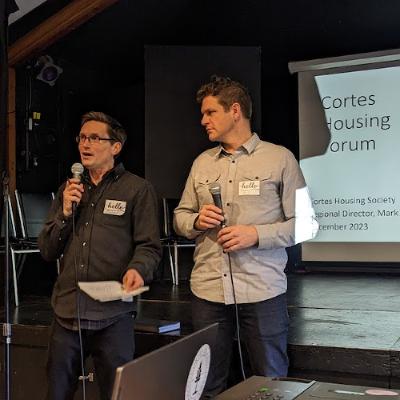
Roy L Hales/ Cortes Currents - Cortes Island's second housing survey was launched on Wednesday, February 11, 2026. Like the first housing survey conducted a little more than two years ago, this was a joint endeavour between Regional Director Mark Vonesch and the Cortes Housing Society, who together provided a look at the first responses to the 2026 survey. There had already been 70 respondents when Cortes Currents interviewed Sadhu Johnston a day after the release.
Sadhu Johnston: "The first survey was really, really helpful for us in guiding the work of the Cortes Housing Society. We wanted to do another housing survey to gauge where people are at and how they're feeling about the housing challenges on Cortes. Also, for us, as we're building out Rainbow Ridge, it helps to get clarity on what people are looking for in terms of their housing needs. We want to make sure we're building the right size units, the right number of bedrooms, and things of that nature," he explained.
Cortes Currents: By the time Mark Vonesch was available to comment on Sunday, the number of respondents had grown to 170.
Mark Vonesch: "Having data helps us make good decisions. We did a housing survey two years ago and we just released a new housing survey earlier this week. We asked similar questions to understand people's lived experience with housing, both as owners and renters. Then we added a few more questions drilling down into some of the challenges that people are having, and we asked some opinion questions on policy decisions."
"We've had 170 people fill out the survey so far, which is about 15% of the island. I would like to see at least another hundred people. So, if you're listening to this and you haven't filled out the housing survey, it just takes a few minutes. The link is on the Tideline. If you subscribe to my newsletter list, it's been released there, and through the Housing Society's social media and newsletter as well. I'm also putting it up on Tideline and we've mailed it out to all the mailboxes that receive drop mail on Cortes. We're hoping to increase the number of people that fill it out this year. Last time, we had almost 25% of the island fill it out, which is huge for a survey, but obviously the more people that fill it out, the better."
Cortes Currents: How long do people have to fill it out?
Mark Vonesch: "We are running the survey until March 6th. We're running it for a similar time as last time—roughly three weeks—so there's lots of time for people to fill it out, but the earlier the better. We've made a few changes this year."
Teen Takeover/Folk U -This episode of FolkU features an exploration of sovereignty by CIA student Tristan. What it is to be sovereign in relation to our fellow humans, and in relation to the land? How can we teach ourselves and others how to self-govern? Featuring two interviews, this podcast challenges us to think about our society a little differently, even if it’s just for an hour.
This show is the fourth instalment in the culmination of the 2025/26 podcasting course at the Cortes Island Academy, an intense deep dive into the techniques and art of podcasting in which each student picks a topic, then researches & produces a full feature-length show on it from start to finish, including interviews, scripting, recording, and editing their show. To learn more about the Cortes Island Academy, visit www.cortesislandacademy.ca
Folk U Radio is taking old school viral every Friday at 1 p.m. and Mondays at 6:30 p.m./Wednesday at 6 a.m. @CKTZ89.5FM or livestreamed at cortesradio.ca. Find repeats anytime at www.folku.ca/podcasts.
Roy L Hales/ Cortes Currents - The Cortes Community Foundation has once again shown how invaluable resource it is to the community. Regional Director Mark Vonesch has a budget of about $25,000 a year for Grants-in-Aid. When the time to disburse the funds arrives, he normally receives requests for far more money than is available. This year was no exception; however, thanks to the Cortes Island Community Foundation, nearly all these requests will be met.
As Director Vonesch explained at the January 28 Board Meeting:
"Similar to previous years, we received a lot more applications than we had funding for. I had roughly $25,000 to spend and we had over $50,000 in applications. I worked with the Cortes Island Community Foundation to put together a community jury of members who were not on non-profit boards or staff, and were not connected to those non-profits in a way that would create a conflict of interest. They held a series of meetings and went through the applications."
"I'm delighted to say that the Cortes Island Community Foundation privately raised an extra $25,000 for these applications this year. So, almost all of the funding requests will be met—assuming these are passed by the board today—both through the SRD Grant-in-Aid program and through the Cortes Island Community Foundation. I'm happy to take any questions."
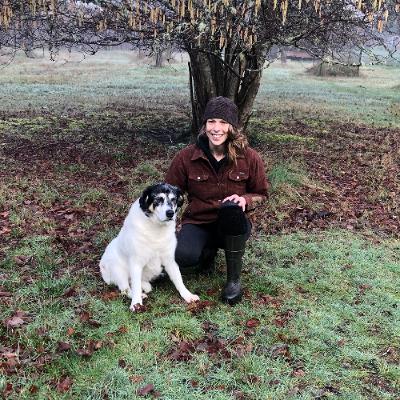
Roy L Hales/ Cortes Currents - In this morning’s interview we hear from Sara Stewart of Wildflower Produce and Cidery, near the southern tip of Cortes Island.
Sara Stewart: “I’m not a religious person, but when you depend on the natural world you become deeply ingrained in it. I used to think I was building connections with the natural world when I lit a fire on Imbolc (Ancient Celtic beginning of Spring) and celebrated Samhain (end of the harvest season). I now find that rituals or ceremonies can disconnect you from nature. So I try to cultivate the spirituality of a squirrel. I don’t see wildlife celebrating Imbolc—you just notice what’s happening in your body and respond accordingly.”
Cortes Currents: Where do you come from and what inspired you to get into agriculture?
Sara Stewart: “I grew up in a subdivision in Southern Ontario, so I didn’t have farming in my family. I gardened for a long time and I was vegan because, once you learn about the food industry, it’s pretty appalling. I worked for nonprofits before farming because I’ve tried to align my work with my values, not with the goal of a higher income. Nonprofits aren’t profitable, and farming is very, very difficult to make ends meet financially and to turn a profit. The most I’ve made farming for myself is about $5 an hour, so it’s definitely a challenging lifestyle.”
“I first got into it as a farm hand when I was 33, but I’m a little bossy, so I became the boss the next year. I became the field manager. I’m pretty good with spreadsheets. I have a very logical mind, and I often say that farming is like playing Sudoku in your mind, but with plants.”
“So if I plant this here, then this has to go here; if I time it like this, this has to go over here. So it’s a lot of planning in the winter. So I do spreadsheets showing where everything is. I have a calendar for when I seed things, when I transplant them, and when I harvest them, and that’s very left-brain.”
“Then in the summertime it’s very right-brained and creative to apply that plan to what’s actually happening, because it rarely lines up with what I intend.”
“This is my 11th season being a market gardener, and season number seven on Cortes. That part has become a lot more established and less challenging. The first year here was a carpet of weeds and very poor soil quality. I test every year. It’s been nice watching the nitrogen and organic matter increase.”
“I grow about $50,000 worth of produce a year, mostly on my own. I do have volunteers who contribute about 15 hours a week in the summer, which is nice. I sell mostly at my farm stand here and at the Cortes Natural Food Co‑op as well.”
Cortes Currents: Tell me about coming to Cortes. Why did you come here and when?
Sara Stewart: “I was working on farms for a few years as a farm manager and then decided I wanted to lease land for myself. I toured the Gulf Islands and down in Saanich. When I finished, someone recommended Cortes. I came here on a visit and I crashed a funeral and realized there were people my age here; elsewhere it had been mostly seniors. Someone told me about Reef Point Farm and that this might be a place to lease land. I contacted them, they were paying caretakers, and I had the idea of paying them to farm here. That was in 2019.”
“I started my first year farming here in 2020 with the goal of being a market gardener—growing vegetables. It just kept growing from there. The next year I got chickens, the year after that I got sheep, and in 2022 I did the business plan for the cidery.”
Cortes Currents: How many years in total have you been making cider?
Sara Stewart: “This is number three.”
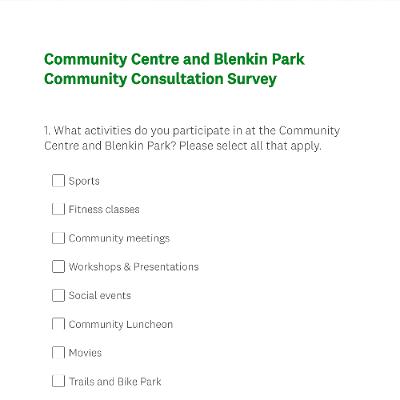
Roy L Hales/ Cortes Currents -The Quadra Island Recreation Society is asking the community for their input into what the island’s Community Centre and a new pavilion at Blenkin Park should be used for.
Marc Doll, Vice Chair of the Society, explained: “We started by looking at one desperate need for the community centre, which was the lack of a proper kitchen facility. We came up with some solutions, but the price tag came in higher than what we wanted for a very small improvement. So, conversations continued, and we decided that we really had to look at the bigger picture. The Quadra Island Community Centre has been serving the community since 1985, and we felt it was time to go back to the public and ask: what do we need this building to do for the next 20 years?”
“At the same time, we've been working with the SRD for the last number of years to get an outdoor pavilion in Blenkin Park. The funding is in place, and we're looking to start building as early as 2026.”
“So, we're going to the community to ask: does this community centre suit the needs of the community for the next 20 years? Or are there things that we need to start preparing for now? At the same time, now that we have money in place for a pavilion, we want to make sure we reach out to all the groups that currently use the facility—the concert groups, Quadra Palooza, the theatre groups, etc.—to say, 'Is this something that you would want?' And if so, what form would it need to take to best suit your use? How does the community imagine using it? Where should it be placed? What elements need to be incorporated to ensure it is well-used?”
Cortes Currents: Have you received any new ideas coming out of this so far?
Marc Doll: “The press release just went out. We have put a postcard into every mailbox on Quadra, which directs people toward a questionnaire online@yourcommunitycentre.ca. I think the postcards only hit mailboxes yesterday. I'm not going to look into the responses until everything is in. The survey closes on March 1st, and then there is a committee meeting to synthesize the responses and plan the next step, which will likely be a public open house.”
Cortes Currents: Can people mail in their responses instead of going online?
Marc Doll: “Yes. The idea is that there are also forms available at the community centre for those who don't want to do it online. They can stop by the centre or grab a form from Jane for a written response.”
Cortes Currents: How integral are these projects to the community?
Marc Doll: “The community centre is the only piece of public infrastructure that Quadra Island has. When we look forward to the challenges that the future is going to place on us, having strong communities and places for people to gather, organize, and learn is what's going to hold us together.”
Cortes Currents: Why does Quadra need a new pavilion at Blenkin Park?
Marc Doll: “The summer months offer so much opportunity. The park is large but generally not well-used in the summer. We want to bring people together; currently, we have no place for a theatre group to put on 'Shakespeare in the Park,' or even for the public to gather under cover for a family picnic on a rainy day. The community centre is a wedding venue in many ways, but it doesn't have that outdoor capacity to allow a young couple to get married without the fear of being rained upon. All these things are important community offerings that we're currently just not able to do.”
Teen Takerover/Folk U -In the first half of this episode, Cortes Island Academy students Elsie, Lacey, and Elias discuss the housing situation on Cortes, from three different angles. This includes tiny homes, Rainbow Ridge, the Seniors Village, and interviews with five different locals, as well as their own stories and observations on the topic. Travel with them as they learn about the challenges of finding housing on Cortes, and the creative solutions that are emerging to try and solve the issue.
In part two, Nathaniel Maki interviews Margaret Verschuur and Fawn Baron from the Death Care Collective, and discusses the importance of having a healthy culture and communication around the topic of death and dying.
This show is the third instalment in the culmination of the 2025/26 podcasting course at the Cortes Island Academy, an intense deep dive into the techniques and art of podcasting in which each student picks a topic, then researches & produces a full feature-length show on it from start to finish, including interviews, scripting, recording, and editing their show. To learn more about the Cortes Island Academy, visit www.cortesislandacademy.ca
Folk U Radio is taking old school viral every Friday at 1 p.m. and Mondays at 6:30 p.m./Wednesday at 6 a.m. @CKTZ89.5FM or livestreamed at cortesradio.ca. Find repeats anytime at www.folku.ca/podcasts.
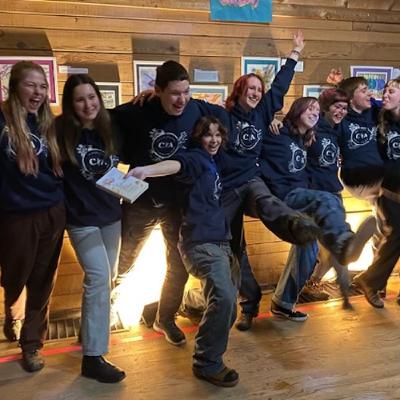
Roy L Hales/ Cortes Currents -The Cortes Island Academy offers an accredited 20 week experimental, project-based education for students in grades 10 through 12. They just wrapped up their fourth year and, on February 9, are about to start taking applications for 2026-2027. In this morning’s interview Executive Director Manda Aufochs Gillespie talks about the school and their recent annual showcase in Mansons hall.

Roy L Hales/ Cortes Currents - In addition to being a former candidate in our area, Jennifer Lash is a former senior advisor to Canada’s Minister of Environment with a lot of insight into what motivates the Liberal government.
So Cortes Currents recently asked her, “Tell us a little bit about the tightrope that Mark Carney's been walking with separatism rising in Alberta and Quebec; environmentalists saying that we should be adapting faster; the rising cost of living, needs for more housing, more jobs; Trump's economic tantrums, the need to just diversify Canada's economy and the threat of recession.”
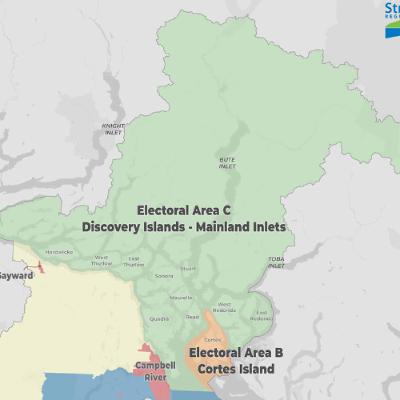
Roy L Hales/Cortes Currents -With all the current hype about the Declaration on the Rights of Indigenous Peoples Act (DRIPA), Cortes Currents reached out to two rural politicians to ask how they see this legislation working at the local level. Mark Vonesch is the Regional Director for Area B (Cortes Island) and Robyn Mawhinney is the Regional Director for Area C, which includes Quadra and most of the other Discovery Islands. They both sit on the board of the Strathcona Regional District (SRD).
Desolation Sound/Folk U - Tune in on January 30, 2026, for this week's episode of Desolation Sounds, where student journalists of the Cortes Island Academy tackle some big topics: where is the line on climate change? What's the deal with UAPs? Is Queerness inherently a radical act? Journey with Dean, Dylan, Devin, and Lin as they interview experts on these topics, and report on their findings.
This show is the second instalment in the culmination of the 2025/26 podcasting course at the Cortes Island Academy, an intense deep dive into the techniques and art of podcasting in which each student picks a topic, then researches & produces a full feature-length show on it from start to finish, including interviews, scripting, recording, and editing their show. To learn more about the Cortes Island Academy, visit www.cortesislandacademy.ca
Folk U Radio is taking old school viral every Friday at 1 p.m. and Mondays at 6:30 p.m./Wednesday at 6 a.m. @CKTZ89.5FM or livestreamed at cortesradio.ca. Find repeats anytime at www.folku.ca/podcasts.
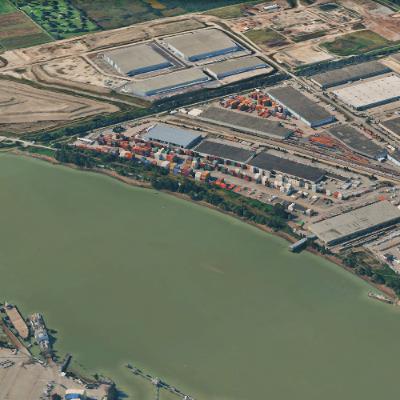
Roy L Hales/ Cortes Currents - British Columbia is currently navigating a widening divide. On one side, the courts are handing down historic decisions affirming Indigenous rights. On the other, a growing wave of anxiety over private property and economic certainty. Today, we look at the fallout from the Gitxaala and Cowichan Tribes decisions—and the political battleground forming around the Declaration on the Rights of Indigenous Peoples Act (DRIPA).
These are actually three separate topics: two court cases regarding the duty to consult before registering mining claims (Gitxaala versus British Columbia and the 2025 appeal); a court case regarding the Aboriginal title to an ancient village site that was sold out from beneath the Cowichan Tribes (Cowichan Tribes v. Canada); and DRIPA, the provincial legislative framework that formally adopts and implements the the United Nations Declaration on the Rights of Indigenous Peoples (UNDRIP)
The tension spiked following Cowichan Tribes v. Canada. For hundreds of years, the Cowichan tribes wintered in the Southern Gulf Islands and then regrouped at Tl’uqtinus village, in Richmond, during the warmer months. David Rosenberg, Senior Counsel for the Cowichan Tribes, explained, ‘These lands were settlement lands and settlement lands were supposed to be put aside for as reserves for First Nations.’ Instead, Tl’uqtinus was sold to settlers. The court has restored the 800 acres of the historic village site ‘over which they have proven sufficient and exclusive occupation,’ to the Cowichan Tribes.
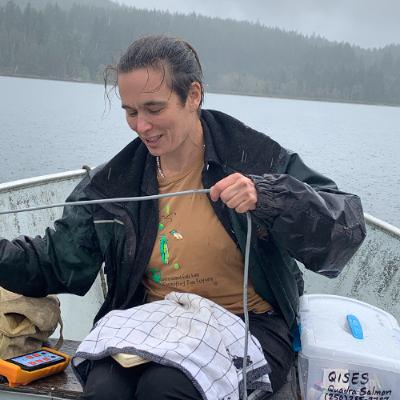
Roy L Hales/ Cortes Currents -The Quadra Island Salmon Enhancement Society grew out of poor salmon runs in the 1970s and 80s and has been a non-profit organization (and registered charity) since 1981. In this morning’s interview Lauren Miller, a director, talks about the 2025 salmon run, climate change and some of the projects her organization has undertaken.
Cortes Island Academy/ Folk U - Tune in on January 23, 2026, to hear student journalists Minton, Jasmine, and Willow, of the Cortes Island Academy, explore the topics of storytelling and play, and why they are vital and important parts of healthy culture, both in the past, and today. Journey with them as they interview experts on these topics, report on their findings, weave in their own stories, and bring us a new and playful understanding of these timeless concepts and why they remain as important today as they did hundreds of years ago.
This show is the first instalment in the culmination of the 2025/26 podcasting course at the Cortes Island Academy, an intense deep dive into the techniques and art of podcasting in which each student picks a topic, then researches & produces a full feature-length show on it from start to finish, including interviews, scripting, recording, and editing their show. To learn more about the Cortes Island Academy, visit www.cortesislandacademy.ca
Folk U Radio is taking old school viral every Friday at 1 p.m. and Mondays at 6:30 p.m./Wednesday at 6 a.m. @CKTZ89.5FM or livestreamed at cortesradio.ca. Find repeats anytime at www.folku.ca/podcasts.
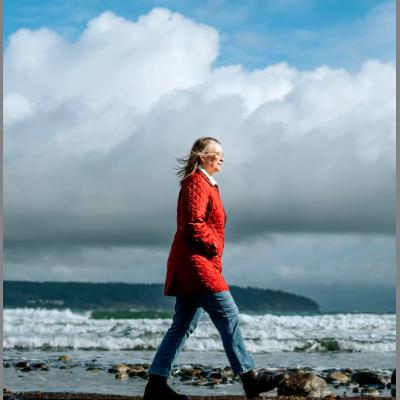
Roy L Hales/ Cortes Currents - It has been two months since Mark Carney survived a non-confidence vote and went on to sign an MOU in which he agreed to support a new bitumen pipeline across British Columbia. In this morning’s interview, Jennifer Lash, the Liberal candidate for our North Island Powell River riding in the last election, explains why she still thinks Mark Carney is the right Prime Minister for Canada.

Comments

Download from Google Play

Download from App Store
 United States