


 Claim Ownership
Creator Generation
Subscribed: 41Played: 1,246
Subscribe

© 2026 Changer Pty Ltd
Description
Creator Generation brings you behind the scenes of the creator economy, featuring top YouTubers and experts who share the strategies, lessons, and stories behind building successful channels, growing incredible businesses, and driving the world’s biggest online video successes.
151 Episodes
Reverse
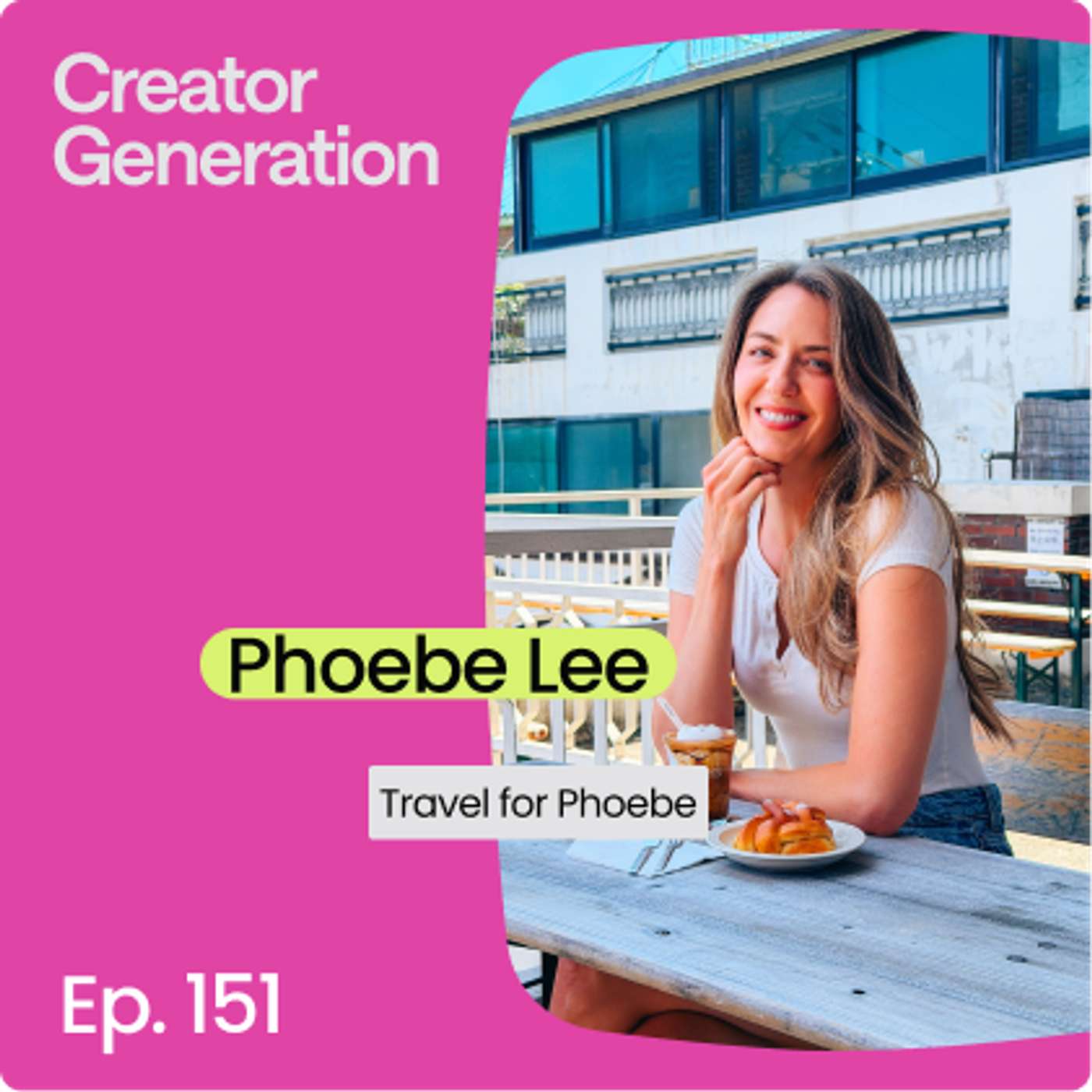
Phoebe Lee has been travelling full time for four years and doesn’t live anywhere. She was Little Grey Box when she last sat down with us, a name she picked off the floor of a London flat and could never explain to anyone. She’s now Travel for Phoebe, she’s past 460,000 subscribers, and she’s back to talk about what the last stretch has actually involved.In this episode, Phoebe is open about the parts of travel creation that don’t make the vlog. She talks about the rebrand she put off for years and finally did at 100k, the video about her mental health that she nearly pulled, and how the response to that one video changed her relationship with her audience completely. Plus the tourism board that threatened to deport and blacklist her mid-trip, how the money has shifted from ad revenue to brand deals, and the three small daily rituals she uses to hold a life together with no fixed address.An honest conversation about the business of travel content, and what it costs to be on camera every day.Topics covered: rebranding an established channel · turning an audience into a community · burnout and taking time off · brand deals and hosted trips · tall poppy syndrome and filming in public · handling difficult clients · what travel creation actually looks like
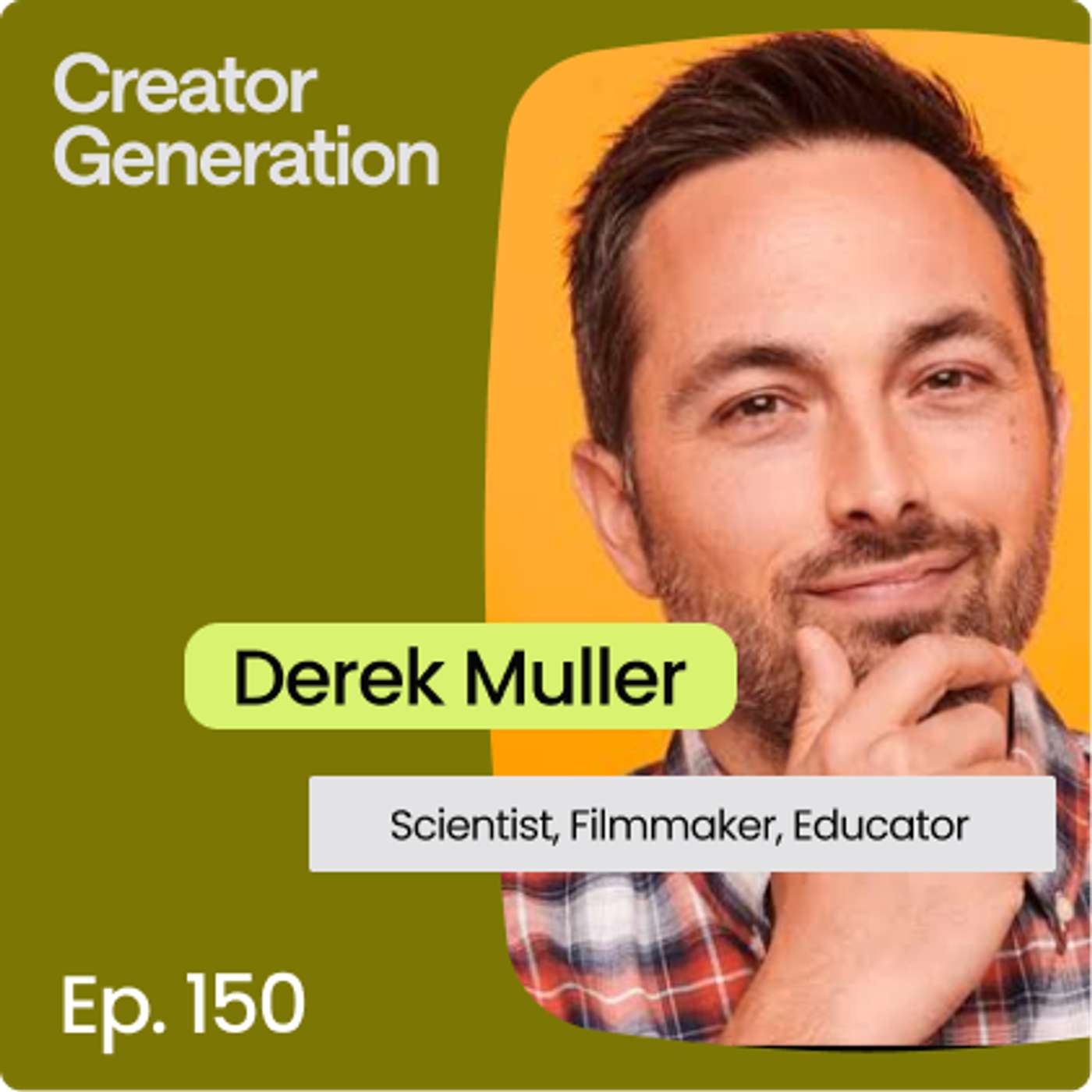
Derek Muller has an engineering degree, a physics PhD and a job he enjoyed at a tutoring company. In 2010 he quit most of it and started Veritasium, which went on to become one of the channels that helped define what YouTube could be. For our 150th episode, he walks through the whole thing.Derek is unusually candid about the parts creators don’t talk about. The first year of sub-1,000 views and the friends who kept him going when he was close to quitting. The pivot he made when he realised that people who don’t like science won’t click a science video and people who do won’t click a basic one. The slinky video that taught him what viral territory looks like, and the decade it took to work out that the real product is knowledge you can repeat to your friends and seem smarter. Then investors came knocking, the first deal fell apart at the signing table, and the second one has taken the company from under 10 people to 35 and is slowly moving him out of frame.A career-spanning conversation about craft, depth, and building something that doesn’t need you in it.Topics covered: finding the right audience · what makes something go viral · depth as a competitive moat · the difficulty of building a team · selling part of a creator business · succession and diversifying on-screen talent · what comes after the channel
Haley Janicek has spent close to a decade at Kit, where she leads creator community. Her first job there was sales. Her argument on email hasn’t changed in all that time: it was never the sexy channel, it has simply always converted better than anything else.In this episode, Haley is specific about where creators go wrong. The big one is treating the newsletter as the whole plan when it’s really the top of the funnel, with the welcome sequence and the automations underneath doing the actual selling. She explains why a subscriber is worth roughly a dollar while a follower isn’t, why the inbox is a space people guard far more closely than their feed, and why nobody buys a $2,500 mastermind off a social post but plenty of people buy it after a few emails. We cover the formula that makes newsletters sustainable (a theme, a fixed day, something you can write in under an hour), the podcast flywheel that lets two creators cross-promote to entire lists rather than new subscribers, and what people get wrong when they pay for subscribers. Plus how Kit’s free studios work as a retention strategy, and why she refuses to put panels on her conference stage.A practical session on email strategy from someone who has watched thousands of creators build lists, and seen which ones actually make money.Topics covered: email strategy vs newsletters · why subscribers convert better than followers · welcome sequences and automations · growing a list through collaboration · paid subscribers and ManyChat · selling as a creator skill · events and community
Ronald Pruett has spent decades in direct response TV, home shopping and direct to consumer, and now sits on the business side of Gemma Stafford's Bigger Bolder Baking, the YouTube channel that has become the number one baking podcast in the US, and most recently a run on QVC. He calls himself the suit. His argument is that what we call the creator economy isn't one yet, because the participants can't really trade with each other, and that what exists today is an economy of creatives instead.In this episode, Ronald is blunt about the structure most creators are working inside. He explains why platforms have an incentive to produce some stars but not too many, why he thinks it's now close to impossible to break out as a new star on YouTube, and why ad revenue, useful as it is, works like a slow poison on a business you don't control. He draws the line between an audience and a community as simply as anyone has: an audience watches, a community buys a ticket. Then he lays out what would have to change for creators to become a genuine asset class, using the music catalogue market as the model, and why hits, predictable revenue and owned IP are the three things institutional money will want before it arrives. Plus the content, community, commerce sequence he uses with Gemma, why direct to consumer brands with no community in the middle went bankrupt handing their money to Meta, and why operators who understand both media and commerce are the biggest missing piece in the industry.A big picture conversation about where the creator economy actually is, and what has to happen before it becomes something you can invest in.Topics covered: creator economy vs economy of creatives · platform incentives and the power law · audience vs community · content, community, commerce · ownership of IP and distribution · lessons from the music catalogue market · creators as an asset class · stars and suits
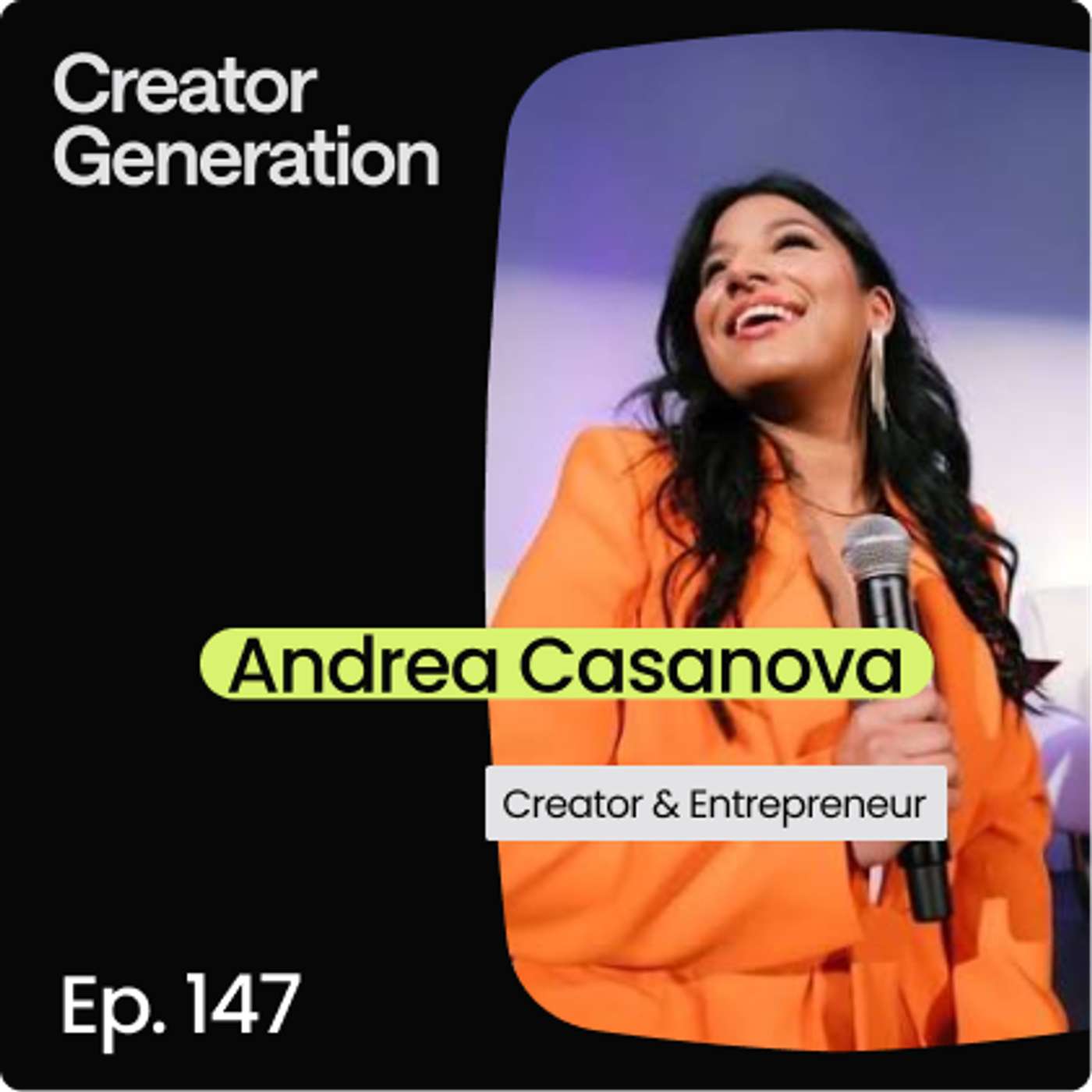
Andrea Casanova was born in Venezuela, left after her brother was kidnapped, and moved through the Dominican Republic, Panama and Brazil before landing in the US for college. On a student visa she was legally capped at $150 a month, so she hustled: growing League of Legends accounts, walking dogs, shooting photos for bars. She now runs an agency, speaks on creator economy tech, and is building Ginger, a tool that helps creators handle their inbound brand deals.In this episode, Andrea is open in a way most people aren't about money and the discomfort that comes with it. She started her agency with one client, a psychiatrist who was also a witch, at $400 a month, and inside two years was billing $70,000 a month. We cover why she thinks 67% of brand emails go unanswered and what that costs a mid-tier creator, why she says the missing skill is business etiquette rather than engagement rate, and her split between brand building and cash building as a way to decide what to work on. Plus, what she had to say no to in order to ship Ginger, and what she'd tell a first-time creator walking into Cannes with nothing to offer.A candid conversation about money, judgement and focus from someone who has built from almost nothing more than once.Topics covered: money mindset and pricing guilt · building an agency from scratch · unanswered brand deal emails · business etiquette for creators · brand building vs cash building · decision making frameworks · becoming a non-technical tech founder · saying no

Comments

Download from Google Play

Download from App Store
 United States