


 Claim Ownership
CyberSecurity Summary
Subscribed: 97Played: 4,444
Subscribe

© Copyright CyberSecurity Summary
Description
CyberSecurity Summary is your go-to podcast for concise and insightful summaries of the latest and most influential books in the field of cybersecurity.
Each episode delves into the core concepts, key takeaways, and practical applications of these books, providing you with the knowledge you need to stay ahead in the ever-evolving world of cybersecurity.
Whether you’re a seasoned professional or just starting out, CyberSecurity Summary offers valuable insights and discussions to enhance your understanding and keep you informed.
You can listen and download our episodes for free on more than 10 different platforms:
https://linktr.ee/cyber_security_summary
1465 Episodes
Reverse
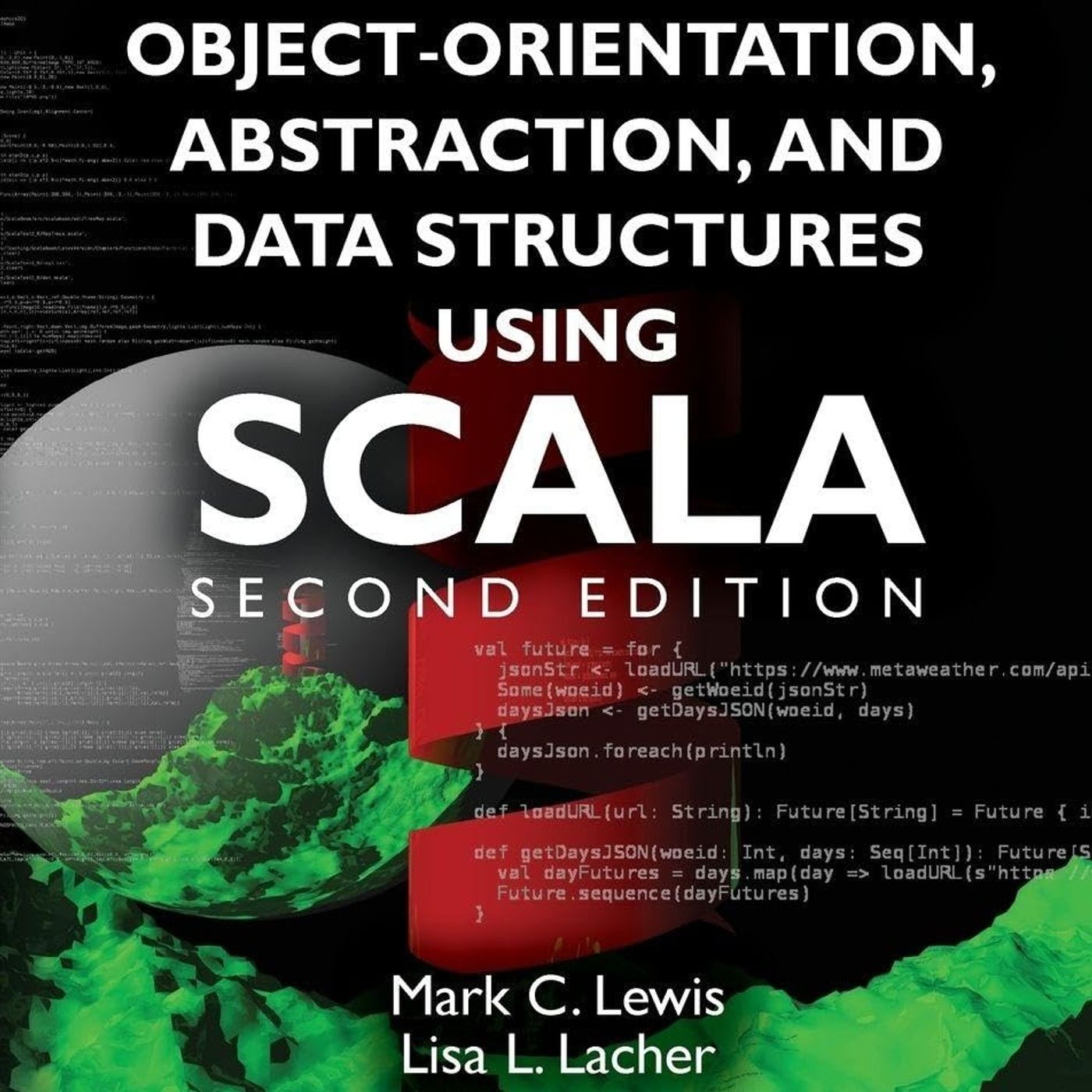
An advanced academic textbook for computer science education. The publication specifically targets undergraduate or graduate students who already possess foundational programming knowledge and wish to transition toward more complex software development. By utilizing the Scala programming language, the curriculum emphasizes fundamental computer science concepts such as object-oriented design, type systems, and code abstraction. Furthermore, the volume provides in-depth exploration regarding the creation, performance, and analysis of various data structures, while additionally integrating practical topics like graphical user interfaces, multithreading, and networking.You can listen and download our episodes for free on more than 10 different platforms:https://linktr.ee/cyber_security_summaryGet the Book now from Amazon:https://www.amazon.com/Object-Orientation-Abstraction-Structures-Textbooks-Computing/dp/149873216X?&linkCode=ll2&tag=cvthunderx-20&linkId=f77ec80a92a0835d2b9d1dc1cf658911&language=en_US&gaOptInStatus=true&ref_=as_li_ss_tlDiscover our free courses in tech and cybersecurity, Start learning today:https://linktr.ee/cybercode_academy

Explore the concepts of natural complexity and cellular automata, which are simple computational models used to simulate complex growth processes. The text highlights how basic, local interaction rules applied to systems with many elements can spontaneously generate intricate macroscopic structures, such as fractals and self-similar patterns, without any external direction. It distinguishes complexity from randomness and chaos, emphasizing that complex systems are typically open, dissipative systems that maintain themselves by channeling energy through their boundaries. Furthermore, the material explains how simple computer programs on one- and two-dimensional lattices can model natural phenomena like snowflakes, traffic, and epidemics. Ultimately, the handbook serves as a practical guide to understanding complexity through hands-on computational modeling and experimentation.You can listen and download our episodes for free on more than 10 different platforms:https://linktr.ee/cyber_security_summaryGet the Book now from Amazon:https://www.amazon.com/Natural-Complexity-Modeling-Handbook-Primers-ebook/dp/B01M5K6651?&linkCode=ll2&tag=cvthunderx-20&linkId=b9dd25a76fc7ee9aecf02814cc9e7f61&language=en_US&gaOptInStatus=true&ref_=as_li_ss_tlDiscover our free courses in tech and cybersecurity, Start learning today:https://linktr.ee/cybercode_academy

An introduction to OAuth 2.0, detailing its mechanics as a security protocol that allows applications to access services on behalf of users without requiring credential sharing. Before the advent of OAuth, developers often relied on insecure methods like credential sharing or credential theft, where applications would directly handle and store user passwords, leading to significant security risks. To address these vulnerabilities, OAuth 2.0 acts as a delegation protocol utilizing access tokens that function similarly to a car's valet key, granting limited and revocable access rather than full control. The text outlines the core architecture of OAuth, including its primary actors such as clients, protected resources, and authorization servers, while contrasting its approach with outdated anti-patterns. Additionally, the source material introduces a comprehensive four-part exploration of building OAuth 2.0 environments, addressing common vulnerabilities, token lifecycles, and advanced protocols like OpenID Connect.You can listen and download our episodes for free on more than 10 different platforms:https://linktr.ee/cyber_security_summaryGet the Book now from Amazon:https://www.amazon.com/dp/161729327X?lv=shuf&channelId=500&plpRedirect=mhFallback&linkCode=ll2&tag=cvthunderx-20&linkId=d7257061800a5d8d1131ca5c400ec211&language=en_US&gaOptInStatus=true&ref_=as_li_ss_tlDiscover our free courses in tech and cybersecurity, Start learning today:https://linktr.ee/cybercode_academy
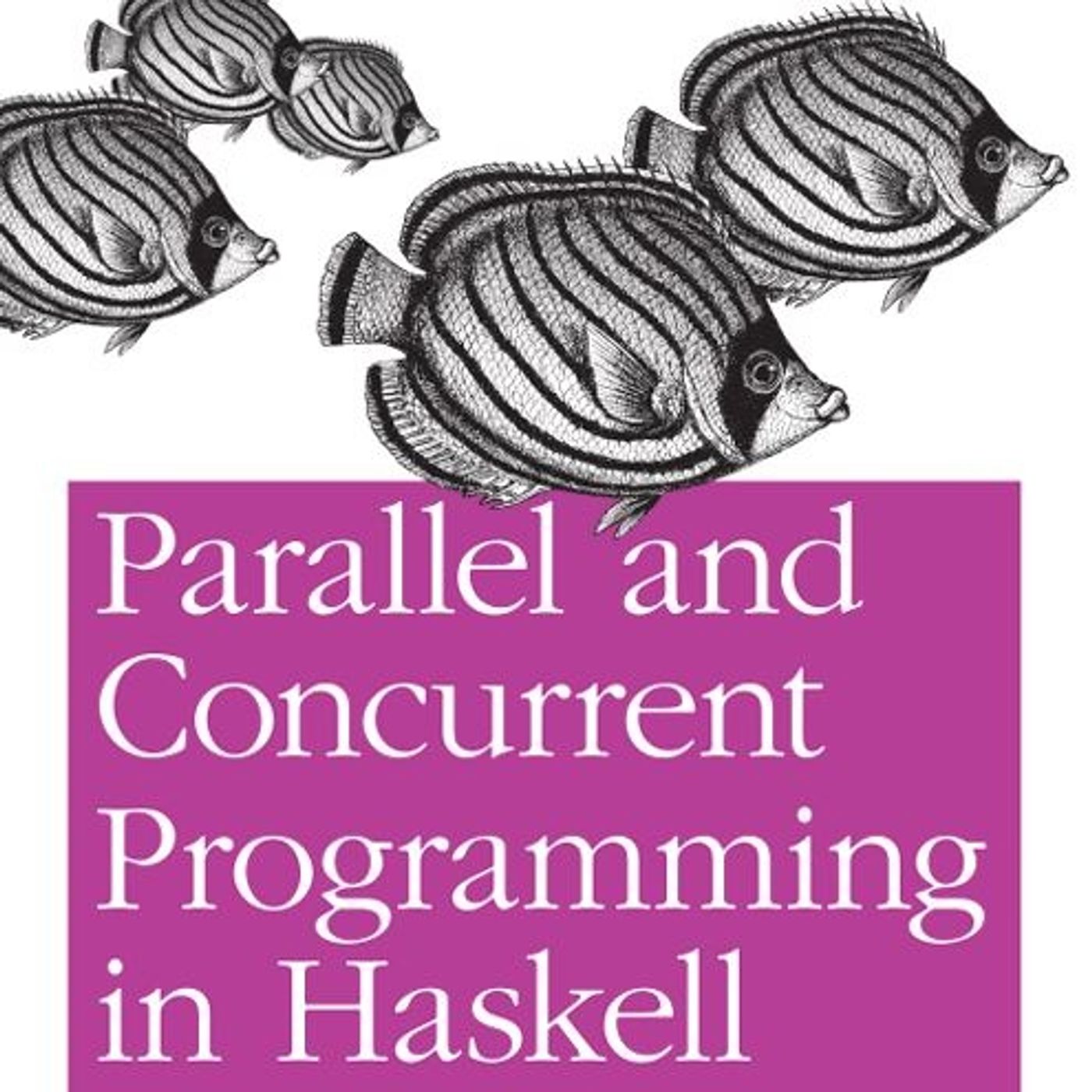
Explores techniques for parallel and concurrent programming in Haskell, highlighting how the language enables developers to utilize multicore processors and handle multiple threads. The sources explain lazy evaluation concepts, including weak head normal form, and demonstrate how the Eval monad utilizes functions like rpar and rseq to execute computations simultaneously. Additionally, the text covers concurrent programming fundamentals, showing how lightweight threads and communication structures such as MVars allow programs to overlap input/output operations. Practical applications are also discussed, ranging from optimizing mathematical functions to fetching data asynchronously from network URLs.You can listen and download our episodes for free on more than 10 different platforms:https://linktr.ee/cyber_security_summaryGet the Book now from Amazon:https://www.amazon.com/dp/1449335942?lv=shuf&channelId=500&plpRedirect=mhFallback&linkCode=ll2&tag=cvthunderx-20&linkId=8783aba1ab98537957222fa82a5b5e55&language=en_US&gaOptInStatus=true&ref_=as_li_ss_tlDiscover our free courses in tech and cybersecurity, Start learning today:https://linktr.ee/cybercode_academy
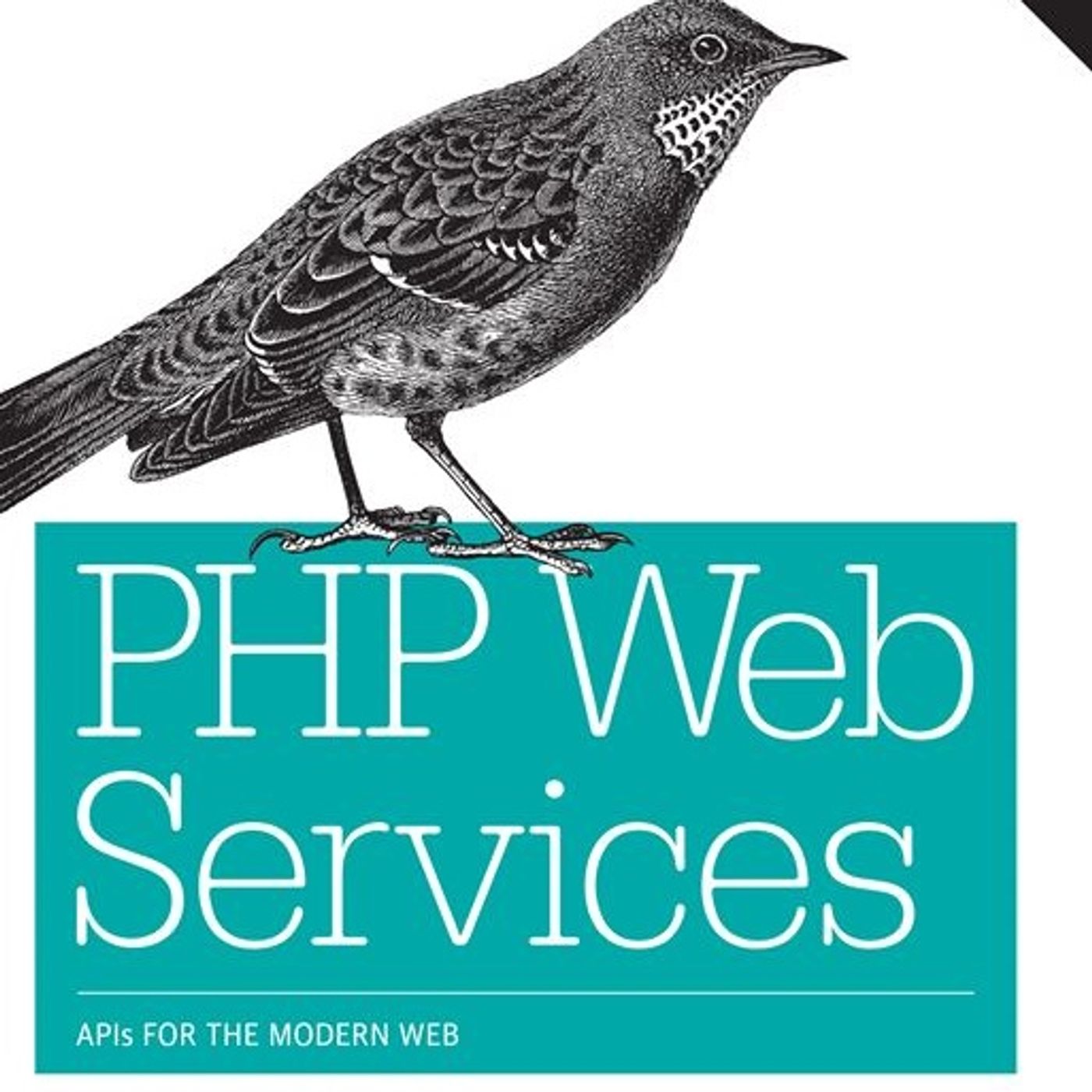
A comprehensive technical guide to building and consuming web services using PHP. The material emphasizes the fundamental role of HTTP, explaining how clients and servers interact through request and response cycles, headers, verbs, and cookies. Various methods for handling HTTP traffic are explored, ranging from command-line tools and browser extensions to native PHP functions and the Guzzle library. The text also addresses different service architectures, including RPC, SOAP, and REST, alongside practical considerations for data formats like JSON and XML. Ultimately, the guide covers broader software engineering topics such as error handling, debugging, API documentation, and designing robust, maintainable systems.You can listen and download our episodes for free on more than 10 different platforms:https://linktr.ee/cyber_security_summaryGet the Book now from Amazon:https://www.amazon.com/PHP-Web-Services-APIs-Modern-ebook/dp/B01A9GD0JC?&linkCode=ll2&tag=cvthunderx-20&linkId=3a4b3f43eacbce8c10b3099f9e86bc4b&language=en_US&gaOptInStatus=true&ref_=as_li_ss_tlDiscover our free courses in tech and cybersecurity, Start learning today:https://linktr.ee/cybercode_academy

Comments

Download from Google Play

Download from App Store
 United States