


 Claim Ownership
DayOne.FM
Subscribed: 0Played: 0
Subscribe

© Copyright 2026 Day One
Description
We're for founders & operators.
https://dayone.fm/shows
https://dayone.fm/shows
472 Episodes
Reverse

Episode SummaryAdrian Macneil grew up packing kiwifruit in rural New Zealand, now he’s building the core infrastructure powering the future of robotics. After leading engineering teams at Cruise and Coinbase, Adrian co-founded Foxglove, a developer platform used by robotics companies worldwide, from autonomous tractors to warehouse bots.In this episode, Adrian shares how Foxglove emerged from an internal Cruise demo, why robotics is finally having its “PC moment,” and what it really takes to build a startup that lasts. We cover:• How Cruise helped pioneer self-driving cars (and what went wrong post-acquisition)• Why developer tools are the missing layer holding robotics back• Lessons from Coinbase, Cruise, and scaling teams from 30 to 1,200• The case for Kiwi founders to leave New Zealand, at least for a while• What robotics startups can learn from the rise of SaaS• The value of building boring robots that just move riceWe also dive into Adrian’s early days hacking e-commerce in Thailand, how government jobs don’t prepare you for startups, and why he believes the robotics industry will 100x in the next decade.Time Stamps03:30 When an internal tool became a startup idea07:42 Cruise vs GM: Startup chaos inside a legacy giant12:47 Foxglove’s customer base: From tractors to warehouses16:15 Why Foxglove won’t build robots — and what they’re building instead21:54 The “1980s PC” moment for robotics27:41 If not Foxglove — what robotics startup would Adrian build?30:15 From kiwifruit packhouses to automation inspiration36:35 Why ambitious builders still need to go to Silicon Valley41:36 The 10-year mindset needed to build a real company47:50 How the Kiwi diaspora can supercharge the next generationResources🧠 Adrian Macneil’s LinkedIn: https://www.linkedin.com/in/adrianmacneil/🛠️ Foxglove – Developer tools for robotics: https://foxglove.devDiaspora.nz is part of Day One.Day One helps founders and startup operators make better business decisions more often. To learn more, join our newsletter to be notified of new Diaspora.nz episodes and upcoming shows.

Episode SummaryXavier Collins, London-born and New Zealand-raised, is no stranger to building marketplaces that scale. After early days at Uber, Xavier joined Nexus Notes before launching Deliveroo into dozens of UK cities and spearheading Turo’s growth across Europe. Now he’s applying his marketplace magic to the film industry with Wonder, an AI-native creative studio backed by Blackbird, LocalGlobe, and a host of world-class angels.In today’s episode, Xavier takes us deep into the creative frontier of AI and storytelling, exploring how technology can unlock new levels of creativity, reshape entertainment financing, and give more filmmakers a voice. We cover:• How AI is redefining storytelling and enabling more scripts to reach production• Lessons from building successful marketplaces at Uber, Deliveroo, Turo, and Nexus Notes• The keys to marketplace success: seeding liquidity, focusing on quality supply, and defining user experience• Why the entertainment industry is overdue for disruption (and how Wonder is leading the charge)• How filmmakers and creatives can harness AI to amplify their visionWe also dive into Xavier’s unique journey—from narrowly missing a consulting career to hustling his way through startups, and the unforgettable Cannes moment that launched Wonder.Time Stamps02:49 The Cannes moment: Realising AI will reshape filmmaking07:18 Using AI to rescue stories that wouldn’t otherwise be told10:56 The life-changing phone call that sent Xavier into startups19:37 Early lessons on marketplace liquidity from Deliveroo and Turo25:52 Price, selection, and service: The three pillars of marketplace success32:16 Services vs SaaS: Rethinking business models in the AI age41:05 Financing films 101: Inside Xavier’s other venture, Lumiere Ventures48:26 Xavier’s advice to young people: Lean into AI nowResources🙋🏻♂️ Xavier Collins’s LinkedIn: https://www.linkedin.com/in/xaviercollins/✨ Wonder – AI-native creative studio: https://www.wonder.incDiaspora.nz is part of Day One.Day One helps founders and startup operators make better business decisions more often. To learn more, join our newsletter to be notified of new Diaspora.nz episodes and upcoming shows.
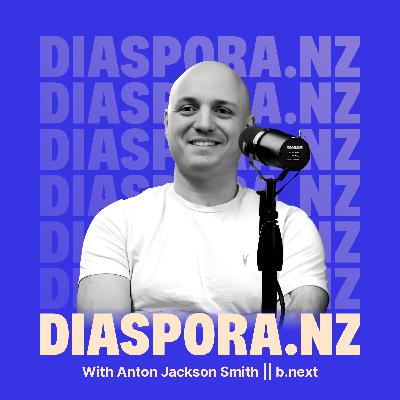
Episode SummaryAnton Jackson Smith is a synthetic biologist, Stanford PhD, and founder of b.next—a startup building synthetic cells from scratch to make biology truly programmable. Think of it as rewriting life’s codebase, with applications ranging from cancer treatments and diagnostics to lab-grown foods and smart crops.In today’s episode, Anton breaks down what synthetic cells actually are (and why they matter), how his open-source platform Nucleus is changing the way biology is engineered, and why the future of medicine, agriculture, and climate tech might be written in DNA.We also dig into his journey, from coding in Queenstown and law school in Otago, to cutting-edge research in Silicon Valley, and how a random article on programmable E. coli changed everything.In this conversation, we cover:• How synthetic cells could power the next generation of therapeutics and diagnostics• Why biology needs its own “AWS moment” and how open source can unlock it• The real business model behind synthetic biology (and why it's not just science)• How Kiwi strengths in agriculture and biotech could shape a global future• What New Zealand needs to do to retain and return its brightest mindsAnton also shares his vision for a safer, more ethical bio-economy, and how we can build powerful new tools without repeating the mistakes of the past.Time Stamps01:21 What is a synthetic cell—and why should you care?06:44 How Anton fell into biology (thanks to an E. coli article in Vietnam)11:12 Why modifying real cells isn’t enough—and what BNext is doing differently16:30 The near-term use cases: cancer, diagnostics, and food22:47 How Nucleus is creating the open-source toolkit for biology30:14 Three phases of BNext’s business model: Boot → Build → Bazaar37:10 The big vision: programmable biology that saves lives44:18 What New Zealand’s biotech future could look like47:30 Returning talent, building bridges, and bringing brains back homeResources🙋🏻♂️ Anton Jackson Smith on LinkedIn: https://www.linkedin.com/in/antonjacksonsmith🧬 b.next : https://www.bnext.bioDiaspora.nz is part of Day One.Day One helps founders and startup operators make better business decisions more often. To learn more, join our newsletter to be notified of new Diaspora.nz episodes and upcoming shows.

Episode SummaryGrowing up in Wellington, New Zealand, with parents in the police force and government, a career in film and TV wasn’t exactly on the radar for Georgia Rippin. But after studying law and Māori at Vic, she made a bold leap to New York, armed with only a suitcase, a dream, and a few blocks of Whittaker’s chocolate that she used to slip into mailrooms of the biggest studios on the planet. That scrappiness paid off: Georgia wound up producing mid-form shows (those 10- to 20-minute episodic pieces that can eventually scale into full series), teaming up with major networks, and ultimately founding Kold Open, a platform reshaping how creators monetise their IP and get discovered.In this episode, Georgia digs into the pitfalls of legacy media, why YouTube fails episodic creators, and how AI-driven product placement might unlock new revenue streams for independent filmmakers. She also shares the real story of how she broke into the industry, from dressing like an assistant to cold-knocking on studio doors, and why she believes being just the right amount of naïve can be an entrepreneur’s superpower. Finally, she offers insights for fellow Kiwis eager to chase creative careers on the world’s biggest stages.Time Stamps00:00 – Intro02:16 – From legal briefs to scripts: Why she picked New York over LA04:18 – Mid-form explained: How shows like Workaholics and It’s Always Sunny began08:01 – Why YouTube’s algorithm hurts episodic creators—and how Kold Open fixes it10:20 – Cracking the first big studio deal: Lessons in hustle, grit, and chocolate bribes14:19 – Being ‘productively naïve’: Georgia on forging a path without industry connections18:07 – AI’s silver lining for indies: New tools that help with coloring, sound, and distribution25:37 – Rise of FAST channels: Why “free TV” is the next frontier for content creators31:53 – The founder journey: Building a startup in NYC and hitting sustainable revenue35:54 – AI-driven ad placement: Adding a digital Pepsi cup post-production (and getting paid)40:48 – Advice for aspiring Kiwi creators: Collaboration, comedic storytelling, and never giving upResources- Kold Open – Georgia’s mid-form platform: https://www.koldopen.com- Georgia Rippin on LinkedIn: https://www.linkedin.com/in/georgia-rippin/- Viva La Dirt League (NZ’s comedy YouTubers mentioned): https://www.youtube.com/c/VivaLaDirtLeague

Episode SummaryBowen Pan’s career is a playbook on turning hidden opportunities into global products. Currently the VP of Product at Common Room (a $52M Series B startup backed by Greylock and Index Ventures), Bowen previously shaped major products at Facebook and Stripe. At Facebook, he discovered latent buying and selling behaviour buried in groups, leading to the creation of Facebook Marketplace, now serving over 500 million people worldwide. Later, at Stripe, Bowen built their apps platform, creating an ecosystem empowering small businesses around the globe.Bowen’s product philosophy hinges on ruthless curiosity, finding underserved markets, and cultivating teams focused on impact, not visibility. From his formative days at Trade Me in New Zealand, through launching ambitious new verticals at Facebook, to redefining payments at Stripe, Bowen shares how Kiwi generalism laid the foundation for his product-led approach.In today’s episode, we cover:• How Bowen uncovered and scaled Facebook Marketplace from a simple SQL query• Why high-impact, low-visibility projects are career superchargers• How New Zealand shaped Bowen’s holistic view of product building• The secret to spotting hidden user behaviour that others overlook• The skills you should build (and ignore) to be an exceptional product leader• Why truth-seeking is the greatest career skill of all• How Common Room is reinventing go-to-market by putting people firstWe also explore Bowen’s thoughts on investing in passionate founders, the future of product management amidst AI-driven tools, and how Kiwi companies can better leverage global opportunities.Time Stamps00:32 Bowen’s journey from Trade Me to Facebook, Stripe, and Common Room02:27 Spotting hidden opportunities: the power of latent user behaviour09:45 Building Facebook Marketplace from scratch21:00 How Bowen validated Marketplace’s potential28:43 Stripe’s mission and building a platform for SMBs35:43 What defines excellent product management?47:26 The future of product leadership in the age of AI55:18 How New Zealand shaped Bowen’s global career59:25 Using New Zealand as a global testing ground01:03:55 Investing philosophy: finding founders with secret insightsResourcesBowen Pan’s LinkedIn: https://www.linkedin.com/in/bowenpan/Common Room - Reinventing go-to-market software: https://www.commonroom.io
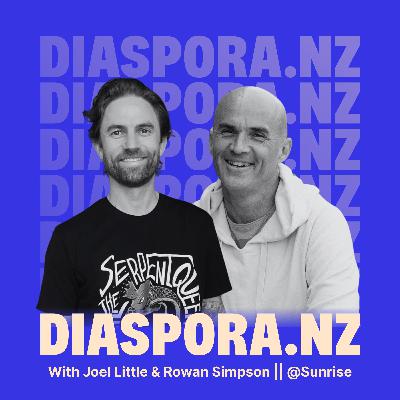
Episode SummaryJoel Little is one of the world's top music producers, quietly shaping global hits behind the scenes - from co-writing Lorde’s breakthrough "Royals" to producing massive tracks for artists like Taylor Swift, Imagine Dragons, and Khalid. Despite Grammys, multi-platinum records, and billions of streams, Joel remains remarkably down-to-earth, bringing a uniquely Kiwi sensibility to Hollywood and beyond.In this special live episode, Joel flips roles with early Trade Me engineer and investor Rowan Simpson, uncovering the striking similarities between creating hit songs and building startups. They dive into the art of discovering and shaping raw talent, how Kiwi humility can be a secret weapon (and sometimes a weakness), and the critical role that producers, mentors, and early supporters play in global success stories.In today’s episode, we cover:• Joel’s wild ride from recording Royals in two days to topping global charts, winning Grammys, and producing some of the decade’s biggest songs• What music producers actually do, and why creative collaboration often feels like therapy• Why Joel sold his song catalogue (and how that’s like a startup “exit”)• The parallels between startups and music: from finding product-market fit, to pivoting when something’s not working, to knowing how to scale authentically• How Kiwi humility can be both a superpower and a stumbling block on the world stage• The backstory of Joel’s non-profit Big Fan, building studios and stages for the next generation of Kiwi artistsWe also hear about Joel’s own personal growth, from musician in Goodnight Nurse to world-renowned producer, and Rowan’s perspective from the early days of Trade Me and Xero, reflecting on how creativity and business blend in unexpected ways.Time Stamps00:00 Intro01:19 Meet Joel Little: Grammy-winning Kiwi producer behind Royals, Taylor Swift, Khalid, and more03:07 What does a producer actually do? Joel breaks down his creative process10:22 The making of Royals: how a song recorded in two days became a global hit15:58 Life after Royals: from struggling musician to Grammy-winning producer19:08 Working with global superstars: Imagine Dragons, Khalid, Taylor Swift22:04 How Joel avoided the classic rockstar pitfalls (and stayed authentically Kiwi)23:12 Why Kiwi humility is both Joel’s secret weapon and greatest challenge28:00 Early days at Trade Me - Rowan shares his journey from scrappy startup to Kiwi tech icon30:16 What Joel looks for in creative collaborators—and how startups can learn from his approach42:12 Selling his catalogue: Joel’s version of a startup “exit”46:30 Big Fan: Joel’s nonprofit building studios and stages for the next generation of artistsResourcesJoel Little’s Instagram: https://www.instagram.com/iamjoellittleRowan Simpson's Linkedin: https://www.linkedin.com/in/rowansimpson/Big Fan – Joel’s nonprofit for emerging Kiwi artists: https://bigfan.co.nzRoyals by Lorde (Grammy-winning single produced by Joel Little): https://www.youtube.com/watch?v=nlcIKh6sBtcYoung Dumb & Broke by Khalid (Joel’s biggest streaming hit): https://www.youtube.com/watch?v=IPfJnp1guPc

Episode SummaryKathryn Zealand founded Skip to help people stay active and independent through aging and injury, inspired by her grandmother’s painful fall and the inadequate technology available at the time. Skip's flagship product, the MoGo, is an innovative, lightweight robotic exoskeleton that acts like an e-bike for walking, offering just the right amount of assistance, whether hiking up mountains or standing from a chair.Kathryn brings her unique perspective as a physicist-turned-founder and former project lead at Google X, Alphabet’s moonshot factory, where she learned the art of rapid prototyping and building breakthrough technologies. In this conversation, Kathryn shares Skip’s journey from idea to hardware startup, the nuances of building consumer robotics, navigating FDA approval, and tackling the manufacturing challenge of moving from prototype to scale.In today’s episode, we cover:• How a personal mission became a company, and why mobility impacts mental health as much as physical well-being• What Skip’s MoGo exoskeleton is and how it empowers people to reclaim active lives• Behind the scenes at Google X: spinning out projects, rapid prototyping, and taking big bets• Navigating the complex hardware funding landscape: equity, grants, pre-orders, and venture debt• The art and science of robotic mobility: why understanding user intent matters• Why Skip chose outdoor brands like Arc'teryx as their first partners, and what’s next in consumer robotics• The skills Kat had to learn (and unlearn) to become a successful CEO and founderWe also talk about Kat’s unconventional career path, from astrophysics to humanitarian law to deep-tech entrepreneurship, and her advice to aspiring founders looking to change the world with impactful technology.Time Stamps00:41 Meet Kat Zealand: Founder, physicist, and former Googler making robotic exoskeletons02:07 How a grandmother’s fall became Skip’s origin story03:32 Introducing MoGo: “An e-bike for walking”05:11 Why mobility technology impacts mental health and quality of life07:50 Partnering with Arc'teryx: From mountain trails to everyday use08:44 Preparing to scale: From 50 handcrafted prototypes to 10,000 units10:23 Navigating FDA approval and the medical vs consumer hardware divide12:53 The robotics software challenge: Predicting user intent accurately15:58 Behind the scenes at Google X: How Alphabet’s moonshot factory works22:34 Spinning out from Alphabet: Lessons from Skip’s journey24:00 Funding hardware startups: Venture capital, non-dilutive grants, and customer pre-orders34:37 Leadership lessons Kat had to unlearn as a Kiwi CEO in Silicon ValleyResourcesKathryn Zealand’s LinkedIn: https://www.linkedin.com/in/kathryn-zealand/Skip website and MoGo rentals & pre-orders: https://www.skipwithjoy.comGoogle X (Alphabet’s moonshot factory): https://x.companyFounders, Inc – SF-based startup community: https://f.inc

Episode SummaryWhen Jamie Beaton co-founded Crimson Education, his goal was simple: help ambitious students get into the world’s best universities. Fast forward ten years, Crimson has 800+ staff, global offices, and a suite of education platforms spanning admissions coaching, an international online high school, and AI-powered study tools.Jamie’s personal journey is just as remarkable—Harvard undergrad, four master's degrees, a JD from Yale, a PhD from Oxford, a Rhodes Scholar. His expertise? Elite admissions, scaling global businesses, and the changing economics of education.In today’s episode, we cover:• Why the traditional university model is broken and which institutions will survive• How AI is making elite education accessible (and why most schools aren’t ready)• Why New Zealand’s smartest students need to get out—and when to return• The right way to build a world-class company, from hiring to leadership• How top universities actually admit students (hint: it’s not just grades)We also hear about Jamie’s biggest mentors, his leadership lessons, and the future of Crimson Education after its recent Series D.Time Stamps01:11 The wildest education history: Harvard, Yale, Oxford & beyond03:40 Crimson’s 10-year journey from a bold pitch to a global business06:48 How the real college admissions process works (and what most Kiwis get wrong)09:52 Buying vs. building: How Jamie makes big bets on acquisitions14:55 The myth of online education and why self-motivation changes everything18:08 How Crimson finds the next generation of ambitious Kiwis25:17 The AI revolution: Private tutoring for everyone—at 1% of the cost35:53 Is there a reckoning coming for the long tail of higher education?44:02 Why Kiwis need to get out—and when to do it56:06 The biggest leadership lessons Jamie had to unlearnResourcesJamie Beaton’s Linkedin: https://www.linkedin.com/in/jamiebeaton/Crimson Education – Global admissions and education platform: https://www.crimsoneducation.org/Crimson Global Academy – Online international high school: https://www.crimsonglobalacademy.school/Revision Village – IB study resource platform: https://www.revisionvillage.com/Need-Blind Financial Aid at Harvard – How top universities fund students: https://college.harvard.edu/financial-aid
SummaryHi, and welcome to day one, the podcast for regional startups and the organisations that support Australian entrepreneurship. Welcome to day one is brought to you by the city of Newcastle and Newihub. Newihub is a growing and vibrant community of Newcastle's startups & founders. It's a central hub where you can learn about what's going on in our ecosystem, with events, available jobs and other resources. I'll tell you more about Newihub later in the episode, but for now, let’s jump into the story of Damien Mahoney.Today, Stackla is a global company with dozens of employees and offices in the US and UK. Many of their clients are household names: McDonald's, Nintendo, Toyota, and Sony just to name a few. But the growth of the company has not always been smooth sailing, and in recent years they've weathered two major storms: the pandemic, which all but wiped out many of their key clients, and a legal battle with Facebook which required Damien to make an incredibly difficult decision to keep the company afloat.But before we hear about how Stackla has been able to emerge from multiple catastrophes, first we need to go back to day one, and hear the story of how a part-time job in radio that was too good to pass up would ultimately lead Damien to become the CEO of a global technology startup.Follow on SocialLinkedInWant to become a sponsor? Get in touch. Send us an email.This podcast uses the following third-party services for analysis: Podtrac - https://analytics.podtrac.com/privacy-policy-gdrpSpotify Ad Analytics - https://www.spotify.com/us/legal/ad-analytics-privacy-policy/
Show NotesSponsorWelcome to Day One is supported and the founder spotlights are made possible by our major sponsor the City of Newcastle’s Newihub.Join the community made up of entrepreneurs from Newcastle & the surrounding areas. Go to Newihub to sign up for your free account.SummaryHello and welcome to a new episode of Welcome to Day One, the podcast for Aussie founders, startups & the organisations that support Australian entrepreneurship. Welcome to Day One is brought to you by the City of Newcastle's brand new innovation platform, Newihub. Today on the show you’ll hear from Antony Martin the co-founder of Hone. But first I'd like to tell you about another organisation that is helping startups succeed in our region. The City of Newcastle is a big supporter of entrepreneurship in our region and has recently launched a brand new digital hub called Newihub. Newihub is a growing and vibrant community of Newcastle's startups & founders. It's a central hub where you can learn about what's going on in our ecosystem, with events, available jobs and other resources.Today Hone has 13 full-time team members and a small team of casuals that come and go with big projects, with customers all around the world and right now they're scaling up manufacturing of their device which will enter its first large runs this year in 2021. It's been quite a journey so far. Now, let's go back to day one, where this story begins...Follow on SocialInstagramTwitterLinkedInFacebookMeet Our Supporters (Become One)SingularityUBrian HillLaurel K.Daniel Spencer Want to become a sponsor? Get in touch. Send us an email.This podcast uses the following third-party services for analysis: Chartable - https://chartable.com/privacyThis podcast uses the following third-party services for analysis: Podtrac - https://analytics.podtrac.com/privacy-policy-gdrpSpotify Ad Analytics - https://www.spotify.com/us/legal/ad-analytics-privacy-policy/
Show NotesSponsorWelcome to Day One is supported and the founder spotlights are made possible by our major sponsor the City of Newcastle’s Newihub.Join the community made up of entrepreneurs from Newcastle & the surrounding areas. Go to Newihub to sign up for your free account.SummaryHi, and welcome to day one, the podcast for regional startups and the organisations that support Australian entrepreneurship. Welcome to day one is brought to you by the city of Newcastle. The City of Newcastle is a big supporter of entrepreneurship in our region and has recently launched a brand new digital hub called Newihub. Newihub is a growing and vibrant community of Newcastle's startups & founders. It's a central hub where you can learn about what's going on in our ecosystem, with events, available jobs and other resources. I'll tell you more about Newihub later in the episode, but for now, let’s jump into the story of Mike McKiernan.Deckee is a free mobile app designed to provide up to date information to people out on the water when boating, fishing or sailing in order to keep them safe. Deckee is approaching a million dollars raised through investors and is officially endorsed by three state governments in Australia. The Deckee app is also available for use worldwide, and international expansion is one of the priorities for the company moving forward. So how did Mike go from studying visual communications at Newcastle University to becoming an investor-backed entrepreneur overseeing a team of employees and scaling a tech company internationally? To answer that question, first, we need to go back to day one, and hear how a job Mike got as a student would reveal a whole set of problems he didn't even know existed. Follow on SocialInstagramTwitterLinkedInFacebookMeet Our Supporters (Become One)SingularityUBrian HillLaurel K.Daniel SpencerThis podcast uses the following third-party services for analysis: Chartable - https://chartable.com/privacyThis podcast uses the following third-party services for analysis: Podtrac - https://analytics.podtrac.com/privacy-policy-gdrpSpotify Ad Analytics - https://www.spotify.com/us/legal/ad-analytics-privacy-policy/
Show NotesSponsorWelcome to Day One is supported and the founder spotlights are made possible by our major sponsor the City of Newcastle’s Newihub. Join the community made up of entrepreneurs from Newcastle & the surrounding areas. Go to Newihub to sign up for your free account.SummaryHello and welcome to a new episode of Welcome to Day One, the podcast for Aussie founders, startups & the organisations that support Australian entrepreneurship. Welcome to Day One is brought to you by the City of Newcastle's brand new innovation platform, Newihub.Today on the show you’ll hear from Colin Goudie the co-founder of Social Pinpoint.Social Pinpoint's a software as a service platform aimed at the community engagement space. Most of its clients are councils and large infrastructure projects that needed to create a place for the community to collaborate with them.Now, let's go back to day one, where this story begins...Follow on SocialInstagramTwitterLinkedInFacebookMeet Our Supporters (Become One)SingularityUBrian HillLaurel K.Daniel Spencer Want to become a sponsor? Get in touch. Send us an email.This podcast uses the following third-party services for analysis: Chartable - https://chartable.com/privacyThis podcast uses the following third-party services for analysis: Podtrac - https://analytics.podtrac.com/privacy-policy-gdrpSpotify Ad Analytics - https://www.spotify.com/us/legal/ad-analytics-privacy-policy/
Show NotesSponsorWelcome to Day One is supported and the founder spotlights are made possible by our major sponsor the City of Newcastle’s Newihub. Join the community made up of entrepreneurs from Newcastle & the surrounding areas. Go to Newihub to sign up for your free account.SummaryHi and Welcome to Day One, the podcast for regional startups & the organisations that support Australian entrepreneurship. Welcome to Day One is brought to you by the City of Newcastle.Today I'd like to share the story of a Newcastle startup that has been flying under the radar for some time. A local Newcastle startup that has customers internationally. That startup is Coassemble and its co-founder, Ryan MacPherson.Coassemble is a service that helps businesses create their own interactive online courses which can be used to educate their teams or their customers. They are a global company with staff in Denver, Wisconsin, LA, Canada, and Newcastle. They are backed by venture capital, and their latest series A raise was four and a half million dollars. So how did Ryan go from being a PE teacher to CEO of a global, multi-million dollar company overseeing thirty plus staff? To answer that question, first, we need to go back to day one and hear the story of how a policy of the Kevin Rudd government would dramatically alter the course of Ryan's career.Follow on SocialInstagramTwitterLinkedInFacebookMeet Our Supporters (Become One)SingularityUBrian HillLaurel K.Daniel Spencer Want to become a sponsor? Get in touch. Send us an email.This podcast uses the following third-party services for analysis: Chartable - https://chartable.com/privacyThis podcast uses the following third-party services for analysis: Podtrac - https://analytics.podtrac.com/privacy-policy-gdrpSpotify Ad Analytics - https://www.spotify.com/us/legal/ad-analytics-privacy-policy/
Show NotesSponsorWelcome to Day One is supported and the founder spotlights are made possible by our major sponsor the City of Newcastle’s Newihub.Join the community made up of entrepreneurs from Newcastle & the surrounding areas. Go to Newihub to sign up for your free account.SummaryHello and welcome to a brand new season of Welcome to Day One. The podcast for regional startups & the organisations that support Australian entrepreneurship. Welcome to Day One is brought to you by the City of Newcastle's brand new innovation platform, Newihub. To learn more and to sign up for a free account, click the link in today's show notes or simply go to newihub.com. Today is a special episode titled Innovation in Newy, the goal of today's episode is to understand what innovation is and take a brief look at where Newcastle has come from and where it's heading.Follow on SocialInstagramTwitterLinkedInFacebookMeet Our Supporters (Become One)SingularityUBrian HillLaurel K.Daniel SpencerWant to become a sponsor? Get in touch. Send us an email.This podcast uses the following third-party services for analysis: Chartable - https://chartable.com/privacyThis podcast uses the following third-party services for analysis: Podtrac - https://analytics.podtrac.com/privacy-policy-gdrpSpotify Ad Analytics - https://www.spotify.com/us/legal/ad-analytics-privacy-policy/
Episode SummaryFrontline’s Brennan O’Donnell has spent two decades helping companies expand across borders, first as an operator at Google and later as a growth investor backing Series B to D businesses. In this episode, Cheryl and Maxine unpack what’s shifted at growth stage in the last 12 months, why the market is still a barbell of “hot or not” deals, and how AI is finally producing application layer companies mature enough for growth rounds.They go deep on Frontline’s transatlantic model: seed investing across Europe to help founders raise a Series A and enter the US earlier, and growth investing in the US to help companies expand into Europe with a hands on, concentrated portfolio approach. Brennan breaks down the four pillars Frontline uses to drive international expansion timing, go to market, talent and org design, and location plus the biggest traps founders fall into, like trying to launch in too many markets at once or optimizing for revenue targets instead of learning.You’ll also hear why the UK and Ireland are the default first step for 97 percent of US companies entering Europe, when Europe becomes a CEO level priority, how relationship driven sales cycles vary across countries, and why developer led community building can beat traditional sales led expansion for certain AI products. Brennan closes with his Big Cojones moment: moving to the Bay Area for a temporary Google job with everything in storage, then doing it again to help build Google’s European HQ in Dublin.Time Stamps03:14 Brennan’s first investment: Mode Analytics and a lawn mowing business in Texas06:49 What’s changed at growth stage and why “growth” is a different world08:30 Why AI enablement came first and app layer is finally ready for Series B plus10:10 The new risk: fast revenue that’s concentrated and not yet durable14:22 Frontline’s model: Europe seed plus US growth and why it’s unique15:58 What Frontline looks for: category leaders and a line of sight to a 5x outcome16:20 The rough revenue range where growth starts paying attention23:22 The four pillars of expansion: timing, go to market, talent, location26:00 Timing: the 10 percent pull, exec maturity, and why waiting too long is risky29:36 Why Europe expansion has to be a CEO level company priority38:04 Build or buy: why most companies compete into new markets rather than acquire39:10 Developer community expansion as a new go to market wedge41:44 Market selection: why nearly everyone starts with London or Dublin43:56 “Success amnesia” and why you must optimize for learning not quotas48:28 Relationship driven sales cycles and how Europe varies market to market52:43 Big Cojones moment: taking a temp Google job and betting on himself54:26 Doing it again: moving to Dublin in three weeks to help build Google EuropeFirst Cheque is part of Day One.Day One helps founders and startup operators make better business decisions more often. To learn more, join our newsletter to be notified of new First Cheque episodes and upcoming shows.This podcast uses the following third-party services for analysis: Podtrac - https://analytics.podtrac.com/privacy-policy-gdrpSpotify Ad Analytics - https://www.spotify.com/us/legal/ad-analytics-privacy-policy/
Episode SummaryLiam Millward is one of Australia’s most watched young founders, but this conversation goes way beyond the headline of raising a record pre-seed at 17. Liam breaks down how Instant is building an AI powered marketing manager for e-commerce brands, why retention marketing is the real lever for growth, and how personalisation at scale changes the economics of marketing teams.Georgie and Liam unpack what it actually takes to win in B2B SaaS right now, why “nice-to-have dashboards” are getting crushed, and what young founders should do instead of spending their time posing with VCs. Liam also shares the downside of raising big too early, his bet on Google winning the model race, and the one tool he has mandated across Instant’s engineering team.Plus: why New York (not SF) is the next chapter for Instant, how Australian buying habits can create painful customers, and Liam’s spicy prediction that AI agents will become the majority of internet traffic shockingly soon.Time Stamps01:35 – Meet Liam Millward and the record-breaking pre-seed story03:40 – Using AI to hire better and have deeper interviews07:55 – What Instant actually does and why retention beats acquisition12:00 – How AI personalization changes loyalty, margins, and growth16:30 – Is B2B SaaS dead or just getting ruthless?20:45 – Raising big too early, age bias, and proving people wrong28:30 – Teenage founders, VC hype, and why starting small still wins34:15 – New York expansion, Google vs OpenAI, and Claude Code43:50 – AI agents, Australia’s talent drain, and what comes next44:38 – Saying no to customers: Australia’s “buy from friends” trap45:32 – Structure at Instant: obsession, speed, and a tiny leadership team46:42 – Australia’s talent drain and what could change itIn the Blink of AI is made possible by our wonderful partnersStripeFor early-stage, venture-backed founders – Stripe Startups is where to start. Enrol in the program and receive access to credits on Stripe fees, expert insights, and a focused community of other founders building on Stripe.Apply for Stripe Startups at https://www.dayone.fm/stripe✨ Connect with Georgie HealyLinkedin: https://www.linkedin.com/in/georginahealy/Instagram: https://www.instagram.com/georgina_healy/Twitter: https://x.com/georgina__healy?lang=enThe Day One NetworkIn The Blink of AI is part of Day One, the podcast network dedicated to founders, operators & investors.Sign up to get your weekly insights into the up-and-coming AI startups: https://dayone.fm/newsletterMentioned in this episode:Stripe StartupsFor early-stage, venture-backed founders – Stripe Startups is where to start. Enrol in the program and receive access to credits on Stripe fees, expert insights, and a focused community of other founders building on Stripe.
Apply for Stripe Startups at dayone.fm/stripeStripe Ad_Nov 2025_02
Episode SummaryHiring is still a human process, no matter how much AI gets injected into it. In this episode of Secured, Cole Cornford sits down with Kim Acosta, Managing Director at UCentric and former Amazon talent acquisition leader, to unpack how AI is actually changing recruitment and where it is quietly breaking trust.They explore how candidates are using AI in applications and technical assessments, why misuse often damages long term employability more than failing an interview, and why recruiters and hiring managers are responding with stricter controls, in person assessments, and AI detection. Kim shares what she is seeing across data, analytics, and AI roles, where demand is growing, and why human judgment, rapport, and credibility still matter far more than perfect answers.The conversation also covers embedded recruitment and RPO models, why soft skills matter more as teams get smaller, and what the next hiring cycle is likely to look like as big tech contracts while smaller companies continue to grow. For candidates, hiring managers, and founders alike, this episode is a grounded look at why shortcuts rarely pay off and why trust is still the real signal.Timestamps00:00 – Intro01:24 – Meet Kim Acosta and UCentric02:06 – From Amazon to starting a recruitment consultancy04:19 – Data engineering demand vs AI hype05:31 – What data engineering roles actually look like07:27 – Adapting business models to real market needs10:04 – Where AI genuinely helps recruiters11:09 – Custom GPTs and interview preparation13:43 – One way interviews and candidate slop15:09 – Technical assessments and AI misuse17:19 – Trust, failure, and reapplying the right way18:29 – Spotting AI generated answers in interviews20:19 – Rapport, eye contact, and human signals22:19 – Hiring for values and team fit23:52 – Agency vs internal vs embedded recruiters27:59 – RPO models and cost tradeoffs28:47 – Layoffs, market shifts, and salary reality30:57 – Where hiring is still strong33:10 – Why hiring and podcasts still need humans🐙 Secured is grateful to be sponsored and supported by Chainguard.Chainguard is the trusted source for open source. Get hardened, secure, production-ready builds so your team can ship faster, stay compliant, and reduce risk. Download your free CVE Reduction Report at https://dayone.fm/chainguardThis podcast uses the following third-party services for analysis: Podtrac - https://analytics.podtrac.com/privacy-policy-gdrpSpotify Ad Analytics - https://www.spotify.com/us/legal/ad-analytics-privacy-policy/
Episode SummaryIs the next AI breakthrough hiding in robotics, not chatbots?This week on In the Blink of AI, Georgie Healy is joined by cognitive robotics researcher Colm Flanagan for a grounded look at the next phase of artificial intelligence beyond large language models. While tools like ChatGPT live comfortably in the cloud, robots do not have that luxury. A self-driving car, drone, or warehouse bot cannot wait seconds for an answer. Decisions have to happen instantly, on device. Colm explains why this constraint could force a fundamental rethink of how we build AI, pushing models to become smaller, faster, and rooted in real-world experience rather than just trained on internet text.The conversation explores whether LLM progress is starting to plateau, what a “data ceiling” really means, and why chasing AGI might be the wrong goal altogether. From robots that form memories like humans to the privacy tradeoffs of machines that watch and learn from us, they unpack the technical limits, the hype cycles, and what actually matters for builders today. If you want a clear-eyed take on where AI is genuinely heading, and why the next breakthroughs may be physical rather than digital, this episode connects the dots.In the Blink of AI is made possible by our wonderful partnersStripeFor early-stage, venture-backed founders – Stripe Startups is where to start. Enrol in the program and receive access to credits on Stripe fees, expert insights, and a focused community of other founders building on Stripe.Apply for Stripe Startups at https://www.dayone.fm/stripe✨ Connect with Georgie HealyLinkedin: https://www.linkedin.com/in/georginahealy/Instagram: https://www.instagram.com/georgina_healy/Twitter: https://x.com/georgina__healy?lang=enThe Day One NetworkIn The Blink of AI is part of Day One, the podcast network dedicated to founders, operators & investors.Sign up to get your weekly insights into the up-and-coming AI startups: https://dayone.fm/newsletterMentioned in this episode:Stripe StartupsFor early-stage, venture-backed founders – Stripe Startups is where to start. Enrol in the program and receive access to credits on Stripe fees, expert insights, and a focused community of other founders building on Stripe.
Apply for Stripe Startups at dayone.fm/stripeStripe Ad_Nov 2025_02
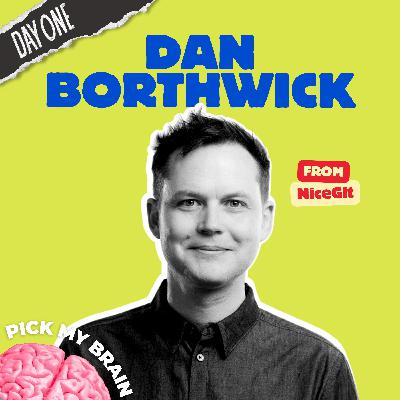
What if your designers, PMs, and writers could safely ship changes to a codebase without waiting weeks for engineering backlog?In this episode of Pick My Brain, Alan Jones is joined by Dan Borthwick, founder of NiceGit, a startup rethinking source control for the reality of modern product teams. Dan pitches NiceGit as a single button way to use Git, keeping the power of version control while stripping away the terminal commands, scary UI, and workflow friction that locks non engineers out of making changes.Alan and Dan unpack why Git has become a productivity bottleneck as more of the world builds software, especially now that over half of GitHub’s users are not programmers. They explore the hidden cost of routing every small change through developers, from UX tweaks to copy updates, and why “good enough” often wins simply because teams cannot afford the delays.They also go deep on go to market strategy for technical products, including why engineers resist traditional marketing, how Atlassian used meetups and peer conversations to grow early, and how to think about whether you are selling a headache pill or a vitamin pill. Dan shares why game studios may be the ideal beachhead, how inbound interest is already forming through LinkedIn, and why team leads are often the real buyer even when end users feel the pain.Along the way, Alan offers practical guidance on positioning, taglines, multivariate testing messaging, and how to equip champions inside an organisation with the right “cheat sheet” to win internal buy in. They finish with sharp, Australia specific advice on fundraising timing, investor targeting, and why warm coffee conversations beat sending a deck too early.If you are building B2B SaaS, developer tools, or selling into teams with multiple stakeholders, this episode is packed with practical insight you can use immediately.Sponsors:Pick My Brain is supported by our wonderful sponsors:Galah Cyber offers the Foundations of Application Security course: a practical, hands-on AppSec course built for engineers who actually ship code. Two days of real-world lessons you can apply immediately. Learn more at galahcyber.com.au/learn.The Day One NetworkPick My Brain is part of Day One, the podcast network dedicated to founders, operators & investors.To learn more, join our newsletter to be notified of new and upcoming shows. The only content we create is content that will help Australian founders.
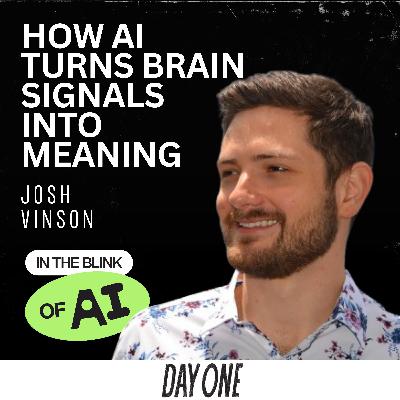
Episode SummaryJosh Vinson works at the edge where AI meets the human brain. With a background in psychology and machine learning, he is part of a growing group of engineers exploring neural decoding, the emerging field focused on translating brain signals into meaningful insights about thought, intent, and experience. While the idea of “reading thoughts” still sounds like science fiction, Josh explains why parts of it are already real, and why recent advances in large language models have quietly accelerated progress in this space.In this episode of In The Blink of AI, Georgie Healy sits down with Josh to unpack how brain computer interfaces actually work, what separates invasive implants like Neuralink from noninvasive approaches such as EEG, and why the hardest challenges are not ethical or philosophical but technical. They explore the twin problems of noisy hardware and radically different brains, and what it would take for neural decoding to become reliable enough for clinical and everyday use.The conversation stretches beyond medicine into the future of communication itself. From experience transfer and lucid dreaming headsets to brain wearables that could track attention, presence, and mental fatigue, Josh shares a clear-eyed view of what might be possible and what should give us pause. If you’re curious about where human cognition and artificial intelligence truly begin to blur, this episode offers a grounded look at what’s coming and why it matters.In the Blink of AI is made possible by our wonderful partnersStripeFor early-stage, venture-backed founders – Stripe Startups is where to start. Enrol in the program and receive access to credits on Stripe fees, expert insights, and a focused community of other founders building on Stripe.Apply for Stripe Startups at https://www.dayone.fm/stripe✨ Connect with Georgie HealyLinkedin: https://www.linkedin.com/in/georginahealy/Instagram: https://www.instagram.com/georgina_healy/Twitter: https://x.com/georgina__healy?lang=enThe Day One NetworkIn The Blink of AI is part of Day One, the podcast network dedicated to founders, operators & investors.Sign up to get your weekly insights into the up-and-coming AI startups: https://dayone.fm/newsletterMentioned in this episode:Stripe StartupsFor early-stage, venture-backed founders – Stripe Startups is where to start. Enrol in the program and receive access to credits on Stripe fees, expert insights, and a focused community of other founders building on Stripe.
Apply for Stripe Startups at dayone.fm/stripeStripe Ad_Nov 2025_02Vanta Ad_BAI Jul25Vanta Ad_BAI Jul25Vanta Ad_BAI Jul25

Comments

Download from Google Play

Download from App Store
 United States