


 Claim Ownership
Debt Talk
Subscribed: 5Played: 67
Subscribe

© Ripon Ray
Description
"Debt’s a tough subject — but it’s time we talked. With the cost of living crisis biting and big changes shaking up the debt world, Debt Talk dives into the heart of it all. From collectors and enforcers to lenders and advice charities, we’re bringing real voices and raw stories to the mic. Let’s break the silence, challenge the system, and find out what support really looks like when debt hits home."
43 Episodes
Reverse

With major wars unfolding globally, including the most recent tensions involving Iran, Israel, and the USA, the impact is being felt far beyond the countries directly involved. Even here in the UK, people are starting to see the effects in everyday life.Disruptions around the Strait of Hormuz have highlighted just how vulnerable we are. Rising fuel costs are already hitting households, and this is beginning to push up the price of essentials like food.In this month’s Debt Talk podcast, Ripon Ray explores how global conflict connects to our personal finances and why it matters for all of us.Rachel Ledwith, speaking from her work with food redistribution charities, shared how rising fuel costs are making it harder to deliver food to communities in need. With the UK heavily reliant on imported food, there are growing concerns about long-term supply chains. At the same time, charities are facing declining and increasingly stretched funding, as attention shifts toward supporting those directly affected by war.Ruth London, speaking on behalf of Fuel Poverty Action, spoke about the rising cost of fuel in the UK and the broader factors driving these increases. She highlighted that while some financial support may be available in the future—such as local council crisis and resilience funds—current support is still not enough for many people. She also pointed to the bigger picture: the UK’s dependence on fossil fuels and the urgent need to move toward renewable energy to create a more affordable and sustainable system.Shirina Ali from Limehouse Project reflected on the social impact, explaining how global conflicts are already increasing racial tensions within communities that are already under strain. With rising costs of living and reduced funding for support services, organisations like hers are finding it harder to meet growing demand.Despite the challenges, all the panelists shared practical top tips to help listeners manage during these difficult times.The next Debt Talk podcast will focus on debt advice funding and regulation in the UK.

As April 2026 begins, local councils across the UK have already set their budgets and secured funding to support financially vulnerable communities. In this episode of the Debt Talk podcast with your host, Ripon Ray, we explore an issue that matters deeply to many people: Council Crisis & Resilience Funds. I’m joined by three expert guests who help us unpack and navigate this vital topic: Laura Stoker, Head of the Tackling Poverty Team at Lambeth Council, explains how previous discretionary payments introduced after welfare reform created uncertainty for local authorities and the people they were trying to support. She highlights that the current funding approach provides greater stability in helping low-income households. Laura also shares how councils identify vulnerable residents and the different ways they can support them — from flexible payment methods to strong partnerships with local organisations that understand community needs. Gareth Evans, Founder and Director of CashPerks, specialises in cash-first approaches and financial inclusion solutions. He explains how this award-winning payment method is helping local councils, third-sector organisations, and housing associations reach the people who need support most. Crucially, the system ensures that even residents without bank accounts can access funds quickly and safely. Gareth emphasises that there are already four million people in the UK without bank accounts, and that this approach makes it easier for communities to access support while maintaining their dignity. Baljit Badesha, CEO of Nucleus Legal Advice, works in partnership with local Citizens Advice services to support communities facing financial hardship. He discusses how different councils respond to the challenge of delivering payments to vulnerable residents and reflects on the limits of local authorities in influencing national policy. However, he stresses that a three-year funding stream is a significant improvement over the previous year-to-year arrangements that councils relied on to support vulnerable communities. Our Debt Talk guests also share their Top Tips for listeners who may be struggling or looking for ways to access support. And in our next Debt Talk podcast episode, we’ll be exploring another powerful topic: Wars and Our Personal Finances.

January is hard.The celebrations are over, the bills have arrived, and for many of us, savings have quietly disappeared. As we wait, often painfully, for the next pay cheque, January becomes the month of fresh starts, New Year’s resolutions, and, if we’re honest, a few broken promises.I’m Ripon Ray, your host, and in this episode of the Debt Talk Podcast, we focus on January Financial Planning and how money is closely linked to the promises we make to ourselves at the start of the year.To help us navigate the challenges of January 2026, I’m joined by three expert guests:Shakira Taylor, a fitness instructor working on the frontline, shares insights on staying active and motivated beyond January. She reminds us that fitness isn’t just about quick wins; sustainable, gradual progress is what leads to lasting health and real rewards.Joe Marley from Alcohol Change talks about Dry January, alcohol habits, and wellbeing. He shares practical tools, including the Alcohol Change app, and explains how cutting down or giving up alcohol can improve wellbeing while saving money. In fact, the average person can save up to £60,000 over a lifetime by giving up alcohol.Nick Hill from the Money & Pensions Service connects healthy habits with healthy finances. He highlights simple budgeting tools, such as “jam jar” planning, and encourages small, manageable changes. Nick also reminds listeners that free, confidential debt advice is available through the MoneyHelper Debt Advice Locator, particularly for those struggling after festive overspending.Our guests also share top tips for Debt Talk listeners, offering practical ways to get through January with confidence.Coming up next: Our next episode explores “The Cost of Valentine’s, Marriage and Divorce', a timely discussion as post-New Year divorce rates begin to rise.
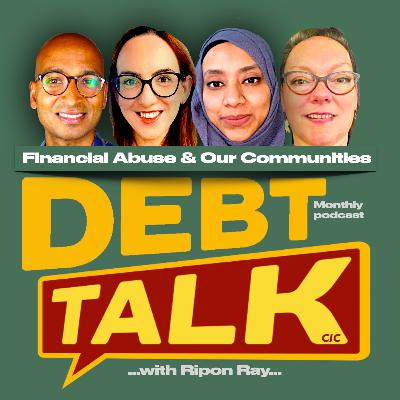
As we move into the next episode of the Debt Talk podcast, Financial Abuse & Our Communities, we do so against the backdrop of growing public concern about domestic abuse in the UK, particularly the recent cases where coercive control, economic exploitation and intimate partner violence have escalated into fatal harm. This makes our conversation with front-line experts even more urgent.Dr Clare Wiper, Assistant Professor in Criminology at Northumbria University and co-author of the report “Designing Out Economic Abuse in the UK’s Banking Industry: A Call for Action”, highlights how deeply financial systems can compound the risks victims face. She stresses that many of the changes required to protect survivors are not radical—but depend on professionals asking the right questions, recognising red flags, and putting effective, trauma-informed safeguards in place, especially when victims are trying to separate financially from an abuser.Helen Ganney from Christians Against Poverty (CAP) explains that economic abuse often sits beneath the surface of other crises. For many clients, debt advice is not the first intervention they need; only once safety, housing, immigration or family issues are stabilised can they begin to address the financial control, coerced debt or economic isolation that frequently accompany domestic abuse. She notes that this complexity places a huge strain on frontline services already operating beyond capacity.Shirina Ali, Advice Manager at the Limehouse Project, a minority-led grassroots organisation in East London, emphasises how economic abuse intersects with language barriers, insecure immigration status and the threat of having no recourse to public funds. Many in the communities she supports only realise they are experiencing domestic abuse when they seek help to understand Universal Credit letters or ask if they are entitled to financial assistance. For these survivors, leaving an abuser often means leaving an entire community and support network behind.All three guests share practical tips for professionals and community workers, urging stronger collaboration, better knowledge-sharing and coordinated responses to meet the overwhelming demand in a sector that remains critically under-resourced.Stay tuned for our next episode: ‘January Financial Planning’.

In this month’s Debt Talk podcast, Ripon Ray explores one of the most pressing challenges in modern Britain: the real cost of digital inclusion. As technology becomes central to everyday life, what happens to those left behind? How do we bring marginalised communities into the digital mainstream without deepening inequality or compromising privacy?Joining the conversation is Elizabeth Anderson, CEO of the Digital Poverty Alliance, who unpacks what true digital inclusion means in today’s society. From a student needing online tools for geography lessons to individuals struggling to upload documents or access essential services, Elizabeth illustrates the profound impact of being digitally excluded. She reveals staggering figures on how many people remain disconnected and the steep social and economic cost of bridging that divide. Elizabeth also delves into the government’s proposed digital ID initiative, raising critical questions about the price of inclusion and the potential erosion of personal privacy in a data-driven Britain.Rachael Tomaney, representing Napier AI, brings a vital perspective on how digital exclusion intersects with financial crime. She explains how individuals with limited digital literacy can unknowingly become conduits for money laundering and scams, as criminals exploit their vulnerability. With the rise of Authorised Push Payment (APP) fraud, Rachael stresses the importance of balancing innovation with protection — ensuring that while automation and AI enhance security, human oversight remains essential to prevent exploitation.Together, our panel offers practical insights and top tips on tackling digital exclusion, from community-level engagement to policy-driven reform, ensuring that digital transformation uplifts, rather than marginalises, those most at risk.Stay tuned for our next episode: “Financial Abuse and Its Impact on Communities.”

Comments

Download from Google Play

Download from App Store
 United States