


 Claim Ownership
Decode Econ
Subscribed: 3Played: 6
Subscribe

© Abdullah Al Bahrani
Description
About Decode Econ: The Podcast
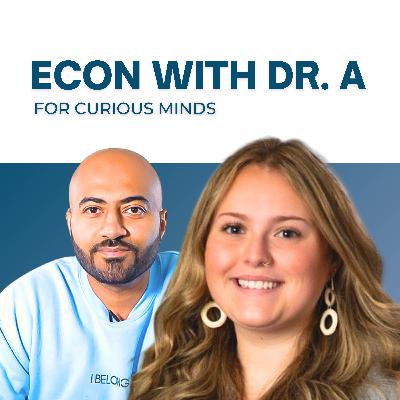
The economy touches everything — from the price of your morning coffee to the decisions shaping our future. Decode Econ breaks it all down. Hosted by Dr. Abdullah Al Bahrani (“Dr. A”), economist, educator, and storyteller, this podcast makes economics personal, practical, and easy to understand.
Each episode explores the trends behind the headlines — inflation, jobs, technology, policy, and the everyday decisions that drive them. Through stories, data, and conversations with thinkers, entrepreneurs, and community leaders, Decode Econ helps you connect what’s hap
www.decodeecon.com
The economy touches everything — from the price of your morning coffee to the decisions shaping our future. Decode Econ breaks it all down. Hosted by Dr. Abdullah Al Bahrani (“Dr. A”), economist, educator, and storyteller, this podcast makes economics personal, practical, and easy to understand.
Each episode explores the trends behind the headlines — inflation, jobs, technology, policy, and the everyday decisions that drive them. Through stories, data, and conversations with thinkers, entrepreneurs, and community leaders, Decode Econ helps you connect what’s hap
www.decodeecon.com
61 Episodes
Reverse
n today’s fast-moving world, economics can feel confusing and overwhelming—but it doesn’t have to be.In this video, we break down 5 powerful insights from the Decode Econ podcast to help you better understand how the economy works and how it impacts your everyday life.Founded by Dr. Abdullah Al Bahrani, Decode Econ is all about making economics simple, accessible, and relevant. Through podcasts, newsletters, and events, the platform helps everyday people cut through the noise and build real economic understanding.🔑 Here’s what you’ll learn in this video:Why Economic Basics MatterUnderstanding core concepts like supply, demand, and inflation can help you make smarter financial decisions and feel more confident navigating economic conversations.Economic Literacy & CapitalismWhen people don’t understand the system, they lose trust in it. Improving your economic literacy empowers you to make informed choices and better understand how markets work.The Power of Data in EconomicsData analytics plays a huge role in shaping economic decisions. Learning how to interpret data can give you a clearer picture of trends and outcomes.Why Community MattersLearning economics doesn’t have to be a solo journey. Engaging with others helps deepen your understanding and makes the process more enjoyable.The Future of Economic EducationEconomic knowledge should be accessible to everyone. Platforms like Decode Econ are leading the way by simplifying complex ideas into easy-to-digest content.📌 Whether you're new to economics or just looking to sharpen your understanding, this video will give you practical insights you can actually use.👉 Want to go deeper? Check out the full Decode Econ podcast for more conversations that make economics make sense.💬 Let us know in the comments: What economic topic do you want explained next?
Healthcare is full of good intentions. It is also full of incentives.In this episode of the Decode Econ Podcast, we sit down with Beth Munnich, Associate Professor of Economics at the University of Louisville, to discuss her research published in the American Economic Review on physician ownership of outpatient surgery centers.The question is straightforward:When doctors own the facilities where they operate, does behavior change?The answer, as in most markets, comes down to incentives.Outpatient (ambulatory) surgery centers have expanded rapidly over the past two decades. Advances in medical technology now allow many procedures to be performed safely without overnight hospital stays.This shift matters for three reasons:* Cost: Outpatient centers typically operate at lower overhead than hospitals.* Access: Patients benefit from shorter stays and quicker turnaround.* Market Structure: Increasingly, physicians are not just providers; they are also the owners.Ownership changes the economic equation.We also discuss teaching and advice for students and economists starting their academic journey.Key Takeaways* Physician ownership changes financial incentives in outpatient surgery markets.* Incentives influence referral patterns and potentially spending.* Healthcare markets are deeply shaped by ownership structure and insurance design.* Rigorous empirical research is essential to move beyond speculation.* Mentorship and persistence are critical in academic careers.This episode is about how markets respond when incentives change.And as Beth reminds us, incentives are always the keyOur goal is to amplify research and the people behind it, help us spread the word about Beth’s ResearchChapters00:00 Introduction to Decode Econ and Guest Beth Munnich00:12 Guest introduction and research overview01:06 Why Beth Munnich was drawn to healthcare economics01:35 The rise of outpatient surgery and its implications03:22 The importance of data and research questions05:18 Incentives and physician ownership in surgery centers07:44 Potential outcomes of ownership incentives08:31 Research findings on ownership and healthcare costs10:40 Doctor behavior and the principal-agent problem12:06 Insurance and patient financial incentives12:38 Research process and data collection challenges15:41 Long-term research journey and data acquisition20:46 Economic lesson: Always incentives22:06 Aligning incentives for better patient care23:22 Beth Munnich’s teaching philosophy and course design28:33 Target audience and topics of her new course30:00 Flipping the classroom: Relevance first in economics education31:35 Favorite subfields: Labor economics and social issues32:42 Impact of research on teaching and curriculum33:31 Career advice for students and early professionals35:44 Path to a PhD and career in economics38:02 Skills needed in modern economics39:44 Misconceptions about academic life41:38 Advice to younger self and career reflections45:05 Mentorship and networking in academia45:26 Connecting with Beth Munnich46:37 Closing remarks and gratituderesourcesBeth Munnich’s website https://www.bethmunnich.com/ Get full access to Decode Econ at www.decodeecon.com/subscribe
Join Dr. Abdullah Al Bahrani and Jack Marx for a wide-ranging conversation on economic policy, leadership, and personal growth.From Supreme Court tariff rulings to Kentucky’s long-term tax strategy, this episode breaks down what recent policy changes mean for consumers and households. The discussion also moves beyond economics into the role of emotional intelligence in leadership—because understanding policy is important, but understanding people is essential.Episode SummaryThis episode begins with reflections on midterms and the importance of engagement in learning. From there, the conversation turns to recent tariff rulings and the constitutional questions surrounding trade policy.Dr. Al Bahrani explains how tariffs work, who legally pays them, and who actually bears the economic burden. The discussion explores what “refunds” would really mean for consumers—and why the answer may be more complicated than headlines suggest.The episode then shifts to Kentucky’s gradual transition away from income taxes toward a broader consumption-based system. The conversation unpacks the strategy behind revenue triggers, the trade-offs involved in tax reform, and the long-term implications for households.Finally, the discussion closes with a powerful reminder: economics is about incentives, but leadership is about people. Emotional intelligence, reflection, and passion are not soft skills—they are performance skills that shape both economic outcomes and personal growth.Key Topics* Tariffs and their constitutionality* Statutory vs. economic incidence* Kentucky’s tax policy transition* Inflation and supply chain dynamics* Emotional intelligence in leadership* Reflection as a tool for growthNotable Sound Bites* “Illegal tariffs should be refunded.”* “Passion drives understanding and motivation.”* “Reflection is key to emotional growth.”Chapters00:00 Introduction and Midterm Reflections05:38 Kentucky’s Budget and Tax Strategy11:00 Emotional Intelligence and Personal GrowthKeywordsEconomics, Tariffs, Kentucky Tax Policy, Emotional Intelligence, Leadership, Public Policy, Supply Chain, Inflation, Midterms, Economic EducationThis week’s Posts* Can Kentucky Cut Taxes and Still Compete?* If Tariffs are Unconstitutional, Who Gets the Refund?* Trump’s “Liberation Day” to Judgement Day* Can You Read the Room?From Income Tax to Sales Tax: What Kentucky Is Really ChangingAre you a supporter of our efforts? Help us by sharing this podcast with others on your socials. Get full access to Decode Econ at www.decodeecon.com/subscribe
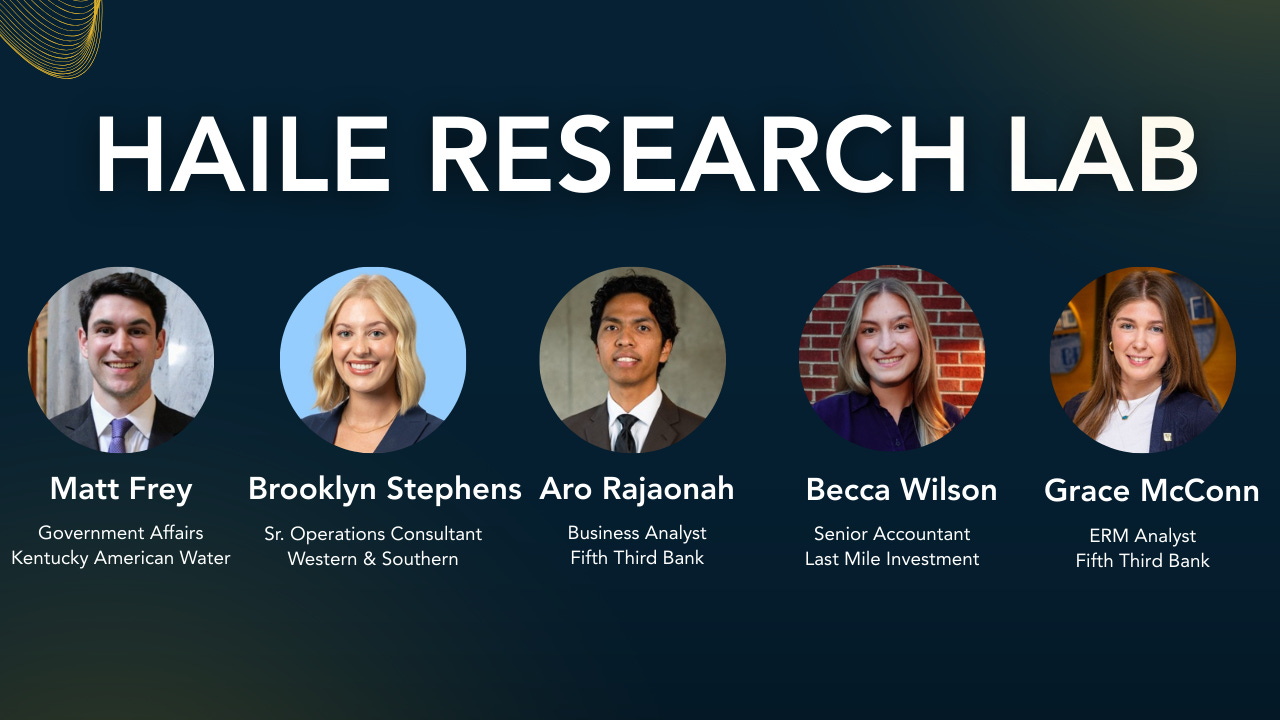
In today’s economy, intelligence isn’t enough. Employers aren’t just hiring credentials — they’re hiring people who can think under pressure, navigate uncertainty, and solve problems no one has clearly defined yet. In this episode, we explore the one skill that quietly separates top performers from everyone else — and why research may be the most underrated competitive advantage in the modern job market.What if the most powerful career advantage isn’t technical skill — but the ability to think clearly when the answer isn’t obvious?In this episode, alumni and faculty from the Haile College of Business share how research transformed their careers — not by preparing them for academia, but by sharpening the one capability employers consistently struggle to find: critical thinking under uncertainty.From government affairs to consulting to international economic research, our guests explain how research builds confidence, adaptability, and the ability to tackle complex, ambiguous problems in real-world environments.You’ll learn:* Why research builds more than resumes — it builds decision-makers* How critical thinking becomes a long-term competitive advantage* Why discomfort and uncertainty are essential to professional growth* How students can position themselves to stand out in an AI-driven economyWhether you’re a student, professional, or leader developing talent, this conversation will change how you think about the value of research.In a rapidly changing economy, the winners aren’t just informed, they’re prepared.From Around the WebHere are some posts this week that made us think* When you get in your way! by Dr. Jeni Al Bahrani. How Forever 21 rose and eventually fell as a business. * Puerto Rico by the Numbers by Monday Morning Economist. I love economic data dives into regions and policies that shape economies. Given Bad Bunny’s recent half-time show and everyone’s interest in PR, this is timely. As are all of Monday Morning Economist posts. * Something is rotten in the state of … Economics- by Nominal News. I missed a fight. Economists are upset with Jon Stewart for dismissing the field of economics. * Buying Futures, Renting the Past: How Speculation and Nostalgia Became the Economy by kyla scanlon. Another example of how she connects the dots between our social and economic realities. Get full access to Decode Econ at www.decodeecon.com/subscribe
In a recent episode of the Decode Econ podcast, Dr. Abdullah Al Bahrani and his student, Jack Marx, discussed the relevance and value of studying economics amid declining interest in the field. Their conversation sheds light on the unique skills economics students acquire, which not only enhance their employability but also their ability to tackle complex real-world issues.Main Content:Understanding the Value of EconomicsEconomics has often been viewed through the narrow lens of salary outcomes, yet Dr. Al Bahrani emphasizes that the true value of an economics degree goes far beyond financial compensation. He cites a recent research post that shows how economics students perform better in the labor market than their non-economics peers, even after controlling for industry and occupation. This finding highlights the critical thinking and problem-solving skills that economics education fosters.Critical Thinking in EconomicsThe podcast emphasizes that economics students are trained to evaluate problems from multiple perspectives. Dr. Al Bahrani notes, “We try to look at a problem from different lenses and we’re continuously asking what information do I need to receive to change my mind.” This mindset equips students with the tools to influence policy and drive change, making them valuable assets in any workforce.Integrating Economics Across DisciplinesDr. Al Bahrani advocates for the integration of economics with other fields such as business, psychology, and sociology. He mentions that students can benefit from adding economics as a second major, which can significantly enhance their skill set and career opportunities. Jack Marx shares his own journey from accounting to economics, illustrating how the latter offered a more engaging and rewarding path.Building Relationships in Economics EducationReflecting on his 13 years at Northern Kentucky University, Dr. Al Bahrani discusses the importance of community and relationships in economics education. He believes that effective teaching is intertwined with rigorous research, stating, “Good research has to be accompanied with good teaching and good communication.” His commitment to fostering a sense of belonging in the classroom is a testament to his belief in relationship-building as an essential component of education.Future Goals and Research DirectionsLooking ahead, Dr. Al Bahrani expresses his desire to mentor the next generation of economic educators. He is currently collaborating with colleagues on various research projects focused on workforce development and skill-based learning. His goal is to bridge the gap between research and teaching, ensuring that economics education remains relevant and impactful.Key TakeawaysThe discussion on Decode Econ serves as a reminder of the immense value that an economics degree holds in today’s job market. By cultivating critical thinking, problem-solving skills, and a sense of community, economics students are well-prepared to navigate complex challenges. As Dr. Al Bahrani suggests, whether you’re a current student or considering a career change, integrating economics into your education can open doors to new opportunities and career paths.Chapters00:00 Introduction and Personal Updates01:22 The Importance of Studying Economics05:05 Reflections on Teaching and Research in Economics08:46 Future Goals and Research Directions12:17 Discussion on Recent Economic Posts13:51 Analyzing the Latest Jobs ReportTags:Economics Education, Critical Thinking, Workforce Development, Higher Education, Career Opportunities, Economic Research, Student Success, Teaching Economics Get full access to Decode Econ at www.decodeecon.com/subscribe
SummaryIn this episode of Decode Econ, Dr. Abdullah Al Bahrani and Jack Marx discuss various economic topics, including the role of economists in monetary policy, the implications of a weakening dollar, the impact of AI on hiring processes, and the importance of storytelling in economics. They emphasize the need for economists to communicate effectively with the public and the significance of developing soft skills for professional success.Keywordseconomics, monetary policy, Federal Reserve, weakening dollar, AI in hiring, storytelling, communication skills, professional developmentTakeaways* Economists need to adjust their language to engage the public.* The weakening dollar can have both positive and negative effects.* AI is complicating the hiring process by diluting the quality of signals.* Storytelling is crucial for economists to connect with their audience.* Practicing communication skills is essential for professional development.* Feedback, even if negative, is valuable for growth.* The market’s response to content can guide future topics.* Building emotional connections is key to effective storytelling.* Students should focus on networking and community signals for job success.* Embracing discomfort in communication leads to improvement.Chapters00:00 Introduction to Decode Econ and Weekly Wrap02:05 The Role of Economists in Monetary Policy07:00 Impact of a Weakening Dollar10:16 AI’s Influence on Hiring Processes14:49 The Importance of Storytelling in Economics20:49 Embracing Uncomfortableness in CommunicationOur posts from this week* AI Killed the Cover Letter* The Consequences of a Weak Dollar* The Skill Everyone Needs (and no one is taught)* Who is Kevin Warsh?* When “Efficiency” Means Admitting You Were Wrong Get full access to Decode Econ at www.decodeecon.com/subscribe
SummaryIn this episode of Decode Econ, Dr. Abdullah Al Bahrani and his research assistant, Jack Marx, discuss various pressing economic issues, including the implications of Supreme Court bias, the current state of the dollar, and the challenges faced by young men in today's economy. They emphasize the importance of mentorship, vulnerability, and community support in navigating these challenges. Get full access to Decode Econ at www.decodeecon.com/subscribe
SummaryIn this week's episode of Decode Econ, Dr. Abdullah Al Bahrani discusses significant economic trends and events, including the implications of isolation in global economics, a retrospective look at economic data from 2016 to 2026, insights from the World Economic Forum in Davos, and the bankruptcy of Saks Fifth Avenue. The conversation emphasizes the changing landscape of trade, inflation, and consumer behavior, while also highlighting community engagement and updates from Decode Econ.TakeawaysIsolation is a key theme in current global economics.Economic growth from 2016 to 2026 shows significant changes.Inflation rates have shifted dramatically since 2016.The Davos meeting highlighted changing global trade dynamics.Saks Fifth Avenue's bankruptcy reflects shifts in retail behavior.Consumer preferences are moving towards direct brand engagement.Decode Econ is expanding its community with new initiatives.The importance of understanding economic news in personal contexts.Engagement with the audience is crucial for content relevance.Staying curious about economic trends is essential for growth.Chapters00:00 Isolation and Global Economic Shifts02:46 Economic Trends from 2016 to 202606:01 Davos and Changing Global Trade Dynamics07:52 Saks Fifth Avenue: A Case Study in Retail Challenges Get full access to Decode Econ at www.decodeecon.com/subscribe
Title: Navigating Economic Currents: Insights from This Week's Decode Econ PodcastIntroduction: In this week's episode of Decode Econ, Dr. Abdullah Al Bahrani dives into some crucial issues affecting the economy, from Federal Reserve dynamics to the impact of individualism on public health perceptions. With a professional yet conversational approach, he sheds light on complex topics in a way that’s accessible and engaging.Main Content:Section 1: Federal Reserve and Market Reactions Dr. Al Bahrani begins by discussing the unprecedented investigation into Jerome Powell, the Federal Reserve Chair, for allegedly overspending and misrepresenting building costs to Congress. This revelation sent shockwaves through financial markets, but surprisingly, the markets responded positively. According to Dr. Al Bahrani, Powell's decisive public stance reassured investors that the Federal Reserve would operate independently from political pressures, thereby boosting market confidence. The implications of this situation are significant: investors are weighing whether this independence will maintain low interest rates and bolster corporate profits, or if it signals a more complex relationship between government influence and economic health.Section 2: The Rise of Individualism On another note, Dr. Al Bahrani highlights a shift towards individualism in the United States and its implications for public health policies, particularly regarding vaccines. He emphasizes that as society increasingly prioritizes personal rights over collective outcomes, navigating health policy becomes more challenging. This shift complicates communication and decision-making processes around vaccination, illustrating the broader societal trends that influence economic behavior and public health.Section 3: The Case for Studying Economics In an engaging segment, Dr. Al Bahrani addresses a common question among students: Why study economics? He shares his own educational journey, encouraging students to consider pairing economics with other fields, such as finance, law, or marketing. He notes that a solid foundation in economics can enhance career prospects and financial literacy, making it a valuable subject for those motivated by financial success.Section 4: Understanding Inflation and Affordability The podcast also delves into the latest Consumer Price Index (CPI) data, revealing a year-over-year growth rate of 2.65%. While this figure may seem manageable, Dr. Al Bahrani points out that essentials like shelter, beef, and coffee are experiencing higher price increases, which directly impacts affordability for many households. He cites personal experiences, noting that the cost of beef has risen by 15% and coffee by 17%, emphasizing that the cost of living is acutely felt at the grocery store.Section 5: Economic Growth vs. Economic Well-Being Additionally, Dr. Al Bahrani discusses the disparity between strong economic growth and the actual well-being of individuals. Despite a robust GDP growth of 4.3% in Q3, the share of GDP attributed to wages has been declining, raising concerns about income inequality. This disconnect between overall economic indicators and the realities faced by individuals is a critical issue that needs more attention.Section 6: Financial Literacy Initiatives Finally, the podcast wraps up with an uplifting discussion on a new initiative called Money Secrets, aimed at addressing the emotional aspects of financial literacy. Dr. Al Bahrani argues that financial education often overlooks the psychological barriers people face regarding money. By creating a platform for individuals to anonymously share their financial experiences, the initiative hopes to destigmatize discussions around money and promote healthier financial behaviors.Conclusion: This week’s Decode Econ podcast provides valuable insights into the current economic landscape, highlighting the importance of understanding the interplay between policy, individual behavior, and market dynamics. As we navigate these complex issues, it’s clear that fostering open discussions about economics and financial literacy is essential for collective well-being. Key Takeaways: 1. The Federal Reserve's independence is crucial for market confidence. 2. The rise of individualism influences public health perceptions and policies. 3. Studying economics can enhance career prospects and financial understanding. 4. Rising costs of essential goods impact affordability significantly. 5. Economic growth does not always equate to improved individual well-being. 6. Initiatives like Money Secrets can help address financial anxieties and promote literacy. Tags: Federal Reserve, Economic Growth, Individualism, Financial Literacy, CPI, Inflation, Money Management, Decode Econ Get full access to Decode Econ at www.decodeecon.com/subscribe
I have been reflecting on my career. If you had asked me 10 years ago where I saw myself in 10 years, I would not have been able to describe my career as it is today. I find that beautiful.As I reflect, I've identified several things that’ve served me well, and I'd like to share them with you. Let us call them the career progression principles. I would love to know which principles you would add to this list.Make sure to subscribe to my newsletter Get full access to Decode Econ at www.decodeecon.com/subscribe
Recently, Walmart announced that it will have to increase its prices due to the tariff wars. This announcement received a harsh response from President Trump, who demanded that Walmart "Eat the Tariff." At the same time, Home Depot has announced that it will not change its prices.Today, I would like to talk about which companies will be able to “eat the tariffs” and which will pass them on as price hikes. Whatever companies decide, it will hurt consumers. I will cover that at the end. Get full access to Decode Econ at www.decodeecon.com/subscribe
Navigating college can be tough. Kyah shares with us how one student's encouragement to attend Econ Club helped her build community. Must listen for all soon to be graduates. Get full access to Decode Econ at www.decodeecon.com/subscribe
My mentor reminds me often that my job is to create value for my organization and the people around me. The value I choose to create will vary across responsibilities and situations, but ultimately, my job is to improve the world. The same is true for you.The challenge many professionals face isn't just creating value—it's ensuring that value is recognized and properly compensated. This brings us to an important economic concept that can help frame how you think about your value and contributions to your organization. Get full access to Decode Econ at www.decodeecon.com/subscribe
Jerome Powell, the Federal Reserve Bank chair, recently reported that the U.S. economy is at risk of experiencing slowing growth coupled with persistent inflation. This economic predicament is what economists call stagflation—a stagnating economy that simultaneously faces rising prices.Powell's candid assessment was met with sharp rebuke and even threats of termination from the administration. This political pressure comes at a critical moment when the Supreme Court is evaluating whether the president can fire chairs of independent agencies, including the Federal Reserve. The timing couldn't be more consequential for our economic stability. Get full access to Decode Econ at www.decodeecon.com/subscribe
In an increasingly competitive and uncertain job market, the difference between those who thrive and those who merely survive often comes down to one factor that business schools rarely teach—building and maintaining your professional support network. Over decades of mentoring, I've observed hundreds of careers. I've identified a clear pattern: those who intentionally build what I call a "hype team" consistently outperform equally talented peers who try to navigate their careers alone.But, how do you develop this team?Learn more here. Get full access to Decode Econ at www.decodeecon.com/subscribe
The current administration is breaking all of its policy rules when it comes to eggs. Their new approach can teach us a lot about the role of government and remind us why government is important.The market has seen a 50% surge in egg prices due to an avian influenza outbreak. In response, the federal government plans to introduce a five-pronged strategy. Get full access to Decode Econ at www.decodeecon.com/subscribe
I have a note in my Notes app called "Thoughts." This is where I collect ideas throughout my day. It's nothing fancy, just a collection of random things that I find interesting: Get full access to Decode Econ at www.decodeecon.com/subscribe
Join Dr. A as we explore critical issues in economics education. This episode highlights: Midterm reflections for students and professors A revealing study on racial and gender achievement gaps in economics classrooms The impact of stereotype threat on student performance, especially for female URM students Strategies for creating inclusive learning environments and combating stereotypesDiscover how stereotype threat affects learning outcomes and learn practical approaches to foster equity in economics education. Essential listening for educators, students, and anyone interested in improving diversity in economics. Get full access to Decode Econ at www.decodeecon.com/subscribe
On Tuesday, 45,000 dockworkers went on strike for the first time in decades, impacting 36 U.S. ports from Maine to Texas. This strike highlights a growing tension between technological innovation and job security, a conflict that will likely affect us all. At the core of this issue lies a fundamental question: How can we embrace innovation without sacrificing workers’ livelihoods?Today, we explore the role of innovation in economic growth, the fears associated with job displacement, and the responsibilities of government and corporations in creating an environment that welcomes disruption while protecting workers. Get full access to Decode Econ at www.decodeecon.com/subscribe
Today, I want to explore a topic that often goes unnoticed: how language can be used to exclude people from "being in the room." This is why I'm so passionate about teaching my students the language of professionalism and economics—it's the driving force behind this newsletter and our podcast.More resources in the newsletter www.WithDrA.com Get full access to Decode Econ at www.decodeecon.com/subscribe

Comments

Download from Google Play

Download from App Store
 United States