


 Claim Ownership
Deep Breath Sounds
Subscribed: 0Played: 3
Subscribe

© Alejandro Verastegui
Description
Deep Breath Sounds is a project dedicated to capturing the ambience sounds of different locations around the world. We were inspired by listening to nature sounds to sleep, relax, and for ambience. We produce our own ambient sounds with a cinematic approach.
5 Episodes
Reverse
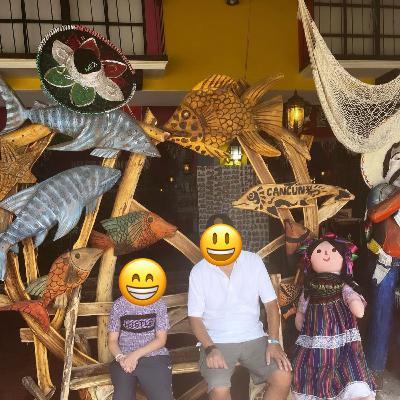
Labeled as a must-visit location in Cancun, Market 28 is a commercial square with hundreds of different kiosks selling everything from gifts and souvenirs to produce, meat, and local dishes.. Besides all the ingenious souvenirs, jewelry, and delicious food, the most interesting fact I found about Market 28 is it’s real name; Market 28’s name is actually Article 115 or “Articulo 115.”
During the 80s, Market 28 was a fruit and vegetable market exclusively. Something to keep in mind: Cancun is the youngest city in Mexico and a lot of things have changed and keep changing since its conception. During the 1994 economic crisis, the Market left it’s fruit and vegetables only business model and embraced souvenirs and jewelry to attract tourism. It was renamed to Articulo 115 contitucional or consittutional Article 115 (macronews.mx).
Interestingly, some of the restaurants and food joints that were there since it’s original opening are still operating to this day. Today, 85% of the market is dedicated to souvenirs and gifts.
Market 28 is not just a market, but a landmark and cultural beacon of Cancun.
If you visit Cancun, you are most likely to stay at the Hotel Zone aka Zona Hotelera. At a glance, this area might seem like a common hotel strip, but it’s conception and development is a considerable feat of engineering. The Hotel Zone is a landmark project in Cancun, and it has dramatically changed the infrastructure and environment of the region.
The first hotels, according to mexicancaribbean.travel, opened in 1974. Before the hotels, Cancun was a series of 66ft-wide sand dunes shaped like number sevens. The region had a population of about 100 people and it was virtually unknown. In an attempt to boost the economy through tourism with resorts, the Mexican government began gathering information on other popular destinations such as Miami beach and Acapulco. According to earthobservatory.nassa.gov, the government compiled data such as number of tourists, number of hotel rooms, average temperatures, rainfall, and hurricane events. From all the candidate locations, Cancun was selected because of the great weather, white sand, and blue water. Cancun is also near archeological sites Chichen Itza and Tulum. Additionally, Cancun had a high level of poverty and no primary industry. The project was approved in 1960 and began in 1970—the project had 3 objectives: 1. To build a tourism zone without permanent residential areas, 2. Build a residential zone for permanent residents, and 3. To build an international airport. This also brought the first infrastructure projects for drinking water, sewage, and electricity (mexiancaribbean.travel.)
Equally important, while the economy in Cancun has created a large revenue, this development has had a toll on the environment. According to a research article, the 2 million tourists-a-year industry has created a water pollution issue. The local water treatment plants cannot handle all the sewage generated by hotels, and the sewage water ends up in the sea which affects ecosystems and coral growth. All the resorts in the area also generate garbage that ends up in illegal landfills (earthobservatory.nasa.gov.)
All things considered, the Hotel Zone is Cancun is a manmade feat, and has become one of the most popular traveling destinations in the world. While it has brought economic benefits to the Mexican people, it is important to consider how a project of this magnitude can negatively affect the environment.
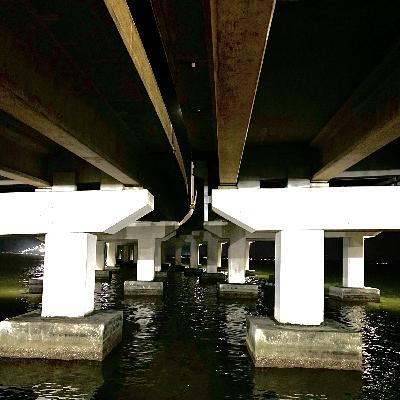
The Biloxi Bay Bridge sits at Point Cadet, on the west end of the Biloxi peninsula. It connects Biloxi to Ocean Springs across the bay. The bridge is a landmark location on the Gulf Coast, and it not only stands as a cultural symbol, but also as an important element of the local psyche in the face of tragedy.
First, Point Cadet, where the bridge is located, is the westernmost part of the Biloxi peninsula. The Point was sparsely populated until the late 19th century, according to discover.biloxi.ms.us. The website also claims that there is evidence that pre colonial and colonial Native Americans once occupied the area. It was during the late 19th century that Biloxi’s fishing and seafood industry developed. It is also interesting to note that this area is where ethnic minorities such as Polish, Croatians, Acadian French, and Vietnamese, first settled to work in the seafood industry.
Eventually, the bridge itself was first built in 1962 as a 4-lane bridge. According to oceanspringsarchives.net, the bridge suffered damages during hurricane Camille in 1969. However, it wasn’t until hurricane Katrina in 2005 when important parts of bridge and highway 90 were completely destroyed. Katrina was devastating and even more so by destroying this symbol of development that kept social and economic ties between Biloxi and Ocean Springs. As architectmagazine.com points out, rebuilding the bridge was vital to signal the recovery of the area. The bridge reopened on November 1 2007, just after 20 months of work. As additional information, the bridge currently spans 1.6 miles and 6 traffic lanes.
We can say that the Biloxi Bay Bridge is a symbol of development, and it signals recovery and hope after the devastating aftermath of hurricane Katrina in 2005. The Biloxi Bay Bridge isn’t only a physical bridge, but also an economic and cultural one that connects tight-knit coastal communities.
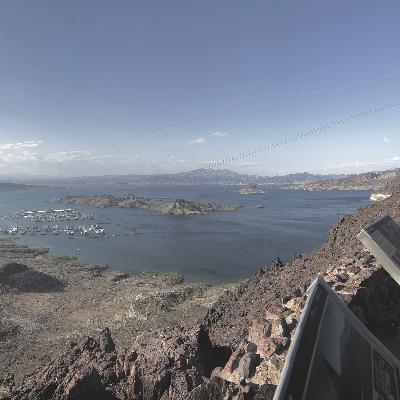
While we were driving through the desert outside of Las Vegas in Nevada, we found a viewpoint spot that gave us a view of Lake Mead.
The initial view from above was breath-taking. From that point of view, the wind was overwhelming and roared in our ears. We decided to drive toward the lake and get to have more personal approach.
Lake Mead is a water reservoir that provides provides sustenance to 20 million people in the states of California, Nevada and Arizona, according to Ecowatch.com. It is also notable that the water levels have been decreasing over the years and is currently at its lowest. It is expected that Lake Mead will reach a “dead pool” state in a few years if the drought conditions remain the same. Dead pool meaning that the water levels become so low that water supply would not be possible. This would be a catastrophic event, as Newsweek.com puts it, the Lake Mead and the Hoover dam gave life to this region of the U.S, and a dead pool would cause all operations to cease.
After a relatively short drive, we made it to the shore of the lake. It was all looking like a holiday weekend with people parked by the shore enjoying music and company and splashing in the fresh water. The small desert bushes surrounding the lake motioned in tandem.
The sun was setting, and we did not have enough time to explore the surrounding areas. Hopefully, the next time we come back, we can visit other locations around the lake.
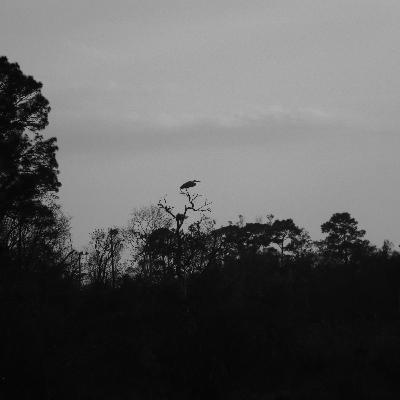
We found this interesting location for this episode: The POW camp recreational area in Saucier, MS. This area is currently part of a trail system and that goes deep in the DeSoto forest in Mississippi. This is not an active POW camp in case you were wondering; As a POW, the place has been abandoned for a long time, but it was operational during WWII.
I was not able to find a lot of information on this camp or more specifically the POW camp. The USDA website only describes it as a recreation site that lies by a 7-acre lake with hiking trails and fishing opportunities.
The best unofficial information we found was from roadsideamerica.com. They describe the site as being a “Former site of a prisoner of war camp, which held German and Italian POWs during World War II. The site was a Navy weapons range after the war and was then abandoned in the 1950s…”
It interesting to think what the POWs might have heard doing time there.
Comments


Download from Google Play

Download from App Store
 United States