


 Claim Ownership
DevOps Leaders Podcast
Subscribed: 3Played: 40
Subscribe

© DevOps Leaders IL Community
Description
היי! אנחנו DevOps Leaders — הפודקאסט הרשמי של קהילת DevOps Leaders IL, הקהילה שמאגדת את מובילי ה-DevOps של ישראל.
בכל פרק, אופיר שטיין (Co-Founder ו-CTO ב-Apono) ומיקי מנור (לשעבר Director of Infra Engineering ב-Skai וכיום Co-Founder ו-CEO בStealth) נפגשים עם מובילי תעשיית ה-DevOps והטכנולוגיה מהארץ ומהעולם. יחד הם צוללים לנקודות מבט ייחודיות, לאסטרטגיות שונות ולתובנות שנצברו לאורך הדרך בעולמות ה-DevOps וה-Platform.
הפודקאסט בשיתוף Apono — פתרון אוטומציה לניהול הרשאות דינמיות למשאבי ה-R&D.
למידע נוסף על Apono לחצו כאן -> www.apono.io
בכל פרק, אופיר שטיין (Co-Founder ו-CTO ב-Apono) ומיקי מנור (לשעבר Director of Infra Engineering ב-Skai וכיום Co-Founder ו-CEO בStealth) נפגשים עם מובילי תעשיית ה-DevOps והטכנולוגיה מהארץ ומהעולם. יחד הם צוללים לנקודות מבט ייחודיות, לאסטרטגיות שונות ולתובנות שנצברו לאורך הדרך בעולמות ה-DevOps וה-Platform.
הפודקאסט בשיתוף Apono — פתרון אוטומציה לניהול הרשאות דינמיות למשאבי ה-R&D.
למידע נוסף על Apono לחצו כאן -> www.apono.io
38 Episodes
Reverse

Join us as we explore what site reliability actually looks like at Fortune 1 scale! In this episode, Yoseph Reuveni, Sr. Director II of SRE at Walmart Global Tech, traces a career from an Israeli VC seat through Elbit, Amazon Prime Video, Bloomberg compliance and Jet.com, into running the only SRE function for a company with 35,000 engineers and 2.5 million employees. Discover how his team went from eight engineers staring at dashboards all night to a single person on the holiday bridge, why an EVP asked "how does one SRE beat all of you?" in a room with 600 engineers, and why he calls unit test coverage in the GenAI era "one big fiction."Yoseph Reuveni on LinkedIn - https://www.linkedin.com/in/yosephreuveni/Miki Manor on LinkedIn - https://www.linkedin.com/in/mikimanor/Ofir Stein on LinkedIn - https://www.linkedin.com/in/ofir-stein/DevOps Leaders - https://www.linkedin.com/company/devops-leaders-il/posts/?feedView=allKey takeaways:* The real difference between SRE and DevOps: DevOps upgrades the database, SRE asks what tier it is and whether the customer would even notice it going down.* 300 SREs supporting 32,000 developers, versus Google's roughly 7,000 SREs for 30,000 developers.* Walmart's "triplet" architecture: three US regions, each with a private data center plus Azure plus Google, 2 milliseconds apart, all active at once, with cost and capacity deciding where work runs.* Holiday peaks run 100x a normal day and last for hours, not minutes. Microsoft built data centers so Walmart would have enough capacity.* 5 billion metrics per second, a volume most monitoring products simply cannot ingest, which is what turned build-versus-buy into build.* His first week produced a list of 60 things to fix. His boss made him pick three: automation, tech debt, and observability.* Attacking problems by class, not by incident. One expired certificate becomes a program to eliminate every trust failure across Walmart.* Adding a missing metric used to mean chasing a team for a year. Now it's two buttons, no code change, no deployment.* Why AI made him a "master lazy" engineer, and why juniors shipping code they can't explain forced Walmart to require an architect's signature on any runtime change to a new resource.* The best-selling item at Walmart on Black Friday two years ago: over 30 million bananas.Join our exclusive DevOps Leaders community with over 300 members, where we share knowledge and improve together.What's your biggest challenge in the DevOps field? Drop it in the comments! Subscribe for weekly insights and updates on the latest in DevOps!#DevOps #Podcast #Technology #AI #Walmart

Join us as we explore where the line sits between developer freedom and total chaos in the agentic era! In this episode, Eyal Goldenberg, Director of SaaS Platform & DevOps at Cellebrite, shares how a company that lived on-prem since 1999 made the jump to SaaS, started its platform deliberately "not opinionated" — and learned the hard way why you have to get opinionated to move fast and safe once agents enter the picture. Discover his line on what really separates freedom from chaos ("just how much light you turn on in the room"), how his team built an SDLC fleet of 30+ agents and 40+ skills devs pull as versioned plugins, and why he bets DevOps — soon "AIOps" — is the role that survives and grows.Eyal Goldenberg on LinkedIn - https://www.linkedin.com/in/eyal-goldenberg/Miki Manor on LinkedIn - https://www.linkedin.com/in/mikimanor/Ofir Stein on LinkedIn - https://www.linkedin.com/in/ofir-stein/DevOps Leaders - https://www.linkedin.com/company/devops-leaders-il/posts/?feedView=allKey takeaways:Cellebrite has run digital-forensics tooling for law enforcement since 1999, all on-prem — then ~5 years ago made the leap to SaaS to finally answer the constant customer pain of slow, on-prem-bound deliveryThe platform started deliberately "not opinionated" — everyone did what they wanted — which quickly turned into a wild west of conflicting decisions; the team is now moving opinionated on purpose, because speed and safety with agents demand it"The difference between freedom and chaos is just how much light you turn on in the room" — they're strict and standardized on CD, but CI still has too much freedom that needs trimmingBuilding an agent isn't the hard part — the real questions are who it serves, how it serves, and who orchestrates the orchestrators before everyone reinvents the wheelThe spaghetti-code warning: if we lean only on agents and stop talking to each other, we'll hit a point where reverting is impossible and "rewrite it all again" becomes an infinite loop — talk to other humans, your pain is sharedTheir SDLC fleet: 30+ agents and 40+ skills, with Terraform and React skills devs pull down as plugins, contribute back to, and version semantically — each app repo owning its sliceHeavy regulation (FedRAMP and more) means no infrastructure gaps between high and low environments — feature gaps are fine, infra gaps are notDevOps's edge over developers is the wide lens — from infrastructure all the way to production — connecting the dots devs (who mostly care that "the pod works") don't seeHiring has flipped: Eyal now leads with AI questions and a troubleshooting scenario — if a candidate still manually edits the UI and configs, they're in the old world; he wants to see them drive an agent to investigate, run, and self-correct* On 2027: DevOps doesn't disappear, it becomes AIOps and grows — more compute, more GPU, more agents, agent-to-agent conflicts needing arbiters — someone still has to build, scale, and monitor the infrastructureWe're recording live from the Platforma conference in Tel Aviv, featuring fascinating discussions on AI and more.Join our exclusive DevOps Leaders community with over 300 members, where we share knowledge and improve together.What's your biggest challenge in the DevOps field? Drop it in the comments! Subscribe for weekly insights and updates on the latest in DevOps!#DevOps #Podcast #Technology #AI #Cellebrite

Join us as we explore what it feels like to step out of the industry for seven months and walk back into a job that runs at a completely different speed! In this episode, Bat Hen Yosefov, DevOps Group Manager at Payoneer, shares how she returned from maternity leave straight into the AI agent era — where people now expect things in hours, not days or weeks — and why she calls it the coolest leave she's ever had. Discover why she insists self-service "is service, it's not always self," the story of a Solution Engineer who told Claude to fix a secrets alert and watched it quietly wipe the pipeline ("he doesn't even know what a pipeline is"), and why she believes knowing the right questions to ask is now the difference between heaven and earth. Bat Hen Yosefov on LinkedIn - https://il.linkedin.com/in/bat-hen-yosefovMiki Manor on LinkedIn - https://www.linkedin.com/in/mikimanor/ Ofir Stein on LinkedIn - https://www.linkedin.com/in/ofir-stein/ DevOps Leaders - https://www.linkedin.com/company/devops-leaders-il/posts/?feedView=all Key takeaways: Coming back from a 7-month maternity leave into the AI era is a shock to the system — the pace went from days and weeks to hours, and "they talk to me in hours now" A DevOps lead today manages a team of agents alongside developers — the agents genuinely speed up the work, but only if you can keep up with what they produce Self-service is a misleading term: "it's service, it's not always self" — some teams wrap it, some hand everything to the developer, and the real platform work is in how you wrap it Knowing the right questions to ask — and understanding the answers you get back — is now the difference between heaven and earth, for engineers and for kids learning today The platform team's job is shifting toward "letting go" — wrapping quality gates so developers need far less interaction, even though that release work is the less fun part ("I'm DevOps, I'd rather build automation to do it") The professional-fear dissonance: pushing developers to lean on you less can feel existential, but the backlog is endless and the same headcount can now deliver far more value, faster Hiring has changed: she doesn't expect a candidate to know everything ("not everyone needs to know Kafka") — she asks whether they can learn and work with the material, because something new drops every two days Bat Hen's open question for the next guest: how do you build organizational knowledge you can feed your agents — bringing the right information at the right time while it keeps learning and solving tomorrow's problems We're recording live from the Platforma conference in Tel Aviv, featuring fascinating discussions on AI and more. Join our exclusive DevOps Leaders community with over 300 members, where we share knowledge and improve together. What's your biggest challenge in the DevOps field? Drop it in the comments! Subscribe for weekly insights and updates on the latest in DevOps! #DevOps #Podcast #Technology #AI #Payoneer
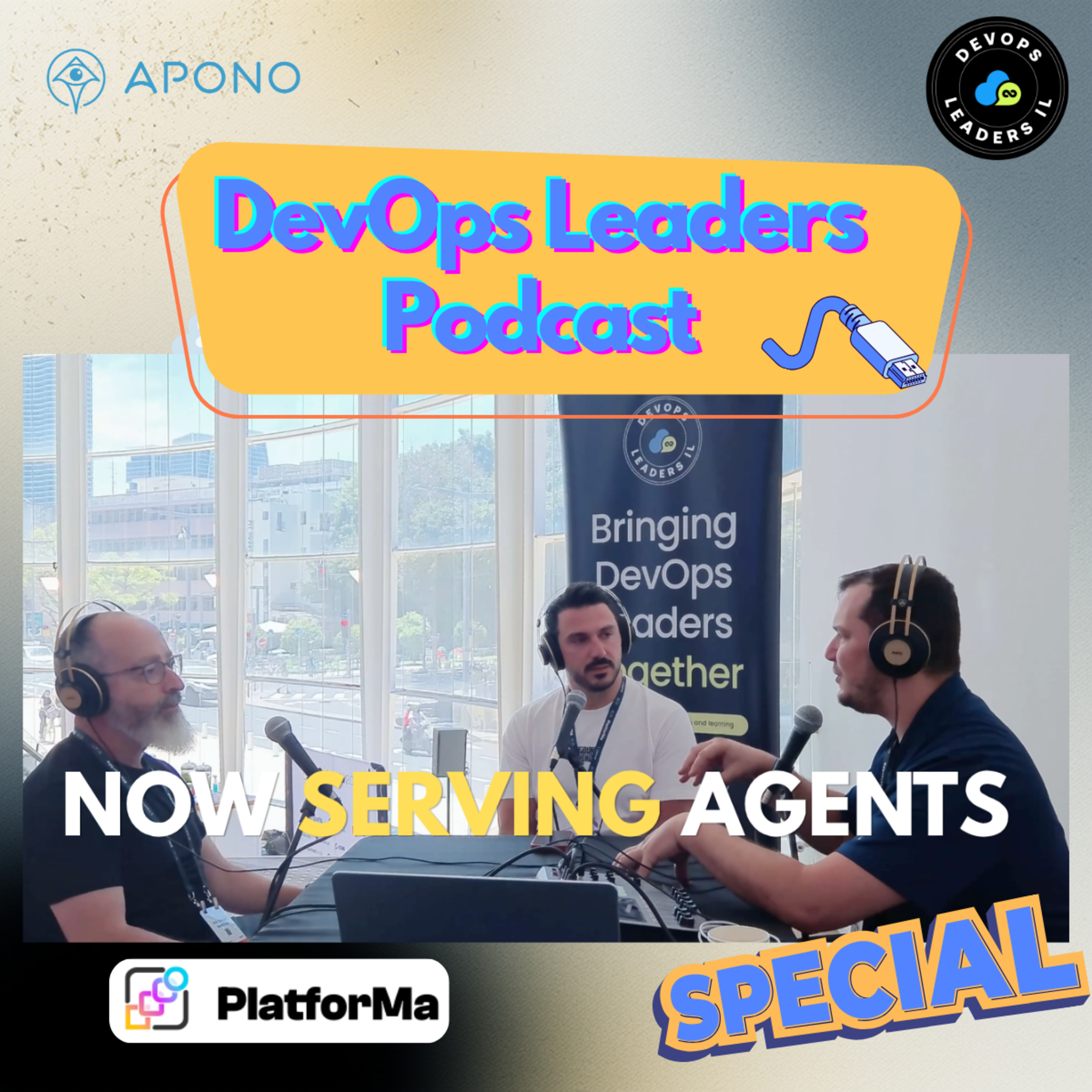
Join us as we explore what it takes to re-architect the entire software development lifecycle when the pipeline now serves agents, not just developers! In this episode, Ariel Nackash, Head of DevOps at SecuriThings, shares why he joined a ~100-person startup at the exact moment it's trying to become an AI-native organization, and how he's rebuilding the SDLC for a world where agents do the bulk of the coding — while developers level up to architects and the final approval gate where code meets the main branch ("the human never leaves the loop"). Discover why an agentic pipeline has to absorb 10x the load, why splitting into autonomous vs. human-in-every-iteration cycles matters, and why Ariel bets DevOps teams won't disappear in 2027 — they'll become "Agentic Platform Engineers."Ariel Nackash on LinkedIn - https://www.linkedin.com/in/ariel-nackash-8030601/ Miki Manor on LinkedIn - https://www.linkedin.com/in/mikimanor/ Ofir Stein on LinkedIn - https://www.linkedin.com/in/ofir-stein/ DevOps Leaders - https://www.linkedin.com/company/devops-leaders-il/posts/?feedView=allKey takeaways: SecuriThings is the only company that actually remediates and patches the vulnerabilities on the IoT/physical-security device itself — cameras, access controllers, and the thousands of unmanaged devices sprawled across enterprise data centers — not just detects them The first problem in IoT security isn't patching, it's inventory: most orgs have no idea what devices, vendors, or firmware versions are even on their network, with unaddressed CVEs running live compute on managed networks Physical security has no "IT team" to defend it — the wedge is connecting physical-security teams to IT, speaking in IT terms, and giving operators the single pane of glass they need for patching and compliance Going AI-native isn't buying Claude and Cursor licenses and letting people play — it's designing a custom SDLC where the pipeline now serves agents alongside your developers An agentic pipeline must absorb ~10x the load, handle new security risk, preserve quality, and stay tailored to the business — old problems, but far more extreme Build for two cycle types: free, autonomous cycles that need little human involvement, and tighter iterative cycles where a human sits on every iteration Developers don't disappear — they level up to architects who see the big picture, keep work custom to the business logic, and own the final approval gate where new code meets the main branch Ariel's open question for the next guest: how do you build a self-maintaining, always-current knowledge layer (from Confluence, Git, posts) that stays accessible as context to agentic flows — efficient and learning, never solving yesterday's problems We're recording live from the PlatforMa conference in Tel Aviv, featuring fascinating discussions on AI and more.Join our exclusive DevOps Leaders community with over 300 members, where we share knowledge and improve together.What's your biggest challenge in the DevOps field? Drop it in the comments! Subscribe for weekly insights and updates on the latest in DevOps!#DevOps #Podcast #Technology #AI #SecuriThings

Join us as we explore how you actually break into DevOps — and thrive once you're there! In this episode, Romi Hemo, DevOps Engineer at HoneyBook, shares how she went from QA automation to owning production deploys by refusing to fear touching, breaking, or taking on more than her job asked. Discover how she "stole" her way into the role one task at a time, why her team tore out a pile of deploy scripts for a Go + Temporal "Deploy Service" running GitOps with Argo CD, and her bet that in the AI era "everyone is a builder" and it's all just prompts. Romi Hemo on LinkedIn - https://www.linkedin.com/in/romi-hemo-9b39b2214/ Miki Manor on LinkedIn - https://www.linkedin.com/in/mikimanor/ Ofir Stein on LinkedIn - https://www.linkedin.com/in/ofir-stein/ DevOps Leaders - https://www.linkedin.com/company/devops-leaders-il/posts/?feedView=all Key takeaways: From QA automation to DevOps: the path was a strong infra/automation base, then "stealing" DevOps tasks one at a time until the move was obvious — value first, permission later. Her two rules for breaking in: come in without fear (to try, to break — DevOps breaks a lot) and relentlessly create added value beyond your job description. Tearing out messy, duplicated deploy scripts for a purpose-built "Deploy Service" in Go + Temporal — and surviving the over-engineering trap on the way ("how will I look in two years?"). The move from a Helm installer to GitOps with Argo CD: commit, push, and let Argo reconcile the cluster to desired state — plus using Port for production and staging deploys. The payoff for developers: fewer failures, more visibility, more self-service capability, and far less getting blocked. * Working AI-native today — 4 parallel tasks and 4 Claude tabs open, more time on planning and less on the small stuff, but you have to watch what the agent actually wrote in the PR before giving it free rein. Her prediction for the AI era: "everyone is a builder," the future platform is mostly text and prompts — "I just talk to Claude and it does everything I need." We're recording live from the Platforma 2026 conference in Tel Aviv, featuring fascinating discussions on AI and more. Join our exclusive DevOps Leaders community with over 300 members, where we share knowledge and improve together. What's your biggest challenge in the DevOps field? Drop it in the comments! Subscribe for weekly insights and updates on the latest in DevOps! #DevOps #Podcast #Technology #AI #HoneyBook

Comments

Download from Google Play

Download from App Store
 United States