


 Claim Ownership
Diabetes Insights - Breakthroughs and Innovators
Subscribed: 10Played: 180
Subscribe

Description
EASD presents: Diabetes Insights - Breakthroughs and Innovators
Join us for expert interviews and discussions on the latest advances in diabetes research. Discover how groundbreaking medicines and cutting-edge technologies are shaping the future of diabetes treatment and management.
Get inspired by the stories of distinguished researchers whose discoveries and contributions have transformed our understanding of diabetes.
These podcasts were recorded at the EASD Annual Meeting 2024 in Madrid, Spain. You can learn more about the research discussed by watching the scientific presentations in the EASD Media Centre (https://www.easd.org/media-centre/home.html).
New episode released every Friday.
Join us for expert interviews and discussions on the latest advances in diabetes research. Discover how groundbreaking medicines and cutting-edge technologies are shaping the future of diabetes treatment and management.
Get inspired by the stories of distinguished researchers whose discoveries and contributions have transformed our understanding of diabetes.
These podcasts were recorded at the EASD Annual Meeting 2024 in Madrid, Spain. You can learn more about the research discussed by watching the scientific presentations in the EASD Media Centre (https://www.easd.org/media-centre/home.html).
New episode released every Friday.
42 Episodes
Reverse
Last week we heard the diabetologist's perspective on cardiovascular outcomes. In this weeks episode, EASD TV continues its deep dive into major clinical trials with the cardiologist’s perspective. Cardiologist Dr. Matthew Cavender (University of North Carolina) joins Vivienne Parry to unpack the SOUL trial, a major cardiovascular outcomes study evaluating oral semaglutide in people with type 2 diabetes.
The trial followed more than 8,000 high-risk participants and demonstrated a 14% reduction in major cardiovascular events, including cardiovascular death, myocardial infarction and stroke. Dr Cavender explains why having an effective oral GLP-1 receptor agonist is an important development for both diabetes and cardiovascular care, and what the findings mean for clinical practice, guideline implementation, and patient access.
From cross-disciplinary teamwork to the future of evidence-based prescribing, this episode offers a clear look at how the SOUL trial is shaping modern treatment strategies.
At the EASD 2024 Annual Meeting, the SOUL trial attracted significant attention as the first study to show cardiovascular risk reduction using an oral GLP-1 receptor agonist. In this episode, Dr Rodica Busui (Oregon Health & Science University-OHSU, Oregon, USA) explains the trial’s major outcomes, including a 14% reduction in major adverse cardiovascular events -matching results previously observed with injectable GLP-1 formulations.
The discussion highlights the potential impact of an oral agent on clinical practice, including improved accessibility, suitability for older adults, and earlier use in the treatment pathway. Dr Busui also reviews new data on heart failure phenotypes, particularly HFpEF, and the growing need to address cardiometabolic multimorbidity in people with type 2 diabetes.
Another key topic is the high proportion of participants using SGLT2 inhibitors in the trial. The reassuring safety data regarding combined therapy offers important guidance for clinicians prescribing contemporary cardiometabolic treatments.
This episode provides a clear and timely overview of how oral GLP-1 therapies may influence the future of cardiovascular and diabetes care.
In this episode, Dr. Sean Wharton (University of Toronto and Wharton Medical Clinic, Canada) and Dr. Nasreen Alfaris (King Fahad Medical City, Riyadh, Saudi Arabia) join host Vivienne Parry to discuss the groundbreaking ATTAIN trial, presented at the EASD 2025 Annual Meeting in Vienna.
The trial tested Orforglipron, the first oral small molecule GLP-1 receptor agonist, showing promising results in weight reduction and cardiometabolic improvements among people living with overweight or obesity.
Beyond the data, the discussion explores what makes Orforglipron different, from its potential to expand access and affordability, to its implications for type 2 diabetes prevention. With obesity now the most common chronic disease worldwide, could this be a pivotal step toward truly scalable care?
What does the future hold for beta cell biology and diabetes treatment? Join Prof. Raphaël Scharfmann (INSERM), recipient of the 2025 Albert Renold Prize, as he explores how developmental biology is unlocking new ways to generate functional beta cells - an important step toward curing diabetes.
In this inspiring interview from the EASD 2025 Annual Meeting in Vienna, Prof. Scharfmann discusses the progress in stem cell-derived beta cell generation, the collaboration driving translational research, and the next big challenge, counting beta cells in the living human pancreas.
Discover how decades of research are shaping the next frontier in diabetes science and what it means for future therapies.
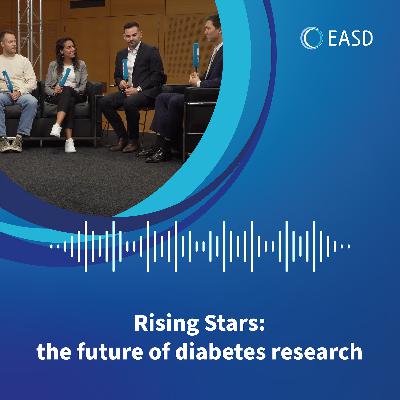
In this episode, Vivienne Parry introduces the EASD Rising Stars of 2025, four early-career researchers whose work spans exercise physiology, precision diabetes medicine, childhood obesity, and metabolic biology.
Dr Sindre Lee-Ødegård (Norway) explores exercise as medicine for highrisk groups; Dr Martin Schön (Slovakia/Germany) works on precision diabetes diagnosis and lifestyle interventions; Dr Cadenas-Sánchez (Spain) investigates childhood obesity and brain health; and Dr Jens Lund (Denmark) uncovers how metabolites like lactate act as powerful signalling molecules.
From exercise as medicine to precision diabetes care, childhood obesity, and molecular metabolism, these young scientists are redefining how we understand, prevent, and treat diabetes.Together, they reflect on their research journeys, their ambitions for the next decade, and the challenges facing young scientists today.
Join us for an inspiring look at the next generation shaping the future of diabetes research and care.
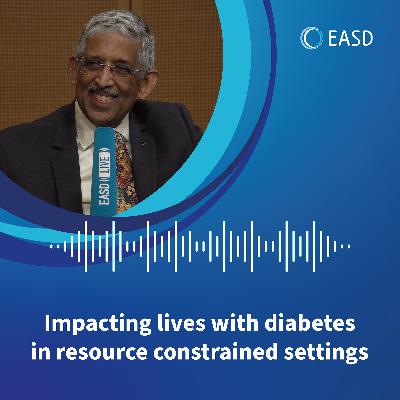
In this episode, Dr. Viswanathan Mohan, recipient of the inaugural EASD Global Impact Prize, reflects on his remarkable 50-year career transforming diabetes care in India and worldwide. From pioneering diabetes as a medical speciality and training over 29,000 educators, to leading translational research and nationwide screening initiatives, Dr. Mohan’s work has set new benchmarks in global health impact.
He discusses the evolving causes of India’s diabetes epidemic, from genetics and high-carbohydrate diets to pollution and urbanisation, and the policies needed to address them. Dr. Mohan also explores how innovation, affordability, and access to technologies like continuous glucose monitoring (CGM) can bridge the care gap for millions, and shares his enduring hope for a future cure for type 1 diabetes.
Join us to learn how one physician’s lifelong mission continues to inspire global change in diabetes prevention and treatment.
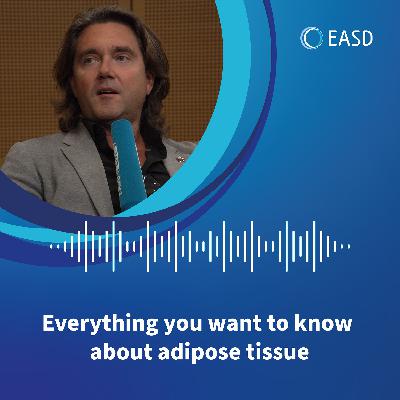
In this episode, EASD TV host Vivienne Parry sits with Prof. Mikael Rydén (Karolinska Institute), recipient of the 40th Camillo Golgi Prize, about his groundbreaking research on adipose tissue.
Prof. Rydén shares insights into how different fat cell subtypes influence disease progression, particularly in diabetes and obesity. His work highlights the potential of precision medicine in tailoring treatments based on the composition of adipose tissue, shifting the focus from generalised treatments to more personalised approaches.
Join us for a deep dive into how Prof. Rydén’s research is revolutionising diabetes care and what it means for the future of metabolic health.
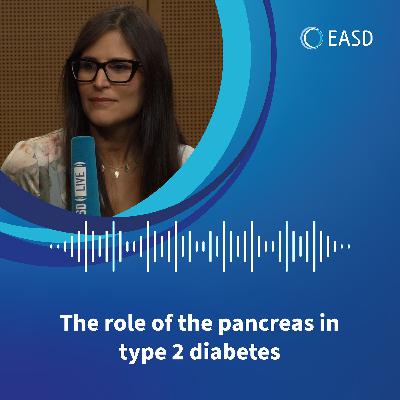
In this episode, Dr Teresa Mezza, recipient of the 2025 EASD Minkowski Prize, takes listeners inside her pioneering research on the early mechanisms of type 2 diabetes. As both a clinician and researcher at the Fondazione Policlinico Universitario A. Gemelli in Rome, Dr Mezza studies patients before and after partial pancreatectomy, offering a unique perspective on beta cell adaptation, function, and decline.
Her work is revealing early biomarkers that could identify individuals at risk of diabetes - even before hyperglycaemia develops - paving the way for earlier intervention and prevention. Dr Mezza also discusses the importance of translational research, the challenges facing young scientists, and her belief that perseverance and curiosity are the driving forces of meaningful discovery.
Join us for this inspiring conversation about science, mentorship, and the future of diabetes research.
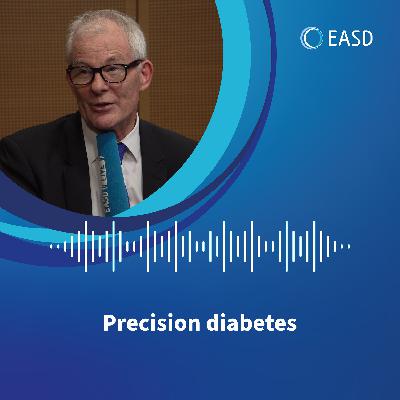
In this episode, EASD host, Vivienne Parry sits down with 2025 EASD Claude Bernard Prize recipient, Prof. Andrew Hattersley, to reflect on his career which has transformed diabetes research and care worldwide. From the discovery of key genetic mutations in maturity onset diabetes of the young (MODY) and neonatal diabetes to establishing a global genetic testing programme that has helped patients in more than 100 countries, Prof. Hattersley has shaped our understanding of diabetes.
Tune in to hear reflections on his early breakthroughs, the team collaborations that made them possible, and the far-reaching clinical impact of precision medicine for children and families worldwide. Looking to the future, he explores the next frontier: bringing personalised approached into type 2 diabetes care.
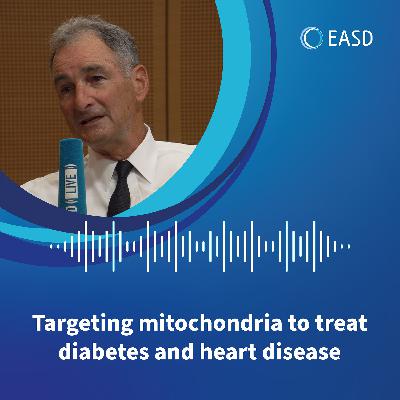
In this episode, we meet Prof Gerald Shulman, recipient of this year’s EASD-Novo Nordisk Foundation Diabetes Prize for Excellence, whose pioneering research has reshaped our understanding of insulin resistance and its role in type 2 diabetes and beyond.
Prof. Shulman shares insights from over four decades of research into how ectopic lipid accumulation disrupts insulin signalling, leading to diabetes, fatty liver disease, cardiovascular complications, cancers, and Alzheimer’s disease. He explains how his discoveries - from the role of diacylglycerols to innovative mitochondrial-targeted therapies now in clinical trials - could mark a paradigm shift in the treatment of insulin resistance.
Join us for this inspiring conversation on the future of metabolic medicine and the exciting prospect of treating insulin resistance as a central target for preventing chronic disease.
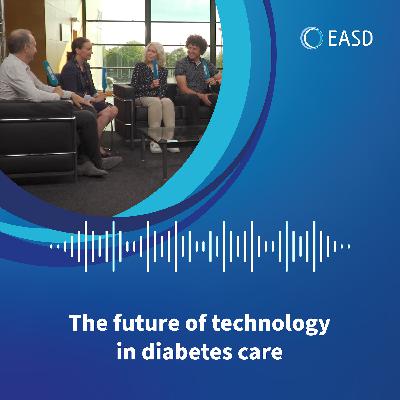
In this special episode, host Vivienne Parry is joined by experts Anna Krook (Karolinska Institute), Klemen Dovč (Ljubljana University Medical Centre), Peter Gillard (University Hospital Leuven), and Julia Mader (University of Graz) to explore the rapid evolution of diabetes technology.
From continuous glucose monitors (CGMs) and automated insulin delivery (AID) systems to AI-powered apps and integrated health records, the panel discusses how these innovations are transforming care and what barriers remain.
They unpack emerging trends in personalisation, device standardisation, and the urgent need for equitable access to ensure no one is left behind. The conversation draws on insights from Diabetologia’s 60th Anniversary Technology Supplement and Symposium (the official journal of the EASD), along with reflections from people living with diabetes themselves.
The panel also explores a central question: how do we ensure everyone, from preschoolers to older adults, in both urban and rural settings, can benefit from these technologies?
Tune in to hear what’s next for diabetes tech, and why centring people with diabetes in innovation is critical.
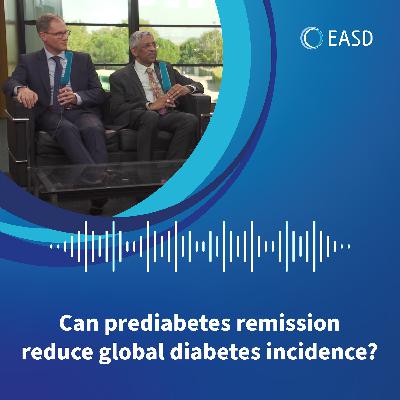
In this episode, Dr Andreas Birkenfeld (Germany) and Dr Viswanathan Mohan, 1st EASD Diabetes Global Impact Prize winner (India), join host Vivienne Parry to explore the growing importance of recognising, screening and managing pre-diabetes on a global scale.
They discuss how moving beyond diabetes remission to pre-diabetes remission could prevent long-term complications, and why strategic, risk-based screening could ease the economic burden on health systems. From policy change and health economics to public awareness and culturally tailored approaches, this episode highlights why proactive intervention in pre-diabetes is critical and what it will take to make it happen worldwide.
What does the future hold for people living with diabetes? In this episode, our host Vivienne Parry together with diabetes advocates Bastian Hauck, Renza Scibilia and Christian Collin dives into recent advances in diabetes prevention, screening, and therapeutics - from GLP-1 drugs to innovative community-driven screening strategies. But as science accelerates, can our health systems and societies keep up? Join us for an eye-opening conversation on equity, access, and the power of community in reshaping diabetes care.
In this lively episode of Diabetes Insights, Prof. Francesco Rubino (King’s College London) and Dr. Louis Aronne (Weill Cornell Medicine) join Vivienne Parry to debate one of the biggest questions in obesity care: will next-generation medications make bariatric surgery obsolete?
Drawing on decades of clinical experience and new trial evidence, they explore whether powerful GLP-1-based therapies and combination drugs can rival the life-changing outcomes of surgery. From costs and complications to patient preferences and the hidden biology of obesity, they unpack how a new era of multi-modal treatment is reshaping care.
🎧 Tune in for sharp insights, respectful disagreement and a glimpse into the future of integrated obesity management.
#diabetes #Obesity #GLP1 #BariatricSurgery #Podcast
In this episode, Dr. Melissa Thomas (Eli, Lilly & Company), Dr. Elizabeth Niemoller (Sanofi) and Prof. Michele Solimena (Helmholtz Zentrum München & Technical University of Dresden) join host Vivienne Parry to examine how partnerships between academia and industry are transforming diabetes research and care.
They discuss the culture shift from cautious collaboration to dynamic, mission-driven partnerships and how initiatives like INNODIA and the Innovative Medicines Initiative (IMI) are delivering real progress for patients. From translational breakthroughs to embedding patient advocates in clinical trial design, they explore why diverse perspectives, early regulatory foresight and shared goals are essential to accelerating therapeutic innovation.
🎧 Listen now for an insider’s look at how public-private partnerships are redefining diabetes science.
Today on Diabetes Insights, Prof. Raphael Scharfmann (INSERM, France) and Dr. Valeria Sordi (San Raffaele Diabetes Research Institute, Italy) join our host, Vivienne Parry to discuss the progress and remaining challenges in creating functional, insulin-producing beta cells from stem cells.
From the fundamental biology of pancreatic development to translational protocols for generating clinical-grade cells, our experts highlight how far the field has advanced and what hurdles remain before cell replacement therapies become a routine option for people with diabetes. They explore key questions around immune rejection, scalability, long-term viability of transplanted cells, and how the research community is navigating the complexities of cell manufacturing at clinical scale.
Listen now for a fascinating look at how cutting-edge science is shaping the future of cell-based therapies in diabetes care.
In this episode, Professors Hood Thabit (University of Manchester, UK) and Helen Murphy (University of East Anglia, Norwich, UK) join Vivienne Parry and EASD to discuss the opportunities and persistent challenges in diabetes care in hospitals and pregnancy.
The conversation examines how diabetes technology - from continuous glucose monitoring (CGM) to hybrid closed-loop systems - is improving outcomes for people with diabetes in inpatient settings and for pregnant women with type 1 diabetes. The guests reflect on recent advances, national implementation success stories from the NHS, and gaps that still exist in gestational and type 2 diabetes care.
A compelling discussion on the balance between innovation, infrastructure, and integrated care.
#Diabetes #Type1Diabetes #GestationalDiabetes #CGM #InpatientCare #PregnancyCare #DigitalHealth #Podcast
In this episode, we explore the fascinating history, fall, and resurgence of GIP (glucose-dependent insulinotropic polypeptide) in diabetes therapy. Once overshadowed by GLP-1, GIP is now back in the spotlight, thanks to dual and triple agonist therapies like tirzepatide. Experts discuss how GIP signaling in the brain may influence appetite and weight regulation, why early studies underestimated its therapeutic value, and what the future holds for multi-agonist drug development in metabolic disease.
Join Prof. Michael Nauck from the University of Bochum, Dr. Alice Adriaenssens from UCL and our host, Vivienne Perry as they revisit the incretin story, unpack recent breakthroughs in GIP biology, and offer a glimpse into the next wave of gut hormone-based therapies that go beyond glucose control to address obesity and energy expenditure.
In this episode, we explore the evolving world of cell therapy in type 1 diabetes. Professor James Shaw (Newcastle University), Dr Timothy Kieffer (University of British Columbia & Fractal Health), and Dr Trevor Reichman (University of Toronto) join EASD to discuss the established role of islet transplants and the exciting promise of stem cell–derived islets.
The conversation covers the clinical realities of pancreas and islet cell transplants, the challenges of immunosuppression, and how scalable, gene-edited stem cell therapies could shape the future of diabetes care.
From early trial successes to the potential of immune-evasive cells and gene therapies for GLP-1 delivery, today's episode examines what’s possible today and what’s coming next.
Today’s episode is special, as the topic was requested by members of the Early Career Academy. The spotlight is on work-life balance in academic medicine and research.
Dr Anna Krook from the Karolinska Institute in Sweden and Dr Benoit Gauthier from the Andalusian Molecular Biology and Regenerative Medicine Centre – CABIMER with the Ministry of Health of Andalusia in Spain, delve into the critical topic of work-life balance for everyone but specifically, early career academics.
Listen in as they discuss the unique challenges faced during this demanding period, including securing grants, managing teaching responsibilities, and navigating personal relationships. The conversation highlights the importance of supportive partnerships, mentorship, and effective delegation.
Practical advice is shared on prioritizing tasks, communicating needs, and finding strategies for maintaining well-being amidst the pressures of academic life.

Comments

Download from Google Play

Download from App Store
 United States