


 Claim Ownership
Doctors Making A Difference
Subscribed: 2Played: 13
Subscribe

© Copyright 2026 Doctors Making A Difference
Description
Not every doctor dreams of climbing the traditional ladder. Some dream of building their own.
Doctors Making a Difference, hosted by Dr. Peter Crane, tells the stories we rarely hear, of physicians who dared to ask, “Is this all there is?” and then changed their lives to answer it.
These are the moments after burnout, after bureaucracy, after sacrifice. When purpose called louder than protocol.
Each week, listeners meet doctors who stepped off the expected path—into roles as entrepreneurs, advocates, creatives, and leaders redefining what it means to heal.
They didn’t just survive medicine. They made it theirs.
108 Episodes
Reverse
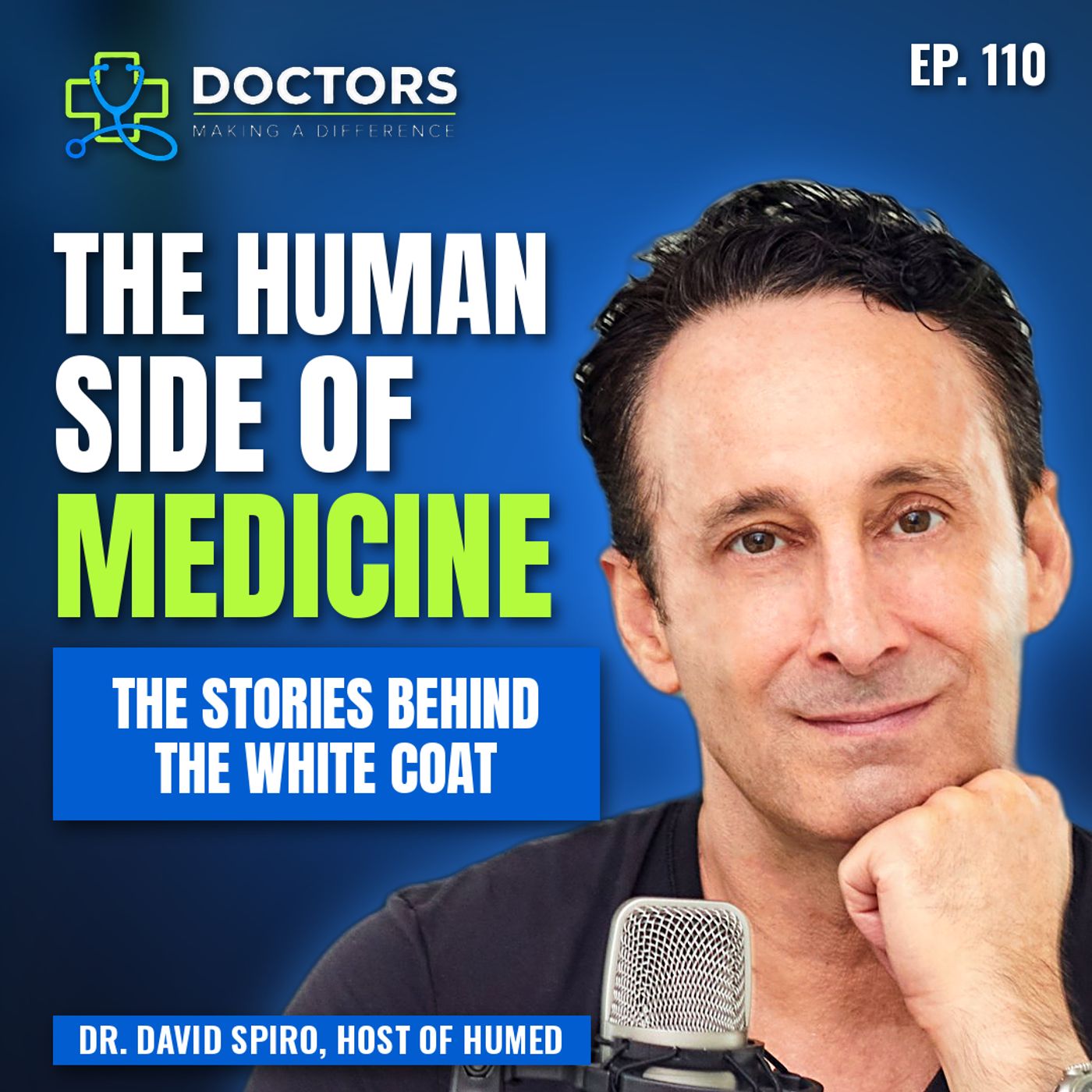
What if the stories behind the white coat are what help us stay in medicine? This episode is sponsored by Kodara, software that helps doctors take their health and wellness expertise online, so they can reach and educate people their in-person practice can’t. Learn more at kodara.com/crane SPONSOR DISCLOSUREKodara’s founder, Lucas Tyson, discusses his background in his interview on BootstrapMD:https://podcasts.apple.com/us/podcast/can-your-medical-practice-run-without-you/id1448215844?i=1000801149879Sponsorship is not an endorsement of any results. Do your own due diligence. Dr. David Spiro, a board certified pediatric emergency physician and host of the HuMed podcast, joins Dr. Peter Crane to compare life as a physician in small communities. They talk about the path from a larger city to a very small town in Oregon, formative patient stories, and what it means when one doctor represents most of the medical care for a family, which can be rewarding and exhausting at the same time.The conversation then turns to staying power: why sleep, control of your time, and eating lunch matter in burnout, how debt and the time value of money shape career choices, and how to treat income as one variable among many when choosing a specialty. They also discuss what it takes to go back to fellowship mid career, and why Dr. Spiro launched HuMed to unveil what doctors do through storytelling and unscripted interviews, focusing on process over outcome. Top 3 Takeaways Rural medicine means being the whole team: in a small town one physician often represents most of a family’s medical care, which is rewarding, exhausting, and a window into the human side of medicine.Treat money as one variable, not the only one: Dr. Crane cites Jim Dahle’s point that income varies more within a specialty than between specialties, and says a financial plan works best alongside patients, teaching, leadership, and family. Stories show what doctors do: Dr. Spiro started HuMed to reveal the work of doctors through authentic, unscripted interviews, and says focusing on process rather than outcome has led to beautiful things. About the Guest Dr. David Spiro is a board certified pediatric emergency physician and the host of the HuMed podcast, which explores the human side of medicine through conversations with physicians, nurses, health care leaders, researchers, patients, and caregivers. He previously practiced in a small town in rural Oregon, and his YouTube channel has more than 100,000 viewers. Connect with Dr. SpiroYouTube: @HuMedwithDavidSpiroMD About the Host Dr. Peter Crane is a board certified physician, educator, and storyteller with a heart for service and a calling to spotlight doctors who make a difference, in their communities, in medicine, and in the lives they touch. Through Doctors Making a Difference, he brings you into intimate conversations with physicians who have overcome challenges, redefined success, and found purpose in and beyond the clinic. His goal is simple: to help more doctors stay in medicine by showing them what's possible. About the Show:Doctors Making a Difference is more than a podcast; it's a movement to highlight the good, the gritty, and the deeply human side of medicine. In every episode, physicians share stories of challenge, purpose, and connection so more doctors can stay in medicine and leave it better than they found it. visit: doctorsmakingadifference.comLMC Series Note:Living with Metastatic Cancer (LMC) explores the science, decisions, and day to day realities of life with advanced disease, through candid physician patient conversations.
The Doctors Making a Difference Podcast is for informational purposes only and does not substitute for medical, legal, or professional advice. Always consult appropriate experts regarding your unique circumstances. Hosted by Simplecast, an AdsWizz company. See pcm.adswizz.com for information about our collection and use of personal data for advertising.
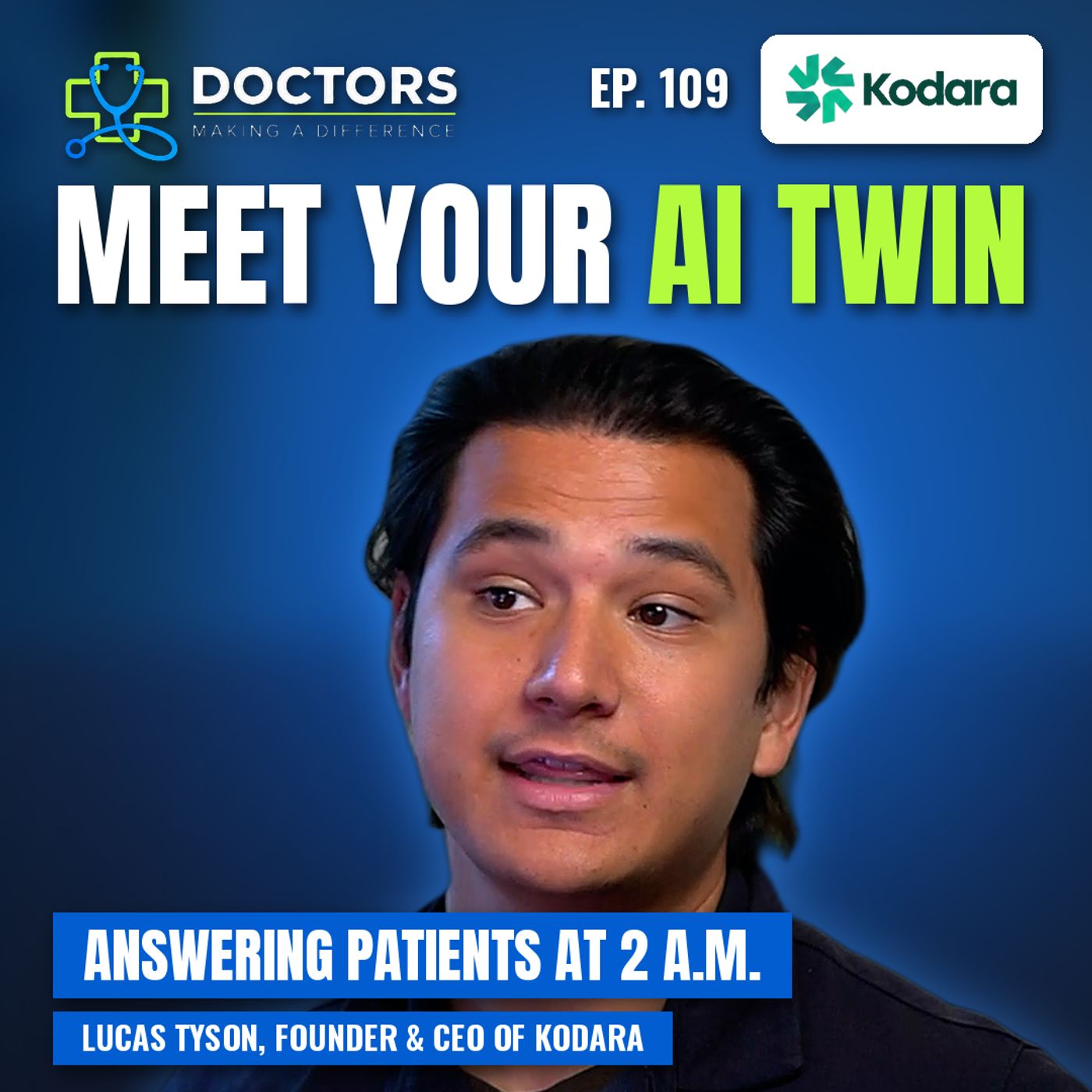
What if your patients could get answers at 2 a.m. from an AI version of you, trained only on what you know? ------------------This episode is sponsored by Kodara, software that helps doctors take their health and wellness expertise online, so they can reach and educate people their in-person practice can’t. Learn more at kodara.com/craneSPONSOR DISCLOSUREKodara’s founder, Lucas Tyson, discusses his background in his interview on BootstrapMD:https://podcasts.apple.com/us/podcast/can-your-medical-practice-run-without-you/id1448215844?i=1000801149879Sponsorship is not an endorsement of any results. Do your own due diligence.----------------Lucas Tyson explains how a career in marketing led him into health care after watching a loved one struggle for months to get answers, and how that experience led him to start Kodara. He and Dr. Crane discuss the rate limiting step in every practice, which is the physician’s own time, and why a general chatbot trained on the open internet gives watered down answers that patients may weigh against their doctor’s advice.Tyson describes the “walled garden” approach, where an AI is trained only on a physician’s own content, and walks through practical uses such as educating prospective patients and answering common GLP-1 questions. The conversation covers the Mayo Clinic avatar study, licensing, billing and liability questions, the disclaimers practices use, and what a build looks like, from training the AI brain to a first version in about a month. As a sponsored episode, listeners are encouraged to do their own due diligence before working with any company. Top 3 Takeaways An AI is only as trustworthy as its training data: Tyson argues that limiting an AI to a physician’s own content, a walled garden, reduces made up answers and keeps responses aligned with how that doctor practices.Most use is education, not diagnosis: patients and prospective patients ask general questions off hours, such as GLP-1 side effects, while diagnosis and in person care stay with the physician.Clear communication manages risk: Tyson says multiple disclaimers and plain framing that the tool is an AI, and not a replacement for the physician, are especially important for existing patients.About the GuestLucas Tyson is the founder and CEO of Kodara, a company that builds an AI version of a health or wellness expert that can educate patients and clients online around the clock. He comes from a marketing background and works with a team of engineers and people with decades of health care experience.Connect with Lucas TysonKodara: kodarahealth.com/crane About the Host Dr. Peter Crane is a board certified physician, educator, and storyteller with a heart for service and a calling to spotlight doctors who make a difference, in their communities, in medicine, and in the lives they touch.Through Doctors Making a Difference, he brings you into intimate conversations with physicians who have overcome challenges, redefined success, and found purpose in and beyond the clinic. His goal is simple: to help more doctors stay in medicine by showing them what's possible.About the Show:Doctors Making a Difference is more than a podcast; it's a movement to highlight the good, the gritty, and the deeply human side of medicine. In every episode, physicians share stories of challenge, purpose, and connection so more doctors can stay in medicine and leave it better than they found it.visit: doctorsmakingadifference.comLMC Series Note:Living with Metastatic Cancer (LMC) explores the science, decisions, and day to day realities of life with advanced disease, through candid physician patient conversations.
The Doctors Making a Difference Podcast is for informational purposes only and does not substitute for medical, legal, or professional advice. Always consult appropriate experts regarding your unique circumstances. Hosted by Simplecast, an AdsWizz company. See pcm.adswizz.com for information about our collection and use of personal data for advertising.
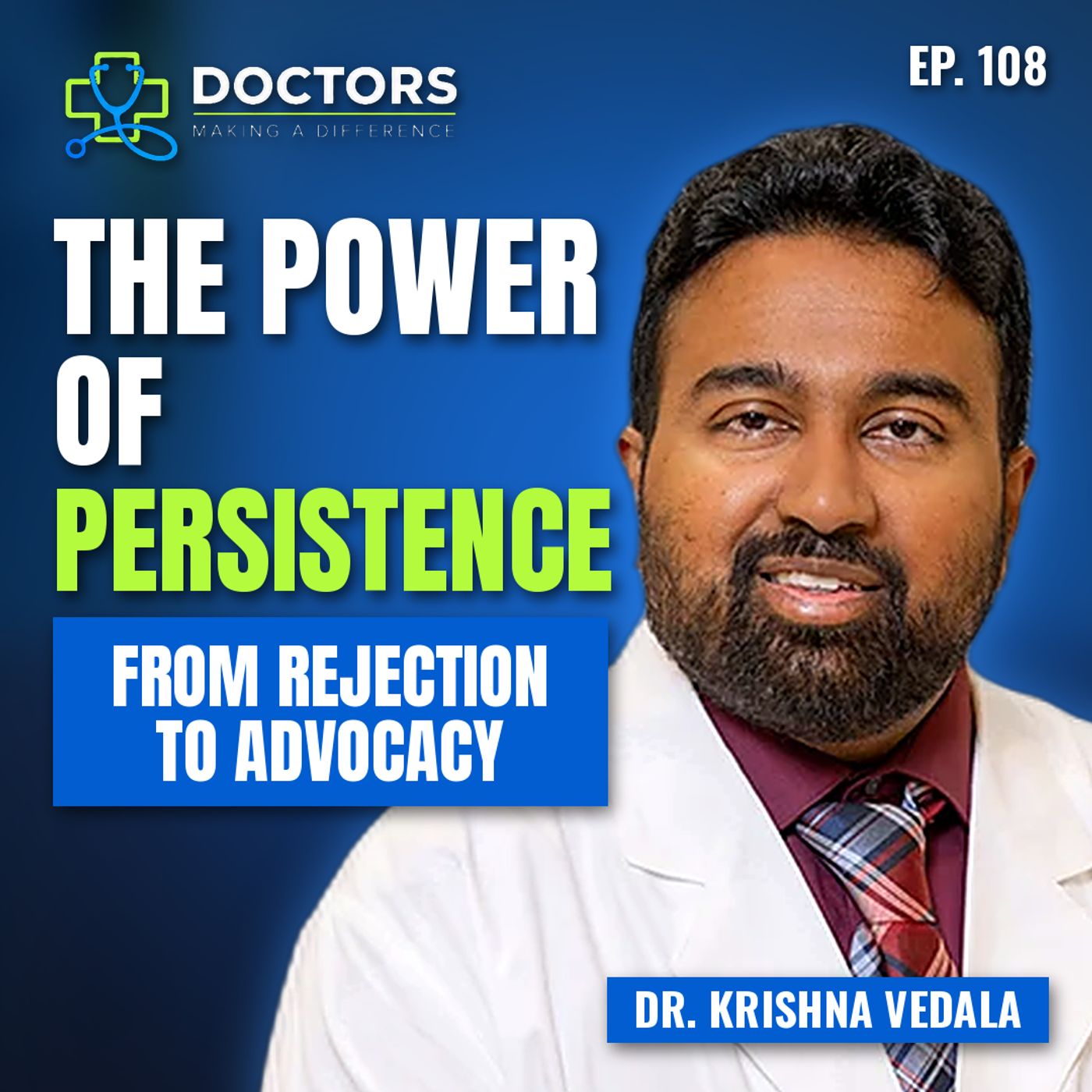
What if the setback that stops you today is the very thing that shapes the doctor you become?Dr. Krishna Vedala traces his path from a childhood in Edmond, Oklahoma, to primary care in Oklahoma City, including the painful stretch of not getting into medical school until his third attempt. He explains how those years as a medical assistant, research assistant, medical biller, and hospice volunteer taught him about persistence, and how writing down simple goals, an idea he calls hope theory, kept him moving forward.The conversation then turns to the work that drives him today. Dr. Vedala describes how his public health training and MBA led him to launch Connected by Health, why he sees housing, social support, education, and civic health as part of every patient visit, and how stories from the clinic carry more weight with legislators than policy talking points. He and Dr. Crane close with practical advice for physicians who feel powerless, including joining advocacy organizations, scaling impact through podcasts, and balancing it all with family.Top 3 TakeawaysPersistence is a skill that can be built: Dr. Vedala was turned away from medical school twice, used the time to learn about health care from every angle, and credits persistence and written goals for getting him to the finish line.Dr. Vedala argues that health is the foundation of a strong society, and that housing, social support, education, and civic health shape patient outcomes in ways that show up years later, as his patient stories illustrate.Physicians have a powerful voice: patient stories carry weight with legislators, and joining organizations such as the March of Dimes or a county medical society magnifies the impact of any one doctor.About the GuestDr. Krishna Vedala is a board certified internal medicine and obesity medicine physician and a primary care doctor in Oklahoma City. He graduated from the University of Oklahoma School of Community Medicine, completed his residency at White River Health System in Batesville, Arkansas, and holds an MPH and a recently earned MBA. He is the host of the Connected by Health podcast and is active in advocacy through the March of Dimes, the Oklahoma chapter of the American College of Physicians, and the Oklahoma County Medical Society.Connect with Dr. VedalaConnected by Health: connectedbyhealthpodcast.com About the Host Dr. Peter Crane is a board certified physician, educator, and storyteller with a heart for service and a calling to spotlight doctors who make a difference, in their communities, in medicine, and in the lives they touch.Through Doctors Making a Difference, he brings you into intimate conversations with physicians who have overcome challenges, redefined success, and found purpose in and beyond the clinic. His goal is simple: to help more doctors stay in medicine by showing them what's possible.About the Show:Doctors Making a Difference is more than a podcast; it's a movement to highlight the good, the gritty, and the deeply human side of medicine. In every episode, physicians share stories of challenge, purpose, and connection so more doctors can stay in medicine and leave it better than they found it.visit: doctorsmakingadifference.comThis episode is sponsored by Kodara, software that helps doctors take their health and wellness expertise online, so they can reach and educate people their in-person practice can’t. Learn more at kodara.com/crane.SPONSOR DISCLOSUREKodara’s founder, Lucas Tyson, discusses his background in his interview on BootstrapMD: Click here to listen.Sponsorship is not an endorsement of any results. Do your own due diligence. LMC Series Note:Living with Metastatic Cancer (LMC) explores the science, decisions, and day to day realities of life with advanced disease, through candid physician patient conversations.
The Doctors Making a Difference Podcast is for informational purposes only and does not substitute for medical, legal, or professional advice. Always consult appropriate experts regarding your unique circumstances. Hosted by Simplecast, an AdsWizz company. See pcm.adswizz.com for information about our collection and use of personal data for advertising.
What if the biggest advances in organ transplantation weren’t just better drugs, but the ability to keep organs alive and working outside the bodyDr. Antonio Di Carlo traces how mentorship, family experience, and the pure magic of reperfusion drew him into transplant surgery. He describes the still astonishing moment a lifeless kidney on ice suddenly produces urine and explains why the technical side of transplant has changed far less than the immunology and preservation science around it.He walks through the transformative impact of normothermic machine perfusion (especially for livers), emerging gene profiling and cell free DNA tools that may soon predict rejection, and the rapid progress in genetically modified pig organs. The conversation then turns to how he frames transplant discussions with patients, a memorable pancreas kidney recipient whose life was restored, the surprising fitness of many octogenarian candidates, and why a thoughtfully written textbook still offers a “mind frame” that AI cannot replace.Top 3 TakeawaysNormothermic machine perfusion has moved organs from ice bucket urgency to assessed, functioning grafts that can wait while the surgical team rests, dramatically improving outcomes, especially for the liver.Xenotransplantation is no longer science fiction: genetically modified pig kidneys have approached one year of human survival, and primate data suggest multi year rejection free function is possible.Chronological age is a poor proxy for transplant candidacy; functional status and “protoplasm” matter far more, as illustrated by motorcycle riding and company running octogenarians who have successfully received organs.About the GuestDr. Antonio Di Carlo is a professor of surgery with 25 years’ experience in adult and pediatric abdominal organ transplantation. Board certified in general and transplant surgery, he holds an MD from McGill University, a leadership certificate from Harvard T.H. Chan School of Public Health, and an MBA in Healthcare Administration from Temple University’s Fox School of Business. He has authored chapters in the book Care of the Older Adult.Connect with Dr. Di CarloLinkedIn: Antonio DiCarlo MD About the Host Dr. Peter Crane is a board certified physician, educator, and storyteller with a heart for service and a calling to spotlight doctors who make a difference, in their communities, in medicine, and in the lives they touch.Through Doctors Making a Difference, he brings you into intimate conversations with physicians who have overcome challenges, redefined success, and found purpose in and beyond the clinic. His goal is simple: to help more doctors stay in medicine by showing them what's possible.About the Show:Doctors Making a Difference is more than a podcast; it's a movement to highlight the good, the gritty, and the deeply human side of medicine. In every episode, physicians share stories of challenge, purpose, and connection so more doctors can stay in medicine and leave it better than they found it.visit: doctorsmakingadifference.comLMC Series Note:Living with Metastatic Cancer (LMC) explores the science, decisions, and day to day realities of life with advanced disease, through candid physician patient conversations.
The Doctors Making a Difference Podcast is for informational purposes only and does not substitute for medical, legal, or professional advice. Always consult appropriate experts regarding your unique circumstances. Hosted by Simplecast, an AdsWizz company. See pcm.adswizz.com for information about our collection and use of personal data for advertising.
Family physician turned entrepreneur Dr. Mike Woo-Ming recounts starting a medical education business during residency in the late 1990s, then walking away from a shareholder position in 2003 after his son’s autism diagnosis so he could be present as a dad.He later sold a software company, traveled the world, and deliberately returned to medicine by launching cash based longevity practices in Southern California proving physicians can redesign both their careers and their impact.Top 3 TakeawaysStarting a simple residency FAQ guide sold by mail in the 1990s taught Woo-Ming that solving real problems creates real businesses and funded his family’s survival when traditional options failed.Leaving medicine for seven years after his son’s diagnosis gave him the freedom to be the dad he never had, while keeping his license and eventually returning stronger.“Pig headed perseverance” and always betting on yourself let him launch cash based practices against naysayers and now coach other physicians to do the same through Bootstrap MD.About the GuestDr. Mike Woo-Ming is a Mayo Clinic trained family physician, longevity practice founder, CEO of Doctor Podcast Network, coach at Momentum MD, and author. After leaving traditional practice to prioritize family and entrepreneurship, he returned to medicine on cash based terms and now helps physicians build freedom and scale their impact. Connect with Dr. Mike Woo-Ming Website: bootstrapmd.comPodcast: Bootstrap MD (Over 300 episodes)About the HostDr. Peter Crane is a board certified physician, educator, and storyteller with a heart for service and a calling to spotlight doctors who make a difference, in their communities, in medicine, and in the lives they touch.Through Doctors Making a Difference, he brings you into intimate conversations with physicians who have overcome challenges, redefined success, and found purpose in and beyond the clinic. His goal is simple: to help more doctors stay in medicine by showing them what's possible. About the ShowDoctors Making a Difference is more than a podcast; it's a movement to highlight the good, the gritty, and the deeply human side of medicine. In every episode, physicians share stories of challenge, purpose, and connection so more doctors can stay in medicine and leave it better than they found it. visit: doctorsmakingadifference.com LMC Series Note:Living with Metastatic Cancer (LMC) explores the science, decisions, and day to day realities of life with advanced disease, through candid physician patient conversations.
The Doctors Making a Difference Podcast is for informational purposes only and does not substitute for medical, legal, or professional advice. Always consult appropriate experts regarding your unique circumstances. Hosted by Simplecast, an AdsWizz company. See pcm.adswizz.com for information about our collection and use of personal data for advertising.

Comments

Download from Google Play

Download from App Store
 United States