


 Claim Ownership
Dynamic Leadership Strategies
Subscribed: 0Played: 0
Subscribe

© LSDS® 2023
Description
Building the capability and capacity of your team means it will operate at its peak potential and accelerate success. Listen to vetted leaders and subject matter experts from LSDS to facilitate your team’s journey.
14 Episodes
Reverse
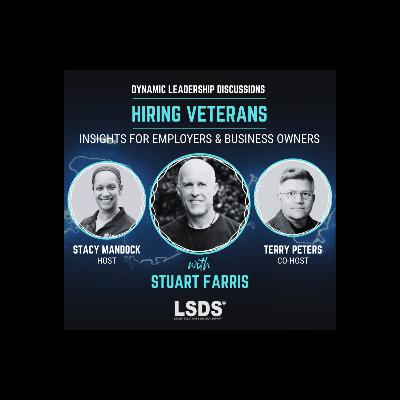
Host: Stacy Mandock Stacy Mandock provides support to the Risk Mitigation team as the program director. With the purpose of providing the safest possible experience for travelers both foreign and domestic, Stacy assists in doing the initial research for travel destinations and identifying potential concerns and/or risks before and during travel. Her specialty is working with collegiate travelers and ensuring that they’re thoroughly prepared before travel as well as tracking potential risks or threats throughout their trips.Guest: Stu FarrisColonel (Retired) Stu Farris retired from the Army at the end of 2022 after serving over 25 years in the Army. He commanded Army Special Forces units from the Detachment to the Group level and deployed to Afghanistan six times. His final assignment was serving as the Chief of Staff of the US Army JFK Special Warfare Center and School at Fort Bragg, NC.Stu lives with his wife and kids in Fayetteville, NC. He works for The Donovan and Bank Foundation, a small non-profit with a mission to help special operators leaving service "Bring closure to their warrior story and transition to a life of peace, contentment, and balance." (www.donovanbank.org) On this topic: Stu and Terry dialogue about the benefits of hiring veterans and some of the skills they bring to the table. Tips shared for both veterans and those looking to hire them. Please see the Show Notes below for links to some of the programs and organizations mentioned in the show. Key takeaways:Challenges of some of the rhetoric around veterans. Terry and Stu share their, very different, experiences of how they retired from serving and transitioning to the “what’s next”. Tips for potential employers on how to engage veterans, what to ask. Show Notes: The Honor Foundation: https://www.honor.org/Special Operations Transition Foundation: https://sotf.org/Commit Foundation: https://www.commitfoundation.org/Bunker Labs: https://ivmf.syracuse.edu/programs/entrepreneurship/
Dynamic Leadership DiscussionsAssuming Responsibility of a Dynamic TeamHost: Stacy Mandock Stacy Mandock provides support to the Risk Mitigation team as the program director. With the purpose of providing the safest possible experience for travelers both foreign and domestic, Stacy assists in doing the initial research for travel destinations and identifying potential concerns and/or risks before and during travel. Her specialty is working with collegiate travelers and ensuring that they’re thoroughly prepared before travel as well as tracking potential risks or threats throughout their trips.Guest: Brian VintonBrian is a distinguished art and creative director with a notable career in the video game industry. He gained prominence at Riot Games, where he influenced League of Legends, and later joined Bungie as Art Director and Head of the Art Department. Known for his strong leadership skills and inspiring leadership style, he focuses on coaching leaders, building teams, sourcing and training art vendors, and art and creative directing player-focused content. Dedicated to the mantra, "It's all about the player," his work continues to push the boundaries of interactive art and storytelling. The opinions expressed in this podcast are his own and not those of Bungie or Sony. On this topic: Brian Vinton has been working with LSDS’ leadership training in different capacities for the past decade. During that time he’s moved up significantly in leadership roles in his career, more recently taking the position as Art Director at Bungie. In this podcast he digs into some of the prep work that went into taking on that role, what he prioritized during the initial phase and what he still implements today. Key takeaways:Key priorities from the startIntegrating with an experienced team as the relative “new guy”Best practices that have kept the momentum going
Host: Stacy Mandock Stacy Mandock provides support to the Risk Mitigation team as the program director. With the purpose of providing the safest possible experience for travelers both foreign and domestic, Stacy assists in doing the initial research for travel destinations and identifying potential concerns and/or risks before and during travel. Her specialty is working with collegiate travelers and ensuring that they’re thoroughly prepared before travel as well as tracking potential risks or threats throughout their trips.Guest: Dr. Kate Colvin Dr. Kate Colvin has worked in the human performance industry for 15 years, gaining experience working with professional athletes, military special operations, as well as Fortune 500 companies. As a seasoned performance psychology consultant, she is passionate about increasing individual mental performance and thus overall psychological well-being.Kate is a published author with contributions to both the Journal of Special Operations Medicine and the Journal of Alternative Medicine. She holds a M.S. in Sport and Performance Psychology from University of Idaho as well as a Ph.D. in Educational Psychology from Texas Tech University and currently resides in Idaho. See Kate’s full bio at Focus20 CoachesOn this topic: Introducing Kate and her skill set as she explains what she does, who it works for and who she loves to work with. This could be you! Working with Kate is a team experience and it’s obvious during this chat that she is energized by the unique problem sets that clients bring to her. Key takeaways:Kate’s background and professional experiencesWhat Kate’s passionate about in her line of workWhat are some of the qualities in a person that she loves to work withCheck out all the coaches and use the intake form on the LSDS Focus20 page to get started!
Host: Stacy MandockStacy Mandock provides support to the Risk Mitigation team as the program director. With the purpose of providing the safest possible experience for travelers both foreign and domestic, Stacy assists in doing the initial research for travel destinations and identifying potential concerns and/or risks before and during travel. Her specialty is working with collegiate travelers and ensuring that they’re thoroughly prepared before travel as well as tracking potential risks or threats throughout their trips.Guest: Beth MacDonaldBeth MacDonald has worked in the defense industry for over 20 years gaining experience in leadership, analysis, development, and solution-based results and currently works as the BD Director for Raven. As a seasoned resource management expert, she is passionate about advancing her skills in coaching and training. Driven by a mission to overcome obstacles, Beth is best known for inspiring others to rise above any circumstance and thrive. As a Gold Star spouse, Beth has spent years researching post-traumatic growth with some of the nation’s leading universities and organizations.See Beth’s full bio at Focus20 CoachesOn this topic: Sometimes ‘No’ is the easy and fast answer, but it doesn’t mean you have to stop there. Beth dives into her experiences over the years of navigating through and around the Nos and problem-solving to the ‘Yes’.Key takeaways:Ways to get the person saying No to help you get to the YesBest practices for handling negative interactionsChecking the energy - yours and theirsCheck out all the coaches and use the intake form on the LSDS Focus20 page to get started!Read the blog online here: https://www.lsds.us/post/dynamic-leadership-discussions-how-to-get-to-the-yes
Hosts: Stacy Mandock Stacy Mandock provides support to the Risk Mitigation team as the program director. With the purpose of providing the safest possible experience for travelers both foreign and domestic, Stacy assists in doing the initial research for travel destinations and identifying potential concerns and/or risks before and during travel. Her specialty is working with collegiate travelers and ensuring that they’re thoroughly prepared before travel as well as tracking potential risks or threats throughout their trips. Guest: Terry Peters Terry is the Founder and Chief Executive Officer of Leader Solutions Decisions Support (LSDS) which provides executive coaching to leaders of all levels and empowers and supports individuals and organizations with the skills and knowledge to achieve their professional vision. Terry has led leadership development forums with Amazon’s North American Customer Fulfillment, Global Engineering Services (GES), and has built a resident leadership academy for Riot Games. He is a 27-year Army Veteran and has numerous decorations and foreign awards for his service to the Nation. On this topic: Meetings…not everyone’s favorite word or activity, but meetings that are run well and are effective can be hugely rewarding for all involved. Terry digs into this topic and shares what he’s seen over the years as to what makes a meeting effective and when it’s going off the rails. In this podcast you will learn more about:● Best practices for conducting effective meetings● Don’ts to stay away from● Recommended timelines● The criticality of present attendees and the value of feedback. Key takeaways:▪ Eliminate anyone’s time being wasted with scheduled and structured meetings.Read the full blog post here.
Priorities are hugely important to an organization and/or team. Equally important is the need to accurately select them at the leadership level and then communicate them down throughout the organization with clarity. Whether this is done well - or not - can have powerful effects on organizational culture. Read the summary, key takeaways, and best practices.Host: Stacy MandockGuests: Lorenzo Stephenson and Terry Peters
Retros are an opportunity to build a stronger company and culture. It’s a safe space for reviewing successes, identifying opportunities for process improvement, and solving issues that may have come up. Read the summary, key takeaways, and best practices for Retros and AARs.
In the last part of the series, we focus on ways to know yourself and your people to avoid conflict. Read the summary, key takeaways, and best practices for conflict resolution part 3.Host: Stacy Mandock Guest: Bill Hanes
While Part I Conflict resolution series focuses on the neuroscience of conflict, Part II explores some red-flags (orange, maybe even yellow) that can be identified before a full-blown conflict situation occurs. Read the summary, key takeaways, and best practices for conflict resolution part 2. Host: Stacy Mandock Guest: Bill Hanes
Workplace collaboration is key to organizational success at all levels. Learn best practices to influence positive interactions and ensure your team members are engaged in all aspects of communication and change. Read the summary, key takeaways, and best practices for Collaborating With The Uncollaborative.Host: Stacy Mandock Guest: Terry Peters
This podcast delves into the breakdown of the brain’s anatomy and provides a deeper understanding of how the neuroscience of conflict can help one reach resolution faster and prevent its frequency. Read the summary, key takeaways, and best practices for conflict resolution.Host: Stacy Mandock Guest: Bill Hanes
Is the information that you are delivering being received as intended? Learn more about effective communication in the workplace and strategies to ensure organizational objectives are achieved. Read the summary, key takeaways, and best practices for Less is More ( Effective Communication in the Workplace).Host: Stacy Mandock Guest: Terry Peters
The challenges of attracting, developing and retaining talent in a post-Covid landscape means leaders must have a “people first” approach while executing their organizational goals and objectives to ensure best talent is kept. Read the summary, key takeaways, and best practices for The Attuned Leader.Host: Stacy Mandock Guest: Terry Peters
The challenges of attracting, developing and retaining talent in a post-Covid landscape means leaders must have a “people first” approach while executing their organizational goals and objectives to ensure best talent is kept. Read the summary, key takeaways, and best practices for Retaining Talent.Host: Stacy Mandock Guest: Terry Peters
Comments

Download from Google Play

Download from App Store
 United States