


Dysrupt Healthcare Podcast
Subscribed: 4Played: 35
Subscribe

© Lester J. Morales
Description
Dysrupt Healthcare exposes the truth about rising health benefits—one of the top 3 expenses for companies. Host Lester J. Morales interviews industry leaders using bold, proven strategies to cut healthcare costs by 20%+ while improving care quality. This podcast is for employers ready to challenge the status quo and take control of their benefits. Real stories. Real savings. Real change.
Need to see it to believe it? Subscribe to Dysrupt Healthcare now!
Need to see it to believe it? Subscribe to Dysrupt Healthcare now!
94 Episodes
Reverse

Most CFOs would never tolerate sloppy spending anywhere else in the P&L… except in the second-largest expense of the business: healthcare.In this episode of the Disrupt Healthcare Podcast, host Lester J. Morales sits down with Dean Jargo, former CFO and founder of Fair Market Health, to unpack why the traditional fully-insured model is structurally misaligned — and how employers can use free-market, direct contracting strategies to pay less while giving employees better access to care.Dean shares how his perspective shifted after his wife’s cancer and emergency heart surgery threw his family deep into the healthcare system. From there, he breaks down why insurance networks aren’t really negotiating “for” employers, how minimum loss ratio rules (MLR) incentivize higher claim costs, and why CFOs must get directly involved instead of delegating everything to HR and big brokerage firms.You’ll also hear how Fair Market Health helps employers buy services like MRIs, surgeries and other procedures directly from providers at a fair price, often:Saving 35–45% on individual services purchased directReducing total plan spend by 10–20%Waiving member out-of-pocket costs while still paying providers fairly and quicklyIf you’re a CFO, CEO, HR leader or advisor, this conversation will change how you think about your health plan, your broker — and your responsibility to your people.Show NotesWhy fully-insured carriers are structurally incentivized for higher claim costs, not lowerWhat a fair market, direct-pay model looks like for hospitals, employers and employeesHow deductibles & out-of-pocket for employees show up as accounts receivable on the hospital sideWhy hospital systems obsess over revenue instead of net profit, collection costs and time value of moneyThe biggest mindset blocks for hospital administrators and employer C-suitTimestamps00:00 – 01:04 | Intro: From Impact to Disrupt Healthcare — and why the Y matters01:05 – 03:21 | Meet Dean Jargo: finance background, free-market mindset, and his wife’s cancer + emergency heart surgery story03:22 – 04:57 | What is Fair Market Health? Creating a truly “fair price” marketplace between buyers and sellers of healthcare04:58 – 08:32 | Who really decides the price of an MRI? The illusion of “negotiated discounts” in traditional networks08:33 – 12:08 | Why carriers don’t benefit from lowering costs: MLR rules, revenue growth and misaligned incentives12:09 – 14:06 | Dean’s biggest surprise: how many high-quality vendors already exist to run better, partially self-funded plans14:07 – 17:46 | The “cost of change” myth and why disruption is actually what employees are begging for17:47 – 20:20 | Transparent pricing + waived out-of-pocket: how buying direct actually increases access to care20:21 – 22:43 | Deductibles vs A/R: the moment Lester realized member cost-sharing is just hospital accounts receivable22:44 – 25:04 | Hospitals chasing revenue vs. focusing on net profit, collection costs and time value of money25:05 – 27:26 | The win–win–win triangle: hospital, employer and employee all benefit in a direct model27:27 – 29:38 | The emotional toll: EOBs, confusing bills and stress stacked on top of serious illness29:39 – 32:00 | On the provider side: revenue myopia and “we’ve always done it this way” thinking32:01 – 33:05 | On the employer side: how CEOs & CFOs delegate benefits decisions into misaligned hands33:06 – 35:08 | Claims analysis 101: what Dean finds when he reprices 12–24 months of claims data35:09 – 36:19 | Access advantage: why direct-pay patients move to the top of the schedule36:20 – 37:36 | Dean’s message to CFOs: get engaged — your health plan is probably your highest-ROI project37:37 – 38:22 | Lester’s example: $3.5M in Rx savings vs $25–30M in extra sales38:23 – 39:23 | Where to find Dean and final call to action for financial leaders39:24 – 40:23 | Closing: why we must disrupt healthcare before it breaks
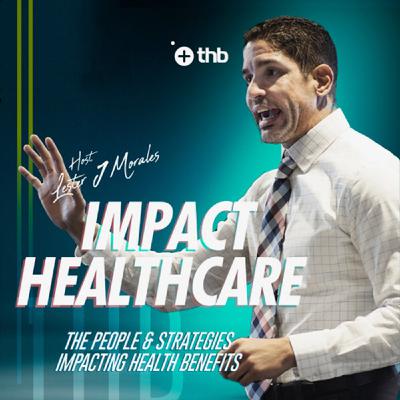
On this episode of Impact Healthcare, Lester is joined by Ben Conner, CEO of Conner Insurance. Together, they discuss Ben’s start in the industry and how he developed into the leader he is today. He also touches on ‘mission-driven benefits’ and shares an impactful story about one of his client’s self-funded journeys. Ben also leaves a word of advice for both employers and advisors looking to achieve similar results.
Show Notes: Welcome to Impact Healthcare! Ben begins by explaining what got him into the insurance business (1:05) and highlights a few key individuals that played a part in his success as a leader (3:52). He speaks about ‘mission-driven benefit’ and how it applies to his business everyday (7:50). Ben also tells a story about a small firm that has achieved significant cost savings with their health plan, showing that all companies are eligible for self-funded insurance. (14:22). Together, the pair discuss the importance of employee buy-in throughout the self-funding process and how it affects recruitment and retention. (26:00). Lastly, Ben shares some advice with advisors and employers in the industry (32:08).

Welcome to Season 2 of Impact Healthcare! On this episode, Lester sits down with John Quinn, CEO of Wellnecity. Together, they discuss his transition from management consulting to health insurance. John explains how healthcare cost are more controllable then ever and the importance of data in reducing expenditure. He also provides employers with actionable strategies they can implement to improve quality of care at a fraction of the cost of their current health plan. Lastly, he leaves listeners with a few words of wisdom for employers and advisers based on his experience in the industry.
Show Notes: John kicks off the episode by discussing his company (1:09), as well his past role as a management consultant. (2:40) They then dive right into how healthcare costs are now more controllable than ever (5:08) and how carriers are not incentivized to help employers save money. (13:55) John walks through exactly how he helps organizations optimize their health benefits (16:00) and how certain employers were able to positively impact their employees healthcare during the COVID pandemic. (22:00) They then discuss the importance of having access to data and how it impacts decision making and business strategy. (26:50) Lastly, John leaves the audience with a few proactive strategies employers can implement to impact healthcare (34:35) and a few words of wisdom (41:15).
In our final episode of the year, Lester J. Morales shares the real why behind moving from Impact Healthcare to Dysrupt Healthcare. This isn’t a cosmetic change—it’s a sharpened mission informed by everything we learned this season: self-funding that actually bends the curve, PBM transparency, employer-led innovation, and data over hype.Here’s the blueprint for the next chapter:Keep the straight-talk interviews with advisors, clinicians, employers, and operators.Add case files where costs drop and outcomes rise—“with the receipts.”Ship practical Monday-morning playbooks you can run in the wild.Elevate patient and employer voices to anchor what truly matters.Key takeawaysThe strategic reason for the shift—and why now.What stays: candor, data, employer-first lens.What’s new: deeper case studies + step-by-step execution.How this community moves from insight to repeatable systems in the new season.Follow Dysrupt Healthcare Podcast, share this finale with your team, and send the case studies you want dissected next season. We have been dysrupted—and we’re ready.
In this episode of the Dysrupt Healthcare Podcast, host Lester J. Morales sits down with Heath Potter, Chief Growth Officer and founding member of Six Degrees Health, one of the leading innovators in reference-based pricing (RBP) and transparent cost-containment solutions.Heath shares how a personal family tragedy—his father’s life-changing injury—became the spark behind his mission to make healthcare affordable, transparent, and fair for every patient and employer.Together, Lester and Heath unpack how Six Degrees Health uses data, analytics, and negotiation—not litigation—to redefine RBP, allowing employers to save an average of 30–40 % on medical claim spend while improving member experience and access to care.From the evolution of RBP 1.0 to today’s member-first model, this episode explores:Why most employers are still overspending on healthcareThe myths about balance billing and access issuesHow transparency and independent negotiation build trust between plans and providersReal case studies where employers saved millions without sacrificing careIf you’re a self-funded employer, benefits advisor, or HR leader who’s ready to rethink healthcare costs, this conversation will show you what true disruption looks like.Dysrupt Healthcare Podcast (yes—with a Y) is where Lester J. Morales talks with leaders who are challenging the status quo of American healthcare.Each episode digs into the WHY—the purpose behind the movement—to make healthcare more transparent, affordable, and human.Timestamps00:00 – “This podcast has been disrupted”00:07 – Welcome to Dysrupt Healthcare: Why the Y matters00:52 – Meet Heath Potter, Chief Growth Officer at Six Degrees Health03:02 – The personal story that ignited a mission to fix healthcare04:26 – How transparent pricing helps families and employers05:36 – Real impact: saving $12 million for a client plan06:43 – A physical therapy story that proved the model works08:28 – Reference-Based Pricing (RBP) explained in simple terms10:56 – Lester’s $90K knee surgery example vs. RBP pricing13:34 – Why hospitals accept fair RBP rates15:40 – RBP 1.0 vs. the Six Degrees model: what’s changed18:21 – Data and analytics as the core of modern RBP21:10 – The real stats: 99 % claim acceptance rate first pass24:00 – How negotiations resolve balance bills without litigation26:10 – The next frontier of RBP: member access to care28:02 – Open access plans and real family examples31:00 – Average employer savings of 25–40 %32:54 – Sustainability and flattening the renewal curve34:50 – Case studies: firefighters, manufacturers, and local communities37:13 – Where to learn more and get a free savings analysis39:21 – Final message to employers: “These are real dollars, not smoke and mirrors”Connect with the GuestsGuest: Heath Potter – Chief Growth Officer, Six Degrees Health📧 [email protected]🔗 LinkedIn: Heath PotterHost: Lester J. MoralesFollow on LinkedIn, YouTube & Spotify for more conversations that #Dysrupt the status quo.

Comments

Download from Google Play

Download from App Store
 United States