


 Claim Ownership
ECVAN
Subscribed: 0Played: 1
Subscribe

© All rights reserved
Description
New Geographies is an art commissioning project co-ordinated & produced by 9 organisations from the East Contemporary Visual Art Network.
In 2017 members of the public were invited to nominate overlooked and forgotten places, across the 6 counties of the East of England.
Then followed an open call for artists to propose a new public artwork inspired by any of the nominated locations. A diverse and exciting group of 10 artists were selected and commissioned. Over the past 3 years we have been working together to realise their ambitious projects, engaging with local artists, residents, schools & communities across the region and further afield.
You can see all 270 nominated locations alongside details of each of the ten artists projects at www.newgeographies.uk.
In 2017 members of the public were invited to nominate overlooked and forgotten places, across the 6 counties of the East of England.
Then followed an open call for artists to propose a new public artwork inspired by any of the nominated locations. A diverse and exciting group of 10 artists were selected and commissioned. Over the past 3 years we have been working together to realise their ambitious projects, engaging with local artists, residents, schools & communities across the region and further afield.
You can see all 270 nominated locations alongside details of each of the ten artists projects at www.newgeographies.uk.
17 Episodes
Reverse
Della by ECVAN
Megan by ECVAN
Dusty by ECVAN
Emily by ECVAN
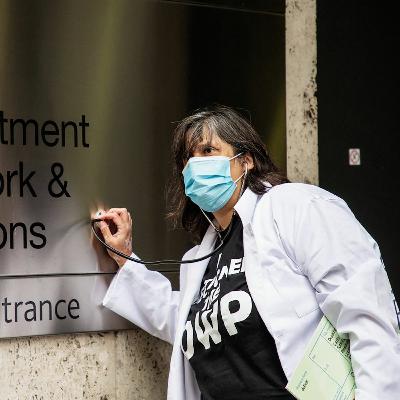
Dolly Sen New Histories Podcast (1) by ECVAN
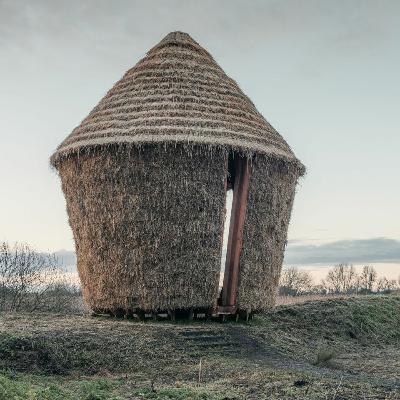
MOTHER… is an artwork by artists Heather and Ivan Morison of Studio Morison that engages with the connections between the natural world and our mental health. The work is inspired by writer Richard Mabey’s book ‘Nature Cure’, in which he recovers from severe depression through walking, watching and writing about the Eastern region’s beautiful and unexplored landscapes.
MOTHER… references local building traditions, materials and architectural vernacular to root the structure in the landscape it is a part of. The form is an interpretation of the remarkable hayricks once found dotting this countryside. The timber used in the framing was felled from the artists own forest and milled by the artists at their workshops. The walls and roof are made from local straw, the thatching of which has been done in the traditional style by a master thatcher whose first job as an apprentice was to thatch a hayrick on this very site. The work, with its deep entranceways, ceiling oculus and high double layered conical ceiling, is an architectural space to enter; re-framing visitors’ experience of the landscape of Wicken Fen, the sky, the light and the materials that surround them.
The vessel like form of the sculpture, alongside its title, connoting universal ideas of protection, nurturing, and birth.
“The ellipsis after MOTHER… also suggest the omission of a second word to be added by the viewer: MOTHER EARTH connects to ideas of the natural world, it’s supporting qualities, but also our own responsibilities and personal connections to it; MOTHER LAND connects us to the place we belong, within this landscape, within a community, within a country. These are important and powerful ideas by which we define our identities; MOTHER SHIP makes us think of the sculpture as a vessel that might take us places – this could be on an imaginary journey around the solar system; or it could be a journey connecting the past with an imagined future – making the work a time machine of sorts, or it could be a journey within our own minds – a rehabilitative journey from upset to calm. Finally, a key reference for the artists is the song Mother, from IDLES debut 2017 album Brutalism – a song that expresses an anger and frustration at the modern world, and its impact on our individual and family lives.
The sculpture offers a space to reflect on these troubling thoughts as well as an opportunity to perhaps still the mind for a while by focusing on the simple material qualities of the work, and the changing nature of the landscape that surrounds it.” Ivan Morison, artist
MOTHER... has been commissioned by Cambridgeshire based Wysing Arts Centre as part of the region-wide arts commissioning programme, New Geographies, which aims to bring contemporary art to unexpected places in the East of England. All locations for art works were nominated by members of the public – in this case Wicken Fen suggested for its “sublime peaty landscape”. MOTHER… is a sculptural structure that has been created specifically for this important area of wild fenland.
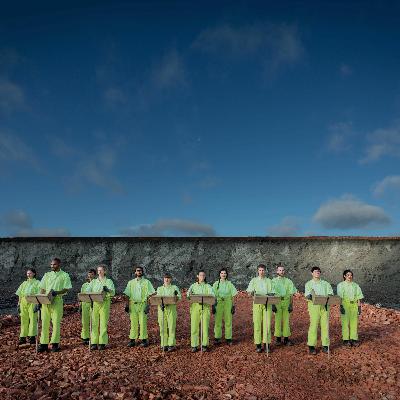
The Must Farm pile-dwelling site is an exceptionally well-preserved settlement dating to the end of the Bronze Age (c. 850BC) located on the edge of a working quarry. The site, often referred to as the UK’s Pompeii, has been excavated by the Cambridge Archaeological Unit, revealing many important discoveries about how people lived and worked. Working closely with Cambridge Archaeological Unit, Wilson explores this and other discoveries, opening up questions around labour, trade and everyday life.
The exhibition includes twelve Bronze Age vessels that have been excavated from the Must Farm site on loan from the Cambridge Archaeological Unit. It also includes objects and seating from Laura Wilson’s performance Deep, Deepen, Deepening which took place at Must Farm Quarry on Saturday 19 October 2019.
Artist, Laura Wilson, says: “It has been such a privilege to have worked so closely with Mark Knight and his team at the Cambridge Archaeological Unit and Forterra to realise this project. Must Farm has revealed such fascinating insights into how people lived and worked during the Bronze Age period, within a broader landscape that even today, is continually changing and adapting.”
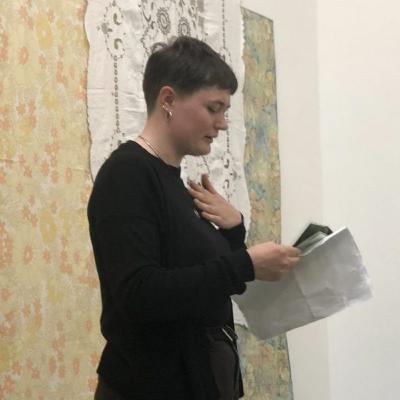
Getting Away from Distant Things: Poet Alison Graham, graduate of the Creative Writing Poetry MA at the University of East Anglia, reading a selection of commissioned poems inspired by Ian Giles' Open Ramble East walks in Norwich, Colchester, Cambridge and Great Yarmouth during the event at Outpost, Norwich.
https://newgeographies.uk/artist/ian-giles/
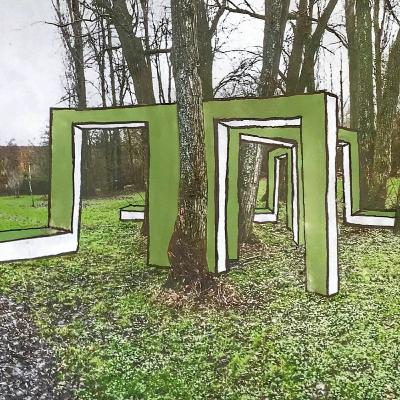
Working in partnership with UH Arts, at the University of Hertfordshire, artist Krijn de Koning is creating a site-specific installation at The Gibberd Garden in Harlow. De Koning’s practice takes different structures and environments – such as Compton Verney, Edinburgh College of Art and Folkstone Triennial – to create interventions in a space, which both highlight and intervene with our experience, perception and assumptions of these places. Based in Amsterdam, de Koning has been able to explore sites in Hertfordshire and Essex with fresh perspectives as a visitor, before selecting The Gibberd Garden as the location for his installation.
The artist’s interest in architecture is well placed at The Gibberd Garden; the house and garden of architect Sir Fredrick Gibberd. Born in 1908 and knighted in 1967, Gibberd designed Harlow and other iconic places such as Liverpool Metropolitan Cathedral and London Central Mosque. The Garden has been arranged into rooms by Gibberd and peppered by his eccentric collection of artworks and paraphernalia left over from his own builds.
Characterising the garden as ‘rooms’ inspired de Koning to design a structure which is divided by walls – acting to partition the space. He has created compartments which feature ‘openings’ that allow people to look and step through as they navigate the space.
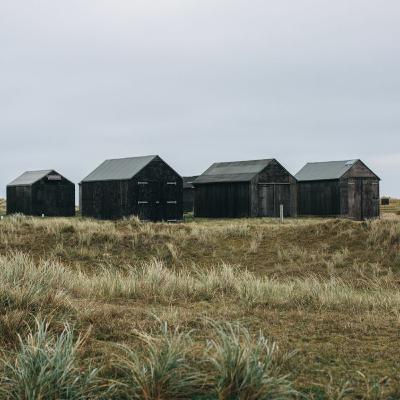
Moveable Estates is a project by Cooking Sections commissioned by New Geographies in 2020, developed as one of 10 site-specific commissions across teh East of England. The project was developed in partnership with East GalleryNUA.
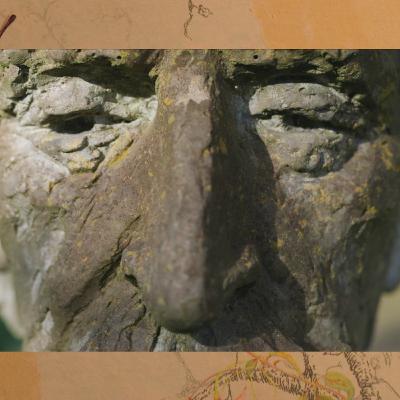
Necessary Amendments: Homes for the people is a new film that was made between 2018 and 2020 In three locations: The Gibberd garden in Harlow, Brooke House in Basildon, and The Cockaigne houses at The Ryde in Hatfield. All are post-war British ‘new towns’
The film is a modest attempt to represent people who live somewhere ‘new’ which of course in most cases is now far from new. How do people feel about where they live? What are their hopes for the future? This is supplemented by historic material from Frederick Gibbard’s archive alongside footage of the volunteer archivists who are custodians of this material.
The decision to work directly with residents and volunteers arose out of lack of material and information found in the extensive records of British new town developments. The homes may be for the people, but their voices are conspicuously absent in this history.
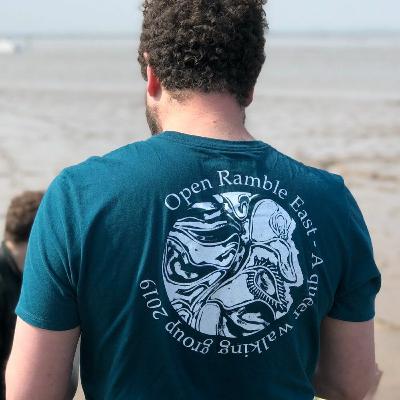
Working in film, performance and events, Ian Giles’ work facilitates social interactions and enables queer histories and presents to be seen and celebrated. He organised the Open Ramble East walks and Outhouse as part of the New Geographies commissions.
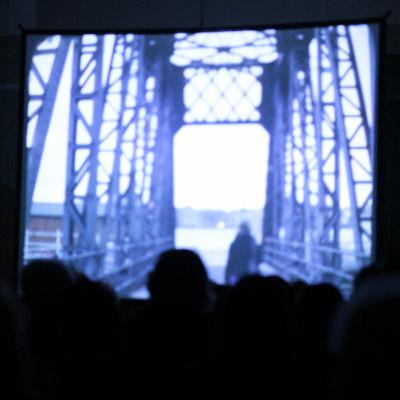
Maria Anastassiou presents her New Geographies commission ‘Way My It Did I’, a filmic response to the historic point of entry for immigrants coming into the UK – Tilbury in Essex.
Set against the transient landscape of the Thames Estuary and laden with traces of the ever shifting global narratives of commerce and migrations, Anastassiou spent the last year connecting with Tilbury based refugee and migrant groups, including Romanian workers, Nigerian women asylum seekers and Filipino seafarers.
Inspired by the work of the University of Essex’s Centre for Migration Studies, Anastassiou’s process-led approach questions official narratives and mediates on the everyday of living and working in Tilbury.
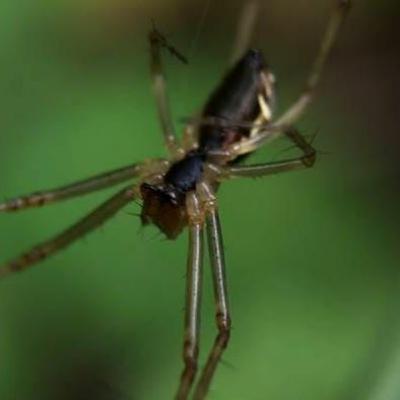
‘The World After’, a newly commissioned work and exhibition by artist David Blandy. Comprised of a film, installation and game, ‘The World After’ is a fictional tale which imagines a world after the Anthropocene era, a time in which humanity’s activities had detrimental effect on earth’s climate and environment. In this future world, human influence on the planet has faded following a catastrophic man-made ecological crisis, with those who remain having to find new ways to survive and form kin.
Blandy’s project takes inspiration from the unique post-industrial setting of Canvey Wick on Canvey Island, Essex.
'The World After' was commissioned by Focal Point Gallery as part of New Geographies.
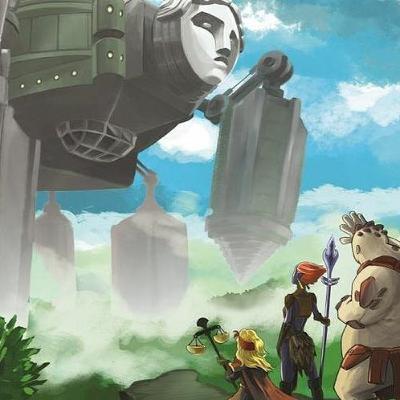
David Blandy is joined in conversation with local writer and researcher Dr. Merline Evans, chaired by writer Jamie Sutcliffe, to discuss his new film, exhibition and table-top roleplay game ‘The World After’.
Recorded from an event at South Essex College on 16th November 2019
‘The World After’ is a fictional tale which imagines a world after the Anthropocene era, a time in which humanity’s activities had detrimental effect on earth’s climate and environment. In this future world, human influence on the planet has faded following a catastrophic man-made ecological crisis, with those who remain having to find new ways to survive and form kin. ‘The World After’ takes inspiration from the unique post-industrial setting of Canvey Wick on Canvey Island, Essex.
As well as a new film and exhibition, Blandy has worked closely with gaming communities in Essex to create a new table-top roleplaying game. With creatures based on local wildlife and myth, the game follows a collective story that imagines new ways of living together.
Dr. Merline Evans is a writer and researcher based in Southend-on-Sea. Her field of research is the critical history of human origins, informed by theoretical perspectives from the emerging field of animal studies. This is intended as a contribution towards a multi-species archaeology that moves beyond anthropocentric ideology and Cartesian binaries to acknowledge the agency and subjectivity of other beings in our accounts of the past. With a long-standing interest in table-top roleplaying games, Evans develops her own roleplaying game campaigns and is co-author of ‘The World After’ with David Blandy.
Jamie Sutcliffe is a writer and co-director of Strange Attractor Press (distributed by The MIT Press). His essays, reviews, and interviews have been published by Art Monthly, Frieze, Rhizome, The White Review, EROS Journal, Bricks From The Kiln and The Quietus, while catalogue essays have been commissioned by the New Museum, New York, the Austrian Cultural Forum, London, and Primary, Nottingham amongst others. He has presented talks, chaired symposia and performed texts at The V&A, Wysing Arts Centre, Jerwood Space, Camden Arts Centre, Somerset House, IMT Gallery and Site Gallery amongst others and is a regular contributor to the Art Monthly Talk Show on Resonance FM. He edits BERSERKER, a journal of genre studies, outlandish comics, and science fiction published by Breakdown Press, alongside the forthcoming Strange Attractor Press Journal. Recent curatorial projects include The Psychopathic Now! at Flat Time House, London, The Shadow Moses Incident at Primary, Nottingham, and a forthcoming exhibition exploring the clandestine politics of Hideo Kojima’s Metal Gear Solid series at Southwark Park Galleries and Dilston Grove in 2020.
Seven Sisters (2019)was a 7-channel audio installation created as part of susan pui san lok's solo exhibition, A COVEN A GROVE A STAND, commissioned by Firstsite, Colchester for New Geographies.
spsl-projects.net/covengrovestand/
https://newgeographies.uk/artist/susan-pui-san-lok/
The North Sea has deposited, transported and eroded the sand that defines the zone of the East Anglian coast for millennia. More recently, these movements have been magnified in a series of events from the 1953 North Sea Flood to the 2018 ‘Beast from the East’. Rising sea-levels, recurrence of severe storms, and the construction industry increasingly dredging the offshore seabed for sands, keep shifting tidal flows and increase the chance of cliff landslides due to the crashing of waves on weakened ground. City walls and military bunkers lie parallel to flood defences, ‘wars’ are fought against ‘eviction’ by the new coastal enemy. They sit between homes whose “priceless” coastal views have dissolved their monetary value and insurability. Moveable Estates invites listeners to think about the future role of cities in envisioning such fluctuating horizons.
Moveable Estates is a project by Cooking Sections commissioned by New Geographies in 2020, developed as one of 10 site-specific commissions in East Anglia. The project was developed in partnership with East GalleryNUA.
Cooking Sections: Daniel Fernández Pascual and Alon Schwabe
Team: Charlotte Grace, Matthew Darmour-Paul
Web design: An Endless Supply
Voice: Gemma Brockis
Text Editing: Jesse Connuck
Sound: Oliver Payne
Curator, East GalleryNUA: Claire Allerton
Project Assistant, East GalleryNUA: Elizabeth Ballard
Special thanks to: AKT II, Kaavous Clayton, Rory Cleary, Kellie Fisher, Amanda Geitner, Alan Hodds, Matt Nightingale, and David Stannard
Comments

Download from Google Play

Download from App Store
 United States