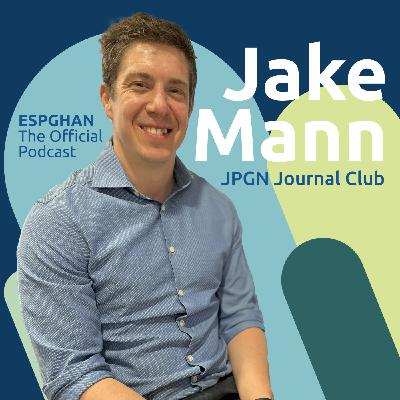
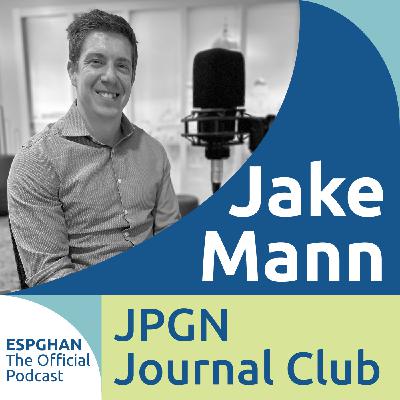
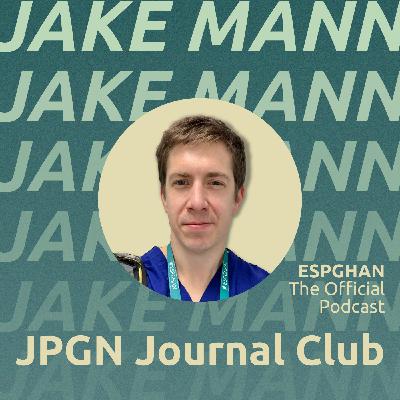
Happy holidays, everyone! The end of the year… twilight falls in mid-afternoon, there’s frost on the windscreen of a morning, and between mince pies and gingerbread, the supermarket aisles are an absolute menace. But there’s hope: ESPGHAN Journal Club is here to educate, to inform, and to keep you out of trouble – whilst you’re with us you’re not flexing those credit cards, are you? Here today is Dr Jake Mann with what he thinks we should know. Jake has chosen two variations on a theme: IBD, or inflammatory bowel disease. From Lancet Gastroenterol Hepatol, by Atia O et al., in a collaboration that pinballs all over the map, from Jerusalem to Philadelphia to Ljubljana and beyond – Maintenance treatment with vedolizumab in paediatric inflammatory bowel disease (VEDOKIDS): 54-week outcomes of a multicentre, prospective, cohort study. Well! That will keep clinician listeners happy; and then, throwing your interviewer a histopathologic bone, from J Pediatr Gastroenterol Nutr, by Little R et al., of Toronto’s Hospital for Sick Children and the University of Toronto – Intestinal histopathology in pediatric PSC-IBD: Characterization of phenotype and assessment of the Nancy Index. Vedolizumab – to its friends, Entyvio – is a monoclonal antibody that blocks the dimer LPAM-1, or lymphocyte Peyer’s patch adhesion molecule, more formally known as integrin α4β7. Blocking integrin α4β7 selectively dampens gut inflammation. Entyvio use has been approved in adults with IBD unresponsive to tumour necrosis factor blockade (adalimumab, infliximab, etc.) or to corticosteroids, or who are steroid-dependent. Formal approval for use in children has not been given, but, faute de mieux, it is deployed anyhow, with good results in two prospective studies of short-term use. Reports of long-term use in children, again with good results, exist, but they are not prospective. The study by Atia et al. has addressed this, with assessment at baseline and after 2 wk, 6 wk, 14 wk, 30 wk, and 54 wk of administration in a 137-member cohort assembled over 6 y. Efficacy of Entyvio against paediatric IBD is good, with few adverse effects (week 54: complete remission, 25% of children with Crohn disease and 47% of children with ulcerative colitis). Noteworthy are that ulcerative-colitis patients responded better than did Crohn-disease patients and that response by 6 wk or 14 wk predicted sustained response – the latter observation suggests that failure to respond to the dosage regimen used in the studied patients may warrant adjustment of that regimen. In sum, the study supports longer-term use of Entyvio in children with IBD. One wonders what genetic quirks may correlate with good or poor early response to Entyvio. Perhaps the samples to answer this question are in someone’s freezers… Medicine wants desperately to be scientific, and believes with all its heart that quantification means Science. From this – well, is it a fallacy? Opinions will vary – from this stance, at any rate, this stance that holds that without a Number evaluation is, as Science, inadequate, derive protocols for grading, and for staging, and for scoring. In histopathologic work these are beautifully suited to retrospective studies, studies in which one person at one time evaluates a large cohort of specimens using detailed criteria, with grade and stage and score interacting to yield Numbers. Are the resulting Numbers reliable? Does the same histopathologist’s work yield the same Numbers every time for the same specimens (“intraoperator variation”)? Does different histopathologists’ work yield the same Numbers every time for the same specimens (“interoperator variation”)? Can Numbers for different specimens obtained from the same patient at different times by different individual histopathologists be trusted to reflect evolution in that patient’s disease – “She was a Seven a year ago, as scored by Joe, on treatment she’s now a Six, as scored by Mary, so the therapy must be working”? Perhaps artificial intelligence, applied universally, will prove its worth in such settings. To mis-quote Tolkien: One programme to rule them all,one programme and no more,one programme to read them alland uniformly score. Toward the value of grading, staging, and scoring outside a retrospective study, however – that is, in everyday service work performed non-uniformly by a variety of humans – scepticism seems appropriate. In IBD, several scoring systems have been proposed, and modified, and used. (That several exist bears witness to the inadequacy of all.) Easiest to deploy is that proposed by workers in Nancy (France), the “Nancy index”. Little et al. conducted Nancy indexing in endoscopic mucosal-biopsy specimens from children with IBD associated with primary sclerosing cholangitis (PSC; 50 subjects) and with IBD independent of PSC (81 subjects), proceeding from observations that the clinical and endoscopic features of IBD tout court and of PSC-IBD vary. In the setting of their retrospective study, “Nancy index” values were reproducible between observers – to some extent trustworthy Numbers, then – and differences existed between histopathologic findings in the two cohorts, suggesting a PSC-IBD histopathologic phenotype. This is not surprising; if rectal sparing, predominantly right-sided colonic inflammation, and “backwash” ileitis clinically and endoscopically characterise PSC-IBD, some sort of histopathologic counterpart to inflammation or to the lack thereof can be expected. Of note, however, is that three features – lamina-propria neutrophil-leucocyte infiltration, eosinophil-leucocyte infiltration, and surface villiform change – were more prominent in PSC-IBD. Perhaps these aspects, not addressed in the grading, staging, and scoring systems used generally in IBD, should be given attention in paediatric IBD patients, and perhaps they point toward pathophysiologic differences between IBD and PSC-IBD that are worth study. Whether Nancy indexing, or modified paediatric-IBD Nancy indexing, will yield Numbers that convey detailed, both diagnostically and prognostically salient information in prospective work, or in routine clinical care, is still very much an open question. Literature Atia O et al. Maintenance treatment with vedolizumab in paediatric inflammatory bowel disease (VEDOKIDS): 54-week outcomes of a multicentre, prospective, cohort study. Lancet Gastroenterol Hepatol 2025 Mar;10(3):234-247. Doi: 10.1016/S2468-1253(24)00319-4. Epub 2025 Jan 6. PMID: 39788134 Little R et al. Intestinal histopathology in pediatric PSC-IBD: Characterization of phenotype and assessment of the Nancy Index. J Pediatr Gastroenterol Nutr 2025 Feb;80(2):290-299. Doi: 10.1002/jpn3.12434. Epub 2024 Dec 17. PMID: 39690834. PMCID: PMC11788967


 Claim Ownership

 1
1


 United States