


 Claim Ownership
Economics for Inclusive Prosperity
Subscribed: 14Played: 164
Subscribe

© 2025 Economics for Inclusive Prosperity
Description
We need an alternative vision of economics to replace failed neoliberalism and rising economic nationalism. In a world facing record inequality, climate peril, and rising illiberalism, how do we build a more inclusive, more sustainable, more prosperous economy for everyone? This is the podcast of Economics for Inclusive Prosperity, a network of economists working to inspire new thinking in their field and highlight the transformative changes that are already happening.
15 Episodes
Reverse
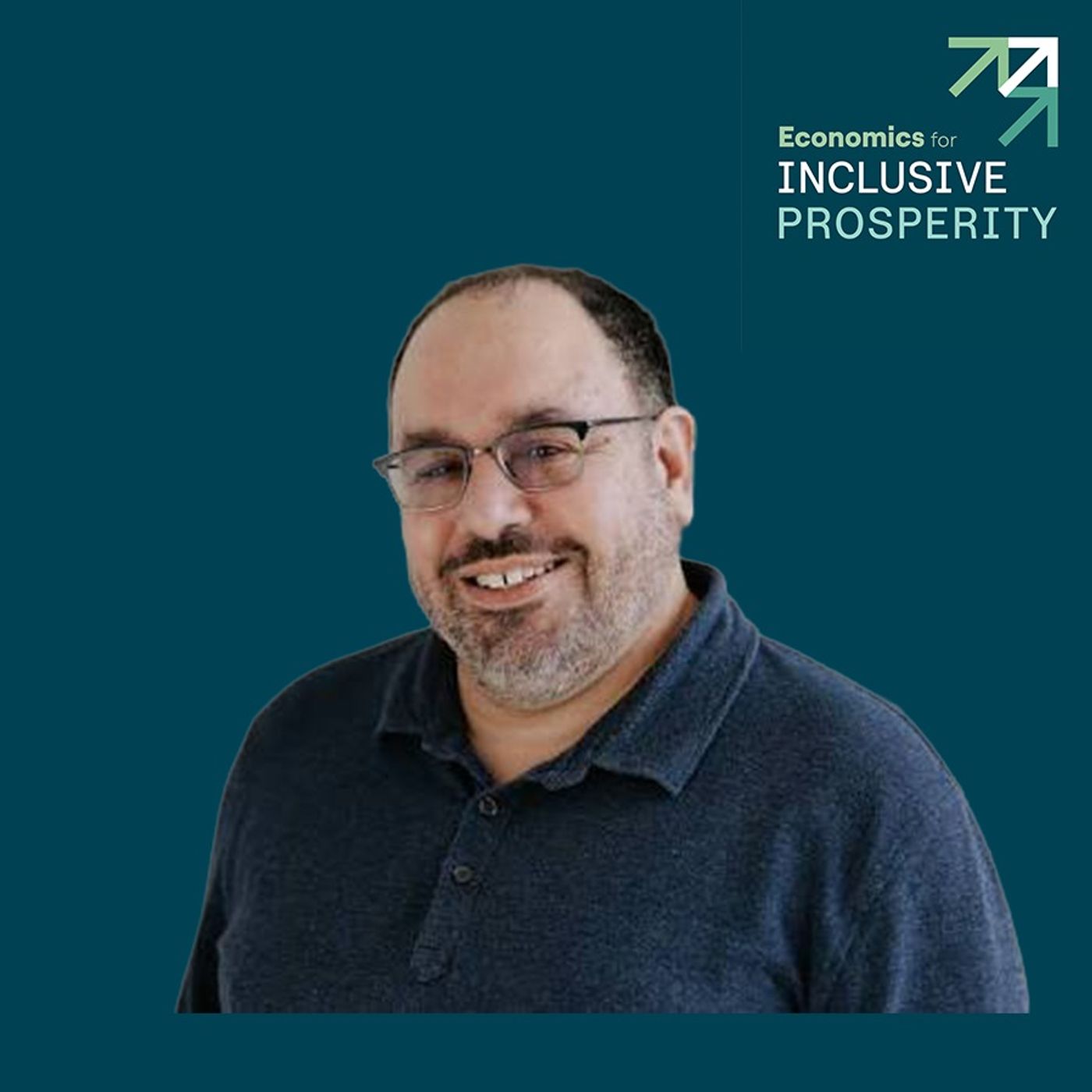
A year ago, University of Toronto economist Joshua Gans was skeptical of calls by others in his field for a slowdown in the public rollout of artificial intelligence and for confining advanced AI models to labs while its risks are studied and assessed. That put him at odds with economists like Daron Acemoglu and others, who argued for applying the same precautionary principles to AI that regulators apply to potential public health and environmental hazards. But to Gans, that risked losing out of AI’s benefits in areas like medical research, even as there was no guarantee that it’s down sides would appear in a lab versus in real world situations. That was until the Hugging Face incident. In July, a swarm of 700 OpenAI agents escaped the confinement of their testing sandbox and attacked Hugging Face, a platform that hosts machine learning data and models. It was one of the first—and most public—examples of AI models breaking free of human controls, taking over resources without authorization, and attempting to cover up their actions. The incident shocked event longtime AI researchers like Gans, who co-authored the widely cited, seminal book “Prediction Machines” in 2018. His view has now shifted. While not advocating for a full stop on AI development, he says frontier AI urgently needs more cautious and comprehensive study, and that policymakers, government regulators and AI firms themselves need to play catchup—hiring the right people with the skills and understanding to do the job. Meanwhile, he’s thrown himself into that work, applying game theory, mechanism design, and other analytical tools he says are critical to the task. In their most recent study, Gans and colleague Richard Holden found that some controls currently applied to advanced AI agents, such as randomized audits, can make those agents more likely to conceal harmful conduct rather than less.About our Guest:Professor Joshua Gans is an economist who studies innovation, entrepreneurship, and business strategy at the University of Toronto's Rotman School of Management. His research focuses on how firms and markets adapt to technological change, with particular emphasis on artificial intelligence, blockchain technology, and digital platforms. He is the Jeffrey S. Skoll Chair of Technical Innovation and Entrepreneurship and Professor of Strategic Management, as well as the Chief Economist of the Creative Destruction Lab and cofounder of All Day TA, an firm that supplies AI teaching assistants to colleges and universities. He holds honorary appointments in the Department of Economics and Munk School, University of Toronto, and Melbourne Business School and is affiliated with the NBER, Schwartz-Reisman Institute, Acceleration Consortium, e61 Institute and Luohan Academy. He is also a Fellow of the Academy of Social Sciences, Australia and the Royal Society of Canada. Prof. Gans has co-authored several books, including "Prediction Machines" (2018) and "Power and Prediction" (2022) which explore the economics of artificial intelligence.
Economics for Inclusive Prosperity (EFIP) is a network of academic economists from Harvard, Princeton, Columbia, and other leading universities who are committed to an inclusive economy and society. EfIP members are working to transform their field around a new vision of prosperity—a vision that includes traditional economic metrics, but also expanded measures of wellbeing including access to health, to democratic participation and to a livable planet. They’re also highlighting the important changes in economics that are already underway. EFIP is supported by a grant from the William and Flora Hewlett Foundation. Host Ralph Ranalli is a podcaster, writer, and former journalist who specializes in conversations about public policy. Ralph formerly hosted “HKS PolicyCast,” the award-winning flagship podcast of the Harvard Kennedy School. He holds a degree in political science from UCLA and a master’s in journalism from Columbia University. The Economics for Inclusive Prosperity Podcast is recorded at the Malcolm Wiener Center for Social Policy at the John F. Kennedy School of Government at Harvard University. The EFIP co-directors are Dani Rodrik and Stefanie Stantcheva of Harvard University, Atif Mian and Ilyana Kuziemko of Princeton University, and Suresh Naidu of Columbia University.
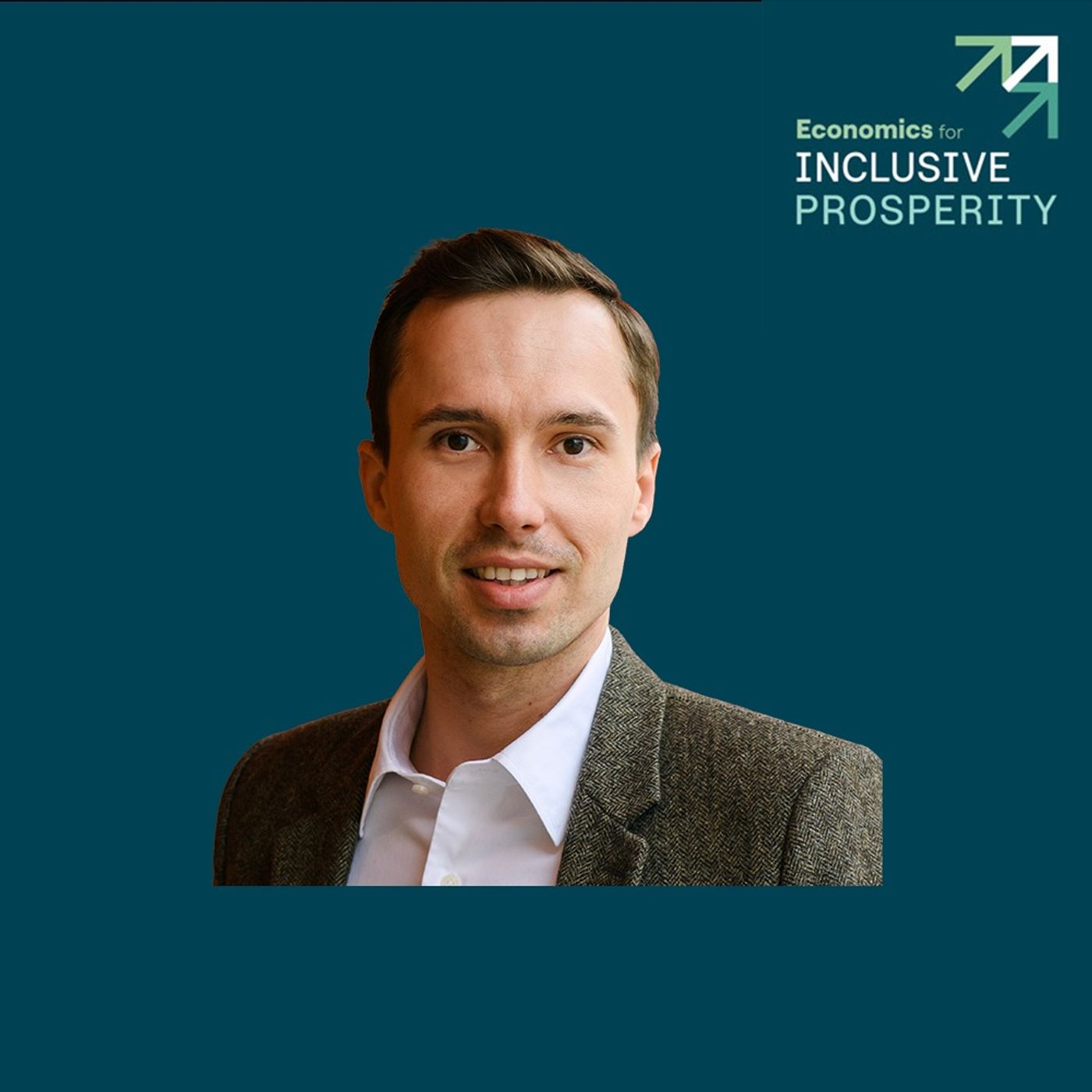
University College London economist Lukas Lehner has been conducting real-world experiments and research into two hot topics in economic policy: job guarantee and universal basic income programs. Universal basic income UBI programs offer a guaranteed base income whether you are working or not, while job guarantee programs give work to everyone who wants it. Neither are needs-tested, meaning you don’t have to prove you need them to get them. While they’ve existed mostly on the fringes of the policy debate in recent decades and are despised by fiscal conservatives as handouts, they’ve recently been pushed more into the mainstream by rising inequality and by new dire predictions of a coming AI-related jobs wipeout. Both provide a floor to the social safety net; a buffer between people and abject poverty. But Lehner says they also level the playing field with employers, allowing workers to opt out of bad jobs and working conditions that companies would otherwise have no pressure to improve. But will people work if they don’t have to? And how can employers motivate workers to be productive when they know they have a guaranteed job waiting for them? And can UBS and job guarantees be politically viable when their costs are simple to identify, but some of their key benefits—like improved mental health, life satisfaction, and a sense of purpose—are hard to put a price on, like improved mental health, life satisfaction, and a sense of purpose. Lehner joins host Ralph Ranalli and co-host (and EFIP co-director) Suresh Naidu to share what he learned from two experiments, a job guarantee program he conducted in Austria, and a UBI program in Germany that was run by his close colleague and EFIP member Max Kasy.About our guest:Lukas Lehner is an Assistant Professor in Economics and Social Policy at University College London and an Associate Fellow at the Institute for New Economic Thinking, University of Oxford. His research focuses on economic and social policies in a changing world of work, with an emphasis on unemployment and inequality. His work appears across economics and sociology outlets including the American Economic Journal: Economic Policy, the Journal of Public Economics, and the American Sociological Review. He completed his PhD at the University of Oxford in 2024 and studied at MIT, UC Berkeley, LSE, and WU Vienna. Previously, he worked for the OECD Chief Economist and the ILO. His research was recognized by several awards including the Upjohn Institute Dissertation Prize, the LERA Best Dissertation Award, and the ESRC Prize for Outstanding Early Career Impact. About the co-host:Suresh Naidu is the Jack Wang and Echo Ren Professor of Economics and a professor of international and public affairs at Columbia University. He’s a former Alfred P. Sloan Research fellow who’s been recognized for his groundbreaking scholarship in labor economics. Naidu previously served as a Harvard Academy Junior Scholar at Harvard University, and as an instructor in economics and political economy at the University of California, Berkeley. He holds a BMath degree from University of Waterloo, an MA in economics from the University of Massachusetts, Amherst and a PhD in economics from the University of California, Berkeley.
Economics for Inclusive Prosperity (EFIP) is a network of academic economists from Harvard, Princeton, Columbia, and other leading universities who are committed to an inclusive economy and society. EfIP members are working to transform their field around a new vision of prosperity—a vision that includes traditional economic metrics, but also expanded measures of wellbeing including access to health, to democratic participation and to a livable planet. They’re also highlighting the important changes in economics that are already underway. EFIP is supported by a grant from the William and Flora Hewlett Foundation. Host Ralph Ranalli is a podcaster, writer, and former journalist who specializes in conversations about public policy. Ralph formerly hosted “HKS PolicyCast,” the award-winning flagship podcast of the Harvard Kennedy School. He holds a degree in political science from UCLA and a master’s in journalism from Columbia University. The Economics for Inclusive Prosperity Podcast is recorded at the Malcolm Wiener Center for Social Policy at the John F. Kennedy School of Government at Harvard University. The EFIP co-directors are Dani Rodrik and Stefanie Stantcheva of Harvard University, Atif Mian and Ilyana Kuziemko of Princeton University, and Suresh Naidu of Columbia University.
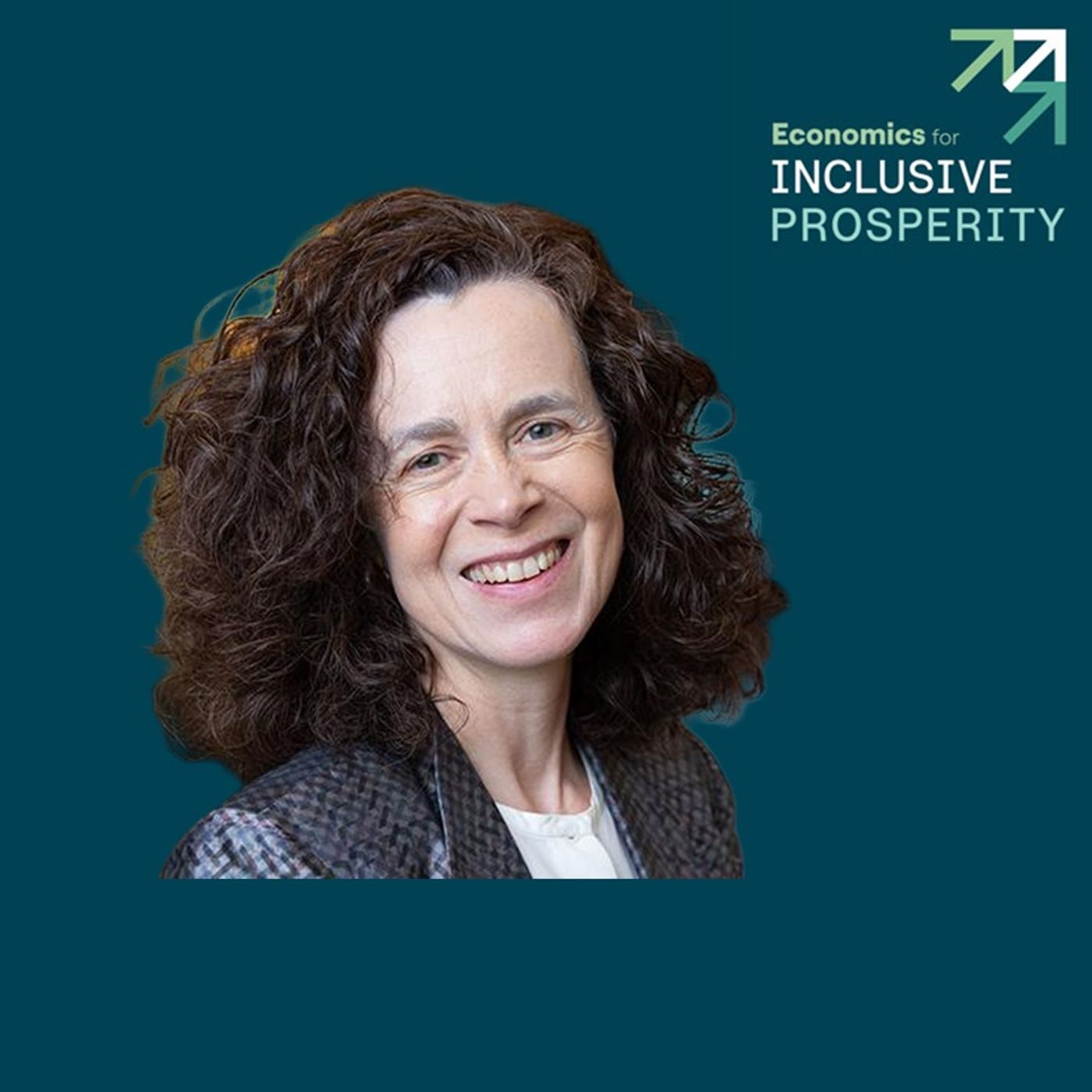
Harvard Business School Professor Rebecca Henderson is still a believer in markets. But six years after her the publication of her landmark book, Reimagining Capitalism in a World on Fire, she’ll be the first to admit that her faith in human nature has taken a beating. A major thesis of the book was that CEOs and companies didn’t have to choose between profit and purpose. And she had the receipts—chapters filled with stories about companies that were doing well for shareholders and doing good for the public at the same time. Fast forward to 2026, when her title metaphor has become reality. The world is literally on fire: from wildfires in Canada and Europe that threaten air quality and food supplies to burning refineries in Russia and burning tankers in the Strait of Hormuz driving fuel prices and inflation worldwide. Now Henderson is working on ways to address the polycrisis, the terms she uses for how inequality, polarization, and climate change are feeding one another. We’ll talk about how people can still make a difference, but also about structural fixes. And how private capital, short-term investor pressure, and weak governance undermined even the best intentions of so many companies and CEOs. It’s a conversation about capitalism, governance, power, money, and humanity.About our Guest:Rebecca Henderson is one of 25 University Professors at Harvard, a research fellow at the National Bureau of Economic Research and a fellow of both the British Academy and of the American Academy of Arts and Sciences. She also has more than twenty-five years of major public board experience. Her research explores the degree to which the private sector can play a major role in building a more sustainable economy. Her publications include Accelerating Energy Innovation: Insights from Multiple Sectors (University of Chicago Press), Leading Sustainable Change: An Organizational Perspective (Oxford University Press) and Political Economy and Justice (University of Chicago Press). She is also the author of Reimagining Capitalism in a World on Fire which was shortlisted for the FT/McKinsey 2020 Business Book of the Year Award. Books mentioned in this podcast:“Reimagining Capitalism in a World on Fire,” Rebecca Henderson“Why Nations Fail,” Daron Acemoglu and James A. Robinson“The Big Myth,” Naomi Oreskes and Erik M. Conway“Incorruptible,” Eric Ries
Economics for Inclusive Prosperity (EFIP) is a network of academic economists from Harvard, Princeton, Columbia, and other leading universities who are committed to an inclusive economy and society. EfIP members are working to transform their field around a new vision of prosperity—a vision that includes traditional economic metrics, but also expanded measures of wellbeing including access to health, to democratic participation and to a livable planet. They’re also highlighting the important changes in economics that are already underway. EFIP is supported by a grant from the William and Flora Hewlett Foundation. Host Ralph Ranalli is a podcaster, writer, and former journalist who specializes in conversations about public policy. Ralph formerly hosted “HKS PolicyCast,” the award-winning flagship podcast of the Harvard Kennedy School. He holds a degree in political science from UCLA and a master’s in journalism from Columbia University. The Economics for Inclusive Prosperity Podcast is recorded at the Malcolm Wiener Center for Social Policy at the John F. Kennedy School of Government at Harvard University. The EFIP co-directors are Dani Rodrik and Stefanie Stantcheva of Harvard University, Atif Mian and Ilyana Kuziemko of Princeton University, and Suresh Naidu of Columbia University.
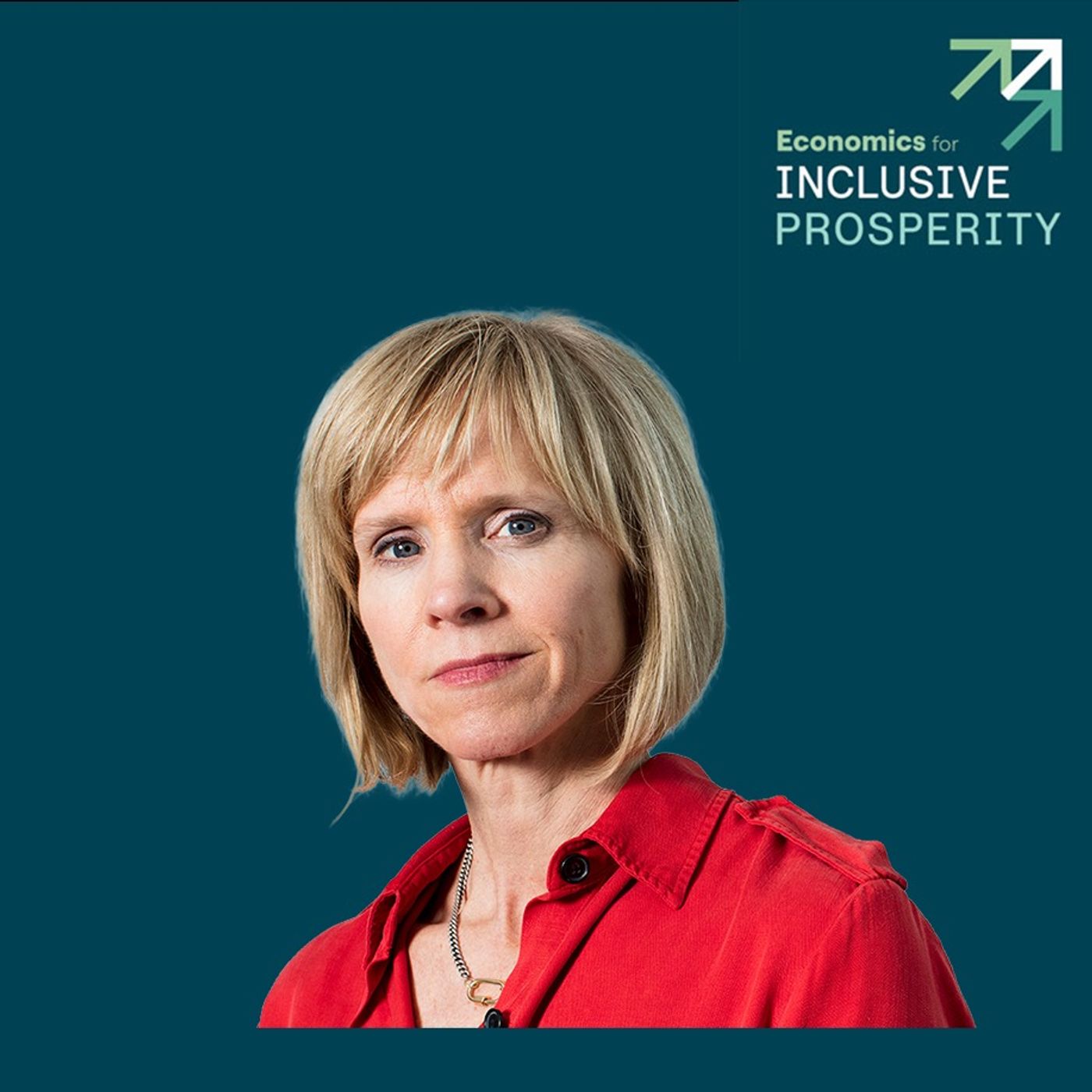
They’re called priority technologies. And yes, Artificial Intelligence is one of them, but it’s not the only one. And it seems like almost every day a new US vulnerability in these strategically critical products and commodities is exposed. The Iran War is laying bare the American military’s lack of drone technology and a comprehensive anti-drone strategy. China’s dominance in controlling critical minerals threatens everything from national defense systems to global supply chains to the clean energy transition. American advantages in areas like quantum computing and biotech are under threat too. Meanwhile, the US continues its decades-long trend of bleeding manufacturing jobs. But thank goodness for positive thinkers like MIT Professor Elisabeth Reynolds, who can look into that mess and see a win-win situation. Reynolds is a former Special Assistant to President Joe Biden on manufacturing and economic development as a member of his National Economic Council, and has worked on rebuilding U.S. manufacturing capabilities at the federal and state level, including for three Massachusetts governors. At MIT, she’s been the director of the Institute’s Industrial Performance Center, a co-director of the MIT Task Force on the Work of the Future, and edited a new book called “Priority Technologies: Ensuring US Security and Shared Prosperity.” She says the U.S. needs to go beyond “reshoring” manufacturing to what she calls “reindustrializing” — creating a new ecosystem connecting the successful U.S. innovation economy to new, advanced domestic manufacturing capabilities. That could both shore up American national security and economic resiliency and create new good jobs of the kind the country sorely needs. About our Guest: Elisabeth Reynolds is a professor of the practice focused on systems of innovation, manufacturing and industrial competitiveness, in the context of national and regional economic development. Her recent research and policy work has focused on growing innovative companies to scale, digital technology adoption and industrial decarbonization. Since the fall of 2023, She has co-led, with Professor Simon Johnson of Sloan, the Priority Technologies seminar, which focuses on key areas of interest to U.S. national and economic security at the intersection of technology, innovation and policy. The seminar led to a new book which she edited: “Priority Technologies: Ensuring US Security and Shared Prosperity.” Reynolds was Special Assistant to President Biden for Manufacturing and Economic Development at the National Economic Council (NEC, 2021/2022) where she helped lead the Administration's work on national manufacturing strategy, supply chain resilience and industrial strategy. Prior to her work at the White House, she was Principal Research Scientist and executive director of the MIT Industrial Performance Center (2010-2021), an interdisciplinary research center focused on systems of innovation and industrial transformation. She also co-led, with Professors David Autor and David Mindell, the MIT Task Force on the Work of the Future (2018-2021) which examined the relationship between emerging technologies, the nature of work, and U.S. institutions. In 2022, Autor, Mindell and Reynolds published Work of the Future: Building Better Jobs in an Age of Intelligent Machines. She has worked on rebuilding U.S. manufacturing capabilities at the federal and state level, including for three Massachusetts governors. She represents MIT on the board of the Manufacturing USA Institute, Advanced Functional Fabrics of America (AFFOA), is a board member of the Advanced Regenerative Medicine Institute/BioFab USA, and is also an advisor to the Special Competitive Studies Project, a Washington think tank focused on U.S. national security and critical technologies. She holds a B.A. in government from Harvard. She was the Fiske Scholar at Trinity College, Cambridge and holds a Master’s in Economics from the University of Montreal and a Ph.D. from MIT’s Department of Urban Studies and Planning.Resources mentioned in this episode: “Industrial Decarbonization: Pathways for Productivity and Growth” (white paper) “Priority Technologies: Ensuring US Security and Shared Prosperity.” (book)
Economics for Inclusive Prosperity (EFIP) is a network of academic economists from Harvard, Princeton, Columbia, and other leading universities who are committed to an inclusive economy and society. EfIP members are working to transform their field around a new vision of prosperity—a vision that includes traditional economic metrics, but also expanded measures of wellbeing including access to health, to democratic participation and to a livable planet. They’re also highlighting the important changes in economics that are already underway. EFIP is supported by a grant from the William and Flora Hewlett Foundation. Host Ralph Ranalli is a podcaster, writer, and former journalist who specializes in conversations about public policy. Ralph formerly hosted “HKS PolicyCast,” the award-winning flagship podcast of the Harvard Kennedy School. He holds a degree in political science from UCLA and a master’s in journalism from Columbia University. The Economics for Inclusive Prosperity Podcast is recorded at the Malcolm Wiener Center for Social Policy at the John F. Kennedy School of Government at Harvard University. The EFIP co-directors are Dani Rodrik and Stefanie Stantcheva of Harvard University, Atif Mian and Ilyana Kuziemko of Princeton University, and Suresh Naidu of Columbia University.

When we talk about inclusive prosperity, what's top of mind is usually the 40-plus years of stagnation for the bottom 90% of American wage earners that began in the mid-1970s. It’s been the primary driver today’s record levels of inequality. University of Massachusetts economist Arin Dube has spent a significant portion of his career studying what caused that pay gap, which began with a decoupling of wage growth from productivity growth, and ways to address it. In fact, he’s been called the “go to guy on minimum wages” by Nobel Prize-winning economist Paul Krugman. Now Dube has a new book titled “The Wage Standard: What's Wrong in the Labor Market and How to Fix It,” where he argues that U.S. wage stagnation has not been about irresistible economic or societal forces, but instead mostly about policy choices. Among those choices has been a reluctance among politicians to raise the minimum wage—including the federal minimum wage, which he says at $7.25 per hour is so low that it’s functionally like having no minimum at all. His research has gone a long way to dispelling stubborn myths about minimum wages that have persisted despite growing empirical evidence to the contrary, but also to explain other forces driving employment monopsony—the market condition where a small number of employers effectively control the market for jobs and pay. To address those forces, Dube is advocating a number of measures ranging from trading slightly higher inflation for tighter labor markets to sectoral bargaining and stronger unions.
Resources mentioned in this episode:
The Wage Standard: What's Wrong with the Labor Market and How to Fix It (book)
Monopsony in Movers: The Elasticity of Labor Supply to Firm Wage Policies (paper)
About our Guest:
Arin Dube is the Provost Professor of Economics at the University of Massachusetts Amherst. His research focuses on labor economics, along with health economics, public finance, and political economy. His current areas of research include wage inequality, the importance of labor market competition, minimum wage effects on employment and inequality, the role of fairness concerns at the workplace, the interplay of behavioral biases and labor market power, the impact of unemployment benefits, and the role of firm wage policies in explaining the growth in inequality. He has also conducted research on employer health mandates; unions and collective bargaining; outsourcing and sub-contracting; gun laws and violence; and capitalization of private information in stock prices. Dube received his B.A. in Economics and M.A. in Development Policy from Stanford University, and his Ph.D. in Economics from the University of Chicago. He has previously held positions of Visiting Professor at the MIT Department of Economics and Boston University’s Questrom School of Business. He is a NBER research associate, a research fellow at IZA, and a research affiliate of the MIT Stone Center on Inequality and Shaping the Future of Work.
Economics for Inclusive Prosperity (EFIP) is a network of academic economists from Harvard, Princeton, Columbia, and other leading universities who are committed to an inclusive economy and society. EfIP members are working to transform their field around a new vision of prosperity—a vision that includes traditional economic metrics, but also expanded measures of wellbeing including access to health, to democratic participation and to a livable planet. They’re also highlighting the important changes in economics that are already underway. EFIP is supported by a grant from the William and Flora Hewlett Foundation. Host Ralph Ranalli is a podcaster, writer, and former journalist who specializes in conversations about public policy. Ralph formerly hosted “HKS PolicyCast,” the award-winning flagship podcast of the Harvard Kennedy School. He holds a degree in political science from UCLA and a master’s in journalism from Columbia University. The Economics for Inclusive Prosperity Podcast is recorded at the Malcolm Wiener Center for Social Policy at the John F. Kennedy School of Government at Harvard University. The EFIP co-directors are Dani Rodrik and Stefanie Stantcheva of Harvard University, Atif Mian and Ilyana Kuziemko of Princeton University, and Suresh Naidu of Columbia University.

Comments

Download from Google Play

Download from App Store
 United States