


 Claim Ownership
Edge of History
Subscribed: 453Played: 846
Subscribe

© 2018
Description
Relatively unknown but awesome (and important) tales from our past, professionally researched and told in "campfire buddy" fashion. As a historian and educator, the Centurion brings you the tales of the daring, the misunderstood, the underdogs, the dynamic people you've never heard of because you didn't have the right teacher to share it with you. You'll hear stories of the baddest men and women who ever lived, the extraordinary odds they overcame, the stuff you didn't know was important but SHOULD know because it connects you with everything remarkable about human will and ingenuity!
39 Episodes
Reverse
In the last episode, we covered the problems of the Marines up in "I Corps" on the border of North and South Vietnam. In this one, I would like to stick with the theme that the Vietnam War offered a very different experience to the different kinds of troops that fought in it. Further south, the soldiers of the Army were deployed, patrolling rice paddies, dikes, and forested jungle areas in the heart of South Vietnam. The average soldier in this environment faced challenges unlike many others in the war, and this is dedicated to his experience.
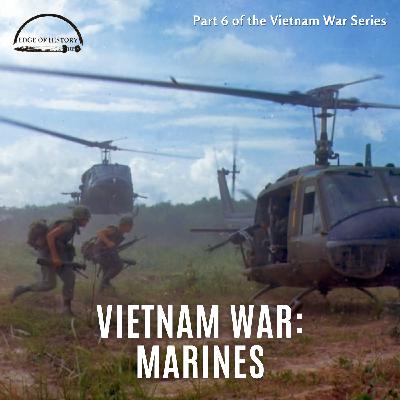
When speaking of the American military serviceman's experience in Vietnam, it's important to know that there were many vastly different combat tours, depending on where in the country one was stationed and when they served. An Army soldier "in the bush" down in the rice paddies of South Vietnam's fertile flatlands in 1970 had a very different war than a Marine posted in the mountainous country close to the border with North Vietnam. This episode focuses on some of those very different experiences and the unique disadvantages they presented.
In 1965, the United States appeared to be "in it to win it." The trouble was, nobody knew what a winning outcome would look like. The government of South Vietnam was hopelessly corrupt and made up of landlords that simply stepped into the exploitative French system that came before them. Capturing territory meant nothing, because the enemy fled and then returned as soon as American troops went somewhere else to search for them. The civilian government in Washington handcuffed decisive measures like invading North Vietnam for fear of a wider conflict with China and the Soviet Union. What remained: to kill as many of the enemy as possible, wherever they could be found, and keep killing until they gave up.
In 1965, American President Lyndon Baines Johnson deploys large numbers of American troops to Vietnam for the first time. Massive naval installations and airbases are built in the name of defending South Vietnam from attack. But the enemy moves like water to the weakest points and the most opportune times to strike. America needs to go on offense, despite knowing very little about the terrain, climate, or people…
By 1964, South Vietnam was a total mess and on the verge of collapse. Trying to prop up the series of incompetent gangster-generals running the show had not worked. The US had a choice: abandon South Vietnam to the tide of totalitarian communism or Double Down. American leadership convinced itself of the latter. Why?
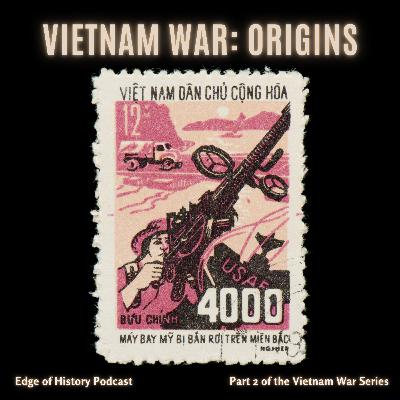
Unbeknownst to many people (and certainly to American war planners, seemingly) is Vietnam's long and proud history of resisting colonial oppressors. For most of the last two thousand years, the area we now know as Vietnam was dominated in some way by much larger and more powerful forces. The associated ethnic groups making up the Vietnamese people never forgot their own identity or their desire to manage their own affairs. Colonial France would learn this lesson in the harshest way imaginable.
For far too many Americans, "Vietnam" conjures up vague film or picture images of futility, atrocity, and stupidity; it also seems to symbolize folly and national shame. While there are truths to all of these, if we are to learn the things the American war in Vietnam can teach us (and dare I say even the ways in which it can inspire us), we need to know its stories better than the two weeks we got in high school. What are the true lessons of Vietnam? Sit down with me for this series and you'll see.
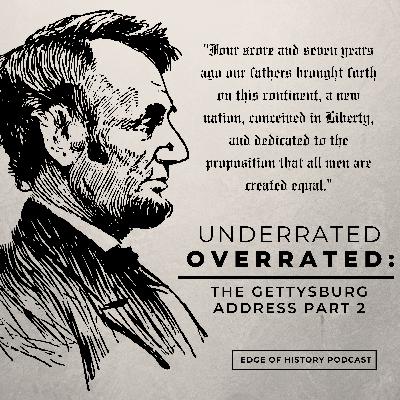
In Part 2, I cover the speech itself, line by line, why it's remarkable all by itself and why its legacy is even more so. It is hard to understate the impact of Lincoln himself and this speech in particular on how America still remembers the war and why it was fought.
The 5th New York Infantry Regiment "Zouaves" were drawn, dressed, and drilled for success in the American Civil War. A volunteer company that drew as many college graduates and businessmen as it did dock and factory workers, it was destined to briefly show its greatness... and then disappear. On this Memorial Day, I tell their story to honor their service and ultimate sacrifice.
Many of us in America know a few phrases of it here and there because we all had to read it in high school. We know it was a good speech, totally reaffirming freedom while honoring war dead, yadda yadda. But lost in the cliches is how significant it was that Lincoln was able to make such a speech at such a time, and make it stick. He had a LOT riding against people even taking the speech seriously, let alone holding it up later as an example of everything America stands for. In part 1, I explain why.
All appeared well as the Romans had the "pacification" of modern-day Germany underway in A.D. 9. The early Principate Roman Army had driven the "barbarians" before it, as it had done many times before. Then revolt stirred and Rome relied on a charismatic German prince, raised as a hostage and then proven auxiliary commander in Roman civilization, to help reaffirm the Empire's authority in his country…
The image of the samurai is almost synonymous with Japanese history for many people: the honor-bound, bow and sword wielding individual warrior on horseback. It could have been very different. When the early Japanese Court was trying hard to adopt the massed infantry tactics of China, a series of defeats to an impressive "barbarian" guerrilla warrior from the north changed the military culture of the country.
Part 3 of a series on historical events that are widely overrated in aspects of their impact and yet actually underrated and deeply misunderstood. The decisive victory Hannibal Barca won over the Roman Republic at Cannae in 216 BC was the crown jewel of his many achievements, and has been studied so often that perhaps it's now cliché. I retell the story to focus on why it was so significant in that war and why it still has lessons for us, despite what modern scholars might think.
Part 2 of a series on historical events that are widely overrated in aspects of their impact and yet actually underrated and deeply misunderstood. The Roman civilization is famous all over the world, but few people know just how unlikely and unique their rise to power was. Through an uncommon combination of ruthlessness and humility, Rome built a culture and a war machine that learned from mistakes, adapted to circumstances, and relentlessly pursued total victory.
Part 1 of a series on historical events that are widely overrated in aspects of their impact and yet actually underrated and deeply misunderstood. President Abraham Lincoln 's landmark Emancipation Proclamation is known popularly as what "freed the slaves," but its story is far more complex. Skeptics correctly point out that it did very little to change the legal and actual status of slaves anywhere in America at that time, but I break it down here for the brilliant practical strike at the institution of slavery that it was. Honest Abe for the win, and within the limits of his Constitutional Power to boot.
Chechens have been in an almost 200-year struggle against Russian imperialism. While they remain in an occupied state, the spirit of their people is very much alive. Through their struggle, we can see the consequences of brutality, the power of evil, the heart of a people, the early buds of radicalization, the way misinformation shifts focus and spreads lies. Ultimately, this episode is a reflection on how small events can have a huge ripple effect on the modern world and how we ALL have a role to play in that, either through silent consent, ignorance, or informed action.
The last of the rebel "old guard" are hunted down, killed, or driven into exile. Chechen traitor/Russian puppet Ramzan Kadyrov rules Chechnya through fear. A generation of traumatized and/or radicalized children remain. Some depart for the bloodbaths of Ukraine or Syria in a tragic epilogue. What's next? How do we evaluate the legacy of the struggle?
After years of attrition taking their toll, a desperate Shamil Basayev turns once more to terrorism. Things are very different in 2004 than they were in 1995, however. The 9/11 attacks and state control of Russian media ensure that instead of helping the rebels, horrific events like the Beslan School Siege further cut off the Chechen cause from any hope.
The brutality and incompetence of the Russian Army is on full display in the opening months of the war. Their overwhelming force and the assistance of Chechen turncoats begin to turn the tide in their favor, however. Supplies choked off and numbers dwindling, the rebels disperse for guerrilla war.
The overreach of the Chechen warlords and the rise of Vladimir Putin combine to precipitate the re-invasion of Chechnya in 1999. Grozny is besieged once again and destroyed in urban combat. Both sides have learned from '94-'96 but this time Russia is committing far more. Staged "terrorist" attacks help Putin rally support, even as he kills his own people.

Comments

Download from Google Play

Download from App Store
 United States