


 Claim Ownership
Edgy Ideas
Subscribed: 49Played: 2,105
Subscribe

© Simon Western
Description
Welcome to Edgy Ideas, where we explore what it means to live a ‘good life’ and build the ‘good society’ in our disruptive age.
This podcast explores our human dynamics in today's networked society. Addressing topical themes, we explore how social change, technology and environmental issues impact on how we live, and who we are - personally and collectively. Edgy Ideas podcast aims to re-insert the human spirit, good faith, ethics and beauty back into the picture, offering new perspectives and psycho-social insights. We pay particular attention to how the ‘unconscious that speaks through us’, entrapping us in repetitive patterns and shaping our desires. Each podcast concludes by contemplating what it means to live a ‘good life’ and create the ‘good society’. Enjoy!
Edgy Ideas is sponsored by the Eco-Leadership Institute
A radical think tank and developmental hub for leaders, coaches and change agents.
Join our community of practice and work live with many of our podcast guests
Discover more here: https://ecoleadershipinstitute.org
Contact [email protected]
111 Episodes
Reverse
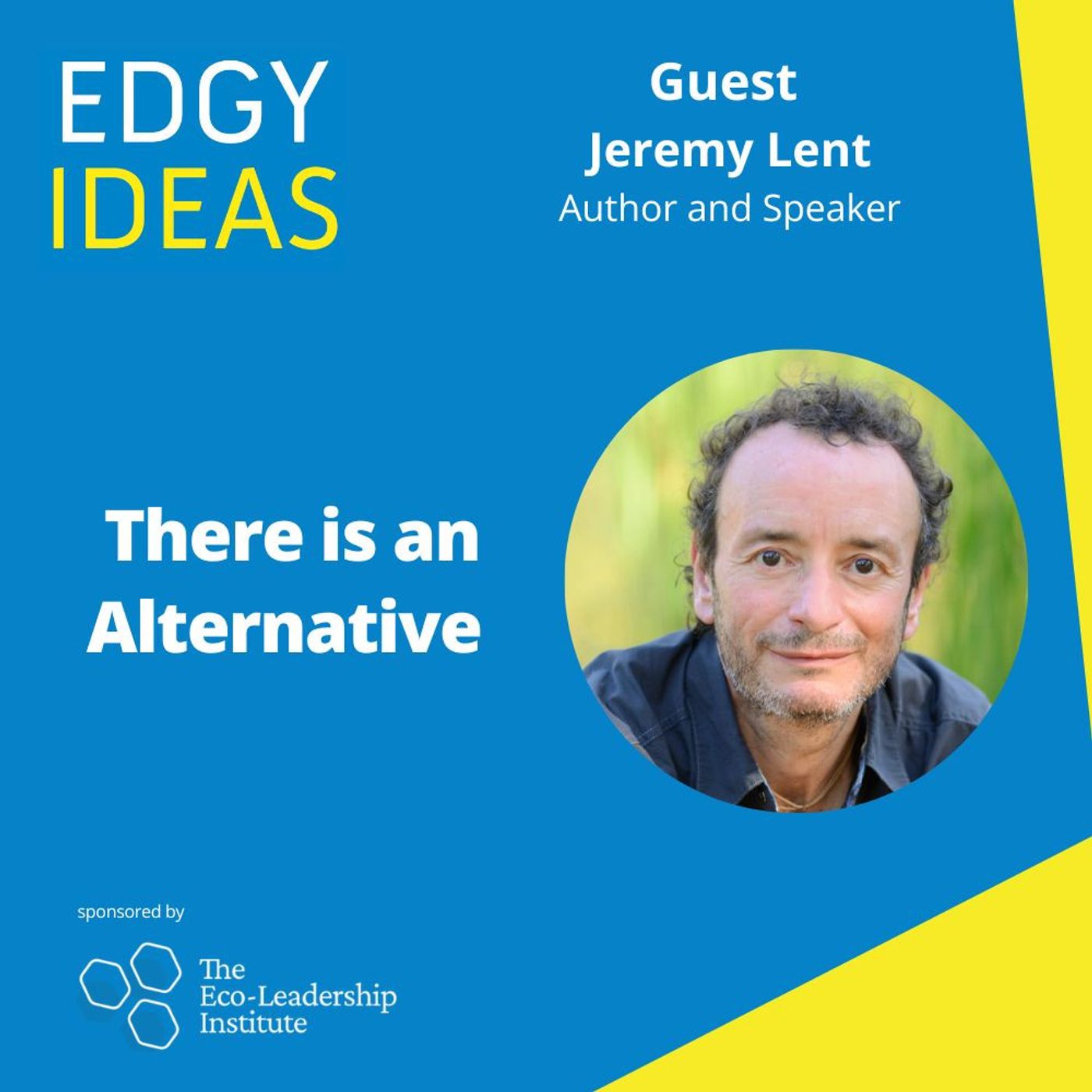
Show NotesWhat if the system isn't broken? What if it's doing exactly what it was designed to do? If that's true, tinkering with capitalism won't save us. We need to imagine a different civilization altogether.In this episode of Edgy Ideas, Simon Western talks with Jeremy Lent, author of Ecocivilization: Making a World that Works for All. Jeremy's argument cuts deep: our ecological and social crises come from a worldview built on separation. Humans from nature. Mind from body. A civilization that prizes control, extraction and competition over connection. Simon brings his own work on Eco-Leadership into the conversation, wrestling with how hard it is to think outside a modernity mindset that shapes everything, how we lead, organise, even how we see ourselves.So what does a life-affirming civilization actually look like? Less control, more collaboration with living systems. Less abstraction, more reconnection with embodied, animate intelligence. And crucially, Jeremy insists these alternatives aren't hypothetical. They're already happening in communities around the world.This isn't a conversation that flinches from the scale of the crisis, but it doesn't collapse into despair either. Jeremy pushes for something harder: full honesty about ecological breakdown, paired with a real belief that transformation is possible. He points to how neoliberalism spread, starting at the margins, until it reshaped the entire world, and asks whether life-affirming ideas could do the same. His closing line says it best: the future isn't a spectator sport. We're all in it, shaping it, whether we notice or not.Key Reflections
The system might not be broken. It might be working exactly as designed.
Our ecological crisis is a crisis of worldview: separation, control, extraction.
Moving past modernity means working with living systems, not controlling them.
There is an alternative. Much of what we need already exists, somewhere, in practice.
Face the crisis honestly, without tipping people into despair or paralysis.
Big ideas start at the margins, then quietly redraw what's possible.
The future isn't something we watch. It's something we build.
KeywordsEcocivilization, Modernity, Ecological Crisis, Life-Affirming Systems, Capitalism, Systems Thinking, Regeneration, Transformation, Collective Action, Eco-LeadershipBrief BioJeremy Lent is an author and speaker whose work investigates the underlying causes of our civilization’s existential crisis, and explores pathways toward a life-affirming future. His new book, Ecocivilization: Making a World that Works for All, lays out the potential for a fundamentally different world system based on life-affirming principles.His previous books are The Patterning Instinct: A Cultural History of Humanity's Search for Meaning and The Web of Meaning: Integrating Science and Traditional Wisdom to Find Our Place in the Universe. He is the founder of the Deep Transformation Network, a global community exploring pathways toward a life-affirming future on a regenerated Earth. He has written extensively about the vision and specifics of an ecological civilization, is co-founder and executive director of the Ecocivilization Coalition, and president of its parent, the Institute for Ecological Civilization.
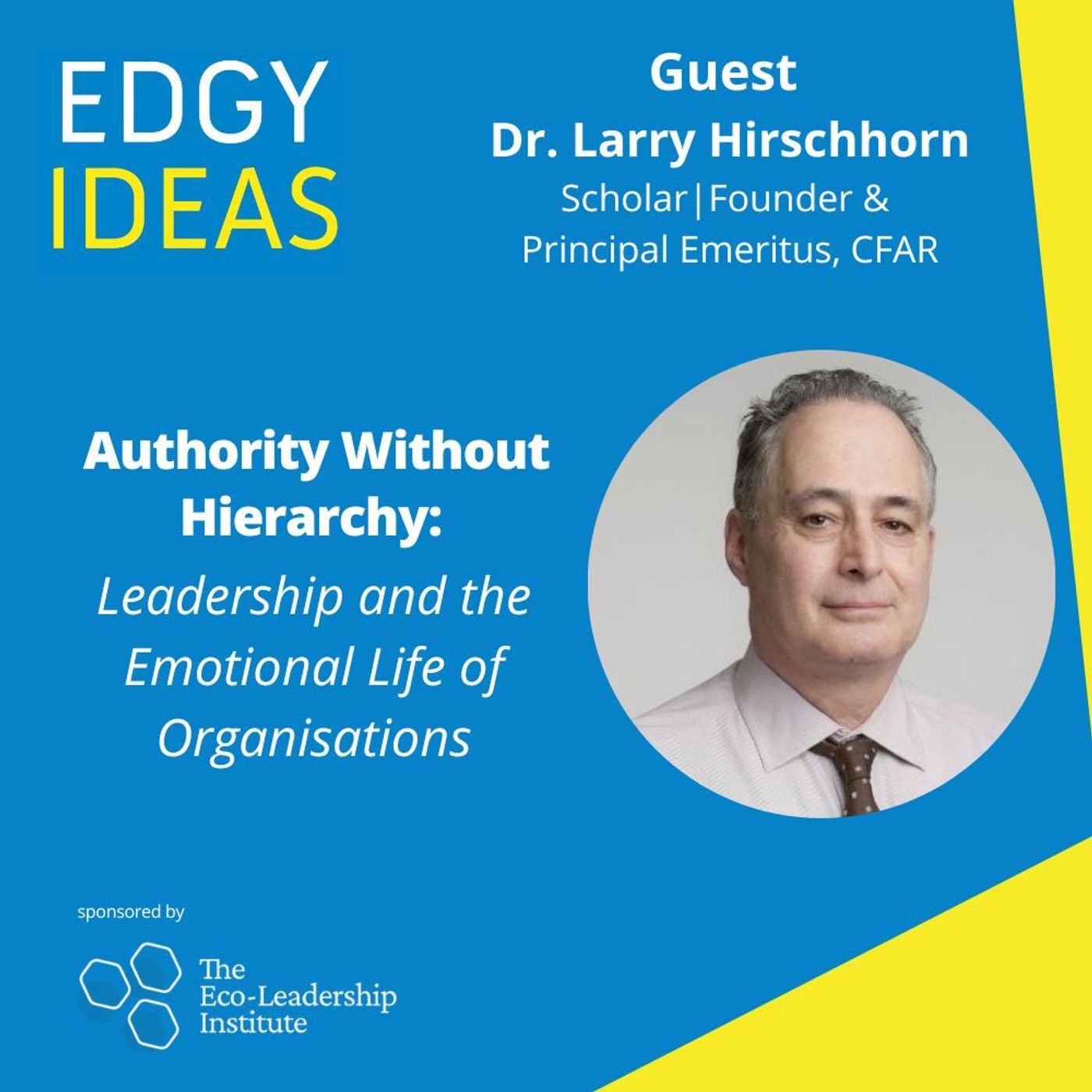
Show NotesWhat happens to authority when hierarchy begins to disappear? And why might leaders themselves be part of the problems they are trying to solve?In this episode of Edgy Ideas, Simon Western is joined by Dr Larry Hirschhorn - founder and Principal Emeritus of CFAR and a leading thinker in systems psychodynamics and organisational consulting.Drawing on a lifetime of working with organisations, Larry discusses the tension between the independence leaders need and the danger of becoming caught in an idealised image of themselves. Challenging the notion that authority disappears in flatter organisations, Larry shares how it actually becomes more personal, relational and political.Larry introduces his idea of 'Primary Risk' - asking what we foreground and what we fail to notice when making strategic decisions. He also shares his most interesting emerging work with Reversal Theory, offering a less pathologising way of understanding how groups actually work.Simon and Larry also reflect on why systems psychodynamics remains at the margins of organisational life. The conversation ends with a refelction on how might we create a good life that holds together our desire for individual freedom and our yearning for collective life.Key Reflections
Leadership requires separateness, but this can easily slip into self-idealisation.
Less hierarchy does not mean less authority; it makes authority more relational, personal and political.
Primary Risk asks us to notice what our strategies push into the background.
Groups need to move between challenge and consensus, purpose and playfulness.
Leaders are part of the systems they are trying to understand and change.
Psychodynamic thinking may be most useful when the theory stays in the background and the organisation’s real challenges stay in the foreground.
The good life requires finding ways to hold individual freedom and collective belonging together.
KeywordsLeadership; Authority; Systems Psychodynamics; Primary Risk; Reversal Theory; Group Dynamics; Distributed Leadership; Organisational Politics; Strategy; Collective Life Brief BioDr. Larry Hirschhorn is a founder and Principal Emeritus at CFAR, a management consulting firm specialising in organisational development, strategy, change implementation, collaboration and leadership transition. With over four decades of experience as an organisational consultant, scholar and thought leader, Larry has worked extensively with leaders and organisations on strategy formulation and execution, organisational diagnosis and organisational design.He is the Director of CFAR’s Dynamics of Consulting Program, an advanced programme for experienced consultants and coaches that explores the intersections between business dynamics and psychodynamics.Trained as an economist, with a PhD from MIT, and later as a psychoanalytically informed organisational consultant, Larry is widely recognised for his work on the psychodynamics of organisations and for connecting the deeper dynamics of groups, relationships and decision-making with the practical realities of strategy and organisational performance.Larry is also a founding member and former President of the International Society for the Psychoanalytic Study of Organizations (ISPSO). A prolific writer, he has received several awards for his work, including the Eliot Jaques Award from the Society of Consulting Psychology, as well as journal awards for his writing on organisational life, leadership and moral purpose. He has also held faculty and teaching roles at the University of Pennsylvania, Wharton, Fielding Graduate University and the William Alanson White Institute.
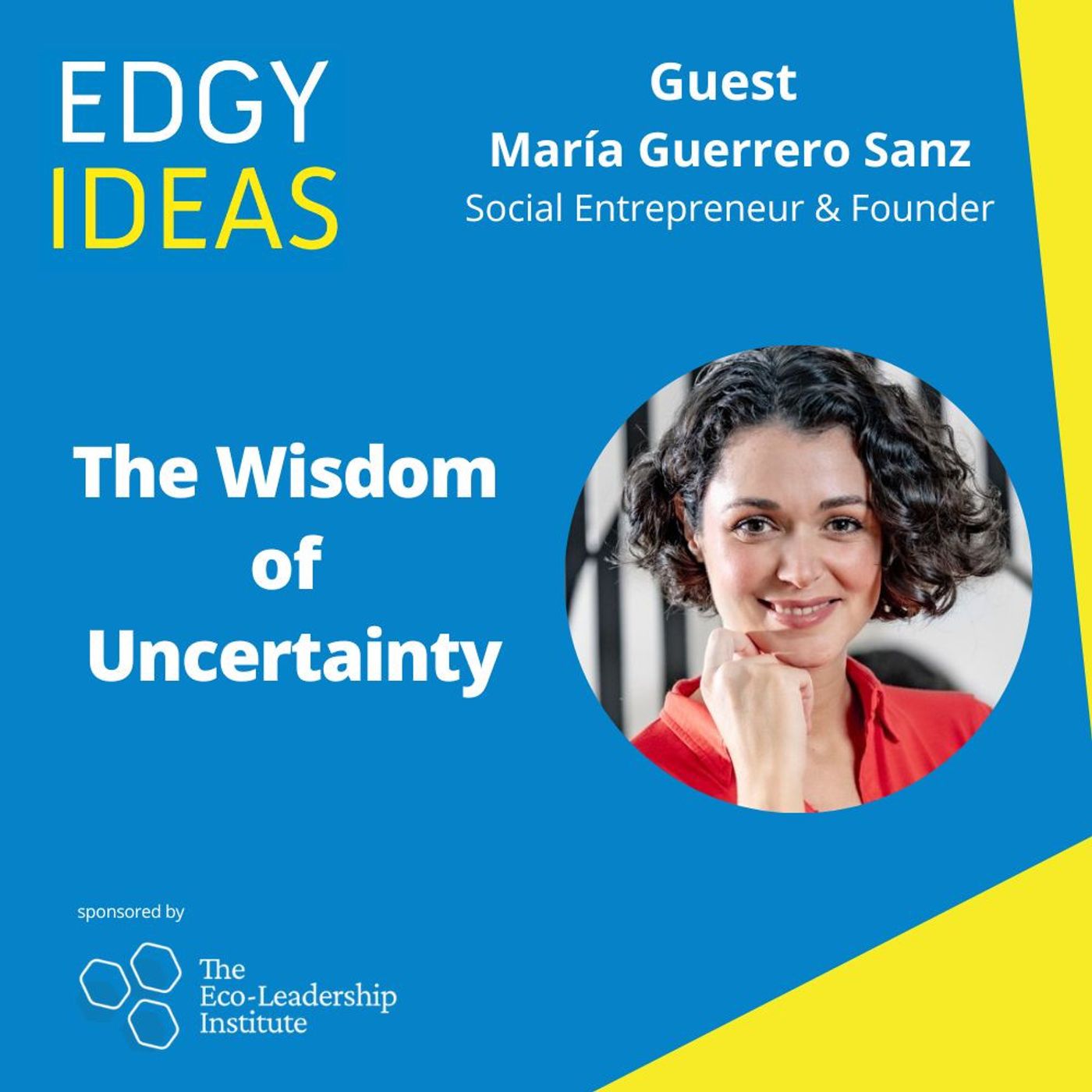
Show NotesIn this episode of Edgy Ideas, Simon Western is joined by Maria Guerrero - social entrepreneur and leadership educator - to explore leadership, power and human development.Starting from Maria's work in education, faith-based institutions and social transformation, the conversation asks what kind of leadership is needed when expertise and authority are no longer enough. Drawing on Adaptive Leadership, Maria asserts that many of today's challenges require collective learning, shared responsibility and the willingness to engage with uncertainty rather than seeking quick answers.Simon and Maria examine how power operates in organisations, churches, universities and society, often shaping whose voices are heard and whose knowledge is valued. They discuss the importance of recognising lived experience alongside expertise and explore how leadership can emerge from unexpected places.The conversation also moves into the embodied and spiritual dimensions of leadership. Through stories of facilitation, peacebuilding and contemplative practice, they reflect on silence, discernment, movement, fragility and interdependence. In a time marked by polarisation and rapid change, Maria offers a vision of leadership rooted in connection, purpose and our shared humanity.Key Reflections
Leadership is less about position or authority and more about the capacity to help individuals and communities navigate meaningful change.
Many of today's challenges are adaptive rather than technical, requiring participation, experimentation, and collective learning rather than expert solutions.
Power is often embedded in organisational cultures and social norms, influencing whose voices are heard and whose perspectives are overlooked.
Real transformation requires the ability to stay with uncertainty, discomfort, and not-knowing instead of rushing towards certainty and control.
Embodied practices such as movement, silence, and deep listening can reveal forms of wisdom that are inaccessible through rational analysis alone.
Human fragility and interdependence are not weaknesses to overcome but realities that can deepen connection, compassion, and collaboration.
Engaging constructively with difference is essential for leadership, peacebuilding, and creating communities capable of addressing complex challenges.
Spirituality, understood as connection to self, others, nature, and something beyond ourselves, remains a vital but often neglected dimension of leadership development.
KeywordsLeadership Development, Adaptive Leadership, Power & Authority, Human Development, Embodiment, Interdependence, Spirituality, Social Change. Brief BioMaría Guerrero is a social entrepreneur, leadership educator, and facilitator working at the intersection of social change, collective learning, and human development. Trained as a lawyer and economist, she began her career in corporate law before leaving the profession to found Acción por la Música, a pioneering organization in Spain that uses collective music-making as a platform for inclusion, community building, and social transformation.Over the past decade, María has combined her practical experience leading social innovation initiatives with a deep exploration of how people, organizations, and societies navigate complexity. Her work draws on Adaptive Leadership, collective sensemaking, adult development, conflict transformation, and traditions of spiritual discernment. She has designed and accompanied large-scale participatory processes in educational, social, and faith-based institutions, helping communities engage difficult questions, navigate polarization, and develop the capacity to learn their way forward together.María teaches leadership at Comillas University and works internationally as a speaker, facilitator, and advisor. She is part of global leadership networks connected to Harvard Kennedy School and Acumen, and is currently pursuing doctoral research on leadership development and organizational transformation in complex systems.At the heart of her work is a simple conviction: many of the challenges that matter most cannot be solved by expertise alone. They require people to learn, adapt, and discover new possibilities together.
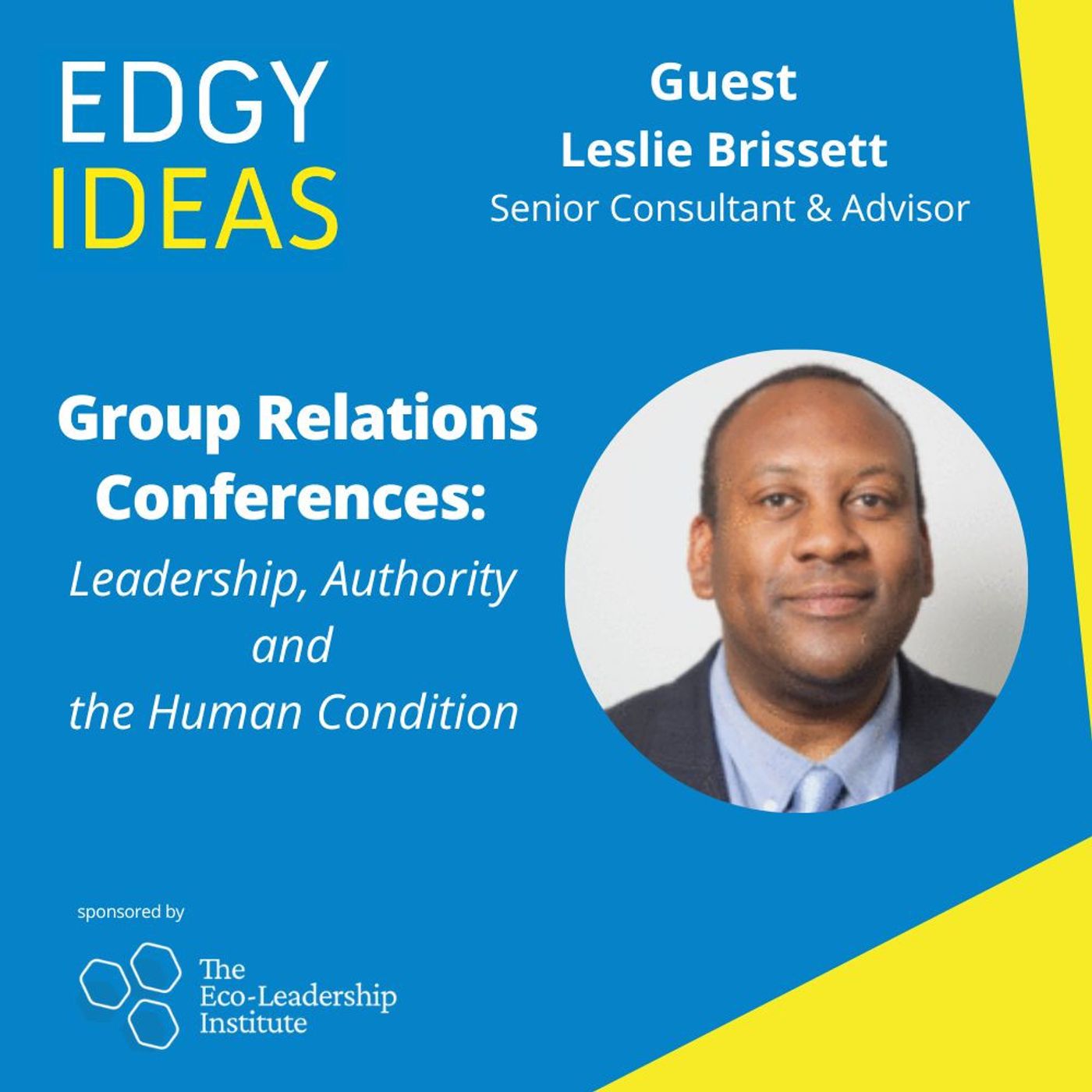
Show NotesIn this episode, Simon Western is joined by his long-time colleague, Leslie Brissett, to explore the history, purpose and enduring relevance of Group Relations Conferences. They trace the roots of this pioneering methodology from the early Leicester Conferences and the Tavistock Institute tradition to its contemporary applications in leadership, organisations and society. They discuss how Group Relations creates a temporary learning organisation where participants study authority, leadership, membership, and the unconscious in real time. They reflect on why these conferences can be deeply moving, often revealing hidden assumptions, internal constraints and patterns carried from our earliest relationships.Simon and Leslie also discuss the changing nature of leadership, the growing prominence of identity and systems thinking and the need to reconnect questions of soul, embodiment and spirituality with organisational life. Along the way, Simon shares how a Group Relations Conference helped him discover a different path to leadership - one that emerged not from hierarchy, but from working at the edge.This is a conversation about learning, freedom, authority and what it means to become more conscious participants in the systems we inhabit.Key Reflections
Every Group Relations Conference is a unique, temporary learning organisation that can never be repeated in exactly the same way.
Authority is not simply something exercised by leaders; it is shaped by how each of us relates to systems, roles, and early life experiences.
Experiential learning can reveal aspects of ourselves that remain hidden in traditional education, coaching, therapy, or leadership development.
Freedom often exposes the internal constraints and assumptions that unconsciously shape our behaviour.
The origins of Group Relations are rooted in post-war efforts to understand authority, democracy, and the conditions that give rise to authoritarianism.
Leadership does not only emerge from formal positions of power; it can arise from the edge of a system through connection and influence.
Identity has become a more visible and important aspect of organizational life, inviting deeper reflection on both self and system.
The future of Group Relations may lie in integrating embodiment, spirituality, and ecological ways of thinking with its psychoanalytic foundations.
KeywordsGroup Relations, Leadership, Authority, Tavistock, Systems Thinking, Identity, Organisational Learning, Soul, WorkBrief BioLeslie has worked in organisational and community leadership for over 30 years. He is on the advisory board of the Eco-leadership Institute. He is the former Group Relations Programme Director at the Tavistock Institute of Human Relations, and is currently serving as the Board Secretary for the International Psychoanalytical Association. Leslie has studied human dynamics in experiential settings in many countries and acts as an adviser and consultant to boards, nations, groups and individuals seeking to improve the quality of life and deepen what it means to be human and humane. Leslie holds multiple degrees including master's degrees in Health Education from Kings College and Organisational Psychology, Social Policy and Non-Profit Policy from the London School of Economics and Political Science, as well as a PhD in Unconscious Decision Making from Trinity College.
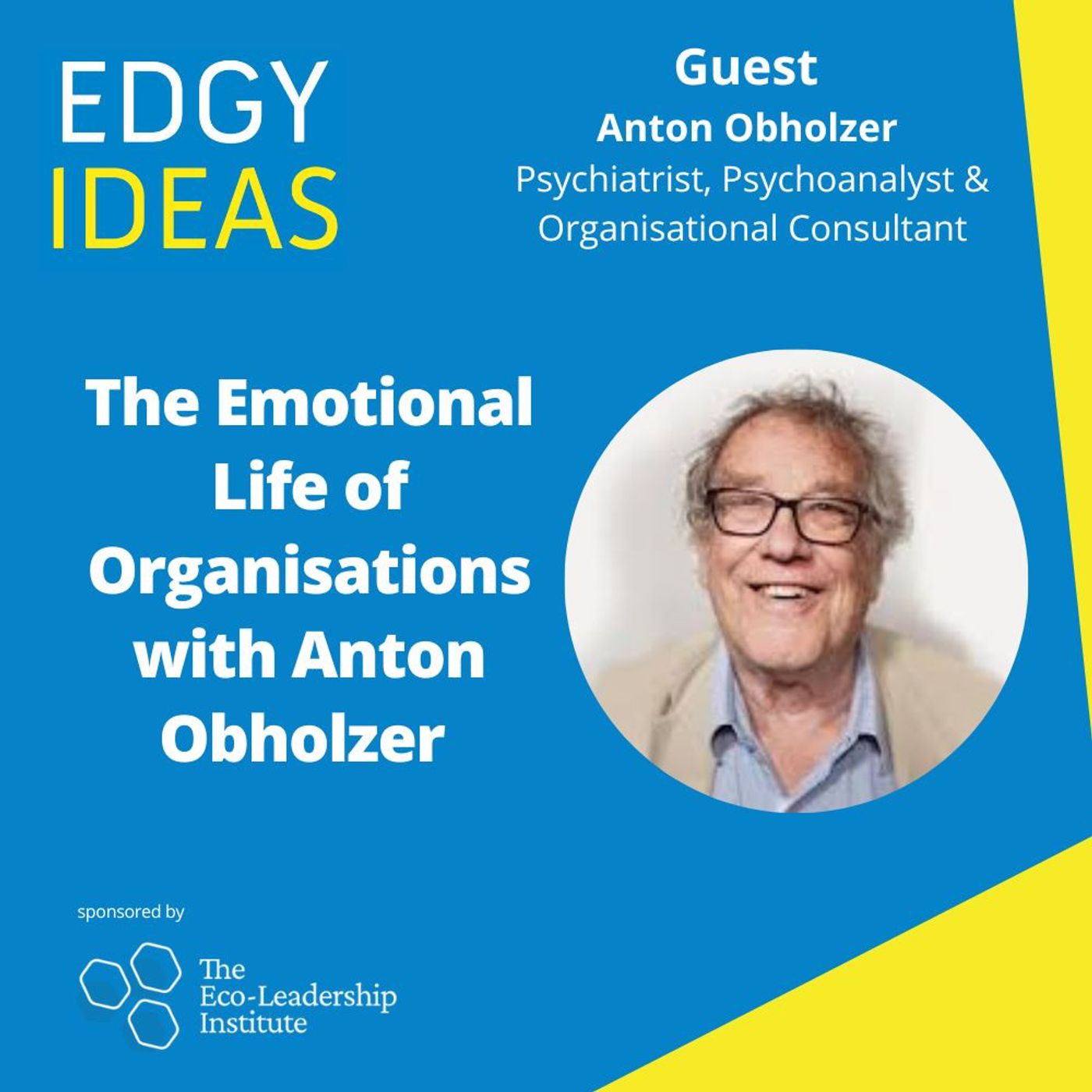
Show NotesIn this episode, Simon Western speaks with seasoned psychoanalyst and organisational consultant Dr. Anton Obholzer about the hidden emotional and relational dynamics shaping leadership, organisations and society. Anton is a hugely respected organisational consultant from the Tavistock tradition, and it is a delight to hear his wisdom and insights on this podcast. Moving beyond technical models of management and mental health, the conversation explores organisations as living systems embedded within wider social and political realities. Anton reflects on the Tavistock tradition, the influence of Eric Miller and the importance of understanding organisations not simply as structures of efficiency, but as emotional containers carrying anxiety, projection, creativity and possibility. Simon and Anton discuss leadership as a protective and generative force, creating the conditions for growth, talent and human flourishing.The dialogue explores the erosion of relational life in contemporary society, the dangers of organisations becoming spaces for unmanaged social anxiety, and the increasing dominance of technological and managerial rationality over human connection. They examine the importance of experiential learning, vulnerability, observation and creative practice in sustaining healthy organisations and societies.At the heart of the episode is a deeper question about how we live together in increasingly uncertain times. Rather than retreating into expertise, certainty or control, Anton calls for greater relational awareness, collective responsibility and societal imagination.Key Reflections
Organisations are emotional and societal systems, not simply technical machines
Leadership involves creating protective spaces where people and creativity can flourish
Psychoanalysis offers ways to understand the hidden dynamics shaping organisational life
Relational intelligence matters more than purely technical expertise
Organisations often absorb and enact wider societal anxieties and fractures
Creativity, art and dialogue are essential to organisational and societal health
Experiential learning creates deeper awareness than abstract theory alone
Technological advancement risks intensifying alienation and loss of human contact
Mental health cannot be separated from political, social and organisational conditions
Healthy societies require interdependence, vulnerability and collective responsibility
KeywordsPsychoanalysis, Leadership, Organisational Dynamics, Tavistock, Anton Obholzer, Simon Western, Eco-Leadership, Relational Intelligence, Systems Thinking, Emotional Containment, Group Relations, Society, Human Connection, Organisational Culture, Creativity, Vulnerability, Interdependence.Brief BioDr. Anton Obholzer is a psychiatrist, Fellow of the Royal College of Psychiatrists, and both a child and adult psychoanalyst, trained at the Tavistock Clinic and the Institute of Psychoanalysis in London. Alongside his clinical work, he trained as an organisational consultant under Eric Miller at the Tavistock Institute of Human Relations, helping pioneer the application of psychoanalytic thinking to organisations, leadership, and institutional life.Until 2002, he served as Chief Executive of the Tavistock & Portman Clinics in London and continues as Chairman of the Consulting to Institutions Workshop and Senior Consultant in the Tavistock Consultancy Service. He has designed and directed group relations and management conferences internationally, and lectures widely on organisational change, leadership, and resistance under conditions of stress and turbulence.A Visiting Professor at the Universities of Vienna, Graz, and Innsbruck, faculty member at INSEAD’s Advanced Management Programme, and teacher across Europe, Dr. Obholzer has spent decades exploring the unconscious dynamics that shape organisations - especially when systems are under pressure.He is also the co-editor of the influential book The Unconscious at Work, a seminal text that examines how unconscious anxieties and emotional dynamics operate within organisations and institutions. His writings and publications have profoundly shaped the fields of systems psychodynamics, organisational consultancy, and leadership studies.

Comments

Download from Google Play

Download from App Store
 United States