


 Claim Ownership
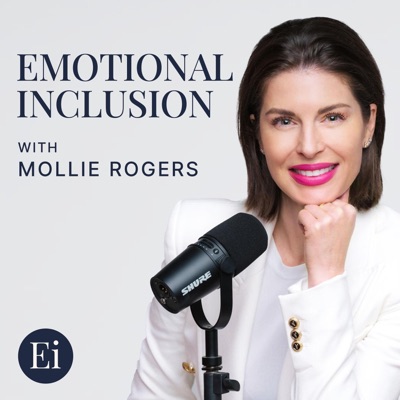
Emotional Inclusion
Subscribed: 2Played: 2
Subscribe

© 2021 - Emotional Inclusion
Description
Hello everyone, I’m Mollie Rogers and this is the Emotional Inclusion podcast. In my one and a half decade long career in the fashion industry and through listening to hundreds of stories of people who have navigated work whilst facing the ‘perfect storm’ on a personal level, I realized the urgent need to advocate a safe platform in the business world where, with a trained professional onboard, emotions could be heard, recognized and dealt with, for an enhanced business productivity. Building a better corporate ecosystem starts here.
In the 21st century world in which we live in, companies are still forgetting that the emotional health of our employees is the very foundation of their success. What are we doing to reintegrate our employees into the workforce when they are experiencing hardships? Why are we still not taking care of our employees when we know that they are our greatest asset? Please join me in sharing conversations with leaders, culture changers, creatives, founders and CEO’s, scientists and doctors, in breaking down archaic corporate stereotypes and building a mindset and culture of Emotional Inclusion in the workforce.
In the 21st century world in which we live in, companies are still forgetting that the emotional health of our employees is the very foundation of their success. What are we doing to reintegrate our employees into the workforce when they are experiencing hardships? Why are we still not taking care of our employees when we know that they are our greatest asset? Please join me in sharing conversations with leaders, culture changers, creatives, founders and CEO’s, scientists and doctors, in breaking down archaic corporate stereotypes and building a mindset and culture of Emotional Inclusion in the workforce.
28 Episodes
Reverse
Dr. Paul RochonDr. Paul Rochon is a Biopsychologist, Doctor in Cognitive Sciences about Sleep, State of Consciousness and Cognitive process, Master in Biology, Physiology and Neuroscience, and Master in Cognitive Psychology from the University of Bordeaux, France.He is also a clinical behaviour specialist, former director of the mental health department, and current director of the sleep center at Raffles Hospital Beijing. As well as certified in Social Cognition from the Military Academy of Lisbon (Portugal), and Cognitive Linguistics from the University of Mons (Belgium).Dr. Rochon has been practicing biopsychological counselling for 20 years, working mostly with athletes, companies, schools, and individuals. He is making science accessible to everyone with clear and easily implementable behaviour management programs.He is a certified Hypnotherapist from the American Hypnosis Association and the Hypnosis Motivation Institute, Los Angeles. He uses hypnosis for Smoking Cessation, Weight Loss, Anxiety, Guilt and Shame, Mindfulness Cognitive therapy, Sport Performance, Pain Management, and Childbirth.He is also a serial entrepreneur, certified in Executive Business Management from SKEMA Business School, with 25 years of experience in the food and beverage industry, and Director of the North Asia International Area of the Entrepreneur Organisation.In addition, as a former professional rugby player and coach, he is passionate about the impact of mindset on athletes' performance.Insights from this episode:Emotions start in the body, not the mindWellbeing is a hard skillSleep is a performance multiplierPsychological safety beats motivationEngagement rises when emotions are supportedRecovery must be designed, not assumedEnvironment matters more than programsWearables can increase anxietyPresenteeism is the real productivity drainEmotional literacy is foundationalQuotes from the show:“We are not thinking machines that feel. We are feeling machines that think.” - António R. Damásio“Emotion is not just linked to performance — it is the base of everything you do.” - Dr. Paul Rochon“People don’t burn out from too much work. They burn out from too much threat.” - Dr. Paul Rochon“If you are a dysregulated leader, you will create a dysregulated team.” - Dr. Paul Rochon“When people feel safe, they perform at their full potential.” - Dr. Paul Rochon“Presenteeism costs two to three times more than absenteeism.” - Dr. Paul Rochon“The future of work is not resilience workshops — it’s biological and emotional skills to stay human.” - Dr. Paul Rochon“What you can name, you can tame.” - Dr. Sue Johnson “The best trick to have a good sleep is to wake up at the same time.” - Dr. Paul Rochon“When people feel supported, even if they never use the support, engagement rises.” - Dr. Paul RochonSTAY CONNECTED—Dr. Paul RochonLinkedInhttps://www.linkedin.com/in/rochonpaul/Engineering Wellbeinghttps://mp.weixin.qq.com/s/vC91-IoW4sLjUMNbkWpjLwEngineering Sleephttps://engineeringsleep.com/ *Emotional inclusion:https://www.emotionalinclusion.com/https://www.instagram.com/emotional_inclusion/https://www.linkedin.com/company/emotional-inclusion/ *Get your copy of Emotional Inclusion: A Humanizing Revolution at Work:https://www.penguin.sg/book/emotional-inclusion/
Insights from this episode:Emotional inclusion is distinct from emotional intelligence: it’s about integration and practice, not just awareness.The average person spends 81,396 hours working throughout their lifetime — making sleep, the one thing we do more than work. Workplaces must make those hours meaningful and human.Neuroscience shows that we emote before we even reason; emotions are biological facts, not weaknesses.Burnout and disconnection are at alarming levels:80% of people will experience a diagnosable mental health condition.60% of employees report being emotionally detached; 19% are outright miserable.48% of workers and 53% of managers report being burned out.Five key actions to engineer emotional inclusion:Prioritize mental health support.Build action-oriented platforms for wellness.Educate teams on naming and regulating emotions.Leaders go first in modeling vulnerability.Challenge false assumptions and create psychological safety.Investing in emotional inclusion leads to stronger performance, innovation, retention, and trust.Personal wellbeing habits such as sleep, movement, meditation, and micro-moments of pause fuel sustainable performance.Quotes from the show:“Emotional intelligence is the knowing. Emotional inclusion is the doing.” “81,396 — that’s how many hours the average person spends working. Shouldn’t those hours be positive, meaningful, and human?” “Emotions are not soft. They’re biological facts.” “There is no such thing as splitting our home self from our work self — that’s a false dichotomy.” “When leaders open up, they give others permission to do the same.” “If you’re not making a difference in people’s lives, you shouldn’t be in business.” – Richard Branson“Workplaces with greater psychological safety and emotional inclusion will make it possible for everyone to contribute and thrive.” – Amy Edmondson “Let’s not just build bridges and technologies. Let’s build cultures of compassion, resilience, and humanity.”STAY CONNECTED—*Emotional inclusion:https://www.emotionalinclusion.com/https://www.instagram.com/emotional_inclusion/https://www.linkedin.com/company/emotional-inclusion/*Get your copy of Emotional Inclusion: A Humanizing Revolution at Work:https://www.penguin.sg/book/emotional-inclusion/
Dr. Kathy PikeDr. Kathy Pike is the founder and past director of the WHO Center for Global Mental Health and professor of psychology at Columbia University. She is also the CEO of One Mind. Dr. Pike has international experience in global mental health discussion. She has published over 100 articles and book chapters on eating disorders, culture, psychopathology, global mental health, and mental health in the workplace. A long-time advocate for increasing access to mental health services, Dr. Pike has provided consultation on mental health policy to Japanese parliamentary representatives and to the United States Mental Health Policy Organizations.She’s also committed to supporting workplaces in their efforts to address mental health in the workplace. As such, she consults with global corporations with the aim of integrating best practices to reduce the burden of mental illness and enhance mental health and wellbeing in today’s rapidly changing workplace. Insights from this episode:Challenges in addressing the complexity of issues that need to change regarding mental health in the workplaceChanging cultures and transformation through structural and systemic changesMental Health at Work Index for Leaders and Organizations3 Ps Framework: Protection, Promotion, ProvisionStrategies at One Mind at WorkAI as an aid for Mental Health Professionals Quotes from the show:“Taking care of our mental health is, it’s a verb. It’s not a noun. It's dynamic and it’s changing. And so this idea of emotional inclusion that you’ve put forward, I think is one that’s really powerful because it means it’s an invitation.” - Dr. Kathy Pike“We have this false dichotomy that what’s good for business is not good for mental health and what’s good for mental health is not good for business. And that’s just flat out wrong. Data is overwhelmingly clear that when we take care of our people, when you take care of people’s mental health and wellbeing, it’s good for the people, it’s good for their teams, it’s good for their families, it’s good for the community, it’s good for the workplace.” - Dr. Kathy Pike“Mental health and wellbeing and focusing on these issues in the workplace, you have to continuously demonstrate that it matters. You have to prove and continue to promote buy-in within the organizations. So you need to be able to demonstrate that what you’re doing is having an impact on what you’re aiming to impact.” - Dr. Kathy Pike“Emotional intelligence is all about knowing how to navigate our emotions and the emotions of the people we interact with. Whilst emotional inclusion on the other hand, puts emotional intelligence into action.” - Mollie Rogers Jean De Dieu“Inclusion is a verb and being inclusive of each other’s emotional realm, as you and I are so aligned with, is something that we need to do.” - Mollie Rogers Jean De Dieu“Nothing will replace who we are as human beings but how AI can bring in additional insights and broaden our perspectives based on the humanity that resides within all of us is going to be fascinating.” - Mollie Rogers Jean De Dieu“Emotional intelligence versus emotional inclusion, it’s one thing for leaders to know, it’s another for leaders to do. And leaders are really building capacity around mental health and wellbeing at the most progressive organizations.” - Dr. Kathy Pike Stay connected:Dr. Kathy PikeLinkedInhttps://www.linkedin.com/in/kathleenmpike/Mental Health at Work Indexhttps://mentalhealthindex.org/ Emotional inclusionhttps://www.emotionalinclusion.com/https://www.instagram.com/emotional_inclusion/https://www.linkedin.com/company/emotional-inclusion/
In this episode, Mollie Jean De Dieu, the founder of Emotional Inclusion, offers us a glimpse into her latest book, "Emotional Inclusion: A Humanizing Revolution at Work". She recounts real-life workplace stories that illustrate the challenges people face and how fostering emotional inclusion can lead to improvements in the workplace for everyone.Insights from this episode:Stigma in the workplaceEffects of workplace experience on performanceFears and struggles from expectationsAnxiety in work influencing personal lifePressure from societal normsImportance of seeking helpPower of authenticity and vulnerabilityQuotes from the show:“Emotional inclusion invites others to look into our humanness. Being emotionally inclusive means being emotionally and mutually accepting of one another.”“The mind-body connection is undeniable when it comes to discussing mental health or emotional wellness holistically.”“There is an urgency to look at stigma as a gateway to creating emotionally inclusive workplace cultures.”“Emotional inclusion invites us to change the core of our discriminating attitude and false assumptions when labeling each other's humanity.”“There is no question that emotionally inclusive companies communicate tools and strategies to address and spot anxiety, depression, stress, and mental illness overall.”“The stigma of mental illness is one of the top reasons that people do not receive care.”“Emotional inclusion puts emotional intelligence into action in a medicalized, confidential, and purpose driven way.”“Whichever way we choose to tackle emotional inclusion, the pull is just greater than us at this stage.”“Emotional inclusion calls for the dialogue to be deepened, and the stigma to be weakened.”Stay connected:Emotional inclusionhttps://www.emotionalinclusion.com/https://www.instagram.com/emotional_inclusion/https://www.linkedin.com/company/emotional-inclusion/Get your copy of the book:https://amzn.to/402BNgj"Emotional Inclusion: A Humanizing Revolution at Work" is published by Penguin Random House
Deborah YehDeborah Yeh is the Global Chief Purpose Officer for Sephora. In this newly created global role,Deborah works across all teams to define Sephora’s Purpose and the resulting sustainabilityand social impact priorities. Since joining Sephora in 2012, she has been instrumental inbuilding Sephora’s reputation with a strong sense of purpose, and she is passionate aboutbringing Sephora’s values to life in a meaningful and authentic way for all stakeholders.Recognized for her steadfast and fearless leadership across notable industry awards such asBusiness Insider’s Most Innovative CMOs and Gold House’s A100 for her work in the AsianAmerican community, Deborah has helped transform Sephora into an inspiring, inclusive andeducational beauty destination. In 2019, Deborah led the launch of Sephora America’s award-winning “We Belong to Something Beautiful” brand campaign, and she has demonstratedrelentless commitment to actions in favor of greater diversity and equity in beauty, includingSephora’s first-of-its-kind national Racial Bias in Retail Study, which was designed to measurethe issue of racially biased experiences in U.S. retail and identify solutions to end unfairtreatments.Prior to joining Sephora, Deborah led marketing strategy and planning for leading brands andretailers, most notably for Old Navy and Target, and she currently sits on the board of L.L.Bean. Deborah attended Harvard University, majoring in Psychology. She currently lives inParis with her husband, two children and two cats.Insights from this episode:Company purpose & Personal purposeOrganizational and employee wellnessChallenges in the retail industryWellness and mental health through a medical lensMedicalized care and safety and emotional attentionEmpathetic and great leadershipCulture of care and belongingQuotes from the show:“Our best assets in almost every company are the intellect and passion of our employees.” - Deborah Yeh“I think if we could nurture these bonds on a more authentic platform, surely enough our companies would truly benefit from it on a macro scale.” - Mollie Jean De Dieu“Emotional inclusion is such a powerful accelerant to more fulfilling and productive relationships including in the workplace.” - Deborah Yeh“Inclusion is an action.” - Mollie Jean De Dieu“Belonging is actually a powerful unlock because that is where you get the feelings. That is where you get the feeling of connectedness. That connectedness is anchored in support and acceptance in psychological safety that comes from belonging.” - Deborah Yeh“There can be no connection and thus belonging if there is no emotional inclusion or psychological safety.” - Mollie Jean De Dieu“A full practice has to think about belonging and has to be thinking about emotional inclusion.” - Deborah Yeh“What you’re challenging us to do is to think about a broader set of forces that we can bring into our practices as leaders. Forces like caring, empathy, support, motivation. All these things are really powerful forms of fuel as a leader to open up and enable others to be successful.” - Deborah Yeh“When you open up to the world, the world opens up to you.” - Deborah Yeh“What I think is so powerful about the concept of emotional inclusion is that it reinvigorates the power of the individual to make a difference.” - Deborah Yeh“We’re all born leaders, paving the way for a better future for all and hopefully a better now for everyone.” - Mollie Jean De Dieu“I think it's very illuminating and freeing to admit that there is no uncomfortableness in admitting our pain and our humanity in the workplace.” - Mollie Jean De DieuStay connected:Deborah YehLinkedInhttps://www.linkedin.com/in/deborahyeh/ Emotional inclusionhttps://www.emotionalinclusion.com/https://www.instagram.com/emotional_inclusion/https://www.linkedin.com/company/emotional-inclusion/

Comments

Download from Google Play

Download from App Store
 United States