


Enchoris Podcast
Subscribed: 1Played: 4
Subscribe

© Elias Ntais
Description
Welcome to the Enchoris Podcast. A series of in-depth conversations with actors from the European Cultural and Creative Industry Landscape. Hosted by Elias Ntais, the CEO of Enchoris, this monthly podcast provides insights to the challenges the Arts Sector is facing and a system thinking approach to analysing and solving them. A knowledge sharing oriented discussion with Cultural Leaders offering access to creative Cultural Management approaches and solutions.
5 Episodes
Reverse
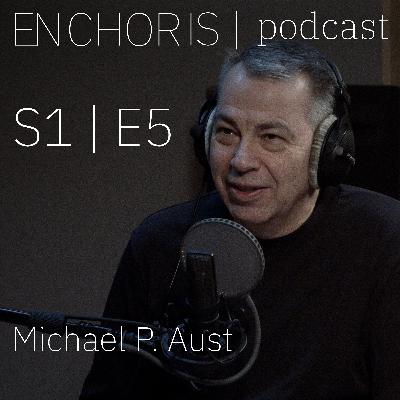
This month we are talking with Michael P. Aust who is a producer, director and the co-founder of the Soundtrack Cologne Festival. We discuss how he entered the film industry and how he navigated the changes and trends over the past 30 years as a producer. Having a diverse portfolio is crucial to surviving the challenges of an ever changing industry.We discuss the effect the AI explosion has had on the composing community and what challenges it has created for artists. We address the difference between AI and generative AI and explore the positive and negative aspects they bring to composing. Can AI be trained ethically ensuring proper reimbursement for copyright holders? What do composers, publishers, collecting societies and AI companies have to do to create a fair environment that respects copyright and intellectual property by creating transparent rules for training AI data sets? What are the legal risks of using generative AI in one's own composition?In the past years Soundtrack Cologne has created an AI Focus stream at the conference that provides insights, legal advice and room to discuss how AI affects music composition. Additionally back in 2024 they did a survey that analysed how AI is being used in the industry by composers and how it affects their motivation to create and work. https://soundtrackcologne.de/ai-focus... We go beyond the misconceptions about AI and discuss what tools composers are using to enhance their workflow and creativity. What tools are popular among the community and what are the benefits of using them. Michael P. Aust suggests that composers could train their own decentralised AI based on their own material and later monetise on that by selling it to a composer after retiring who will continue their legacy.Soundtrack Cologne was a catalyst for a lot of copyright initiatives and composers associations being funded and created a collaborative ecosystem where composers learned to share experience and work together as a community and do lobbying. We discuss the importance of festivals where people meet and the effect it has both on the industry and also the opportunity they provide for composers and artist to build up their skill set beyond composing. Additionally the festival has provided politicians insight and a frame to understand the industry and its challenges better.We discuss the challenges of keeping a festival alive and how financing by the state, city and sponsors has to be stable and predictable to make it sustainable. Festivals provide the framework for the industry to grow and provide composers the opportunity for life long training and expanding their skillset. There is no substitute for this type of work in the industry.Read more about Soundtrack Cologne at https://soundtrackcologne.de/

On this months podcast we welcome Josef Fuchs from Jokifu Coaching to talk about being an artist, finding your own voice and navigating the professional side of the performing industry.He shares his personal journey from Tirol Austria, where he discovered sound and singing as a medium of expression and experimentation to Salzburg where he dove into the classical music scene and found a new language to explore. Having been a singer, an agent and a casting director gives him a unique perspective on the inner workings of opera houses and music festivals.In his coaching and team-building capacity he strives to provide people an opportunity to discover their voice and develop their personality that feeds the artistic persona. An advocate of Work Sessions instead of auditions, he tries to provide an environment in which a singer can find his footing, experiment and show his personality. Contrary to old fashioned auditions he looks for unique artists and tries to unleash their potential and collaboration skills, focusing both on the needs of a musical piece and the dynamics a cast is built on.Authenticity is the core of his approach! He strongly encourages singers to abandon any preconceived notion of success and embark on a journey of self-discovery and excellence. Finding the right attitude to manage rejection and the complicated power dynamics of stage life are some of the core concepts of his work.We discuss the toll difficult pieces and stagings have on the soul of performers and touch on the sensitive issues of abuse, harassment and power games that are strongly being discussed in the art world since the 1950's. He provides clear guidance about how awareness, self-reflection, boundaries and solidarity with other performers can keep someone mentally healthy and safe. The communal side of music and the transcendent nature of music are in the core of his process. Providing transparency in the audition process and giving people an opportunity to showcase their abilities is key to creating a great production and a creative environment to work in.Josef has the ability to keep it light while addressing every aspect of theatre life and maintaining an objective critical approach on the performing industry. You can find more about his work on the Website of Jokifu Coaching!https://www.jokifu.com/
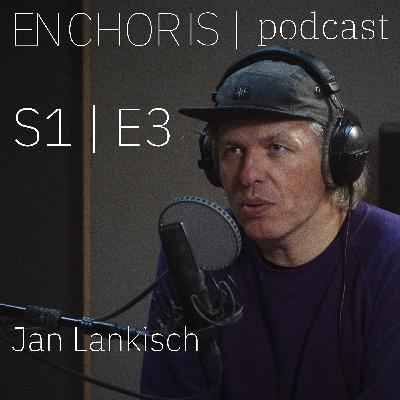
This months guest is Jan Lankisch. We discuss the challenges and the spirit with which he curates the Weekend Festival for the past 14 years. https://www.weekendfest.de/Parallel to curating a festival, he runs a record label and produces records. Jan provides insight into the communal nature of the festival and how actually booking artists you love created long lasting friendships and led to releasing and producing records.https://www.weekendrecords.de/You can read more about Jan Lankisch's work as an artistic director and designer on his website.https://idomanythings.com/about/The study about festivals made by initiative music, miz and livekomm mentioned can be found in german here:https://www.initiative-musik.de/studien/#FestivalstudieRecorded at River Studios Cologne by Nick BenoyFilmed and Directed by Jorgos Katsimitsoulias
In the second episode of the Enchoris Podcast we focus on the challenges of merging orchestral performances with handcrafted live electronic music.We are discussing with Barbara Volkwein, the founder and artistic director of Groove Symphony how combining club culture and symphonic arrangements creates a unique inclusive experience in the concert hall. We talk about her love of electronic and symphonic music and her quest to bring diverse audiences to the concerthall. She shares anecdotes from the past 20 years of the project and explains the complexity of staging a concert with live electronics. What happens when you bring some of the world's best electronic musicians, arrangers and orchestras together?Learn more about Groove Sympony athttps://groovesymphony.deRecorded at River Studios Cologne by Nick BenoyFilmed and Directed by Jorgos Katsimitsoulias
The focal point of the first episode of the Enchoris Podcast are the problems that Music Venues are facing in Europe. We are discussing the findings of a study that our first guest Christof Schreckenberg of Creative Tide conducted together with Enchoris in Munich that analyses the factors that contribute to the existential threat that clubs are experiencing post pandemic. Inflation, rising prices, gentrification, regulations and bureaucracy and creating an environment in which it is very hard for music venues to survive. In this episode we discuss the key findings of the Munich study and anecdotes from the behind the scene interviews that were conducted during the research period. A summary of the study in english can be found by clicking the following link on the creative tide website.https://creativetide.de/essentials-of-the-munich-music-venue-study-2024.htmlWhat became evident in this process is the social impact the music venues have, and the multiple ways in which they improve the quality of life in a city. More than a place for creativity and music to be performed and experienced Music Venues are hubs for creative communities, safe spaces for marginalised groups and a catalyst for the creative economy.Christof Schreckenberg is the CEO of Feldstärken Gmbh https://feldstaerken.de/ and Creative Tide www.creativetide.deRecorded at River Studios Cologne by Nick BenoyFilmed and Directed by Jorgos Katsimitsoulias
Comments


Download from Google Play

Download from App Store
 United States