


 Claim Ownership
English with Rik
Subscribed: 4Played: 7
Subscribe

© Rik Thurnheer
Description
These are free English Lessons.
Whether you would like a lesson about pronunciation, business English, conversational English, or help with a specific English question, you can contact me for live or online lessons by emailing me: englishwithrik@gmail.com
My qualifications include a Masters degree in Education, CELTA English language teaching certification, and over 14 years of experience teaching English.
Whether you would like a lesson about pronunciation, business English, conversational English, or help with a specific English question, you can contact me for live or online lessons by emailing me: englishwithrik@gmail.com
My qualifications include a Masters degree in Education, CELTA English language teaching certification, and over 14 years of experience teaching English.
22 Episodes
Reverse
The most commonly used tense in English is the present simple tense.In this podcast, you will not only learn when to use the present simple and how to form it, you will also get some practice forming the tense as I guide you in an activity.
This is a intermediate level lesson about what the most common pronouns are and how to use them. Personal, objective, subject, and object pronouns are all discussed.
There might even be a little bit of comedy :-)
These two sounds are similar but knowing how to hear and pronounce each of these sounds differently will help you sound more like a native English speaker - and be better understood.
Put your headphones or earbuds on and learn how the sounds are made, then practice what you've learned with some time to pronounce them.
What are the two ways can you pronounce the word THE?
What are the three situations for pronouncing THE in these different ways?
The answers are in this lesson.
Modal Auxiliary Verbs are so commonly used in English, it's hard to imagine speaking or writing without them.
In this lesson, you will learn how to pronounce and use the verbs: can, could, may, should, and should. These modal auxiliaries will be used to express politeness, permission, requests, possibility, and advice.
You will learn the grammar rules for using these verbs in different tenses and when you can and can't use them.
Dive in and feel the joy of modal auxiliary verbs!
This lesson is about listening to and recognizing the ɚ sound in paragraphs along with other words, and also listening to the individual ɚ-sound words by themselves.
You will also get the chance to listen to and repeat some ɚ-sound words.
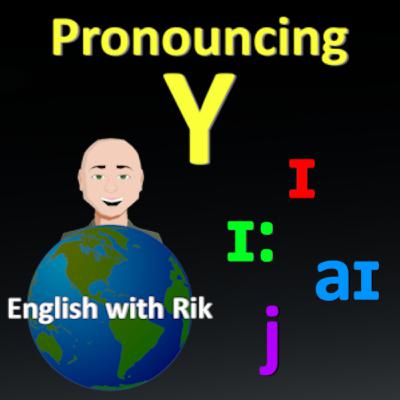
The letter Y can be a consonant or vowel and can be pronounced in four main ways. Start this lesson to learn how to make the Y sounds and when to pronounce it in those different ways.
The ʃ and s sounds are quite similar, and this lesson will help pronounce each of these sounds so they are different from each other - as they should be.
There is a full transcript available in the downloads area as well as handouts about the main points for making these two sounds.
You can also download the audio file that will guide you in pronouncing words that are in pairs, one word with the s sound and the other word with the ʃ sound in it.
If you've ever struggled trying to make the b or v sounds, this lesson will help you!
In the lesson, you will learn how to make the b and v sounds.
In this lesson you will learn how and when to pronounce the T in five different ways.
Have fun with the amazing letter T!
English-speaking people use sarcasm often, and knowing how to use it can take your English skills up a level.
This lesson will explain, demonstrate, and prepare you for using this fun form of humour.
For full lessons and more lessons subscribe at:
https://www.patreon.com/EnglishwithRik

If you are struggling with phrasal verbs, this is an introduction to why you should know them, how to use them, and some great examples and tips.
Learn about the past simple tense.
In this lesson, you will learn why you should use the past simple tense, how to form it, what some of the most common irregular past simple tense verbs are and how to pronounce them.
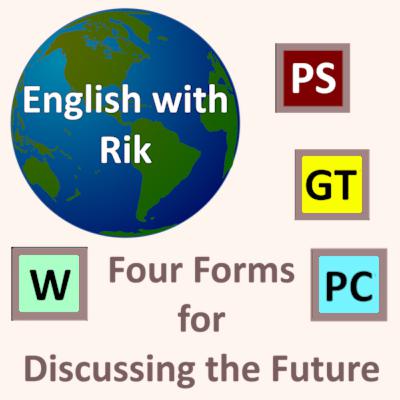
This lesson is about using four forms of the future to express your ideas either when you are speaking or writing about the future.
The four forms in this lesson are: the present simple tense, going to, the present continuous tense, and will and shall.
This introduction is about who I am, what the podcast is about, and why you should listen if you are learning English.
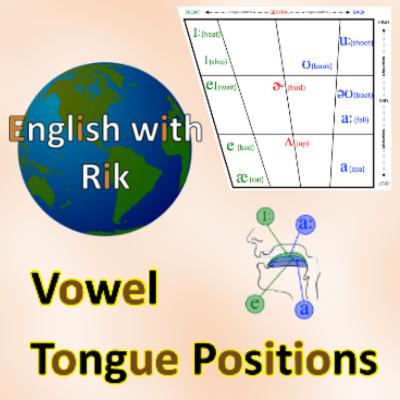
This podcast is about how to position your tongue to pronounce vowel sounds well. Where your tongue is positioned is such an important part of making English sounds.
For each vowel sound, your needs to be at the front of your mouth, in the centre, or at the back. You also need to position your tongue low in your mouth, high, or in the middle.
This podcast is easier to follow if you have a vowel chart to follow along with. If you don’t have one, you can find one online by searching for VOWEL CHART. If you subscribe to my podcasts as a patron, you can download the chart that's used in this podcast.
You can find me on Patreon as English with Rik.
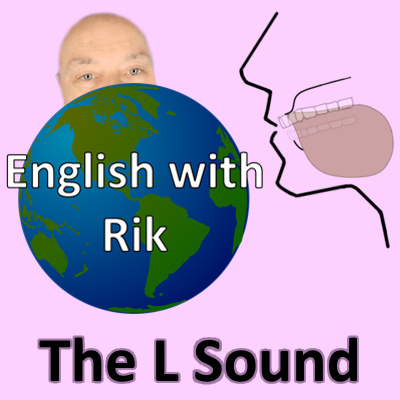
This lesson is about using your lips, tongue, and throat to make the lll sound. You can do this!
The letter L can make two sounds; there is a dark L and a light L. This lesson is about pronouncing both of the sounds of this letter so you can sound more like a native English speaker.
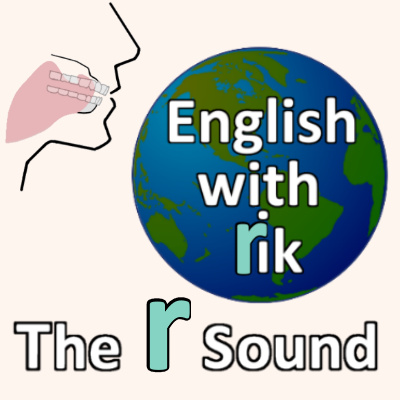
In this lesson, you will learn how to use your lips, your tongue, and your throat to make the r sound. This is something you can do!
The letter R is the letter that represents the r sound and because it’s so common, pronouncing the sounds of this letter will make you more clearly understood in English.
This lesson is about the pure American r sound.
In some languages here and there don’t mean the same thing as they do in English. If you use these words incorrectly, people probably won’t understand the location you’re talking about accurately. This lesson will help you understand how to use two words.
Are you looking for help pronouncing English vowels, or maybe you’re having trouble pronouncing the R sound? If you are, this lesson is for you.
In this lesson you will learn about the vowels, which are: A, E, I, O, U, and sometimes Y. You’ll also learn a bit about the R because some people consider it a semivowel.
This lesson progresses from the easiest vowel sounds to the most difficult, just like a ladder that’s easy to climb at the bottom and more difficult at the top.

Comments

Download from Google Play

Download from App Store
 United States