


 Claim Ownership
Ethical Schools
Subscribed: 10Played: 615
Subscribe

© 2019 Ethical Schools
Description
Amy and Jon talk with educational innovators about creating ethical learning environments, helping students overcome the effects of trauma, and empowering young people to make change. Tune in weekly.
245 Episodes
Reverse
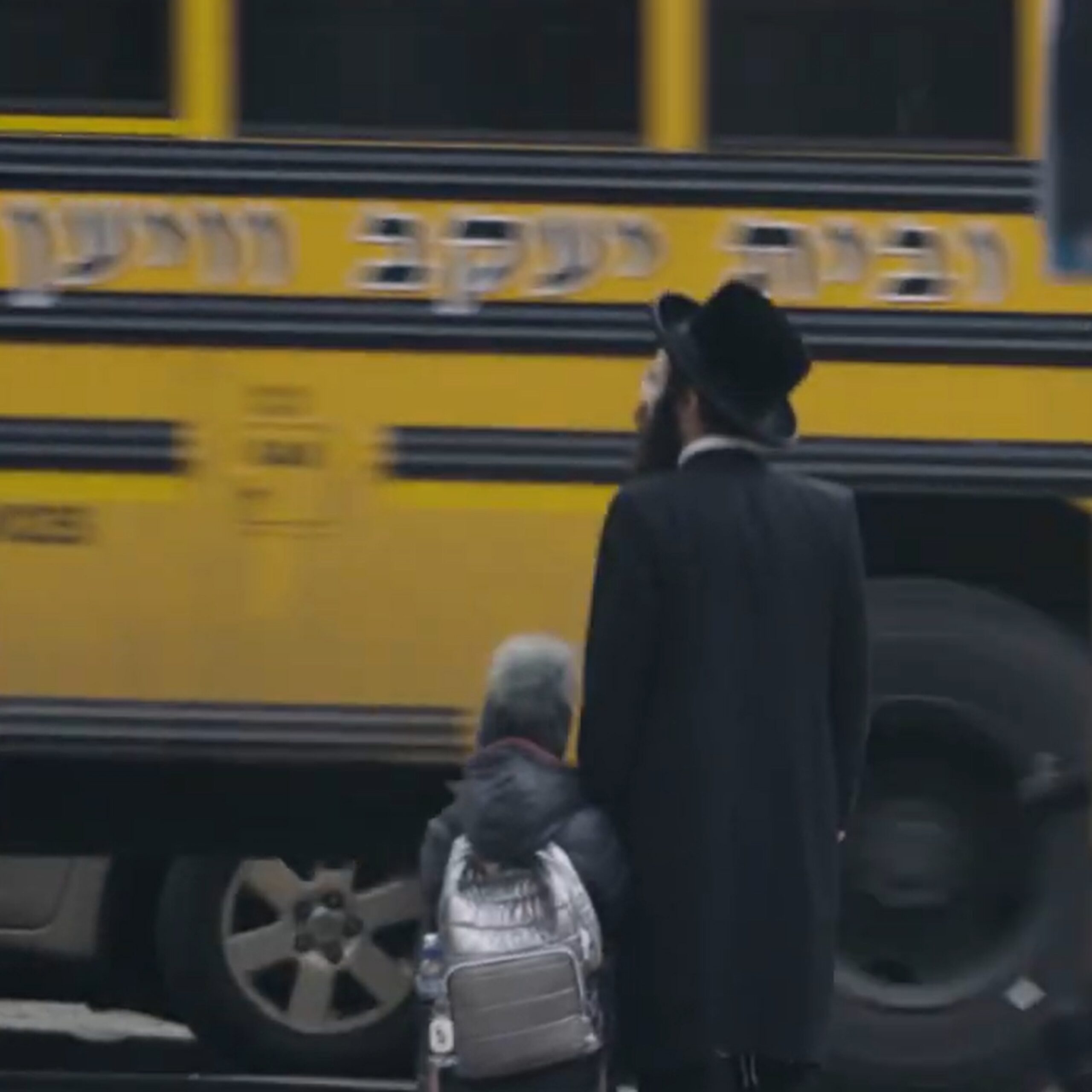
We speak with Elana Sigall and Joe Kolman, creators of "Unorthodox Education," a documentary exposé of NYC's ultra-Orthodox yeshivas. Each year, thousands of students graduate from these schools with little to no secular education. They are unprepared for college, careers, or life outside their insular communities. Because of their communities' extraordinary political power, elected officials are complicit in failing the students. The film tells the stories of schools, students, the fight to hold the schools accountable, and the obstacles to be overcome.
Overview
00:00-00:47 Intros
00:47-06:21 Initial involvement in “Unorthodox Education”
06:21-09:21 Core subjects missing from yeshivas’ curriculum
09:21-09:59 Number of yeshivas in New York State
09:59-11:54 Differences in girls’ and boys’ education
11:54-14:50 Yeshivas’ justification for not providing secular education
14:50-15:37 Strategy for making sure students remain in the community?
15:37-18:59 How the refusal to provide secular education is maintained
18:59-22:17 Reasons for increased refusal over time to offer secular education
22:17-25:09 Experiences and struggles of students who want a secular education and those who leave the community
25:09-25:55 Ages at which people leave the community
25:55-26:46 Role of New York State Education Department
26:46-28:51 Politicians’ actions and justifications
28:51-30:48 Fears of accusations of antisemitism
30:48-33:17 Obstacles in funding and distribution of the film
33:17-35:44 Current state of things
35:44-37:44 What listeners can doResources
Learn more about the documentary, its filmmakers, and upcoming screenings on the official Unorthodox Education website.
The filmmakers also discuss the work of Yaffed, an organization advocating for the right of children in Hasidic and Haredi schools to receive an adequate secular education.
Transcript[00:00:15] Jon M: I'm Jon Moscow.
[00:00:17] Amy H-L: And I'm Amy Halpern-Laff. Our guests today are Elana Sigall and Joe Kolman, the producer and director, respectively, of Unorthodox Education, a documentary film about the fight to ensure that students in ultra-Orthodox yeshivas in New York City receive a basic secular education, and the current state of the battle. Welcome, Elana and Joe.
[00:00:40] Joe K: Thank you.
[00:00:41] Elana S: Thank you very much. Thanks for having us.
[00:00:44] Jon M: How did each of you become involved with this film?
[00:00:47] Joe K: Well, I guess I should start because I was ... It started with me. I learned that a lot of Jewish kids were not getting the secular education they needed in these ultra-Orthodox schools, and I was kind of shocked by that because my mother had gone to a yeshiva in Tel Aviv when she was growing up and got a religious education, but also got a really good secular education, and later went on to law school. The idea that there was some conflict between religious practice and secular education seemed crazy to me, and was the rationale for denying these kids in New York City and upstate New York this basic education. So I was furious, and I started learning more and more about it.
And as a journalist, I got involved and decided to do a documentary. That was 2020. Originally, I thought we'd do a short video where we would interview a few people and explain the situation, and I did that. Right before COVID began, we finished this eight-minute documentary, and people said they didn't understand what I had done because they couldn't understand why people would deprive their own kids of an education...

We welcome back Dr. Kym Vanderbilt of Lehman College, this time joined by her former students, Kelsey Nova and Cyndhia Silvero. We discuss how Dr. Vanderbilt’s graduate students create case studies based on ethical challenges they themselves have faced. Ms. Nova and Ms. Silvero share their own case studies. We also discuss the ongoing struggle for fair compensation for early childhood educators, especially assistant teachers and education directors.
Overview00:15-00:40 Intros
00:40-02:26 Objectives in assigning scenarios of ethically complex situations
02:26-05:06 Kelsey’s ethical dilemma scenario
05:06-06:14 Potential solutions
06:14-08:13 Cyndhia’s ethical dilemma scenario
08:13-09:14 Improving children’s experiences at more elite schools
09:14-10:37 Making schools more sensitive to cultural diversity
10:37-14:51 Does the State encourage teacher ed classes that discuss ethical issues
14:51-15:25 Penalty Kick video promo
15:25-17:00 Codes of ethics
17:00-23:28 Issues to resolve for high quality early childhood programs
23:28-26:55 Special ed issues
26:55-28:58 Why do these issues exist?
28:58-32:52 Denials/evaluations
32:52-39:50 Issues for early childhood staff as employees:
Autonomy vs compliance, staff pay and disparities
39:50-42:38 “Making this a career that people can stay in.”
42:38-43:50 Outro
TranscriptClick here to see the full transcription of this episode. Soundtrack by Poddington Bear

Jon talks with Dr. Beverly Falk of the High Quality Learning Project, Lauren Monaco, New York City pre-K teacher, and experienced educators Gil Schmerler and Renee Dinnerstein. They discuss the centrality of play to children’s development as confirmed by recent research on how the brain works. A “play-in” in Manhattan calls for greater emphasis on play in early childhood classes.
Overview00:15-01:17 Intros01:17-02:53 Play’s defining features02:53-03:22 Defining early childhood03:22-08:46 How children learn and develop08:46-11:46 How central has play been historically to early childhood education11:46-24:15 Conflict between free play and academics in the early childhood education field24:15-28:36 Current status of play in early childhood education in NYS and NYC28:36-29:10 Penalty Kick video promo29:10-31:36 Patterns in community-based centers and schools31:36-36:06 What should NYS and NYC do to reinstitute proper levels of play?36:06-39:41 NYCplays.org: Organizing: How listeners can get involved, 9/26 Play-in39:41-41:08 Importance of public/education officials speaking up41:08-42:07 Play and explicit literacy instruction should be paired42:07-44:37 Parents getting mixed messages44:37-45:47 You can’t rush neurological development45:47- OutroTranscript
Click here to see the full transcription of this episode. References
Protectors of Play (POP) website: nycplays.org
Join NYC Plays’ free, all-ages Play-In with games, activities, and advocacy for play in schools: September 26, 12–2 pm, at Manny Cantor Center (197 East Broadway, 6th floor, NYC). Register here!
The High Quality Early Learning Project
(Podcast) February 20, 2026: NYC Kindergarteners are Being Diagnosed with Play Deprivation & We Can Change It
(Podcast) February 27, 2026: The Proposal to Fix Kindergarten that NYC's Mayor Needs to Hear
Renee Dinnerstein's book "Choice Time: How to Deepen Learning Through Inquiry and Play"
Soundtrack by Poddington Bear

We share brief presentations from the fifth “Global Saturday Salons” that Ethical Schools is sponsoring with three international partners. Nando Rodriguez is the Senior Manager for Environmental Programming at the Brotherhood/Sister Sol (BroSis) in Harlem, NYC. Camila Salcedo, 16, is a sophomore at Thurgood Marshall Academy, and Elias DeLeon, 17, is a junior at KIPP Charter School. Both have been members of the BroSis community for several years. Together, they explore what happens when young people are trusted with real responsibility, meaningful relationships, and hands-on experiences in nature.
This salon series, Learning to Citizen: Tales of Youth Voice, Agency, and Care, honors learners and educators who are already practicing care, enacting citizenship, and learning how to regenerate their communities and their world. Discover more at edfortheworldwewant.net.
TranscriptionClick here to see the full description of this episode. References
To view Nando's slides presented during the Salon, [access the presentation here].
Want the full conversation? Watch the complete Salon, including the plenary session, on YouTube.
Soundtrack by Poddington Bear.

Jon speaks with Dr. David Penberg, who ran the Liberty Partnership Program at Bank Street College in the 1990s, and two of the participants, Madelyn Baez, and Tara Crichlow. Three decades later, Madelyn, Tara, and David explain how the program changed the trajectory of their lives. The Liberty Partnership was created as a college prep intervention for underserved and marginalized middle school students. For the participants, it was a safe place of "uncomfortable empowerment" where their opinions were taken seriously in a simultaneously supportive and challenging environment.
Overview00:00-00:45 Intro
00:45-01:56 Liberty Partnership Program (LPP) origin and description
01:56-03:36 What LPP felt like to Madelyn and Tara
03:36-07:03 LPP structure and goals
07:03-09:40 How Madelyn and Tara joined
09:40-14:42 How experiences in the program were different from school
14:42-19:10 Environmental conversations
19:10-19:24 Trip to China
19:24-20:49 Asset-based program; not about “fixing” the young people
20:49-23:03 Opportunities and relationships
23:03-26:04 “Uncomfortable empowerment”
26:04-26:50 Options, opportunities, exposure, experience
26:50-30:37 Bank Street as a place of safety and empowerment during time of demonization
of young people of color after Central Park jogger case
30:37-35:03 Impact on students’ relationships with families and friends
35:03-37:02 Impact on David’s life
37:02-37:52 Remembering youths who died
37:52-40:51 The larger Bank Street environment
40:51-42:15 The “pure love” of the LPP community
42:15- OutroTranscriptClick here to see the full transcription of this episode. Soundtrack by Poddington Bear

Comments

Download from Google Play

Download from App Store
 United States