


 Claim Ownership
European Crucible Podcast
Subscribed: 1Played: 22
Subscribe

© European Crucible, Heriot-Watt University 2024 - 2025
Description
Listen to broadcaster, Quentin Cooper, as he interviews team members from 5 pilot projects that received seed funding and learn how their multidisciplinary research activities were initiated and enabled through their participation in European Crucible. Projects address medical, health, environmental, social, legal and technological challenges. The aim of the European Crucible is to create and develop a pan-European network of future research leaders who have enhanced knowledge, contacts and capacities to collaborate more effectively with wider impact.
12 Episodes
Reverse
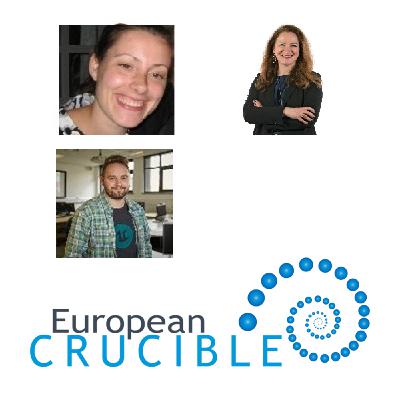
In this podcast, we hear the Crucible reflections of 3 more Scottish Crucible Alumni in conversation with Quentin Cooper. Featuring Prof Emilie Combet Aspray, Prof Mirela Delibegovic and Prof Robin Sloan. Learn more about how their research and careers have progressed in the years since undertaking Scottish Crucible. Prof Emilie Combet Aspray, University of GlasgowScottish Crucible Alumnus 2011Emilie is Professor of Human Nutrition and Director of the Scottish Alliance for Food in the School of Medicine, Dentistry & Nursing, Human Nutrition at the University of Glasgow. She investigates how food, including whole foods, specific nutrients, and the way we eat, impacts on health throughout life, from the time peri-conception to old age. Prof Mirela Delibegovic FRSE, University of AberdeenScottish Crucible Alumnus 2009Mirela is a pharmacologist/biochemist and Director of Aberdeen Cardiovascular and Diabetes Centre. She is also Dean for Impact and Engagement and was awarded the distinguished Regius Professor of Physiology at the University of Aberdeen Prof Robin Sloan, Abertay UniversityScottish Crucible Alumnus 2015Robin is Professor of Game Design and Culture based in the Faculty of Design, Informatics and Business at the University of Abertay Dundee. He studied as a computer artist before progressing into the games industry, where he worked in both art and post-production teams.

In this podcast, we hear the Crucible reflections of 3 more Scottish Crucible Alumni in conversation with Quentin Cooper. Featuring Prof Janine Illian, Prof Stephen Wallace and Dr Laura Wyness. Learn more about how their research and careers have progressed in the years since undertaking Scottish Crucible.Prof Janine Illian, University of GlasgowScottish Crucible Alumnus 2009Janine is Head of Statistical Sciences within the School of Mathematics & Statistics at the University of Glasgow. Her research includes statistical modelling with applications in biological, environmental and other systems.Prof Stephen Wallace, University of EdinburghScottish Crucible Alumnus 2017Stephen is Professor of Chemical Biotechnology and holds a UKRI Future Leaders Fellow at the University of Edinburgh. His experiences include periods of research at the University of Cambridge, CalTech, MIT and Harvard.Dr Laura Wyness, Registered Nutritionist and Nutrition WriterScottish Crucible Alumnus 2014Laura is an award-winning freelance nutritionist helping to put science based nutrition advice into practice, specialising in eating well for menopause, workplace wellness and nutrition communications.
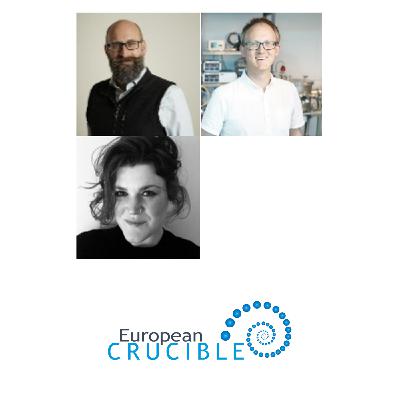
In this podcast, we hear the Crucible reflections of 3 Scottish Crucible Alumni in conversation with Quentin Cooper. Featuring Prof. Tim Drysdale, Prof. Stuart Reid, and Dr Heather May Morgan. Learn more about how their research and careers have progressed in the years since undertaking Scottish Crucible. Scottish Crucible Alumnus 2010: Prof Tim Drysdale, University of EdinburghTim holds the Chair of Technology Enhanced Science Education and is Director of Strategic Digital Education in the School of Engineering at the University of Edinburgh. Tim is recognised for his pioneering work in remote laboratories for undergraduate engineering teaching and is founder of Practable.io. Scottish Crucible Alumnus 2011:Prof Stuart Reid, FRSE, University of StrathclydeWith a background in physics, Stuart is head of Department and Royal Society Industry Fellow in Biomedical Engineering at Strathclyde University. Stuart heads a multidisciplinary team working across medical and astrophysics/quantum research areas. He is co-inventor of "nanokicking", where nanoscale vibrations are used to persuade stem cells to turn into bone in the lab. Nanokicking using wearable vibration devices have been trialled in partnership with the Scottish Centre for Innovation in Spinal Cord Injury at the Queen Elizabeth University Hospital. Scottish Crucible Alumnus 2015:Dr Heather May Morgan, University of AberdeenHeather is Dean for Enterprise and Innovation and a Senior Lecturer in Applied Health Sciences in Aberdeen. Heather is a multidisciplinary social scientist whose formal training spans law, French language, forensic medicine, philosophy, gender studies, social research, sociology, criminology and health services research.
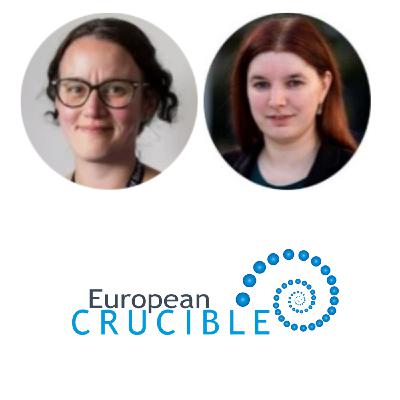
Project: “Nanoparticles and the Human Body” Nanoparticles are of interest to many areas of physics, and can also be used as carriers for the safe and effective administration of drugs, or for theranostics (diagnostic and therapeutic capability in a single therapy) purposes, yet they can also interact with biological systems and lead to unwanted adverse effects. The objective of this project is to revolutionize the toolbox of analytical chemistry techniques in order to investigate nanoparticle interactions with the human body and its impact on medicine safety.The team for this Societal Challenge included expertise in Chemistry, Physics and Biomaterials. In this episode we hear from Dr Zahara Rattray and Dr Jessica Steinlechner. Dr Zahra Rattray, Chancellor’s Fellow and Senior LecturerInstitute of Pharmacy and Biomedical Sciences, University of Strathclyde Dr Jessica Steinlechner, Assistant ProfessorDepartment for Gravitational Waves and Fundamental Physics at Maastricht University
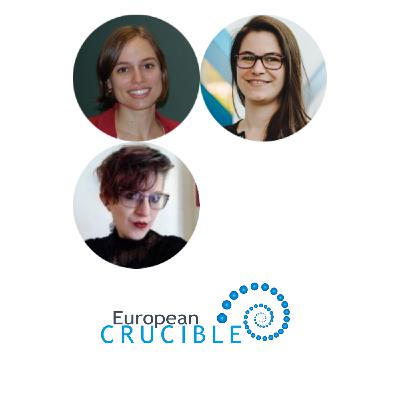
Project: “Science and Human Histories”Has public confidence in the ethics and capacities of science declined in recent times? Topics such as climate change, vaccines, telecommunications, food safety, and most recently COVID-19 have been the subject of debate. This project examines one of the key factors which lies behind the conflict between science and its critics: specifically, the way in which science is, and has been, communicated to society.The team expertise for this Societal Challenge is in Museum Studies and Physics:Dr Jennifer Walklate, Lecturer in Museum Studies,Department of Anthropology, University of AberdeenDr Veronica Gonzalez-Fernandez, Assistant Professor in Physics, Department of Optics, Universidad Complutense de Madrid Dr Antonija Grubisic-Cabo, Assistant Professor in PhysicsZernike Institute for Advanced Materials, University of Groningen
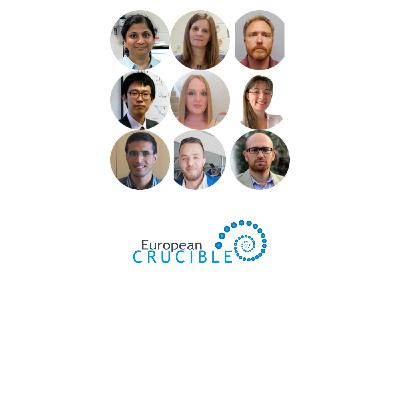
Project: "rECOver"Many green technologies (e.g. batteries and hydrogen) rely on critical elements, materials, and supply chains that have negative environmental impacts. A collider event brought together policymakers, industry partners and specific actors with influence over the use and development of 'green' technology. A collection of qualitative and scientific data regarding the existing gaps in the thinking are being addressed.The Team expertise for this Energy and Environment Challenge is in Robotics, Energy, Chemistry, Mechanical Engineering, Psychology and Law.Dr Karen Donaldson, Project Manager, The National Robotarium, Heriot-Watt UniversityDr Guanchen Li, Lecturer in Systems Power & Energy, James Watt School of Engineering, U. GlasgowDr Katarzyna Kowal, Lecturer in Applied Mathematics, School of Mathematics and Statistics, U. GlasgowDr Gearoid Millar, Senior Lecturer in Sociology, U. AberdeenDr Caroline Kirk, Senior Lecturer, School of Chemistry, U. EdinburghDr Aruna Ivaturi, EPSRC Fellow, Chancellor's Fellow and Senior Lecturer, Department of Pure and Applied Chemistry, U. Strathclyde.Dr Mourad Nachtane, Associate Professor at Arts et Métiers, Grande Ecole of Technology, Metz, FranceDr Mohamed Jebahim, Associate Professor at Arts et Métiers, Grande Ecole of Technology, Metz, FranceDr Onur Çağdaş Artantaş is a Scholar in the Department of Administrative Law, Hacettepe University, Ankara, Türkiye
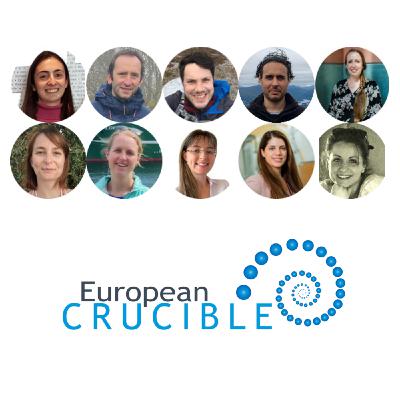
Project: MIRRORCoastal marine habitats are biodiverse ecosystems providing a wealth of social, economic and cultural benefits but are under immense human pressure because of coastal development, polluting land run off and climate change. The project aim is to increase coral settlement rates by actively attracting colonisation via a substrate's magnetic properties.The team expertise for this Environmental Challenge is in Marine Biology, Chemical Physics, Ecology and Environmental Science, Maths and StatisticsDr Ryan Pereira, Associate Professor, Lyell Fellow, Lyell Centre, Heriot-Watt UniversityDr Adriana Tavares, Chancellor's Fellow in Positron Emission Tomography Imaging, U. EdinburghDr Katarzyna Kowal, Lecturer in Applied Mathematics, School of Mathematics and Statistics, U. GlasgowDr Andrew Ward, Chancellor's Fellow in Civil and Environmental Engineering, U. StrathclydeDr Ben Swallow, Lecturer in Statistics, School of Mathematics & Statistics, U. St AndrewsDr Heidi Burdett, Associate professor in Ecology and Environmental Science, Umeåm, SwedenDr Simona Aracri, Permanent Researcher at the National Research Council of Italy, Institute of Marine EngineeringDr Julia Calderwood, Researcher, Marine Institute, Ireland Dr Martha Vardaki, Research Fellow in Chemical Biology at the National Hellenic Research Foundation, Greece Dr Eteri Svanidze, Research Fellow, Max-Planck Institute for Chemical Physics of Solids, Dresden, Germany With Project Partner, Dan Exton, at Operation Wallacae
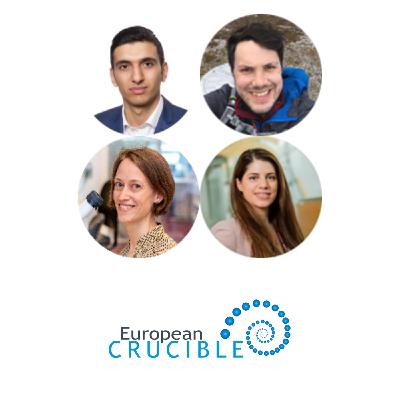
Project: "AUTODOSE"Autophagy is a vital cellular process, in which dysfunctional components of the cell are removed and the building blocks recycled for reuse. Defects in the functioning of this system have been shown to have important links with various diseases, including cancer and neurodegeneration. The project will shed light on autophagy pathways using Raman Spectroscopy and fluorescence techniques from fat body tissue of Drosophila larvae.In this episode we discuss the AUTODOSE project. The team expertise for this Medical Challenge is in Biology, Biophysics, Maths, Statistics, and Electrical Engineering.Dr Ben Swallow,Lecturer in Statistics School of Mathematics & Statistics,U. St AndrewsDr Helene Knævelsrudm,Associate Professor,University of Oslo, NorwayDr Martha Vardaki,Research Fellow,National Hellenic Research Foundation, Athens, Greece
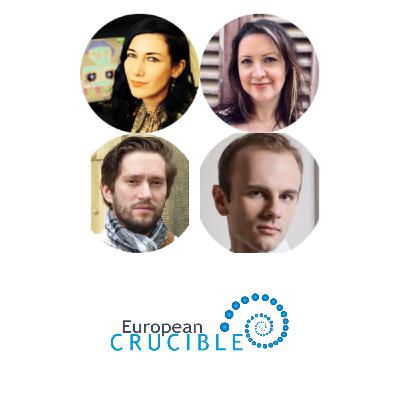
Project: "MAVKA"Children are being traumatised by the violence in Ukraine and are in need of safety. Several approaches can provide support for victims of trauma conflict. Storytelling allows us to make sense of information in an organised way whilst combining elements of play. The aim of the project is to develop a 'serious game' providing children and young people affected by war and conflict with an opportunity to engage in mixed media to process emotion and trauma.The Team expertise for this Societal Challenge is in Social Sciences, Literature, and Computer Science.Dr Mel McKendrick, Associate Professor in Psychology, Heriot-Watt UniversityDr Carolyn Jess-Cooke, Reader in Creative Writing, U. GlasgowDr Mathieu Chollet, Lecturer in Healthcare Technologies, School of Computing Science, U. GlasgowDr Igor Tereshcenko, Assistant Professor, National Technical University of Ukraine
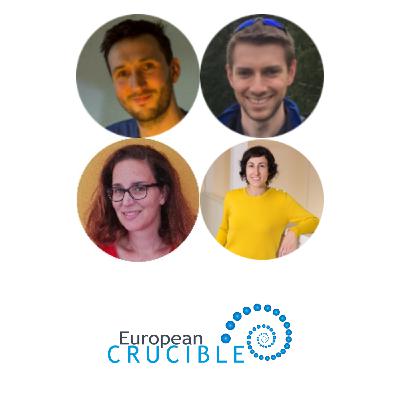
Project: "UV-Go"Despite the standard use of spectroscopy to determine the composition of water in the laboratory and in the field, UV/visible spectrometers are expensive and bulky. This project encompasses the development and testing of new low cost and sensitive UV sensors for water composition quantification.The team expertise for this Environmental Challenge is in: Physics, Chemistry, Experimental Hydrology, Material and Environmental Science Dr Fabien Massabuau,Chancellor's Fellow,Department of Physics, U. Strathclyde Dr William Peveler,Lord Kelvin Adam Smith Fellow,School of Chemistry, U. Glasgow Dr Nathalie Lidgi-Guigui,Associate professor,Université Sorbonne Paris Nord, France Dr Núria Martínez-Carreras,Senior Research and Technology Associate,Luxembourg Institute for Science and Technology (LIST), Luxembourg

Project: "UV-Go"
Despite the standard use of spectroscopy to determine the composition of water in the laboratory and in the field, UV/visible spectrometers are expensive and bulky. This project encompasses the development and testing of new low cost and sensitive UV sensors for water composition quantification.
The team expertise for this Environmental Challenge is in: Physics, Chemistry, Experimental Hydrology, Material and Environmental Science
Dr Fabien Massabuau,Chancellor's Fellow,Department of Physics, U. Strathclyde
Project: "UV-Go"Despite the standard use of spectroscopy to determine the composition of water in the laboratory and in the field, UV/visible spectrometers are expensive and bulky. This project encompasses the development and testing of new low cost and sensitive UV sensors for water composition quantification.The team expertise for this Environmental Challenge is in: Physics, Chemistry, Experimental Hydrology, Material and Environmental Science Dr Fabien Massabuau,Chancellor's Fellow,Department of Physics, U. Strathclyde Dr William Peveler,Lord Kelvin Adam Smith Fellow,School of Chemistry, U. Glasgow Dr Nathalie Lidgi-Guigui,Associate professor,Université Sorbonne Paris Nord, France Dr Núria Martínez-Carreras,Senior Research and Technology Associate,Luxembourg Institute for Science and Technology (LIST), Luxembourg
Comments


Download from Google Play

Download from App Store
 United States