


 Claim Ownership
Everyday Ambassador
Subscribed: 11Played: 120
Subscribe

© Annelise Riles
Description
The strategies global leaders use to negotiate impasses and bridge divides may seem complicated. But when you break them down, they can turn out to be quite simple. From giving gifts to encouraging play to creating space for collaboration, Northwestern University law professor Annelise Riles shares surprising stories of how seemingly small gestures can bring about big change. Follow Everyday Ambassador to hear how you can use these tools to shape your community and your world. Everyday Ambassador is produced by FP Studios with support from the Humboldt Foundation.
anneliseriles.substack.com
anneliseriles.substack.com
32 Episodes
Reverse
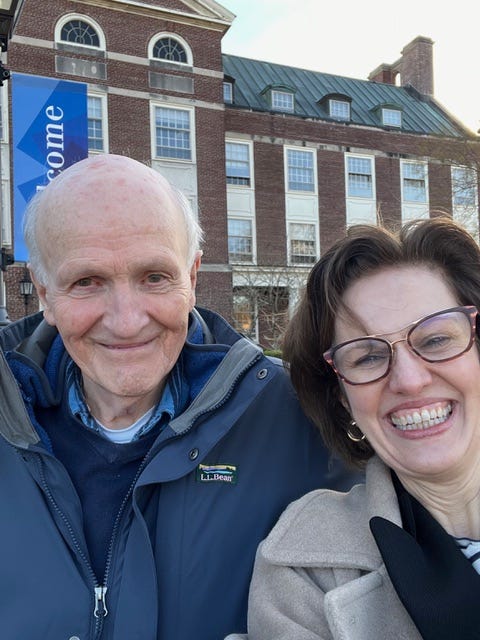
In this episode, I sit down with Dr. Frank von Hippel—physicist, diplomat, policy-maker, architect of disarmament treaties, and co-founder of Princeton’s Program on Science and Global Security. One of the most influential voices in the history of nuclear arms control, von Hippel worked hand-in-hand with Soviet scientists to reduce the nuclear arsenals of both countries. He’s sounding the alarm about the state of nuclear diplomacy today. Von Hippel explains what’s at stake when policymaking loses its scientific foundation—and how to rebuild.Von Hippel reflects on a career spent navigating the space between scientific expertise and geopolitical brinkmanship: from citizen-driven movements that helped shift U.S. nuclear posture in the 1980s, to negotiating with Gorbachev, to the ongoing dangers posed by nuclear modernization and renewed great-power rivalry. Von Hippel shows us not only how policy changes happen, but how fragile progress can be.The conversation touches on the great questions of today’s nuclear landscape. What does deterrence theory assume about human behavior? How do weapons labs think about nuclear testing? Why has China altered its long-held posture of nuclear minimalism? And what does it mean to rebuild a knowledge-based policy system in an era of deep political polarization?Von Hippel also discusses the vulnerabilities of civilian nuclear power systems, lessons from Fukushima, and the long, troubled legacy of plutonium reprocessing—an issue that continues to shape global nuclear security debates far beyond the weapons complex.This episode is a reminder that experts, citizens, and institutions all play a role in reducing nuclear dangers. Progress has never been inevitable—but neither is backsliding. As von Hippel notes, periods of cynicism and misinformation have historically been followed by stronger public engagement and reform. The task now is to stay engaged long enough for that next turn.Don’t miss an episode! Subscribe now to get perspectives and analysis on peace, security and disarmament you won’t find elsewhere, plus bonus interviews like the one below. Timestamps00:00 – The return of Cold War–era tensions and the shrinking space for science-based policymaking02:18 – Indiscriminate deregulation and the challenge for the next generation of scientist-advocates05:22 – Star Wars, ballistic missile defense, and how scientists reshaped U.S.–Soviet perceptions of nuclear war09:54 – Behind the scenes: von Hippel’s advisory role with Gorbachev and the push for a nuclear test moratorium13:39 – The road to the Comprehensive Test Ban Treaty and why testing still matters today16:40 – Deterrence theory, risks of accidental war, and whether nuclear weapons are truly necessary for stability20:57 – China’s evolving nuclear posture and the complexities of three-way deterrence25:55 – No-first-use policy debates and how U.S. allies shape American nuclear doctrine27:46 – Civilian nuclear power: Fukushima lessons, regulatory capture, and spent-fuel vulnerabilities33:35 – Plutonium reprocessing, proliferation risks, and the political economy of nuclear wasteBonus Content for All Subscribers: Frank von Hippel on Family Legacy, the Manhattan Project, and Becoming a Citizen-ScientistIn this extended conversation, von Hippel shares a personal account of his grandfather’s role in the Manhattan Project—and how earlier experience with chemical weapons shaped his views on the moral obligations of scientists. He reflects on his own path from particle physics to public policy during the Vietnam War, and the rise of student-driven scientific activism that helped reshape congressional and executive science advising. These stories offer a rare, intimate look at how individual scientists navigate the responsibilities that come with knowledge and influence. This is a public episode. If you'd like to discuss this with other subscribers or get access to bonus episodes, visit anneliseriles.substack.com/subscribe

Annelise Riles speaks with historian Elisabeth Roehrlich about the origins, evolution, and modern challenges of the International Atomic Energy Agency. Together they explore how the IAEA balances its dual mandate to promote civilian nuclear technologies while preventing the spread of nuclear weapons, and why its work remains both technical and deeply political. Roehrlich offers historical insight into today’s debates over inspections, nuclear safety, and the future of the global nonproliferation system. This is a public episode. If you'd like to discuss this with other subscribers or get access to bonus episodes, visit anneliseriles.substack.com/subscribe
Dear Friends,Are you one of kind? Seeking to connect with brilliant, engaged people around the world for inspiration, new ideas, and a whole-hearted approach to issues like the economy and trade, disarmament and borders, or the impact of AI and digital platforms? Join us at Everyday Ambassador Salons! Every first Friday of the month, we’re building a “cohort that thinks otherwise” and having fun doing it…Off-the-record conversation with thought leaders about the state of the world outside the silos and beyond the usual political divides. It’s an intellectual shot in the arm to keep you going all month.Hope you can join us!AnnelisePS: Bring a friend and get a 20% discount on membership! Use this code: https://anneliseriles.substack.com/3e18d318More info here: This is a public episode. If you'd like to discuss this with other subscribers or get access to bonus episodes, visit anneliseriles.substack.com/subscribe
For most Americans, nuclear weapons live in the abstract: Cold War history, distant threats, geopolitical chess pieces. But for New Mexicans, the legacy of the atomic age is not theoretical, it’s lived, inherited, and ongoing. In this episode of Everyday Ambassador, we speak with Jay Coghlan, executive director of Nuclear Watch New Mexico, about the deep and often invisible impacts that eight decades of nuclear development have had on the state and its people.Coghlan has spent 30 years working on nuclear policy. The conversation moves from the early days of the Manhattan Project to present-day policy debates, from the lived trauma of uranium miners to the moral and strategic contradictions of modern nuclear modernization. Coghlan begins where the modern nuclear era began: Los Alamos and the Trinity Test of 1945. He recounts how New Mexican communities, Indigenous, Hispanic, rural, became unwitting subjects of the world’s first atomic experiment. Downwinders, ranching families, the Mescalero Apache, and displaced homesteaders were all affected, yet ignored for generations. Compensation, where granted at all, came far too late and in far too small a measure. If the Trinity Test was the first wound, uranium mining was the second. Coghlan details the concentration of uranium extraction on Native lands, particularly the Navajo Nation and Laguna Pueblo, and the long-term health consequences for miners who were misinformed, unprotected, and ultimately abandoned.Hundreds of mines remain open and unremediated, continuing to contaminate water, soil, livestock, and communities. This environmental injustice forms the structural backdrop to New Mexico’s status today as what Coghlan bluntly calls “America’s nuclear weapons colony.”Conghlan strongly criticizes President Trump’s recently floated idea of resuming nuclear weapons testing. From a national security standpoint, Coghlan argues, testing is self-defeating: it would help rival nations “catch up” with U.S. capabilities.Coghlan draws a distinction between minimal deterrence, which requires a small arsenal, and counterforce, which requires thousands of weapons designed for war fighting. Despite public rhetoric focused on deterrence, he explains, U.S. policy continues to embrace counterforce planning.As the strategic landscape shifts from a bipolar world to a multipolar one involving Russia, China, and new technologies like hypersonics and AI, Coghlan warns of escalating risks. Coghlan also describes how he forged a partnership with Archbishop John Wester, a leading moral voice on nuclear disarmament. Coghlan tells the story with humor and candor, reflecting on how secular activism and religious leadership can meet in a shared mission: protecting life. Their work together reframes nuclear disarmament as a challenge to ideological boundaries and partisan assumptions.Episode Timestamps00:00 — Introduction: New Mexico at the center of nuclear history01:17 — Displacement and the forced removal of Hispanic homesteaders04:55 — Lawsuits, cleanup, transparency, and the politics of accountability08:03 — The modernization program and the Non-Proliferation Treaty10:12 — Uranium vs. plutonium weapons and how modern bombs work16:51 — The risks of new weapon designs and the push for production22:27 — Should we worry about resumed testing? Short-term vs long-term risks24:19 — Why testing is dangerous: fallout, cancer, global deposition26:49 — Underground tests and venting; why testing still poses risks30:15 — Deterrence, counterforce, and the modern nuclear arms race33:40 — AI, escalation risks, and the importance of human judgment36:52 — Proposals to hand weapons-grade plutonium to private entities41:01 — Nuclear winter and the pro-life framing of disarmament This is a public episode. If you'd like to discuss this with other subscribers or get access to bonus episodes, visit anneliseriles.substack.com/subscribe
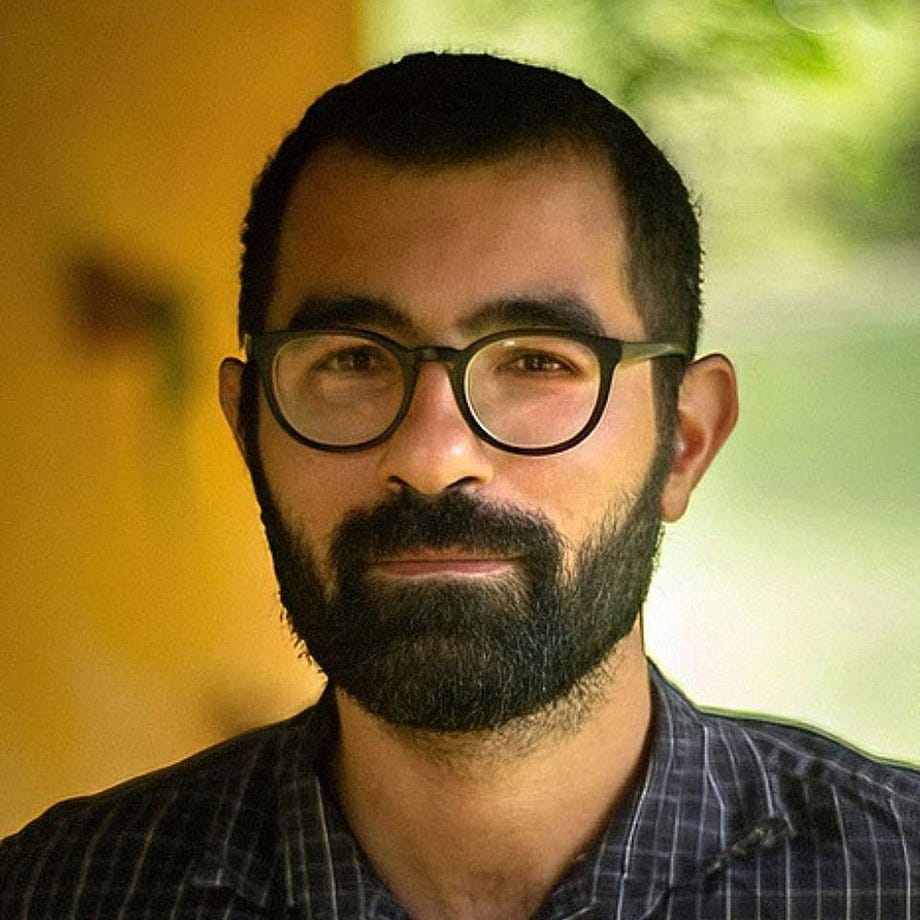
Annelise Riles speaks with Brazilian scholar Fernando Brancoli about the October 2025 police raid in Rio de Janeiro’s favelas—the deadliest in Brazil’s history. Brancoli explains how global arms markets, political dynamics, and historical inequalities have blurred the lines between policing and warfare. They explore how local and global struggles for peace are increasingly intertwined. This is a public episode. If you'd like to discuss this with other subscribers or get access to bonus episodes, visit anneliseriles.substack.com/subscribe
Everyday Ambassador welcomes cultural anthropologist Miranda Hallett for a deep dive into El Salvador’s past and present. She explains the legacy of dispossession, U.S. intervention, the rise of MS-13, and President Bukele’s authoritarian turn. Hallett also shares stories of Salvadoran migrants in the U.S. building community and practicing “fugitive citizenship,” finding hope and democracy in the margins. This is a public episode. If you'd like to discuss this with other subscribers or get access to bonus episodes, visit anneliseriles.substack.com/subscribe
This is a public episode. If you'd like to discuss this with other subscribers or get access to bonus episodes, visit anneliseriles.substack.com/subscribe
In this episode of Everyday Ambassador, Annelise Riles speaks with historian Naoko Shimazu about the 1955 Bandung Conference. The gathering of newly independent Asian and African nations marked the rise of the non-aligned movement and showed how informal diplomacy—conversations, relationships, and pageantry—can reshape the world. Their discussion explores what Bandung teaches us about building bridges in a divided world today. This is a public episode. If you'd like to discuss this with other subscribers or get access to bonus episodes, visit anneliseriles.substack.com/subscribe
On the 80th anniversary of the atomic bombing of Nagasaki, Mayor Shiro Suzuki joins Everyday Ambassador to share his personal story as the son of Hibakusha and his mission to create a world without nuclear weapons. He discusses the work of Mayors for Peace, the power of cultural connection, and why even the smallest steps toward peace matter. This is a public episode. If you'd like to discuss this with other subscribers or get access to bonus episodes, visit anneliseriles.substack.com/subscribe

This is a public episode. If you'd like to discuss this with other subscribers or get access to bonus episodes, visit anneliseriles.substack.com/subscribe
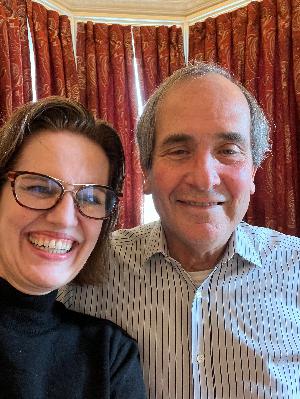
Journalist and NewsGuard Executive Editor Jim Warren joins Everyday Ambassador to explain how misinformation spreads online—and what’s being done to stop it. From fake health cures to AI-generated propaganda, Jim shares what NewsGuard’s team of reporters has uncovered across thousands of websites, podcasts, and social media posts. He also discusses the challenges of media literacy and what schools, journalists, and citizens can do to better evaluate the information they consume.To learn more about how you can access NewsGuard’s browser extension or use it in your classroom, visit newsguardtech.com. You can also check out their Substack newsletter, Reality Check, for weekly updates on the state of online information. This is a public episode. If you'd like to discuss this with other subscribers or get access to bonus episodes, visit anneliseriles.substack.com/subscribe
This is a public episode. If you'd like to discuss this with other subscribers or get access to bonus episodes, visit anneliseriles.substack.com/subscribe

This week on Everyday Ambassador, I spoke with Zsofia Banuta, co-founder of Unhack Democracy, a grassroots organization working to protect democratic institutions across Central and Eastern Europe. Don’t miss our live follow-up event on May 8th on Substack with Zsofia and her co-founder Elliot Goat, where they’ll answer your questions and share more about their work. This is a public episode. If you'd like to discuss this with other subscribers or get access to bonus episodes, visit anneliseriles.substack.com/subscribe
This is a public episode. If you'd like to discuss this with other subscribers or get access to bonus episodes, visit anneliseriles.substack.com/subscribe
Annelise Riles speaks with Austin Bryan, an anthropologist and soon-to-be professor of global health, about his ten years of research with LGBTQ+ communities and healthcare workers in Uganda. Bryan offers a behind-the-scenes look at how international HIV funding has shaped not only access to care but also the emergence of activist networks in a country facing severe anti-LGBTQ+ laws. Their conversation explores the human cost of defunding, the resilience of marginalized communities, and why long-term, ground-level research matters. This is a public episode. If you'd like to discuss this with other subscribers or get access to bonus episodes, visit anneliseriles.substack.com/subscribe
Thank you for tuning into my live video! Join me for my next live video in the app. This is a public episode. If you'd like to discuss this with other subscribers or get access to bonus episodes, visit anneliseriles.substack.com/subscribe

Annelise Riles speaks with Dr. Bilqis Alatishe-Muhammad, a Nigerian physician and public health advocate working to improve maternal health and champion gender equity across Nigeria. From treating vulnerable communities to challenging cultural norms and policy gaps, Dr. Bilqis shares her deeply personal and powerful mission to bring healthcare to those who are often forgotten. Her story is a reminder that small acts of care can drive global change. This is a public episode. If you'd like to discuss this with other subscribers or get access to bonus episodes, visit anneliseriles.substack.com/subscribe

When we think of a traditional path to global influence, few would imagine starting out on tour with the Grateful Dead. But Stephen Greene, co-founder and CEO of RockCorps, has built a trailblazing career doing just that—blending the power of music, the passion of young people, and a bold new approach to social change.In the latest episode of Everyday Ambassador, host Annelise Riles reconnects with her high school classmate for a conversation that spans decades, continents, and some of the most pressing generational challenges of our time.Learn more about RockCorps: https://rockcorps.com or https://ibisrockcorps.fr/ This is a public episode. If you'd like to discuss this with other subscribers or get access to bonus episodes, visit anneliseriles.substack.com/subscribe
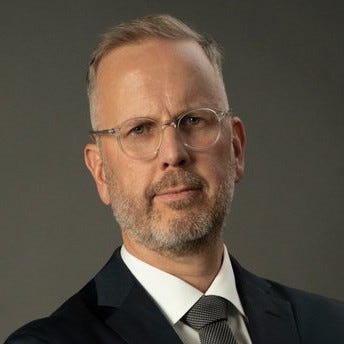
What do you do when you see human rights violations—but you don’t have the power to stop them?That’s the challenge many of us face today. It’s easy to feel overwhelmed, furious, or hopeless. But what if there were a way to channel that frustration into real impact?This week, we’re heading to Europe to see how one European Union diplomat handles the treatment of migrants at its borders—and what we can learn from him.Meet the Human Rights Diplomat at Europe's BordersMeet Jonas Grimheden, the Fundamental Rights Officer at FRONTEX, the EU’s border control agency (Europe’s version of ICE). His job? To make sure that migrants' human rights are respected—a near-impossible task when facing governments that don’t want oversight.Jonas is a Swedish human rights lawyer and a skilled diplomat who has taken on some of the world’s toughest assignments, including representing his country in North Korea. He spent years at the European Union Agency for Fundamental Rights, ensuring that human rights shape EU foreign policy.In this week’s podcast interview, Jonas reveals the high-stakes challenges of defending human rights at Europe’s borders. His work is harrowing, inspiring—and strikingly different from the approach taken in the U.S.Pushbacks, Beatings, and Strategic SilenceGrimheden’s team spends thousands of days each year in the field—on boats, at airports, even on deportation flights—observing procedures and speaking with migrants directly. Many reveal they were beaten or turned away illegally in a previous attempt. These reports trigger formal investigations, roughly one per week, though Grimheden believes they could be doing one a day.Still, he knows the limitations. “I’m not the FBI. I can’t order anyone to act,” he said. “But I do have access, data, and leverage. And I use them.”His team investigates what are known as pushbacks—when migrants are expelled without due process, often violently. In some countries, border guards are accused of beating migrants, stealing their possessions, and forcing them back across borders, often in the dead of night.“It doesn’t take a lawyer to know that’s illegal,” Grimheden said bluntly. “I’ve even filed a criminal complaint myself with a national prosecutor’s office. That case is still pending—three years later.”Despite evidence, some member states deny wrongdoing outright. “They tell me their police aren’t that stupid,” he said. “Unfortunately, I think they are.” Convincing national authorities to allow independent monitoring, particularly along green borders—remote stretches of forest or coastline—is an uphill battle.In one case, officials claimed monitors couldn’t patrol due to wild bears. “I think the bears were always there,” Grimheden quipped. “What changed was a year of persistence and public pressure.”The Impossible Job: Fighting for Migrants’ Rights with Little Real Legal PowerJonas’ mission is daunting. He confronts violence and human suffering daily—migrants who are beaten, raped, drowned, or tricked by smugglers. Governments often turn a blind eye. Politicians exploit fear for votes. And border guards often see human rights enforcement as an obstacle, not a duty.And here’s the catch: Jonas has little power to enforce change. His job is to observe, document, and report. He can’t force border guards to stop abuse. Each EU country controls its own borders and isn’t always receptive to outside oversight. Worse, some of the worst abuses happen beyond the EU’s jurisdiction, in countries that don’t answer to European laws.He faces impossible ethical dilemmas.* Spotting a migrant boat in distress: If Jonas alerts authorities, migrants might be rescued—only to be captured and abused in Libyan detention centers. If he says nothing, they might drown.* Documenting police violence: He uncovers that border police in a “nice” European country are beating migrants and stealing their property. When he reports it, officials often deny everything.The Secret Weapon: Aikido DiplomacyHow does Jonas make an impact with so little direct power? His secret weapon is Aikido—a Japanese martial art focused on non-violent conflict resolution.Aikido isn’t about overpowering an opponent; it’s about redirecting their energy. As Jonas explains:"If you try to confront someone directly, it takes a great deal of force. But if you move with them, as they turn in a certain direction, you can harness their own force for your purposes—and flip them."That’s exactly how he deals with nationalist politicians and hostile border guards. He doesn’t yell. He doesn’t fight. He listens, understands their motivations, and then finds ways to shift their behavior.For example, he discovered that migrant beatings mostly happened late at night, near the end of border guards’ shifts. Why? The guards were exhausted and just wanted to go home. By understanding this, Jonas found a way to introduce policies that reduced their workload and, in turn, the violence—without condoning their actions.Grimheden sees his job not as shouting from the sidelines, but persuading from the inside. “I have to be stubborn and patient,” he said. “Yelling doesn’t help. Strategy does.”Lessons for Everyday AmbassadorsJonas’ approach offers a roadmap for all of us who care about human rights but lack formal power. Here’s how we can apply his strategies:* Be a Diplomat, Not Just an AdvocateDon’t just talk to people who already agree with you. Seek out those who don’t. Changing minds is part of changing the culture.* Control Your EmotionsRanting in private is fine. But yelling or exaggerating in a debate doesn’t work—it just makes opponents dig in.* Understand the Other SideJonas assumes that people don’t want to be cruel—something in their situation leads to their behavior. If you can understand their motivations, you might be able to flip them.* Be Meticulously FactualFacts are your strongest tool. Do your research. If someone has questions, take the time to get real answers.* Be Clear and FirmJonas never yells, but he also never backs down. When he tells border guards that a law is being broken, he does so calmly and clearly. **Clear is kind.*** Do the Right Thing, Even Outside Your MandateJonas sometimes reports crimes as a private citizen or helps NGOs bring lawsuits—even if it’s not technically in his job description. His reasoning?"My mandate doesn’t say I can't."* Be Patient and PersistentChange doesn’t happen overnight. Some of Jonas’ biggest wins took months or even years. But persistence pays off.The Challenge: Put Diplomacy Into PracticeJonas calls his approach "a bit of a strategy game." And we can all play it.This week, I challenge you: Find one or two people who don’t believe in the human rights of migrants, people facing violence abroad, or sexual minorities. Engage them. Apply these diplomatic strategies. See if you can shift their thinking—even a little.Because when the culture changes, politics will follow.To learn more about Jonas Grimheden’s work, visit Frontex’s official site This is a public episode. If you'd like to discuss this with other subscribers or get access to bonus episodes, visit anneliseriles.substack.com/subscribe
In this episode, Annelise Riles speaks with Felecia Maxfield-Barrett, CEO of Utah Global Diplomacy, about how global diplomacy is taking root far beyond embassies and government offices—right in communities like Utah. From her upbringing in American Fork to her leadership in international exchange programs, Felecia shares how shared humanity and storytelling can build bridges across cultures and borders.To learn more about Utah Global Diplomacy and how you can get involved in citizen diplomacy, visit utahdiplomacy.org. If you would like to discuss this with other subscribers or get access to bonus episodes, visit anneliseriles.substack.com This is a public episode. If you'd like to discuss this with other subscribers or get access to bonus episodes, visit anneliseriles.substack.com/subscribe

Comments

Download from Google Play

Download from App Store
 United States