


 Claim Ownership
Evolving Past Alzheimer's
Subscribed: 95Played: 1,880
Subscribe

Description
We are absolutely convinced that Alzheimer's and other brain diseases are generally treatable and reversible. Early translational evidence supports this belief. The Evolving Past Alzheimer's podcast brings you the highest caliber information about what you can do to identify, prevent, and treat Alzheimer's disease. The show's secondary goal is to use Alzheimer's and cognition as a platform to explore consciousness and the human experience in it's "second half of life." Topics include emerging technologies, transhumanism, traditional medicinal approaches, spiritual conversations, and stories of people living with – and through – Alzheimer's. This show brings you conversations with experts around the world that are leading the charge in treatment and prevention of Alzheimer's and other brain disease.
78 Episodes
Reverse
 1
1This is a super technical episode. The guest is a world leader in brain energy and its impact on cognition and cognitive change that leads to Alzheimer's. We had to break this episode into two parts. The difference between early-onset Alzheimer's (which is usually genetic) and late-onset Alzheimer's that usually happens after age 65. Dr. Gonzalez-Lima argues that there is a common pathway, a problem with the way the brain produces energy, which leads to late-onset Alzheimer's. The causes of this can be multiple, and the major one is simply getting older. So as individuals, we have to lead healthy lifestyles to push back on these changes. The earliest changes in the brain are different than are commonly understood. They are changes in the way the brain metabolizes energy. These changes show up long before the common atrophies we see in Alzheimer's patients. Many of the factors that lead to the development of Alzheimer's are vascular. Test that may help catch Alzheimer's before cognitive symptoms… Carotid Intima-Media Thickness Test (CIMT) EEG or QEG - brain maps Genetics, head injuries, and brain trauma are other factors that can lead to Alzheimer's. There are also some infections and viruses that can be associated with the development of the disease. Environmental toxins are a new cause that is being accepted worldwide by even the most conservative organizations. We finish by talking about mitochondria therapy, a low-level laser therapy, where photons are shot into the brain's photon acceptors. It essentially makes more space, making the cells more likely to bind and use oxygen. The main risk with this laser is the need to protect the eyes. Ultimately, the hope is that this treatment can be done with LED lights, and people can do it themselves. The ketogenic diet can help repair even a damaged brain. We have seen a number of people improve through adopting this diet, even though it can be difficult to sustain, and I don't recommend sustaining it for long. That conversation will lead us into part 2 which will be released in two weeks. 12:17 - Fundamental problems in the brain and nervous system that are leading to diseases like Alzheimer's 21:05 - Why are some brains more vulnerable than others to Alzheimer's? 38:48 - A practical way to assess cerebral brain flow 40:02 - Laser light treatment to help with brain flow 1:09:39 - The ketogenic diet and its potential to help with improving cognition
Dr. Dale Bredesen is a neuroscientist of the first order as well as a truly pioneering doctor in the fields of Alzheimer's and Parkinson's research. In 2014, Dr. Bredesen published a widely publicized case series of 10 people who improved from cognitive decline. He has gone on to teach thousands of practitioners his methodology. At the time of recording this episode, there is a clinical trial well underway testing his methodology. Dr. Bredesen is the author of numerous scientific papers as well as the author of New York Times bestseller, The End of Alzheimer's. Most importantly, Dr. Bredesen's work brings hope and potential solutions for those struggling with Alzheimer's and other forms of cognitive decline. In This Episode "The field has argued that some drug is going to be out there that will work, and they haven't. So we wanted to start from ground zero." The root cause of Alzheimer's Subjective cognitive impairment vs mild cognitive impairment Factors that determine if you can reverse cognitive decline and how much you can improve "Chronic illnesses like Alzheimer's are working against the physician because they are keeping people from coming to you for years." How long the results hold after cognitive improvement and what you can do to retain the results The "pandemic within the pandemic", how COVID-19 and Alzheimer's are connected "The Five Personalities", sub-types of Alzheimer's "We should never follow Alzheimer's with a period. Alzheimer's due to what?" What is the ketoflex diet, and why ketone energy is so important in Alzheimer's and cognition? What is detoxification, and how does it play into Alzheimer's treatment? The role of psychotherapy in Alzheimer's prevention and how to deal with apathy during treatment Links The End of Alzheimer's Read Dale's Publications Evolving Past Alzheimer's
The field of preventive neurology is coming. Detection of early brain damage is critical and our guest this episode, Darmiyan appears to have developed this technology. This interview is with Darmiyan's co-founder, Kaveh Vejdani MD, currently serving as it's chief medical and technology officer. A highly technical, but potentially game-changing episode. Darmiyan is a medical image processing company currently focused on applying ai technology for early detection of neurodegenerative brain conditions like Alzheimer's. Changes in the brain early on lead to Alzheimer's before symptoms develop. If we can learn to detect these changes before symptoms manifest, then there is more opportunity for prevention. In This Episode: 1:04 - What the technology is and what it can see 5:18 - Discoveries they have made about early Alzheimer's prevention and how the test works 12:04 - "This is one of the tests that is going to change the course of action." 14:04 - The accuracy you can expect from the test 17:10 - The criteria for diagnosis with the test 20:22 - What is on the horizon for Darmiyan? 21:50 - "If you wait for the person to be close to dementia that it's visible on the MRI, that is too late for treatment actions." 27:26 - Interventions that can improve results after early detection 29:24 - When this technology will be more widely available to people who want to detect degenerative diseases before they have symptoms Links Darmiyan's Website
In Feb 2018 Michele Mootz started the CrossFit Wellness Program focused on bringing CrossFit to populations that were not being addressed including those with serious chronic diseases as well as aging adults over 65 including those with cognitive impairment. We discuss the tremendous benefits they have seen to date. We also discuss the impact COVID has had on this program and the overall health of this community of individuals. Michele Mootz was a Physical Therapist for 13 years before starting work with CrossFit. She is currently the Program Director for CrossFit Wellness as well as a Flowmaster for CrossFit Training Department. In This Episode: 1:23 - What is Crossfit? 2:29 - Michele's journey from working as a physical therapist to CrossFit 9:45 - "The recipe to try to get our patients healthier doesn't change, we are just paying closer attention to more high-risk factors they walk in with." - Michele Mootz 11:12 - Results Michele has seen with the members of her gym 14:18 - "The foundation of CrossFit has always been that the movements are functional movements." - Michele Mootz 17:03 - How CrossFit can improve areas of your life outside of just physical fitness 21:33 - "One of the mistakes that have been made by me and other CrossFit gyms is trying to integrate everyone into one class." - Michele Mootz 22:54 - How likely is an injury in Crossfit? 27:23 - What the senior CrossFit classes look like 29:57 - How long it takes to see the results of CrossFit To inquire about a local class or to join CrossFit's zoom offering: michele.mootz@crossfittraining.com OR classinfo@crossfit.com The zoom class discussed in this episode occurs at 9am Pacific time.
In this episode we talk with neurologist Suzanne Gazda MD. Dr Gazda is an authority on neurodegenerative diseases and offers more insight to balancing the "mental" vs "physical" risks in the age of coronavirus and social distancing. We focus on inflammation, auto-immune disease, Alzheimer's, and isolation.
This is a review of the neurological symptoms that are associated with COVID-19. We discuss the implications of COVID-19 on Alzheimer's disease and other dementias. We discuss what you can do to protect yourself. This is not medical advice, please ask your healthcare provider before taking action to find out what is right for you. Protection: -N95 mask (or at least a cloth or surgical mask) -Low Inflammatory diet (low in processed foods that come out of a bag or box) -Increased exercise/movement - 20-30 minutes of moderate intensity 4-5 times per week. -Good sleep - 7-9 hours according to your chronotype (biological rhythm) -Managing stress- we outline box breathing technique Supplements that likely offer immune support -Zinc citrate or picolinate or acetate. about 30-60mg. -Quercetin - 1gram twice a day -N-Acetyl Cysteine (NAC) - 600-900mg by mouth twice a day -Resveratrol - 100-150 mg daily -Curcumin 500-1000mg twice a day -Vitamin D3 -3000-5000 IU per day -Vitamin C - 1000-3000mg daily (can be taken as 1000mg two or three times per day) If you would like information on where and how to obtain high quality supplements, dietary advice, stress management tools please email info@kemperwellness.com, that is our company. And we can direct you to those resources. If you have questions or comments that you would like us to address please find us on social media or email nate@evolvingpast.com
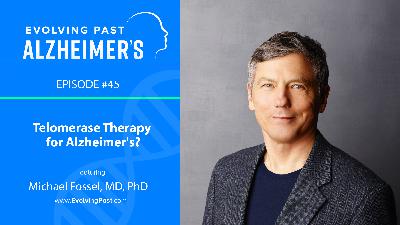
Dr Michael Fossel received his MD and his PhD from Stanford University. He has published numerous articles in both high impact medical journals and popular press. His book The Telomerase Revolution was hailed by the WSJ as one of the five best science books of 2015. In this episode we discuss the promise telomeres and telomerase therapies for Alzheimer's and dementia. Deep dive on epigenetics and the role of glial cells in the process.
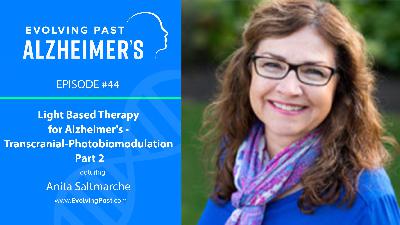
This is the second part of a rich discussion between Anita Saltmarche and Dr Nate Bergman. It features transcranial photobiomodulation (PBM), or shining LED light energy into the brain. Anita has led numerous clinical trials and has over 17 years of experience with this technology. A good discussion about which devices, how much to use, and more information about the VieLight product.
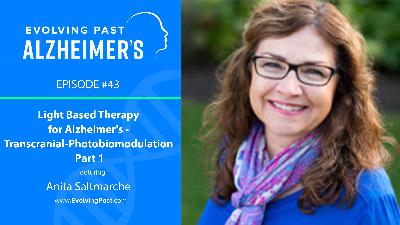
This is the first part of a rich discussion between Anita Saltmarche and Dr Nate Bergman. It features, transcranial-photobiomodulation (PMB), or shining LED or low level laser light energy into the brain known. Anita has led numerous clinical trials and has over 17 years of experience with a variety of photobiomodulation applications. We talk about near-infrared and red light, the important wavelengths and intensities of over the counter and prescriber only devices. We specifically look at the research around the VieLight product.
The first of a 3-part series on light therapy (AKA: Photobiomodulation). This is an interesting discussion of light therapy helmet used with a 64 year old woman with significant Alzheimer's type cognitive impairment. With Dr Joe Diduro DC from ProNeurolight.
This is, Dr Nate Bergman on a solocast chatting about 3 cases of improvement with Alzheimer's and cognitive impairment. We are excited to be part of the changing conversation within the Alzheimer's and Dementia communities. Increasingly, the question isn't so much IF someone will improve, it's more of a question of how much.
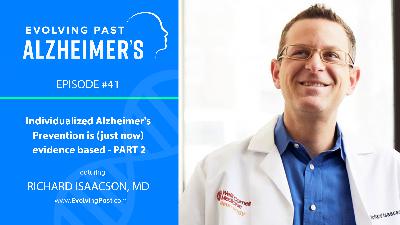
In the first episode with Dr Richard Isaacson we discussed his journey towards the recent Oct 2019 publication which was the first forward looking designed paper showing improvements in people at-risk for developing or with early symptoms of Alzheimer's. In this second episode we discuss Richard's idea around how mitochondria might be a root-cause for Alzheimer's disease. We talk about different "personalities" of early Alzheimer's and how this might be related to lab levels and cognitive function tests. Other items we discuss towards a personalization of an approach in Alzheimer's are hormone replacement therapy in Alzheimer's disease and prevention. Cocoa flavanols, Intermittent Fasting, Ketogenic diet, metabolic goals and targets, body fat and quite a bit more. One more note, please understand that none of this should be construed as medical advice. Please consult your local qualified medical authority, even if only considering lifestyle modifications like fasting of any kind or nutritional ketosis.
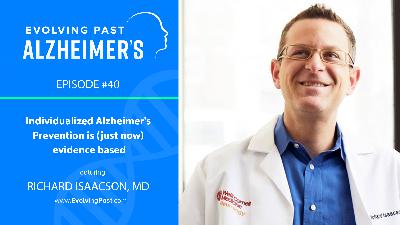
As our listeners know I get particularly excited about having certain guests on this show. This episode is one of those guests! I have been after Dr Richard Isaacson for over a year now and I had to make a special trip to NYC to go bang on his door to get his attention here...but the reason I am so excited is because the kind of work that Richard is doing is truly pioneering in the Alzheimer's community and his recently published paper. We'll talk about this in great detail, but by way of introduction. Dr Richard Isaacson finished both his undergraduate degree as well as medical school in just 6 years. Completed his neurology residency at Beth Israel Deaconess/Harvard Medical School and now serves as the Director of the Alzheimer's Prevention Clinic at Weill Cornell in New York City. Finally, and perhaps most important, he and his wife just welcomed their first child into this world....congratulations and Welcome to the show, Dr Isaacson! This is a great episode where we discuss a first-of-its-kind (prospective design) paper showing that early interventions work to prevent Alzheimer's and treat early symptoms. An episode not to be missed. A deep discussion of the research and some of the controversies surrounding Alzheimer's research.
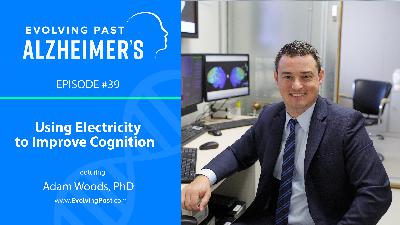
In this episode we explain non-invasive electrical stimulation, specifically transcranial direct current stimulation (tDCS). These techniques are used to alter brain function for the better. They harness and modulate the neuroplastic responses in the brain. Our guest, Dr. Adam Woods, is cognitive neuroscientist and Assistant Director of the Center for Cognitive Aging and Memory (CAM) at the McKnight Brain Institute at Univ of Florida. He is a national leader in the field of transcranial electrical stimulation (tES), leading the largest tES trial in history, publishing the first comprehensive textbook in the field, and led multiple field standards papers. In particular, we focus on transcranial direct current stimulation (tDCS). We talk about how these techniques enhance cognition in the aging brain and potentially Alzheimer's disease. These effects are being observed in pilot trials and now being tried on larger groups. We discuss memory networks and functional MRI findings related to tES interventions. This is highly technical episode, but well worth it for the information. Click here information about Dr Woods and his work.
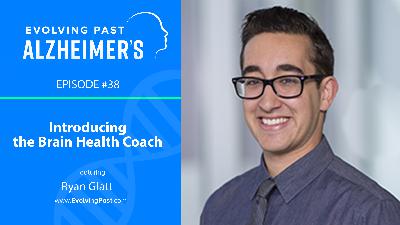
Deep Conversation on Brain Health Coaching and finding your edge, with brain health coach extraordinaire. To contact Ryan Glatt or to find out more about the services he offers go to Somatiq.com or Ryanglatt.com. You can follow him on Instagram @glatt.somatiq
Dr McEwen explains her study of older adults with cognitive decline and begins by explaining what are the subjective assessment she used in her studies to label cognitive decline. The effects on cognitive functioning social experience and physical challenge of a group exercise class was the focus of the study. Discussion of what is similar and difference between psychosis and Alzheimer's. The discussion to turns to how Dr McEwen ties together all the various indicators she is researching and the CogFit exercise program is laid out. Dr McEwen also works at Genius Gyms and helps translate some of her research into practical applications for a variety of people who could benefit from the cognitive training. She is also help to develop an app that help people do these exercises on their own as well. The discussion concludes talking about the other ways these exercises can help with emotional, attentional or executive function problems by addressing underlying cognitive problems. Dr. Sarah McEwen is a Cognitive Psychologist, the Director of Research and Programming at Saint John's - Pacific Brain Health Center in Santa Monica, CA.
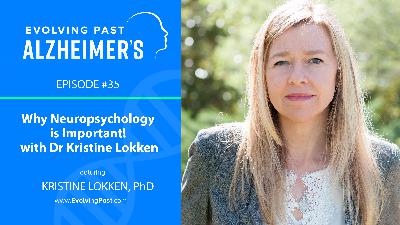
We're back on track...here's a really helpful discussion covering why neuropsychological testing is important if you are dealing with memory loss, cognitive impairment, Alzheimer's, Traumatic Brain Injury, and even problems with mood (such as anxiety and depression). Kristine Lokken PhD is a functional neuropsychologist with a passion for helping people restore brain health. Her extensive background in clinical research, medical neuropsychology, and holistic wellness merged together to create the Brain Health Institute (BHI). In addition to her work at BHI, she served as the Director of the Rehabilitation Neuropsychology Service at the Birmingham VA Medical Center and instructed as a Clinical Assistant Professor at University of Alabama at Birmingham. She has maintained a private practice for over 15 years, and has seen thousands of patients with varying neurological and psychological issues in her clinical work. Dr. Lokken has published several articles in peer reviewed journals and has lectured extensively on brain health. Since the time of the recording of this episode Dr Lokken has relocated to Seattle, WA to be part of the Brain Health and Research Institute. Neuropsychologic testing is essential to make a diagnosis of Alzheimer's or other dementia. This episode explores the role of a Neuropsychologist in a holistic approach to cognitive care. Our discussion begins by focusing basic definitions within the field of neuropsychology. We discuss what is coming down the line in terms of early recognition of Alzheimer's from a neuropsychologist's perspective. Later we take a deeper dive into the best tests or areas to test for early recognition. We touch on some of Dr Lokken's recently presented evidence that homocysteine may be one of the more useful and affordable biomarkers to look at. Dr Lokken talks about the value of online cognitive tests versus being evaluated by a Neuropsychologist. The discussion continues by looking at self-reported cognitive decline and what you can do if you feel you are worried about it. We finish talking about how the medical community has changed its perspective on prevention going back to the end of 2018 and what is possible in the future in terms of prevention.
Dr Nate Bergman welcomes you back for season 2 of the Evolving Past Alzheimer's Podcast. This season we're talking Neuropsychology, new approaches that incorporate both the brain and body for better results, begin talking about transcranial electric stimulation approaches to Alzheimer's and issues of cognition. We will also continue to discuss ways to optimally age in our bodies while our minds and spirits continue to soar!
In This Episode You Will Learn: Where are you in your career right now? Neuroscience research is fascinating. Dr. Ted is most interested in attention, perception, and memory. These three things work together harmoniously because you can't remember something you ignore, and it's difficult to notice something if you don't perceive it in the beginning. Dr. Ted studied how the brain encodes beats. He uses music perception to enable people to pay attention, listen, and remember information. He worked with Adam Gaza and researched aging's attention, memory, and perception. Their research indicated that some memory issues stem from attentional issues, inhibiting irrelevant information. How does this process change as we grow? It's not a problem with memory capacity; it's more on the intentional filtering issue. When you add distraction (in a lab setting), adults will show deficient memory performance compared to young adults when you test them on the content they were told to remember. But if you test them on the content they were supposed to ignore, older adults remember the better. The research now is more on assessing the different potential therapeutics to help people focus their attention and improve their memory performance. There are two ways: musical training to facilitate attention to memory performance and noninvasive neurostimulation using a magnetic field of electrical currents to retrain neuro oscillation that underlies attention to memory processes and rescues the brain's cognitive abilities to mediate age-related problems. What aspects of perception do you focus on? Dr. Theodore focuses on perceiving or experiencing things such as the sound of one's voice or picture. Dr ted is focused chiefly on vision and audition. That's humans' ability to see and ability to hear. The brain has a region dedicated to visual processing and another region for auditory processing. These regions are highly connected. The brain can ramp out or tune out noises. Like a radio equalizer, the brain controls the volume to either ramp up a particular sound to hear more or tune out from other background noise. You can focus on one person's voice even in a noisy crowd. Why is brain oscillation significant? Brain oscillation means the frequencies at which the brain and neurons are firing. They become active at different frequencies. When you sleep, you get these slow bursts of activities. We call these delta waves. The neurons can burst in a range of thousand hertz. The brain oscillates at lower frequencies, but the other neurons pick up the slack. If you record a large group of neurons, you will get high frequencies. Dr. Ted uses EEG or fMRI to look at large swabs of the cortex. It includes hundreds of thousands of neurons in one group. When you get that number of neurons synchronously firing together, you get temporal resolution and can detect oscillations. While you can't get the resolution you need for an individual neuron, you can get a lot of exciting information from 70 Herts and below. What would the program look like? The research is mainly on assessing how attention, memory, and perception. We are looking at the interaction of these things across the lifespan, how it degrades potentially as people get older, and how we might be able to remediate that. In studying the brain, they've identified specific mechanisms for specific interventions. The frontal theta activity seems to be involved in the complex cognitive function of one's multitasking ability. For example, one study looked at how people multitask. Research shows that people peak at multitasking in their twenties, which declines as they age. The process was a little car simulation where respondents had to drive a car and respond to street signs. The goal was to assess how w brain can multitask by driving a car and responding to streetlights simultaneously. Younger adults were better at it, but a month into playing the simulation paradigm, older people were able to improve their multitasking abilities. It shows that frontal data is related to one's ability to focus your attention and remember objects. Another study was done to shorten the brain's improvement to multitask. They had young adults at their peak, stimulating their brains at six Herts. It's what they call theta stimulation. Results showed that after an hour, this group improved this multitasking ability as opposed to those who could feel the stimulation but didn't get the total dose. This method was then replicated in older adults. The session ran over an hour initially. But for the older adults, the protocol was done in three days. The Variables There are a lot of individual variabilities here since not everyone responds the same to the treatment. Even then, we can now estimate the conductivity and resistivity of the skin, the scalp, the cerebral spinal fluid, the gray matter, and the white matter in the brain. But, to do that, we needed to have an actual picture of each brain. Dr. Ted and his team brought the respondents for an MRI to take a high-resolution picture of their heads, including the scalp, the brain, and the CSF. The results allowed them to assign resistance to all the tissue types. Eventually, they were able to get into each person's brain. It's helpful to know that the efficacy of stimulation can be affected by one's anatomy. As a person ages, the brain degenerates and shrinks a bit. The more it does, the less current is likely to go into the brain. When dealing with an aging population or people with neurodegenerative disorders, that's important. When dealing with an aging population or people with neurodegenerative disorders, that's important. People with more atrophy will likely need a higher dose of stimulation for the current to reach the brain. This result helps us understand the individual differences of people. Other brains work faster, so they need fewer pulses per second for the current to reach the brain. It means people won't function as efficiently when stimulated at the inaccurate Hertz level. This means that brains need to oscillate at a frequency that matches. What does this mean for people with neurogenerative disorders such as Alzheimer's? Intensity is an important question here. They tried different intensities, showing that the higher the intensity, the more effective it is. However, they still saw some improvements in memory, even with lower intensities. Lowered beta-load is one of the biomarkers associated with Alzheimer's. With the stimulation, we saw an increase in microglia. These neurons help clear the amyloid plaques. TACS is a more practical solution than other types of neurostimulation requiring complicated electronics. If this demonstrates the efficacy, it can be used with other treatments for Alzheimer's. The study is still in the research phase, but still, this is a practical solution. What's great about this neurostimulation is that if you stimulate a node of network regions that are functionally connected, you can manipulate brain activities. Even if the stimulation doesn't reach the hippocampus, if they're able to hit a region of the cortex that communicates with the hippocampus, then it's believed that it can impact the hippocampus and fire out activities in the rain. TACS Stimulation It's hard to hit a specific quadrant in the brain and stimulate it. It takes some time before the stimulation can start seeing real effects. Right now, it's still in its early stages. So, it's just about seeing what works, understanding the why, and looking for answers. Everything comes at a cost. There are activities that people do that affect how the brain functions and be stimulated. The same is accurate with the hertz and other frequencies. The stimulation and work may impact the brain at a specific frequency. People could be doing other things to improve multiple functions, but at the moment, science is doing this, and hopefully, it bears good results. About the Guest: Dr. Theodore Zanto Director of Neurology at Neuroscape and Assoc Prof at UCSF. He specializes in brain imaging and non-invasive studies on the brain, especially on attention, perception, and memory studies. For more information about your assessment options for cognitive issues or Alzheimer's, contact Kemper Cognitive Wellness in Cleveland, Ohio. Email: info@kemperwellness.com Website: https://kemperwellness.com/ Phone: (216) 337-1400.
6 Effective Ways of Heart Disease Prevention Anyone who wishes to optimize health by protecting the heart and brain must listen to this! Dr. Marwan Sabbagh and Joe Piscatella combine the six most effective principles for heart disease prevention. They unfold valuable heart and brain facts in their new book Strong Heart, Sharp Mind, which are equally beneficial for the prevention of Alzheimer's disease. In a way, they open hope for effective heart disease treatments, dealing with Alzheimer's, and other brain ailments with a multidisciplinary approach. What is good for your heart is good for your brain and ultimately contributes to your overall healthy lifestyle. This episode guides listeners to optimal well-being using a 6-Step Brain-Body Balance Program. In this discussion, he adds that the mechanism that underpins heart disease symptoms considerably overlaps with the symptoms of Alzheimer's. Therefore, aggressively managing the cures for one has two or more benefits. How Is Heart Disease The # 1 Cause Of Death Worldwide? Researchers agreed that cardiovascular arrest, high blood pressure, and cholesterol are risk factors for many other diseases like Alzheimer's. High blood pressure is one of the mechanisms overlapping Alzheimer's and heart disease symptoms, making it the most deadly disease of all time. Dr. Sabbagh believes aggressively managing cholesterol and high blood pressure might considerably help heart disease prevention through natural anti-inflammatory processes. He adds that saturated fats are bad for the brain, which triggers amyloid (an unhealthy protein in the brain), hindering ongoing heart disease treatment. Is High Blood Pressure A Contributor to Heart Disease? National Academy of Sciences, Engineering, and Medicines analyzed the whole shebang, including diet, cognitive stimulation, exercise, health conditions, etc. They came up with their thorough and expert analysis that blood pressure management, mental stimulation, and exercise were the only three things that showed sufficient evidence to recommend them in clinical practices. Several other health organizations are researching, concluding that high blood pressure management is the ultimate risk reduction strategy for the heart and brain. What Are Neurobics? Neurobics are brain exercises that aid in healthy mental activities and prevent severe diseases such as Alzheimer's and heart disease. Dr. Sabbagh suggests Neurobics as a way of simultaneously doing physical activity and cognitive stimulation. In the book, the author outlines the perfect Neurobics that can improve heart function and blood vessel health. Transforming The American Diet into A Healthful Way to Eat According to Berkeley Wellness Letter, Nutrition Actions, and Tufts Newsletter, modest dietary changes can help fight heart disease symptoms. Similarly, one fish meal a week, two berries a week, and two vegetables a day can reduce Alzheimer's disease risk. Managing Alzheimer's with A Good Sleep Regimen Sleep apnea is a huge risk for heart attacks as well as a considerable risk for cognitive decline. Quality sleep is the procedure by which your brain removes the amyloids. That's why Dr. Sabbagh refers to sleep as an easy fix to our mild cognitive illness. Exercise during the daytime, regular meal times, waking up, and going to bed are far more beneficial than sleeping pills. Also, there is a link between inadequate sleep quality, plaque building, and high blood pressure. How Stress Management Is Vital To Defeat Heart Diseases A person's mental health can positively or negatively impact their physical health, and the risk of heart failure may increase with high blood pressure. So, they refer to a phenomenon called 'hippie genetics,' which has secondary benefits in dealing with stress and reducing risks for heart disease. As said, you are more likely to be stress-free if you are physically active and socially connected, leading a healthy lifestyle. Keep your heart pumping and passions alive by knowing what is good for you. If you have people that support you and share the same bond, you are more likely to be mentally healthy. The people who practice cognitive stimulation are the people who exercise and eat right and ultimately lead a healthy lifestyle. However, it is more important to practice mental stimulation even if you have heart disease symptoms or Alzheimer's. The book gives you a great plan to follow that. About the Guest: Marwan Noel Sabbagh, M.D, formerly the Director of the Lou Ruvo Center for Brain Health at Cleveland Clinic, is internationally known for his expertise in the brain and vascular disorders like Alzheimer's and related dementias. For more information about your assessment options for cognitive issues or Alzheimer's, contact Kemper Cognitive Wellness in Cleveland, Ohio. Email: info@kemperwellness.com Website: https://kemperwellness.com/ Phone: (216) 337-1400.

Comments

Download from Google Play

Download from App Store
 United States