


 Claim Ownership
Explorers
Subscribed: 0Played: 5
Subscribe

© 2012 Academy of Achievement
Description
The Academy of Achievement presents a selection of extraordinary men and women who have defied expectations, broken boundaries, and made history around the world. Their words and their example are an inspiration to us all.
95 Episodes
Reverse

In this podcast, recorded at the Auberge du Soleil in California's Napa Valley during the 2014 International Achievement Summit, three remarkable physicists engage in a group discussion of the origin and nature of the universe. Dr. Adam Riess and Dr. Saul Perlmutter were joint recipients of the Nobel Prize in Physics for their discovery that the expansion of the universe is not slowing, as was thought, but accelerating. Dr. Lisa Randall first attended the Academy of Achievement as a student delegate and returned in 2008 as an honoree. Her hypothesis that the larger part of the universe's gravity is hidden in an unknown dimension poses a formidable challenge to existing theories of the universe. Together, the three engage in a provocative discussion of the limits of time, space and existence.
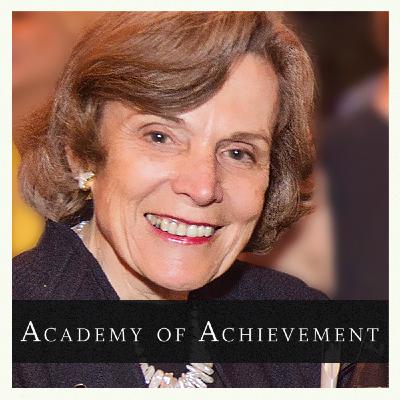
"I can still feel that leap of enthusiasm, and real joy, at the prospect of finally getting out to the beach, and running around," says Sylvia Earle, recalling her move to coastal Florida at age 13. Probably the most important thing, to me, aside from just the freedom of it and the power of it, was the kind of creatures that you could see along the beach, that you can't find anywhere else." That child's fascination with the crabs she found scurrying in the sand, was the beginning of a remarkable career in marine science. Today, Sylvia Earle is the best-known woman marine scientist on the planet. Among other accomplishments, she has walked untethered on the sea floor at a lower depth than any other human being. When Sylvia Earle first began her career, she met resistance. Some people could not accept a woman traveling with men on long scientific expeditions, but her remarkable accomplishments have won her a position in the oceanographic community that transcends boundaries. Botanist, biologist, conservationist, entrepreneur, Sylvia Earle has followed whales in the open sea, fought with sharks, and lived for weeks at a time on the floor of the sea, in the Tektite undersea station. She has challenged and overcome every obstacle that stood in the path of her burning curiosity about the magical world beneath the waves. Today, Dr. Earle is Explorer in Residence at the National Geographic Society. To date, she has led over 70 expeditions, logging more than 6500 hours underwater. In this two-part podcast, recorded at the Auberge du Soleil in California's Napa Valley during the 2014 International Achievement Summit, Dr. Earle warns her listeners that mankind's fate is inextricably bound up with the fate of the global ecosystem, particularly the world's oceans.
"I can still feel that leap of enthusiasm, and real joy, at the prospect of finally getting out to the beach, and running around, says Sylvia Earle, recalling her move to coastal Florida at age 13. "Probably the most important thing, to me, aside from just the freedom of it and the power of it, was the kind of creatures that you could see along the beach, that you can't find anywhere else." That child's fascination with the crabs she found scurrying in the sand, was the beginning of a remarkable career in marine science. Today, Sylvia Earle is the best-known woman marine scientist on the planet. Among other accomplishments, she has walked untethered on the sea floor at a lower depth than any other human being. When Sylvia Earle first began her career, she met resistance. Some people could not accept a woman traveling with men on long scientific expeditions, but her remarkable accomplishments have won her a position in the oceanographic community that transcends boundaries. Botanist, biologist, conservationist, entrepreneur, Sylvia Earle has followed whales in the open sea, fought with sharks, and lived for weeks at a time on the floor of the sea, in the Tektite undersea station. She has challenged and overcome every obstacle that stood in the path of her burning curiosity about the magical world beneath the waves. Today, Dr. Earle is Explorer in Residence at the National Geographic Society. To date, she has led over 70 expeditions, logging more than 6500 hours underwater. In this two-part podcast, recorded at the Auberge du Soleil in California's Napa Valley during the 2014 International Achievement Summit, Dr. Earle warns her listeners that mankind's fate is inextricably bound up with the fate of the global ecosystem, particularly the world's oceans.
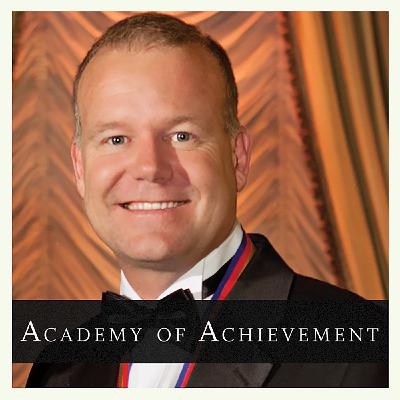
The paleoanthropologist Lee Rogers Berger has supervised archeological expeditions across South Africa, in Zimbabwe, and on the islands of the
Micronesian archipelago. In 1997, he received the first National Geographic Society Prize for Research and Exploration for his studies of
human evolution. He is best known for his 2008 discovery of Australopithecus sediba, a previously unknown species of hominid.
His nine-year-old son Matthew found the first fragments of sediba in a cave outside Johannesburg. The site eventually yielded the two
million-year-old remains of a young boy, an infant and two adults, all specimens of the species of Australopithecus sediba, perhaps an
intermediate stage between ape-like hominids and the more human Homo habilis. Berger studied anthropology, archaeology and geology at Georgia
Southern University, while working as a news cameraman on the side. On one occasion, he threw down his camera and jumped into the Savannah River
to save a drowning woman, an act that won him awards from the National Press Photographers Association and the Boy Scouts of America.
He undertook doctoral studies in palaeoanthropology at the University of the Witwatersrand in South Africa, where he has lived ever since.
Berger is the author of several books, including In the Footsteps of Eve and The Official Field Guide to the Cradle of Humankind. Dr. Berger
presents his discoveries in this podcast, recorded at the National Geographic Society in Washington D.C. during the 2012 International Achievement Summit.

As a girl in England, Jane Goodall dreamed of traveling to Africa to study animals in the wild. In the summer of 1960, her dream brought her to the shores of Lake Tanganyika, to observe the wild chimpanzees at Gombe Stream. Other scientists did not believe that a 26-year-old woman could survive alone in the bush, but Jane Goodall did more than survive. Her work revolutionized the field of primatology. Over the years, she found chimpanzees engaging in activities that were once thought definitively human, such as tool-making, cooperative hunting and even warfare. Her work, the longest continuous field study of any living creature, has forced us to redefine our understanding of what it means to be human, and provided a vital insight into the evolution of our own species. Today, Jane Goodall travels the world, campaigning for the humane treatment of all animals, and empowering young people in their own efforts to preserve the environment for all living things. In this two-part podcast, recorded at South Africa's Singita Sabi Sands Game Reserve during the 2009 International Achievement Summit, Dame Jane Goodall gives an engrossing account of her lifelong study of chimpanzees in the wild.

As a girl in England, Jane Goodall dreamed of traveling to Africa to study animals in the wild. In the summer of 1960, her dream brought her to the shores of Lake Tanganyika, to observe the wild chimpanzees at Gombe Stream. Other scientists did not believe that a 26-year-old woman could survive alone in the bush, but Jane Goodall did more than survive. Her work revolutionized the field of primatology. Over the years, she found chimpanzees engaging in activities that were once thought definitively human, such as tool-making, cooperative hunting and even warfare. Her work, the longest continuous field study of any living creature, has forced us to redefine our understanding of what it means to be human, and provided a vital insight into the evolution of our own species. Today, Jane Goodall travels the world, campaigning for the humane treatment of all animals, and empowering young people in their own efforts to preserve the environment for all living things. In this two-part podcast, recorded at South Africa's Singita Sabi Sands Game Reserve during the 2009 International Achievement Summit, Dame Jane Goodall gives an engrossing account of her lifelong study of chimpanzees in the wild.

Richard Leakey won fame as a paleoanthropologist while still in his early twenties, with sensational discoveries of the fossil remains of our most ancient ancestors, but his subsequent career as an author, conservationist, government official and political activist of unyielding courage has been even more extraordinary. For nearly 30 years, he directed the National Museum of Kenya, creating a world-class center for the study of human origins. As Director of Kenya's National Wildlife Service, he led a successful campaign against poaching of the endangered African elephant. After surviving a plane crash that cost him both his legs, he founded an opposition party to combat the corruption of the country's one-party government. Subjected to constant harassment, death threats and even beatings by the regime's supporters, he won election to parliament, where he forced reform of Kenya's constitution. As a government official, he continued his campaign against corruption in the civil service and secured a resumption of international aid. Now retired from politics, he remains a passionate and effective advocate for the environment, for the rights of the disabled, and for the cause of democracy in his beloved Kenya.

Richard Leakey won fame as a paleoanthropologist while still in his early twenties, with sensational discoveries of the fossil remains of our most ancient ancestors, but his subsequent career as an author, conservationist, government official and political activist of unyielding courage has been even more extraordinary. For nearly 30 years, he directed the National Museum of Kenya, creating a world-class center for the study of human origins. As Director of Kenya's National Wildlife Service, he led a successful campaign against poaching of the endangered African elephant. After surviving a plane crash that cost him both his legs, he founded an opposition party to combat the corruption of the country's one-party government. Subjected to constant harassment, death threats and even beatings by the regime's supporters, he won election to parliament, where he forced reform of Kenya's constitution. As a government official, he continued his campaign against corruption in the civil service and secured a resumption of international aid. Now retired from politics, he remains a passionate and effective advocate for the environment, for the rights of the disabled, and for the cause of democracy in his beloved Kenya.

Award-winning documentary filmmakers Dereck and Beverly Joubert have spent the last 25 years living among nature's most fearsome predators. From their camp in Botswana, hours from the nearest village, they record the social behavior and hunting practices of lions, cheetahs and leopards, the most endangered and dangerous creatures on earth. The pair first met in high school in Johannesburg, South Africa, and fell in love with wildlife and each other while studying at the Lion Research Institute in Botswana. Dereck writes, directs and shoots their documentary films, while Beverly, an internationally acclaimed photographer, serves as producer and sound engineer. Together, they remain in the wild for months on end, editing their films in their tents.
To date, they have created over 20 documentary films, half a dozen books and numerous magazine articles, winning five Emmy Awards and international environmental honors for their work. Their recent documentaries include Eye of the Leopard and Relentless Enemies: Lions and Buffalo. The Jouberts make a compelling video presentation of their work in this podcast, recorded at the Singita Sabi Sand Game Reserve in South Africa, during the 2009 International Achievement Summit.

The world's leading genetic scientists discuss the revolution in genetics that is transforming medical science. In this podcast, recorded at the 2008 International Achievement Summit in Hawaii, award-winning journalist Kathleen Matthews moderates the discussion and introduces the panelists: Dr. Francis S. Collins, the former Director of the National Center for Human Genome Research (now Director of the National Institutes of Health) who led the successful effort to sequence the human genome; James A. Thomson, one of the first scientists to successfully culture human stem cells; Dr. Shinya Yamanaka, the first scientist to successfully revert adult human skin cells to their stem cell state; Dr. Elias Zerhouni, the outgoing Director of the National Institutes of Health. They are joined by the brilliant neurosurgeon Benjamin S. Carson.
The world's leading genetic scientists discuss the revolution in genetics that is transforming medical science. In this podcast, recorded at the 2008 International Achievement Summit in Hawaii, award-winning journalist Kathleen Matthews moderates the discussion and introduces the panelists: Dr. Francis S. Collins, the former Director of the National Center for Human Genome Research (now Director of the National Institutes of Health) who led the successful effort to sequence the human genome; James A. Thomson, one of the first scientists to successfully culture human stem cells; Dr. Shinya Yamanaka, the first scientist to successfully revert adult human skin cells to their stem cell state; Dr. Elias Zerhouni, the outgoing Director of the National Institutes of Health. They are joined by the brilliant neurosurgeon Benjamin S. Carson.
The world's leading genetic scientists discuss the revolution in genetics that is transforming medical science. In this podcast, recorded at the 2008 International Achievement Summit in Hawaii, award-winning journalist Kathleen Matthews moderates the discussion and introduces the panelists: Dr. Francis S. Collins, the former Director of the National Center for Human Genome Research (now Director of the National Institutes of Health) who led the successful effort to sequence the human genome; James A. Thomson, one of the first scientists to successfully culture human stem cells; Dr. Shinya Yamanaka, the first scientist to successfully revert adult human skin cells to their stem cell state; Dr. Elias Zerhouni, the outgoing Director of the National Institutes of Health. They are joined by the brilliant neurosurgeon Benjamin S. Carson.

David Doubilet first fell in love with the undersea world as a child, snorkeling off the north coast of New Jersey. At age 12, he wrapped a Brownie camera in a plastic bag to take his first underwater pictures. He trained rigorously to excel as both diver and photographer; within a year of graduating from Boston University in 1970, he shot his first story for National Geographic, a relationship that continues to this day. In addition to contributing photographs and columns to a host of travel, nature and diving magazines, he has published half a dozen books of his astonishing images. Both inspired artist and fearless explorer, his expeditions have taken him around the world -- from the Caribbean to the South Pacific, from the Indian Ocean to the Galapagos Islands -- capturing the amazing creatures, brilliant scenery and otherworldly light of the ocean's depths. In reefs and caverns of fluorescent coral, he has recorded the most intense colors on the planet, as seen in his books, Water Light Time and The Kingdom of Coral: Australia's Great Barrier Reef. He has plumbed the mysterious depths of Loch Ness, Scotland and inspected the submerged remains of the USS Arizona at the bottom of Pearl Harbor, pioneering the use of the split-lens camera to take pictures at the water line, keeping objects above and below the waves in focus simultaneously. Recent assignments have taken him to the southern coast of Australia to photograph the great white shark, a fearsome predator, now itself endangered by the unregulated predation of man. His book, The Red Sea, documents the vistas of his "favorite underwater studio." Never far from the water, he maintains two homes in contrasting aquatic environments, one on the St. Lawrence River in Clayton, New York, and another on the sea at DeKelders, South Africa. When he is not on location, David Doubilet is a popular spokesman for the National Geographic Society, sharing his brilliant images to advocate for the conservation of what he has called "the most beautiful, most mysterious part of our planet."

The first female theoretical physicist to gain tenure at Harvard, Lisa Randall is the proponent of a radical new cosmology that may overturn our old conceptions of time, space and the universe. The Standard Model of physics has proved highly accurate in predicting the relative strength of the known forces in verifiable ways, with one exception. The force of gravity appears inexplicably weak in relation to the other forces, such as electromagnetism. When a small magnet picks up a paper clip, it is overcoming the gravitational pull of the entire planet beneath it. After performing a mind-boggling series of calculations, Randall has proposed a solution to this riddle. She has come to suspect that there's a lot more gravity in the universe, but most of it is concentrated in a dimension that is hidden from us, one in which completely different rules govern the behavior of the elements. Randall suggests that our picture of the universe is distorted because we live in "a three-dimensional sinkhole." She outlines these ideas for the general reader in her book, Warped Passages: Unraveling the Mysteries of the Universe's Hidden Dimensions. She expresses her staggering ideas in remarkably clear colloquial language, replete with vivid images and pop culture references, including song lyrics by Bjork and Eminem. She was marked for greatness early; as a high school student, she won the Westinghouse Science Talent Search and attended the 1980 program of the Academy of Achievement as a student delegate. She continued to excel through college and graduate school, earning her Ph.D. at Harvard. She held professorships at MIT and Princeton before returning to Harvard as full professor in 2001. Even non-physicist friends knew she was entering the inner circle of the science when Stephen Hawking saved her a seat at his table during an international physics conference. Last year, Time magazine named her to its list of the "100 Most Influential People in the World." Experiments now underway may provide support for her ideas in the near future. NASA plans to test the theory with an array of Laser Interferometry Space Antennae, nicknamed - what else? - LISA.

A pioneer of molecular paleontology, Svante Paabo has developed and refined the technique of isolating and sequencing the DNA of creatures long extinct. Year after year, he is making discoveries that shed light on our own evolutionary past, and on what it means to be human. The Stockholm-born Paabo, who had once considered becoming an Egyptologist, was a Ph.D. student in molecular genetics at the University of Uppsala, Sweden when he set out to capture a DNA sample from an ancient Egyptian mummy. Extracting coherent DNA from human remains is enormously difficult, as they have usually been contaminated with bacteria and other living matter. Paabo's former Egyptology professors provided him with tissue samples, but he feared his Ph.D. advisor would disapprove of such a far-fetched project. Working in secret, he succeeded in sequencing a quantity of DNA from the mummy of a 2,400-year-old Egyptian boy, a finding he published in Nature in 1985. Over the next decade, Dr. Paabo extracted DNA from the remains of mammoths and ground sloths, cave bears and marsupial wolves. He even sequenced a DNA sample from the so-called "Ice Man," who had lain frozen in an Alpine glacier for 5,000 years. In 1996, he made headlines around the world when he succeeded in procuring a DNA sample from the 42,000-year-old remains of a Neanderthal man. Today, Dr. Paabo heads the genetics department at the Institute for Evolutionary Anthropology in Leipzig, Germany. Among his first accomplishments at the institute was mapping the entire genome sequence of the chimpanzee, enabling a gene-for-gene comparison with the human genome. Further study could reveal why chimpanzees are immune to such human diseases as AIDS and malaria, and may offer hope for the treatment of speech disorders and autism. Dr. Paabo is now attempting to map the entire genome of the Neanderthal. If he succeeds, comparisons with the genome of modern humans will yield invaluable insight into our own origins, and Svante Paabo, his admirers suspect, will be due for a Nobel Prize.

"I can still feel that leap of enthusiasm, and real joy, at the prospect of finally getting out to the beach, and running around. But probably the most important thing, to me, aside from just the freedom of it and the power of it, was the kind of creatures that you could see along the beach, that you can't find anywhere else." That child's fascination with the crabs she found scurrying in the sand, was the beginning of a remarkable career in marine science. Today, Sylvia Earle is the best-known woman marine scientist on the planet. Among other accomplishments, she has walked untethered on the sea floor at a lower depth than any other human being. When Sylvia Earle first began her career, she met resistance. Some people could not accept a woman traveling with men on long scientific expeditions, but her remarkable accomplishments have won her a position in the oceanographic community that transcends boundaries. Botanist, biologist, conservationist, entrepreneur, Sylvia Earle has followed whales in the open sea, fought with sharks, and lived for weeks at a time on the floor of the sea, in the Tektite undersea station. She has challenged and overcome every obstacle that stood in the path of her burning curiosity about the magical world beneath the waves."

Dr. Steven A. Rosenberg is the Chief of Surgery at the National Cancer Institute in Bethesda, Maryland. He pioneered the development of immunotherapy that has resulted in the first effective immunotherapies for selected patients with advanced cancer. Dr. Rosenberg also pioneered the development of gene therapy and was the first to successfully insert foreign genes into humans and to conduct clinical studies of the gene therapy of cancer. He received his medical degree from Johns Hopkins and his Ph.D. in biophysics from Harvard. After his residency training at Brigham Hospital in Boston, he joined the National Cancer Institute as its Chief of Surgery at age 34, a position he continues to hold today. Dr. Rosenberg is credited with developing the use of IL-2 and immune cells for the treatment of patients with melanoma in a procedure termed adoptive cell transfer. He has shown that expanding immune cells in the lab can be used to treat patients with melanoma. The first published study in 2002, demonstrated that some patients with advanced melanoma could be treated to complete remission with a combination of chemotherapy, immune cells, and high doses of IL-2. The second study, published in 2006, demonstrated that the receptor of T cells can be transferred to immune cells and in combination with chemotherapy and high doses of IL-2 can be used to treat patients with melanoma. Dr. Rosenberg is the recipient of numerous awards, and is the author of eight books and more than 820 articles in the scientific literature covering various aspects of cancer research. He was the most cited clinician in the world in the field of oncology for the 17 years between 1981 and 1998. The Academy student delegates visited Dr. Steven Rosenberg at the National Cancer Institute during the 2007 Achievement Summit in Washington, D.C., and he spoke to them about his latest trail-blazing cancer research and clinical treatments for melanoma.
Dr. Steven A. Rosenberg is the Chief of Surgery at the National Cancer Institute in Bethesda, Maryland. He pioneered the development of immunotherapy that has resulted in the first effective immunotherapies for selected patients with advanced cancer. Dr. Rosenberg also pioneered the development of gene therapy and was the first to successfully insert foreign genes into humans and to conduct clinical studies of the gene therapy of cancer. He received his medical degree from Johns Hopkins and his Ph.D. in biophysics from Harvard. After his residency training at Brigham Hospital in Boston, he joined the National Cancer Institute as its Chief of Surgery at age 34, a position he continues to hold today. Dr. Rosenberg is credited with developing the use of IL-2 and immune cells for the treatment of patients with melanoma in a procedure termed adoptive cell transfer. He has shown that expanding immune cells in the lab can be used to treat patients with melanoma. The first published study in 2002, demonstrated that some patients with advanced melanoma could be treated to complete remission with a combination of chemotherapy, immune cells, and high doses of IL-2. The second study, published in 2006, demonstrated that the receptor of T cells can be transferred to immune cells and in combination with chemotherapy and high doses of IL-2 can be used to treat patients with melanoma. Dr. Rosenberg is the recipient of numerous awards, and is the author of eight books and more than 820 articles in the scientific literature covering various aspects of cancer research. He was the most cited clinician in the world in the field of oncology for the 17 years between 1981 and 1998. The Academy student delegates visited Dr. Steven Rosenberg at the National Cancer Institute during the 2007 Achievement Summit in Washington, D.C., and he spoke to them about his latest trail-blazing cancer research and clinical treatments for melanoma.
Dr. Steven A. Rosenberg is the Chief of Surgery at the National Cancer Institute in Bethesda, Maryland. He pioneered the development of immunotherapy that has resulted in the first effective immunotherapies for selected patients with advanced cancer. Dr. Rosenberg also pioneered the development of gene therapy and was the first to successfully insert foreign genes into humans and to conduct clinical studies of the gene therapy of cancer. He received his medical degree from Johns Hopkins and his Ph.D. in biophysics from Harvard. After his residency training at Brigham Hospital in Boston, he joined the National Cancer Institute as its Chief of Surgery at age 34, a position he continues to hold today. Dr. Rosenberg is credited with developing the use of IL-2 and immune cells for the treatment of patients with melanoma in a procedure termed adoptive cell transfer. He has shown that expanding immune cells in the lab can be used to treat patients with melanoma. The first published study in 2002, demonstrated that some patients with advanced melanoma could be treated to complete remission with a combination of chemotherapy, immune cells, and high doses of IL-2. The second study, published in 2006, demonstrated that the receptor of T cells can be transferred to immune cells and in combination with chemotherapy and high doses of IL-2 can be used to treat patients with melanoma. Dr. Rosenberg is the recipient of numerous awards, and is the author of eight books and more than 820 articles in the scientific literature covering various aspects of cancer research. He was the most cited clinician in the world in the field of oncology for the 17 years between 1981 and 1998. The Academy student delegates visited Dr. Steven Rosenberg at the National Cancer Institute during the 2007 Achievement Summit in Washington, D.C., and he spoke to them about his latest trail-blazing cancer research and clinical treatments for melanoma.

The Director of the National Institute of Allergy and Infectious Diseases (NIAID), Dr. Anthony Fauci is a pioneer in the study of diseases of the immune system. The world's leading AIDS researcher, he is also the administrator of a multi-billion dollar government agency. He oversees clinical trials of experimental drugs, conducts research in his own laboratory, publishes reams of scientific papers, and still makes weekly rounds of clinic patients. Anthony Fauci was born and raised in Brooklyn, New York and received his M.D. from Cornell University Medical College. He joined NIAID in 1968 and became a pioneer in the field of human immunoregulation, developing therapies for formerly fatal diseases. He became Director of NIAID in 1984, as the AIDS epidemic was ravaging America's cities. Activists accused the government of deliberate neglect and hanged Dr. Fauci in effigy. Rather than shrinking from his critics, he met with them face-to-face. Within a year of his appointment, he had become the world's foremost advocate for AIDS research, a hero to his former critics. He streamlined the process for testing new drugs, and successfully lobbied the Food and Drug Administration to make AIDS drugs more widely available. When Fauci took charge of NIAID, its annual budget was only $320 million. By 2010 it was approximately $4.8 billion. As AIDS continues to rage around the world, Dr. Fauci play an international role in the struggle to control the spread of the disease, promote its treatment, and find a safe and effective vaccine. This podcast was recorded at the 2007 International Achievement Summit in Washington, D.C.

Comments

Download from Google Play

Download from App Store
 United States