


Exploring Washington State
Subscribed: 49Played: 1,576
Subscribe

© 2025 T212 Media LLC
Description
What if you could sit down at your favorite coffee shop with the most interesting people in Washington State?
Every episode does exactly that. Host Scott Cowan has unhurried conversations with artists, entrepreneurs, historians, and makers—people doing fascinating work across the state. These 60-minute episodes feel less like interviews and more like catching up with a friend who has great stories to tell.
No scripts. No time limits. Just curiosity and good conversation.
340+ episodes and counting. There is always more to explore.
Every episode does exactly that. Host Scott Cowan has unhurried conversations with artists, entrepreneurs, historians, and makers—people doing fascinating work across the state. These 60-minute episodes feel less like interviews and more like catching up with a friend who has great stories to tell.
No scripts. No time limits. Just curiosity and good conversation.
340+ episodes and counting. There is always more to explore.
350 Episodes
Reverse
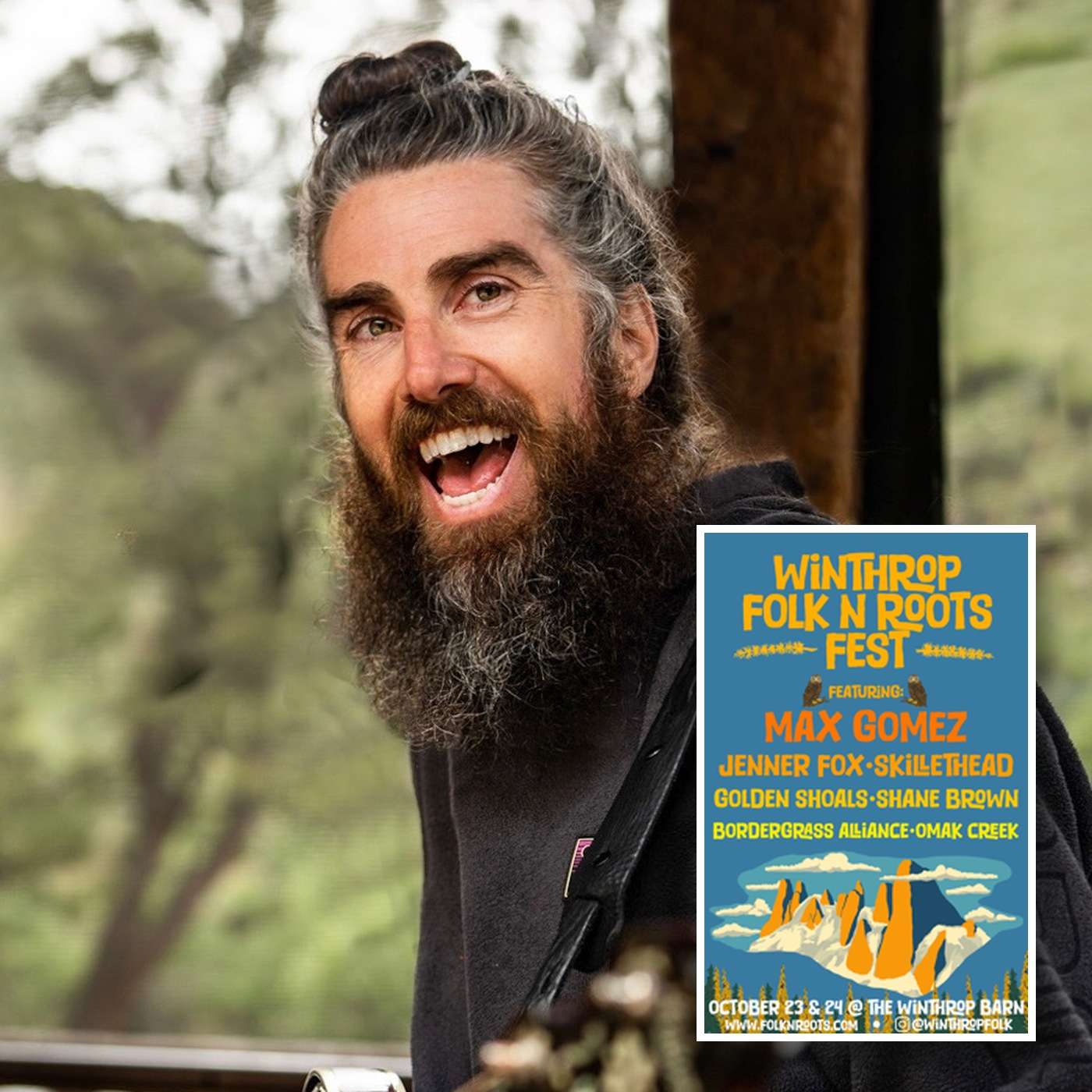
Brian Alley spent years on the road with Never Come Down, a Portland band that played bluegrass instruments and anything from Gillian Welch to Ween. They played Hardly Strictly Bluegrass in San Francisco and a hostel stage in Reykjavik during Iceland Airwaves. Then Brian settled in the Methow Valley, offered to help a small festival called Cidergrass with its booking, and by spring realized he was running the whole thing. He was voluntold.That festival is now the Winthrop Folk N Roots Fest, back at the Winthrop Barn on October 23 and 24, 2026, with Max Gomez headlining. It is small on purpose: one stage, seven acts, and a full house for every artist.Brian is blunt about the money. Every musician leaves with at least $300 for each day they play, with food and lodging covered, and even that is only about $60,000 a year for a band on the road 200 days. Tickets have a set price, plus pay what you can passes and patron passes for people who want to cover a neighbor, and there is no VIP tier. As Brian puts it, "this is a community thing."We also get into the late night jams at the artist hang, "emo grass" and the Northwest sound, why small venues can lose money on a full night, what a small town asks of a newcomer, and Mountain Music Fund, the nonprofit he started so nobody misses music camp because they cannot afford it.Also: Blue Star coffee in Twisp, the veggie sandwich at the Mazama Store, and pie, no question.Chapters00:00 Welcome, and the festival coming up02:24 From touring band to festival organizer05:05 Voluntold05:25 The coolest stage he ever played: Hardly Strictly Bluegrass07:46 A hostel show in Reykjavik during Iceland Airwaves11:03 What a Portland sound means, and emo grass14:51 Hard choices at a big festival, and finding Chuck Prophet17:10 Why one stage is the right size for now18:22 The late night jams at the artist hang19:29 What a free festival makes possible21:27 Booking a festival from the far end of the road26:07 Folk and roots is a big umbrella29:29 How many people fit in the Winthrop Barn30:42 Free workshops, showcases and jams around town33:08 Is a small town welcoming to a new face?36:53 This year's lineup, headlined by Max Gomez40:49 Pay what you can, and patron passes43:44 Why small venues lose money on full nights48:55 $300 a day, and why that is still not getting rich51:12 The crew: four board members and 20 to 30 volunteers54:41 What a festival does for a town in shoulder season58:04 Why you should come: Sisters Folk Fest meets Wintergrass01:00:41 Where the outdoors starts at the back door01:02:33 Coffee in the Methow Valley01:06:03 Lunch at the Mazama Store01:09:00 Cake or pie01:14:18 Mountain Music Fund and the camp he wants to build01:17:59 Can you bring a 140 pound dog to a festival?Winthrop Folk N Roots FestOctober 23 and 24, 2026 at the Winthrop Barn, 51 State Route 20, Winthrop. Friday 5pm to 11pm, Saturday 11am to 11pm. Weekend pass $120, day passes $60 and $70, patron pass $175, and a limited number of pay what you can passes. The Saturday daytime workshops, showcases and jams around town are free.Lineup: Max Gomez, Jenner Fox, Skillethead, Golden Shoals, Shane Brown, Bordergrass Alliance and Omak Creek.LinksWinthrop Folk N Roots Fest: www.folknroots.comTickets: zeffy.com/winthrop-folk-n-roots-fest-2026Want to help Mountain Music Fund? [email protected] Star Coffee Roasters, Twisp: bluestarcoffeeroasters.comThe Mazama Store: www.themazamastore.comThings to do in Winthrop: explorewashingtonstate.com/winthrop

John Shephard has spent three decades photographing Washington State on Fujichrome Velvia 50, using two cameras nobody makes anymore. One of them has a lens mounted on a rotating cylinder that takes two minutes and twenty seconds to complete a single exposure.It started at five in the morning in a Skagit Valley tulip field in 1999, when he met an Australian photographer named Ken Duncan and ended up spending four years as his assistant, two of them living in Australia.Now John has made his own book. Washington Wide is a panoramic portrait of the entire state, shot on film, drum scanned on a 25 year old Heidelberg Tango, with a foreword by Randy Lewis. It releases this fall.We talk about why he only buys 20 rolls of film a year, which corners of Washington he still wants to shoot, and what happens to an art form when the film, the cameras, and the people who can repair them are all quietly disappearing.Also: the Salmo-Priest Wilderness, why summer is his least favorite season, and a firm vote for huckleberry pie.Chapters00:00 Meeting Ken Duncan in a tulip field11:59 Two cameras, two ways of seeing16:34 What film cannot do that your eye can23:35 Washington before and after Instagram41:22 Going digital46:38 Deciding to make the book himself01:11:08 Washington Wide, out this fall01:22:00 Wrapping upLinksJohn Shephard Photography: https://johnshephard.comWashington Wide, preorder: https://washingtonwide.com
Kate Miller is the executive director of the Okanogan Land Trust, a nonprofit with two staff and an intern that protects working farms and ranches, wildlife habitat and water resources across Okanogan and western Ferry counties. Scott recorded this in their office in the town of Okanogan, in the county of Okanogan, a naming situation he admits gets him every time.Kate did not plan this career. She was born in Chapel Hill, grew up overseas while her father worked in global public health, went to Reed College, and finished a PhD in cultural anthropology in California. There was a postdoc in Vienna and teaching at Western Oregon University. Then COVID rearranged everything, a friend pointed her toward local environmental nonprofits, and she has now run this one for over five years. Her husband teaches at Tonasket Elementary.Most of this conversation is about one property.Bonaparte Meadows is 745 acres in the Okanogan Highlands, below Bonaparte Mountain near Bonaparte Lake, and at its centre sits roughly 265 acres of calcareous fen. Kate explains the distinction most of us never learn. A bog catches and holds rainwater, which is what makes bogs acidic. A fen is fed by groundwater welling up through the site. At Bonaparte that water filters through limestone, which makes it a calcareous fen, one of the rarest wetland types in the United States and the largest peat wetland in Okanogan County. Its deep peat soils hold water, store carbon, and feed cold clean flows into the Okanogan River watershed.Parts of it had been mined for peat. The family that owned it wanted to sell rather than place an easement, which meant the only way to protect it was to buy it outright.So a two person organisation in one of Washington's least populated and lowest income counties set out to raise 1.5 million dollars. Kate walks through how that actually works: state Recreation and Conservation Office grants that require a local match, the Ponderosa Dinner they hold every summer, the end of year mail campaign, and the part that surprised her most, which was how hard and how fast her own community gave.On August 12, 2026, five days after this conversation was recorded, Okanogan Land Trust announced that the For the Fen campaign had reached its 1.5 million dollar goal. Project partners include Trout Unlimited, the Okanogan Conservation District, North Central Washington Audubon Society, the Confederated Tribes of the Colville Reservation and Sparrow Song Consulting. Restoration planning comes next.You can learn more about Bonaparte Meadows and its extraordinary capacity to sequester carbon, store water and provide habitat for wildlife and plant life on the Okanogan Land Trust campaign page. Giving now supports the stewardship fund for the property.Also covered: what a conservation easement actually restricts and what it leaves alone, why parcels under about 80 acres rarely qualify, how many years one easement takes, the 36 easements the trust now holds, and the worthy projects it has to turn down because two people can only do so much.Plus a divemaster certification in Egypt, and a firm ruling on cake.Chapters00:00 Welcome, and an office in Okanogan, in Okanogan County00:50 Chapel Hill, then overseas, then Reed, then a PhD in anthropology06:02 What a land trust is, and what an easement does08:46 Getting paid for an easement, or donating one for the tax benefit12:31 How big a parcel has to be13:11 So how long does all this take (watch her face)17:24 Working with landowners21:43 The water rises up through limestone, and that changes everything30:37 Putting the water back33:27 How you actually raise the money34:57 The Ponderosa Dinner40:54 What surprised her about her own community44:46 Why this place, and who wanted it protected46:34 What is next for the trust49:32 Thirty six easements and counting51:02 The projects they have to say no to58:03 Where Kate eats01:01:11 Getting divemaster certified in Egypt01:06:14 Exploring Okanogan County01:12:08 Protecting the trails around WenatcheeKate's local picksSmallwoods, a little south of Okanogan toward Malott, for the porch, the smoked meats and the milkshake. Bonaparte Lake Resort, which is proud of its dinners and runs a smoked prime rib on Saturdays, with a reservation strongly advised in high season. She also named Crafted, Freebird, Tugboats and Scott Brothers.LinksOkanogan Land Trust: okanoganlandtrust.orgBonaparte Meadows and the For the Fen campaign: okanoganlandtrust.org/protect-bonaparte-meadows-3Exploring Washington State Podcast: explorewashingtonstate.com/podcast-2/
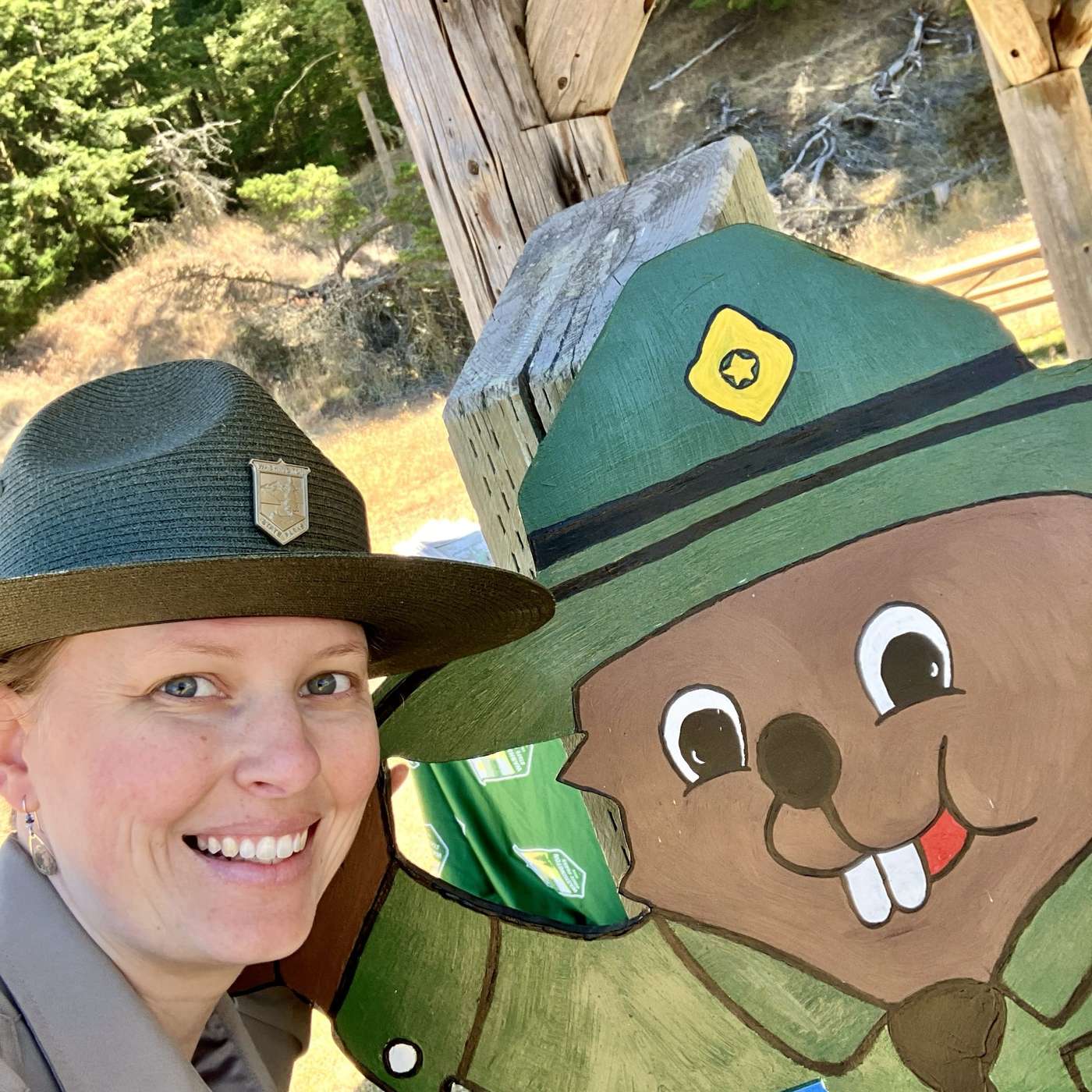
Kelsey Lang looks after the museums at Fort Flagler and Fort Worden, and she lives at one of them.She grew up in central Florida, an hour north of Orlando. Her husband went looking for the rainiest place in the country that also had mountains, Washington came up, and after years of applying they made the move during COVID with a dog who could not fly and a U Haul driven by a hired stranger. Her degree is in marine science with minors in biology and geology, which is not the resume you expect from someone running two history museums.The best story in this episode is a ceiling beam. The Fort Flagler museum sits in the old quartermaster storehouse, and across one beam there is a scatter of greasy fingerprints at different heights. A volunteer anthropologist worked out the likely explanation: bored soldiers, stationed at the end of an island with no bridge and no ferry, greasing their fingertips to see who could jump the highest. Nobody has ever cleaned it off.She also points out something most visitors trip over without noticing. The concrete gun batteries have been aging for a century, rain pulls calcium carbonate out of the cracks, and it is recalcifying inside as stalactites, stalagmites and flowstones. There are caves forming inside the fortifications.Also covered: how she rebuilt both museums around human stories instead of glass cases, the scavenger hunt she designed by following her eight year old around and writing down everything at that eye level, the Junior Ranger program and why adults keep asking for their own version, and the interactive rooms at the Commanding Officer's Quarters where you can write in the commander's log, look over the parade grounds through vintage binoculars, and put on a fake mustache for a photo. Plus a footstool whose legs are literal deer legs, hooves attached, and a rug made from used silk underwear.Her advice, and it is the line worth keeping: the next time you drive past a state park sign, turn down the road. Just do it.CHAPTERS00:00 Welcome back, and a host who admits he is rusty00:52 Interpretive specialist, or park ranger01:43 Central Florida to the Olympic Peninsula05:00 Moving during COVID, with a dog and a U Haul06:02 The museums Kelsey actually oversees08:24 Living in ranger housing at Fort Flagler09:47 Marine science to museum curation11:49 Rebuilding the Fort Flagler museum13:00 A scavenger hunt designed by an eight year old15:15 How the Junior Ranger program works20:29 Why Washington's parks are underappreciated25:41 Favorite season at each fort27:25 The greasy fingerprints on the storehouse beam30:55 Cave formations growing inside the batteries32:55 Camping at Fort Flagler, and the ranger pick35:59 Coffee and lunch in Port Townsend38:35 Inside the Commanding Officer's Quarters43:34 The commander's log and the selfie station50:17 Deer leg footstool, silk underwear rug52:50 What still needs fixing, and the long term plan01:01:41 Summer events at the parks01:05:06 A recent visit to Peshastin PinnaclesKELSEY'S PORT TOWNSEND PICKSCoffee: Conduit Cafe, 1012 Lawrence St, Uptown. She orders an iced latte.Lunch: Tommyknocker's Cornish Pasty, 711 Water St. She goes for the mac and cheese.Lunch: The Old Whiskey Mill, 825 Water St.Camping: Fort Flagler site 37, back corner of the upper forested loop, the furthest spacing from your neighbors.Cake or pie: cake. Specifically spice cake.PLAN YOUR VISITFort Flagler Museum is open daily 11am to 4pm through August, then Wednesday through Sunday in September and October. Free, donations welcome, Discover Pass required to park.The Commanding Officer's Quarters Museum at Fort Worden is open Friday through Tuesday, 11am to 4pm, April through October. It is closed Wednesdays and Thursdays.The Rothschild House in Port Townsend is open Thursday through Saturday, 11am to 4pm, April through September.The Fort Flagler historic hospital tour is cancelled through August 30 for construction work.A Level 3 burn ban is in effect statewide through October 30. No charcoal or wood fires. Gas and propane stoves are fine.The Junior Ranger booklet can be downloaded from parks.wa.gov, and completed pages can be mailed in to earn the badge.A note on two numbers you will hear in this episode: Washington State Parks recorded more than 40 million visits in 2025, not the 36 million quoted from the sign, and Fort Flagler has 116 campsites rather than the 150 plus estimated in the conversation.
Remember me? After six months off, the Exploring Washington State podcast is back, and we're kicking things off with a caffeinated twist. Scott dragged his buddy Brooks Smothers from RV Out West to four very different coffee shops in downtown Everett to drink too much coffee, talk even more, and finally figure out what a "one and one" actually is. Turns out you can drink coffee your whole life and still learn something at the first shop.From cortados served in little glass juice cups to the surprising backstory of the AeroPress, plus Everett's arts scene, its food, and the eternal question of why every coffee shop closes at 3, it's a loose and friendly tour of a city that takes its coffee seriously. Grab a cup and settle in.

Comments

Download from Google Play

Download from App Store
 United States