DiscoverEye of Power
Eye of Power
Claim Ownership

Eye of Power

Author: Tom Dardick

Subscribed: 2Played: 186
Share

Description

The Eye of Power is a model that answers this question: "What's in the way of me making the positive change I wish to make?" The answer is always the same: it's always us. But it's never simple, especially when we struggle to sustain the new behaviors we desire. The Eye of Power model lights our way. It reveals the specific beliefs and habits that, while they may have served us in the past, now hold us in place. Once we clearly see the blockage, we are better positioned to get past them. And that's what we do - together. In the Eye of Power community, we apply the lessons and clarity of the model to the most pressing priorities we face at this moment of our life journey. It may be gaining a skill or habit that helps us in our role at work. It might be a career change. It could be gaining entrepreneurial skills, or a plan of action to launch some creative endeavor. The model works effectively to make positive changes in our relationships, be they our primary life partnership, or other familial, casual, or professional. And it isn't just about ideas. It's about actions. It's about support. It's about getting real, looking in the mirror, marshaling our spirit, and creating the life we're made to live. When we do this, we make the world around us a much better place. We gain mastery over ourselves so that we can better contribute to everyone around us. That's power. That's the kind of power we talk about in this podcast. And it's the kind of power we work to bring more of into the world. We examine issues through this lens. We talk to people who exemplify the principles embodied in the model. We suggest action items that will move you in a better direction - one where you feel more substantial, more seen, more impactful, and more fulfilled.

Who is the podcast for?

It's for CEO's, HR Directors, Agency Directors, Business Owners, and people who want to increase the quality of their organizational culture - the emotional connections between the people who work side by side on a shared mission. It's for leaders who want to build and nourish a culture of trust. The system provides tools - a map, a compass, and a flashlight - that helps people do the inner work, the introspection that builds self awareness, needed to make and sustain the positive changes they need to make in order to be their best and highest selves. This means they will better connect, more meaningfully, with a wider range of people to a greater effect. They become more valuable team members. Better leaders. Better able to provide support to others who share their mission. The other side of the coin is you get less in-fighting, less resentment, less playing the blame game. Instead of those negatives, your culture features more engagement, more enthusiasm, more support, better listening, better communication, and an ever-rising culture of trust. This is more and more a challenge in an environment of remote work or hybrid workforces. We must come up with new ways to connect our employees with each other and with the organization. The system of the Eye of Power, when installed at the organizational level, helps leaders with their leadership style - they'll be able to communicate and connect with their direct reports in a more human way - important as we move away from a transactional approach in the workplace to a whole human leadership approach. The pressure from increasing automation driven by accelerating AI capacities puts increasing pressure on leaders to think and act in the human dimension - to treat people with respect to their emotional needs. This means they need, more than ever, high EQ or emotional intelligence, great listening skills and a healthy habit of Active Listening, a way to get to that which holds people back from the actions they know will pay off. The topics we discuss, all circling around the elements of the Eye of Power model, feed these positive qualities. Leaders and anybody who wants to manifest their best selves and serve others as they do s
206 Episodes
Reverse
I attended a conference last week in Austin, TX. I had hopes for it. It didn't turn out like that. How it did turn out I wouldn't choose. But as far as a lasting effect on me and my business, it was far beyond anything I could have anticipated. In this episode, I share that story and the lessons I took from my experience. Conferences? I say go. But only with an optimized attitude.
What happens when insight is no longer the problem?In this episode of The Eye of Power Podcast, Tom Dardick concludes a three-part series on holding back by turning toward the moment that matters most: the point where awareness becomes choice.After exploring how holding back hides in responsibility and discernment and examining the real costs it carries over time in the first two installments of this series, this third and final episode focuses on what it means to stop postponing action under the guise of patience, prudence, or “later.” We do so as a matter of reckoning rather than advice.This episode explores:Why insight without expression creates internal pressure rather than clarityHow “later” often becomes a way of managing discomfort instead of exercising agencyThe difference between chosen restraint and habitual holding backWhy momentum stalls when knowing and doing drift apartHow agency shows up in ordinary, repeatable moments rather than dramatic gesturesWhat it costs to keep work, ideas, and conviction partially hiddenTom also reflects candidly on the cost of holding back in his own work, including the tension between effort, visibility, and commitment. This episode is therefore less a conclusion and more a line being crossed in real time.This conversation is for people who:Feel capable but constrainedSense they already know what needs to changeAre tired of more insight without movementWant alignment between what they see, value, and act onAre navigating leadership, creative work, or personal growth with honestyChoosing Not to Hold Back is not about forcing action or abandoning discernment. It’s about recognizing when restraint has become default and deciding what to do when that realization arrives.Key topics:personal growth • agency • alignment • leadership • self-awareness • holding back • decision-making • purpose • pressure • momentum • fulfillment • creative work • professional development
What does holding back actually cost us over time?In this episode of The Eye of Power Podcast, Tom Dardick continues a three-part series on holding back by exploring its real-life consequences. Not the dramatic kind, but the quieter costs that accumulate slowly and often go unnoticed: reduced energy, blurred clarity, strained connection, and a thinning sense of purpose.Many capable, thoughtful people hold back for good reasons. Discernment, responsibility, and self-control are often rewarded. This happens in families, in organizations, and in leadership roles. But when holding back becomes habitual, it doesn’t stay neutral. It shapes how we show up, how clearly we think, how connected we feel to others, and how meaningful our work becomes.In this episode, Tom reflects on:How holding back quietly drains energy and momentumWhy clarity erodes when insight outpaces expressionHow restraint can turn connection into something procedural rather than aliveThe subtle way purpose goes quiet when contribution is consistently containedWhy these patterns are human, not personal failureAnd how awareness becomes the starting point for real, lasting changeRather than offering quick fixes or motivational advice, this episode invites a deeper kind of attention. Tom offers a simple, practical experiment listeners can try. This experiment helps reveal the true cost of holding back in everyday moments and opens the door to more aligned action.This conversation is especially relevant for:Leaders and professionals navigating responsibility and self-expressionPeople interested in personal growth, self-awareness, and fulfillmentThose exploring agency, alignment, and purpose in work and lifeAnyone who senses they’re capable of more but isn’t fully bringing it forwardThe Cost of Holding Back (and What to Do About It) is not about forcing change. It’s about seeing clearly because when we see the cost honestly, the path forward begins to reveal itself.Key topics:personal growth • leadership development • self-awareness • agency • alignment • purpose • energy • clarity • connection • holding back • fulfillment • mindset • professional development
Do you hold yourself back—even when you believe you’re being honest, capable, and fully yourself?In this episode of The Eye of Power Podcast, Tom Dardick explores a quiet but powerful dynamic that affects personal growth, leadership, and fulfillment: the subtle habit of holding back. Not out of fear or insecurity, but out of discernment, professionalism, and a desire to be responsible.Many accomplished people learn early how to manage themselves well—how to read the room, soften their message, and avoid unnecessary friction. These skills are valuable. But over time, what begins as wisdom can become habit. And habit, when left unexamined, can quietly limit energy, clarity, and momentum.This episode invites listeners to look more closely at:The difference between discernment and self-editingHow holding back can feel reasonable while still carrying a real costWhy insight alone doesn’t always translate into meaningful changeHow managing yourself can slowly replace showing up more fullyWhere awareness becomes the starting point for real transformationTom also shares a more personal reflection on his own podcasting journey—recognizing the gap between sharing ideas and sharing lived experience, and how that realization is shaping a new chapter in his work.Rather than offering quick fixes or motivational advice, On Holding Back offers something more durable: a lens for self-awareness and a simple, practical invitation to notice where you may be holding back in everyday conversations, decisions, and relationships—and to experiment with one small step toward fuller expression.This episode is for leaders, professionals, mentors, and anyone interested in personal development, agency, alignment, and living with greater integrity and presence.Key themes:personal growth • leadership development • self-awareness • agency • alignment • holding back • authenticity • fulfillment • inner voice • professional development
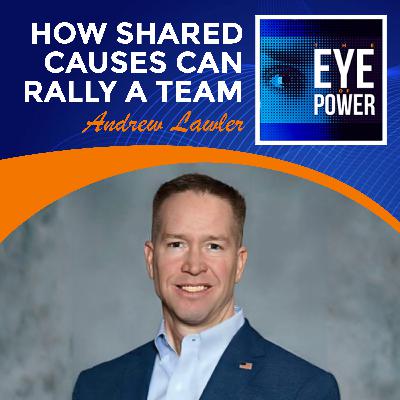
Tom Dardick sits down with Andrew Lawler, who talks about the importance of establishing shared causes when leading a diverse team focused on achieving long-term success. He reflects on his journey from serving in the military to becoming the COO and President at Barry Isett & Associates. Andrew explores the importance of maintaining a strong people strategy aligned with business goals and how to set ambitious goals while maintaining cultural precepts during periods of growth and change. He also presents his strategies in addressing the challenges of cross-training, employee retention, and maintaining genuine human relationships in the age of AI.
In this episode, Tom Dardick opens up about a hard-earned truth from decades in coaching, consulting, and leadership development: insight alone doesn’t change people—consistent practice does. Drawing from personal experiences with The Communication Gym, his transition into purpose-centered consulting, and the creation of the Mentor Machine Protocol, Tom explores why so many change efforts fail and what it really takes to build lasting human and organizational transformation.Through parallels with medicine, psychology, positive psychology research, and real-world organizational behavior studies, Tom examines why many traditional models unintentionally reinforce dependency rather than capability. He shares candid reflections on his own missteps and what he’s learning about agency, habit formation, and the shift from self-interest to shared mission.This episode challenges the assumptions behind coaching and consulting while honoring their value, offering a humble, research-backed exploration of what truly drives sustained change at both the individual and organizational level.Whether you’re a leader, coach, consultant, HR professional, or someone committed to personal growth, this conversation will help you rethink how development really works—and how to build systems that empower people to grow from the inside out.Key Topics Covered (SEO-rich keywords)Personal developmentOrganizational transformationLeadership developmentCoaching and consulting effectivenessBehavior change and habit formationPositive psychology interventionsAgency and self-determinationCommunication skills trainingCulture change and employee engagementPurpose-driven leadershipSustained Incremental Actions (SIA’s)Mentor Machine ProtocolHuman motivation and shared missionWhy ListenYou’ll learn:Why most training, coaching, and consulting doesn’t create lasting behavior changeThe psychological and systemic forces that keep people stuckHow consistent practice outperforms insight and adviceWhat Tom learned from the failures and successes of The Communication GymHow purpose, identity, and small weekly actions work together to transform peopleA new way to think about development that empowers individuals and organizationsPerfect ForExecutives and senior leadersCoaches and consultantsOrganizational psychologistsHR and L&D professionalsPersonal development enthusiastsAnyone interested in behavior change, agency, and leadership
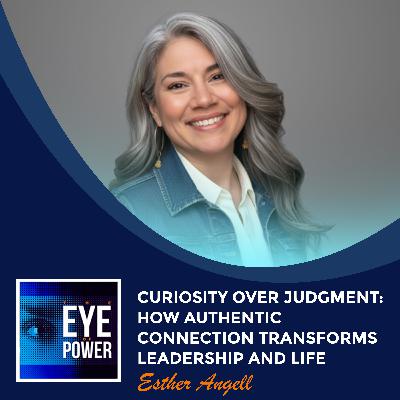
What if the secret to better relationships, stronger teams, and more confident kids was as simple as If you want a friend, be a friend?In this Eye of Power conversation, Tom sits down with go-to-market strategist and leadership mentor Esther Angell to explore how curiosity over judgment changes everything—at home, at work, and in the way we build our careers.Esther shares wisdom passed down from her Queens-born mother and her unforgettable Aunt Lynn (Live Like Lynn), who made everyone around her feel seen, valued, and loved. From coaching her kids to ask great questions, to helping anxious young people step out of their own heads, she shows how genuine interest in others becomes a superpower in a lonely, distracted world.You’ll hear Esther’s unusual journey:Growing up in rural Oklahoma with global experiences and missionary travelWorking in a faith-based nonprofit with people in deep poverty—and what scarcity really does to the brainSurviving the boom-and-bust cycles of upstream oil and gas and the camaraderie that shared suffering createsBecoming a leader in manufacturing and software, building psychologically safe teams, and learning not to manage everyone like yourselfDeveloping high emotional intelligence (EQ)—staying grounded, processing emotion, and not taking things personallyNow, as a consultant, Esther helps organizations clarify their go-to-market strategy, align marketing, sales, product, and customer success, and actually use the tech stacks and tools they already pay for. She’s especially passionate about supporting new managers as they discover who they are as leaders, and about creating positive influence in the immediate sphere around you instead of chasing abstract status.If you care about leadership, mentoring, curiosity, authenticity, or raising grounded kids in an anxious age, this episode will give you both inspiration and practical lenses you can use right away—on your team, in your family, and in the way you show up in the world.
In this candid and pivotal episode of The Eye of Power Podcast, Tom Dardick reveals a truth he’s long kept in the background: he has been holding back his full voice on the show. Tom explains why he softened critiques of the coaching and consulting industry, avoided emotionally charged topics, and shared very little of his personal struggles—and why that all changes now.This episode marks the beginning of a more direct, transparent, and energized phase of the podcast. Tom unpacks his evolving insights from Eye of Power 2.0, the deeper understanding of attention, alignment, and agency that emerged from the new model, and what listeners can expect from the relaunch.If you’re interested in personal development, leadership psychology, organizational culture, behavioral change, and the science of human agency, this episode is essential.#TomDardick, #EyeofPower, #agency, #personalgrowth, #leadershipdevelopment, #behavioralchange, #coachingcritique, #consultingproblems, #humanalignment, #organizationalculture, #self-improvement, #mentoring, #MentorMachine
Episode 200 is a little different—in the best way.In this milestone episode of The Eye of Power Podcast, Tom introduces the core team behind Mentor Machine and the ReTeam platform: his brother and longtime technology leader Greg Dardick, architect and ReTeam founder Vivek Nigam, and global facilitator and creative force Giselle Soares. Together, they share the origin story of how a shared passion for mentorship, belonging, and human-centered leadership evolved into a system designed to help organizations build truly thriving, aligned cultures, especially in remote and hybrid workplaces.You’ll hear how personal experiences with being overlooked, under-mentored, or unseen at work inspired tools that:Surface quiet talent and give everyone a voice in meetings and projectsBuild psychological safety, trust, and real friendships at workTurn positive psychology into daily actions, not just a training eventHelp leaders scale a culture of belonging, accountability, and growth across large organizationsThe team also looks ahead to the age of AI and exponential change. They explore why small, values-aligned teams can now create billion-dollar impact, why relationships and fulfillment are the new strategic advantage, and how Mentor Machine’s value-sharing model aligns fees with real business outcomes like reduced turnover and stronger engagement.If you care about leadership, mentoring, employee engagement, culture change, and the future of work, this behind-the-scenes conversation shows how a small global team is building systems so more people can feel seen, valued, and fulfilled at work.
Most of my life, I walked alone in my work. Last week I finally said it out loud. In this follow-up episode, I explore why that longtime habit formed, why it’s been hard to break, and how having a team at Mentor Machine Incorporated has changed everything for me. We also look at what mentorship really is (perspective, not advice) and why so many leaders avoid it even when they need it most. I introduce the Mentorship Self-Reflection Guide with questions that help you see where you’re carrying too much alone and where connection could accelerate your growth. Click the link to use the guide for yourself!
What True Mentorship Really Is — and Why Most Organizations Get It WrongMost organizations say they want mentorship. But what they usually create is something very different: advice, evaluation, and performance management. None of that transforms a person.In this episode of The Eye of Power, we explore the deeper meaning of mentorship — the kind that changes identity, unlocks fulfillment, and allows people to grow into who they are capable of becoming.We explore the difference between:Advice vs MentorshipGuidance vs WitnessingPerformance support vs Human developmentAnd we examine why mentorship is so rare, even in organizations filled with good people and strong intentions.Tom also shares a personal reflection on what it was like to grow without mentorship, and how that shaped his understanding of leadership, resilience, and the long journey of becoming.This conversation is for:Leaders who feel like they are carrying too much aloneExecutives and founders who support others more than they are supportedHR and People Operations professionals trying to build cultures of growthMentors, coaches, and managers who want to help others develop authenticallyAnyone who has felt that their potential is larger than their reflectionYou’ll learn:Why mentorship is an act of belief, not instructionThe three defining abilities of a true mentorHow to recognize “unsupported growth” in yourself and your organizationHow to reconnect with your own becomingHow to offer support in a way that strengthens identity rather than dependenceToward the end of the episode, Tom guides listeners through a quiet reflective exercise taken from the Mentorship Self-Reflection Guide, a simple tool designed to help you see where you may be growing alone — and where companioned growth could make all the difference.Key Topics & Search KeywordsMentorship, Leadership Development, Authentic Leadership, Personal Growth, Executive Coaching, Organizational Culture, Fulfillment, Human Development, Emotional Intelligence, Self-Reflection, Resilient Leadership, Transformational Leadership, Coaching Skills, People Development, Leadership Mindset, Becoming, Workplace Culture, Relational Leadership, Leadership Presence, Identity and GrowthIf this episode resonates with you, and you recognize something of your own journey in it, you are invited to reach out for a human conversation, with no pressure or expectation.You don’t have to walk the long road alone. Connect with Tom on LinkedIn and request the Mentorship Self-Reflection Guide.
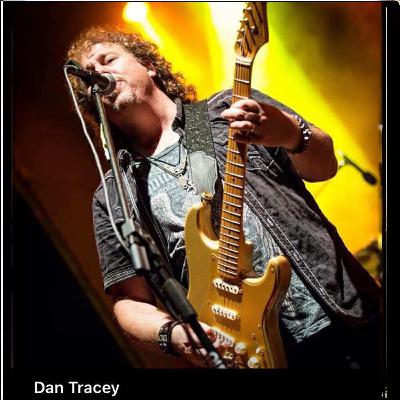
Dan Tracey is a talented and accomplished professional musician, songwriter, and producer. He is a long-time member of the legendary rock band, the Alan Parsons Live Project and has also written and/or recorded with Don McClean, Felix Cavalier, Honeymoon Suite, Little River Band, Tiffany, and many more. Dan's success is not simply a product of his musical talent, but of his mindset. On today's Eye of Power episode, he shares some of his insight with us, notably the commitment to "bring great." Find out more about Dan here:https://alanparsons.com/pages/dan-tracey-guitar-backing-vocalshttps://www.discogs.com/artist/5104376-Dan-Tracey
In our white paper, Frustration to Fulfillment, we noted a worldwide decline in engagement and suggested ways leaders could address this problem by identifying and strengthening the elements that build more fulfillment in their workforce. In this episode, we dive deeper into fulfillment in the workplace. At Mentor Machine Incorporated, we have a name for that kind of fulfillment: Alvea. It's produced when mastery combines with contribution in ways that benefit others in a shared mission. Today, we look at why it is imperative for organizations in all segments and at all scales must actively and strategically build Alvea in their people. As we enter the age of AI, it's needed in order to thrive - maybe even survive as an organization.
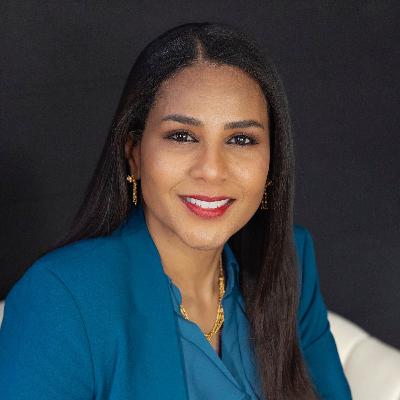
Our guest this episod Dr. Hagir Elsheikh, whose personal story is a shining example of how much personal power we all truly possess. Dr. Elsheikh shares the story of the trauma of her childhood in oppressive Sudan, and how she's been able to find peace through purpose through her experience as the activist mother of Kareem, her autistic son. Here is a partial bio:Dr. Hagir Elsheikh, Chairwoman and CEO of Hagir Network, Founder & CEO of Tomorrow’s Smile INC, Kareem’s Mission Org. HSE Staffing Agency LLC, KMission TV LLC. She is an Advocate, Activist, Motivational Speaker, political analyst, Talk show host, Producer, Author, poet, and philanthropist. Hagir Elsheikh is an advocate, leader, and survivor whose life’s work embodies resilience, justice, and dedication to peace-building and human rights. Her journey from a survivor of torture, gender-based violence, harassment, female genital mutilation (FGM), and domestic violence to a global human rights champion is a testament to her spirit and lifelong commitment to making the world a better place. Early Life and Political Activism Born in Sudan, Hagir's early years were marked by her vocal opposition to the oppressive Al-Bashir regime. From the age of 11, she used her voice to protest against tyranny and advocate for democratic reforms. As one of the few female spokespersons for the Sudanese Democratic Front, her courageous activism led to her arrest, torture, and eventual asylum in the United States. These experiences only strengthened her resolve to fight for justice and human dignity. Advocacy for Human Rights and Women's Rights Hagir Elsheikh’s advocacy is deeply personal and wide-reaching. As a survivor of torture, Gender-Based violence, domestic violence, harassment, and FGM, she channels her experiences into powerful campaigns against gender-based violence, human trafficking, and the exploitation of minors. Her efforts include raising awareness, advocating for legislative changes, and supporting victims through counseling and empowerment programs.Hagir’s commitment to combating FGM is particularly noteworthy. She has tirelessly worked to raise awareness and implement preventive measures to stop this crime, drawing from her own painful experiences to drive change. Her advocacy extends to supporting survivors and promoting gender equality, demonstrating her commitment to protecting vulnerable populations. Peace Building and Democratic Empowerment Hagir’s work in peacebuilding and democratic empowerment is globally recognized. She collaborates with organizations such as the United Nations, UNDP, TASSC, CWS, Amnesty International, Pennsylvania Human Relations Commission (PHRC), the civic club, World Affair Council of Harrisburg, and several colleges and organizations such as Grand Canyon University, Johns Hopkins University, and the University of Pennsylvania to promote dialogue and initiatives that foster peace and democratic governance. Her efforts have been instrumental in promoting peace in conflict-affected regions, especially in Sudan.In the United States, Hagir is an active member of Sudan's working advocacy group for Congress and the State Department, providing crucial advice, briefings, and support for humanitarian causes. She serves on the boards of Trustees of several humanitarian organizations, including the organization that she founded Tomorrow’s Smile INC (TSI), TASSC, Church World Services (CWS), and the World Affairs Council of Harrisburg. Her work with CWS, in particular, involves using her experiences as a refugee and immigrant to raise awareness about the challenges refugees face and to assist in providing them with training and cultural orientation when they settle in Pennsylvania. She is also a member of the board of trustees at Harrisburg Area Community College (HACC), Kareem’s Mission organization.As a mother of a child with autism, Hagir has a personal and profound commitment to supporting individuals with autism and their famil
This week's episode is a departure. Tom shares a PowerPoint presentation from his talk entitled Mentoring as a Strategic Asset. The thesis of this talk is that organizations of the future, in order to thrive, perhaps even survive, must feature a mentoring culture. This means the people in the organization effectively act as both mentor and mentee to be, in ways that matter personally to them, better tomorrow than today. Given time and constituency demands, this is easier said than done. It is also exactly the mission of Mentor Machine Incorporated - to help leaders achieve this rare and invaluable status. Tom reviews his G.R.O.W.T.H. framework that typifies masterful mentoring, and offers ideas about how organizations of all types and sizes can evolve to a place where more of their people feel a sense of deep fulfillment.
In this last installment of the Frustration to Fulfillment series, the rubber meets the road. We look at some of the ways to take action that nourishes individuals and organizational culture through systematically increasing fulfillment in the workplace. It's not just a hot term or a fad - it is a recognition of the deeper aspects of human nature, and rising to the responsibility to take actions that lead to more flourishing. Though we look at some of these actions, the primary one - true in all intentional positive change - is a commitment to make it happen. That's the takeaway from today's episode. For more, check out thementormachine.com and/or contact tom at tom@thementormachine.com. The kinds of actions you can take, aside from seeing the latest research on engagement in the workplace, are finding ways to measure fulfillment, installing effective means to not simply teach, train, or coach - but to inspire, connect, and grow. These are the ingredients that give us more meaning and purpose, which in turn gives us the kind of fulfillment we call Alvea, which in turn creates a thriving organizational culture. Start building that right now!
In this installment of our continued review of our white paper Frustration to Fulfillment, we take a look at the workplace of the 21st century through a psychological lens. Specifically, we utilize the findings of Abraham Maslow, Victor Frankl, and Martin Seligman to apply positive psychological precepts to improve our individual level of fulfillment and our organizational culture. If you would like to read the white paper, please visit thementormachine.com, or reach out to Tom directly at tom@thementormachine.com.
Engagement is a hot word - many organizations do what they can to build engagement. Yet, frustration is widespread: It shows up as fatigue, disengagement, or quiet dissatisfaction, even among competent and engaged employees. The problem is Engagement ≠ Fulfillment: Engagement keeps people interested for a while, but only fulfillment sustains them long-term. Fulfillment = Alignment: It emerges when people’s strengths, values, and contributions connect to meaningful outcomes.The Data That MattersOnly 21% of employees worldwide are engaged in their work. Nearly 80% are disengaged or frustrated (Gallup, 2025).Disengagement costs the global economy $8.9 trillion annually — about 9% of global GDP (Gallup, 2025).70% of employees don’t believe their leaders create a culture where they can thrive (Deloitte, 2023).1 in 3 workers say their workplace harms their mental health (American Psychological Association, 2024).Employees who find their work meaningful are 70% less likely to experience burnout (Gallup, 2024).Employees who feel they can use their strengths at work are 57% less likely to quit (Deloitte, 2023).What can we do about all of this? Pay attention to Fulfillment and do what you can to build it. How? That's what we talk about in today's episode - Eye of Power style.
In this second installment of a series in which we explore the contents of our white paper entitled Frustration to Fulfillment: Contemporary Challenges and Effective Strategies in Building and Sustaining an Engaged Workforce and Thriving Organizations, we contrast the ideas of engagement in our work with fulfillment at work. The research is clear - engagement follows fulfillment, and leaders of 21st century organizations are well-advised to build systems that maximize fulfillment. We introduce a distinct concept, a particular kind of fulfillment, we call Alvea. In future installments, we will further examine the research behind these claims as well as offer action items for leaders who want to build thriving human-centered cultures.
Today's episode is the beginning of a series based upon a newly available white paper entitled Frustration to Fulfillment: Contemporary Challenges and Effective Strategies in Building and Sustaining an Engaged Workforce and Thriving Organizations, which presents the latest research regarding how organizations gain and lose productivity via the ways they foster, or degrade, engagement and fulfillment in their workplaces. In this first installment, Tom lays out current trends, the stakes involved, the causes for the decline, and the key area of focus leaders must address to guide their teams to long-term satisfaction.
loading
Comments