


 Claim Ownership
First Principles
Subscribed: 0Played: 0
Subscribe
Description
First Principles isn't another business podcast recycling the same startup stories. Adrian Wells takes the fundamentals that actually matter and breaks them down like you're having coffee with the smartest professor you ever had.
Wells spent twelve years teaching philosophy and critical thinking before ditching the lecture hall for the microphone. Turns out, the same principles that help you think clearly about ancient Greek ethics also work pretty well for modern business decisions. Who knew?
Every episode strips away the latest trends and buzzwords to focus on the core ideas that don't change. How to actually evaluate evidence when everyone's throwing around statistics. Why most "revolutionary" business advice is just old wine in new bottles. The thinking patterns that separate smart decisions from lucky guesses.
You won't get hyped-up success stories or flavor-of-the-month strategies. Instead, you'll learn how to think through problems the way philosophers have for centuries, applied to the stuff that matters in your work and life right now.
Multiple new episodes drop daily, so there's always something fresh when you need it. Follow now if you're ready to think better, not just think faster. Multiple new episodes daily—follow now!
Wells spent twelve years teaching philosophy and critical thinking before ditching the lecture hall for the microphone. Turns out, the same principles that help you think clearly about ancient Greek ethics also work pretty well for modern business decisions. Who knew?
Every episode strips away the latest trends and buzzwords to focus on the core ideas that don't change. How to actually evaluate evidence when everyone's throwing around statistics. Why most "revolutionary" business advice is just old wine in new bottles. The thinking patterns that separate smart decisions from lucky guesses.
You won't get hyped-up success stories or flavor-of-the-month strategies. Instead, you'll learn how to think through problems the way philosophers have for centuries, applied to the stuff that matters in your work and life right now.
Multiple new episodes drop daily, so there's always something fresh when you need it. Follow now if you're ready to think better, not just think faster. Multiple new episodes daily—follow now!
124 Episodes
Reverse
Ray Dalio manages the world's largest hedge fund, predicted the 2008 crash, and just issued his most urgent warning yet: America is heading into "very, very dark times." His analysis isn't based on politics or gut feelings - it's rooted in 500 years of data on how empires rise and fall. In this episode, Adrian Wells breaks down Dalio's "Big Cycle" theory and what it means for your future.
🎯 What You'll Learn:
• Why Dalio's track record gives his warnings serious weight (he made billions during 2008 while others lost everything)
• The specific patterns that preceded the fall of Dutch and British empires - and how they're playing out in America today
• How US debt exploded from $5.7 trillion to $34 trillion in just 24 years, and why that's not sustainable
• China's economic rise from $1.2 trillion to $17.7 trillion since 2000, and what it signals about global power shifts
👤 Perfect for: lifelong learners who want to understand the big picture forces shaping our economic future, not just the daily news cycle.
📍 Chapters:
[00:00] Adrian Wells introduces Dalio's most dire prediction yet
[01:45] The Big Cycle theory: how empires actually collapse
[04:15] America's debt spiral: the numbers that keep economists awake
[06:30] China's rapid rise and what history teaches about power transitions
[08:45] Why this time might not be different
[10:30] What individuals can do when nations decline
🔔 Never miss an episode:
Follow First Principles on Spotify or Apple Podcasts and turn on notifications. New episodes drop daily, your next favorite insight is one tap away.
🔍 Topics: Ray Dalio, economic collapse, empire decline, US debt crisis, China economy
Find all episodes at First Principles
------------
Keywords: thinking skills, critical thinking podcast, ai dangers
Learn more about your ad choices. Visit megaphone.fm/adchoices
What if everything you've been told about building wealth is keeping you broke? Adrian Wells breaks down why the "safe" financial advice everyone follows might be the riskiest strategy of all. Spoiler alert: your savings account is literally losing you money every single day.
🎯 What You'll Learn:
• Why putting money in traditional savings makes you 2.15% poorer annually (the inflation math that'll shock you)
• The hidden costs of homeownership that eat 3-4% of your home's value every year
• How Japan's 15-year housing crash proves real estate isn't the "sure thing" everyone claims
• The S&P 500's 90-year track record that crushes both savings accounts and housing returns
👤 Perfect for: lifelong learners and anyone passionate about personal growth who's ready to question conventional financial wisdom and think differently about money.
📍 Chapters:
[00:00] Adrian Wells introduces the wealth-building myths costing you thousands
[01:30] The savings account trap: why 0.35% interest rate equals guaranteed loss
[04:00] Real homeownership costs beyond your mortgage payment
[07:00] Japan's housing market collapse: the cautionary tale nobody mentions
[10:00] Stock market returns vs. real estate: the 90-year comparison
[12:00] Three actionable steps to stop getting poorer
This isn't about getting rich quick. It's about understanding the basic math that separates wealth builders from wealth destroyers. The numbers don't lie, but most financial advisors won't show you this side of the equation.
🔔 Never miss an episode:
Follow First Principles on your podcast app and turn on notifications. New episodes drop daily, your next favorite insight is one tap away.
🔍 Topics: personal finance, real estate investing, inflation, stock market returns, wealth building
Find all episodes at First Principles
-------
Keywords: depression stories, relationship psychology, entrepreneurship philosophy, leadership psychology, mental health celebrities, health myths
Learn more about your ad choices. Visit megaphone.fm/adchoices
What if walking away from $50 million was the smartest career move in Hollywood history? In this episode, Adrian Wells breaks down how Matthew McConaughey deliberately sabotaged his own lucrative career to become the actor he actually wanted to be.
🎯 What You'll Learn:
• Why McConaughey rejected a $14.5 million romantic comedy role in 2010 and disappeared from Hollywood for 20 months
• The psychological principle behind his career transformation that applies to any major life change
• How sacrificing short-term wins can create exponential long-term success (backed by his Oscar win within 3 years)
👤 Perfect for: lifelong learners and anyone passionate about personal growth who's ever felt trapped by their own success or wondering if it's too late to reinvent themselves.
📍 Chapters:
[00:00] Adrian Wells introduces McConaughey's $50M gamble
[01:30] The romantic comedy trap that made him miserable
[04:00] 20 months of career silence: what really happened
[07:00] The philosophy behind deliberate career sabotage
[10:00] From rom-com king to Oscar winner: the numbers
[12:00] How to apply McConaughey's strategy to your own reinvention
McConaughey didn't just get lucky with his comeback. He systematically destroyed his old identity to build a new one. Before 2010, he'd made over $100 million from romantic comedies alone. After his strategic disappearance, he earned an Oscar, Golden Globe, and SAG Award within three years.
The same first principles thinking that guided his transformation can guide yours, whether you're stuck in a career that pays well but feels hollow, or wondering if it's possible to completely reinvent yourself at any stage of life.
🔔 Never miss an episode:
Follow First Principles on Spotify and turn on notifications. New episodes drop daily, your next favorite insight is one tap away.
🔍 Topics: career change, Matthew McConaughey, personal reinvention, strategic sacrifice, first principles thinking
Find all episodes at First Principles
----------
Keywords: success psychology, personal development, behavioral economics
Learn more about your ad choices. Visit megaphone.fm/adchoices
What if 67% of people struggling to lose weight have a hidden problem that most doctors never even test for? Adrian Wells sits down with an insulin specialist who's finding mold toxins in the majority of his patients who can't shed dangerous belly fat. The connection between what's growing in your walls and what's growing around your waistline is more real than you think.
🎯 What You'll Learn:
• Why visceral fat acts like a toxic organ, pumping out 30+ inflammatory compounds that wreck your metabolism
• How mold exposure can spike insulin resistance by 40% and block fat loss even when you're doing everything "right"
• The waist measurement numbers that put you at 5x higher risk for metabolic disease (and what to do about it)
• A simple intermittent fasting approach that can cut visceral fat by 4-7% in just 6 weeks
👤 Perfect for: lifelong learners and anyone who's been frustrated by stubborn weight that won't budge despite their best efforts.
📍 Chapters:
[00:00] Adrian Wells introduces the mold-metabolism connection
[01:45] Why 67% of fat loss patients test positive for mold toxins
[03:30] The hidden danger of visceral fat beyond how it looks
[05:15] How mycotoxins hijack your insulin system
[07:00] The waist measurements that signal metabolic trouble
[08:45] Intermittent fasting strategies that actually work
[10:30] Practical steps to test and treat mold exposure
🔔 Never miss an episode:
Follow First Principles on Spotify or Apple Podcasts and turn on notifications. New episodes drop daily, your next favorite insight is one tap away.
🔍 Topics: insulin resistance, visceral fat, mold toxicity, intermittent fasting, metabolic health
Find all episodes at First Principles
--------
Keywords: fame psychology, relationship psychology, philosophy business
Learn more about your ad choices. Visit megaphone.fm/adchoices
Think being "authentic" at work helps your career? New research suggests you might be sabotaging yourself. Adrian Wells breaks down why excessive authenticity actually makes people trust you less, and what high performers do instead.
Turns out, your coworkers don't want to hear every unfiltered thought. Studies from Stanford and Harvard show that people who practice selective authenticity get promoted faster and build stronger relationships. The catch? Most people have no idea where to draw the line.
🎯 What You'll Learn:
• Why employees who share every emotion show 40% higher burnout rates among their teams
• The "authenticity paradox" that explains why being too real makes you seem unreliable
• How selective sharing builds trust faster than full transparency
• The three-question filter high performers use before speaking their mind
👤 Perfect for: lifelong learners and anyone passionate about personal growth who wants to advance their career without compromising their values.
📍 Chapters:
[00:00] Adrian introduces the authenticity trap at work
[01:45] Stanford research on emotional expression and trust
[03:30] Why "being yourself" backfires in professional settings
[05:15] The selective authenticity strategy from Harvard Business Review
[07:00] Three questions that separate helpful honesty from career suicide
[09:30] How to stay genuine while building credibility
[11:15] Key takeaways you can implement tomorrow
This isn't about becoming fake or corporate. It's about understanding that authenticity without boundaries isn't authentic at all. It's just poor impulse control with better marketing.
🔔 Never miss an episode:
Follow First Principles on Spotify or Apple Podcasts and turn on notifications. New episodes drop daily, your next favorite insight is one tap away.
🔍 Topics: workplace authenticity, professional relationships, career advancement, emotional intelligence, trust building
Find all episodes at First Principles
-----------
Keywords: productivity science, behavioral economics, thinking skills, mental health celebrities
Learn more about your ad choices. Visit megaphone.fm/adchoices
Here's a controversial truth: religious people might live 7 years longer, but the world's happiest countries are filled with atheists. Adrian Wells breaks down the research that's making both believers and non-believers uncomfortable.
🎯 What You'll Learn:
• Why Denmark and Sweden (70% atheist) top happiness rankings while religious nations struggle
• The charity gap: religious people donate 3.5x more money but atheists dominate scientific innovation
• How belief systems actually affect your brain chemistry and decision-making patterns
• The surprising data on which worldview produces better mental health outcomes
👤 Perfect for: lifelong learners and anyone questioning how belief shapes society and personal wellbeing.
📍 Chapters:
[00:00] Adrian Wells reveals the 7-year longevity gap
[02:15] Scandinavian happiness: what atheist societies get right
[04:45] The charity paradox and community building differences
[07:00] Scientific reasoning vs emotional regulation scores
[09:30] Mental health outcomes across belief systems
[11:45] What this means for your personal worldview
This isn't about proving anyone right or wrong. It's about understanding what the actual data shows when we strip away assumptions and look at measurable outcomes. Some findings will challenge your preconceptions, regardless of what you currently believe.
The research paints a complex picture that doesn't fit neatly into anyone's talking points. Religious communities excel at certain human needs while secular societies dominate in others. The question isn't which is "better" but what we can learn from both approaches.
🔔 Never miss an episode:
Follow First Principles on Spotify or Apple Podcasts and turn on notifications. New episodes drop daily, your next favorite insight is one tap away.
🔍 Topics: atheism vs religion, happiness research, longevity studies, belief systems, mental health
Find all episodes at First Principles
-------------
Keywords: behavioral economics, business strategy, depression stories, philosophy business
Learn more about your ad choices. Visit megaphone.fm/adchoices
What if your morning granola bar packs more sugar than a glazed donut? Adrian Wells breaks down the shocking truth about "healthy" foods with insights from sugar expert research that'll change how you read every label. Turns out, food companies have 57 different ways to hide sugar on ingredient lists, and they're using every single trick.
🎯 What You'll Learn:
• Why the average American eats 17 teaspoons of added sugar daily (spoiler: it's not from obvious sources)
• The 57 sneaky names for sugar that make "healthy" foods sound nutritious
• How children's products contain 40% more sugar than identical adult versions
• Simple label-reading tricks that expose hidden sugars instantly
👤 Perfect for: lifelong learners and anyone who's ever felt confused standing in the grocery aisle wondering what's actually healthy.
📍 Chapters:
[00:00] Adrian Wells exposes the "healthy" food lie
[01:30] The 17-teaspoon problem most people don't see
[03:45] Granola bars vs donuts: the shocking sugar showdown
[06:15] 57 names for sugar hiding in plain sight
[08:30] Why kids' foods are sugar bombs in disguise
[10:45] Your 3-step label detective method
This isn't about cutting out all sugar or going on some extreme diet. It's about seeing through the marketing BS so you can make informed choices. When you know what to look for, those "natural" and "organic" labels start telling a very different story.
The food industry spends billions getting you to buy products that seem healthy but aren't. After this episode, you'll spot their tricks from a mile away and actually know what you're putting in your body.
🔔 Never miss an episode:
Follow First Principles on your podcast app and turn on notifications. New episodes drop daily, your next favorite insight is one tap away.
🔍 Topics: hidden sugar, food labels, healthy eating, nutrition facts, sugar addiction
Find all episodes at First Principles
--------------
Keywords: mental health celebrities, thinking skills, personal development, evidence evaluation, depression stories
Learn more about your ad choices. Visit megaphone.fm/adchoices
What if the biggest financial myth of the last decade has kept millions trapped in cycles of financial desperation? In this episode, Adrian Wells breaks down a savings expert's explosive claims about the $47 billion passive income industry and reveals how childhood money trauma controls adult financial decisions in ways most people never realize.
🎯 What You'll Learn:
• Why 95% of passive income attempts fail within two years (and the hidden costs nobody talks about)
• The truth about rental properties: they actually require 40-60 hours of work monthly, not the "set it and forget it" promise
• How post-traumatic broke syndrome makes people who grew up financially unstable hoard cash instead of investing it wisely
• Why over 60% of Americans have less than $1,000 in savings but still chase passive income dreams
👤 Perfect for: lifelong learners and anyone passionate about personal growth who's tired of getting sold financial fairy tales instead of practical money wisdom.
📍 Chapters:
[00:00] Adrian Wells introduces the passive income myth
[01:45] The $47 billion scam: why the numbers don't add up
[04:20] Post-traumatic broke syndrome: how childhood shapes money decisions
[07:10] The rental property reality check that nobody mentions
[09:30] What actually works for building wealth (it's not sexy)
[11:15] Key takeaways you can use starting today
This isn't another feel-good money episode. It's a reality check backed by research that could save you years of chasing the wrong financial strategies. The savings expert's insights about childhood money trauma alone will change how you think about your relationship with cash.
🔔 Never miss an episode:
Follow First Principles on Spotify or Apple Podcasts and turn on notifications. New episodes drop daily, your next favorite insight is one tap away.
🔍 Topics: passive income myths, post-traumatic broke syndrome, rental property reality, savings psychology, financial trauma
Find all episodes at First Principles
----------
Keywords: critical thinking podcast, leadership psychology, social media addiction, health myths, logical reasoning, celebrity interviews
Learn more about your ad choices. Visit megaphone.fm/adchoices
Sometimes you just know. That split second when everything changes, when life pivots on the smallest detail. In this episode, Adrian Wells examines Louis Tomlinson's devastating moment when police knocked on his door to deliver news that would shatter his world: his mother had passed away.
🎯 What You'll Learn:
• Why 60-80% of people report "just knowing" before receiving tragic news
• How Louis balanced One Direction tour dates while his mother battled leukemia
• The psychological impact of sudden loss during peak career moments
• Why police handle death notifications when families can't be reached
👤 Perfect for: lifelong learners and anyone who's faced unexpected loss or wants to understand the psychology behind those haunting moments of intuition.
📍 Chapters:
[00:00] That cold December day that changed everything
[01:45] Johannah Deakin's leukemia diagnosis in early 2016
[03:30] Performing while grieving: Louis's impossible choice
[05:15] The science behind premonitions and "just knowing"
[07:00] Why police become messengers of tragedy
[09:30] How sudden loss reshapes identity and purpose
[11:00] Key insights about grief, intuition, and resilience
This isn't just another celebrity story. It's about those universal moments when life stops, when we're forced to confront what really matters. Louis's experience reveals something profound about human intuition, the weight of responsibility, and how we carry on when everything falls apart.
🔔 Never miss an episode:
Follow First Principles on Spotify and Apple Podcasts. New episodes drop daily, your next favorite insight is one tap away.
🔍 Topics: Louis Tomlinson, grief psychology, sudden loss, One Direction, mother's death, police notifications, premonitions, intuition science
Find all episodes at First Principles
-----------
Keywords: first principles, relationship psychology, thinking skills, motivation psychology, evidence evaluation, fame psychology, mental health celebrities
Learn more about your ad choices. Visit megaphone.fm/adchoices
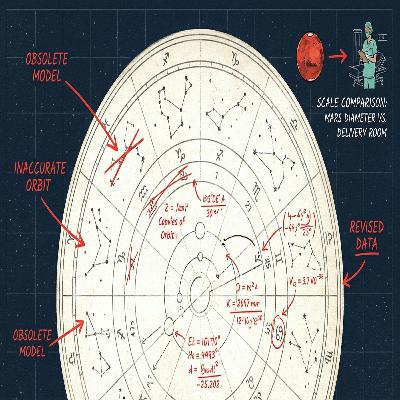
Ever wonder why your horoscope feels so accurate? Neil deGrasse Tyson just crushed that illusion in under three minutes. In this episode, Adrian Wells breaks down the astrophysicist's devastating takedown of astrology, and honestly, the facts are pretty brutal.
🎯 What You'll Learn:
• Why your zodiac sign is actually wrong (thanks to something called precession)
• The shocking math behind gravitational forces - spoiler: your obstetrician has more pull on you than Mars
• How astrology conveniently ignores an entire 13th constellation called Ophiuchus
• What happened when scientists actually tested 2,000 people for personality correlations with birth months
👤 Perfect for: lifelong learners and anyone passionate about personal growth who's ready to separate scientific fact from wishful thinking.
📍 Chapters:
[00:00] Adrian Wells sets up Tyson's astrology challenge
[01:15] The precession problem that destroys your sign
[02:30] Gravitational force reality check
[03:45] The missing 13th constellation nobody talks about
[05:00] What real scientific testing revealed
[06:30] Key takeaways for critical thinking
Look, this isn't about crushing anyone's fun. It's about understanding how the universe actually works versus how we want it to work. Tyson's breakdown is clinical, precise, and kinda mind-blowing when you realize how the basic astronomy facts completely undermine the whole system.
If you've ever been curious about why scientists are so skeptical of astrology, this episode gives you the exact reasons in plain English. No PhD required.
🔔 Never miss an episode:
Follow First Principles on Spotify or Apple Podcasts and turn on notifications. New episodes drop daily, your next favorite insight is one tap away.
🔍 Topics: Neil deGrasse Tyson, astrology debunked, critical thinking, astronomy facts, scientific skepticism
Find all episodes at First Principles
------
Keywords: logical reasoning, critical thinking podcast, performance optimization, first principles, entrepreneurship philosophy, cognitive biases
Learn more about your ad choices. Visit megaphone.fm/adchoices
Your doctor just told you those painful periods are "normal." The irregular cycles? "Just stress." That crushing fatigue? "Try getting more sleep." But what if everything you've been told about women's health symptoms is keeping you from getting the care you actually need? In this episode, Adrian Wells breaks down the dangerous gap between what women experience and what medical professionals actually investigate.
🎯 What You'll Discover:
• Why it takes 7-10 years on average for women with endometriosis to get diagnosed (and the red flags doctors ignore)
• The shocking 50% higher misdiagnosis rate for women having heart attacks compared to men
• How 70% of women with PCOS go undiagnosed despite affecting 1 in 10 women of reproductive age
• The 16-minute longer wait time women face in emergency rooms before receiving pain medication
👤 Perfect for: lifelong learners and anyone passionate about personal growth, especially if you've ever felt dismissed by a healthcare provider or want to advocate better for yourself or loved ones.
📍 Chapters:
[00:00] Adrian Wells introduces the medical gaslighting crisis
[02:15] The endometriosis diagnosis disaster: why severe pain gets dismissed
[04:30] Heart attack symptoms: how "typical" male patterns hide women's reality
[06:45] PCOS and hormone imbalances: the silent epidemic nobody talks about
[09:00] Emergency room bias: why women's pain isn't taken seriously
[11:30] Red flags that actually require immediate medical attention
🔔 Never miss an episode:
Follow First Principles on Spotify or Apple Podcasts and turn on notifications. New episodes drop daily, your next favorite insight is one tap away.
🔍 Topics: women's health, medical bias, fertility issues, hormone imbalances, healthcare advocacy
Find all episodes at First Principles
--------------
Keywords: evidence evaluation, personal development, performance optimization, ai dangers, logical reasoning, fame psychology, entrepreneurship philosophy, billionaire mindset
Learn more about your ad choices. Visit megaphone.fm/adchoices
What if the most successful football manager of his generation fell in love with a club not because of their history, but because of how they treated their own people? Adrian Wells explores Jürgen Klopp's unexpected emotional connection to Liverpool and the management philosophy that changed everything.
The German coach who ended Liverpool's 30-year Premier League drought didn't just transform tactics. He transformed an entire culture by paying attention to something most leaders completely ignore.
🎯 What You'll Learn:
• The specific moment Klopp knew Liverpool was different (it wasn't what you'd expect)
• Why his 61.5% win rate across 491 matches came from focusing on people, not just players
• The leadership principle that made three Champions League finals possible
• Whether he'd ever return to Anfield and what that tells us about authentic leadership
👤 Perfect for: lifelong learners curious about what separates good leaders from transformational ones, and anyone who wants to understand how emotional intelligence drives results.
📍 Chapters:
[00:00] Adrian Wells on why Klopp's story matters beyond football
[01:30] The Liverpool moment that changed everything for Klopp
[04:00] How treating staff like family became a competitive advantage
[07:00] The psychology behind Klopp's player development approach
[10:00] Would he return? What his answer reveals about purpose
[12:00] Leadership lessons you can apply starting today
This isn't just another sports story. It's about what happens when someone leads with genuine care instead of just strategy.
🔔 Never miss an episode:
Follow First Principles on Spotify or Apple Podcasts and turn on notifications. New episodes drop daily, your next favorite insight is one tap away.
🔍 Topics: Jürgen Klopp, Liverpool FC, leadership philosophy, emotional intelligence, team culture
Find all episodes at First Principles
-------
Keywords: performance optimization, fame psychology, philosophy business, business strategy, success psychology, ai dangers
Learn more about your ad choices. Visit megaphone.fm/adchoices
What if you could spot a liar in the first four words they speak? Mentalist Oz Pearlman just cracked the code on deception, and it's simpler than you think. Adrian Wells dives into the psychology behind first impressions and the tiny tells that reveal when someone's feeding you a line.
🎯 What You'll Learn:
• The 7-second window that determines if people like you (and the one body position that kills it instantly)
• Why liars use 40-60% fewer hand gestures and what to watch for instead
• The three-word phrase that's a dead giveaway someone's lying to your face
• How 55% of likability comes from something you probably don't even think about
👤 Perfect for: lifelong learners and anyone passionate about personal growth who wants to read people better and make stronger first impressions.
📍 Chapters:
[00:00] Adrian Wells introduces the psychology of instant judgments
[01:30] The 7-second rule that makes or breaks first meetings
[04:00] Body language mistakes that scream "stay away"
[07:00] The liar's tell that works 3x better than traditional methods
[10:00] Oz Pearlman's mentalist secrets for reading people
[12:00] How to use these insights without becoming paranoid
Here's what gets me about this stuff: we're all walking around giving off signals we don't even know we're sending. But once you know what to look for, you can't unsee it. And honestly, that's both fascinating and a little terrifying.
The hand gesture thing alone will change how you watch conversations. You'll start noticing when people's words don't match their movements, and trust me, it happens way more than you'd expect.
🔔 Never miss an episode:
Follow First Principles on Spotify or Apple Podcasts and turn on notifications. New episodes drop daily, your next favorite insight is one tap away.
🔍 Topics: body language, deception detection, first impressions, mentalism, social psychology
Find all episodes at First Principles
-----
Keywords: billionaire mindset, motivation psychology, performance optimization, productivity science, celebrity interviews, business strategy, philosophy business
Learn more about your ad choices. Visit megaphone.fm/adchoices
What if everything you've been told about weight loss is actually making you fatter? Adrian Wells breaks down the shocking science behind why crash diets sabotage your metabolism and trap you in a cycle that's nearly impossible to escape.
The research is brutal: extreme calorie restriction can slow your metabolism by up to 40%, and those effects can last for years. Even worse, your body fights back with hormone changes that make you 400% hungrier while making it harder to feel satisfied after eating.
🎯 What You'll Discover:
• Why Biggest Loser contestants still burn 500-800 fewer calories daily six years later
• The metabolic "damage" that happens when you lose more than 2 pounds per week
• How your hunger hormones get hijacked for over a year after rapid weight loss
• The counterintuitive approach that actually works for long-term fat loss
👤 Perfect for: lifelong learners tired of yo-yo dieting and anyone who wants to understand what the weight loss industry doesn't want you to know.
📍 Chapters:
[00:00] Adrian Wells exposes the crash diet lie
[02:15] The Biggest Loser study that changed everything
[04:30] Why your metabolism crashes harder than expected
[06:45] The hormone hijacking that keeps you hungry
[09:00] How to lose weight without destroying your metabolism
[11:30] Practical steps you can start today
This isn't about another diet plan. It's about understanding the fundamental science so you can finally stop fighting your own biology. The weight loss industry profits from your failures, but the research shows exactly why their methods backfire.
🔔 Never miss an episode:
Follow First Principles on your podcast app and turn on notifications. New episodes drop daily, your next breakthrough insight is one tap away.
🔍 Topics: weight loss, metabolism, crash diets, hunger hormones, sustainable fat loss
Find all episodes at First Principles
-----------
Keywords: celebrity interviews, leadership psychology, productivity science, critical thinking podcast, first principles, anxiety management, cognitive biases, depression stories
Learn more about your ad choices. Visit megaphone.fm/adchoices
Ever notice how politicians love to say America is "at a breaking point"? Adrian Wells breaks down why crisis rhetoric has become the go-to playbook for political messaging, and what it actually tells us about leadership when times get tough.
🎯 What You'll Learn:
• Why Americans have believed the country was "on the wrong track" for 70% of the last two decades
• How crisis framing increases political engagement by 6x but comes with hidden psychological costs
• The specific rhetorical patterns that make crisis messaging so effective (and why you should recognize them)
👤 Perfect for: lifelong learners and anyone who wants to think more clearly about the political messages flooding your feeds every day.
📍 Chapters:
[00:00] Adrian introduces the crisis rhetoric playbook
[01:45] The psychology behind "breaking point" messaging
[03:30] Why crisis language actually works on voters
[05:15] Historical patterns: America's long history of "crisis moments"
[07:00] Social media's role in amplifying urgent political posts
[08:45] What effective leadership communication looks like during real challenges
[10:30] How to evaluate crisis claims with philosophical tools
This isn't about taking political sides. It's about understanding the communication strategies that shape how we think about our world. Wells applies the same critical thinking tools philosophers have used for centuries to decode modern political rhetoric.
When everyone's shouting that the sky is falling, how do you figure out what's actually happening? That's the kind of thinking skill that doesn't go out of style.
🔔 Never miss an episode:
Follow First Principles on Spotify or Apple Podcasts and turn on notifications. New episodes drop daily, your next favorite insight is one tap away.
🔍 Topics: political communication, crisis rhetoric, leadership psychology, critical thinking, media literacy
Find all episodes at First Principles
-----------
Keywords: behavioral economics, career advice, entrepreneurship philosophy, thinking skills, critical thinking podcast, success psychology, ai dangers, mental health celebrities
Learn more about your ad choices. Visit megaphone.fm/adchoices
Here's the description:
What if the technology designed to connect us is actually making us lonelier than ever? Adrian Wells digs into Brené Brown's latest research on how social media algorithms are creating a hidden epidemic of disconnection, and the simple strategies that can actually help us build real human connection.
The numbers are staggering: Americans now report having fewer than 2 close friends on average, down from 3.5 in the 1990s. Meanwhile, we're spending 2.5 hours daily scrolling through feeds designed to trigger dopamine hits every 13 seconds. It's no accident that loneliness rates have doubled since 2018.
🎯 What You'll Learn:
• Why limiting social media to just 30 minutes per day shows measurable decreases in loneliness within weeks
• The specific algorithm patterns keeping you hooked and how to break free
• Brown's research-backed method for building genuine connections in a digital world
• The counter-intuitive reason why more online "friends" actually make us feel more isolated
👤 Perfect for: lifelong learners who want to understand the psychology behind our digital habits and reclaim authentic connection.
📍 Chapters:
[00:00] Adrian Wells introduces the loneliness epidemic hiding in plain sight
[01:45] The 13-second dopamine trap: how algorithms hijack human connection
[04:20] Why fewer friends doesn't mean what you think it means
[06:50] Brown's 30-minute rule and what happens when you actually follow it
[09:15] The three-step process for building real connections in a fake world
[11:30] Your action plan: what to do starting today
This isn't another "social media is bad" conversation. It's about understanding exactly how these systems work so you can use them intentionally instead of being used by them.
🔔 Never miss an episode:
Follow First Principles on Spotify or Apple Podcasts and turn on notifications. New episodes drop daily, your next favorite insight is one tap away.
🔍 Topics: social media psychology, loneliness epidemic, digital wellness, Brené Brown research, human connection
Find all episodes at First Principles
---
Keywords: business fundamentals, philosophy business, personal development, productivity science, performance optimization
Learn more about your ad choices. Visit megaphone.fm/adchoices
Your brain is lying to you right now. While you're reading this, it's filling in massive gaps in your vision, making split-second decisions before you know you're making them, and filtering out 99.9% of reality. Adrian Wells breaks down the stunning research that reveals just how much your own mind is working against you.
🎯 What You'll Learn:
• Why your brain only shows you 40 bits out of 11 million pieces of information it processes every second
• The shocking truth about your blind spot that's 20 times bigger than a full moon (but you never notice it)
• How people become MORE convinced of their beliefs when shown contradictory evidence
• Why your brain starts moving your body 350 milliseconds before you decide to move
👤 Perfect for: lifelong learners and anyone who wants to make better decisions by understanding how their mind actually works.
📍 Chapters:
[00:00] Adrian Wells reveals the brain's biggest lie
[01:30] The 11 million to 40 information filter shock
[04:00] Your massive blind spot experiment
[07:00] Why evidence makes people more stubborn
[10:00] The 350 millisecond decision delay
[12:00] How to use these insights in daily life
These aren't just cool party facts. Understanding your brain's tricks can transform how you evaluate information, make choices, and see the world. Once you know how the magic trick works, you can't be fooled by it anymore.
The research is mind-bending, but Wells keeps it grounded in what you can actually do with these insights. Your brain might be lying, but at least now you'll know when it's happening.
🔔 Never miss an episode:
Follow First Principles on Spotify or Apple Podcasts and turn on notifications. New episodes drop daily, your next favorite insight is one tap away.
🔍 Topics: brain science, cognitive bias, decision making, neuroscience, critical thinking
Find all episodes at First Principles
---------
Keywords: evidence evaluation, thinking skills, motivation psychology, personal development, mental health celebrities, philosophy business, social media addiction, career advice
Learn more about your ad choices. Visit megaphone.fm/adchoices
What if 99% of entrepreneurs are chasing the wrong thing entirely? Adrian Wells breaks down the PPF Framework that separates the wealth builders from the wannabes, and why this deceptively simple formula actually works when everything else fails.
The numbers don't lie: self-made millionaires follow patterns the rest of us miss. They build 7 income streams on average while most people struggle with one. But here's what nobody talks about: it's not about the streams themselves.
🎯 What You'll Learn:
• Why the PPF sequence matters more than each individual piece (get this backwards and you're toast)
• The real reason 88% of millionaires are self-made, and how they think differently about risk
• How to spot the difference between passion projects that pay and expensive hobbies that drain your bank account
• The specific income stream formula that actually scales (hint: it's not what the gurus are selling)
👤 Perfect for: lifelong learners and anyone who's tired of business advice that sounds great but leads nowhere.
📍 Chapters:
[00:00] Adrian Wells on why most frameworks are backwards
[02:15] The PPF breakdown: Purpose isn't what you think
[04:30] Why passion without profit kills dreams (and bank accounts)
[06:45] The 7 income streams myth vs. reality
[09:00] How to test if your idea has millionaire potential
[11:30] Three questions that separate builders from dreamers
The personal development industry pulls in $13 billion yearly, but most people still struggle. This episode cuts through the noise to show you what actually moves the needle.
🔔 Never miss an episode:
Follow First Principles on Spotify or Apple Podcasts and turn on notifications.
New episodes drop daily, your next favorite insight is one tap away.
🔍 Topics: PPF framework, millionaire mindset, multiple income streams, business philosophy, wealth building
Find all episodes at First Principles
------
Keywords: social media addiction, business strategy, fame psychology, logical reasoning, critical thinking podcast
Learn more about your ad choices. Visit megaphone.fm/adchoices
Ever wonder why some people bounce back from stress like nothing happened while others stay rattled for hours? Adrian Wells breaks down the science behind your body's secret weapon: the vagus nerve, a biological superhighway that literally controls how you handle trauma and emotional pain.
Tim Ferriss reveals how this longest nerve in your body makes up 75% of your parasympathetic nervous system and acts as your personal stress recovery system. The kicker? People with higher vagal tone recover from stress 50% faster than everyone else.
🎯 What You'll Learn:
• Why humming, singing, or gargling can hack your nervous system in real time
• The cold water face trick that triggers your 'diving response' and drops stress instantly
• How your vagus nerve sends more signals TO your brain than it receives (this changes everything)
• Simple daily practices that boost your vagal tone and emotional resilience
👤 Perfect for: lifelong learners and anyone who wants to understand why their body reacts the way it does to stress and how to actually do something about it.
📍 Chapters:
[00:00] Adrian Wells introduces the body's hidden control center
[01:30] What the vagus nerve actually does (it's not what you think)
[04:00] The 75% rule that explains your stress response
[07:00] Why some people recover faster: the vagal tone advantage
[10:00] Three techniques you can try today to activate your vagus nerve
[12:00] Key takeaways for building emotional resilience
🔔 Never miss an episode:
Follow First Principles on Spotify or Apple Podcasts and turn on notifications. New episodes drop daily, your next favorite insight is one tap away.
🔍 Topics: vagus nerve, stress response, emotional regulation, trauma recovery, nervous system
Find all episodes at First Principles
-------------
Keywords: ai dangers, wealth mindset, fame psychology, motivation psychology, critical thinking podcast
Learn more about your ad choices. Visit megaphone.fm/adchoices
You check your phone for 15 seconds at 3 AM, thinking it's harmless. That tiny blue light just tanked your sleep quality for the entire week. In this episode, Adrian Wells breaks down the hidden science of sleep disruption and shares the research-backed fixes that actually work.
🎯 What You'll Learn:
• Why 15 seconds of phone light suppresses melatonin production for up to 7 days straight
• The 2-degree temperature drop your body needs for deep sleep (and what kills it)
• How anxiety about not sleeping releases cortisol, the hormone designed to keep you awake
• Why most "insomniacs" actually sleep more than they think (sleep studies prove it)
👤 Perfect for: lifelong learners and anyone tired of waking up tired, ready to understand the real science behind quality sleep.
📍 Chapters:
[00:00] Adrian Wells introduces the 3 AM phone trap
[01:45] The melatonin shutdown: what 15 seconds of light actually does
[04:15] Your body's temperature control system and why it matters
[06:30] The cortisol-anxiety feedback loop keeping you awake
[08:45] Sleep study revelations about "insomnia"
[10:30] Science-backed fixes you can try tonight
🔔 Never miss an episode:
Follow First Principles on Spotify and Apple Podcasts and turn on notifications. New episodes drop daily, your next favorite insight is one tap away.
🔍 Topics: sleep science, melatonin production, circadian rhythm, sleep hygiene, insomnia solutions
Find all episodes at First Principles
---------------
Keywords: celebrity interviews, first principles, behavioral economics, productivity science, decision making, depression stories, entrepreneurship philosophy, critical thinking podcast
Learn more about your ad choices. Visit megaphone.fm/adchoices

Comments

Download from Google Play

Download from App Store
 United States