


 Claim Ownership
Flocode: Engineering Insights 🌊
Subscribed: 8Played: 74
Subscribe

© James O'Reilly
Description
Flocode: Engineering Insights dives into the dynamic intersection of Python coding and engineering. Tailored for civil and structural engineers, this podcast uncovers practical coding applications, explores AI tools, and delves into broader engineering topics. While it complements our newsletter, expect a more spontaneous and lively dialogue. Join us for a journey of discovery at flocode.dev
flocode.substack.com
flocode.substack.com
16 Episodes
Reverse
Welcome back to another episode of the Flocode Podcast! Today, we're kicking off 2025 with a deep dive into open-source tools for structural engineering. Our guest is Morten Engen, a civil engineer at Multiconsult and Adjunct Associate Professor at the Norwegian University of Science and Technology (NTNU). Morten is the lead developer of Structural Codes, an open-source Python library which paves a new path for how engineers approach capacity based design.This episode is a live, hands-on demonstration, almost like a webinar, where Morten walks us through Structuralcodes, complete with practical coding examples and insights. Whether you're a seasoned python programmer or just getting started, you'll gain valuable knowledge about bridging engineering, coding and how our design codes are shaped.Show Notes:* Episode Highlights:* Welcome to the Flocode Podcast and introductions.* About Dr. Morten Engen: career journey and academic background.* What is Structural Codes, and why was it developed?* An overview of the library: focusing on Eurocode 2 and reinforced concrete.* Challenges and inspirations in maintaining an open-source capacity tool.* Practical workflows: integrating Structural Codes with engineering tools like FEM software.* Live coding walkthrough: setting up and using Structural Codes.* Expanding to other codes like ACI and Canadian standards.* Modular architecture and customization for unique engineering needs.* Encouraging community contributions and future plans for Structural Codes.* Key Links:* Structural Codes Documentation* GitHub Repository for Structural Codes (Star it, fork it, provide feedback and commentary!)* FIB Model Code Information* Connect with Morten Engen on LinkedInI really appreciate Morten’s efforts in leading the structuralcodes project. It’s a fantastic contribution to our industry and I hope that Flocode listeners investigate it, use it and ultimately help to shape it with practical feedback and suggestions.This is my own personal intent as well. I am working toward implementing aspects of ACI 318-19 and CSA A23.3. If anybody is interested in helping with this, get in touch.Thanks to Morten for sharing his excellent work and thank you all for your time and attention.See you in the next one.James 🌊 Get full access to Flocode: Engineering Insights 🌊 at flocode.substack.com/subscribe
Hello everyone, welcome back to another episode of the Flocode Podcast! Today, I’m joined by Peter Debney, a chartered structural engineer with over 35 years of experience in both engineering practice and engineering software development. Peter has worked extensively with Arup as part of their Oasys software team, contributing to some of the most advanced solutions for finite element analysis (FEA), structural design, and crowd simulation.Peter is also the author of one of my favorite engineering books, ‘Computational engineering’. It’s the first engineering book that I’ve read in a long time that made me smile. Full of practical advice and ‘engineeringisms’ that help you think more clearly. I read it on my phone during my daily commute over a few weeks. Loved it.IStructE Online Store | Peter Debney - Computational engineeringTopics Covered in ‘Computational engineering’:* Design (including parametric design)* Modelling (and its problems)* Analysis (basics and methods/linear, nonlinear, and dynamic)* Optimization* AI and machine learning* The future of engineering softwareI highly recommend Peter’s book to all structural engineers. It’s full of invaluable advice and insights on how to think critically about engineering and approach problems in the most practical way, and not just in relation to computational design. I wish there were more books like it. We dive into some of these topics today, but we'll also be discussing Peter's career journey, how he transitioned from traditional structural engineering to becoming a domain expert in computational design, and his involvement with the Institution of Structural Engineers (IStructE), where he’s currently the Chair of the Yorkshire Regional Group and a member of the Digital Workflows and Computational Design Panel. We talk about the increasing role of automation, machine learning, and AI in engineering workflows, and how computational tools are shaping the future of the industry. Peter shares his insights on avoiding common pitfalls in FEA models and the benefits of understanding structural behavior before relying on software.We explore the mindset required for modern engineers to succeed in a world that increasingly relies on computational approaches. Peter offers great advice for young engineers on how to approach computational design, mastering problem-solving techniques, and even how learning a musical instrument can improve your understanding of dynamics in structural engineering.Links to items discussed:* Sydney Opera House 50 years on (A great read)* Confessions of a Computational Engineer (Peter’s talk for IStructE on his career path)* https://www.oasys-software.com/ (Oasys Structural Software)I also want to acknowledge Peter's inspiring journey. He has overcome significant personal challenges, including dyslexia and speech barriers, and has become a powerful advocate for progression and adaptive approaches to neurodiversity in our profession.Another great discussion with a fascinating character. These podcasts are a lot of fun and I appreciate the kind words from everybody, wherever you are on the planet.I loved Peter’s book. It reminded me of the great ‘Structures: Or Why Things Don't Fall Down’ by JE Gordon. Another great read and one that Peter noted as an inspiration.I always welcome recommendations for new books, please comment below with your suggestions.See you in the next one!James 🌊 Get full access to Flocode: Engineering Insights 🌊 at flocode.substack.com/subscribe
Hi all 👋,Welcome back. Today I’m speaking to my friend, Connor Ferster. Connor has been operating in the Python for Engineering space for a few years now and has become a leading voice. He is the founder of StructuralPython. He is the author of the highly regarded StructuralPython course, which teaches engineers practical, Python-based solutions to streamline workflows and address real-world challenges in structural design. His next project, Engineering Automator, digs into engineering automation, guiding engineers on integrating custom Python solutions into their specific work environments for optimal efficiency and giving you a chance to maintain your sanity amidst the ever-increasing demands of the industry.In this episode, we discuss:* Engineering toolkits and workflow automation* Python for complex structural calculations* Open-source tools in structural engineering* Educational gaps in engineering with PythonConnor is also a key contributor to the open-source engineering community. His python libraries, handcalcs and forallpeople, are popular engineering tools.* handcalcs renders LaTeX math expressions in a way that mirrors traditional handwritten math (like MathCad).* forallpeople is a robust units management library simplifying the complexity of unit conversions. These open-source projects not only demonstrate his technical approach but highlight his dedication to making engineering tools more accessible to everyone. He’s an open book, pushing things forward. That’s what it’s all about.Connor also contributes to the development of Pynite, an open-source structural analysis library led by Craig Brinck. Listen to episode on Pynite here 🔗🎙. Connor is helping to formalize and drive consistency in Pynite, making it even more accessible and reliable to structural engineers worldwide.Recently, he left his position at RJC Engineering here in Vancouver to focus on StructuralPython full-time, and I’m excited to see what new ideas, courses, and tools he’ll come up with, given the extra bandwidth.Check out his recent series of interviews with engineers who have used Python to create their own workflow solutions.It’s always a pleasure to speak with him and I hope our listeners take a closer look at his work and upcoming Engineering Automator course, his waitlist is currently open. You can also go to https://engtoolkit.com to get your free: * PDF framework for building your own automated engineering toolkit * Links for Connor’s full, unlisted, video interviewsConnor is always welcome on this podcast, and I look forward to following his journey in the years to come.See you in the next one.James 🌊 Get full access to Flocode: Engineering Insights 🌊 at flocode.substack.com/subscribe
Welcome back to another episode of the Flocode Engineering Insights Podcast. Today, I’m speaking with Liam Brannigan. Liam is an experienced data scientist, fellow Irishman, and the creator of an excellent course on Polars, one of Python’s fastest-growing data manipulation libraries.Liam is also a contributor to Polars fantastic documentation. In this episode, we’ll be taking a bird’s-eye view of the data science landscape and exploring how it can benefit practicing engineers. Liam brings excellent insights from his diverse career across multiple domains, spanning everything from finance to oceanography and now, data engineering.* Check out Liam’s course here: Data Analysis with Polars* I have taken Liam’s course on Polars, it’s concise, clear and easy to implement. While I still use Pandas, I am using Polars more and more as my data sets increase in size and fidelity and as I gain comfort in the methods. It’s very similar to Pandas, the transition is pretty smooth for the most part - will talk about this in more detail soon.* Follow Liam on LinkedIn.We dive into why data science is becoming more important for modern engineers, the advantages of using tools like Polars and Pandas, and how these technologies can improve workflows, boost efficiency, and handle larger datasets more effectively than traditional tools like Excel.I had a great chat with Liam, because of this broad background he is uniquely positioned to understand the pros and cons of data engineering principles in a civil/structural engineering context. There’s a lot of great information in this episode. Huge thanks to Liam for coming on the podcast, really enjoyed it.See you in the next one!James 🌊 Get full access to Flocode: Engineering Insights 🌊 at flocode.substack.com/subscribe
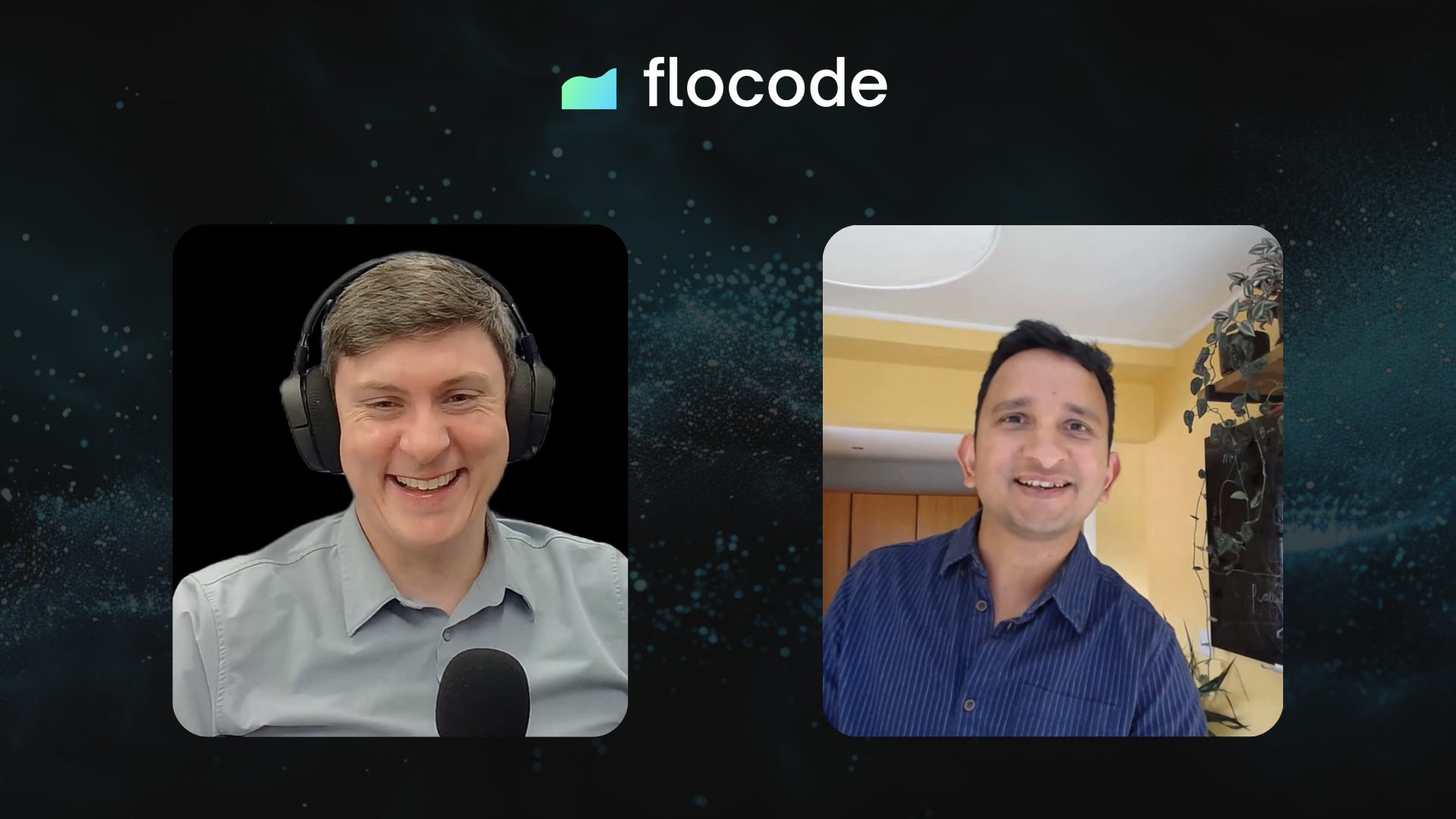
In today’s episode, I welcome Ramaseshan Kannan, the Head of Computational Science at Arup and a Royal Academy of Engineering Industrial Fellow. With a PhD in Numerical Linear Algebra from the University of Manchester and a career that spans both industry and academia, Ramaseshan is at the forefront of research in our industry as it relates to computational science, machine learning, and numerical analysis.* Connect with Ramaseshan Kannan | LinkedInAt Arup, Ramaseshan drives the development of advanced algorithms and finite element solvers, bringing innovation to the built environment. His work is a powerful blend of theory and practice, pushing the boundaries in high-performance computing, uncertainty quantification, and optimization.This area of research is one of deep personal interest to me. While Ramaseshan delves into the underlying theory and mechanics, myself and many others are on the other side of the fence, trying to implement the types tools and ideas that he creates into practical applications for our clients and projects. It’s an exciting time to be in engineering, as more tools are becoming available that are increasingly approachable, though each comes with its own learning and opportunity costs. The decisions we make about which tools to invest our time in are crucial—and often, it’s only in hindsight that we understand their true value. But such is the art of progress, it’s only after the fact we realize we were banging our head against the wall.My conversation with Ramaseshan was both inspiring and thought-provoking. I had a fantastic discussion with him, and I look forward to our next conversation. He’s a remarkable thinker, and I’m eager to see where his ideas and his work will lead.Thank you for being part of the Flocode community. It’s been a lot of fun so far. I will have more announcements soon.See you in the next one.James 🌊Notes:* What Could Possibly Go Wrong? Meta Tools for Digital Tools and Workflows 🛠️ - By Ramaseshan Kannan* CSIC Research Talk by Dr Ramaseshan Kannan “Blending data-and computational sciences for sustainability”* Royal Academy of EngineeringRamaseshan spoke briefly about the potential of LLM’s in the geometry or parametrization space and since our conversation, I found the following:World Labs, a newly formed company, said Friday (Sept. 13) that it has raised $230 million to build large world models (LWMs) that “perceive, generate and interact with the 3D world.”“We aim to lift AI models from the 2D plane of pixels to full 3D worlds — both virtual and real — endowing them with spatial intelligence as rich as our own,” the company said in a Friday post on LinkedIn.Source: World Labs Raises $230 Million to Build Spatially Intelligent AIPretty interesting! Get full access to Flocode: Engineering Insights 🌊 at flocode.substack.com/subscribe
Todays guest is Craig Brinck. The mastermind behind Pynite, my favourite structural analysis library for Python.Craig is a Senior Structural Engineer at Carollo Engineers, based in Herriman, Utah, with a Master’s degree from the University of Utah. During our conversation, Craig shares the story behind Pynite—how it evolved from his early experiments in Excel and VBA to a robust Python package that simplifies structural analysis.I am a big fan of Pynite, I think it’s an incredibly useful and flexible tool for Structural Engineers. It’s free, powerful and open-source. What more could you want?Some of my favourite features include:* Fast and easy frame analysis.* Well crafted functions and methods to build models quickly and gain insights.* Great Documentation.* Visualizations and Plotting.Whether you're dealing with beams, columns, or plates, Pynite is designed to be a lean and accessible tool for engineers who want to dive deep into finite element analysis without the licensing requirements of commercial software. It’s an open book, with fully visible source code.It was a very interesting discussion for me personally, since I’ve been using Pynite myself for a number of years and have always looked forward to discussing it with Craig. Craig has extended an open invite to the Flocode Community to assist in the maintenance and future development of Pynite. * Pynite GitHub* Pynite Documentation* Craig’s LinkedInIf you are interested or have some ideas, changes or practical examples you would like to share, make sure to open up the discussion at:https://github.com/JWock82/PyNite/discussionsI plan to share some more of my own insights on Pynite soon.Thank you for being a part of Flocode.See you in the next one. James 🌊 Get full access to Flocode: Engineering Insights 🌊 at flocode.substack.com/subscribe
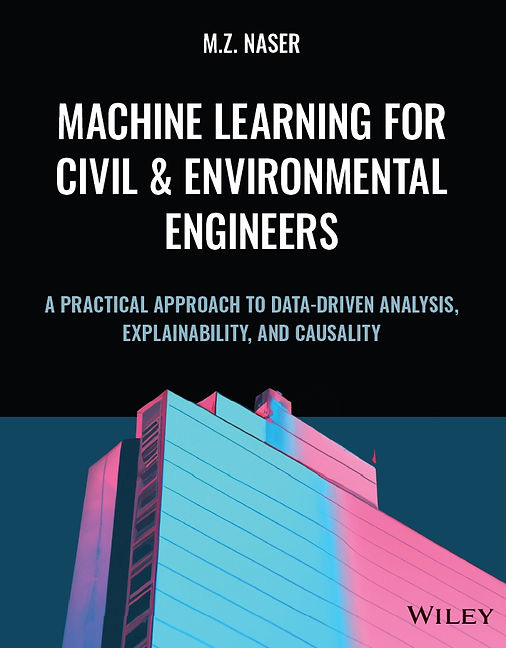
Welcome back to the Flocode Podcast!I’m excited to welcome Dr. MZ Naser, an assistant professor at Clemson University. Dr. Naser is a leading expert in integrating advanced technologies in civil and structural engineering, with a PhD from Michigan State University. His research focuses on many applications of ML in Engineering and his primary focus for this PhD was on fire engineering and the shear response of composite steel girders exposed to fire. He has authored several influential books, including:* Machine Learning for Civil and Environmental EngineersThis book was my introduction to Dr. Naser’s work. It contains an excellent overview of the ML landscape and is a great starting point for engineers interested in ML.* Interpretable Machine Learning for the Analysis, Design, Assessment, and Informed Decision Making for Civil Infrastructure* Leveraging Artificial intelligence into Engineering, Management, and Safety of InfrastructureIn this episode, we discuss the rapid advancements in machine learning and its potential to revolutionize civil engineering. Dr. MZ Naser shares his perspective on the current state of machine learning and its practical applications in the engineering sector.The discussion concludes with advice for engineers on how to start learning machine learning and its potential future impacts on the industry.This is a topic I really enjoy and I believe we will see adoption of ML tools increase exponentially over the coming years as the industry realizes the practical benefits and relative ease of adopting these tools.For those interested in the basics of Machine Learning, check out a previous Flocode article that covers the fundamentals of Linear Regression:#003 - Machine Learning for Civil and Structural Engineers | 01: The FundamentalsImportant Links:* Visual Introduction to Machine Learning - Check this out, very cool.* LinkedIn: Dr. MZ Naser* Personal Website: Dr. MZ Naser* Dr. MZ Naser - Clemson University Faculty PageI had a great time talking to Naser and I look forward to our next discussion! If any subscribers have guest recommendations or specific topics they would like me to explore, please let me know in the comments.See you in the next one!James 🌊 Get full access to Flocode: Engineering Insights 🌊 at flocode.substack.com/subscribe
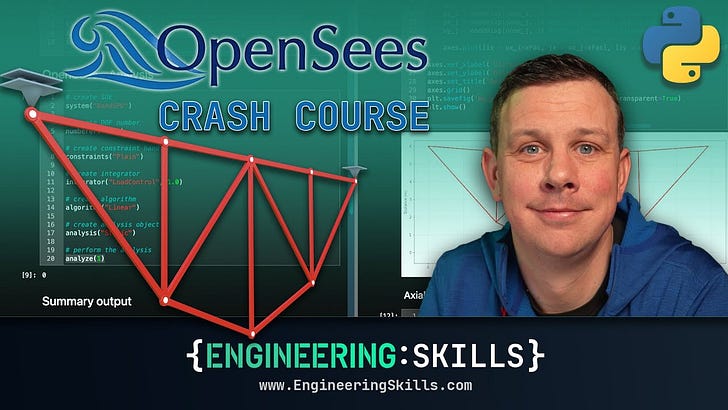
Hello everybody, I hope you’re all thriving out there!I’m back with another podcast episode, speaking to Dr. Seán Carroll.Dr. Carroll is a chartered engineer and founder of engineeringskills.com, where he teaches a broad range of structural engineering courses, many of which include Python and other open-source tools. With a Ph.D. in Civil Engineering Dynamics from the University of Nottingham, he has extensive experience in higher education, including:* Senior Lecturer in Structural Engineering at the University of Exeter* Assistant Professor in Structural Engineering at the University of WarwickDr. Carroll has helped over 20,000 online learners enhance their skills. His courses are designed for both students and professionals, offering practical applications of structural dynamics, finite element analysis, concrete/steel design and much more.There is a wealth of information from basic to advanced topics and many of the courses employ Python to demonstrate practical examples or key concepts.This is an excellent resource for anybody who feels the need to brush up on or expand their technical understanding of core engineering concepts. Often, we are buried in code requirements and project specifications, and get lost in the minutiae. A solid grasp of the fundamentals is the cornerstone of effective engineering.Join Dr. Carroll on engineeringskills.com and take a look at the course library.Seán has provided a 30% off link for the Flocode Community, valid until the end of August 2024. Please use: FLOCODE30I’m a member of EngineeringSkills and have taken a number of Seán’s courses. His material is thorough, clear and excellently presented. He got me started on Blender, a fantastic 3D modelling tool that has become a great addition to my toolbox, particularly for building complex FE and CFD models with irregular geometry.I’ve also leaned on his ‘Multi-Degree of Freedom Dynamics, Modal Analysis and Seismic Response Simulation in Python’ course as well as a few others.You can connect with Seán on LinkedIn and Youtube.Check out his fantastic introduction to OpenSeesPy.We had a great chat and I look forward to doing it again.See you in the next one.James 🌊 Get full access to Flocode: Engineering Insights 🌊 at flocode.substack.com/subscribe

The ‘Insights’ series is a broader look at engineering. We will explore some ideas, philosophies and lessons learned.Today, we dig into some key skills for professional engineers. While these might not be the definitive top skills, they are important. I have included the article below if you prefer to read rather than listen. I execute some side missions during the podcast, so some additional topics are covered exclusively in the audio version.In this episode, I share what I believe are pivotal skills for engineers. It's important to note that these views are my own and may not align with the broader industry consensus. Every engineer has unique experiences and perspectives, contributing to a diverse range of valid opinions. I offer one viewpoint among many.We'll be exploring:* Cross-disciplinary understanding* System-level thinking* Adaptability in problem-solving* Ethical engineering* Storytelling and visualization* Plus, a bonus skill: Managing personalities and conflictsThese skills are more than just theoretical concepts; they're practical tools that can significantly advance your efficacy as an engineer.Books Mentioned* "The Obstacle Is the Way" by Ryan Holiday - Goodreads* "The Feynman Lectures on Physics" by Richard Feynman - Goodreads* "Six Easy Pieces" by Richard Feynman - Goodreads* "Sapiens: A Brief History of Humankind" by Yuval Noah Harari - GoodreadsYour thoughts and perspectives are valuable; please add your comments.James 🌊Interdisciplinary UnderstandingThe crux of my message revolves around the interdisciplinary nature of engineering projects. Professionals in civil, structural, mechanical, geotechnical, and electrical engineering are often highly specialized in their domains. However, a broader understanding of how these areas intersect becomes pivotal, especially when coordinating complex designs.Think of it as a Venn diagram, where each circle represents a different engineering discipline. The overlap, though seemingly small, is where the magic happens.Being fluent, or even moderately conversant, in these overlapping areas offers a significant edge in managing and orchestrating intricate projects. It's a universal truth in engineering or any organization, for that matter.A few examples that come to mind.* Mechanical and structural discussing operating loads for pumps/valves/support systems.* Prefab components or modular engineered solutions being installed into a larger global structure.* Equipment suppliers and issues surrounding weight, access, constructability, sequencing, lead times, etc.* Environmental review or community engagement* Lab testing or more specialist work like specific concrete mix design, interpreting instrumentation data, or other sub-disciplines often engaged on larger projects.The gaps between these specializations and the often loosely defined scope limits are where the challenges instantiate themselves {🐍👀}.So, why is this cross-disciplinary fluency so crucial? Simply put, it's about aligning diverse objectives that, while distinct, often intertwine with the work of other teams. By understanding these connections, we can navigate the complexities of collaboration more effectively.Every project I've been part of has reaffirmed this. A broad grasp of various fields doesn't just add value—it's often the linchpin in transforming a complex project from a jumble of individual efforts into a well-oiled machine.Systems Level ThinkingIn a past episode, we discussed the parallels between programming and engineering and some viable problem-solving strategies in both. Systems-level thinking is another great example.Systems-level thinking is an analytical approach to understanding complex systems by examining the linkages and interactions between the components that comprise the entirety of that system. It’s about seeing the 'big picture' rather than focusing on individual elements in isolation.Key aspects of system-level thinking include:* Interconnectedness: Recognizing that changes in one part of a system can have ripple effects throughout the entire system.* Holistic Perspective: Focusing on the whole system rather than just its individual parts.* Contextual Awareness: Understanding how external factors, such as environmental, social, or economic elements, impact the system.* Feedback Loops: Identifying how actions within the system produce reactions which may influence future actions.* Dynamic Nature: Appreciating that systems are constantly evolving and that solutions may need to adapt over time.Imagine it as adjusting a lens. One moment, you're zoomed in, immersed in the intricate details of your design – the specifications, the technical requirements. You're focused on the minutiae, ensuring every aspect of your work is heading in the right direction. But, at a moment's notice, you need to zoom out. You shift from a micro to a macro perspective, taking in the entire landscape of the project.Why is this shift significant? Because the decisions you make in those detailed designs don't always exist in isolation. They can ripple through the project. For instance, a small change in your design could lead to significant alterations in geometry, impacting other team members' work. It might necessitate logistical shifts or even affect procurement timelines. This is where system-level thinking intersects with interdisciplinary understanding. It's about recognizing that your piece of the puzzle is part of a larger one. Fractal puzzle pieces, if you will.This constant reframing – moving between the granular details and the overarching project goals – requires cognitive flexibility and a broad understanding of engineering principles. Who's affected by your decisions? How do your actions impact the timeline, the budget, and the overall project flow?It's about wearing different hats, understanding different perspectives, and always being ready to adjust your approach based on the project’s evolving needs. It is important to appreciate that this skill develops over time as you gain experience. However, asking the right questions and keeping this concept in mind will accelerate this process considerably.Adaptability in Problem-SolvingConsider the early stages of a project: brainstorming sessions ensue, conceptual designs are outlined, plans take shape, and expectations are formed. Brainstorming and concept design are the best parts of a project; I love it—engineering freedom. Then, the sh*t hits the fan.The transition from theory to practice often reveals the fluid nature of real-world conditions. When on-site work commences—boots are on the ground. Drilling, digging, constructing, implementing—and unforeseen challenges arise. It's in these moments that the ability to pivot becomes invaluable.Adaptable problem-solving is more than a skill; it's a mindset. It's about maintaining composure and responsiveness in the face of new challenges. The key lies in how we interpret and react to changing conditions. Can we remain calm and solution-oriented? Can we extract critical information from evolving scenarios to make informed decisions? These are the hallmarks of an effective engineer.Being adaptable also means being resourceful. It involves evaluating the available information and considering various options. By asking intelligent questions, we can draw additional insights out of situations, guiding us toward more informed, nuanced solutions. The value is immense if you can work towards becoming this type of hypothetical question master. I have always loved people that ask good questions. They elevate the room, and they promote better thinking.In essence, adaptability in engineering is about thriving within constraints, whatever they may be. It's about seeing change not as an obstacle but as an opportunity, as annoying and cliched as that sounds.This mindset, which requires rigorous cultivation and willpower, can transform challenges into triumphs, ensuring that you are always part of the solution.Ethical EngineeringThis is a broad topic, and I’ll try to do a dedicated episode on ethical engineering topics because so much falls into this very interesting bucket. Many issues are grey areas, philosophical discussions that can be quite polarizing for people.In my experience working in several countries and jurisdictions, while ethical considerations are universally acknowledged as crucial, they often need to receive extra emphasis during execution. This is easy to say, but the world is a complicated place. In reality, there’s often a layer of financial or legal abstraction between the words in a contract and the real-world application. Ultimately, everything hinges on the context of local culture, project budgets and regulatory requirements.It’s easy to whine about it as a backseat driver, but I don’t have a clean solution other than to try your best to be vocal about issues you encounter in the most productive manner possible and offer viable solutions or alternatives.There are many topics to consider under the ‘ethical engineering umbrella’ and many deep dives.One aspect of my industry that I find extremely interesting is First Nations’ engagement and partnerships. This is a huge focus here in BC, Canada. For subscribers in other parts of the world, First Nations people in Canada refer to the diverse groups of Indigenous peoples who were the original inhabitants of the land that is now Canada. There are over 600 recognized First Nations governments or bands across Canada.It’s been a fascinating journey for me, an Irish immigrant (I moved here after university in 2010), observing the complex interactions of FN communities with the federal and provincial governments. Given the topic’s history and politics, there is a lot to unpack, which I will hopefully do in a future post. It’s certainly not my area of expertise, but from a purely sociological and personal learning perspective, there are many valuable discussions to be had. Professionals involved in large-scale projects often face compartmen
Hello out there everyone, I’m back with another episode.This time, there’s video. I’ve tried this before and had various technical issues so I’m still finding my feet with the optimum workflow for thing. Bear with me.As always, no commercial deals are in place, these are my own opinions on Viktor.I had a great discussion with Anande Bergman of Viktor AI in this episode. Anande is the chief officer for growth at Viktor AI, a platform that’s simplifying the app creation process for engineers across the globe.Viktor AI integrates with Python, Excel and a broad variety of other commercial engineering software, and is changing the landscape of how engineers can build applications for themselves, their teams, and their clients.Anande will explain Viktor, how it works, their vision and their tools. He also shares how Viktor’s extensive documentation and examples empower engineers to tackle a broad spectrum of tasks in new ways. If you’re interested in automating tasks, making your work interactive, or creating tools, then this episode is for you.I encourage you to check out the documentation and examples for yourself. The team at Viktor have done a fantastic job in terms of making their systems accessible, practical and usable. Recently they released a slick visual app builder with a drag and drop interface, to make things even more accessible.Viktor has a generous free tier that provides users with full functionality as long as you are OK with your app being public, you can check out their various plans here, just be aware of any data you are uploading (from a commercial sensitivity perspective).The Viktor team is active and productive with new features, content and updates rolling out on a consistent basis.I see big things on the horizon for Viktor and exciting times for Anande and his team.If you’re curious about building internal or personal engineering apps, Viktor is a great platform, with rich documentation and resources. I really appreciate the extent of free services that they have provided for engineers. Much respect.A great chat with a very nice guy, now on with the episode.See you in the next one.James 🌊 Get full access to Flocode: Engineering Insights 🌊 at flocode.substack.com/subscribe
Today I'm excited to be joined by Bruce Hamersley, Principal Engineer and owner of Basis Engineering Ltd based in Vancouver, British Columbia, Canada.Bruce is a structural engineer with over 37 years of global bridge design experience with a strong background in soil-structure interaction, and innovative construction engineering solutions.* Connect with Bruce on LinkedInBruce has contributed numerous technical papers to the bridge engineering field and was recognized in 2019 with a prestigious Fellowship from Engineers Canada for his outstanding professional contributions. He has also had a profound impact on my own career. Bruce gave me my first engineering job, back in 2011. I was fresh out of university, brimming with enthusiasm but hilariously deficient in terms of practical engineering experience. His mentorship opened doors to global engineering adventures that expanded my horizons and shaped my career trajectory.The importance of keeping an open mind in all aspects of engineering was a key lesson I learned from Bruce. You can never know it all.Over his career, Bruce has worked on major global projects including highway and railway bridges, seismic retrofitting of bridges, and creative construction methods like the innovative launching system used on the Vedder Road Bridge project, the world’s first kingpost launching system for a Tied Arch.His portfolio includes landmark projects like the Queensferry Crossing cable-stayed bridge - at opening it was the longest triple tower cable-stayed bridge in the world, the Oakland Bay Bridge (San Francisco, USA), The Lions Gate Bridge (Vancouver, BC) and a broad variety of projects in the industrial, marine and energy sectors.In this episode, Bruce shares his perspectives gained over decades of experience on topics including:* Engineering philosophy* Problem-solving strategies* Mentoring young talent* Iconic project stories* AI in bridge designBruce is a fantastic mentor and a true innovator in the field. I'm grateful he took a chance on me those many years ago, and I'm delighted to have him on the podcast to discuss his invaluable insights. See you in the next one!James 🌊 Get full access to Flocode: Engineering Insights 🌊 at flocode.substack.com/subscribe

Hey everyone, and welcome to another episode of Flocode: Engineering Insights 🌊.In today’s podcast, I speak with Tim Rawling, co-founder of the fascinating calculation management platform CalcTree.You can connect with Tim on LinkedIn.Before we dive in, I want to clarify that this is not sponsored content. There's no commercial deal in place here. I stumbled upon the CalcTree platform myself and was genuinely impressed, so I thought it would be a great tool to discuss.CalcTree provides an interesting platform to create and collaborate on your engineering calculations using Excel and Python. It’s still in the Beta stage, but they’ve already got many impressive features and interesting engineering content. I recommend taking a look for yourself; there is a lot to discover.Now, back to the episode. Tim and I had a great conversation diving deep into the world of engineering calculations. Here's what you can expect:* The CalcTree Story: We'll get the inside scoop on what CalcTree is, how it came to life, and how Tim made the bold leap from Arup to pursue this innovative idea full-time.* Tech Talk: We'll explore CalcTree's capabilities – Tim will give us an overview of its architecture and highlight the coolest features, like the bounty program and calculation library.* Behind the Build: What goes into creating something this complex? Tim will share some of the challenges he faced and his approach to overcoming them.* Adoption and Growth: We'll talk about the industry adoption of CalcTree, its user base, and what exciting things are on the roadmap.* Python for Engineers: If you're an engineer interested in Python and computational design, Tim has some fantastic advice!Tim's passion for engineering and innovation is infectious – he's a great guy and I really enjoyed talking with him, and I know you'll enjoy this episode.If you have guest recommendations for me, let me know, and I’ll reach out to them!See you in the next one!James 🌊 Get full access to Flocode: Engineering Insights 🌊 at flocode.substack.com/subscribe

This Podcast is available on Spotify and Apple Podcasts.Welcome back to another edition of Flocode Engineering Insights.This week, I’m excited to bring you a podcast episode featuring Scott Reese, a civil engineer from Williams Lake, BC, Canada.Scott isn't just a close friend of mine; he's an extraordinarily fascinating individual, and it’s a privilege to be able to share some of his genuinely unique insights.Despite battling retinitis pigmentosa, a condition resulting in the complete loss of his vision, Scott has achieved remarkable feats in both his professional career as an engineer and as an athlete. Our conversation dives into the breadth of these achievements, shedding light on how he navigates the complexities of engineering projects around the globe and how he conquered a 30 km open water swim in the frigid waters of the Pacific Ocean last summer.We cover a lot of ground, including his engineering philosophies, approaches to problem solving, how he uses Python, and some of the fascinating insights and adaptations he’s made to progress his career as an engineer.I think this episode will surprise many listeners in terms of how he approaches his work. I am constantly amazed at the different ways he has adapted his workflow.Guest Profile - Scott Reese, P.Eng - Civil Engineer* Engineering: Scott is a seasoned civil engineer with 17 years behind him. His expertise spans mining, energy, and water resources engineering. With a global footprint, Scott has contributed to major projects in North and South America, Europe, and Africa. His involvement covers the entire spectrum of project development, from the initial identification and concept stages through site investigation and detailed design to construction and project management. He is an incredible technical writer with a deep knowledge of Project control systems and finances. His design experience is broad and predominantly related to water conveyance, management and hydraulics.* Adaptability and Innovation: Despite the challenges posed by visual impairment, Scott's achievements as an engineer are nothing short of extraordinary. An avid Python enthusiast, Scott has skillfully leveraged programming to navigate and solve complex engineering design problems. His work particularly shines in energy and financial modelling alongside various data processing and engineering tasks. What makes Scott's use of Python stand out is his ability to adapt its functionalities to overcome the limitations he faces with more conventional software and design tools. He does everything through narration software and screen reader tools; it’s incredible. His approach to problem-solving and engineering in general underscores his technical acumen, resilience and creativity in the face of what most of us would perceive as serious limitations.* Raising the Bar: Beyond his professional achievements, Scott's personal journey is equally inspiring. Scott is a dedicated athlete and a father to two young kids. He commutes to work on the bus daily with his guide dog, Caleb. He memorizes where everything is and counts his steps in every direction as part of some sort of personally developed geolocation system; I don’t know how he does it. His memory and ability to recall information is remarkable. I’ve even convinced him to join me on the BJJ mats, where we rolled around, and I showed him some basic armlocks from full guard. Brazilian Jiu-Jitsu is such a great sport for him since it's so heavily based on feeling your opponent’s pressure, grips and momentum. In addition to actively running, skiing, waterskiing and kayaking, Scott attends our company golf events to drive golf balls in whatever direction people advise. He is a liability in most circumstances and a better golfer than me.* The Swim: In a feat of incredible personal endurance and stubbornness, Scott successfully swam more than 30 kilometers across the Strait of Georgia, an open channel in the Pacific Northwest separating mainland BC from Vancouver Island. This feat is a testament to his incredible perseverance and physical endurance, but it also underlines his commitment to giving back to the community that afforded him his amazingly dignified and majestic dog, Caleb. Scott raised over $164,000 for the Canadian Guide Dogs for the Blind.* Some news articles covering Scott’s swim:* Blind man swims across B.C.'s Georgia Strait in 11 hours to raise money for guide dogs* Blind man completes swim across B.C.'s Georgia Strait for a good causeI appreciate Scott sharing his candid opinions and engineering insights. I’m sure everyone can take something away from this discussion.If you’re interested in the simplified AI chatbot that I built for Scott, you can learn more here. Feel free to clone or fork this repository as you wish.Scott's book recommendation: Endurance: Shackleton's Incredible Voyage This book covers the harrowing tale of Ernest Shackleton's 1914 Antarctic expedition, where his ship, Endurance, was trapped and crushed by ice, leading to a remarkable story of survival and leadership against extraordinary odds. You can just read the book. You don’t need to swim 30 km.If you are interested in recommending a guest or would like to participate in the Flocode Project, please reach out - I’d love to hear from you. You can reach me at info@flocode.dev or through LinkedIn.The Flocode community is growing. We now have members in 81 countries. I can’t believe it. Thank you all.More news is coming soon. A lot of things are happening.See you in the next one.James 🌊 Get full access to Flocode: Engineering Insights 🌊 at flocode.substack.com/subscribe
Apple Podcasts, SpotifyToday, I’m privileged to present my first guest on the Flocode podcast, the inimitable Jeremy Haile, a distinguished figure in the engineering community. Jeremy is the definition of an Industry Leader; in late 2022, he was recognized with the Canadian Consulting Engineer Lifetime Achievement Award.Firstly, I’d like to thank Jeremy for being my canary in the coal mine. And he’s about as handsome and gracious a canary you could hope for.Jeremy is a Civil Engineer with a broad and diverse background in global Mining, Water Resources and Hydropower Projects.His journey began in Rhodesia, what is now Zambia and Zimbabwe, which we discuss.He attained a degree in Engineering Sciences and Economics in 1972 at Oxford University, followed by a Masters in Soil Mechanics at Imperial College London.He’s had a prosperous career spanning over five decades. Jeremy has been a pivotal force behind Knight Piésold Canada, where I also work as a Senior Structural Engineer in our Power and Water Group.Now semi-retired, Jeremy continues to assist on our major projects, proving that a true engineer's spirit never fades.Today, we talk about his career and his perspectives on engineering. He shares some of the lessons, tools and philosophies that have guided him.Jeremy's insights have shaped the industry and many engineers’ careers. And above all of that, he is a pleasure to talk to.I’m grateful for his time, and I hope that wherever you are in the world, you can take something away from today’s rich discussion.For all things flocode, check out the website for deeper dives into Python and subscribe to the newsletter for engineering insights and podcast episodes like this one.To all of the listeners out there, thank you kindly for your words of encouragement and support. We’re just getting started.If you have comments, suggestions or questions, let me know; we’re all in this together.Happy holidays to everyone around the planet! 🎅🎄🦌I’ll see you in the next one! James 🌊 Get full access to Flocode: Engineering Insights 🌊 at flocode.substack.com/subscribe

Today’s newsletter features the flocode podcast. I’m still figuring it all out so please bear with me.If you would prefer to read rather than listen, the article below contains mostly the same content as the audio version, with the exception of a few additional tangents exclusive to the podcast.This discussion (with myself) highlights the similarities between problem-solving in engineering and coding, focusing on efficient, iterative, and pragmatic approaches. It advocates for simplicity and continuous learning, underscoring the value of interdisciplinary insights in engineering problem-solving.These are my opinions based on my own experiences so take it easy. Some of the books I mentioned:* The Pragmatic Programmer by Andrew Hunt and David Thomas Goodreads Link* Clean Code: A Handbook of Agile Software Craftsmanship by Robert C. Martin Goodreads Link* The Lean Startup by Eric Ries Goodreads Link* Structures: Or Why Things Don't Fall Down by J.E. Gordon Goodreads Link* The Feynman Lectures on Physics by Richard P. Feynman Goodreads LinkThoughts on the podcast?I have a rough plan for many topics I plan to cover in these episodes but the main goal is to enjoy the process. Please let me know if you have suggestions/feedback or requests for topics. I want the Flocode Project to become a collaborative community of engineers growing together and sharing ideas and perspectives. Pull no punches, assassinate me.See you in the next one 👊James 🌊Problem-Solving: A Practical Methodology for EngineersThis guide is crafted for anyone out there navigating the complexities of modern engineering problems and seeking insights that transcend the usual boilerplate stuff. It's a weird amalgamation of lessons learned thus far on my engineering journey.The aim is not to prescribe an infallible method or to diminish the tried-and-true practices honed over years of collective experience. Rather, it's to share a collection of principles that have proven their worth in my own personal and professional growth.This is a delicate topic. Engineers by definition solve problems so far be it from me to tell other engineers how they should go about their business. I would likely have the same success rate as if were to ask my wife to ‘calm down’.Readers should consider this post as a peer's perspective, offered with humility, acknowledging the vast ocean of wisdom that the engineering community has accumulated and continues to build upon. Every project has its unique context and constraints, and this post is not a one-size-fits-all solution but a starting point for reflection and, perhaps, discussion.Programming Principles in EngineeringAt the intersection of engineering and programming best practices lies a shared commitment to precision, and efficiency. Both disciplines involve constructing systems—be they of concrete, steel or code—that must perform reliably under various conditions. This guide explores how the methodical approach inherent in software development, with its emphasis on clean, maintainable code, parallels the planning and execution required in structural engineering.The value of pragmatic and efficient problem-solving cannot be overstated. It is the engine driving projects to completion on time and within budget, ensuring that structures not only stand but endure with minimal need for intervention. Efficiency in engineering translates directly into cost savings, safety, and longevity of structures, reflecting the same principles that guide the creation of robust and scalable software.While pragmatism is a widely acknowledged virtue in engineering, its practical application is more challenging than it appears. It requires a disciplined adherence to simplicity and functionality, resisting the allure of over-complication, and focusing on what truly works within the constraints of the project.Framing the ProblemEvery project begins by confronting a problem that demands a solution. To clearly define the problem, engineers must go beyond the surface symptoms and understand the underlying issues. The questions behind the questions. I often think back to my squeakier 6-year-old self asking my dad a conveyor belt of “Why?, But Why? But How? And then what? Why?”, until he was on the verge of an aneurysm and straining with every fibre of his being to calmly asked me to shut up while he was driving. A fine testament to his patience.A problem well stated is a problem half-solved.Breaking down complex challenges into smaller, more manageable parts is the divide-and-conquer strategy. This approach can simplify the problem and enable parallel development. It makes immense projects, which can seem intimidating at first glance, approachable and executable.Assumptions are the Achilles' heel in problem-solving. I've blindly followed poor assumptions many times in the past. Questioning every hypothesis and commonly accepted 'truths' ensures that solutions are not just innovative but also grounded in reality."The first step to solving any problem is to understand that it exists," - SenecaThe psychology of accepting unproven realities is an interesting one, especially when you start to consider authority bias, social proofs and information cascades.The quality of inquiry often dictates the innovation in response. The best engineers ask the best questions. And everyone loves a good question.In my best Donald Trump voice - “Nobody loves a good question more than me, believe me”.PlanningThe planning and design phase is where the foundation for success is laid. Establishing clear requirements and constraints is imperative. It's a principle borrowed from lean startup methodologies that instructs one to be clear about the 'must-haves' and the 'nice-to-haves'. This clarity in requirements helps in crafting a roadmap that is focused and lean, devoid of unnecessary complexities.Iterative design is at the heart of agility. Starting with a minimal viable solution and refining it through successive iterations is a strategy that builds resilience into the design process. This allows for adjustments based on real-world feedback, enhancing the suitability and functionality of the final product. It's a process of evolution, where each iteration is an opportunity to learn and improve.Over-engineering is a common pitfall that can lead to increased costs, extended timelines, and systems that are cumbersome to maintain."Simplicity is the ultimate sophistication" - Leonardo da VinciLeo’s quote holds true in engineering as much as it does in art. The simplest design often leads to the most robust solutions.ExecutionExecution is the stage where plans and designs materialize into tangible outcomes. Writing code—or in the case of an engineer, creating designs—as if one has to maintain it for a lifetime instills a mindset geared toward quality and sustainability. It calls for a vision that looks beyond the immediate completion of a design deliverable toward constructability, long-term utility and reliability.In software development, test-driven development (TDD) represents a paradigm shift towards ensuring reliability from the get-go. This concept, when adapted to structural engineering, can lead to the implementation of proactive validation through simulation and modelling before physical construction begins. It mitigates risks and ensures that the structure will perform as expected when subject to real-world forces.Continuous integration and delivery, staples of modern software development practices, are becoming more commonplace in large engineering projects. The ideas of incremental progress and continuous assessment, enabling teams to identify and address issues promptly are standard practice now, think of BIM coordination on any major project. This approach ensures that the final product is refined through continuous feedback and improvement, embodying the thought "We cannot control the wind, we can direct the sail."This is easy to say and sounds like a standard corporate marketing video but it is the correct way to approach execution, especially in a complex multidisciplinary engineering project where scope changes can have significant domino effects. I have mixed feelings about this personally, with the right team, it’s a fantastic approach but there are times when I felt like there were too many cooks in the kitchen along with backseat drivers and armchair quarterbacks all in my office at the same time.My advice is to be ruthlessly pragmatic with your execution. Idealize constraints and the limits of your scope, let it be known so that stakeholder expectations are crystal clear. If the goalposts move, adapt and refocus but maintain transparency on all challenges and effects. Easy to say, hard to do.Review and RefinementThe iterative cycle is incomplete without review and refinement. In the world of programming, code reviews are essential to quality assurance—another practice that finds its parallel in engineering as peer reviews. This collaborative process not only helps in catching errors but also facilitates knowledge sharing and collective ownership of the project's success.Refactoring is as vital in engineering as it is in coding, described in "Clean Code". It's about revisiting and revising the design to improve its structure and efficiency without altering its external behaviour. It embodies the spirit of continuous improvement and the strive for excellence.The feedback loop is the heartbeat of the lean startup model and is just as crucial in engineering. It ensures that the project adapts to new information and evolves in response to functional requirements and constraints.BooksThree excellent books that have profoundly impacted my ability to both frame and solve problems include:* ‘The Pragmatic Programmer' by Andrew Hunt and David Thomas has been pivotal. It transformed my perspective on coding practices and embedded the core philosophy of pragmatism, enhancing the flexibility and effectiveness of the solutions I develop. It’s for programmers but at least h

This is an audio version of the newsletter on the same topic, so a heads-up that this is not new content. Consider this an experiment with the format of the newsletter, I’m still trying to figure out the best way to share my content, and what resonates with subscribers. Some people, including myself, like to listen rather than read while travelling or when you’re out and about.If you have comments or suggestions for improvement, including format or content, please don’t hold back, let me have it.See you in the next post!James 🌊 Get full access to Flocode: Engineering Insights 🌊 at flocode.substack.com/subscribe
Comments


Download from Google Play

Download from App Store
 United States