


Food Matters Live Podcast
Subscribed: 165Played: 6,897
Subscribe


© Food Matters Live 352159
Description
Welcome to the Food Matters Live podcast – where we showcase the innovations, the big ideas, and the visionaries in the food industry.
We dig deep, we look to the future and the past, and we question everything we think we know about food.
Hit subscribe to make sure you never miss an episode.
And find out how you can join the conversation on our website foodmatterslive.com.
We dig deep, we look to the future and the past, and we question everything we think we know about food.
Hit subscribe to make sure you never miss an episode.
And find out how you can join the conversation on our website foodmatterslive.com.
630 Episodes
Reverse
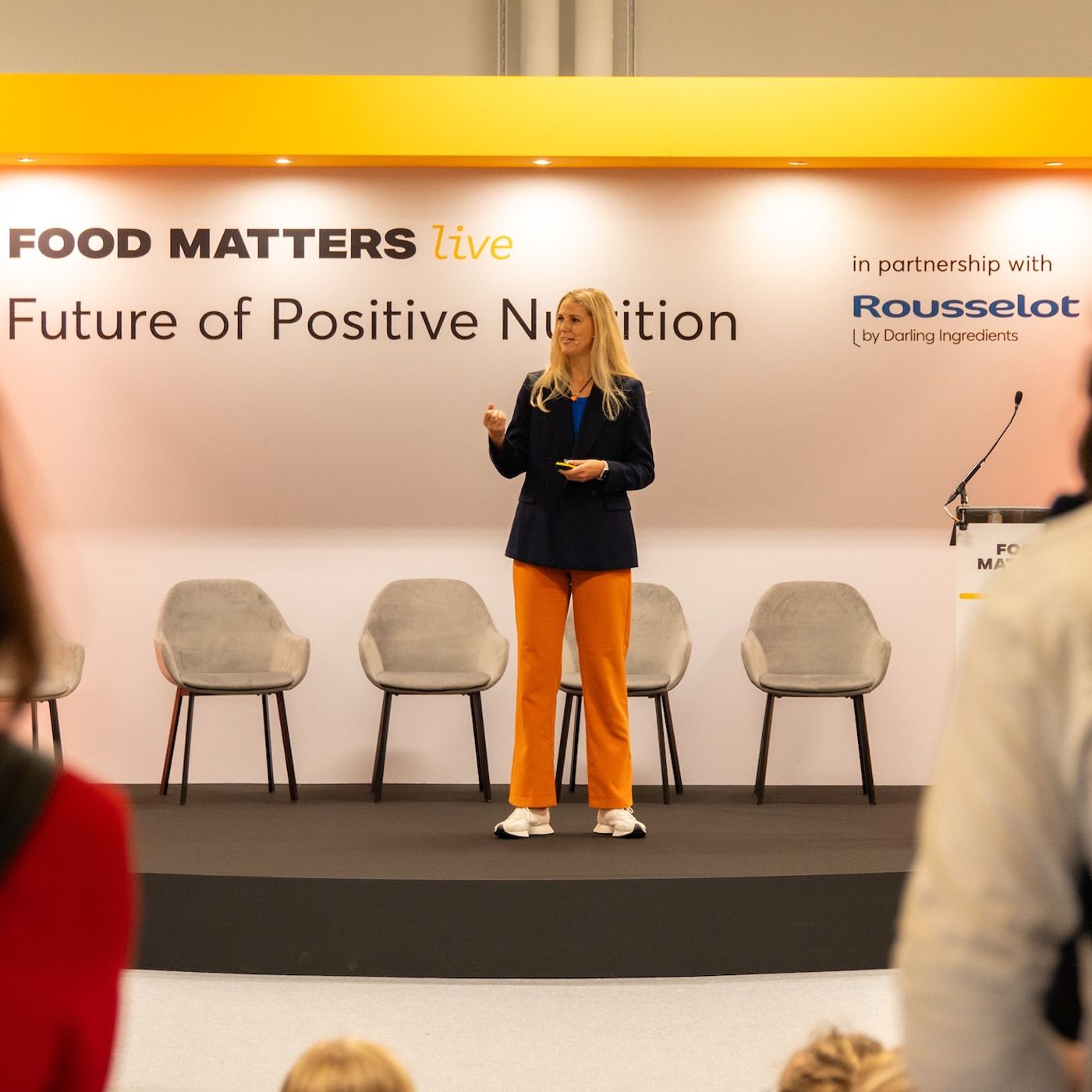
Twenty years ago, roughly eight scientific papers a year were being published on the gut microbiome. Scientists barely knew it existed. Today it is one of the most actively researched areas in all of human biology, and what it's revealing is that this community of trillions of microbes living in your lower intestine is not just relevant to digestion. It's connected to your immune system, your brain, your metabolism, your mood, your response to stress, and your long-term risk of many major diseases.In this episode of the Food Matters Live podcast, recorded at our London Olympia event, two scientists approach the gut microbiome from very different angles. Dr Emily Leeming, microbiome scientist, registered dietitian and author of Genius Gut and Fibre Power, opens with a compelling and accessible masterclass on what the gut microbiome is, why it matters, and what we can actually do about it. Dr Umar Jan, President of European Operations at Sabinsa, then presents the science behind two of Sabinsa's biotics. His presentation addresses a question that sits at the heart of the postbiotic category: when you inactivate a probiotic, what exactly are you left with, and can you prove it's doing something useful?If this has whet your appetite for next year’s Food Matters Live events - you can already register your interest to partner with us in London and Rotterdam. Just head to foodmatterslive.com

Neil Rankin applied for a job at Pret after the 2008 financial crisis closed his sandwich business. He didn't get it. What followed was seven years in professional kitchens, a Michelin-level career built around fire and meat, and then slowly, a growing conviction that the most important thing he could do with everything he'd learned was to stop cooking meat altogether.Symplicity started in a home kitchen during Covid, hand-making sausages and shaping burgers with an ice cream tub lid. Its first customers were Soho House, Dishoom and Gordon Ramsay. It is now in Waitrose and 3,000 restaurants across the UK and every product is still made by hand, using wild lacto-fermentation, everyday vegetables, miso, flaxseed and flour. In this episode of the Food Matters Live podcast, recorded at our London Olympia event, Neil sits down for an extended conversation about the journey that brought him here and what he's learned along the way. He explains why he thinks everything truly delicious in the world has been fermented and why he believes the plant-based industry's fatal mistake was starting with bitter proteins and working backwards. He opens up about the genuine tension of being a meat eater building a meat alternative and why retail remains the hardest frontier of all.If this has whet your appetite for next year’s Food Matters Live events - you can already register your interest to partner with us in London and Rotterdam. Just head to foodmatterslive.com

Most food manufacturers are running their product development on spreadsheets. Nutritional values in one file, allergen data in another, recipes in a shared drive, submission forms being manually rekeyed the night before a customer deadline. But the pace of change facing food manufacturers right now is unlike anything in recent memory. HFSS reformulations, UPF scrutiny, carbon labelling, gut health claims, retailer-specific submission formats that change without warning, and behind every single one of those challenges, a development process that in most businesses still runs on fragile, disconnected data. In this episode of the Food Matters Live podcast, recorded at our event at London’s Olympia, the case is made that a significant portion of the pressure that technical and NPD teams are feeling isn't coming from the market or from regulation, but from out-dated background systems.Could it be that in a decade where AI will increasingly depend on the quality of the data underneath it, the manufacturers who treat product data as a strategic asset rather than an administrative byproduct will be the ones who pull ahead?If this has whet your appetite for next year’s Food Matters Live events - you can already register your interest to partner with us in London and Rotterdam. Just head to foodmatterslive.com

Consumers say they want natural. But do they want it enough to accept a less vibrant colour, a shorter shelf life, or a higher price? And when regulation forces the change anyway, how do you bring consumers with you when they weren't asking for it in the first place?Clean label means something very different to a Michelin-trained chef building a fermented meat alternative from scratch, to a bakery NPD manager reformulating existing lines away from artificial colours, to a global consumer science director at one of the world's largest confectionery companies navigating the cocoa crisis. What all three have in common is the same uncomfortable truth: natural is harder, less stable, more expensive and less forgiving than artificial - and the consumer rarely gives you credit for it unless you tell them.In this episode of the Food Matters Live podcast, recorded at our London Olympia event, our expert panel dives into the world of clean label, from the practical realities of moving from artificial to natural colours, allergen considerations, shelf life constraints, and why consumers may accept a dimmer colour once you explain the reason.If this has whet your appetite for next year’s Food Matters Live events - you can already register your interest to partner with us in London and Rotterdam. Just head to foodmatterslive.com

Only 4% of UK adults meet the recommended 30 grams of fibre per day. The average intake is 16 grams, which is barely half the target. And this isn't a new problem. It's been consistent for years, across every age group and demographic, with no sign of closing.What makes that statistic more troubling is what sits behind it: most people don't even know what the recommendation is. In this episode of the Food Matters Live podcast, recorded at our London Olympia event, a panel of specialists look at the fibre gap from every angle: policy, science, product development, supply chain and consumer behaviour. We hear from a nutrition researcher from the Danish Agriculture and Food Council, who explains how Denmark's Whole Grain Partnership drove consumption to 63 grams within four years.And we learn why fibre reformulation is technically more complex than it looks.If this has whet your appetite for next year’s Food Matters Live events - you can already register your interest to partner with us in London and Rotterdam. Just head to foodmatterslive.com

Comments

Download from Google Play

Download from App Store
 United States