


 Claim Ownership
Founder Thesis
Subscribed: 32Played: 1,472
Subscribe

© Copyright 2022 ThePodium.in
Description
Dickens said, it was the best of the times, it was the worst of the times. The words have never been truer. Best because there’s never been a better time to be an entrepreneur. Worst because the clutter is mind-numbing. Founder Thesis breaks through the noise to bring you stories of success & failure, grit & struggle, bouquets & brickbats from some of the most brilliant entrepreneurs in India.
416 Episodes
Reverse
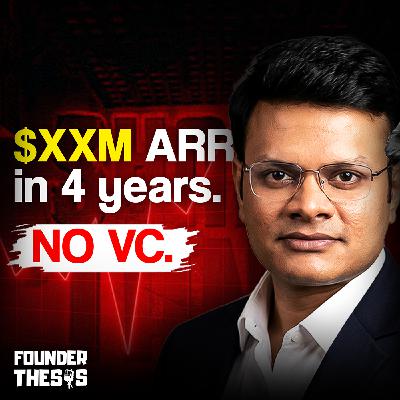
How did Shubham Garg bootstrap CodeVyasa to $XXM ARR without a single dollar of VC funding?
In this episode, we uncover the contrarian playbook behind India's fastest-growing AI-powered IT services firm and why enterprises are ditching SaaS for custom software. Shubham Garg is the Founder and CEO of CodeVyasa, a 600-person bootstrapped IT services company serving unicorns like Mamaearth, UpGrad, and Yatra, plus Fortune 500 clients including HDFC Bank and major oil and gas PSUs. What makes his story remarkable is the journey itself - from failing at a supply chain SaaS startup in 2019 to pivoting into high-value outcome-based engineering services that reached $XXM in annual recurring revenue, all without external funding.
In this candid conversation with host Akshay Datt, Shubham reveals how CodeVyasa helped UpGrad slash their AWS cloud bill by 40% (saving $2M annually), replaced SAP's enterprise software for a government PSU in just two quarters, and is now capitalizing on the AI revolution by selling GenAI implementation services. He shares hard-earned lessons of scaling a services business with no VC money, and his controversial thesis that the era of SaaS dominance is ending as enterprises shift to building custom AI-powered tools in-house.
This episode is essential viewing for bootstrapped founders, service business operators, enterprise sales professionals, and anyone navigating India's IT services boom in the AI era.
What You'll Learn:
👉How Shubham Garg scaled CodeVyasa from zero to $XXM ARR and 600 employees without VC funding using pure customer revenue and cash flow discipline
👉Why outcome-based pricing beats traditional time and material models, and how CodeVyasa competes with giants like Infosys and PwC for Fortune 500 contracts
👉The build versus buy revolution - why enterprises are replacing SaaS platforms like SAP and Salesforce with custom AI-powered software built in-house
👉CodeVyasa's AI enablement strategy including data pipelines, LLM operations, and identity stitching that now represents 20-25% of revenue
#ITServicesIndia #BootstrappedStartup #AIServices #ProductEngineering #OutcomeBasedPricing #DevOpsConsulting #GenAIImplementation #BuildVsBuySoftware #SaaSvsCustimSoftware #IndianUnicorns #DataEngineering #LLMOperations #IdentityStitching #ChinaPlusOneStrategy #FortuneIndiaIT #EnterpriseSales #B2BTechSales #ScalingWithoutVC #CashFlowMasterclass #TechStartupIndia #QAAutomation #CloudOptimization #ReplacingSAP #BootstrappedGrowth
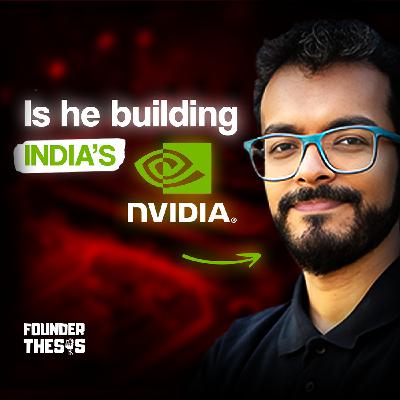
When China banned gallium exports, it didn't hurt AGNIT Semiconductors, it made them essential. Hareesh Chandrasekar reveals how geopolitical supply chain wars created a $13 million opportunity and why India's first GaN chip company is competing with billion-dollar rivals on just $5 million.
In this episode, Hareesh Chandrasekar, Co-Founder and CEO of AGNIT Semiconductors, shares the unconventional journey of commercializing 18 years of IISc research into India's first indigenous GaN chip company. From leveraging ₹300 crores in government-funded R&D infrastructure to competing with billion-dollar global players on a $4.87 million budget, Hareesh breaks down the capital-efficient playbook for deep tech startups.
He reveals how China's gallium export restrictions created sovereign demand for AGNIT's chips, why defense contracts came before consumer markets, and the brutal reality of scaling from lab prototypes to 100,000 chips in 12 months. With three chips currently in field trials for defense applications and expansion planned into electric two-wheelers, AGNIT is at the forefront of India's semiconductor manufacturing revolution.
He shared this candid journey with host Akshay Datt, exploring the intersection of geopolitics, deep tech commercialization, and the India Semiconductor Mission 2.0. This conversation is essential for founders tackling hardware, investors evaluating deep tech, and anyone interested in India's strategic technology ambitions.
In this episode, you'll discover:
👉How Hareesh Chandrasekar spent 18 years building GaN expertise at IISc before raising a single VC dollar, using institutional R&D as non-dilutive capital to de-risk AGNIT Semiconductors
👉Why semiconductor startups take 2-4 years and $2 million just to reach VC-fundable stage, and how the deep tech timeline differs radically from software
👉The military-to-commercial strategy: starting with defense jammers, radars, and drone communication chips before pivoting to high-volume electric vehicle markets
👉How China's control of 87-90% of global gallium reserves and export restrictions created guaranteed sovereign demand for indigenous semiconductor supply chains
👉AGNIT's fab-lite model: controlling IP and critical manufacturing steps while outsourcing volume production, competing with $300M+ funded rivals on $5M
👉The make-or-break challenge: scaling from hundreds to 100,000 chips in 12 months to validate foundry partnerships and achieve commercial viability
👉India's semiconductor ecosystem reality: zero domestic wafer production, complete import dependence, and why $500M GaN foundries are more achievable than $20B silicon fabs
👉Why pitch decks work for investors but defense customers demand working prototypes, data sheets, and field trial results before taking startups seriously
#Indiasemiconductor [https://www.youtube.com/hashtag/indiasemiconductor] #GalliumNitride [https://www.youtube.com/hashtag/galliumnitride] #GaNchips [https://www.youtube.com/hashtag/ganchips] #semiconductorstartupIndia [https://www.youtube.com/hashtag/semiconductorstartupindia] #IndiaSemiconductorMission [https://www.youtube.com/hashtag/indiasemiconductormission] #ISM2 [https://www.youtube.com/hashtag/ism2].0 #defensetech [https://www.youtube.com/hashtag/defensetech] #compoundsemiconductors [https://www.youtube.com/hashtag/compoundsemiconductors] #semiconductormanufacturing [https://www.youtube.com/hashtag/semiconductormanufacturing] #chinaexportban [https://www.youtube.com/hashtag/chinaexportban]
Disclaimer: The views expressed are those of the speaker, not necessarily the channel
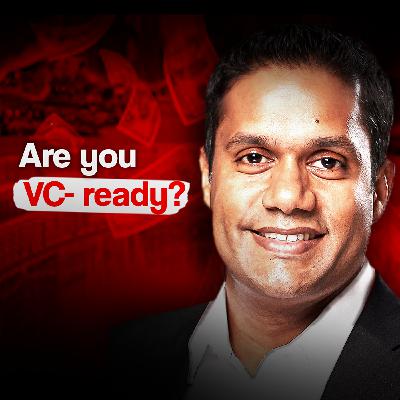
In this episode, we unpack the $4M-$10M funding gap that's stranded hundreds of Indian startups, why Anand raised $45M during COVID when everyone else froze, and the brutal truth about unicorn valuations in India's tech ecosystem. Anand Prasanna is the Managing Partner of Iron Pillar, a $400M+ venture growth fund that's cracked the code on taking Indian companies from $10M to $100M in revenue and shepherding them to IPO. With exits like Bluestone's NSE listing and Vyome's historic Nasdaq debut, Iron Pillar proves that the "India for the World" thesis isn't just talk, it's delivering real returns. From his days at McKinsey and Sequoia to running Morgan Creek's Asia office in Shanghai, Anand brings a rare global lens to Indian venture capital. He shared his contrarian playbook, investment discipline, and why he's passing on the AI hype cycle in this candid, no-holds-barred conversation with host Akshay Datt.
Whether you're a founder navigating Series B, an LP evaluating fund managers, or an operator curious about what metrics actually matter at scale, this episode breaks down growth-stage VC like never before. You'll learn the 444 process for picking winners, why CAC payback matters more than growth rate, the dual exit strategy for Indian startups, and Anand's brutally honest takes on Zepto, Cred, Physics Wallah, and why 30% of India's unicorns are overvalued.
#VentureCapital [https://www.youtube.com/hashtag/venturecapital] #GrowthStageVC [https://www.youtube.com/hashtag/growthstagevc] #IndiaStartups [https://www.youtube.com/hashtag/indiastartups] #SeriesBFunding [https://www.youtube.com/hashtag/seriesbfunding] #StartupFunding [https://www.youtube.com/hashtag/startupfunding] #IndianUnicorns [https://www.youtube.com/hashtag/indianunicorns] #VCInvesting [https://www.youtube.com/hashtag/vcinvesting] #StartupIPO [https://www.youtube.com/hashtag/startupipo] #BluestoneIPO [https://www.youtube.com/hashtag/bluestoneipo] #FounderThesisPod [https://www.youtube.com/hashtag/founderthesispod] #StartupMetrics [https://www.youtube.com/hashtag/startupmetrics] #CACPayback [https://www.youtube.com/hashtag/cacpayback] #UnitEconomics [https://www.youtube.com/hashtag/uniteconomics] #InvestmentStrategy [https://www.youtube.com/hashtag/investmentstrategy] #PrivateEquity [https://www.youtube.com/hashtag/privateequity] #IndiaVC [https://www.youtube.com/hashtag/indiavc] #StartupEcosystem [https://www.youtube.com/hashtag/startupecosystem] #FundingGap [https://www.youtube.com/hashtag/fundinggap] #ScalingStartups [https://www.youtube.com/hashtag/scalingstartups] #IndiaForTheWorld [https://www.youtube.com/hashtag/indiafortheworld] #GlobalExpansion [https://www.youtube.com/hashtag/globalexpansion] #VCReturns [https://www.youtube.com/hashtag/vcreturns] #LPCapital [https://www.youtube.com/hashtag/lpcapital] #StartupValuation [https://www.youtube.com/hashtag/startupvaluation]
Disclaimer: The views expressed are those of the speaker, not necessarily the channel

How do brands grow using the power of sound?
In this episode, Rajeev Raja reveals how BrandMusiq created the sonic identities for Mastercard, 7Up, and dozens of global brands.
Rajeev Raja is the founder of BrandMusiq, Asia's first sonic branding agency that's redefining how brands connect emotionally with consumers through strategic sound design. In this conversation with host Akshay Datt, Rajeev shares his unconventional journey from being National Creative Director at DDB Mudra and a professional jazz flautist to pioneering an entirely new category in India's advertising landscape.
Rajeev breaks down the science and art of sonic branding, from understanding Indian classical Navarasas to leveraging AI for scalable sound production, while revealing the capital-efficient playbook that helped him build a bootstrapped agency serving Fortune 500 clients.
In this episode, you'll learn:
👉How Rajeev Raja built BrandMusiq into Asia's leading sonic branding agency without venture capital funding
👉The difference between jingles and strategic sonic identity systems, and why brands need MOGOs in the audio-first economy
👉Inside BrandMusiq's proprietary MUSE framework that turns brand personality into emotionally resonant sound
👉Why sonic branding delivers 8.5x more effectiveness than visual-only advertising and drives measurable brand trust
👉How AI is transforming music creation for brands while human creativity remains irreplaceable for emotional connection
👉Real-world pricing and business models, from several hundred thousand dollar global deals to startup-friendly licensing options
#AudioMarketing #BrandIdentity #SonicIdentitySystem #AdvertisingIndustry #CreativeEntrepreneurship #AudioFirstBranding #MumbaiStartups #SoundBrandingAgency #FounderStory #PodcastSonicIdentity #AIMusic #MusicBranding #indianadvertising
Disclaimer: The views expressed are those of the speaker, not necessarily the channel

How does a Bollywood director think about making blockbusters?
From script to screen to box office success, discover the hidden economics of India's most glamorous industry.
Ever wondered how a Bollywood film actually gets made and who makes money from it? In this revealing episode, acclaimed director Shashank Khaitan pulls back the curtain on the complex business machinery of Hindi cinema. From his journey as a small-town dreamer in Nashik who played tennis at the junior international level to becoming the creative force behind romantic comedies like Humpty Sharma Ki Dulhania and Badrinath Ki Dulhania, Shashank breaks down the entire filmmaking value chain. He shares candid insights on how producers, directors, actors, and studios split revenues, the evolving role of OTT platforms in film financing, and why building a rom-com requires balancing romance with comedy down to precise percentages.
Beyond Bollywood, Shashank reveals his ambitious second act as co-founder of Global Sports Pickleball, where he's applying his storytelling expertise to build India's next major sporting ecosystem. He shared this fascinating journey in a candid conversation with host Akshay Datt, exploring how capital flows through India's entertainment industry, the rise of franchise leagues, and why karma matters more than luck in building sustainable success.
Key Highlights:
👉How Shashank transitioned from junior international tennis to becoming a successful Bollywood director with multiple hit films
👉The complete economics of Bollywood filmmaking, from script acquisition and actor fees to OTT deals worth 25-130 crores and theatrical revenue splits
👉Why producers are the dealmakers and chief marketing officers who manage everything from casting to distribution strategy
👉The secret to rom-com success: balancing romance and comedy while creating characters audiences genuinely care about
👉How Shashank is building Global Sports Pickleball into a 1000-crore business by 2027, leveraging his storytelling skills to create India's next sporting phenomenon
👉Why self-awareness and process-driven thinking trump outcome obsession for long-term entrepreneurial success
Chapters:
00:00 - Shashank Khaitan's Journey from Tennis to Bollywood
08:07 - How Bollywood Films Actually Get Made
21:56 - Breaking Down Bollywood's Revenue Models
42:20 - Producer's Role in Film Business
01:01:03 - Marketing Strategy for Bollywood Releases
01:23:36 - Building Global Sports Pickleball Empire
01:40:56 - Future of Sports Infrastructure in India
#BollywoodBusiness #FilmIndustryIndia #BollywoodDirector #MovieProduction #OTTPlatforms #NetflixIndia #DharmaProductions #YashRajFilms #FilmFinancing #BollywoodEconomics #IndianCinema #RomComMovies #HumptySharmaKiDulhania #BadrinathKiDulhania #PickleballIndia #GlobalSportsPickleball #SportsStartups #SportsInfrastructure #IndianSportsIndustry #StartupPodcast #EntrepreneurJourney #BollywoodInsights #FilmDistribution #MovieMarketing #CelebrityEntrepreneurs #SportsLeagues #IPLModel
Disclaimer: The views expressed are those of the speaker, not necessarily the channel
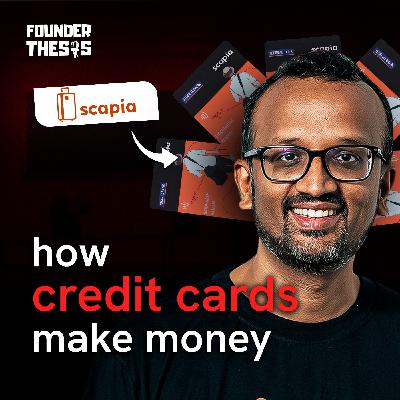
Ever wondered how credit card companies actually make money and why your rewards never seem to add up?
Anil Goteti, Founder of Scapia, reveals the hidden business of cards: from interchange fees and breakage profits to why banks spend ₹3,500 acquiring each customer and still wait three years to break even.
The business of cards in India is a multi-billion dollar industry built on economics most consumers never see. Anil Goteti spent eight years at Flipkart mastering consumer behavior before diving into this opaque world with Scapia, a travel-focused credit card that's raised $72 million to challenge how the card business operates.
In this masterclass conversation with host Akshay Datt, Anil deconstructs the entire value chain: how merchant discount rates get split between issuing banks, acquiring banks, and payment networks like Visa and Mastercard, why co-branded card partnerships exist, and how rewards programs are designed so 50% of points expire unused, a profit center called breakage. He exposes why traditional banks charge forex markups of 3-5% on international spending, how customer acquisition costs in the card business have ballooned to ₹3,000-3,500 per customer, and why it takes six to nine years of card usage before banks see real profit.
Anil also shares Scapia's contrarian approach: zero fees, zero forex markup, instant transaction visibility, and making reward redemption so easy it threatens the breakage model competitors rely on. Beyond card economics, this episode explores how Scapia survived when RBI banned their banking partner from issuing new cards, why the business of cards in India is still massively underpenetrated compared to Western markets, and how the convergence of fintech and travel creates dual revenue streams that make their aggressive customer economics sustainable at scale.
What You'll Learn:
👉The complete business model of credit cards: how interchange fees, MDR splits, rewards programs, and interest income create the revenue stack
👉Why banks spend ₹3,000-3,500 acquiring each card customer and still need three years to reach breakeven on that investment
👉How Scapia built a $72M card business with zero fees by monetizing through travel commerce and challenging the breakage profit model
👉The hidden economics of co-branded cards: how fintech companies and banks share risk, revenue, and customer acquisition costs
👉Why India's card business is poised for explosive growth with only 6-7 cards per 100 people versus 300+ in developed markets
👉Real-time product innovation that's reshaping the card business: instant forex conversion, transparent rewards ledgers, and seamless bill payments
#CreditCardBusiness #CreditCardEconomics #InterchangeFees #MDRExplained #CardBusinessModel #CreditCardIndustry #CobrandedCards #RewardsPrograms #BreakageProfits #ForexMarkup #CustomerAcquisitionCost #CardUnitEconomics #PaymentNetworks #IndiaFintech #CreditCardStartups #FintechBusinessModel #TravelFintech #CardIssuingBusiness #BankingPartnership #CreditCardRevenue #StartupIndia #FintechIndia #CardPayments #digitalpayments Disclaimer: The views expressed are those of the speaker, not necessarily the channel
In this episode, Raution Jaiswal reveals how he built InsuredMine from $40,000 in funding to $5 million ARR, competing against giants like Salesforce in the US insurance agency software market.
Starting as an immigrant founder with no insurance background, Raution bootstrapped his way through the brutal early days, moonlighting while building his first product, pivoting from a consumer app to B2B CRM, and eventually capturing 17 of the top 50 insurance agencies in America.
He shared the journey in this candid conversation with host Akshay Datt. Raution breaks down his "Trojan Horse" go-to-market strategy, positioning InsuredMine as a friendly add-on to legacy systems before becoming the central hub of agency operations. He discusses why modern product architecture is his secret weapon, how he's embracing AI to move from automation to prescriptive intelligence, and why he chose to return to India after 18 years in the US to run his American business and give back through his foundation. This is a masterclass in vertical SaaS, capital efficiency, and contrarian company building in a massive but overlooked market.
Key Highlights:
👉How Raution built InsuredMine to $5M ARR with only $40K in funding, competing against Salesforce and legacy insurance software giants
👉The "add-on" Trojan Horse strategy that helps InsuredMine infiltrate agencies and become their central operating system
👉Why modern product architecture is InsuredMine's biggest competitive moat against billion-dollar competitors with legacy tech debt
👉Raution's pivot from B2C insurance wallet app to B2B agency CRM, and how he validated the business with 50 paying customers before quitting his job
👉How InsuredMine is leveraging AI to move from generative features to predictive analytics to prescriptive recommendations for insurance agents
👉Why Raution moved back to India after 18 years in the US to run his American business and launch his foundation for underprivileged students
Chapters:
00:00 - Raution Jaiswal's InsuredMine Origin Story
01:20 - US vs India Insurance Industry Landscape
05:25 - How Insurance Distribution Works in America
10:26 - The Problem InsuredMine Solves for Agencies
14:24 - Building CRM for Insurance Agency Market
17:25 - InsuredMine vs Legacy Agency Management Systems
20:54 - Why VCs Chase InsuredMine Despite Bootstrapping
24:33 - The $40K to $5M ARR Journey
27:24 - Scaling InsuredMine Without Venture Capital
29:03 - Bootstrapping Secrets and Capital Efficiency Playbook
32:09 - Managing US Business from India Strategy
35:41 - Product Evolution from Automation to AI
37:06 - Building World-Class Support at Scale
40:38 - Running Global SaaS Company from Bangalore
42:10 - From Kolkata Streets to US Entrepreneur
47:59 - Paying It Forward Through Education Foundation
50:59 - Building Trust-Based Sales Without VC Money
52:38 - Product Roadmap and AI CRM Vision
56:03 - AI Agents vs Human Insurance Agents
#InsurtechStartup #BootstrappedStartup #VerticalSaaS #InsuranceAgencySoftware #InsuranceCRM #SaaS #StartupIndia #FounderStory #USInsuranceMarket #InsuranceTechnology #AIinInsurance #StartupBootstrapping #IndependentInsuranceAgents #PropertyCasualtyInsurance #SalesforceAlternative #AgencyManagementSystem #InsuranceDistribution #CapitalEfficiency #StartupJourney #B2BSaaS #InsuranceInnovation #StartupPodcast
Disclaimer: The views expressed are those of the speaker, not necessarily the channel
How did Apurv Agrawal transform SquadStack from a data collection startup into India's leading AI-powered BPO generating ₹200+ crore ARR?
This episode reveals the 10-year journey to finding true product-market fit and disrupting India's massive outsourcing industry. Apurv Agrawal, Co-Founder and CEO of SquadStack, shares the remarkable evolution from Squadrun's gig economy roots to becoming India's most advanced AI-native contact center platform. Starting as a horizontal marketplace for data collection tasks, SquadStack pivoted multiple times before discovering their breakthrough in distributed calling services during COVID-19. What began as weekend experiments became enterprise solutions for major brands like Kotak, Axis Bank, and Bajaj. Apurv reveals how they built a billion-interaction dataset, achieved 95% AI implementation success rates while competitors fail, and created a unique hybrid workforce combining stay-at-home professionals with local agencies across tier-2 and tier-3 cities. He candidly discusses the emotional definition of PMF, why founders can't fight market forces, and his contrarian leadership philosophy of "leading with love" that attracted 19% ex-founders to his team. With voice cloning technology and hyper-personalized customer journeys, SquadStack is reshaping how enterprises handle sales, support, and collections through AI-human collaboration. He shared this transformative journey in this insightful conversation with host Akshay Datt, offering invaluable lessons on market timing, vertical focus, and building sustainable competitive moats in the AI era.
Key insights you'll discover:
👉How Apurv built SquadStack into a ₹200+ crore ARR leader through strategic pivots and market timing
👉Lessons from transitioning from horizontal gig marketplace to vertical AI-BPO specialist serving enterprise customers
👉SquadStack's breakthrough approach to distributed workforce management combining individual professionals with agency partnerships across India
👉Revolutionary AI implementation strategies achieving 95% success rates while industry reports 95% failure rates
👉Deep dive into voice cloning technology and hyper-personalized customer journey automation transforming contact center operations
👉Founder philosophy on high-agency hiring
👉Ubuntu leadership principles, and why love-based culture attracts exceptional entrepreneurial talent
#BPOstartups #AIautomation #IndianstartupsPMF #productmarketfit #distributedworkforce #contactcenterAI #voicecloning #enterpriseAI #gigeconomyIndia #BPOdisruption #remoteworkIndia #startupfunding #founderstory #entrepreneurshipIndia #AIimplementation #customerserviceAI #startuppivot
Disclaimer: The views expressed are those of the speaker, not necessarily the channel
How did a Google engineer turn a 90% revenue loss into a $XXM ARR LegalTech success story?
Madhav Bhagat's SpotDraft journey reveals the secrets of AI timing, opinionated product strategy, and global SaaS scaling.
From losing $900K in collections with his NYC nightlife startup DrinkLink to building SpotDraft into a leading contract lifecycle management platform, Madhav Bhagat's entrepreneurial journey is a masterclass in resilience, pivot strategy, and AI-first thinking.
After leaving Google where he helped scale Google Classroom to millions of users, Madhav co-founded SpotDraft with the vision of democratizing legal technology. What started as a tool for freelancers evolved into an enterprise-grade CLM platform that now serves major companies like PhonePe, Airbnb, and Panasonic. The company has achieved double-digit millions in ARR with 60% revenue coming from the US market.
In this candid conversation with host Akshay Datt, Madhav shares how SpotDraft reduced contract implementation times from 2 years to 60 days, leveraged AI cost reductions from $40 to 4 cents per contract, and built an opinionated product that outcompetes giants like icertis and Docusign. He reveals why being early to AI wasn't always an advantage, how non-technical teams now ship code using AI agents, and why focusing on mid-market customers over enterprise deals became their winning strategy. This episode offers invaluable insights for SaaS founders navigating AI adoption, international expansion, and building sustainable competitive advantages in crowded markets.
What you'll learn from this episode:
👉How Madhav built SpotDraft from Google exit to $XXM ARR in LegalTech
👉Why AI timing matters more than being first, and lessons from pre-GPT to post-GPT era
👉SpotDraft's opinionated product strategy that reduced implementation from 2 years to 60 days
👉Secrets of scaling SaaS globally with 60% US revenue from India base
👉How AI agents are transforming organizations and enabling non-technical teams to ship code
👉Why mid-market focus beats enterprise deals in competitive SaaS markets
#legaltech #startups #AIstartups #saas #startupfounder #AI #B2BSaaS #startupjourney #entrepreneurship #indianstartups #founderstory #artificialintelligence
Disclaimer: The views expressed are those of the speaker, not necessarily the channel
How did a founder who sold millions of cars and managed billions in real estate become the CEO competing with Palantir for government healthcare contracts?
In this episode, we explore Avinav Nigam's journey from Cars24 to building TERN Group, an AI-powered healthcare recruitment platform solving the global nursing shortage.
Avinav Nigam has built companies worth over $10 billion in enterprise value across three different industries - and his latest venture might be his most ambitious yet. After co-founding Cars24 (India's used car unicorn) and IMMO Capital (a European real estate investment platform), Avinav is now tackling the global healthcare crisis with TERN Group, an AI-native recruitment platform that's already generating ₹250 crores ARR in just 24 months.
What makes this story remarkable isn't just the impressive metrics - 40% month-on-month growth, 88% conversion rates, and competing with enterprise giants like Palantir for government contracts - but the deeply personal mission driving it. After witnessing his colleague's death due to healthcare system failures and seeing talented Indian nurses exploited by unethical recruitment agents, Avinav built a zero-cost platform that charges employers instead of workers.
In this candid conversation with host Akshay Datt, he reveals how AI is revolutionizing healthcare recruitment, why he believes "AI replaces humans who don't use AI," and his vision for becoming the future of human mobility across borders.
Key Highlights
👉How Avinav built three successful companies across cars, real estate, and healthcare - reaching $10B+ enterprise value
👉TERN Group's explosive growth: ₹250 crores ARR, 40% MoM growth, and 88% conversion rates in 24 months
👉Why charging employers instead of healthcare workers created a more profitable and ethical business model
👉 How AI-powered interviews assess 80 nursing specializations across 28 different attributes with human-level accuracy
👉 The global healthcare worker shortage crisis: 15 million workers needed by 2030 and how TERN is solving it
👉 Competing with Palantir and other enterprise giants for billion-dollar government healthcare contracts
#CrossBorderBusiness [https://www.youtube.com/hashtag/crossborderbusiness] #AIFirstCompany [https://www.youtube.com/hashtag/aifirstcompany] #HealthcareWorkforce [https://www.youtube.com/hashtag/healthcareworkforce] #TalentMobility [https://www.youtube.com/hashtag/talentmobility] #EthicalRecruitment [https://www.youtube.com/hashtag/ethicalrecruitment] #MarketplaceModel [https://www.youtube.com/hashtag/marketplacemodel] #RealEstateInvesting [https://www.youtube.com/hashtag/realestateinvesting] #StartupJourney [https://www.youtube.com/hashtag/startupjourney] #FutureOfWork [https://www.youtube.com/hashtag/futureofwork] #GlobalTalentShortage [https://www.youtube.com/hashtag/globaltalentshortage] #B2GContracts [https://www.youtube.com/hashtag/b2gcontracts] #CompoundedCompanies [https://www.youtube.com/hashtag/compoundedcompanies] #DigitalTransformation [https://www.youtube.com/hashtag/digitaltransformation] #InternationalExpansion [https://www.youtube.com/hashtag/internationalexpansion]
Disclaimer: The views expressed are those of the speaker, not necessarily the channel
How did a serial entrepreneur who built AI solutions for Toyota and Honda before ChatGPT existed become India's pioneering AI-first venture capitalist?
In this episode, we explore Rahul Agarwalla's bold prediction of 100 AI unicorns emerging from India and his contrarian investment framework that's reshaping the startup ecosystem.
Rahul Agarwalla, Managing Partner at SenseAI Ventures, brings a unique perspective to AI investing - having built and sold three AI/ML companies since 1996, including enterprise solutions used by Fortune 500 giants like Toyota, Honda, and Canon. As India's first AI-focused VC fund, SenseAI has deployed over ₹200 crores across 31 investments, achieving four successful exits while pioneering the shift from AI infrastructure to applications.
In this candid conversation with host Akshay Datt, Rahul reveals his VDAT framework for evaluating AI startups, explains why most "AI wrappers" will fail, and shares controversial takes on outcome-based pricing, founder requirements, and market timing. With AI startups capturing 57.9% of global venture capital in 2025, Rahul's insights on building sustainable AI businesses, navigating the India-US corridor, and identifying the next wave of AI unicorns provide essential guidance for founders and investors riding the AI revolution.
Key Highlights:
👉How Rahul built AI solutions for Toyota and Honda before the ChatGPT era and transitioned to become India's first AI-focused VC
👉The VDAT framework: Why variety, data, architecture, and team are the only metrics that matter when evaluating AI startups
👉Why "AI wrappers" will fail and how to build defensible AI-native applications that OpenAI can't replicate overnight
👉SenseAI's contrarian bet on applications over infrastructure and why outcome-based pricing will replace traditional SaaS models
👉The roadmap to 100 AI unicorns from India and why technical founders are non-negotiable for AI success
👉Market insights on AI tooling opportunities and the shift from foundational models to specialized vertical solutions
Subscribe to the Founder Thesis Podcast for more deep-dive conversations with India's most innovative entrepreneurs and investors. Follow us on LinkedIn for exclusive content, founder insights, and startup ecosystem updates. Visit founderthesis.com to discover more inspiring founder stories and actionable insights from India's leading entrepreneurs.
#AI #venturecapital #AI startups #IndianStartups #StartupEcosystem #AIinIndia #TechEntrepreneur #DeepTech #StartupFunding #AIInvesting #ArtificialIntelligence #MachineLearning #AIVentureCapital #AIApplications #AIInfrastructure #OutcomeBasedPricing #AIWrappers #VDATFramework #DefensibleAI #AIUnicorns
Disclaimer: The views expressed are those of the speaker, not necessarily the channel
How did Ankit Mehta build IdeaForge into India's leading drone technology company?
In this episode, host Akshay Datt explores his journey of creating mission-critical drones for defense, public safety, and industrial applications.
Ankit shares how IdeaForge scaled through India's funding winter, developed cutting-edge autonomous systems, and positioned itself as a leader in the rapidly growing drone market.
Key Highlights:
👉How Ankit Mehta built IdeaForge into India's top drone startup
👉Surviving India's funding winter and focusing on sustainable growth
👉The role of autonomous drones in defense and public safety
👉Overcoming government procurement challenges for defense contracts
👉The future of drone technology in India and the global market
#DroneIndustry #DefenseTech #DeepTech #IndianStartups #HardwareStartups #PatientCapital #BootstrapStory #IPOJourney #DefenseProcurement #MadeInIndia #DroneManufacturing #TechEntrepreneurship #IITFounders #MissionCriticalTech #IndigenousTechnology #StartupInsights #TechPolicy #DroneRegulations #HardwareVsSoftware #TechFounders #IndianDefense #StartupStrategy #EntrepreneurshipIndia #DeepTechStartups #DefenseContracts #TechInnovation #startupjourney
Disclaimer: The views expressed are those of the speaker, not necessarily the channel
"Infrastructure always beats applications."
This is the core philosophy that made Sharad Sanghi one of India's most successful tech entrepreneurs.
While others built consumer apps, he built the data centers that powered them. Now at 56, he's doing it again with AI infrastructure, showing why betting on the plumbing beats betting on the applications.
Sharad Sanghi is a pioneer who built India's technology infrastructure backbone. He founded NetMagic in 1998, India's first data center company, scaling it to ₹3,600 crores revenue and 19 data centers before selling to NTT Communications for $116 million. Under his leadership, the company grew to serve 1,500+ enterprise customers with 300MW of IT capacity. After a successful exit, he's now building his second unicorn - Neysa, an AI cloud platform that raised $50 million in just 6 months. With degrees from IIT Bombay and Columbia University, and experience building the early internet backbone in the US, Sharad brings 30+ years of infrastructure expertise to India's AI revolution.
Key Insights from the Conversation:
👉Infrastructure-First Strategy: Building foundational technology layers creates more defensible businesses than applications
👉Crisis Management: Survived dot-com crash and 2008 financial crisis through disciplined focus on profitability over growth
👉Zero Layoff Philosophy: Maintained employment through multiple economic downturns, proving empathy drives long-term success
👉80-20 Cloud Strategy: Competed with hyperscalers by focusing on 20% of features that 80% of customers actually use
👉AI Market Opportunity: India's transition from labor arbitrage to product innovation creates massive global opportunities
👉Supply-Constrained Business: Data center and AI infrastructure businesses benefit from demand exceeding supply
👉Second Innings Mentality: Starting a new venture at 56 proves age is irrelevant when solving transformative problems
This insightful conversation was conducted by Akshay Datt, serial entrepreneur and host of Founder Thesis, India's leading startup-focused podcast featuring deep conversations with disruptive founders.
#DataCenter [https://www.youtube.com/hashtag/datacenter] #CloudComputing [https://www.youtube.com/hashtag/cloudcomputing] #AIInfrastructure [https://www.youtube.com/hashtag/aiinfrastructure] #StartupPodcast [https://www.youtube.com/hashtag/startuppodcast] #TechEntrepreneur [https://www.youtube.com/hashtag/techentrepreneur] #IndianStartups [https://www.youtube.com/hashtag/indianstartups] #AICloud [https://www.youtube.com/hashtag/aicloud] #Infrastructure [https://www.youtube.com/hashtag/infrastructure] #Entrepreneurship [https://www.youtube.com/hashtag/entrepreneurship] #TechFounder [https://www.youtube.com/hashtag/techfounder] #CloudAI [https://www.youtube.com/hashtag/cloudai] #DataCenters [https://www.youtube.com/hashtag/datacenters] #AIRevolution [https://www.youtube.com/hashtag/airevolution] #TechLeadership [https://www.youtube.com/hashtag/techleadership] #StartupJourney [https://www.youtube.com/hashtag/startupjourney] #IndianTech [https://www.youtube.com/hashtag/indiantech] #AIAdoption [https://www.youtube.com/hashtag/aiadoption] #TechInnovation [https://www.youtube.com/hashtag/techinnovation] #CloudInfrastructure [https://www.youtube.com/hashtag/cloudinfrastructure] #aibusinessideas [https://www.youtube.com/hashtag/aibusinessideas]
Disclaimer: The views expressed are those of the speaker, not necessarily the channel
"80 to 90% of income for all artists, even Arijit Singh and Shreya Ghoshal, comes from live events only. YouTube pays barely 1-2 paise per stream today."
This shocking revelation from Gaurav Dagaonkar exposes the broken economics of the music industry. While millions stream their favorite songs, artists make almost nothing from digital plays - a problem that led him to build Hoopr, India's leading music licensing platform.
Gaurav Dagaonkar is the Co-founder and CEO of Hoopr, India's leading music licensing platform serving over 200,000 creators and 125+ enterprise clients including Myntra, ITC, and Marico. An IIM Ahmedabad MBA who rejected corporate placements to pursue music, Gaurav spent over a decade as a successful Bollywood music director working on films like Joker, Heartless, and Lanka. His YouTube channel Songfest has garnered half a million followers. After experiencing the industry's broken economics firsthand, he built Hoopr, which has raised multiple funding rounds and revolutionized how creators access licensed music. Host Akshay Datt explores how domain expertise combined with business acumen created this remarkable entrepreneurial success story.
Key Insights from the Conversation:
👉Industry Economics: Music streaming pays artists only 1-3 paise per play, forcing 80-90% of artist income to come from live performances
👉Market Opportunity: Only 1-2% of venues comply with music licensing laws, representing a massive untapped market
👉Customer Validation: Hoopr interviewed 150+ creators and 50+ brands before building their platform, ensuring strong product-market fit
👉Revenue Model Innovation: Rejecting minimum guarantee models in favor of transparent unit economics created sustainable growth
👉Creator Impact: Independent artists can earn more from a single micro-sync license than years of streaming revenue
👉Copyright Complexity: Indian artists gave away both publishing and master rights, unlike Western markets where artists retained publishing control
#entrepreneurship #startup #musicindustry #creatoreconomy #iimahmedabad #bollywood #musictech #foundingindia #musiclicensing #startupjourney #businessbuilding #artistrights #copyrightlaw #digitalcreators #musicbusiness #startupfunding #productmarketfit #indianstartups #creativeindustry #founderstory #musicentrepreneur #techinnovation #platformbusiness #revenuemodel #sustainablebusiness #startuplife #entrepreneurmindset
Disclaimer: The views expressed are those of the speaker, not necessarily the channel
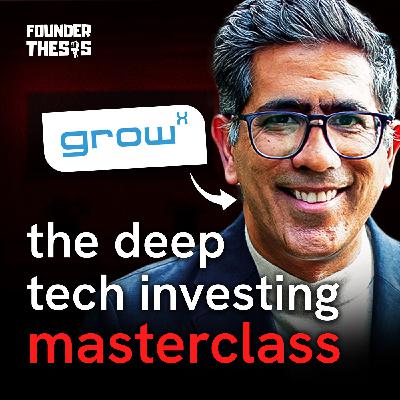
"Cash is just a commodity. What truly attracts top entrepreneurs is the connection you build."
Ashish Taneja completely flips the traditional investor-founder power dynamic in this eye-opening conversation with host Akshay Datt, revealing why the best founders actually choose their investors, not the other way around.
Ashish Taneja is the Founding Partner & CEO of GrowX Ventures, one of India's pioneering deep tech venture capital firms. A Chartered Accountant who transitioned from being the India CEO of Vertex (a major UK BPO firm) to venture investing, Ashish has bootstrapped GrowX from angel investments in 2008 to managing ₹400+ crores across institutional funds. His portfolio includes a spectacular 17x return from spacetech company Pixxel, and notable exits to companies like Reliance and NASDAQ. With 49 investments and 9 successful exits over 15+ years, Ashish has become a leading voice in India's hardware and deep tech ecosystem.
Key Insights from the Conversation:
👉Deep Tech Focus: India's future lies in hardware-first companies solving complex problems in space, defense, semiconductors, and advanced manufacturing
👉Patient Capital Thesis: Deep tech requires 4-6 year investment horizons versus software's 18-month cycles
👉Dual Valley Strategy: Successful deep tech investing means navigating both technology risk and commercialization risk simultaneously
👉Founder-First Philosophy: The best entrepreneurs choose their investors based on value-add, not just capital
👉Barbell Portfolio Strategy: Combining high-risk seed deep tech bets with lower-risk Series B growth investments
👉Bootstrap Mentality: Building a VC fund through personal savings, consulting revenue, and reinvested returns rather than institutional money
#VentureCapital #DeepTech #SpaceTech #HardwareStartups #IndiaVC #StartupFunding #TechInvesting #DefenseTech #Semiconductors #PatientCapital #FounderThesis #AkshayDatt #GrowXVentures #AshishTaneja #StartupEcosystem #AngelInvesting #SeriesB #SeedFunding #TechEntrepreneur #IndianStartups #VCStrategy #InvestmentStrategy #TechFounders #StartupJourney #ModernIndustrials
Disclaimer: The views expressed are those of the speaker, not necessarily the channel
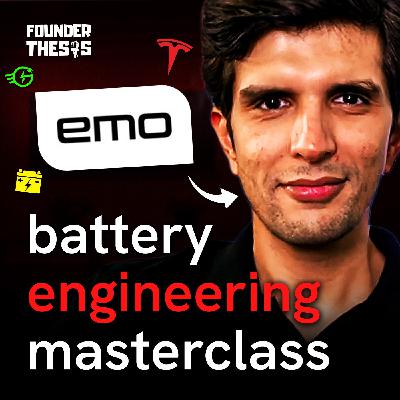
"Energy is the only input cost that can be systematically optimized over time."
A game-changing perspective from battery tech pioneer Sheetanshu Tyagi that's reshaping how India's quick-commerce giants think about profitability. This insight is driving EMO Energy's transformation from a hardware company to an Energy-as-a-Service platform.
Sheetanshu Tyagi is the Co-Founder & CEO of EMO Energy, a deep-tech startup revolutionizing India's EV battery landscape. With over a decade of experience at world-class companies including Rivian (as one of the first 50 employees), Ather Energy, and Ola Electric, Sheetanshu has been at the forefront of the global EV revolution. He holds 8 patents for innovative automotive systems and has successfully raised $7.86 million for EMO Energy, achieving a valuation of ₹203 crores. Under his leadership, EMO has deployed over 2,000 battery packs, covered 18.3 million kilometers, and established partnerships with industry giants like Blinkit, BigBasket, and Domino's.
Host Akshay Datt explores Sheetanshu's journey from a 2BHK startup to building India's most advanced battery technology platform.
Key Insights from the Conversation:
👉Hardware-First Philosophy: EMO's contrarian approach focuses on superior mechanical and thermal engineering rather than expensive specialized cells
👉Fast Charging Breakthrough: 20-minute charging capability with 5+ year battery life, solving the critical downtime problem for commercial fleets
👉Immersion Cooling Innovation: Proprietary liquid cooling technology maintains uniform temperature within 1°C across all cells
👉Energy-as-a-Service Model: Transitioning from 90% hardware revenue to 50%+ software and services, offering systematic energy cost optimization
👉Strategic Market Focus: Targeting high-utilization commercial fleets rather than consumer market, doubling rider productivity to 140-160 km/day
👉Sodium-Ion Future: Predicting India's potential to bypass lithium dependency and build sovereign battery technology using locally available materials
#EVBattery #StartupIndia #DeepTech #ElectricVehicles #BatteryTechnology #EnergyStorage #Entrepreneurship #TechStartup #Innovation #FastCharging #EMOEnergy #IndianStartups #CleanTech #SustainableMobility #VentureCapital #HardwareTech #EVInfrastructure #BengaluruStartups #FutureOfMobility #StartupJourney #TechFounder #electricmobility
Disclaimer: The views expressed are those of the speaker, not necessarily the channel
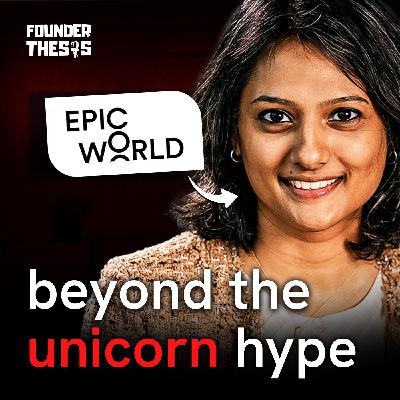
India's real economic engine isn't in big cities - it's in the 400 million+ people building, trading, and growing across Middle India.
In this episode of the Founder Thesis Podcast, host Akshay Datt speaks with Jyotsna Krishnan (Managing Partner, Elevar Equity; CEO and Co-Founder, Epic World) on how to invest, build, and scale startups for India's underserved majority.
With 15+ years in impact investing, Jyotsna shares how Elevar Equity has backed 50+ companies, catalyzed $3B+ in follow-on capital, and impacted over 60 million low-income households - proving that profit and purpose aren't mutually exclusive.
She also introduces Epic World and Epic Intelligence, a data platform designed to map the $10 trillion informal economy of entrepreneurial households in India.
Key Insights:
👉Elevar's customer-backward investment thesis
👉Why India's middle 70% is the biggest untapped market
👉Building startups with distribution, dignity, and deep context
👉Epic World's vision to productize ground-up insights
👉Why Middle India needs its own startup playbook
👉The real size of India's economy - beyond GDP metrics
#ImpactInvesting #IndiaStartups #FounderThesis #MiddleIndia #VCIndia #SocialImpact #CustomerCentric #InclusiveGrowth #InformalEconomy #StartupIndia #MSME #StartupPodcast #VCPodcast #BusinessStrategy #InvestmentStrategy #StartupEcosystem
Disclaimer: The views expressed are those of the speaker, not necessarily the channel
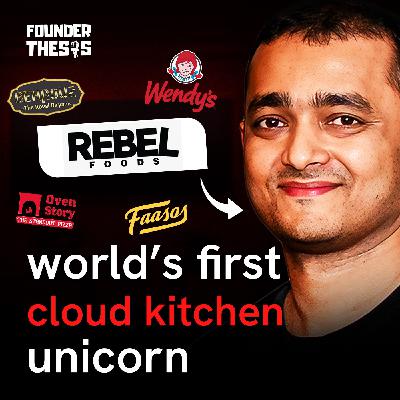
"I have this fundamental belief that you make abnormal returns not when you are right but when people don't agree with you."
This contrarian mindset from Jaydeep Barman perfectly captures how Rebel Foods built a $1.4 billion unicorn by doing what everyone thought was impossible: decoupling restaurant brands from physical real estate.
Jaydeep Barman is the Co-founder and Group CEO of Rebel Foods, the world's largest internet restaurant platform operating 450+ cloud kitchens across 100+ cities in three countries. Under his leadership, the company processes 3 million orders monthly, generates ₹1,800+ crores in annual revenue, and achieved unicorn status at a $1.4 billion valuation. A former McKinsey Associate Partner with an MBA from INSEAD, Jaydeep pioneered the multi-brand cloud kitchen model that revolutionized how restaurants operate.
In this candid conversation with host Akshay Datt, he shares the journey from a failed Kolkata roll startup to building a category-defining global company.
Key Insights from the Conversation:
👉Contrarian Strategy: Being misunderstood by competitors created a protective moat during Rebel's early growth years
👉Cloud Kitchen Economics: 12-15 month payback periods with 25-30% monthly profits, dramatically better than traditional restaurants
👉Multi-Brand Innovation: Single kitchens operating 15+ brands simultaneously, maximizing asset utilization
👉Technology Moat: Proprietary Rebel OS automates cooking processes, ensuring consistency across hundreds of locations
👉Global Expansion: Strategic approach to international markets, focusing on structural advantages rather than rapid scaling
👉People Philosophy: Hiring for "founder mentality" over CVs, creating an intentionally "abnormal" company culture
#CloudKitchen #StartupFounder #FoodTech #Unicorn #RebelFoods #EntrepreneurJourney #StartupStrategy #FoodDelivery #BusinessModel #StartupPodcast #FounderStory #IndianStartups #RestaurantTech #VentureCapital #BusinessStrategy #Entrepreneurship #StartupLessons
Disclaimer: The views expressed are those of the speaker, not necessarily the channel

How do you build a $100 million enterprise tech company - without raising a single dollar from venture capital?
In this episode, host Akshay Datt speaks to Rajesh Sinha, Founder of Fulcrum Digital and Culinary Digital, shares his remarkable story of scaling two global businesses to ~$100M ARR - fully bootstrapped.
From building a customer-funded SaaS + services hybrid model to leading the shift toward autonomous AI agents, Rajesh reveals his frameworks for disciplined growth, tech innovation, and global expansion.
He also unpacks how AI agents - powered by SLMs (Small Language Models), governed by secure enterprise frameworks, and orchestrated via Fulcrum's proprietary FT Rise platform - are set to reshape the future of business software.
Whether you're a startup founder, enterprise AI strategist, or services operator, this conversation is packed with insight on how to scale without capital, differentiate in crowded markets, and win in the age of AI.
Key Topics Covered:
👉How to bootstrap a $100M SaaS and digital services company
👉The evolution of Fulcrum through 5 tech eras: Web 1.0 → AI economy
👉Why vertical and horizontal AI agents are the future of work
👉How Fulcrum is using SLMs vs LLMs for cost-effective AI delivery
👉The mechanics of AI agent governance, pricing, and orchestration
👉Fulcrum's global delivery model: India, Brazil, Argentina, and beyond
👉Navigating enterprise sales, customer concentration risk, and culture
👉Why Rajesh now sees the value of investors - but didn't need them
#BootstrappedStartup #AIAgents #DigitalTransformation #TechEntrepreneur #StartupGrowth #CustomerFunding #IntelligenceAmplification #PlatformBusiness #EnterpriseAI #FounderThesis #TechServices #ScalingWithoutVC #AIStrategy #BusinessAutomation #TechLeadership #StartupPodcast #Entrepreneurship #SaaS #GlobalBusiness #techinnovation
Disclaimer: The views expressed are those of the speaker, not necessarily the channel
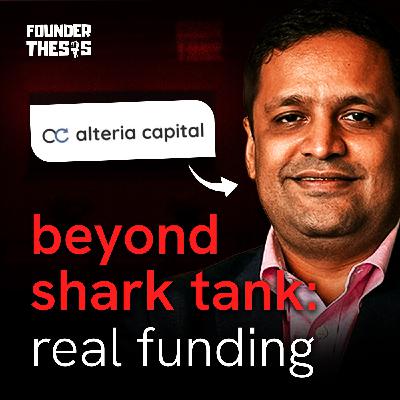
"Venture debt is like an umbrella - you buy it before it starts raining, because once it starts raining, everything becomes expensive."
This analogy perfectly captures the strategic timing required for startup capital - smart founders raise debt when they don't need it, not when they're desperate.
Vinod Murali is the Co-founder and Managing Partner of Alteria Capital, India's largest venture debt fund managing ₹4,500 crores across multiple funds. Widely recognized as the pioneer of venture debt in India, he has over 17 years of experience in the space and has personally backed more than 220 startups including unicorns like Spinny, Rebel Foods, Country Delight, and OneCard. His firm has deployed over ₹7,500 crores to date, making him one of the most influential figures in Indian startup financing. Before founding Alteria, Vinod spent nearly a decade building India's first venture debt business at Silicon Valley Bank and later InnoVen Capital.
Key Insights:
👉Private Credit Evolution: Venture debt sits within the ₹2 trillion private credit ecosystem, filling the gap between traditional banking and equity financing
👉Indian Market Adaptation: India required a complete rewrite of the Silicon Valley venture debt model due to its execution-heavy versus IP-heavy nature
👉Risk Framework: Successful venture debt relies on evaluating four key risks - selection, performance, payment, and resolution
👉Capital Timing Strategy: The best time to raise debt is when you don't need it, not during crisis situations
👉Portfolio Performance: Alteria has achieved less than 0.5% losses across their ₹7,500 crore deployment
👉Regulatory Arbitrage: The shift from NBFC to AIF structure unlocked better capital access and tax efficiency for venture debt funds
#VentureDebt #StartupFunding #IndianStartups #PrivateCredit #StartupCapital #VentureCapital #AlteriaCapital #StartupAdvice #Entrepreneurship #StartupStrategy #VinodMurali #FounderThesis #AkshayDatt #StartupFinance #VentureFinancing #StartupEcosystem #BusinessStrategy #StartupGrowth #FinancialStrategy #startuppodcast
Disclaimer: The views expressed are those of the speaker, not necessarily the channel.

Comments

Download from Google Play

Download from App Store
 United States