


 Claim Ownership
Fresh Economic Thinking
Subscribed: 52Played: 1,849
Subscribe

© Cameron Murray
Description
Cameron Murray is famous for questioning sacred cows and conventional wisdoms of both left and right. We chat about Cameron's latest Twitter battle and then delve into a controversy. Wide-ranging analysis - no topic out of bounds - inequality, regulation, housing, superannuation, lockdowns, tax, war, the meaning of life.
www.fresheconomicthinking.com
www.fresheconomicthinking.com
135 Episodes
Reverse

Construction prices rising? Have you tried Productivity™?Sounds great to me!Productivity is an economic term we use to describe the process of the same number of people being able to produce more goods and services in a given period of time. The term doesn’t tell us how to become able to produce more stuff. Productivity™ is different to the economic term. It is a political phase used to deflect from facing real trade-offs or policy changes that might create losers as well as winners. Here is Claire O’Neil, Australia’s Housing Minister, using Productivity™ exactly in this way. Our focus is on delivering our election commitment — five per cent deposits and 100k homes for first buyers. And, tackling our drive towards building 1.2 million homes around the country by focusing on stagnant construction Productivity™.Here is David Janetzki, Queensland Treasurer, doing the same.The decade of declining construction Productivity™ has reduced housing affordability and increased the cost of vital infrastructure projects…And here is Andrew Leigh, Assistant Minister for Productivity, doing it. That’s not just a housing shortfall – it’s a Productivity™ failure.I find it useful to replace the political phrase Productivity™ with Magic Beans™. Declining construction Productivity™ becomes Declining construction Magic Beans™. And this new phrase communicates as much information as the old one. Is this too cynical?Maybe. But my experience with the state of the conversation and analysis on construction productivity suggests not. Trends come and go about what Magic Beans™ really means, depending on the political appetites of the day. I have written three deep dives into this topic in the past couple of years here at FET. The video above is a presentation I made a few weeks back, laying out many of the conceptual problems being made in the fun political game of blaming construction Magic Beans™ Producitivity™ for the price of homes. Enjoy.Timestamps0:00 Intro2:15 What the nerds are saying8:00 Is the data plausible? 8:45 The history of mismeasuring productivity10:11 The two arguments are 1) productivity in decline, and 2) this is causing high home prices11:50 The evidence of productivity in decline and why it doesn’t make sense18:30 Prefabrication can make measured construction productivity worse19:12 More productive doesn’t mean lower price, instead it means denser, bigger, better, and more expensive homes23:16 Recap and wrap upPut Fresh Economic Thinking to WorkWhy a paid subscription mattersA paid subscriber to FET wants an intellectual challenge. They don’t want someone to write what they already think. They want insights that are hard to get elsewhere and a public debate that is intellectually honest, not tribal. Subscribing is a vote for independence — you're saying I want Cameron Murray to have the financial freedom to investigate things that other economists won’t. If that sounds like you, and you get value from the research and analysis published here, I’d appreciate your financial support. A fresh economic consultancyMost economic consultancies begin with the conclusion a client wants. They sell institutional credibility and a report. I sell economic thinking.If your organisation has a difficult economic question, a policy argument that needs testing, or a problem where you want to get beyond the usual consultant consensus, I’d like to hear from you.FET also provides custom economics training, presentations and workshops for organisations that want their people to understand the economics behind the issues they work on.If there are economic concepts, debates, or blind spots your team needs a genuine handle on, then please reach out.As always, please like, share, comment, and subscribe. Thanks for your support. You can find Fresh Economic Thinking on YouTube, Spotify, and Apple Podcasts. This is a public episode. If you'd like to discuss this with other subscribers or get access to bonus episodes, visit www.fresheconomicthinking.com/subscribe
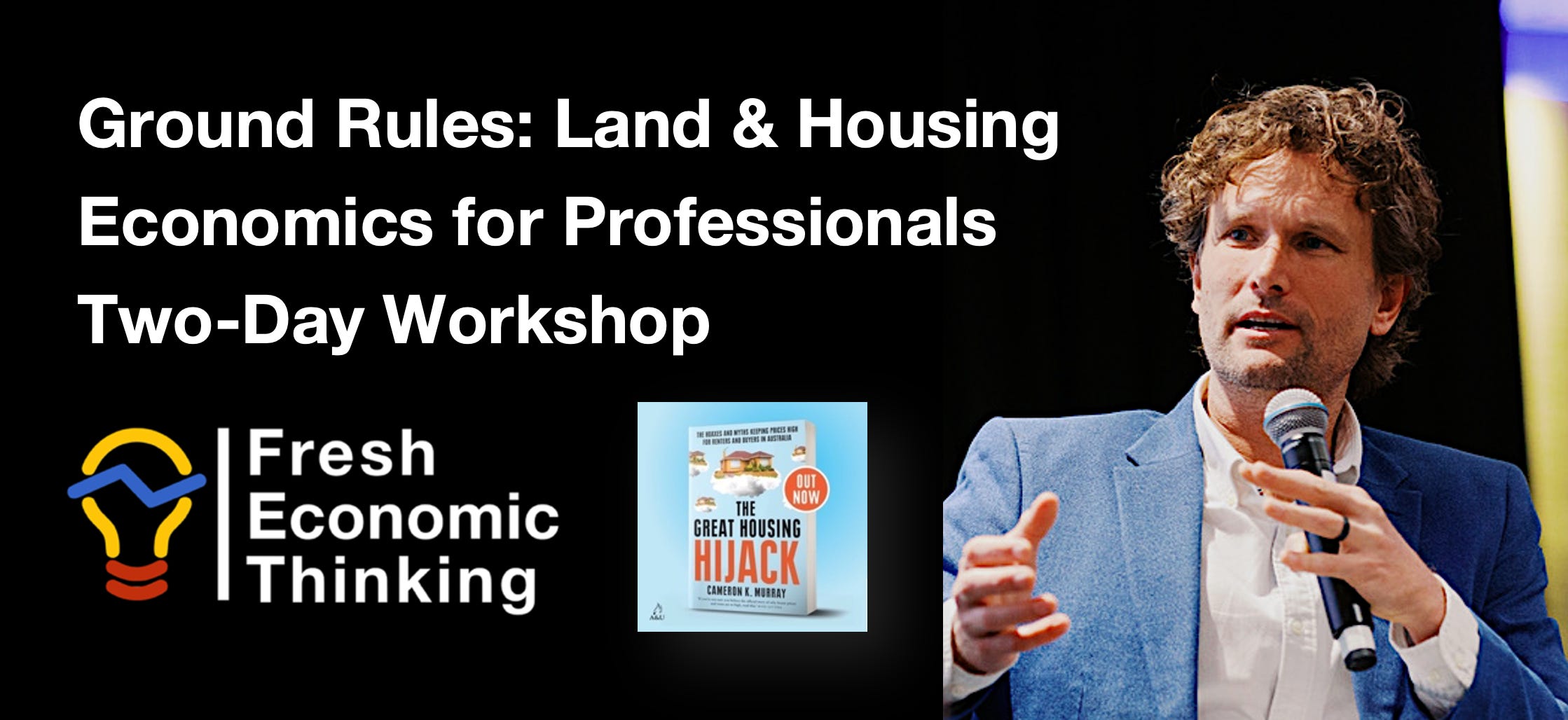
If there are widespread concerns about inflation raising the cost of living, should governments provide ad hoc subsidies for things like energy, transport, fuel and so on?Nicholas Tarrant from Policy Institute Australia says, “No!”His latest report is entitled Hit and miss: Who benefits from state concessions and cost-of-living support?He looks at $12 billion of ad hoc subsidies provided by Australian governments, predominantly the states, which is about $1,100 per household per year. Starts tomorrow! A few seats still available.Ground Rules: Land and Housing Economics for ProfessionalsPut that professional development budget to work with the FET Land and Housing Economics workshop in Melbourne on 10-11th November.This two-day workshop is crafted for smart researchers, policy analysts, economists and planners who want to truly understand how land and housing markets work.This course may be eligible for CPD points from your professional Institute. Please check directly with them.There is a great group of attendees, and tickets are still available here (email me for a ticket invoice for bank payment if you prefer).More details here.Why does this matter?Because these ad hoc subsidies end up targeted at certain households in very strange ways. The image below shows that a retiree in Western Australia who owns a $3 million home and has $500,000 in super will get $2,800 in these state subsidies for fuel, energy, transport and more. But a single working mother with no car and few assets gets only $1,500 in such ad hoc benefits. So if the most well-off groups are getting these “cost-of-living relief” subsidies, then do they even do what they are intended to do?Put Fresh Economic Thinking to WorkWhy a paid subscription mattersA paid subscriber to FET wants intellectual challenge. They don’t want someone to write what they already think. They want insights that are hard to get elsewhere and a public debate that is intellectually honest, not tribal. Subscribing is a vote for independence — you're saying I want Cameron Murray to have the financial freedom to investigate things that other economists won’t. If that sounds like you, and you get value from the research and analysis published here, I’d appreciate your financial support. A fresh economic consultancyMost economic consultancies begin with the conclusion a client wants. They sell institutional credibility and a report. I sell economic thinking.If your organisation has a difficult economic question, a policy argument that needs testing, or a problem where you want to get beyond the usual consultant consensus, I’d like to hear from you.FET also provides custom economics training, presentations and workshops for organisations that want their people to understand the economics behind the issues they work on.If there are economic concepts, debates, or blind spots your team needs a genuine handle on, then please reach out.As always, please like, share, comment, and subscribe. Thanks for your support. You can find Fresh Economic Thinking on YouTube, Spotify, and Apple Podcasts. This is a public episode. If you'd like to discuss this with other subscribers or get access to bonus episodes, visit www.fresheconomicthinking.com/subscribe
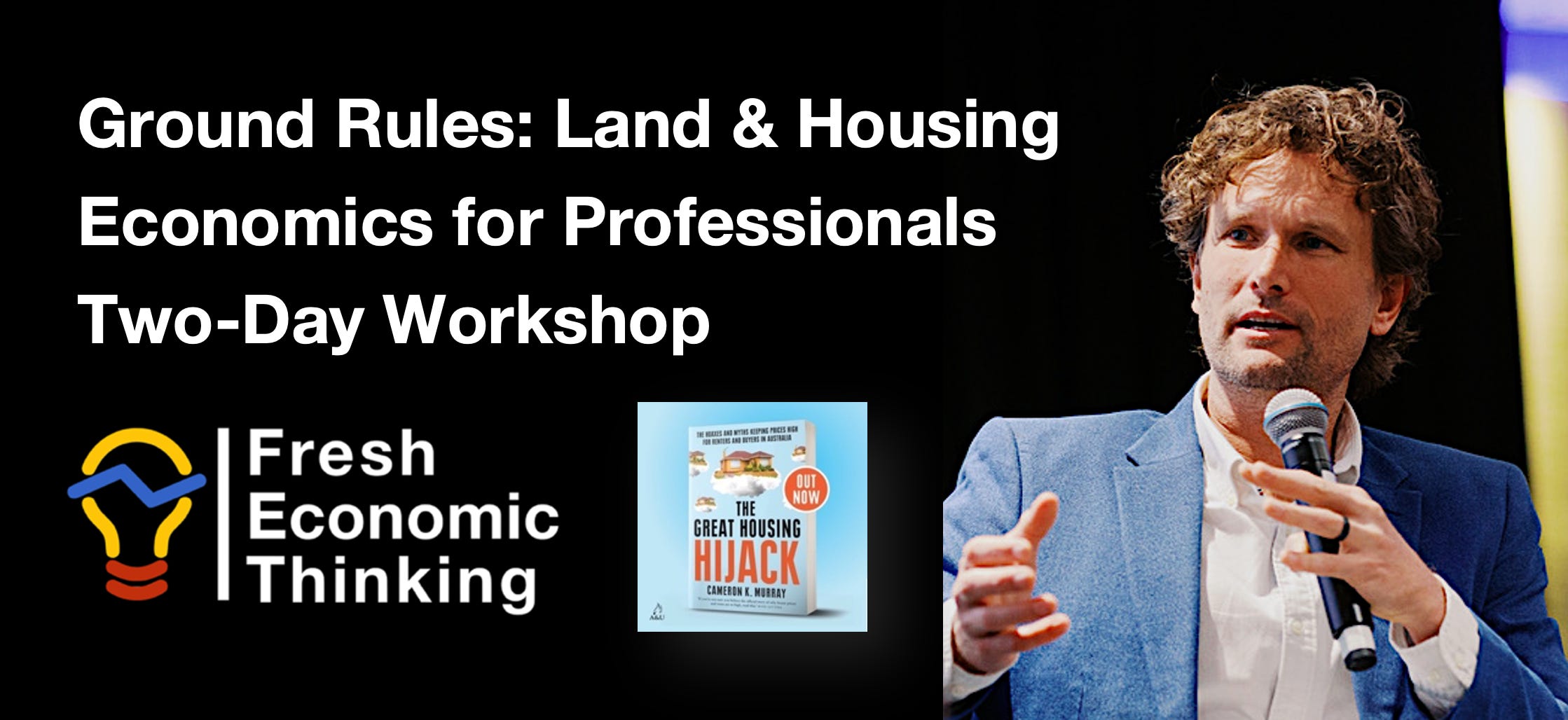
My friend Matt Lloyd-Cape just released his book, Our Place, about the story of housing in Australia. Our views on housing differ somewhat, which made for a more interesting chat.Though we both arrive at similar conclusions about the need for government and non-market housing if we want to make large changes to housing outcomes, we disagree about the extent and effectiveness of interventions in the markets. For example, Matt favours financial subsidies in the form of publicly provided discounted mortgages, which can give households who qualify a leg. I see that as just another cash subsidy (which rises in value with the value of the home you buy) which is hidden by being amortised in the form of a cheaper mortgage. We already have cash subsidies in Australia for first home buyers in the form of cash grants and discounted stamp duty (which has the same net effect). Do we need or want more? I don’t know. You can read an extract of the book here, and buy the book at Amazon here.Matt will be speaking at two upcoming events in Melbourne (21st Oct) and Adelaide (5th Nov), so if you are interested and want to catch him speak and chat about housing, I recommend getting to one of those events. Put Fresh Economic Thinking to WorkWhy a paid subscription mattersA paid subscriber to FET wants intellectual challenge. They don’t want someone to write what they already think. They want insights that are hard to get elsewhere and a public debate that is intellectually honest, not tribal. Subscribing is a vote for independence — you're saying I want Cameron Murray to have the financial freedom to investigate things that other economists won’t. If that sounds like you, and you get value from the research and analysis published here, I’d appreciate your financial support. A fresh economic consultancyMost economic consultancies begin with the conclusion a client wants. They sell institutional credibility and a report. I sell economic thinking.If your organisation has a difficult economic question, a policy argument that needs testing, or a problem where you want to get beyond the usual consultant consensus, I’d like to hear from you.FET also provides custom economics training, presentations and workshops for organisations that want their people to understand the economics behind the issues they work on.If there are economic concepts, debates, or blind spots your team needs a genuine handle on, then please reach out.Ground Rules: Land and Housing Economics for ProfessionalsPut that professional development budget to work with an upcoming FET Land and Housing Economics workshop in Melbourne on 10-11th November.This two-day workshop is crafted for smart researchers, policy analysts, economists and planners who want to truly understand how land and housing markets work.This course may be eligible for CPD points from your professional Institute. Please check directly with them.Tickets hereMore details here.As always, please like, share, comment, and subscribe. Thanks for your support. You can find Fresh Economic Thinking on YouTube, Spotify, and Apple Podcasts. This is a public episode. If you'd like to discuss this with other subscribers or get access to bonus episodes, visit www.fresheconomicthinking.com/subscribe
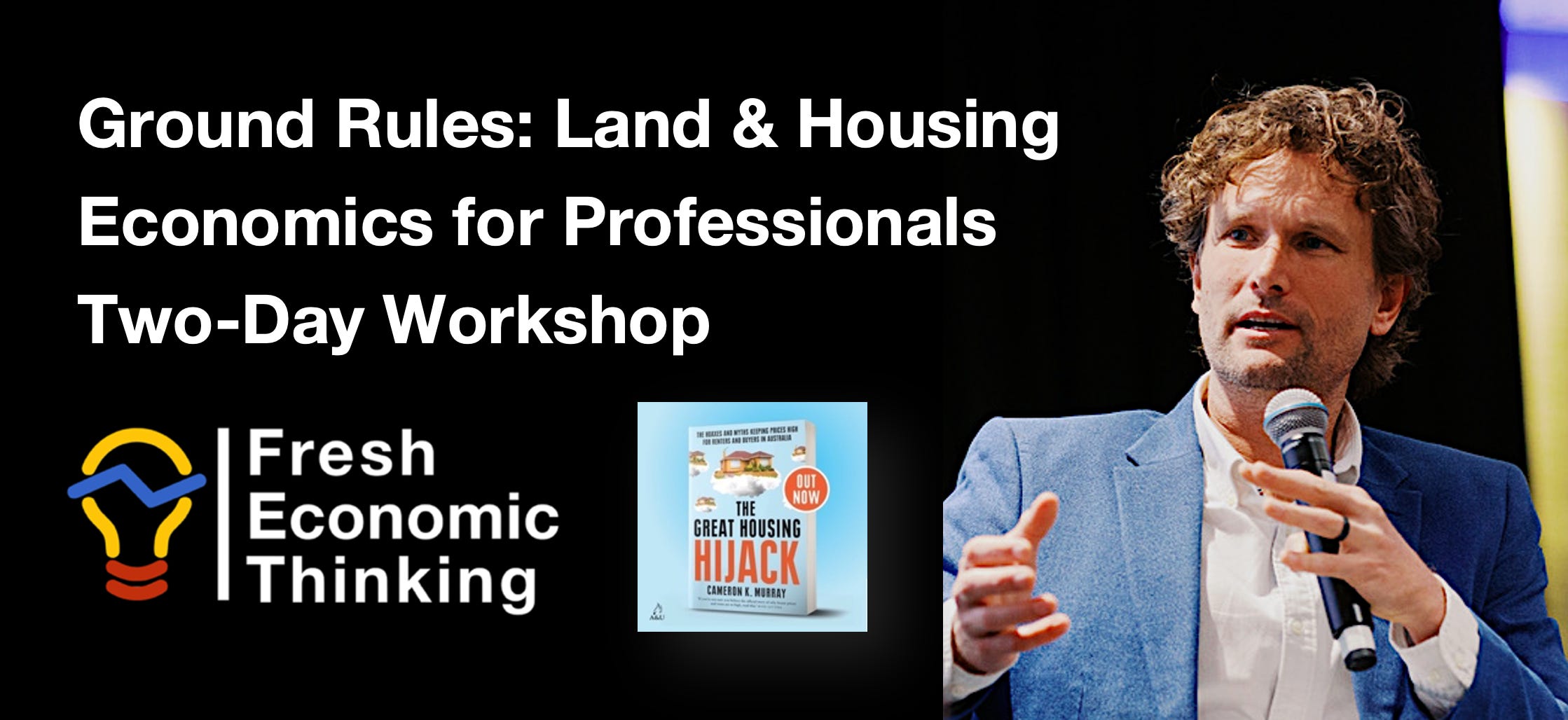
The debate about super is heating up again. Pauline Hanson announced in September that One Nation’s policy is to allow renters or mortgage holders to keep 3% of their salary out of superannuation to spend now, making them put away 9% instead of 12% in their retirement account. With regular co-host Jonathan Gadir, we discuss all the arguments put forward by the panicking media mob about why letting people spend their money when they earn it is bad. For a longer deep dive into the economic arguments against superannuation, try this FET article.I referenced a Super Members Council (SMC) report in the podcast which, despite being a lobby group report in favour of super, notes that the system costs the federal budget becase the tax breaks are higher than the age pension savings. There is a copy below to download. I also recently asked Grok AI about whether there are any organised interest groups looking out for the workers who actually want to spend their money when they earn it to take all their wages as income rather than park 12% in superannuation. Its answer was shocking.The honest answer is that almost nobody with deep pockets wants the whole compulsory system abolished.The $4.4–4.5 trillion pool and ~$30 billion a year in fees create one of the most organised and well-resourced interest groups in the country. Industry funds, retail funds, the Association of Superannuation Funds of Australia, unions, and a large slice of the financial advice industry all have strong reasons to keep the architecture intact and just tinker at the edges.We have dug an enormous financial and political hole with the superannuation system. It is technically easy to unwind superannuation—just require all income to be paid into a worker’s bank account, adjust tax settings slightly so that it all doesn’t get taxed at full marginal rates, and allow people to spend a small amount out of their super balance for an adjustment period of about five years (say $10,000 per year), and then any remaining funds will roll into non-tax advantaged investment funds. But to do that needs an organised group standing up for workers. Put Fresh Economic Thinking to WorkWhy a paid subscription mattersA paid subscriber to FET wants intellectual challenge. They don’t want someone to write what they already think. They want insights that are hard to get elsewhere and a public debate that is intellectually honest, not tribal. Subscribing is a vote for independence — you're saying I want Cameron Murray to have the financial freedom to investigate things that other economists won’t. If that sounds like you, and you get value from the research and analysis published here, I’d appreciate your financial support. A fresh economic consultancyMost economic consultancies begin with the conclusion a client wants. They sell institutional credibility and a report. I sell economic thinking.If your organisation has a difficult economic question, a policy argument that needs testing, or a problem where you want to get beyond the usual consultant consensus, I’d like to hear from you.FET also provides custom economics training, presentations and workshops for organisations that want their people to understand the economics behind the issues they work on.If there are economic concepts, debates, or blind spots your team needs a genuine handle on, then please reach out.Ground Rules: Land and Housing Economics for ProfessionalsPut that professional development budget to work with an upcoming FET Land and Housing Economics workshop in Sydney or Melbourne.This two-day workshop is crafted for smart researchers, policy analysts, economists and planners who want to truly understand how land and housing markets work.This course may be eligible for CPD points from your professional Institute. Please check directly with them.Sydney tickets here.Melbourne tickets hereMore details here.As always, please like, share, comment, and subscribe. Thanks for your support. You can find Fresh Economic Thinking on YouTube, Spotify, and Apple Podcasts. This is a public episode. If you'd like to discuss this with other subscribers or get access to bonus episodes, visit www.fresheconomicthinking.com/subscribe

In the past few weeks, some of the world’s leading Artificial Intelligence (AI) experts have spoken up about the risks of letting AI models loose. Whether that is hijacking our heavily connected communications and infrastructure systems or triggering further geopolitical conflict, handing over decision-making to a tool that lacks human reasoning poses risks that are hard for us to even contemplate.A group of experts has started pushing for a treaty to limit such risks with their AI 2040 Plan. Here’s a recent NYT podcast on the topic, and another informative interview is here.I asked Jonathan about the infamous “Hugging Face” attack by a group of AI agents and how that signals the unpredictability of AI choice when not constrained by the unwritten and internal rules of human cooperation. One thing I didn’t get to discuss more with Jonathan was the type of basic economic sense check I usually make. For example, the AI 2040 Plan lists as its fourth risk that AI takes everyone’s jobs. But economists know that technology that replaces work will itself create new work opportunities. And we weren’t able to discuss the upside either—what if the most powerful AI agents realise that if humans stop fighting wars amongst their tribes and learn to cooperate better, we will build them more data centres?I’m always the optimist!The Future of Affordable Housing - online webinarHousing affordability and construction productivity are two of the most debated topics in our industry today. But are we missing some fundamentals?I will be speaking at this event about fundamental economic issues in our understanding of construction productivity and its apparent decline. Book here. Use code LAW15 for a 15% FET supporter discount. Dates: Friday, October 2, 2026 & Friday, October 9, 2026Times: 4.00PM - 6.30PMCPD hours: 5 (5 formal points)Speakers: Cameron Murray, Fresh Economic Thinking; Noura Thaha, Associate Principal, Group GSA; Stephen White, Director Planning Urbis; Lindsay Clare, Clare Design; Kim Houghton, Economic Solutions (Regional Housing Issues in Australia); Geoff Hanmer, Architect & Lecturer at UTS; John Baker, Founding Director, BKA ArchitectureAs always, please like, share, comment, and subscribe. Thanks for your support. You can find Fresh Economic Thinking on YouTube, Spotify, and Apple Podcasts. This is a public episode. If you'd like to discuss this with other subscribers or get access to bonus episodes, visit www.fresheconomicthinking.com/subscribe

Comments

Download from Google Play

Download from App Store
 United States