DiscoverFrontline Leadership
Frontline Leadership
Claim Ownership

Frontline Leadership

Author: Christian Skierski

Subscribed: 0Played: 0
Share

Description

Frontline Leadership is a podcast for leaders who operate where decisions matter and consequences are real. Hosted by Christian Skierski, DBA, the show explores leadership, human performance, culture, and decision-making through the lens of real-world experience rather than theory alone.

Each episode offers concise reflections, practical insights, and thoughtful analysis drawn from military service, organizational leadership, and academic research. Topics include accountability, communication, trust, adaptability, and the often unseen dynamics that shape teams and institutions.

This is not motivational noise or recycled leadership slogans. It is a space for disciplined thinking, honest observation, and professional growth for leaders who want to lead with clarity, credibility, and purpose.

8 Episodes
Reverse
Episode SummaryWhen a conversation about a course redesign sparked a memory of navigating through forests with a compass and a worn field manual, Dr. Christian Skierski (DBA/PMC) found himself revisiting a lesson that never gets old. In this episode, he unpacks why land navigation, a skill most students may never use in the field, is one of the most complete leadership frameworks ever put to paper.Drawing from Marine Corps doctrine, real operational experience, and decades of leading people through ambiguity, Christian walks through four core leadership principles hidden inside the fundamentals of navigating terrain.Key TakeawaysDelegation is not abdication. The patrol leader can assign a navigator, but cannot transfer responsibility for the mission. The same standard applies to every leader in every organization.Avoid the skyline. The easy route exposes you. Ego, self-promotion, and the comfort of recognition are all skylines. Disciplined leaders choose the harder, quieter path where integrity stays intact.Pace yourself and measure it. Pacers in the field count every step. Leaders need their own version: metrics, milestones, and honest self-assessment. Without them, you risk believing you've gone farther than you have.Know when to take the compass back. Effective leadership means knowing when to let others lead and when the mission demands you step in and take the lead.Who This Episode Is ForSenior leaders, supervisors, HR professionals, and anyone responsible for developing others through complexity and change. Whether you've worn a uniform or not, these principles translate directly to organizational leadership.Resources & LinksSubscribe to the Frontline Leadership newsletter on Substack and LinkedIn for articles, frameworks, and leadership toolsSupport the mission, visit the [Frontline Leadership Store] and pick up gear that carries the message: leadership is about direction, not positionGet your Frontline Leadership AI Coaching Prompt Guide HEREVisit the Website to find out more Frontline LeadershipAbout the Author After decades of leading diverse teams through crises, transformations, and growth, Dr. Christian Skierski recognized a recurring pattern: leaders were being trained to manage processes, not people, and to react to data rather than interpret meaning. What began as a personal mission to mentor and equip emerging leaders has evolved into Frontline Leadership, a platform that blends battle-tested experience, academic rigor, and future-focused innovation.
Most organizations say leadership development is a strategic priority. Their investment patterns tell a different story.In this episode, Dr. Christian Skierski, DBA breaks down one of the most persistent and costly failures in organizational design — the systematic underinvestment in frontline leader development. Drawing on research from Gallup, DDI, McKinsey, David Kolb, and Google's Project Oxygen, this episode examines why leadership capability does not cascade from the top down, what the science of adult learning actually demands from development programs, and how artificial intelligence is eliminating the structural excuses organizations have relied on for decades.If you lead people, develop people, or design organizations — this episode is for you.What We CoverWhy fewer than half of frontline leaders report receiving quality leadership development — while organizations simultaneously rank next-generation leader development as a top strategic priorityThe Gallup finding that a direct manager accounts for at least 70 percent of the variance in employee engagement — and what that means for where development dollars should goThe cascade assumption — why developing executives does not automatically produce leadership strength throughout the organization, and what Zenger and Folkman's research says about how capability actually gets builtHow AI disrupts the three structural barriers to frontline development — cost, scale, and personalization — and the critical distinction between AI as a cost cut versus AI as a capability infrastructureThe McKinsey finding that the average manager waits twelve years between their first leadership role and their first leadership training — and what that gap costs the organizationThe $8.8 trillion annual cost of manager-driven disengagement, according to Gallup's 2023 State of the Global Workplace reportWhat a genuine leadership development system requires versus what most organizations are actually runningFor a deeper dive read the Frontline Leadership ArticleAbout the AuthorDr. Christian Skierski, DBA is the founder of Frontline Leadership Consultancy & Coaching. He brings a practitioner-scholar perspective to enterprise leadership development, organizational design, and talent strategy. Frontline Senior Strategies is published for senior leaders, HR executives, and organizational designers who take the work of building leaders seriously.FRONTLINE LEADERSHIP | https://frontlineleadership.my.canva.site/Get your Frontline Leadership AI Coaching Prompt Guide Here I invite you to subscribe, comment below with your own leadership challenges, or share which leadership pillar resonates with you the most. Let’s continue this conversation and learn from each other’s experiences. For those who’ve asked how to support the work behind Frontline Leadership, I’ve added a simple, entirely optional option LINK.Disclaimer: The views and opinions expressed in this article are those of the author. This article draws on leadership insights from personal experiences and professional expertise.
In this episode of the Frontline Leadership Podcast, we examine a lesson learned in one of the most unforgiving environments in the world: inside a jet engine.Drawing from experience as an FAA-certified Airframe and Powerplant (A&P) mechanic and aerospace propulsion specialist, this episode explores the discipline required to maintain engines like the Pratt & Whitney F100 and General Electric F110 powering aircraft such as the F-15 Eagle and F-16 Fighting Falcon.In aviation maintenance, the margin of error is not philosophical. It is measurable. Often in thousandths of an inch.That level of precision carries a powerful leadership lesson.Excellence is not something leaders perform when people are watching. It is a discipline practiced in small decisions made long before anyone notices.This episode explores how the standards required to maintain combat aircraft translate directly into leadership principles that shape culture, trust, and performance in organizations.Key topics covered:• Why precision matters more than intention in leadership • How small decisions compound into organizational culture • The danger of negotiating with standards “just once” • What aviation maintenance teaches about accountability and trust • Three questions every leader should ask about their real tolerancesThe lesson from the flightline is simple:People do not follow what leaders intend. They follow what leaders actually do.And behavior, like mechanical tolerances, is measured in thousandths.Explore More Frontline Leadership Content📖 Read the full article and subscribe to the newsletter: https://frontlineleadership.my.canva.site/🔗 Follow the Frontline Leadership LinkedIn newsletter: https://www.linkedin.com/newsletters/frontline-leadership/The Frontline Leadership series provides practical doctrine for leaders operating at the edge of the organization, where standards, culture, and decisions matter most.If you find value in these discussions, consider subscribing, sharing the episode, and joining the conversation. For those who’ve asked how to support the work behind Frontline Leadership, I’ve added a simple, entirely optional option LINK.Disclaimer: The views and opinions expressed in this article are those of the author. This article draws on leadership insights from personal experiences and professional expertise.
Episode TitleMuch Will Be Required: The Accountability Standard for Senior LeadersEpisode NotesPromotion is often treated as validation.But what if it is something else entirely?In this episode of the Frontline Leadership Podcast, I unpack a leadership principle drawn from Luke 12:48 that reframes senior leadership as proportional accountability. As responsibility increases, so does expectation. Authority does not reduce scrutiny. It intensifies it.We explore:Why promotion is not a reward, but an inherent obligationThe shift from competence-based leadership to consequence-based leadershipHow influence, trust, and authority scale accountabilityWhy stewardship, not ownership, defines mature senior leadershipThis conversation is not about religion. It is about responsibility.If you operate at a level where your decisions shape culture, systems, and long-term outcomes, this episode will challenge how you view advancement.Continue the ConversationRead the full newsletter article: Frontline Leadership on LinkedIn Frontline Leadership Support the Show
Leadership growth isn’t automatic — it’s intentional.In this episode of Frontline Leadership, we break down the shift from tactical execution to strategic impact and explore the six core pillars that help leaders operate at the right altitude:• Leading Change • Leading People • Results Driven • Business Acumen • Building Coalitions • Enterprise PerspectiveIf you’ve ever felt the strain of moving from “doing the work” to leading the enterprise, this conversation is for you.This episode is designed for leaders who want to think beyond today’s task list and develop long-term strategic influence.Explore more leadership insights, tools, and resources at: 👉 Frontline Leadership (FRL) Website: [LINK]Subscribe to the Frontline Leadership LinkedIn Newsletter for weekly leadership strategy delivered directly to your inbox: 👉 [LinkedIn Newsletter Link]For those who’ve asked how to support the work behind Frontline Leadership, I’ve added a simple, entirely optional option LINK.
Episode TitleWhy Flawless Candidates Still Fail Executive InterviewsEpisode DescriptionPerfect résumés fail interviews every day. Not because the candidate lacks experience. Not because they say the wrong thing.They fail because executive readiness is not visible when it matters most.In this episode of Frontline Leadership, we unpack why highly qualified leaders lose momentum in executive interviews and how selection panels actually evaluate readiness in real time.At senior levels, interviews are not qualification checks. They are executive evaluations.This episode breaks down the visibility gap that causes strong candidates to miss selections and explains what decision makers are really listening for when the stakes are high.In This Episode, You’ll Learn• Why executive interviews are evaluations, not conversations • Why strong leaders still lose selections despite flawless records • What selection panels are listening for, even when they struggle to articulate it • The visibility gap between experience and executive readiness • Why collaboration language can unintentionally weaken confidence • The difference between activity and impact in interview answers • How executive judgment is evaluated under pressureThe Three Executive SignalsProblem Framing: Can you clearly explain what mattered, why it mattered, and what was at stake before describing the action?Decision Ownership: Can the panel hear the judgment call you personally owned and the tradeoffs you accepted?Outcome Clarity: Can the panel clearly hear what changed, what improved, and what endured because of your decision?When any of these is missing, readiness is assumed rather than demonstrated.Executive Visibility Self CheckAfter any high-stakes interview or leadership conversation, ask yourself:Could they clearly hear how I framed the problemCould they clearly hear the decision I personally madeCould they clearly hear the outcome that changed because of meIf it was unclear to you, it was unclear to them.Who This Episode Is For• Senior leaders preparing for executive interviews • Candidates pursuing VP, Director, or C-suite roles • Military and civilian leaders operating at strategic levels • Professionals who are perfect on paper but struggle to close selectionsClosing ThoughtWe do not select résumés. We select leaders under pressure.Executive readiness must be visible.Call to ActionRead the full article If this episode sharpened how you think about leadership evaluation, follow and subscribe to Frontline Leadership.This is where executive thinking becomes visible.
Contrast Framing: The Space Between What We Say and What’s HeardYou give the brief. You explain the decision. You answer the questions in the room.And then, days later, the follow-ups start.In this episode of Frontline Leadership, I explore a pattern that shows up quietly but consistently in leadership. Messages rarely fail in the moment. They fail later, in the questions that reveal how people actually understood what was said.Drawing on real leadership experiences and conversations with my children, this episode explores why clarity alone is often not enough. People do not evaluate messages in isolation. They compare them against prior experiences, assumptions, and unspoken alternatives. When leaders do not shape that comparison, misalignment fills the gap.We also connect these lived moments to well-established behavioral science, including research on anchoring, reference dependence, and loss aversion, to explain why decisions slow, trust erodes, and credibility is tested after the meeting ends.This episode is for leaders who want to understand what is really happening in the space between intention and interpretation.What This Episode CoversWhy messages can feel clear in the room but unravel days later. How unspoken comparisons shape understanding. The hidden cost of misalignment on trust and decision speed. Why follow-up questions are often about framing, not facts. What leaders can do before the room empties to prevent rework later?Books Mentioned and RecommendedAvailable through the Frontline Leadership LibraryThese are books I regularly return to when thinking about communication, judgment, and leadership credibility. Each connects directly to the themes discussed in this episode.Thinking, Fast and Slow: A foundational look at how people actually think, decide, and misjudge. Essential for understanding why people rely on comparisons and mental shortcuts even when they believe they are being rational.Made to Stick explores why some messages survive after they leave the room while others dissolve. Highly practical for leaders who brief often and want their message to travel intact.Crucial Conversations Focused on moments where stakes are high, and misunderstandings carry real consequences. Especially useful when trust is already under pressure.Nudge: A clear explanation of how context and framing shape decisions without force. Helpful for leaders designing processes and communication environments.You can find all of these in the Frontline Leadership Library, where I share what I am reading and why it matters for real-world leadership, not theory alone.Continue the ConversationIf this episode resonated, it probably means you have seen this pattern yourself. The brief felt clear. The decision was slowed anyway. The follow-up questions revealed something deeper.Follow Frontline Leadership for more reflections on communication, trust, and the leadership work that begins after the meeting ends.If you found this episode useful, consider sharing it with a leader who handles follow-ups.
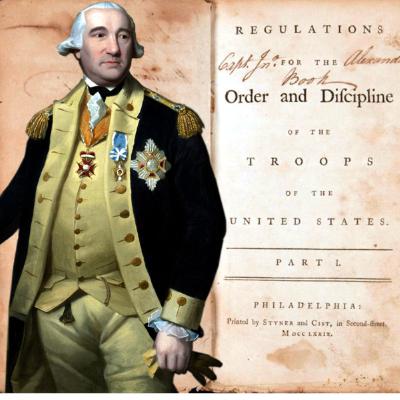
Frontline Leadership examines how leaders raise standards, enforce discipline, and build high-performing cultures in environments resistant to change. Drawing on historical case studies, real world leadership experience, and practical application, each episode explores what it takes to turn disorganized effort into disciplined execution.Drawing on lessons from figures such as Baron Friedrich von Steuben and the transformation of the Continental Army at Valley Forge, the podcast connects timeless leadership principles to modern challenges across the military, business, and public service. Topics include setting and enforcing standards, overcoming resistance to change, leading by example, training leaders to multiply impact, and balancing discipline with adaptability.This podcast is for leaders responsible for culture, performance, and accountability. It is not theory for theory’s sake. It is a practical leadership playbook for those tasked with raising the bar and sustaining it.
Comments