


 Claim Ownership
Fund the People: A Podcast with Rusty Stahl
Subscribed: 4Played: 87
Subscribe

© Fund the People
Description
Our show offers transformative ideas, tools, and examples to help you invest in the nonprofit workforce within your sphere of influence. This unique podcast invites you into a fun, provocative conversation with diverse funders, nonprofits, scholars, and capacity-builders. In 2014, Rusty Stahl founded Fund the People, which works to maximize investments in America's nonprofit workforce. In September 2020, we launched this eponymous podcast to broadcast our message far and wide. In 2025, we launched the premium version of the show (visit patreon.com/FundthePeople). Thank you for listening!
125 Episodes
Reverse
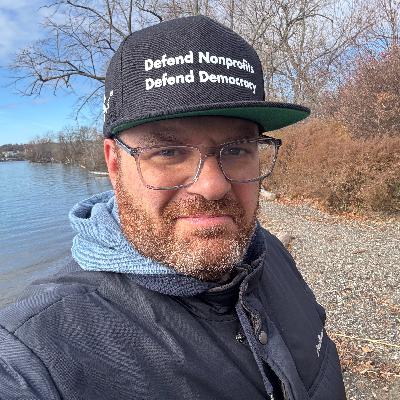
In this brief holiday bonus, you’ll get behind-the-scenes highlights of Season 8. Plus a sneak-peek at some of the provocative guests and valuable topics we’ll cover in season 9!Season 9 will start in late January 2026. If all goes according to plan, S9:E1 will drop on Wed., Jan. 21, 2026 at 8am ET. From thereon, new episodes will publish weekly on Wednesday mornings throughout the season.You’ll also learn about our the new FTP Podcast Premium on Patreon. For $6 a month, you provide grassroots support for production of this ad-free show. And you offer monthly earned income for Fund the People, a national nonprofit organization. This helps us remain an independent, bold voice for the nonprofit workforce. It helps us produce thought-leadership, research, tools, communications, educational programs, and advocacy for investment in the nonprofit workforce. As a Patreon member, you will get:Extended episodes with audio and video Tons of bonus content, including special messages from Rusty, extras from new episodes, and video footage from our back catalogue of over 100 episodesDiscussions with Rusty and the FTP Pod communityParticipation in live episode sessions, so you can ask your questions and participate in the conversationA whole-new Patreon-only weekly show called Riverside Reflections. Sign up now with this special link for a six month free subscription to our premium show. (https://patreon.com/FundThePeople/redeem/512F4) Patreon members can watch the video version of this episode, filmed down by the river in New York's Hudson Valley (where we record Riverside Reflections, our new podcast available exclusively on Patreon).Also on this episode, Rusty acknowledges the people who worked with him to make S8 happen:Erin Giunta, producerCarla Paez, EditorJonny Taylor, Sound EngineerKayla Weathers, Administrative AssistantAnd he thanks our major foundation supporters this year, who helped make this show and all our programming possible:The James Irvine FoundationBarr FoundationThe Kresge FoundationRaymond John Wean Foundation Thanks for listening, and thanks for all you do! Have a restful holiday season and we’ll talk to you in the New Year!
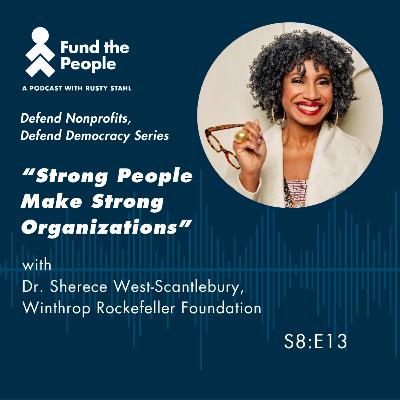
Get 6 months free of our new Premium Pod on Patreon! Available thru 12/31/25 11:59p ET. Click here to redeem this gift so you can…Engage with Rusty and guests during episode recordingLearn with other listeners, guests, and Rusty in our discussion forumAccess extended episodes with videoEnjoy Riverside Reflections (RR), our new Premium-only extra show! Get the inside scoop from Rusty while getting outside for a waterside walk.Tap into older episode’s video footage, bonus content, and more fun and valuable surprises! More extended and RR episodes are going up every week. Click here to listen to our first RR episode and view the post-episode video for free.Now on with the show…In our Season Finalé, you’ll get an inspiring discussion on defending the nonprofit sector, with a call to action for funders to act with courage rather than caution. The message is clear: a strong country depends on a strong, well-resourced nonprofit workforce, and philanthropy must choose to lead boldly in this moment. Host Rusty Stahl speaks with Dr. Sherece West-Scantlebury, President and CEO of the Winthrop Rockefeller Foundation. Reflecting on more than 30 years in philanthropy and her forthcoming retirement, West-Scantlebury offers a candid assessment of what has and hasn’t worked in the sector. She traces the evolution of the Foundation’s mission, its focus on Arkansas working families, and how COVID reinforced the urgency of addressing low wages, systemic inequities, and the root causes of poverty. Throughout the conversation, she challenges philanthropy to confront the real costs of sustaining a healthy civil society and to move beyond outdated, restrictive funding models.West-Scantlebury also details the Winthrop Rockefeller Foundation’s commitments to capacity building, nonprofit workforce pay and benefits, leader wellness, and innovative approaches such as enterprise capital. She argues that investing in nonprofit people is essential to nonprofit sustainability and impact. Her message is clear: a strong democracy depends on a strong, well-resourced nonprofit workforce. Philanthropy must choose to lead boldly in this moment.Download an edited transcript of this episodeThis is part 2 of our 2-part Season 8 Finalé. Check out part 1, a conversation with Andrea Levere of Capitalize Good (S8:E12), from December 10, 2025.Guest Bio:Sherece Y. West-Scantlebury, PhD, is a nationally recognized equity advocate and transformational leader whose career spans housing advocacy in New York City to executive roles at some of the Southeast’s most prominent foundations. For nearly two decades, she has led the Winthrop Rockefeller Foundation, where she will retire at the end of 2025, after previously serving as the founding CEO of the Foundation for Louisiana and at the Annie E. Casey Foundation. Known for speaking life into leaders and organizations, Sherece brings deep expertise in public policy, strategic philanthropy, and program design. She is also the founder of Executive West Coaching & Consulting, where she supports women leaders and leaders of color with a trusted space to think clearly, lead with courage, and align leadership with their values and vision.Related Episodes:Enterprise Capital: A Framework for Sustainable Nonprofits - with Andrea Levere (S8:E12)Lowering Our 'Revenue Risk,' with Gretchen Upholt, BDO (S8:E11)'Silence Isolates, Solidarity Shields,' with Tonya Allen, McKnight Foundation (S8:E7)Links to Resources Discussed in the Episode:Winthrop Rockefeller FoundationFund the PeopleAnnie E. Casey FoundationFoundation for LouisianaCapitalize GoodUnited for ALICE (ALICE: Asset Limited, Income Constrained, Employed)ALICE in the Nonprofit WorkforceEnterprise Capital ExplainerCapacity Building in PhilanthropyMIT Living Wage CalculatorTitan: The Life of John D. Rockefeller, Sr. by Ron ChernowAudre Lorde (referenced on silence and complicity)

In this episode, you’ll learn about a powerful alternative to restricted, project-based funding: enterprise capital for nonprofits. Guest Andrea Levere, founder and CEO of Capitalize Good, explains why nonprofits—like any enterprise—need multi-year, flexible capital that strengthens their balance sheets, builds reserves, and supports the people and systems that drive impact. Andrea breaks down the basic financial principles that determine nonprofit sustainability, and how enterprise capital enables organizations to innovate, hire essential staff, invest in technology, and create high-quality jobs. She also shares compelling examples—from affordable housing developers to workforce builders—showing how this kind of capital supports everything from salaries and benefits to new program development and strategic growth.Andrea and Rusty also dig into the relationship between talent-investing and enterprise capital, the pitfalls of scarcity-based philanthropy, and how funders can more effectively match their “sources of funds” to the actual needs of organizations. Andrea shares stories from Capitalize Good’s partnerships with funders like the Winthrop Rockefeller Foundation and the Citi Foundation's Community Progress Makers, as well as the emerging work in Arkansas to pilot enterprise capital approaches statewide. Listeners will come away with a clear understanding of how enterprise capital works, why it matters, and how both nonprofits and funders can adopt this transformative approach.Download an edited transcript of the episode in .PDF formatLinks to Resources:Gift to Listeners: 6 Months Free Subscription to FTP Podcast Premium on Patreon (up to 50 people). Offer will no longer be available after 12/31/25 at 11:59pm ET.Fund the People websiteLong-Haul Grantmaking Report (Fund the People)Guest Organization & Initiatives MentionedCapitalize Good websiteCapitalize Good “Blueprint for Enterprise Capital”Capitalize Good “Deeper Dive” FAQ sectionAndrea Levere on LinkedInCapitalize Good on LinkedInYale School of ManagementNonprofit Finance FundWinthrop Rockefeller FoundationCiti Foundation – Community Progress Makers
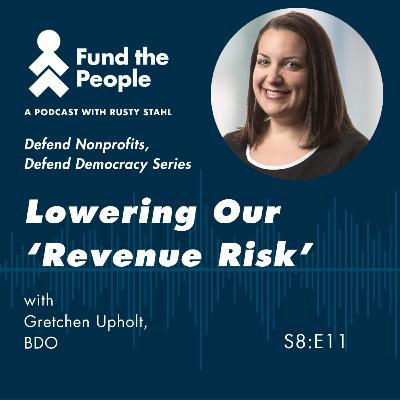
In this episode, nonprofit finance expert Gretchen Upholt joins Rusty to introduce Nonprofit GPS, BDO’s free new online toolkit for scenario planning, business model resilience, and short-term coaching. Learn how your organization can navigate revenue risk and make informed financial decisions in 2026, as the impact of the Trump Administration's War on Charity continues to roll across the sector.Itching for more Fund the People Podcast? Join the new Premium version of the show on Patreon! Visit patreon.com/fundthepeople to join. You'll get extended episodes, videos, bonus content, and community conversations. Plus, you'll get Riverside Reflections, an entire new weekly show only available to premium subscribers! Get the inside scoop on Fund the People while getting outside for a walk and an intimate conversation with host Rusty Stahl. Download an edited transcript of this episode.Related Episodes:Funders Confront Reality and Myth of Nonprofit Overhead with Rodney Christopher, BDOMacArthur President Chooses Courage, Not Quiet with John Palfrey, MacArthur FoundationHow Many-Year Grants Strengthen Nonprofit Jobs and Impact with Betsy Leondar-Wright, Fund the PeopleResources Mentioned:Nonprofit GPS website (free tools from BDO and their partners)Strong Nonprofits websiteNonprofit Financial Commons websiteBDO Nonprofit and EducationFunding for Real Change, the website that resulted from the Real Change, Real Costs InitiativeOn our 'PodPage', stream this and all episodes, find links to our show on your favorite podcast player, and more.Resources Mentioned:Nonprofit GPS website (free tools, templates, webinars, coaching from BDO and their partners)Strong Nonprofits websiteBDO Nonprofit and EducationFunding for Real Change, the website that resulted from the Real Change, Real Costs InitiativeGuest Bio:As a Managing Director with BDO’s Nonprofit and Grantmaker Advisory practice, Gretchen Upholt leads the team’s Cohort & Initiative programs, where BDO partners with funders to provide large-scale capacity building programs for their grantees. She also serves as a lead for several key product areas including training and finance technology consulting, and as a representative of BDO to nonprofits and funders in the Midwest region. In addition to her leadership in the practice, she splits her time between playing an active role as trainer, coach, and curriculum developer for cohort and other training initiatives and as consultant to nonprofit clients across the country, helping nonprofit leaders improve their financial management skills and processes. An experienced staff and program manager, Gretchen is skilled in training, capacity building, research, and program and volunteer management. Previously, Gretchen served as the head of the Volunteer Department at the Thabyay Education Network in Thailand. In that role, Gretchen developed a strategic plan to improve monitoring and evaluation and program management in her department. She also served on the leadership team for the organization, where she reviewed and approved budgets for the organization’s 22 programs and worked on a plan to restructure the organization’s finance and operations staffing and systems. Gretchen’s widely diverse nonprofit experience includes working on the corporate citizenship team at the TCC Group, designing and implementing a pilot research study on nonprofit talent costs for the Talent Philanthropy Project (now Fund the People), as a project manager with the Connecticut Coalition to End Homelessness, and as Chorus Manager for The Choral Arts Society of Washington. She also served as a Community Development Peace Corps Volunteer in Ukraine, where she designed project frameworks, wrote grants, and led a committee tasked with making funding decisions for USAID-funded grants.
This episode explores the stages of foundation responses to the Trump Administration’s War on Charities, through the lens of a place-based funder network. Rusty sits down with Megan Thomas, CEO of Catalyst of San Diego and Imperial Counties. This regional funder association has worked with its members and local nonprofit advisors to build several rounds of collaborative funding, including cash flow assistance loans. You’ll hear:The stages of local funder reaction and response to the Trump Administration's shock-and-awe tactics in their 2025 attacks on nonprofits and philanthropy;Why and how local funders began organizing with one another to create collective funding;How persistent leadership and courage can spur collective, partnership-based responses;The consequences of the Trump Administration’s actions on the local social sectorMegan is a longstanding leader in the philanthropic community, and her organization, Catalyst, is one of Fund the People's partners in the California Talent Justice Initiative.This episode is part of our biweekly Defend Nonprofits, Defend Democracy Series, as well as our ongoing efforts to feature our California Talent Justice Initiative partners across the Golden State. Transcript:Edited PDF of Episode Transcript with Time StampsRelated episodes from FTP Podcast:Defend Nonprofits, Defend the Social Safety Net - with Edward Hershey, CEO, Home of Guiding Hands (San Diego)Nonprofit Staff Resilience and Wellbeing in Turbulent Times - with Loretta Turner, Founder and Strategist, Do Good Leadership CollectiveMacArthur President Chooses Courage, Not Quiet - with John Palfrey, President, MacArthur FoundationResources mentioned in the episode:Catalyst of San Diego and Imperial CountiesUSD Nonprofit Institute Report (March 2025)Coordinated Regional Response CollaborativeResilient Response FundSustained Support FundSan Diego Solidarity NetworkCommunity-Centric FundraisingGuest bio:Megan serves as Catalyst’s president & CEO, providing strategic leadership and partnership to the entire Catalyst staff, board, members, and community partners. Megan oversees Catalyst’s facilitation of collaborative efforts among its funder members and other stakeholders; leads the production of philanthropy and impact investing skills-building and issue based learning; and spearheads Catalyst’s work related to championing equity and opportunity. She strengthens Imperial and San Diego County communities through shared learning and pooled and aligned funding strategies, and initiatives fiscally sponsored by Catalyst.Megan brings 20 years of experience in the nonprofit and philanthropic fields to this role, having most recently served as Executive Director of San Diego Coastkeeper where she built partnerships among the nonprofit, business, and public sectors to advance environmental goals across San Diego County. Megan received her Bachelor of Science in Business Administration from Georgetown University and her Masters in Business Administration from Yale School of Management. She serves on the board of directors for the United Philanthropy Forum (national) and the Museum of Us (San Diego).
In this powerful episode of Fund the People’s Defend Nonprofits, Defend Democracy series, Rusty sits down with Tonya Allen, President of the McKnight Foundation, to explore how philanthropy can respond to the Trump Administration’s War on Charity, and serve as an active force for transformation. Tonya shares her roots in Detroit activism, lessons from community leaders who shaped her understanding of philanthropy as “an active verb,” and her belief that funders must embrace—not shy away from—power to change systems. She urges foundations to reject fear and isolation in the face of political attacks, reminding listeners that “silence isolates, and solidarity shields.”Tonya and Rusty also discuss how McKnight has transformed under her leadership—expanding its grantmaking to historic levels, adopting bold investment and climate commitments, and launching the $5 billion GroundBreak Coalition to build wealth for communities of color in the Twin Cities. She offers candid insights on trust-based philanthropy, supporting nonprofit workers, and how the Unite in Advance initiative is helping the social sector stand strong against coordinated threats. This episode is a master class in courageous, values-driven leadership in philanthropy.Guest Bio:Tonya Allen is a leader and a change agent with a passion for co-creating an equitable, sustainable world. In 2021, she became president of the McKnight Foundation, a Minnesota-based family foundation that advances a more just, creative, and abundant future where people and the planet thrive.In 2024, McKnight granted over $145 million—the highest charitable payout in the Foundation’s history at 7 percent of its endowment—in support of equitable communities, a clean energy economy, global food systems, artists and culture bearers, and innovative neuroscience research. Beyond this increase in grantmaking, Tonya has worked to ensure that McKnight uses every tool in its toolbox as a philanthropic organization. In her first year at McKnight, Tonya championed using the Foundation’s investments to advance net zero goals, and elevated McKnight’s voice and leadership to rebuild Twin Cities neighborhoods and small businesses impacted by Covid-19 and the 2020 civil unrest. In 2022, Tonya helped launch the GroundBreak Coalition, an ambitious, multi-sector effort to close wealth gaps in Minneapolis-St. Paul. In 2023, GroundBreak announced nearly $1 billion in commitments towards its goals.Prior to joining McKnight, Tonya served as president and CEO of The Skillman Foundation, and as a program officer at the Charles Stewart Mott and Thompson McCully foundations. She was a co-founder and architect of Detroit Children’s Fund, and the founder and director of Detroit Parent Network.Similar Episodes:MacArthur President Chooses Courage, Not Quiet – with John Palfrey, MacArthur FoundationNonprofits, the U.S. Constitution & the ACLU – with Mike Zamore, ACLUEpisode Links:Tonya Bio and Headshot.McKnight’s “All in On Mission” blog postTonya’s essay "Why We Increased Our Giving"Unite in Advance Op-Ed in Nonprofit Quarterly Council on Foundations’ Sign-On Statement from PhilanthropyInside Philanthropy story on the GroundBreak CoalitionStatement from Tonya following the mass shooting at Annunciation Catholic Church and School in Minneapolis
In this brief Bonus Episode, Rusty Stahl introduces the concept of Staff Operating Support (S.O.S.) Grants. It's a new type of grant for the new type of existential crisis we face.Download our new S.O.S. Grants Concept Paper (http://bit.ly/3WwR489)Share this flyer about the S.O.S. Grants Concept PaperAn S.O.S. Grant is restricted for investments in a grantee's people and the systems that support their team. Within that restriction area, an S.O.S. Grant is flexible, responsive, and trust-based. Why? Read our concept paper to find out! Rusty and our team at Fund the People developed the S.O.S. Grants Concept as a new part of our Funding that Works Framework. It is meant to help funders and fundraisers support nonprofit workers in response to the current crisis, but also in reaction to the chronic deficit of investment in America's nonprofit workforce.Have feedback? Leave comments in your podcast app, or email rusty@fundthepeople.org.
Advocacy expert Bethany Snyder joins Rusty Stahl to reveal how nonprofit leaders can reclaim their power, speak out boldly, and protect the sector from political attacks.In this powerful episode of Fund the People, host Rusty Stahl sits down with advocacy strategist Bethany Snyder, founder of Snyder Strategies, to explore how nonprofits can — and must — use their voices boldly in today’s political climate. Snyder argues that the nonprofit sector is “on the menu” under the Trump administration’s attacks on civil society, and the only way off is to reclaim a seat at the policymaking table. With a mix of urgency and humor, she calls on nonprofit leaders to act from a place of strength, not fear, reminding them that their power is exactly why they’re being targeted.Drawing on her career spanning grassroots campaigns, public policy, and a stint as a staffer for Senator Al Franken, Snyder shares practical guidance for organizations to build strategic advocacy programs — not “random acts of advocacy.” She breaks down her Advocacy Roadmap process, showing how nonprofits can engage their members, train effective advocates, and communicate clearly with lawmakers. Whether at the local, state, or federal level, her message is clear: advocacy isn’t optional — it’s essential to protecting your mission, your community, and the nonprofit sector itself.Guest Bio:Bethany Snyder, MPP, is the powerhouse behind Snyder Strategies, LLC, where she helps nonprofit and membership organizations build bold and effective advocacy programs that drive real change. With nearly 25 years of experience spanning communications, advocacy, and public affairs, Bethany has worn many hats—grassroots advocacy director, lobbyist, consultant, communications director, and even a U.S. Senate staffer—bringing a wealth of expertise to every project she touches.She is also the recent former Director of the Iowa Nonprofit Alliance, during which she Bethany championed the work of Iowa’s 23,000 nonprofit organizations and the professionals who power them, ensuring their voices were heard and amplified.A proud Hawkeye with a BA from the University of Iowa and a Master of Public Policy from the University of Minnesota, Bethany’s dedication to community runs deep. She leads Central Iowa Rainbow Families, chairs One Iowa Action and the Urbandale Civil Rights Commission, and serves on the board of Family Equality, all while advocating for a more equitable future.Links to Resources:Bethany Snyder – Snyder Strategieshttps://www.snyderstrategies.me/Bethany helps nonprofits and social justice organizations find their advocacy voice and build lasting policy impact.Snyder Strategies Quiz - What’s Your Advocacy Edge? https://snyder-strategies.involve.me/nonprofit-advocacy-quizAdvocacy With Sass (Bethany’s blog)https://www.snyderstrategies.me/advocacy-with-sassA three-minute questionnaire to help you understand where you are on your advocacy journey—so you can move forward with clarity and confidence.Senator Al Franken (D-MN) Bethany previously served as a staffer for Senator Franken during his first term in office.CDC Smokefree Programs - Background on the national movement to promote smokefree air policies — the kind Bethany helped advance early in her career.Foundations on the Hill - A national gathering where foundation and philanthropic leaders meet with federal lawmakers to advocate for charitable giving and organized philanthropy.Bolder Advocacy (Alliance for Justice) - A top resource for nonprofit and foundation advocacy training, tools, and legal guidance.The Adventures of Baron von Munchausen (One of the most under-rated yet joyfully wacky and amazing films of all time, according to Rusty)
Is your nonprofit stuck in an understaffing cycle, in which you need expertise but can't afford senior-level salaries? Are you overwhelmed by wearing multiple hats as an executive director, lacking specialized skills in fundraising, HR, or communications? What if there was a way to access experienced professionals without the full-time commitment?Through this episode, you’ll learn about working with “fractional executives” – a practice where nonprofits engage a portion of an experienced professional's time to provide both strategic guidance and hands-on implementation of a key organizational function. You’ll get tips for when organizations are ready for fractional executives; how to find them; and how best to work with them. Our guest is Cindy Wagman, a Canadian fundraising consultant who has become a leading voice in the fractional executive practice for nonprofits. Wagman shares her journey from university fundraiser to consultant, how she evolved her own fractional executive model, and the training and matching services she has developed to help more people become fractional executives specifically for nonprofits, and help more nonprofits find them.Wagman defines fractional executives as a unique blend of strategic thought and implementation, typically requiring 7+ years of direct experience in their function. Unlike traditional consultants who provide advice, fractional executives create plans and then execute them, working on retainer and focusing on deliverables and outcomes. She emphasizes this isn't a cost-saving measure but rather an optimization strategy, allowing small and mid-size nonprofits to access senior-level expertise they couldn't otherwise afford. The typical investment is comparable to hiring a junior-level employee but with significantly more experience and strategic capability.The conversation covers practical guidance for both sides of the equation. For nonprofits considering fractional executives, and professionals considering becoming fractional consultants. Wagman has built an entire ecosystem around this model, including training programs through her Nonprofit Fractional Academy, a matchmaking service at nonprofitfractionals.com, and multiple podcasts. She advocates for funders to embrace investing in people and trust organizations to choose how to best structure their teams, whether through traditional hiring or fractional arrangements.About Cindy Wagman:Cindy Wagman helps seasoned nonprofit pros build six-figure consulting businesses—without the burnout. A former in-house leader turned business coach, she’s the founder of Cindy Wagman Consulting and the Nonprofit Fractional Network, and has guided 100+ consultants to grow profitable, values-driven practices.She’s the bestselling author of Raise It!, co-host of Confessions with Jess and Cindy, and host of Fracture, a private podcast for nonprofit fractional execs ready to stop fixing broken systems and start building something better.Nonprofit Executive's Guide to Hiring a Fractional Leader (free) Matchmaking Service (find a fractional executive for your org)
Remember that old activist saying, "Don't mourn; organize"? Well, what if you're feeling deep disillusioned and disempowered by attacks on nonprofits and communities you love? Feeling dread as you witness beloved institutions and ideas get damaged or destroyed? How are you going to sustain morale through all this?This episode offers language, tools, and pragmatic resources to help you or your team mourn, so that you can continue to organize. Our guest Meico Marquette Whitlock shares the concept of social impact grief. Whitlock discusses how this emotional response to setbacks, policy reversals, and systemic resistance is part of changemaking work, but often goes unacknowledged, creating a dynamic among activists he describes as "driving with the parking brake on."The discussion includes practical strategies and exercises for both individuals and organizations to get back into gear. Meico emphasizes that grief isn't linear and shouldn't be avoided, but rather embraced as fuel for continued work.The episode concludes with information about Whitlock's books, retreats, and consulting services, which position self-care as essential for sustainable social change work.BIO:Meico Marquette Whitlock is The Mindful Changemaker and The Mindful Techie. He works with changemakers who want to improve their well-being so they can sustainably increase their well-doing in changing the world. He's the author of the Amazon bestseller How to Thrive When Work Doesn’t Love You Back: A Practical Guide for Taking Care of Yourself While Changing the World and The Intention Planner. He has worked for more than two decades across the nonprofit, public, and private sectors, during which time he has used information technology to improve well-being in underserved communities as a software and web developer, communications director, trainer and facilitator, and mindfulness teacher.According to his website, Meico is a former triathlete, loves salsa dancing, and makes the world’s best vegan chili. He holds an M.S. in Information Science from the University of Michigan and a B.A. in Political Science and Spanish from Morehouse College. He is also a certified trauma-informed mindfulness teacher.Related Episodes:Nonprofit Staff Resilience and Well-Being in Turbulent Times with Loretta TurnerWellbeing as Strategy: Reimagining Philanthropic Practice with Laura BaconHappy Healthy Nonprofit People with Beth KanterResources Discussed in Episode:Services:Speaking engagementsCoaching and consulting for individualsCoaching and consulting for organizationsVirtual Wellness Retreat for Changemakers (August 2025)Publications:Mindful Techie websiteNewsletter (scroll down main page to “Sign up for Updates” just above footer)Book: How to Thrive When Work Doesn’t Love You Back (here’s a digital preview of the book)Book: The Intention PlannerSocial Media:LinkedInYouTube (includes Meico’s podcast, “Dear Mindful Changemakers”)InstagramOnline Courses:Leading Your Team Through Change and UncertaintyCultivating Well-Being & Resilience in Challenging Times2025 Life Planning Masterclass & Guide for ChangemakersPost-Election Email Series:In the episode, Rusty mentions that Fund the People used Meico's tips to help their team debrief after the election in fall 2024. Here are the emails Meico shared at that time. Although the election is in the rear view, the messages and tips are still relevant:Protecting Your Digital Well-being in Stressful TimesNavigating Workplace Grief, Disruption, and UncertaintySelf-Care for Team Leaders in Difficult TimesWhat to Say to Your Team Post-Election DayGrow Not Weary in Well-Doing: You Were Made for Times Like ThisManaging Your Team’s Post-Election StressEasing Your Team’s Election AnxietyFinding Balance in Turbulent Times
In the season premiere of Season 8, your host Rusty Stahl (Founder, President & CEO of Fund the People) outlines the season’s focus on strengthening and defending the nonprofit sector. He previews upcoming conversations with influential leaders such as Tonya Allen of McKnight Foundation, Deepak Bhargava of Freedom Together Foundation, and Michael Thatcher of Charity Navigator. Rusty shares a new Fund the People research report and webinar (10/10 at 10am PT) on ‘long-haul grantmaking’ that emphasize better jobs in nonprofits and will be featured on the podcast this season, alongside a forthcoming concept from Fund the People called “Staff Operating Support” (or “S.O.S.”) Grants, a new type of strategic, responsive funding meant to provide direct investments in nonprofit workers.Rusty frames this season within the broader context of what he calls the Trump Administration’s War on Charity (#TrumpWarOnCharity), citing efforts to undermine First Amendment freedoms, nonprofits, charitable giving, and the nonprofit workforce. He discusses how euphemisms have obscured the severity of these threats, and emphasizes the need to speak plainly about the challenges facing the sector. He encourages nonprofit leaders to stand in solidarity with all other nonprofits. He invites listeners to make their nonprofit values visible by wearing FTP Defend Nonprofits, Defend Democracy gear.The episode addresses current events, including the politicization of the horrific Charlie Kirk assassination, which Rusty argues has been exploited by the Trump Administration to justify attacks on progressive philanthropy and nonprofits. He details the flawed logic behind these narratives, putting his M.A. in Philanthropy from Indiana University up against a J.D. from Yale Law School. Finally, Rusty closes with a call to remain vigilant,and to follow Season 8 for research, tools, and practices to help you invest in the nonprofit workforce despite (or because of) the ongoing siege on our sector.Bio:Rusty Stahl serves as Founder, President, and CEO of Fund the People. Fund the People works to strengthen the effectiveness, impact, and sustainability of philanthropy and the social sector by maximizing investment in America’s nonprofit workforce. Rusty is a tenacious, mission-focused thought-leader, social entrepreneur, and student of the field. Alongside his colleagues, Stahl has studied, developed ideas, and written extensively on what it takes to invest in the nonprofit workforce. This podcast is one of the places such exploration and learning takes place. Before launching the organization, Rusty completed R&D for Fund the People as a Visiting Scholar in Residence at NYU’s Wagner School of Public Service. Previously he served as Founding Executive Director of Emerging Practitioners in Philanthropy (EPIP) and as a Program Associate at the Ford Foundation. He holds an M.A. in Philanthropic Studies from Indiana University.Resources:Long-Haul Grantmaking report Long-Haul Grantmaking webinarMeet the Moment CommitmentUnite in AdvanceFund the People’s Defend Nonprofits, Defend Democracy workFund the People’s Defend Nonprofits, Defend Democracy Merch StoreRelated Episodes:MacArthur President Chooses Courage, Not Quiet - with John PalfreyNonprofits, The Constitution, and the ACLU - with Mike Zaymor, American Civil Liberties UnionMeet the Moment: A Call to Action for Funders - with Shaady Salehi, Trust-Based Philanthropy Project
What happens when a major foundation president decides to speak out boldly during a crisis? How can philanthropy surge resources to protect nonprofit workers facing unprecedented job losses? In this season finale of the Fund the People Podcast, host Rusty Stahl sits down with John Palfrey, President of the John D. and Catherine T. MacArthur Foundation, to explore how courage becomes contagious in times of sector-wide attacks. You'll discover the real math behind foundation payout increases, learn why one foundation moved from 5% to 6% giving (adding $150 million over two years), and understand the strategic thinking behind multi-year general operating support.Palfrey shares the behind-the-scenes story of how MacArthur Foundation responded to federal cuts targeting nonprofits—from increasing their payout rate to joining solidarity campaigns that have gathered nearly 700 institutional signatures. He offers frank "real talk" about the trade-offs of long-term funding, explains why he believes in the constitutional "freedom to give," and discusses how foundations calculated that nonprofit grantees lost about 12% of their federal funding. This conversation reveals both the possibilities and limitations of philanthropic response during crisis.As attacks on nonprofits continue through 2025, this episode provides essential insights for anyone working in or with the social sector. Whether you're a nonprofit leader wondering how to navigate funding relationships, a foundation professional considering how to increase impact, or simply someone who believes in the power of organized giving, you'll gain practical knowledge about how major philanthropy is adapting to meet this unprecedented moment—and why taking summer breaks might be the most important advice of all.Funding for Real Change - fundingforrealchange.com (true cost initiative tools)Season 5, Episode 7: "The Great Double Standard" (Rusty's rant about foundation overhead policies)Season 4, Episode 10: “MacArthur Foundation Makes Changes to End Nonprofit Starvation Cycle – with Kenneth Jones, MacArthur Foundation” interview about MacArthur's indirect cost policy Season 7, Episode 17: “Meet the Moment: A Call to Action for Funders – with Shaady Salehi, Trust-Based Philanthropy Project”Season 7, Episode 1: “Do Funders Understand the Nonprofit Burnout Crisis? – with Elisha Smith Arrillaga, CEP” on the 2024 State of NonprofitsHR 9495 - "The Big, Bloated Bill" (link to Congress.gov full text)Center for Effective Philanthropy “State of Nonprofits 2025: What Funders Need to Know” John Palfrey's guest post on CEP blog “Courage in Unity: A Funder’s Response to the ‘State of Nonprofits’” (June 3, 2025 response to the report)Council on Foundations public solidarity sign-on campaign - (694+ institutional signatures supporting philanthropy's freedom to give)"Meet the Moment" commitment - Trust-based philanthropy pledge (nearly 200 institutional signatures)The Courage Project - Coalition of nonprofits and foundations launched May 2025BioJohn Palfrey is President of the John D. and Catherine T. MacArthur Foundation, one of the nation’s largest philanthropies with assets of approximately $8 billion.Prior to joining the Foundation, Palfrey served as Head of School at Phillips Academy Andover. During his tenure, the number of faculty members of color doubled, and the student body grew more diverse. Palfrey was the Henry N. Ess III Professor of Law and Vice Dean for Library and Information Resources at Harvard Law School. Palfrey served as Executive Director of the Berkman Klein Center for Internet & Society. He is founding board chair of the Digital Public Library of America, and is the former board chair of LRNG.Palfrey has published extensively on how young people learn in a digital era, as well as the effects of new technologies on society at large. Palfrey holds a JD from Harvard Law School, an MPhil from the University of Cambridge, and an AB from Harvard College.
Why are so many talented community organizers burning out and leaving the field just when we need them most? What would it look like if nonprofits collectively committed to improving wages and working conditions for the people doing the most essential work in our movements? How can funders shift from perpetuating a cycle of underpayment to investing in the workforce that drives social change?In this episode, you’ll get promising ideas from guests who are answering these questions with practical, real-world efforts on the ground. Host Rusty Stahl sits down with Kara Park from All Due Respect, and Gaby Hernandez from Órale, to explore a groundbreaking project in Southern California where 20 organizations came together to create shared labor standards for the community organizers on their teams. Through candid conversation, they reveal findings from their compensation study showing that organizers are making an average of $57,000 while directors wish they could pay $65,000, and that there's a troubling salary plateau that pushes experienced organizers out of the field after five years. The guests share how their collective, multi-organizational approach moved beyond individual organizations to create more system-wide change, including transparent pay scales, wellness budgets, and a direct appeal to funders.This conversation offers practical insights for any nonprofit leaders grappling with staff recruitment, compensation, and retention, funders seeking to make meaningful impact, and anyone who believes that the people fighting for justice deserve to thrive while doing that work. Kara and Gaby demonstrate that addressing burnout requires both better compensation and improved working conditions - you can't have one without the other. Their work provides a roadmap for how organizations can move from accepting poverty wages as inevitable to collectively demanding the resources needed to sustain a powerful movement for social change.Resources:All Due Respect websitePublications page on All Due Respect websiteAll Due Respect: Building Strong Organizations by Creating Fair Labor Standards for Organizers (initial national study by All Due Respect, April 2022)What is the Status of Organizer Compensation in Southern California? (All Due Respect, April 2024)SoCal Organizer Compensation and Benefits Standards (All Due Respect, December 2024)Compensación y Beneficios para Organizadores del Sur de California (Diciembre 2024)Órale website (en español)Fair Labor Standards for Community Organizers – with Kinzie Mabon and Kevin Simowitz, All Due Respect, FTP Podcast episodeBiosKara Park is an organizer, facilitator and coalition builder with over a decade of experience in state and national social justice movements. Her work has included grassroots organizing, issue-based advocacy, civic engagement, leadership development and political education, including consulting on curriculum and training for multiple organizations. Kara has served as the Director of Programs for Asian American organizing efforts in both Minnesota and Oregon, building state-based power and leading organizational strategy and program development. In 2017, she helped to pass Oregon's landmark Reproductive Health Equity Act, which has since become a model for multiple other state policy campaigns. Kara has also worked as Civic Engagement Manager for Forward Together, a national organization that unites communities to win rights, recognition and resources for all families, and co-created an Asian and Pacific Islander reproductive justice storytelling project called We Carry Oceans.Gaby Hernandez is the Executive Director of ÓRALE, an immigrant-led organization dedicated to dismantling the criminalization of immigrants and securing protections that allow communities to flourish. Gaby is a graduate from the Coaching for Healing, Justice, and Liberation program, a certification training designed for social justice movement leaders.
This episode updates you on how the Big, Bloated Bill in Congress will impact nonprofits and philanthropy. And this week’s interview offers a deep dive into how the proposed law would impact nonprofits that hold up America’s social safety net.What happens when government cuts to essential services threaten to recreate the horrors of decades past? How do nonprofits navigate serving vulnerable populations while fighting for their very existence? In this powerful episode, Edward Hershey, CEO of Home of Guiding Hands, reveals the critical connection between defending democracy and protecting society's most vulnerable members—people with intellectual and developmental disabilities who depend on services that are now under unprecedented threat.Hershey shares the stark reality of operating a $35 million nonprofit with 1,200 employees while 90% dependent on government funding that's facing massive cuts. From paying payroll on credit cards due to delayed government payments to witnessing a 40% underfunding crisis finally addressed only to be threatened again, his organization's story illuminates how attacking nonprofits, government programs, and philanthropic funding creates a dangerous triple threat to democratic values. The conversation traces a direct line from the horrific institutional conditions exposed by Geraldo Rivera in the 1970s to today's policy decisions that could force a return to those dark days.Through personal accounts of rallying 300 constituents, confronting elected officials, and maintaining hope among staff and clients, Hershey demonstrates that defending democracy isn't abstract—it's about ensuring that government remains "of the people, for the people" by protecting the infrastructure that cares for those who cannot advocate for themselves. His message is clear: we are judged as a society by how we treat our most vulnerable, and preserving that care is preserving democracy itself.You can find all the episodes of this podcast plus our blog, toolkit and other resources at fundthepeople.org. Resources:Fund the People BlogHome of Guiding HandsGeraldo Rivera’s Expose Rate StudyEdward Hershey’s Op EdRally footage/media:KPBS Monday 5/26KPBS "San Diego News Now" podcast (2:07 mark) FOX 5 aired footage 5/26 at 1:05 pm and re-aired 5/27 at 6:08 am and 9:08 amKUSI aired footage 5/26 4:07 pm, 6:08 pm, and 5/27 at 5:16 am 10 News mentioned the rally in their morning newscast at 5:42 amBio:Edward Hershey is the President and Chief Executive Officer of Home of Guiding Hands. He assumed his role with HGH on September 1, 2021. Edward began his career at HGH in 2015 as the Vice President of Operations and was then promoted to Chief Operating Officer. Edward has 27- years of management experience in directing all facets of business operations, with expertise in operations and project management. Prior to joining Home of Guiding Hands, Edward worked for Father Joe’s Villages as their Vice President of Operations for 12 years, and for the Employment Development Department where he specialized in Veteran’s needs. Edward served in the US Navy during the Gulf War and was honorably discharged in 1993. He serves on the Board for the California Disability Services Institute, and the California Disability Services Association. He volunteers his time for Boy Scouts of America and the VFW. Edward holds a Master’s Degree in Human Resource Management with a Specialization in Strategic Innovation and Change Management from Colorado State University and a Bachelor’s Degree in Organizational Leadership with a Specialization in Public and Non-Profit Management. Edward is a graduate of the National Leadership Consortium on Developmental Disabilities, a licensed California Contractor, and is a member of the John Maxwell team certified as a leadership coach, speaker, and trainer. He lives in El Cajon with his wife of 16 years Jessica and their three children, Julia, Niko, and Ethan.
Are you curious about the true scope and scale of nonprofit employment in America? Ever wonder how nonprofit jobs weathered the pandemic compared to for-profit jobs? In this episode, host Rusty Stahl speaks with Dr. Alan J. Abramson and Chelsea Newhouse, both of George Mason University, about the numbers behind the nonprofit workforce, and their implications for funders, policymakers, and nonprofit leaders.The conversation reveals crucial facts about nonprofit employment based on George Mason’s latest report. Abramson and Newhouse discuss how nonprofits lost 580,000 workers during the early pandemic but weathered the initial downturn better than for-profits. They explore common misconceptions about nonprofit funding and highlight how the sector has struggled to fully restore its workforce.Our guests introduce their Nonprofit Works, a free, user-friendly tool that provides high-level data about how many Americans earn a living through nonprofit work, and how much money nonprofits add to the economy in annual wages. The database allows users to segment this data by sub-sector and geography, and compare it to business and government jobs. The numbers are drawn from federal Department of Labor data, but the nonprofit employment data are published extremely infrequently, and only with help from scholars at a private, nonprofit university. Alan and Chelsea argue that better, more frequent releases of nonprofit workforce data – including relevant data collected by other federal agencies – would help nonprofit workers gain the visibility and support they deserve in public policy, the media, academic research, and among private funders.You can find all the episodes of this podcast plus our blog, toolkit and other resources at fundthepeople.org. Bios:Alan J. Abramson is director of the Center on Nonprofits, Philanthropy, and Social Enterprise, in the Schar School of Policy and Government at George Mason University. He teaches and conducts research on the nonprofit sector and philanthropy, and has worked to save and sustain work done at Johns Hopkins University by his late colleague, Dr. Lester Solomon. For more than a decade, Dr. Abramson directed the Aspen Institute’s Nonprofit Sector and Philanthropy Program. Before that he worked at the Urban Institute. Alan is the author and coauthor of numerous books and articles, and is involved with multiple academic associations related to the nonprofit sector. Dr. Abramson received his PhD in political science from Yale University.Chelsea Newhouse is a consultant on the George Mason University’ Nonprofit Employment Data Project and Senior Program Manager at East-West Management Institute. Prior to joining the East-West Management Institute in 2022, Chelsea was at the the Johns Hopkins Center for Civil Society Studies, where she worked closely with late Center Director Lester Salamon on the Nonprofit Economic Data Project and the Nonprofit Works Interactive Database, the Comparative Nonprofit Sector Project, and a variety of other research projects focused on the nonprofit, philanthropic, and volunteer sector. Following Dr. Salamon’s passing, she helped transfer the Nonprofit Employment Data Project to George Mason University. Chelsea has also served as a consultant with Maryland Nonprofits and the New York Council of Nonprofits.Resources:GMU Center on Nonprofits, Philanthropy, and Social EnterpriseGMU Nonprofit Employment Project websiteGMU Nonprofit Works websiteDirect link to the 2024 Nonprofit Employment ReportA link to the UN TSE Sector Handbook project, which provides guidance and background on the nonprofit satellite accountJHU Center for Civil Society StudiesStanding Up for Nonprofits, a 2024 book on nonprofit advocacy that Ben Soskis and Alan Abramson wrote. It's available for free online from Cambridge University Press
What's at stake when nonprofits and democracy are under attack? How can organizations respond effectively to threats against their tax status and Constitutional rights? In this illuminating conversation, Rusty speaks with Mike Zamore, National Director of Policy and Government Affairs at the American Civil Liberties Union (ACLU), about the unprecedented challenges facing nonprofits in today's political climate.Mike Zamore draws from his 22 years of Capitol Hill experience and current ACLU leadership to explain how nonprofits are essential to America's constitutional framework of checks and balances. He details recent fights against attempts to weaponize government power against nonprofits, including legislation that would have allowed stripping organizations of tax-exempt status without due process. The conversation highlights parallels between threats to individual liberties and threats to nonprofit First Amendment freedoms.The discussion concludes with practical advice for nonprofits in red states and red districts to effectively engage with Republican representatives regarding the upcoming tax reconciliation bill that could adversely affect the sector. Zamore emphasizes the importance of solidarity, encouraging nonprofits to stand together against intimidation tactics, and that reminding us that maintaining collective courage is crucial for preserving both Constitutional rights and the ability to serve communities.This episode was recorded the morning of May 9, 2025, before the House Ways and Means Committee revealed the language in their portion of the proposed tax bill, which includes re-introduction of H.R. 9495. Click here for resources on new tax bill.Resources referenced in the episode:ACLUA Call to Action for Red State Nonprofits on the FTP blog"Meet the Man Who Wants to Tax Most of the Nonprofit World" by Ben Gose"‘Five Alarm Fire': How New Tax Law Could Decimate Nonprofits — and What Can Be Done" by Steve TaylorFilibustered!: How to Fix the Broken Senate and Save America, co-authored by Senator Jeff Merkley and Mike Zamore"How Will We Know When We Have Lost Our Democracy?"Harvard statement "Upholding Our Values, Defending Our University" and lawsuit against the governmentStatement of Solidarity with Harvard UniversityFTP Podcast Episode “Dr. King, AmeriCorps, & Nonprofit Work - with Michael Smith, AmeriCorps”“AmeriCorps members who respond to disasters and help nonprofits are let go in DOGE cuts”Guest Bio:Mike Zamore is the National Director of Policy & Government Affairs at the ACLU, where he leads efforts to harness the organization’s vast expertise, 4 million members and supporters, paid staff in every state, and electoral work to shape federal, state, and local policy.Mike is a 22-year veteran of Capitol Hill, and spent over 14 years as the Chief of Staff to Senator Jeff Merkley, an Oregon Democrat first elected in 2008. As Merkley’s top aide, Mike managed a 50+ person staff and $4 million budget, counseled the Senator on legislative and political strategy, represented the Senator to various constituencies, and led two successful re-elections. Prior to joining Senator Merkley, Mike was the Policy Director at the Democratic Senatorial Campaign Committee, where he assisted the 2008 Senate candidates develop their positions on the issues. Mike earlier served as Policy Advisor to Representative Patrick Kennedy and spearheaded Kennedy’s legislative agenda, including mental health parity legislation that became law in 2008, and spoke frequently on health systems reform. Earlier in his career, he spent several years working on business development projects in the early days of post-Soviet Russia and clerked for Judge Allyne R. Ross on the Eastern District of New York.Mike is an adjunct faculty member at American University’s Washington College of Law. He graduated from Brown University and Harvard Law School, lives in Washington, DC with his wife and two sons.
Are you concerned about high turnover in youth-serving nonprofits? Wondering why dedicated staff working with vulnerable young people struggle to make ends meet? In this episode, you’ll get findings from groundbreaking research on the wage crisis among youth-serving nonprofit workers in San Francisco, and what can be done to address it. Host Rusty Stahl interviews Madison Holland, founder of the Prosperity Initiative.Madison shares key findings from their recent report revealing that this workforce is predominantly women (69%) and people of color (80%), with over half not earning a living wage, and 40% working multiple jobs to survive. The research identifies how low wages create a harmful cycle: poor staff retention leads to deteriorating service quality, and ultimately worse outcomes for youth. Most critically, this undermines the trusted relationships that vulnerable young people need with consistent adult mentors, the very foundation of effective nonprofit youth work.The conversation explores solutions targeting different stakeholders: government funders must cover full program costs and reduce administrative burdens; philanthropic funders should provide unrestricted multi-year funding; and nonprofits themselves need to leverage collective power by refusing to underprice their services and explicitly prioritizing staff well-being in budgets. Madison emphasizes that investing in the nonprofit workforce isn't just about fairness to workers—it's essential for achieving meaningful outcomes for the young people these organizations serve.Bio:Madison Holland graduated from the University of San Diego with a bachelor’s degree in Psychology (Childhood Development emphasis) and Political Studies (Social Justice emphasis). She later earned a Master’s degree in Urban and Public Affairs from the University of San Francisco, focusing her thesis on legislation related to juvenile hall closures.With over ten years of experience working with children in various roles and settings, Madison most recently served as the Director of Advocacy and Government Relations at the Boys & Girls Clubs of San Francisco. There, she led advocacy efforts, managed government funding, and oversaw mentorship and youth advocacy programs. Madison has been actively involved in the Children & Youth Fund’s Service Providers Working Group for seven years, where she contributed significantly to budget advocacy work, membership engagement, resource and infrastructure development, and more.Madison is passionate about preventing burnout, building a healthier youth-serving nonprofit workforce, and redefining narratives around working in the nonprofit sector. She believes that choosing a career dedicated to serving others should not require sacrificing personal well-being. She was a fundamental part of driving the work to obtain grant funds that led to the creation of the Prosperity Initiative.You can find all the episodes of this podcast plus our blog, toolkit and other resources at fundthepeople.org. And we invite you to learn from all the amazing past guests of Fund the People - A Podcast with Rusty Stahl at fundthepeople.org/ftp_podcast.Resources:Prosperity Initiative - find the report, download related materials, subscribe to their newsletter, and connect with their work.madison@prosperityinitiative.orgWage Crisis One Pager 2.20.pdfWage Crisis Report 2024.pdfFindings Summary - Prosperity Initiative.pdf
Are you concerned about the recent attacks on nonprofit funding? Wondering how the sudden dissolution of USAID and cuts to federal agencies are impacting vital organizations and the communities they serve? In this eye-opening installment of our Defend Nonprofits / Defend Democracy series, host Rusty Stahl delivers critical updates on the Trump Administration's actions against nonprofits, and speaks with Laura Andes, Chief Operations and Program Officer at Charity Navigator about how these cuts are affecting nonprofit organizations and leaders across America and globally.Rusty begins with alarming updates on recent developments, including the hostile takeover of the federal grants portal, AmeriCorps staff furloughs, attacks on the Vera Institute of Justice, and legislation that would limit courts' ability to stop illegal administrative actions. He emphasizes the estimated loss of 10,000-20,000 nonprofit jobs. And he highlights concerning precedents that may be set through attacks on universities and other 501(c)(3) organizations. These moves represent a coordinated assault on both government services and the nonprofit sector that traditionally fills gaps when government falls short.Laura Andes from Charity Navigator joins us to share insights from her decade on staff at USAID and her current role evaluating nonprofit effectiveness. Andes details Charity Navigator's response—creating resource lists of affected highly-rated organizations and launching a "Giving Is American" campaign to encourage immediate support. Both Rusty and Laura urge listeners to take action: donate now rather than waiting until year-end, encourage foundations to increase payouts, and if you're in a red state or district, contact your elected Senators and Member of Congress about the value nonprofits bring to communities and the need to keep attacks on nonprofits out of the tax bill.BioLaura Andes is an evaluation professional with 20 years of experience in the non-profit and government sectors. She is the Chief Program Officer, where she oversees the development of the Encompass Rating System. Before this role, she served as Vice President of Impact Ratings. She joined Charity Navigator in 2021, having considerable experience, most notably implementing and evaluating global health programs, and developing enhanced placed-based service programs in affordable housing domestically. She holds a B.S. in Chemistry from the University of Michigan (Go Blue!) and an M.P.H. from Yale University. In her free time, you will find Laura exploring the mountains near her home in Colorado with her husband and two children.Resources from EpisodeFor an extensive list of action items, go to the show notes page on our website: https://www.fundthepeople.org/ftp_podcast/red-state-nonprofits/. You can find all the episodes of this podcast plus our blog, toolkit and other resources at fundthepeople.org. Action OpportunitiesIf you’re a nonprofit leader living or operating in a community represented by a Republican Member of Congress or Senator, please read Fund the People’s Call to Action for Red State Nonprofit Leaders. Sign your organization to The Pact: A Civil Rights Coalition Unity CommitmentAdd your foundation to the new pledge to support nonprofits through this crisis, Meet the Moment Commitment: A Call to Action for Philanthropy in 2025 (and Beyond) Sign your foundation on to the Public Statement from Philanthropy, a pledge of solidarity among fundersHelp AmeriCorps members who’ve been taken out of their term of service. Fill out this form (created by friends of AmeriCorps)If you are an AmeriCorps member who need support or want to share your story, please use this formCharity Navigator StatementUSAID ListDocuments on the Humanitarian Impact of Aid cuts https://www.kff.org/global-health-policy/fact-sheet/the-trump-administrations-foreign-aid-review-status-of-the-presidents-malaria-initiative-pmi/https://www.usaidstopwork.com/
Are you questioning the sustainability of leadership practices in your organization? How might centering the experiences and perspectives of women of color transform leadership in the social sector? What would it look like if funders truly listened to what nonprofit organizations need and responded accordingly? In this powerful episode, Rusty speaks with Safi Jiroh, Executive Director of LeaderSpring Center, to answer some of these questions.This episode delves into LeaderSpring's evolution from supporting only executive directors to creating a fellowship for women of color leaders at all levels in nonprofits. Safi discusses how the organization redesigned its curriculum to address systemic barriers and promote liberatory leadership practices while challenging unsustainable expectations in the nonprofit sector.Safi offers profound insights on what women of color bring to leadership roles, including community, empathy, lived experience, love, resilience, intuition, and truth-telling as primary contributions. The discussion tackles the current political climate where diversity, equity, and inclusion work is under attack, with Safi emphasizing the need to "fight to dream" and "fight to innovate" despite opposition. She challenges philanthropy to examine practices that create "bondage for nonprofit organizations" and to demonstrate the will to change by releasing control and embracing vulnerability.You can find all the episodes of this podcast plus our blog, toolkit and other resources at fundthepeople.org. And we invite you to learn from all the amazing past guests of Fund the People - A Podcast with Rusty Stahl at fundthepeople.org/ftp_podcast.BioSafi’s deep family and cultural history of social and racial justice rooted in an ethic of love, service, and liberation in Oakland, California, formed her fierce dedication to servant leadership and development of a strong racial justice lens in life and work. Her over 25 years of experience in the public and social sectors as a leader, grant maker, consultant, facilitator, and volunteer have been the portals through which her life-long commitment to the advancement of human dignity has manifested. Safi brings her keen lens of racial equity and social justice to our Fellowship program, of which she is an alumna, and Impact Consulting work. Prior to LSC, Safi’s leadership positions included: Executive Director of the Marcus Foster Educational Institute, Executive Director of Banning Cultural Alliance, Community Faculty Fellow with the Center for the Arts at the California College of Arts, and Grants and Nonprofit Management Analyst for the City of Oakland’s Cultural Arts Department. In each position, Safi established equity-centered foci to aspect of the work. As a licensed minister with a Master of Arts in Spiritual Formation and Leadership, she works at the intersections of faith, formation, and justice. She has been an independent organizational capacity building consultant and facilitator since 1990 supporting hundreds of projects, a certified Integral® Coach since 1999, and has served on numerous local, state, and national Boards and public policy committees, commissions, and task forces. She is a keynote speaker, a former dancer, and a private poet.ResourcesLeaderSpring CenterSafi Jiroh on LinkedInWomen of Color LeadStrong FellowshipLeaderSpring's Upcoming EventsRace to Lead Reports - Building Movement ProjectBoardSource Research
How are nonprofits surviving in today's challenging political climate? What happens when government funding freezes threaten essential services? How are state nonprofit associations becoming the backbone of sector defense?In this thought-provoking installment of Fund the People’s "Defend Nonprofits Defend Democracy" series, host Rusty Stahl engages in a candid conversation with Nonoko Sato, President and CEO of the Minnesota Council of Nonprofits (MCN). They discuss the critical challenges facing nonprofits under the Trump Administration.What does it look like when nonprofits and foundations unite to protect vulnerable communities? How can organizations navigate uncertain policies while staying true to their values? And, most importantly, where can we find hope and resilience in a time when the sector itself is under attack?Whether you're a nonprofit leader seeking practical insights, a funder considering how to respond effectively, or another infrastructure group in the field, this episode offers valuable perspective on defending democracy through a strong, united nonprofit sector.You can find all the episodes of this podcast plus our blog, toolkit and other resources at fundthepeople.org. And we invite you to learn from all the amazing past guests of Fund the People - A Podcast with Rusty Stahl at fundthepeople.org/ftp_podcast.Nonoko Sato Bio:Nonoko Sato is the president and CEO for the Minnesota Council of Nonprofits, the largest state association for nonprofits in the United States. She oversees MCN’s strategic response to organizational and sector challenges through public policy and advocacy, responsive and educational programming, and sector-wide research.Nonoko serves or has served in a variety of advisory, board, and trustee roles, including Governor Walz’s Council on Economic Expansion, Equity Diversity Impact Assessment Committee of the Minneapolis Public Schools, Coalition of Asian American Leaders, Theater Mu, Carleton College, among others. She previously served as MCN’s associate director, overseeing internal operations, programming, finance, and administration, as well as launching BenefitsMN, an association health plan for nonprofit organizations that strives to increase the vitality of Minnesota nonprofits through access to affordable and sustainable healthcare.Prior to these roles, Nonoko served as the executive director of an organization that champions educational equity by supporting students in overcoming systemic barriers on their journey to a college degree. Under her leadership, the organization tripled the number of students and expanded its services through high school. In all her roles, Nonoko is dedicated to enhancing and improving cultural humility, intentionally creating inclusive and accessible spaces, and working to end disparities in power, money, access, and resources.Resources:Minnesota Council of NonprofitsNational Council of NonprofitsMap of Place-Based Nonprofit Associations in the U.S.

Comments

Download from Google Play

Download from App Store
 United States