


GLP-1 Studio Podcast
Subscribed: 23Played: 532
Subscribe


© GLP-1 Studio LLC
Description
The GLP-1 Studio Podcast was created to advocate for affordable access and to answer stigma and misinformation with facts and patient stories.
Hosted by Amanda Bonello, founder of GLP-1 Studio and host of the Studio’s podcast. Most episodes are patient stories and the fight for access, alongside interviews with professionals, advocates and the brands behind built for patients. People have used the show to get their story heard, and those stories have made a real difference for others going through the same thing.
newsletter.glp1studio.com
Hosted by Amanda Bonello, founder of GLP-1 Studio and host of the Studio’s podcast. Most episodes are patient stories and the fight for access, alongside interviews with professionals, advocates and the brands behind built for patients. People have used the show to get their story heard, and those stories have made a real difference for others going through the same thing.
newsletter.glp1studio.com
39 Episodes
Reverse
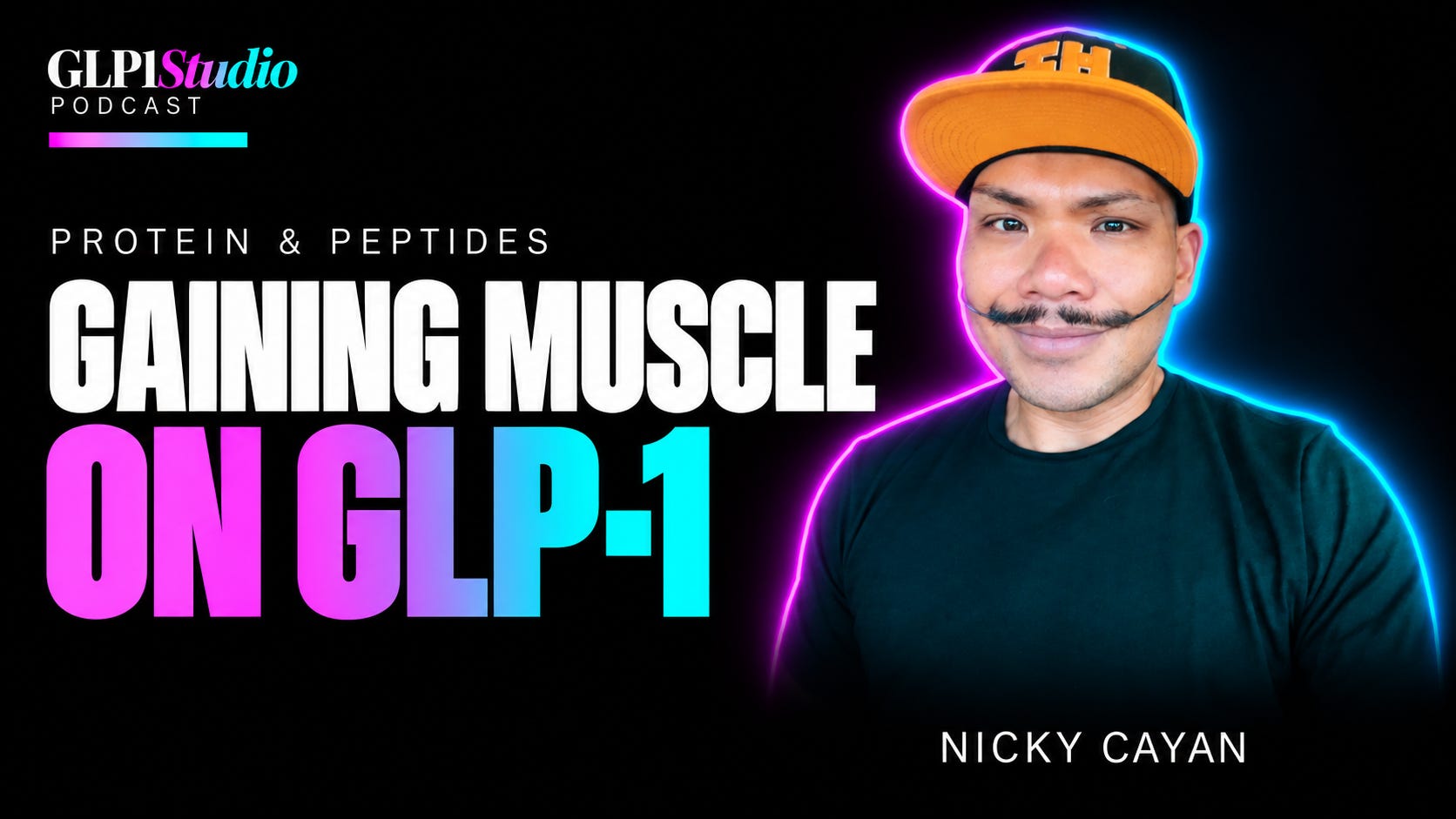
Nicholas Cayan, better known on TikTok as @nicky_glp1wellness, joined me for this episode to talk about how GLP-1 medications helped him lose weight and gain muscle. Yes, gain it.When I first stepped into this space, there were a lot of questions with few answers. One of the loudest was, Is muscle loss inevitable? And when singer Avery shared that she developed osteoporosis and osteopenia after 1 year on Ozempic, it dialed the drama to max.Spoiler alert: that story had layers far beyond the medication itself. Let me know your thoughts in the comments.People like Nicky give the rest of us a reason to exhale. His TikToks aren’t just progress updates, they’re proof that some muscle loss is expected with any weight loss, but it’s not inevitable in a harmful way. Pair GLP-1 therapy with enough protein, consistent resistance training, and patience, and you can preserve muscle strength, and often even improve it, though individual results vary and the research is still evolving.Protein, Peptides, and PurposeNicky’s journey started with his doctor literally telling him, that he couldn’t believe he was alive. “…and he’s like, oh my God, I can’t believe you’re alive. And I’m like, why? He’s like, your A1C is ridiculous. And I was like, oh, like I knew it was gonna be high, but I was like, like how high? And so he’s like, your A1C is like, I think he said it was a 12.3, 12.5. And I was like, oh, that’s not too high. He’s like, you’re supposed to be under six. And I’m like, oh, well then yeah, that’s kind of high.”In the beginning, when Nicky went looking for guidance, he found a gap big enough to drive a truck through. Most of the creators he saw online were already deep into maintenance or women whose experiences, like lady cycles, side effects, even appetite patterns, didn’t line up with his own. So he made a decision that changed everything: he’d start documenting his own journey. At first he could barely stand the idea of taking selfies. He eased in with bathroom-and-gym mirror shots, half-torso only, because full-body pics felt like too much. Months later, scrolling back, he realized his camera roll had quietly shifted: “When did I start taking full-body selfies?” Confidence had crept in, one rep and one snapshot at a time.Nicky’s feed is a time capsule of consistency. You can literally scroll back through his videos and watch the change happen in real time.His hope is to inspire, educate, and motivate:“Prior to my journey, I was eating fast food every single meal… two, three, sometimes four times a day because I was just hungry. Now I spend it on protein powder and peptides.”This line landed and I knew what I had to do next.The Studio Shop is officially open! You can grab your GLP-1 apparel and help support my independent advocacy, this podcast, and Nickaaayyy himself. The Protein & Peptides T-shirt and hat, inspired by this episode, are available below or on TikTok Shop, where you can even get a refundable sample!The Protein and Peptides tank and hat are a nod to that exact moment. But my favorite part? The inner tag reads GLP-1 Studio Season 2 | Episode 7, marking where this quote was first said.On Stigma and StrengthNicky didn’t just share his strengths, he also shared his experience with the mental aspect “that people don’t really talk about.”“Nobody talks about the mental part,” he said. “Everyone talks about the weight, the snacks, the numbers… but the emotions are a whole different thing. You could make a whole podcast just about that.”He talked about how hard it can be to accept compliments now, how he never got them before, and he doesn’t know how to feel.“I feel a little awkward,” he said. “I’m not used to compliments. It brings back childhood stuff. I just say thank you, but I don’t really know what to do with it.”That moment reminded me of something Dr. Angela Tran shared in her interview on The GLP-1 Studio Podcast. She said:“…but I always warn people, hey, tell me how you felt when someone told you you were skinny because that can really bring a whole gamut of things you have to work through also. So that’s part of like the whole management of this medication is not just the side effects, but it’s just sort of like the changes around you that you don’t even see.”Dr. Tran was right. It’s not just a physical transformation, it’s emotional. Even positive attention can stir up old memories and insecurities. And Nicky was the first to admit that we don’t talk about that enough.The physical changes are measurable, but the emotional ones are just as real and just as important to acknowledge.Consider becoming a free or paid subscriber to support my independent advocacy efforts. 💖Amazing TransformationsIn our conversation, Nicky admitted that he didn’t think his story was amazing enough.“I don’t think my story is really significant compared to other guests that you have, you know, that have these huge stories of why they took it… Even when you sent me the message to sign up for this, I’m like, my god, I’m gonna share my little story about my little GLP-1 journey.”He’s seen others in the community go through huge, headline-worthy transformations, people who’ve lost hundreds of pounds or overcome life-threatening complications. Like Jamie Selzer, who shared that he was once 650lbs in Season 1, Episode 18. Compared to that, he said, his own journey felt small. But that’s exactly why his story matters.Not every transformation has to be dramatic to be meaningful. Sometimes the most powerful stories are just relatable. It’s relatable stories that help us feel understood and connected. Stigma & Self AdvocacyWhen Nicky talked about stigma, it hit home. He said it himself, people see the before-and-after photos, but they don’t see the mental and physical work behind it. “…I just wish everyone knew this, and instead of having that whole stigma of, you know, it’s cheating or you’re taking the easy way out. Really, I’m not, because I don’t think I’ve ever worked this hard for my health before.”It’s people like Nicky sharing their stories online that helps the rest of us have the courage to step out of the GLP-1 pantry. Most of us didn’t have the courage to advocate for obesity care until GLP-1s changed our lives by showing us that it wasn’t our fault. Now we are all trying to learn how to advocate for ourselves and for each other.That’s why I’ve created the GLP-1 S.T.R.O.N.G. Framework and why I’m writing GLP-1 Strong: A Framework for Self-Advocacy. Stigma doesn’t just live online: it shows up in doctor’s offices, in conversations with family, and in the tiny looks that make you question your worth.I truly believe self-advocacy can change the world and I want to help people make that happen.Affordable Access to GLP-1sBy the end of our conversation, Nicky turned his focus outward, to access.He told me he hadn’t even realized it was an issue until he started listening to the podcast:“In the beginning, I was like, why is there a podcast about GLP-1s? I thought it was just going to be about food or weight loss stories. I didn’t know the whole access thing was this big. I thought everyone could get it. And then I listened to your podcasts and I was like, holy crap. That is effed up.”This meant the world to me because it doesn’t always feel like I’m making a difference. But if I can reach even 1 person with the message that, this isn’t about weight loss, it’s about treating a life threatening disease, then it makes it all worth. Nicky added:“People don’t have access to it, and I don’t understand why… It’s sad that it has to be limited.”That’s the truth we keep coming back to. When access is stripped away, people don’t stop needing care, they’re just forced into unregulated, unsafe options, like the grey market and research peptides.Nicky’s story reminds us why we share these conversations in the first place. Every voice adds another layer to this movement: each one proof that obesity care, access, and advocacy are about people. That’s what GLP-1 Studio is about. Amplifying stories to help advocate for access. 📢We’re changing the conversation about obesity and GLP-1s one story at a time, and stories like Nicky’s are how it happens. Join the conversation and share your thoughts on this episode.Disclaimer: The views and opinions expressed in this episode are my own and do not represent the official positions or policies of the GLP-1 Collective nonprofit, GLP-1 Studio, or any affiliated organizations.The GLP-1 Studio Podcast—formerly known as the GLP-1 Collective Podcast—is produced and owned by GLP-1 Studio LLC, a for-profit media company.This podcast is for informational and educational purposes only. It is not medical advice, and it should not be used to diagnose, treat, or replace care from a qualified healthcare professional.Mention of any products, services, companies, or individuals does not imply endorsement. Sponsorships or affiliate relationships, if present, are always disclosed.© 2025 GLP-1 Studio LLC. All rights reserved. Get full access to GLP-1 Studio at newsletter.glp1studio.com/subscribe
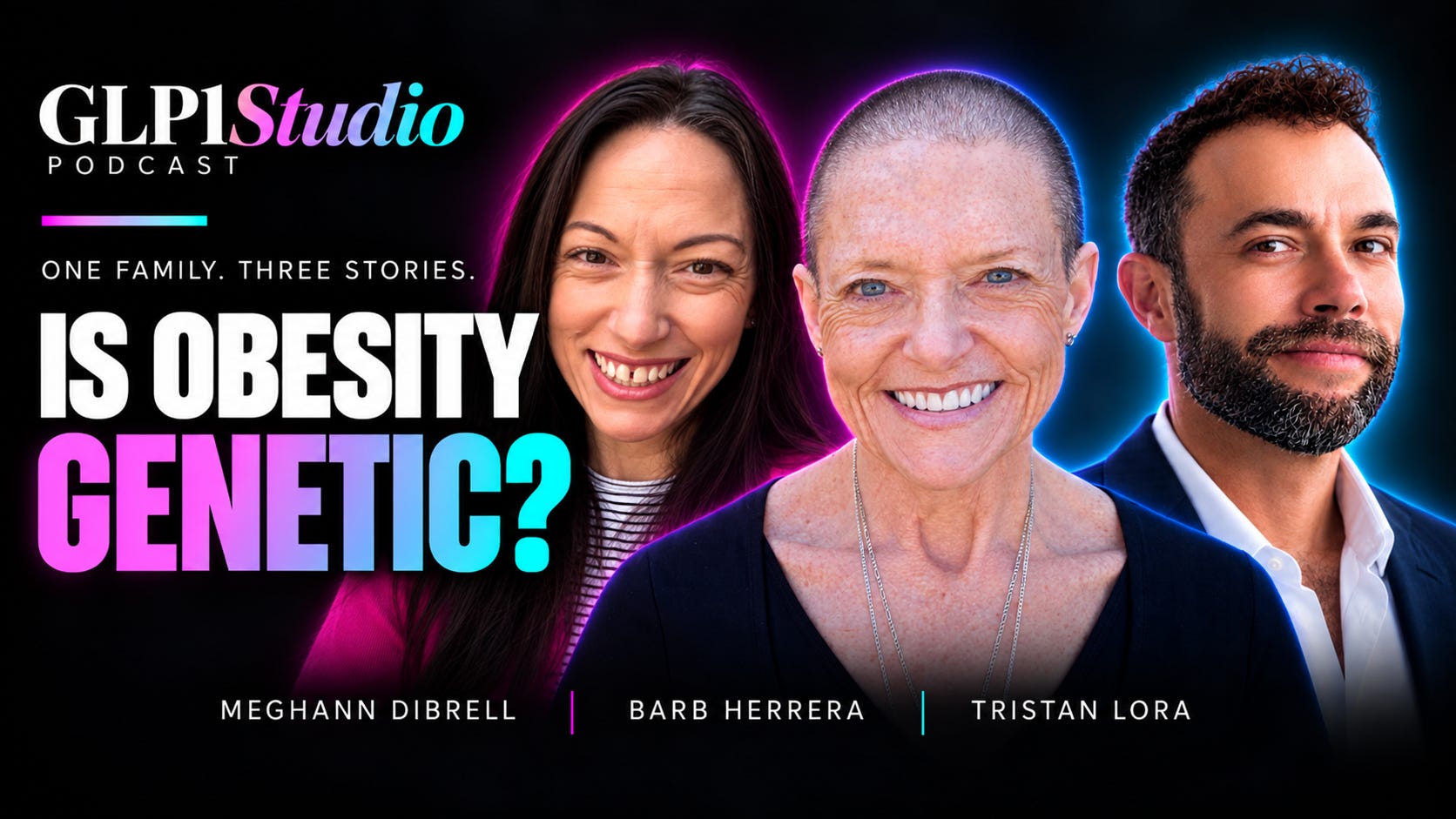
GLP-1s, food noise, and a family’s weight loss journeyAmanda Bonello sits down with Barb Herrera, Tristan Lora, and Meghann for a candid conversation about how GLP-1 medications changed their lives. The episode covers weight regain after stopping medication, food noise, family support, and the emotional side of long-term obesity treatment.In this episode, Barb shares how major weight loss helped save her life during cancer and heart complications, Tristan explains the cycle of weight loss, regain, and renewed control, and Meghann talks about building a healthier relationship with food while raising a family. Together, they show how community, biology, and consistency shape long-term success.Key topicsBarb shares that she has lost 280 pounds on GLP-1s and says multiple doctors told her that weight loss likely saved her life during cancer and cardiac complications.Barb explains a pacemaker issue caused by dramatic skin laxity after major weight loss, a complication her care team did not anticipate.Tristan describes how a 2001 bicycle accident led to major weight gain, years of cycling between loss and regain, and a return to GLP-1 treatment after regaining weight off medication.Meghann shares that she lost 125 pounds, started a YouTube channel to connect with others, and found that many of her struggles with bingeing, fast food, and food noise were more common than she thought.The family talks about food noise as a biological and psychological force, not a lack of willpower, and how GLP-1s gave them relief from constant cravings and shame.Tristan describes how food and alcohol both functioned as addictions for him, and how the medication helped him experience meals without compulsion for the first time.Meghann and Barb reflect on how family roles changed as weight loss allowed more mobility, more independence, and less physical strain.The group discusses the cost of eating out before treatment and how GLP-1s reduced both impulsive eating and food spending.Barb and Tristan discuss compounded medications, branded options, and how insurance coverage or cash pay affects access and continuity of treatment.Exercise and muscle preservation come up as a major concern, with all three noting that resistance training, DEXA scans, and strength work helped them stay active and monitor progress.Timestamps00:00 - Barb arrives, surgery complications, and setting up audio03:44 - Recording begins and Amanda explains the documentary format09:31 - Family introductions and each person’s GLP-1 journey11:19 - Barb’s cancer history, pacemaker surgery, and 280-pound loss13:48 - How severe obesity affected mobility and daily life at home16:44 - Tristan’s weight gain after a car accident and lifelong activity18:09 - Why GLP-1s finally matched hard work with real results21:23 - Food insecurity, addiction patterns, and the roots of weight cycling24:41 - Meghann’s YouTube channel and why community matters28:30 - Tristan on alcohol, food addiction, and the first shot experience31:20 - Eating because the body needs it, not because the brain demands it34:02 - Meghann on fast food, childhood food habits, and weight gain triggers36:24 - Why “being gentle” still did not stop regain for Tristan38:18 - Repeating meals, removing food decisions, and simplifying life40:12 - Barb on dieting history, McDonald’s fries, and lifelong compulsions41:22 - Meghann on drive-thru autopilot, shame, and food rituals42:39 - Why the shame lifted once GLP-1s quieted food obsession46:41 - Food spending before and after GLP-1 treatment49:22 - Barb on private eating, alcohol calories, and switching medications51:50 - Guilt, genetics, and family risk across generations53:05 - Brand-name versus compounded medications and access challenges55:08 - Tristan on stopping medication, regaining weight, and learning from it58:17 - Food noise returning off medication and the decision to restart59:15 - Strength, resistance training, and why GLP-1s are not “the easy way”62:58 - Meghann on muscle loss, motivation, and building a healthier life65:10 - Barb’s memoir, Meghann’s Substack, and closing thoughtsKey frameworksFood noise as a constant biological pressure rather than a simple habit issue“Great equalizer” as Tristan’s description of how GLP-1s helped his effort finally pay offRemoving food decisions as a strategy for reducing mental load and impulsive eatingWeight loss as life expansion, not only scale change, through mobility, energy, and confidence Get full access to GLP-1 Studio at newsletter.glp1studio.com/subscribe

Episode SummaryFor Earth Day, I had Cheyenne Parish and Omar Al-Midani back on the show from PureWay Compliance. We talked about the same thing we talked about last year (safe sharps disposal for GLP-1 patients) except this time I had data to back up everything that surprised me the first time around. I've been on a GLP-1 for 18 months and stacked weekly NAD+ injections on top for six of those months. The container is still only three-quarters full. The math is wild.We talked about how PureWay's microwave-based recycling process actually works. We also covered what's new at the company since last year, including their redesigned consumer site for at-home users. The biggest thing I keep coming back to: most GLP-1 patients are never told their manufacturer offers a free sharps container as part of patient support. Plus we have an Earth Month discount and a free container giveaway for three Studio listeners.Guest BiosCheyenne Parish is the marketing specialist at PureWay Compliance, leading the company's consumer outreach and influencer partnerships. Omar Al-Midani is co-founder and president of PureWay, which uses a proprietary microwave-based sterilization process to recycle plastic from used sharps containers. PureWay is the exclusive partner of PPSWG, a consortium representing more than 365 pharmaceutical producers focused on safety and sustainability.In This Episode[00:00] Earth Day reunion with Cheyenne and Omar from PureWay[02:25] Easy ways to get a free sharps container[03:44] How PureWay's proprietary recycling process actually works[04:46] Why safe sharps disposal matters for sanitation workers and the planet[06:42] What's new at PureWay over the past year[08:49] How they simplified waste management for at-home consumers[10:42] PureWay's AI integration into operations[14:04] Why corporate sustainability gatekeeping misses the bigger picture[18:22] What actually happens when sharps go in the household trash[21:22] Practical steps for safe sharps disposal at home[23:53] What NAD+ actually is and why I take NR instead[26:34] Why doctors don't always know about preventative supplements[33:39] How patient communities reshape what companies offer[36:55] The exclusive PureWay × PPSWG partnership with 365+ pharma companies[44:20] The microwave technology that recycles the plastic[50:12] How to enter the Earth Month giveaway[53:10] The water and energy cost of AI and modern waste systems[54:43] Closing thoughts on small habits that scaleResources & LinksPureWay Compliance:Consumer site (the one you want for at-home use): purewayathome.comMain corporate site: pureway.comInstagram: @purewaycomplianceLinkedIn: PureWay ComplianceEarth Month discount code: Use EARTH20 at purewayathome.com for 20% off, good through 5/13/2026.💉💖 Giveaway entry: Three GLP-1 Studio listeners win a free 1.4-quart mail-back disposal system. To enter:1. Follow @purewaycompliance and @amanda.bonell0 on Instagram2. Repost the giveaway post and tag someone who could use a safer disposal option Get full access to GLP-1 Studio at newsletter.glp1studio.com/subscribe
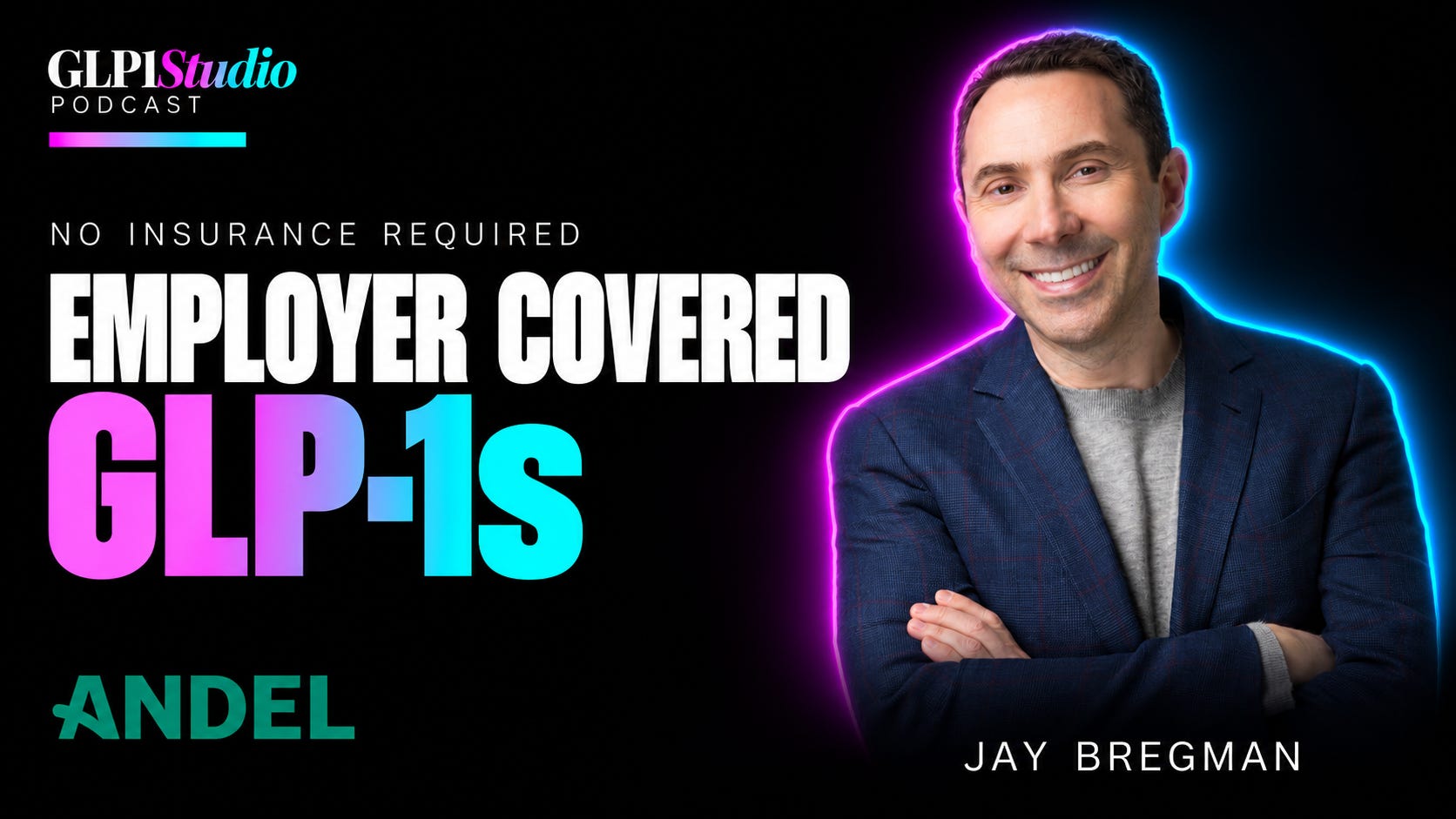
EPISODE SUMMARYHave you lost GLP-1 coverage through your employer? Or maybe you never had it to begin with? In this episode, Amanda sits down with Jay Bregman, founder and CEO of Andel, to break down a real solution that exists right now. Andel is one of more than 18 vetted partners inside Eli Lilly's Employer Connect program, and it is built differently from every other option on that list. No PMPM fees. No administrative overhead. No prior authorization. A membership fee under $10 per fill and a direct-to-employer price already lower than Lilly's own cash pay option. Amanda shares the data on why employers dropped coverage in the first place, what it is actually costing them not to cover it, and what the research says about productivity, morale, and talent retention when employees have access or lose it. Plus exactly how to refer your own employer to the program in five minutes without waiting for HR to figure it out.GUEST BIOJay Bregman is the founder and CEO of Andel, a healthcare technology platform enabling high-cost medications including GLP-1s to be accessible through employer benefits. A serial entrepreneur with 20-plus years of experience, he previously co-founded Hailo, the first pan-European ride-hailing company later acquired as Lyft Europe, and founded Thimble, acquired by S&P 500 insurer Arch Insurance.Website: andel.org LinkedIn: linkedin.com/in/jaybregman Company: linkedin.com/company/joinandelIN THIS EPISODE[0:00] Jay's background and how watching Senate drug pricing hearings sparked the idea[3:30] What the word "andel" means and why the cooperative model is the foundation[6:40] The Lilly Zepbound KwikPen direct-to-employer partnership explained[13:00] The full confirmed pricing breakdown and what an employee actually pays[17:00] Why the platform fee is the same for small and large employers[19:00] How the employee experience works from app download to next-day delivery[24:00] Employer ROI, productivity gains, and the business case[29:00] The research on employees who lost GLP-1 coverage and what it showed[33:00] Why Andel is expanding beyond GLP-1s to all high-cost employer drugs[51:00] Nonprofit partnerships and the 5% profit fund for underserved patientsRESOURCES MENTIONEDRefer your employer now: andel.org/referralAndel main site: andel.orgAndel on LinkedIn: linkedin.com/company/joinandelJay Bregman on LinkedIn: linkedin.com/in/jaybregmanLilly Employer Connect launch announcement: fiercehealthcare.com/payers/eli-lilly-launches-its-direct-employer-platform-obesity-drugsLilly Direct cash pay pricing: lillydirect.comAon GLP-1 multi-year study: aon.com/en/insights/articles/workforce-focused-analysis-on-glp-1sKristi Turner episode — Lost GLP-1 Coverage Through Employer: glp1studio.substack.com/p/lost-glp1-coverage-through-employerJennifer Sansabrino episode — GLP-1 Coverage for Teens: glp1studio.substack.com/p/glp1-coverage-for-teens-one-moms-fightGLP-1 Access and Contact Congress: glp1studio.substack.com/p/contact-congress-for-glp1-accessObesity Action Coalition: obesityaction.orgSTRONG Framework white paper: glp1strong.comRELATED EPISODESLost GLP-1 Coverage Through Your Employer — Kristi Turner glp1studio.substack.com/p/lost-glp1-coverage-through-employerGLP-1 Coverage for Teens — Jennifer Sansabrino glp1studio.substack.com/p/glp1-coverage-for-teens-one-moms-fight Get full access to GLP-1 Studio at newsletter.glp1studio.com/subscribe
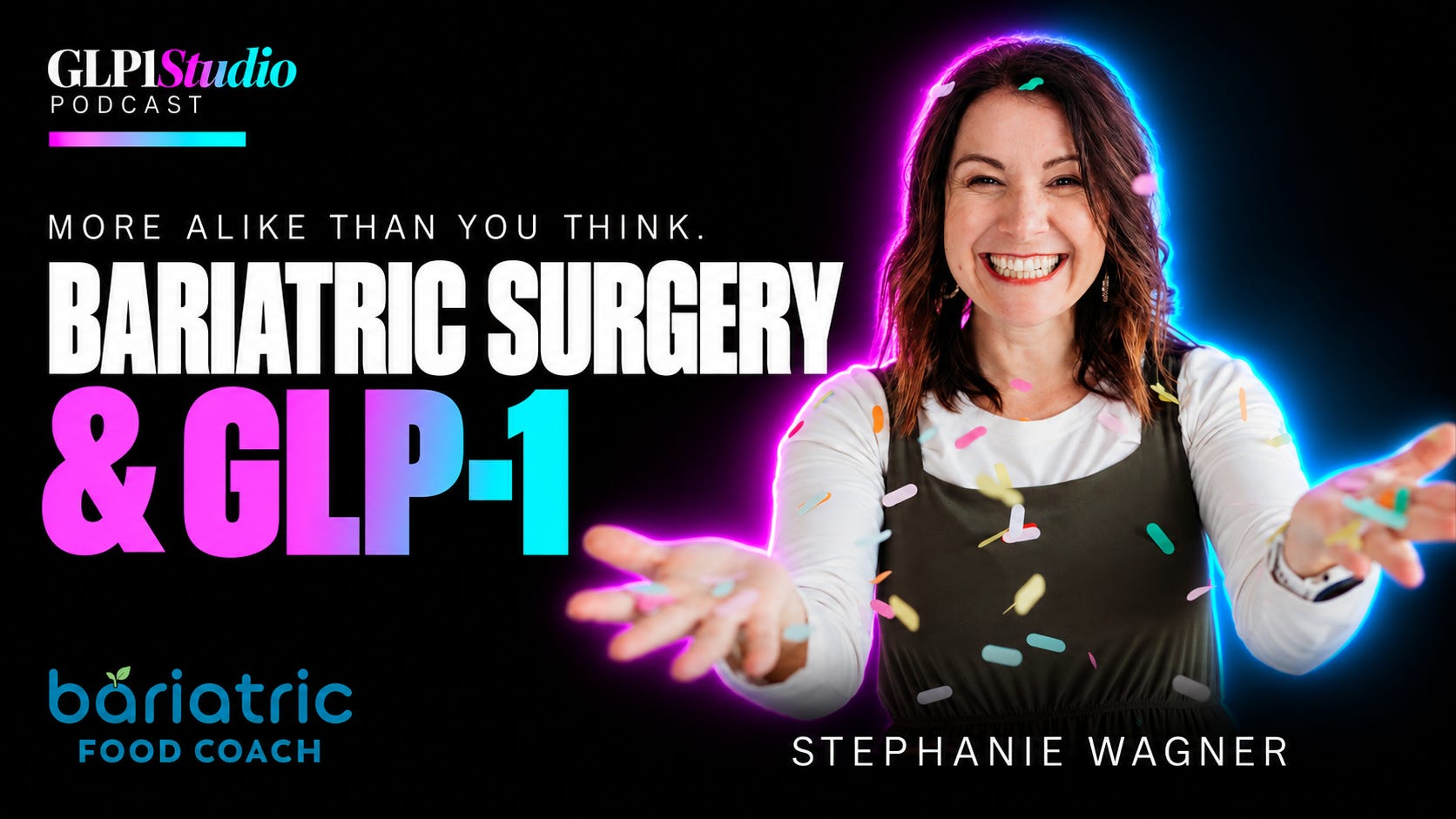
Episode Title: Bariatric Surgery and GLP-1s Are the Same Treatment — with Stephanie Wagner, MS RDN | The Bariatric Food CoachEpisode Description:If you've ever felt like you failed after bariatric surgery — or after stopping a GLP-1 — this episode is for you. Registered dietitian and Bariatric Food Coach Stephanie Wagner, MS RDN joins Amanda Bonello to break down exactly how bariatric surgery works, why it boosts your body's own GLP-1 production, and what actually happens when weight comes back. Spoiler: it's not a character flaw. It's biology.They cover every type of bariatric surgery (sleeve, bypass, lap band, duodenal switch, SADI-S), the hormonal science behind each one, and why adding a GLP-1 medication after surgery isn't starting over — it's continuing your treatment. Plus the insurance code that might be unlocking free dietitian visits you didn't know you had.In This Episode:Why bariatric nutrition and GLP-1 nutrition are almost identical — same disease, different toolsA plain-English breakdown of gastric sleeve, gastric bypass, lap band, duodenal switch, and SADI-SHow bariatric surgery hijacks your hormones (in the best way) — and why that effect fades over timeWeight regain after bariatric surgery: the biology behind it and why you never failed your treatmentMotivational interviewing and why the counseling side of obesity care matters as much as the clinical sideThe insurance code 97802 — call your insurer and ask if you have Medical Nutrition Therapy benefits. Many private plans cover unlimited dietitian visits at zero out-of-pocket costHydration tips that actually stick, straight from Atomic HabitsQuote of the Episode:"If we truly viewed obesity as a chronic disease… then bariatric surgery and GLP-1 medications are treatments, not tests you pass or fail." — Stephanie Wagner, MS RDNAbout Steph WagnerStephanie Wagner, MS RDN is a registered dietitian nutritionist specializing in bariatric surgery patients since 2009 and the founder of Bariatric Food Coach. She is the author of Best Fork Forward: Everyday Dinners After Weight Loss Surgery — 60 high-protein recipes, 30 minutes or less, with a photo for every single one.🌐 bariatricfoodcoach.com📸 Instagram: @bariatricfoodcoach📘 Facebook | 🎥 YouTube | 📌 Pinterest: Bariatric Food Coach📖 Best Fork Forward on Amazon [💰 AFFILIATE LINK]Premier Access Membership from $19/month — HSA/FSA eligible. Nearly 700 recipes, GLP-1 video course, AI meal planner, and an active community running since 2015.Resources MentionedBest Fork Forward by Steph Wagner — Amazon [💰 AFFILIATE]Atomic Habits by James Clear — habit science behind the hydration tips [💰 AFFILIATE]Insurance code 97802 — Medical Nutrition Therapy. Call your insurer and ask.doTERRA food-grade essential oils — one drop in your water bottle, lasts forever, costs almost nothing[BACKLINK: Dr. Lindsay Ogle episode — she introduced Amanda to Steph]Timestamps00:00 — What is a Bariatric Food Coach?02:25 — Dietitian vs. nutritionist vs. health coach: what actually matters07:27 — Steph's own weight loss journey and the stigma inside the profession10:07 — Why nutrition counseling fails people — and what motivational interviewing fixes16:28 — Amanda's family member: GLP-1, then surgery, no support throughout22:22 — Every type of bariatric surgery explained in plain English29:28 — The shame of weight regain and why you never failed your treatment30:05 — How bariatric surgery boosts natural GLP-1 — and what happens when that fades33:48 — "You never fail chemotherapy." The analogy that changes everything39:11 — Insurance code 97802 and free dietitian access44:54 — Best Fork Forward, the AI meal planner, and the online community51:05 — Hydration tips that actually workSubscribe to GLP-1 Studio on Substack for the full written companion piece to this episode — with the science sourced and linked. glp1studio.substack.comWhen you advocate for yourself, you advocate for all of us.Disclosure: GLP-1 Studio is a for-profit media company founded by Amanda Bonello. The GLP-1 Collective is a separate 501(c)(3) nonprofit, also founded by Amanda Bonello. These are two distinct legal entities. GLP-1 Studio does not receive funding from the GLP-1 Collective, and the Collective does not direct or fund the editorial content produced by GLP-1 Studio. This content was not sponsored or commissioned by any pharmaceutical company, telehealth provider, or clinical organization. Steph Wagner did not pay for her appearance. This content contains affiliate links. If you purchase through those links, GLP-1 Studio may earn a small commission at no additional cost to you. Get full access to GLP-1 Studio at newsletter.glp1studio.com/subscribe

Comments

Download from Google Play

Download from App Store
 United States