


 Claim Ownership
Getting to Grow
Subscribed: 3Played: 21
Subscribe

© Zoe Fox
Description
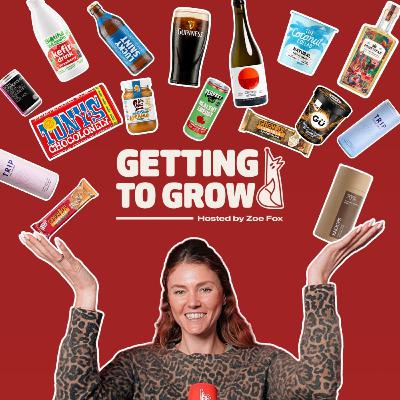
Getting To Grow is a business, brand and growth podcast for founders, startups and FMCG brands, hosted by Zoe Fox. Each episode features founders, entrepreneurs, brand builders, sales leaders and industry experts from household-name brands and fast-growing challenger startups across consumer goods. Whether you’re a startup founder, entrepreneur, brand marketer, sales professional or operator in the FMCG and consumer brand space, Getting To Grow delivers practical insights, actionable lessons and real-world stories from people actively building some of today’s most exciting brands.
95 Episodes
Reverse
How do you build a wine brand from scratch, challenge the traditional wine industry, and get your products into major retailers, festivals and airlines?In this episode of Getting To Grow, Zoe Fox sits down with Charlie Vass, co-founder of Vinca Wine, to talk about what it really takes to build and scale a challenger drinks brand. From spotting an opportunity in the wine market to creating premium wine in more convenient formats, Charlie shares the highs, lows and lessons from building a business in a category that has been around for centuries.Charlie started Vinca with two co-founders, recognising that while people loved wine, traditional bottles weren't always suited to the occasions they wanted to enjoy it. Starting with canned wines and high-quality Sicilian wine, the team set out to make wine more accessible, convenient and relevant to modern consumers. They bootstrapped the business, secured major listings with Tesco and British Airways, and even developed the UK's first wine bottle made from recycled aluminium.The conversation covers why challenger brands don't always need completely original ideas, why bootstrapping can build credibility with investors, and why winning a major retail listing is only the beginning. Charlie also shares the story of driving from Barcelona to the UK to fulfil a customer order, the costly mistake of printing 150,000 cans with the brand name spelt incorrectly, and why founders should never try to outsource the growth of their business.In this episode:- How Charlie went from a career in tech sales to founding Vinca Wine- Why the founders spotted an opportunity in the traditional wine market- How Vinca is changing the way people consume wine- Why premium wine in convenient formats can appeal to modern consumers- How the founders bootstrapped the business with around £15,000- Why bootstrapping can give founders more credibility with investors- How Vinca secured a listing with Tesco by selling a product using mock-ups- The story behind developing the UK's first recycled aluminium wine bottle- How Vinca landed a major listing with British Airways- Why building scalability into your supply chain matters from day one- The story of driving wine from Barcelona to the UK to fulfil a customer order- What happened when 150,000 cans were printed with the wrong brand name- Why founders should focus on their own business instead of obsessing over competitors- Why you can't outsource the growth of your business- The dangers of building a business just to sell it- What Charlie would do differently if he were starting Vinca againIf you're interested in entrepreneurship, wine, food and drink, FMCG, challenger brands, consumer businesses, retail, fundraising, startups or building a business from the ground up, you'll enjoy this conversation.Follow Zoe FoxInstagram: https://www.instagram.com/gettingtogrow/LinkedIn: https://www.linkedin.com/in/zoe-foxgettingtogrow/Vinca wine:https://vincawine.com/https://www.instagram.com/vincawine/?hl=en
How do you build a food brand from scratch, take on giants like Heinz, and get your products into more than 7,000 stores?In this episode of Getting To Grow, Zoe Fox sits down with Liam, co-founder of Dr. Will’s, to talk about what it really takes to build and scale a challenger food brand. From leaving a career in investment banking at JP Morgan to launching a range of natural sauces and condiments, Liam shares the highs, lows and lessons from building a business in one of the most competitive categories in food.Liam left JP Morgan at 25 to start Dr. Will’s with two co-founders who had never built a consumer brand before. They spotted an opportunity in the UK sauces market, where established names like Heinz had dominated for decades. Starting with market stalls, sampling and independent retailers, they eventually made the leap into major supermarkets, including Tesco. Today, Dr. Will’s has more than 7,000 stocking points and has raised £3 million from angel investors.The conversation covers why building a food brand takes longer than most founders expect, why an incredible product matters more than marketing, and why getting listed in a supermarket is only the beginning. Liam also shares the personal cost of entrepreneurship, the challenges of fundraising in the UK, and why he believes founders should always raise more money than they think they need.In this episode:- Why Liam left JP Morgan to start a food business at 25- How Dr. Will’s identified an opportunity in the sauces and condiments market- Why the founders had to learn everything from scratch- How they developed their natural sauces using ingredients like dates instead of refined sugar- Why making an amazing product is more important than marketing- How Dr. Will’s went from market stalls and independent retailers to more than 7,000 stocking points- Why going straight into Tesco was one of the toughest challenges- How to compete against established brands like Heinz and Hellmann’s- Why building a food brand takes much longer than founders expect- Why founders should raise more money than they think they need- The challenges of raising investment in the UK compared with the US- Why profitability has become such an important focus for startups- The personal cost of building a business, from relationships to missed holidays- Why founders should hire people who are better than them- How TikTok and founder-led content are changing food and drink marketing- What Liam would do if he had to build a business from scratch againIf you're interested in entrepreneurship, food and drink, FMCG, consumer brands, supermarket retail, fundraising, startups or building a business from the ground up, you'll enjoy this conversation.Follow Zoe FoxInstagram: https://www.instagram.com/gettingtogrow/LinkedIn: https://www.linkedin.com/in/zoe-foxgettingtogrow/Dr. Will's:https://www.instagram.com/doctor_wills/https://www.dr-wills.com/
How do you build a food brand from scratch, survive a disastrous launch and go on to build three successful brands?In this live episode of Getting to Grow, recorded at Lunch!, Zoe Fox sits down with James Averdieck, the founder of Gü, Coconut Collaborative and Spooners, to talk about what it really takes to build, grow and scale food and drink brands. He is also Zoe’s boss, so the questions were kept nice. The answers weren’t.James launched Gü about 25 years ago, in a heatwave, when chocolate puddings don’t sell. It was a complete disaster for the first three months, and both Sainsbury’s and Waitrose threatened to delist it. He went on to sell the business in 2010 at age 44, then moved into coconut, a niche inside a big category that he believed could grow into something much bigger. Today he’s behind Coconut Collaborative, which has just launched coconut water, and Spooners, a cookie dough brand that took a first-mover position in the UK supermarket desserts aisle.The conversation also covers why James believes money doesn’t build brands, why you have to earn your market share in the UK rather than buy it, and why rate of sale is the number that drives the industry. He explains the difference between playing to win and playing not to lose, why he has no business idols, and why he’d turn down a hypothetical £10 million. He also shares his view on manifesting and mindset for anyone scared to start a business.In this episode:How James launched Gü and survived a disastrous first three monthsHow near-delisting from Sainsbury’s and Waitrose almost ended the brandWhy he moved from desserts into coconut after selling GüWhy he doesn’t call Coconut Collaborative a “yogurt alternative”How Coconut Collaborative launched coconut water and reached about £400k in sales in three monthsHow Spooners found a gap in the cookie dough marketWhy rate of sale is the metric that matters in UK supermarketsWhy money is the lubricant, not the engine, of growthWhy entrepreneurial teams play to win and big companies play not to loseWhy being customer-focused is the key to winningWhy James has no business idols and follows his nose insteadWhy he would hate being a non-exec directorHow mindset and manifesting help founders build confidenceWhy trade shows like Lunch! matter for making connectionsWhat James would do if he lost everything tomorrowWhether there’s another business after SpoonersIf you’re interested in entrepreneurship, food and drink, FMCG, consumer brands, retail, product development, startups or business growth, you’ll enjoy this conversation.Follow Zoe FoxInstagram: https://www.instagram.com/gettingtogrow/LinkedIn: https://www.linkedin.com/in/zoe-foxgettingtogrow/coconut collab:https://www.instagram.com/coconutcollab/?hl=enhttps://coconutco.co.uk/
How do you build a brand from scratch, turn a product into a brand people genuinely recognise, survive years of setbacks and eventually build a portfolio of brands?In this episode of Getting to Grow, Zoe Fox sits down with Jamie Laing and Ed Williams, the co-founders behind Candy Kittens and the team now taking Graze into its next chapter, to discuss what it really takes to build, grow and scale consumer brands.Jamie and Ed first met 15 years ago when Jamie approached Ed to help design T-shirts for Candy Kittens. Instead, Ed came back with a completely different idea: forget the sweet shop and build a packaged sweets brand that could be sold around the world. That conversation became the beginning of their business partnership and the foundation of Candy Kittens.Since then, they've built Candy Kittens into a recognised confectionery brand, expanded into major retailers and recently acquired Graze from Unilever. They discuss what it takes to move from simply creating a product to building a brand that consumers actually recognise, remember and want to buy.The conversation also explores why the relationship between Jamie and Ed works, how starting as business partners rather than friends allowed them to be brutally honest with each other, and why finding the right co-founder can sometimes be more important than starting a business with your best friend.Jamie and Ed share the reality behind building consumer brands, including getting their first major retail listing, dealing with mistakes, constantly improving products and packaging, and learning that there is always something that could be done better.They also discuss their approach to social media and branding, why companies shouldn't simply copy what other brands are doing, why chasing virality can distract from the real goal of selling products, and why brands need to understand exactly who their customer is.The pair also reflect on the importance of removing ego as a founder, knowing what you're bad at, taking risks, building great teams and continuing to show up when things aren't going well.Jamie and Ed explain why they believe success takes much longer than people think, why there is no secret shortcut to building a successful business, and why the founders who keep turning up when the chips are down are the ones who ultimately create something lasting.They also discuss their ambitions for building a house of brands, why Graze was a brand they had admired since the early days of Candy Kittens, and their long-term ambition to build the UK equivalent of LVMH for food and drink.In this episode:- How Jamie Laing and Ed Williams met and started Candy Kittens- How Candy Kittens went from an idea to a recognised consumer brand- The difference between creating a product and building a brand- How they landed their first major retail listing- Why starting as business partners helped their relationship- Why co-founders don't necessarily need to be friends- How Jamie and Ed built Candy Kittens over 15 years- Why they decided to acquire Graze- How they approached the 100-day Graze rebrand- Why founders need to remove their ego- How to deal with mistakes and constant setbacks- Why relentless execution matters- The importance of building the right team- Why success takes longer than you think- Why 50% of success is simply turning up- How to keep going when things aren't working- Their ambitions for building a house of brands- Jamie and Ed's approach to risk, failure and entrepreneurship- What they would do if everything they built disappeared tomorrowIf you're interested in entrepreneurship, startups, consumer brands, FMCG, branding, marketing, social media, retail, product development, leadership or business growth, you'll enjoy this conversation.Follow Zoe FoxInstagram: https://www.instagram.com/gettingtogrow/LinkedIn: https://www.linkedin.com/in/zoe-foxgettingtogrow/Graze: https://www.graze.com/Candy Kittens: https://candykittens.co.uk/
Can a simple electric toothbrush really become a £50 million business? What does it actually take to build a consumer brand from scratch, survive major setbacks, get rejected by 98–99% of investors and create a product that customers genuinely want?In this episode of Getting to Grow, Zoe Fox sits down with Mark Rushmore, founder of SURI, to discuss what it really takes to build, scale and grow a modern consumer brand.After working at P&G and managing Pringles UK, Mark went on to build and sell an experiential marketing agency before turning his attention to the oral care industry. After seeing the problems with existing electric toothbrushes and the amount of waste created by the category, Mark and his co-founder Geeve set out to build something different.Launched in May 2022, SURI quickly found traction, selling out its first 5,000 units within days and continuing to grow through consumer feedback, word of mouth, reviews, influencers and a growing marketing flywheel. Mark explains how the company went from launch to targeting more than £50 million in revenue just four years later.In this conversation, Mark shares the realities of building SURI, from developing a more sustainable electric toothbrush and listening closely to consumers to dealing with supply chain problems, products stuck in customs and the fear that the company could go bankrupt before it had even properly started.He also discusses the challenge of raising investment, why 98–99% of investors rejected SURI, how he approached fundraising like dating, and why the right investors can bring much more to a business than just money.Mark explains why he believes the secret to SURI's growth was hiding in plain sight: listening to customers and building what they actually wanted. He also breaks down how the company's marketing flywheel developed through small improvements across advertising, influencers, reviews, referrals, SEO and word of mouth.The conversation also explores entrepreneurship, dealing with constant problems, building a large addressable market, competing in a huge category, the importance of scientific credibility and why problems can actually be a sign of life.Mark also reflects on the bigger picture, including why time is the most precious commodity, what he would be proud of if SURI disappeared tomorrow, and why he would still take the chance and do it all again.In this episode:How Mark Rushmore built SURIHow SURI went from launch to a £50M revenue businessWhy the electric toothbrush market was ripe for disruptionHow SURI sold out its first 5,000 unitsWhy listening to consumers was key to SURI's growthHow SURI built its marketing flywheelThe importance of word of mouth and customer reviewsHow SURI dealt with products getting stuck in customsWhy Mark thought the company could go bankrupt before it startedWhat it takes to build a sustainable consumer productHow SURI raised external investmentWhy 98–99% of investors rejected SURIHow Mark approached fundraising and investor relationshipsWhy the right investors can bring more than just moneyHow to deal with constant problems as an entrepreneurWhy problems can be a sign of lifeHow SURI built credibility through scientists and dental expertsWhy making something slightly better can create a huge opportunityMark's approach to risk, failure and entrepreneurshipWhy time is the most precious commodity If you're interested in entrepreneurship, startups, consumer brands, FMCG, oral care, sustainability, product development, marketing, fundraising, branding, customer acquisition, leadership or business growth, you'll enjoy this conversation.Follow Zoe FoxInstagram: https://www.instagram.com/gettingtogrow/LinkedIn: https://www.linkedin.com/in/zoe-foxgettingtogrow/SURI:https://www.trysuri.com/https://www.instagram.com/discoversuri/

Comments

Download from Google Play

Download from App Store
 United States