


 Claim Ownership
Global Economy Podcast
Subscribed: 246Played: 3,215
Subscribe

© 2025 ECIPE
Description
The Global Economy Podcast is a podcast by ECIPE, a think tank dedicated to international economic policy. This podcast will discuss international economic policy and politics, particularly in Europe, and expose the key debates in our time to critical examination. We are unrepentant supporters of globalisation and an open world order, and just like our other work, this podcast will channel irreverent and contrarian views.
64 Episodes
Reverse

In this episode, Fredrik Erixon speaks to Jeffrey Schwab of the Liberty Justice Center about the legality of the “Liberation Day tariffs”. A ruling by the Supreme Court is expected soon, and Schwab is the plaintiff lawyer behind the case V.O.S. Selections, Inc. v. Trump. Schwab lays out his case and explains the constitutional limits of presidential tariff powers. They explore the legal arguments, implications for businesses, prospects for potential refunds, and the expected timeline for the Court’s ruling.
You can watch a video recording of this conversation here.
You can read a transcript of the chat here.
Jeffrey Schwab serves as Senior Counsel and Interim Director of Litigation at the Liberty Justice Center, where he litigates cases to protect civil liberties and constitutional rights. Jeff has a particular interest in protecting the right of free speech and enforcing constitutional and other legal limits on government.
He served as counsel for Mark Janus in Janus v. AFSCME, the landmark case in which the United States Supreme Court found that public employees could not be compelled to pay money to a union without their consent. He currently leads Liberty Justice Center’s efforts to enforce the Janus decision and protect public employees’ rights not to be forced to join or pay a union.
Jeff has also served as lead counsel in Liberty Justice Center cases challenging restrictions on ride-share vehicles and home-sharing hosts, the implementation of a tax on Internet streaming services such as Netflix and Spotify on Chicago residents, and campaign finance laws that seek to benefit certain political contributors over others. Additionally, Jeff challenged an Illinois law limiting which courts people who seek to vindicate their constitutional rights against the state can file.
He is admitted to practice in Illinois and is licensed in the US Supreme Court, the First, Second, Third, Seventh, Eighth, Ninth, and Tenth Circuit Court of Appeals, as well as federal district courts in Illinois.

In this episode of our Global Economy Podcast, our Director, Oscar Guinea, talks with Lucian Cernat* about the latter’s new paper, Trade Policy 3.0: Three Scenarios for Tomorrowland.
Their conversation outlines the evolution from trade policy 1.0 to 3.0 and how geopolitical tensions, resilience, and economic security shape today’s landscape. They cover the WTO’s role, lessons from COVID-19, and three future scenarios (immunity, sclerosis, and contagion), offering insights into the shifting global trade environment.
You can read a transcript of the chat here.
Read Lucian’s study here.
Lucian Cernat is the Head of Trade in Goods, Tariff Negotiations, Technical Barriers to Trade, Customs and Rules of Origin at DG TRADE in the European Commission. Previously, he held the position of Head of Global Regulatory Cooperation and International Procurement Negotiation at the European Commission. Until 2008, he held various positions at the United Nations in Geneva dealing with trade and development issues. He has authored more than 20 publications on the development impact of trade policies, WTO negotiations, EU preferential market access, regional trade agreements, competition policy, corporate governance. Prior to his UN experience, he has been a Trade Diplomat with the Romanian Ministry of Foreign Affairs, and part of the negotiating team of bilateral FTAs with the EuroMed area and Baltic countries, preceding Romania’s accession to the EU. Lucian Cernat obtained a PhD from University of Manchester and a postgraduate diploma from Oxford University. He is also the author of Europeanization, Varieties of Capitalism and Economic Performance in Central and Eastern Europe (Palgrave Macmillan, 2006).
*Disclaimer: the opinions expressed in this podcast are those of the guest and do not represent an official position by the European Commission.

ECIPE’s Fredrik Erixon talks to Professor Jonathan Barnett, from the University of Southern California, about his recent book The Big Steal: Ideology, Interest, and the Undoing of Intellectual Property.
Together, they discuss how policymakers have weakened IP protections in the last decades, partly because of shifting technologies and new ideas, and distorted innovation incentives. As a result, innovation and value generation have shifted between sectors and business models. The conversation also covers how strong IP rights contribute to long-term, high-value innovation, new entrepreneurship, and competition, drawing implications for Europe and global policy reform.
You can watch a video recording of this conversation here.
You can read a transcript of the chat here.
Order Professor Barnett’s book “The Big Steal: Ideology, Interest, and the Undoing of Intellectual Property” here.
Jonathan M. Barnett is the Torrey H. Webb Professor of Law at the University of Southern California, Gould School of Law, and director of the law school’s Media, Entertainment and Technology Law Program. He specialises in innovation law and policy, including antitrust, competition, corporate, and intellectual property law, with a focus on monetisation strategies and organisational structures in content and technology markets. He has published widely in scholarly and policy publications and comments regularly on innovation and competition policy in the press and at professional conferences. Prior to academia, he practised corporate law at a leading international law firm, specialising in mergers and acquisitions.

In this episode of the Global Economy Podcast, ECIPE’s Chief Economist, Erik van der Marel, sits down with Harold James, Professor at Princeton University and a leading expert on globalisation. Together, they dive into James’s book Seven Crashes: The Economic Crises That Shaped Globalisation, exploring how major economic shocks — from demand-side crises like the Great Depression and the 2008 financial meltdown to supply-side disruptions like the 1840s food crisis, the 1970s oil shock, and COVID-19 — have repeatedly reshaped the course of globalisation, either slowing it down or propelling it forward.
During their conversation, Erik and Professor James discuss the potential for a renewed wave of globalisation following the current negative supply shock. They trace historical parallels between past technologies — such as steam power and containerisation — and institutions like joint-stock companies that once propelled globalisation forward, and today’s transformative technologies, such as AI, that are likely to do the same. The dialogue also examines US policy, semiconductor bottlenecks, rare earths, the global shift toward services, intellectual property, and the role of education in shaping the future of globalisation.
You can watch a video recording of this conversation here.
You can read a transcript of the chat here.
Order Professor James’s book “Seven Crashes: The Economic Crises That Shaped Globalisation” here.
Harold James, the Claude and Lore Kelly Professor in European Studies at Princeton University, is Professor of History and International Affairs at the Woodrow Wilson School, and an associate at the Bendheim Center for Finance. His books include a study of the interwar depression in Germany, The German Slump (1986); an analysis of the changing character of national identity in Germany, A German Identity 1770-1990 (1989); International Monetary Cooperation Since Bretton Woods (1996), and The End of Globalization (2001), which is available in 8 languages. He was also coauthor of a history of Deutsche Bank (1995), which won the Financial Times Global Business Book Award in 1996, and he wrote The Deutsche Bank and the Nazi Economic War Against the Jews (2001). His most recent books include Family Capitalism, Harvard University Press, 2006; The Creation and Destruction of Value: The Globalization Cycle, Harvard University Press, 2009; Making the European Monetary Union, Harvard University Press, 2012; The Euro and the Battle of Economic Ideas (with Markus K. Brunnermeier and Jean-Pierre Landau), Princeton University Press, 2016; Making A Modern Central Bank: The Bank of England 1979-2003, Cambridge University Press 2020; The War of Words: A Glossary of Globalization, Yale University Press 2021; Seven Crashes: The Economic Crises That Shaped Globalization, Yale University Press 2023. He is the official historian of the International Monetary Fund. In 2004, he was awarded the Helmut Schmidt Prize for Economic History, and in 2005 the Ludwig Erhard Prize for writing about economics. He writes a monthly column for Project Syndicate.
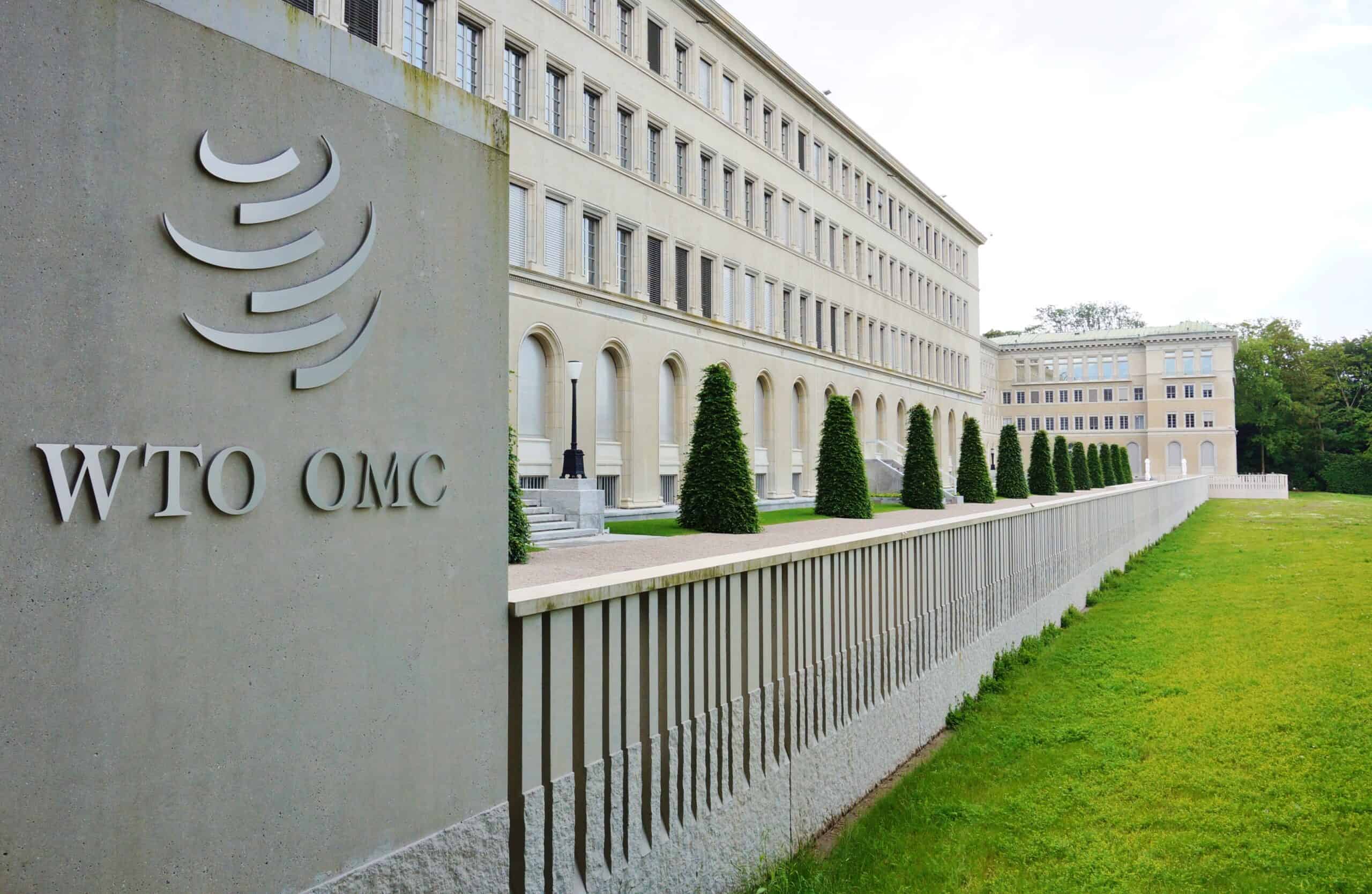
In this episode of the Global Economy Podcast, Fredrik Erixon speaks with Stuart Harbinson, former WTO Ambassador and senior fellow at ECIPE, about the state of global trade, the Trump tariffs, and the future of the World Trade Organization (WTO).
They explore the erosion of the Most Favoured Nation (MFN) principle, the rise of bilateralism, and the threat this poses to multilateral trade rules. The discussion highlights historical lessons, the limits and opportunities for WTO reform, and the role of the WTO Secretariat. Harbinson also offers pragmatic insights into dispute settlement, the MPIA, and possible paths forward for preserving the multilateral trading system.
Read Stuart’s blog “The WTO in the Age of Trump’s Trade Bullying – Should There Be WTO Reform?“.
You can watch a video recording of this conversation here.
You can read a transcript of the chat here.
Stuart Harbinson had a distinguished career in public service in Hong Kong. From 1994 to 2002 he represented Hong Kong, and then the Hong Kong Special Administrative Region of China, in the WTO in Geneva. He subsequently joined the WTO Secretariat as Chief of Staff to Director-General Dr Supachai Panitchpakdi and then became Senior Adviser to Director-General Pascal Lamy. He has rich experience as a former Chairman of a number of WTO bodies, including the TRIPS and Services Councils, and the Dispute Settlement Body. He was Chairman of the WTO’s overarching body, the General Council overseeing preparations for the launch of the Doha round, and of the negotiating group handling the formative stages of the Doha negotiations on agriculture. He has also chaired a number of WTO dispute settlement panels. After leaving the WTO, he worked in the UNCTAD Secretariat and for international law firms in Geneva, and has undertaken several trade-related technical assistance projects. He currently serves as a part time adviser on international trade for Penta Group, the world’s first comprehensive stakeholder solutions firm.
This episode of the Global Economy Podcast, hosted by Philipp Lamprecht, features Dr Bernd Christoph Ströhm and focuses on the geopolitical and economic relevance of the Western Balkans for the European Union.
The conversation explores the region’s strategic importance amid increasing competition from China and Russia, challenges in the EU enlargement process, and the growing frustration among Western Balkan countries over stalled accession talks. The episode highlights how EU regulations can impose unintended costs on neighbouring countries and calls for more flexible, credible, and inclusive policies. Bernd and Philipp advocate for a more responsive, strategic, and geopolitically aware EU approach to its neighbourhood.
You can watch a video recording of this conversation here.
You can read a transcript of the chat here.
Dr Bernd Christoph Ströhm is a Senior Fellow at the European Centre for International Political Economy (ECIPE), a Senior Research Associate and Country Expert at the Vienna Institute for International Economic Studies (wiiw), and a Political Risk / OSINT Analyst at S&P Global.
At ECIPE, his research focuses on Russia’s foreign policy dynamics, the influence of non-EU actors such as Russia and China on Southeastern Europe, the EU integration of the Western Balkans, and the economic and political development of the entire Western Balkan region. He holds a PhD in East European Studies and a master’s in Advanced International Studies.
At the Vienna Institute for International Economic Studies (wiiw), he regularly drafts comprehensive macroeconomic analyses and policy forecast reports, assessing economic trends and policy impacts in the Central, Eastern and Southeastern Europe (CESEE) region. At S&P Global, he crafts analytical pieces on political risk-inducing events in the CESEE region, including policy changes and protest risks. He also monitors the outcomes of national and regional elections in the Western Balkans, while drafting country reports that evaluate political and governmental stability within the CESEE region.
Bernd worked on numerous publications and different projects, including in-depth analyses of Chinese infrastructure investments in the Western Balkans for the European Parliament, a thorough cohesion policy study on Germany for the European Commission, or a study on free trade policy recommendations for the Central European Free Trade Agreement (CEFTA). He teaches as a Postdoctoral Teaching Fellow at the Diplomatic Academy of Vienna, where he holds interdisciplinary lectures and seminars. His lectures and seminars cover the evolution of the international system, the political and economic situation in the Western Balkans, and the geopolitical and geoeconomic influences of China and Russia on the region, as well as the evolution of Russia’s domestic and foreign policy dynamics.
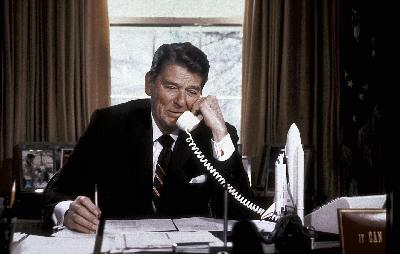
Frank Lavin joins Fredrik Erixon on the ECIPE Global Economy podcast to discuss his book Inside the Reagan White House: A Front Row Seat to Presidential Leadership with Lessons for Today. The conversation centres on Reagan’s leadership and the philosophical pillars of his presidency.
Lavin reflects on Reagan’s views on government, the Cold War, and his moral approach to foreign policy, comparing it to today’s tendency to use more grievance-driven rhetoric. They also explore Reagan’s ability to unite people across political divides, his optimism, and his focus on individual empowerment. The discussion highlights valuable leadership lessons for today’s political climate.
You can watch a video recording of this conversation here.
You can read a transcript of the chat here.
Order Mr Lavin’s book “Inside the Reagan White House: A Front-Row Seat to Presidential Leadership with Lessons for Today” here.
Frank Lavin is a visiting fellow at the Hoover Institution (Stanford University). He was CEO of Export Now and he is the author of several books on economics and international affairs, including “Home Front to Battlefront: An Ohio Teenager in World War II (War and Society in North America)”.
Frank has had senior posts in national security and international policy in the administrations of the two Bush presidencies and was Director of Politics under Ronald Reagan.
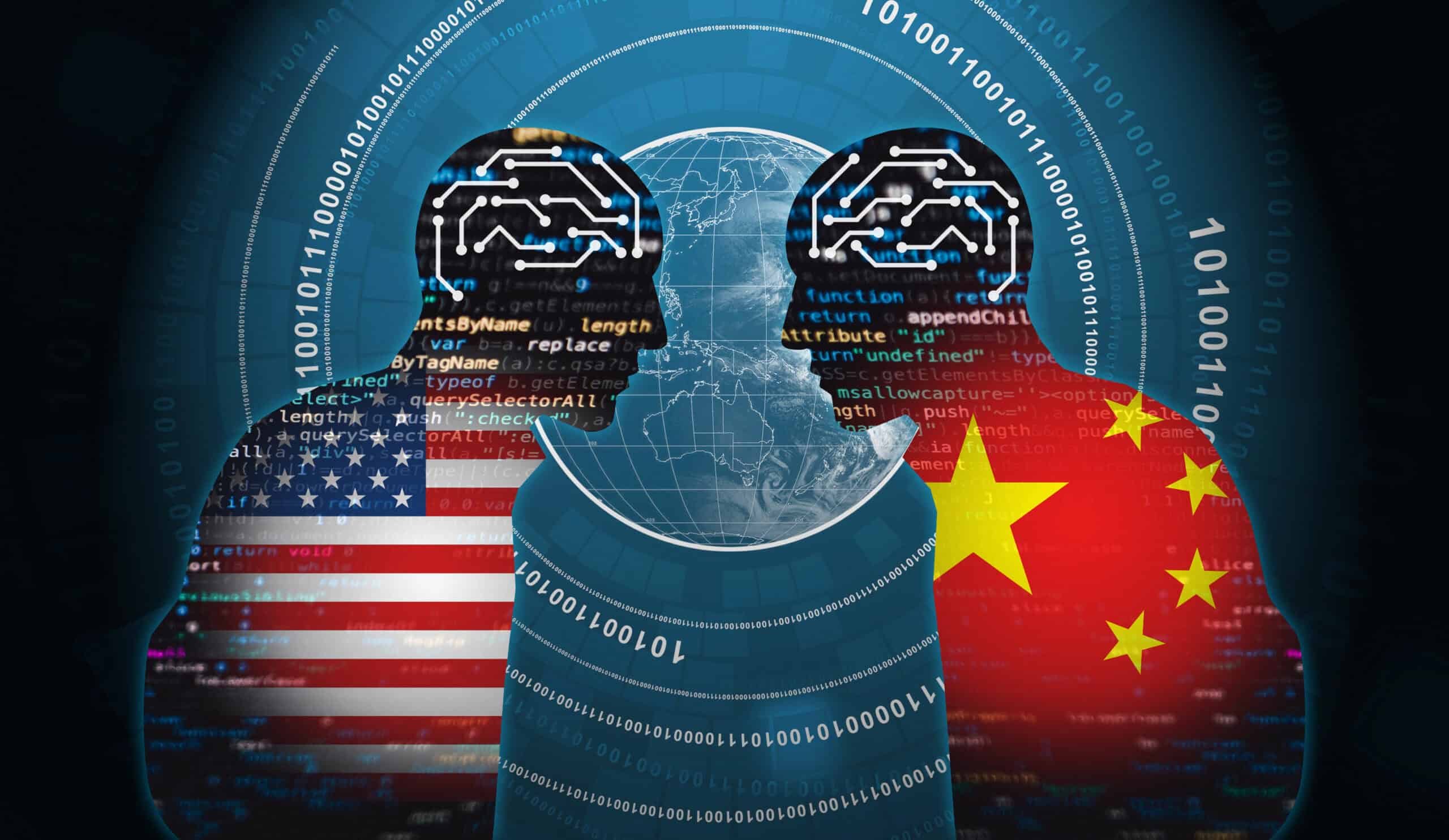
In this episode of the ECIPE Global Economy Podcast, Fredrik Erixon speaks with Alex Capri about his new book Techno-Nationalism: How It Is Reshaping Trade, Geopolitics, and Society. The conversation explores the growing entanglement of technology, national security, and economic policy, focusing on key elements such as supply chain weaponisation, strategic decoupling, and tech diplomacy.
Capri highlights the geopolitical competition over critical technologies like semiconductors and AI, the implications for global supply chains, and the strategic dilemmas faced by smaller countries. The discussion offers both historical context and forward-looking insight into a fragmenting yet innovation-driven global economy.
You can purchase the book “Techno-Nationalism: How It Is Reshaping Trade, Geopolitics, and Society” here.
You can watch a video recording of this conversation here.
You can read a transcript of the chat here.
Alex Capri teaches in the Business School at the National University of Singapore (NUS), and in the NUS Lee Kuan Yew School of Public Policy.
He has worked extensively in China and Asia for two decades, where he was a partner and the regional leader of KPMG’s Asia Trade & Customs Practice, based in both Hong Kong and Singapore. Prior to his consulting career, he was a trade specialist in the U.S. Treasury Department, and the U.S. Customs Service.
Alex is a regular panellist for the World Economic Forum (WEF). He writes for Forbes Asia and Nikkei Asia, and he is a frequent guest on global television and radio networks.
Known for his expertise in supply chains, global trade, technology and geopolitics, he is a research fellow at the Hinrich Foundation, a senior fellow at the Australian Strategic Policy Institute (ASPI) and a board member of Purdue University’s Krach Institute of Tech-Diplomacy.
He advises corporate boards on geo-economics and techno-nationalism and he provides guidance to clients on cross-border projects throughout Asia and the Indo-Pacific, the Middle East, Europe and the Americas.
Alex holds an M.Sc. from the London School of Economics, in International Political Economy and a B.Sc. in International Relations, from the University of Southern California.
On this episode of the Global Economy Podcast, Fredrik Erixon speaks with ECIPE’s Chief Economist, Erik van der Marel, about the consequences of the Trump administration’s threat to impose tariffs, particularly in relation to global trade and the restructuring of the US economy.
The conversation explores how US production and trade networks have evolved, the implications of high tariffs, and the impact of such policies on global value chains. It also highlights the integration of services, such as R&D, marketing, and consultancy, into new forms of globalisation.
You can watch a video recording of this conversation here.
You can read a transcript of the chat here.
In this episode of ECIPE’s Global Economy podcast, Fredrik Erixon speaks with Jeffrey Ding, assistant professor at George Washington University, about his book Technology and the Rise of Great Powers: How Diffusion Shapes Economic Competition.
They discuss how the diffusion of general-purpose technologies, rather than just leading-edge innovation, drives national economic power. Drawing on historical cases from the Industrial Revolutions to today’s AI race, Ding explains why widespread adoption across sectors is more critical than simply being first. The conversation explores implications for the US, China, and Europe in the current technological competition.
You can purchase the book “Technology and the Rise of Great Powers: How Diffusion Shapes Economic Competition” here.
You can watch a video recording of this conversation here.
You can read a transcript of the chat here.
Jeffrey Ding is an Assistant Professor of Political Science at George Washington University. Prior to this role, Ding served as a postdoctoral fellow at Stanford’s Center for International Security and Cooperation, sponsored by Stanford’s Institute for Human-Centered Artificial Intelligence.
Ding’s research focuses on great power competition and cooperation in emerging technologies, the political economy of innovation, and China’s scientific and technological capabilities. His work has been published or is forthcoming in the European Journal of International Relations, European Journal of International Security, Foreign Affairs, International Studies Quarterly, Review of International Political Economy, and Security Studies, and his research has been cited in major outlets such as The Washington Post and The Financial Times.
Ding earned his PhD in 2021 from the University of Oxford, where he was a Rhodes Scholar. Previously, he worked as a researcher for Georgetown’s Center for Security and Emerging Technology and Oxford’s Centre for the Governance of AI. Originally from Iowa City, Ding is a lifelong Hawkeye fan and a proud graduate of the University of Iowa.

This episode of the Global Economy Podcast features Fredrik Erixon and Oscar Guinea discussing our new study on the rise of mass litigation in Europe.
They explore how collective actions, often imported from the US, are increasingly impacting European firms, especially innovative ones, through legal costs, uncertainty, and changes in compliance behaviour.
The conversation highlights differences between European and US regulatory systems, the role of third-party litigation funding, and the economic consequences for competitiveness and innovation. The Netherlands, Germany, and Portugal emerge as key hotspots due to more accessible legal frameworks. The study warns of significant costs and unintended effects.
You can find the report “The Impact of Increased Mass Litigation in Europe” here.
You can watch a video recording of this conversation here.
You can read a transcript of the chat here.
Fredrik Erixon introduces a special episode of ECIPE’s Global Economy Podcast to announce the new ECIPE podcast designed for Spanish-speaking and Latin American audiences: Sin Arancel de por Medio.
The hosts, Renata Zilli and Oscar Guinea, join the discussion, to present this project and its aim to provide a comprehensive understanding of how global politics affects Latin America, along with the region’s economic, political, and social developments, by featuring insights from a wide array of experts, political leaders, and academics from various countries and backgrounds.
Transcripts of the conversations will be available in English.
Subscribe to Sin Arancel de por Medio on Apple Podcasts and Spotify, to not miss out on the release of any episodes, as well as on Substack, where we will share complimentary information to the recordings.
Watch a video version of the announcement here.
You can find a transcript of this episode here.
In this episode of ECIPE's Global Economy Podcast, Fredrik Erixon and Oscar Guinea delve into Europe's competitiveness challenges. They discuss the European Commission's Competitiveness Compass and its heavy reliance on the Draghi report.
Key issues explored include high energy prices, digital regulation, and market dynamism. The conversation highlights the impact of energy costs on European firms, the complex regulatory environment affecting the digital economy, and the need for creative destruction to enhance productivity. They also touch upon the importance of trade policy and foreign direct investment in boosting Europe's competitiveness.
This episode offers valuable insights into the critical factors shaping Europe's economic future and the necessary steps to improve its global standing.
You can watch a video recording of this conversation here.
You can read a transcript of the chat here.
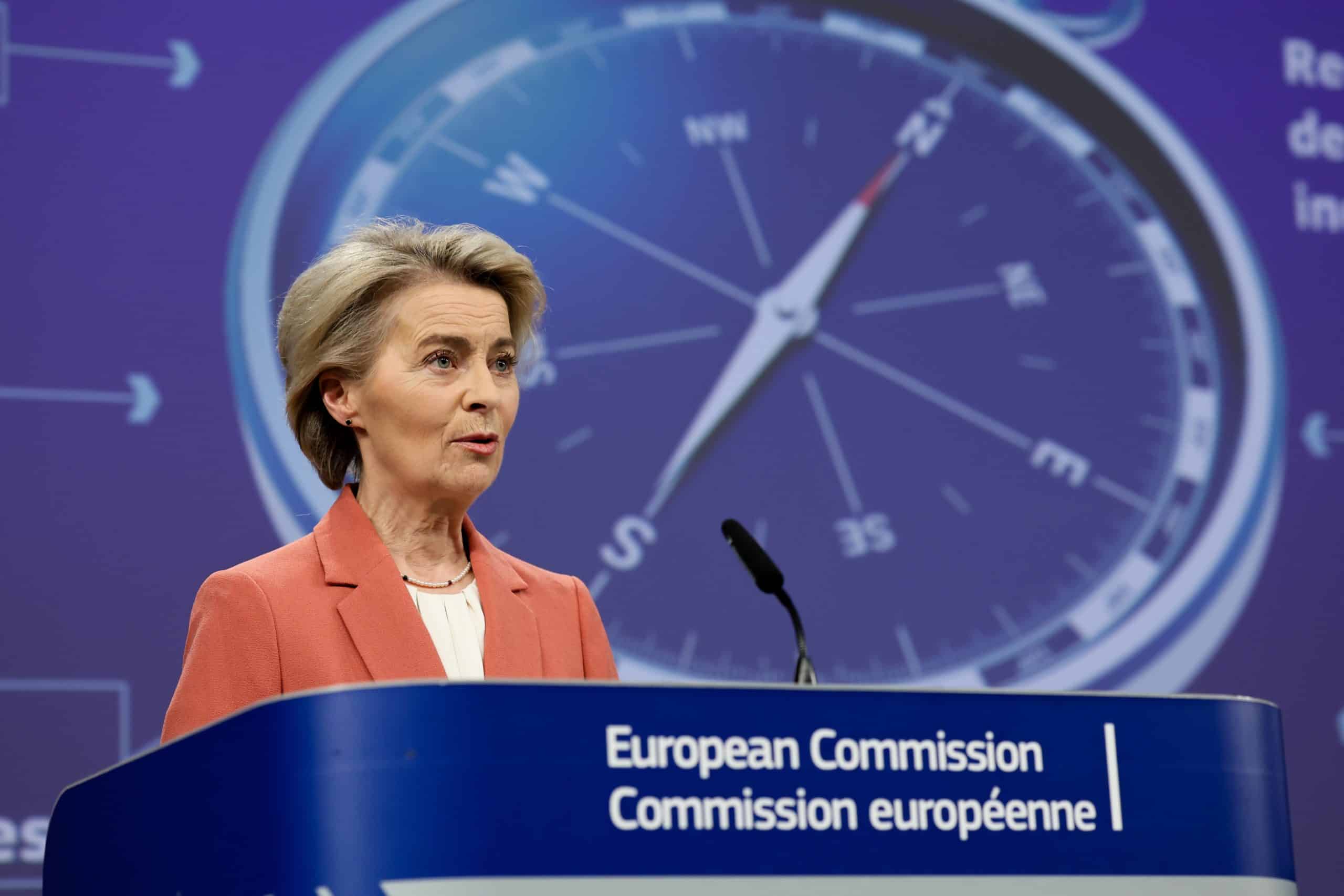
Our Senior Economist, Oscar Guinea, talks with Pieter Garicano, author of Silicon Continent, about Europe's competitiveness and the recently released Competitiveness Compass proposal by the European Commission.
Garicano highlights three key issues:
Lack of funding and member state buy-in for initiatives like the 28th legal regime for startups,
Denial of trade-offs, particularly regarding decarbonisation and energy prices,
Over-reliance on government strategies rather than private sector enterprise.
He also discusses the EU's energy investment issues, focusing on intermittent renewables and the resulting price volatility.
Furthermore, he addresses the challenges of data center development in Europe due to power availability and the complexities of AI development, citing restrictive regulations like the AI Act and GDPR as hindering innovation.
Finally, he contrasts Europe's industrial policy with China's successful EV strategy, emphasising the need to allow failure, focus on clear objectives, and encourage competition.
He concludes that Europe's regulatory environment and labour laws stifle innovation and scaling, risking a significant growth gap with the US.
You can watch a video recording of the chat here.
You can read a transcript of the conversation here.
Pieter Garicano is a Philosophy, Politics, and Economics graduate from the University of Oxford and co-author, along with Luis Garicano, of Silicon Continent—a weekly blog on Substack that analyses why the EU is falling behind Asia and the US in AI, innovation, and growth. He is also the Managing Editor at Works in Progress, a magazine of new and underrated ideas to improve the world (Stripe), and an Emergent Ventures Grantee at the Mercatus Center, George Mason University.

This episode of the Global Economy Podcast is a recording of a recent webinar where Fredrik Erixon spoke with Wolfgang Münchau on the state of the German economy.
The German economy is in a bad shape. Its Gross Domestic Product has fallen for two consecutive years and once-mighty German industrial companies struggle to keep up with technological change and global competition. What has gone wrong?
In a new book – Kaput: The End of the German Miracle – Wolfgang Münchau argues that Germany’s economic problems go deep and have evolved over a longer period of time. Its manufacturing-first mentality is entrenched and keeps a hold over the country’s economic imagination – leading to false perceptions about the economy and slow responses to new technological developments.
You can watch a video recording of the conversation here.
Wolfgang Münchau is the director and co-founder of Eurointelligence, a service that provides daily information about the euro area, targeted at investors and policymakers. He is also the European columnist for the New Statesman, and previously an associate editor and columnist for the Financial Times. Wolfgang was one of the founding members of Financial Times Deutschland, the German language business daily, where he served as deputy editor from 1999 until 2001, and as editor-in-chief from 2001 until 2003. He previously worked as foreign correspondent in Washington DC and Brussels for the Times, and in Frankfurt for the FT. Wolfgang’s latest book, Kaput, published by Swift Press, is about the rise and decline of the German economy. Wolfgang and his wife, Susanne Mundschenk, live in Oxford.
Director Fredrik Erixon talks with MEP Jörgen Warborn in the latest episode of the Global Economy Podcast.
They discuss how the EU must prioritise trade to combat its growth crisis. The conversation delves into the ratification of the EU-Mercosur deal as an enabler of a massive free trade zone, reforms to the World Trade Organization for stronger global trade rules, a focus on sectoral agreements for faster progress, and how crucial it is to balance protection with promotion and partnership.
You can also watch a video recording of the conversation here.
Jörgen Warborn is a Swedish entrepreneur and politician of the Moderate Party (Sweden). He studied Economics and Leadership at the International University of Monaco, International Relations at the London School of Economics, and Entrepreneurship at Babson College. Mr Warborn started his first business at 17 and has managed several small businesses in IT and Marketing. He was Mayor of Varberg Municipality from 2010 until his election to the Swedish Parliament in 2014, and was re-elected in 2018. Mr Warborn is a representative of the European Parliament since 2019.

Fredrik Erixon hosts an insightful conversation with renowned economist John Cochrane as they delve into the pressing issues of inflation, deficits, and potential economic policies under a second Trump administration. As the US faces persistent high deficits and European countries grapple with sluggish economic growth, they discuss what the future holds and the necessary steps for recovery.
You can also watch a video recording of the conversation here.
John H. Cochrane is one of the world’s leading economists. He has been researching financial economics and macro-economics for 40 years and is now the Rose-Marie and Jack Anderson Senior Fellow at Stanford’s Hoover Institution. He was previously a professor at the University of Chicago and its Booth School of Business. He’s the author of several books and numerous papers on finance, including the leading textbook on asset pricing. He blogs as the Grumpy Economist.
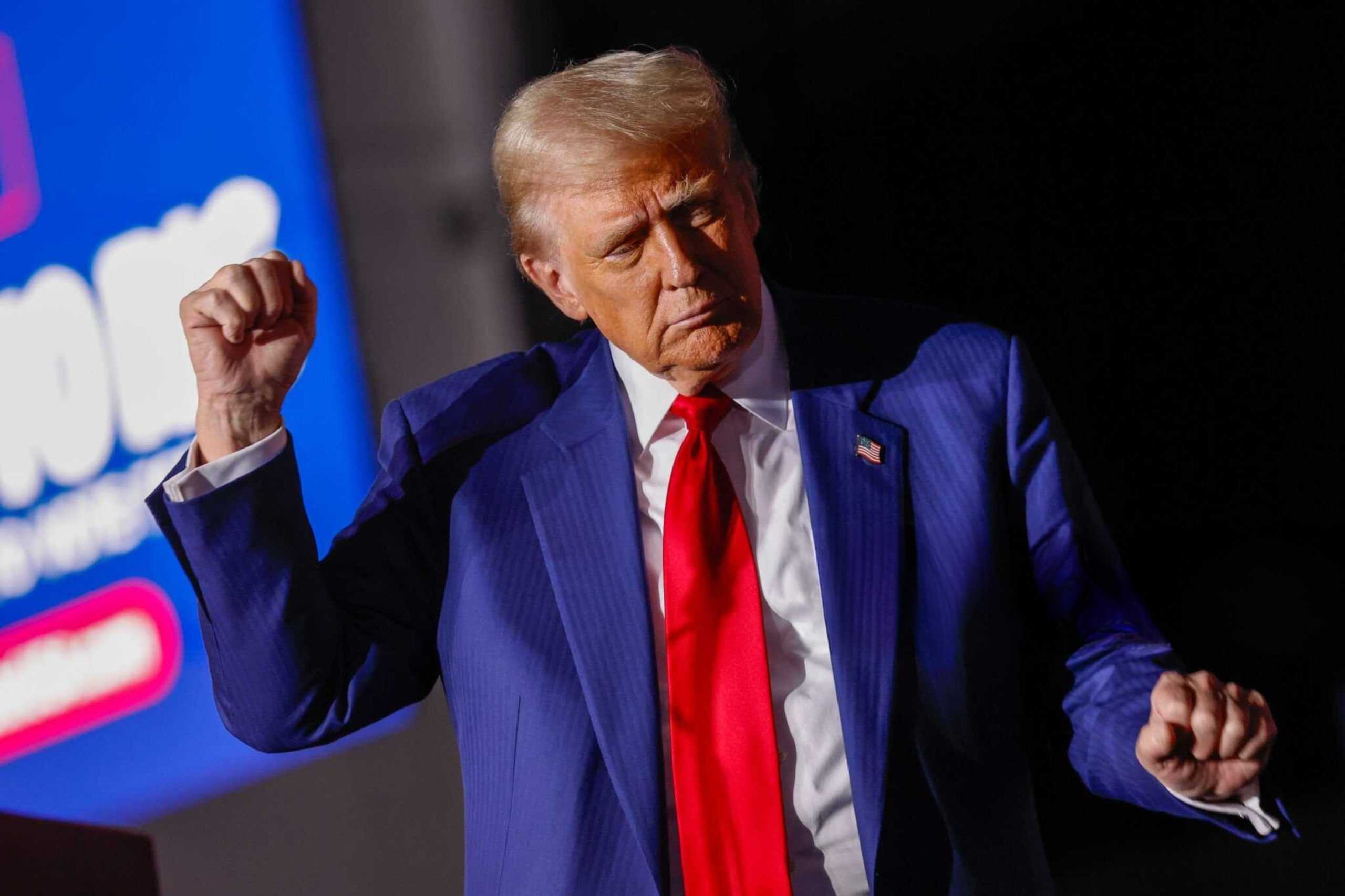
In this episode of the Global Economy Podcast, Fredrik Erixon and Frank Lavin discuss the potential impact of the incoming second Trump administration on foreign policy.
They analyse the likelihood of a continuing transactional and domestic-centric approach, considering campaign rhetoric, Trump’s volatile attitude, and his new team.
They also examine his foreseeable approach to relations in Asia, particularly with China, and Europe, with special attention to the ongoing war in Ukraine.
You can also watch a video recording of the conversation here.
Pre-order Mr Lavin’s upcoming book “Inside the Reagan White House: A Front-Row Seat to Presidential Leadership with Lessons for Today” here.
Frank Lavin is a visiting fellow at the Hoover Institution (Stanford University). He was CEO of Export Now and he is the author of several books on economics and international affairs, including “Home Front to Battlefront: An Ohio Teenager in World War II (War and Society in North America)”.
Frank has had senior posts in national security and international policy in the administrations of the two Bush presidencies and was Director of Politics under Ronald Reagan.
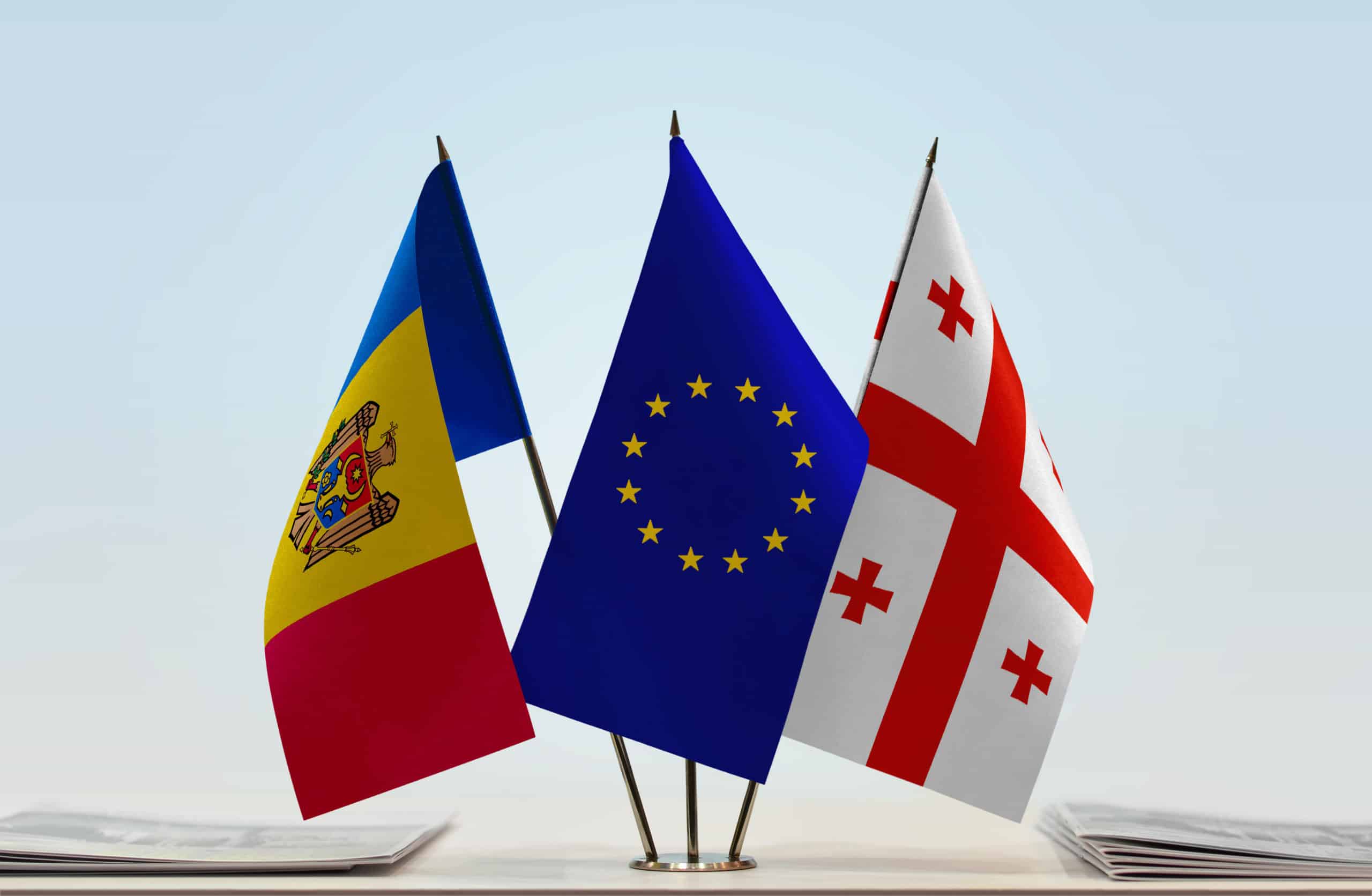
Director Fredrik Erixon interviews Tengiz Pkhaladze, a Senior Fellow at ECIPE, about the recent developments in Moldova and Georgia, two countries on the path to EU membership, where important elections have recently been held.
The conversation looks at the outcomes of the recent elections in both countries, including the challenges faced by Moldova’s President Maia Sandu and the contested victory of the Georgian Dream party. The exchange explores the implications of these events for the EU’s Eastern Partnership and the broader geopolitical landscape.
Mr Erixon and Mr Pkhaladze examine the impact of Russian influence, the importance of Western support, and the potential consequences of diverging from the European path.
You can also read a summary of the conversation here.
Tengiz Pkhaladze is a Senior Fellow at ECIPE. His research interests cover different areas, including Eastern Partnership Countries, Black Sea Region, European integration and Russian foreign policy towards the Black Sea and Eastern Partnership Countries.
To celebrate the 100th episode of the ECIPE Global Economy Podcast, host Fredrik Erixon welcomes Inu Manak, a distinguished trade policy expert and follow at the Council on Foreign Relations (CFR) in Washington, DC.
In this timely discussion recorded just days after the U.S. election, they explore pressing questions about the future of U.S. trade policy. Will America maintain its manufacturing-first strategy, strategic tariffs on China, and scepticism toward international trade institutions, or even bigger tariff hikes on the horizon under a second Trump administration?
Join us for this timely conversation about what the next chapter of U.S. trade policy might bring.
You can also watch a video recording of the interview here.

Comments

Download from Google Play

Download from App Store
 United States