


 Claim Ownership
God Forbid
Subscribed: 1,285Played: 40,064
Subscribe

© Copyright 2025, Australian Broadcasting Corporation. All right reserved.
Description
Religion: it’s at the centre of world affairs, but profound questions still remain. Why are you here? What happens when you die? Does God matter? God Forbid seeks the answers.
432 Episodes
Reverse

For most of history, body size has been about more than just health — it’s been a tool of control. From colonial ideals of “discipline” to modern-day diet culture, our ideas about fatness and thinness are deeply tied to morality, power, and profit. But are we getting it all wrong?Why do we see fatness as a personal failure rather than a natural variation in human bodies? How have our ideas of race and femininity affected our ideas of acceptable fat? Is public health really about health, or does it fuel stigma? And in an era of body positivity, have we actually made progress — or just rebranded the same old shame?GUESTS:Tess Royale Clancy, fat activist and co-founder of Radically Soft, Sydney’s first ever market for plus sized 2nd hand & new clothes. April Helene-Horton aka The Bodzilla, body positivity advocate, model, and a 2025 ambassador for the Butterly Foundation. Dr Kathryn MacKay, researcher in feminist bioethics and a lecturer at the Sydney Health Ethics Centre. Dr Jane Williams, researcher at the School of Public Health at the University of Sydney and the Australian Centre for Health Engagement, Evidence and Values (ACHEEV) at the University of Wollongong. Also co-host of the Undisciplinary podcast.This episode first went to air in April 2025This episode of God Forbid was made on Gadigal and Ngunnawal land.Technical production by Roi Huberman and Dylan Prins.
Looking towards the heavens for meaning doesn’t always mean looking to God. UFOs (and the modern moniker UAPs) have long been the food for thought of sceptics, theologians, and astrobiologists alike. But what does belief in these mysterious phenomena have in common with religion? And what implications does life outside Earth have for the existence of God? GUESTS:Bill Chalker, UFO researcher. Contributing editor, International UFO Reporter. Author of Hair of the Alien and The Oz Files: The Australian UFO Story. Reverend Dr Tim Jenkins, Reader in Anthropology and Religion, Divinity Faculty, University of Cambridge. Author of Images of Elsewhere Dr. Diana Walsh Pasulka, Professor, Religious Studies, University of North Carolina Wilmington, specialising in UFO and UAP religions This program first went to air in February 2025This episode of God Forbid was produced on Gadigal land, and recorded on Gadigal and Dharug land as well as the sovereign land of the Eastern Band of Cherokee Indians.
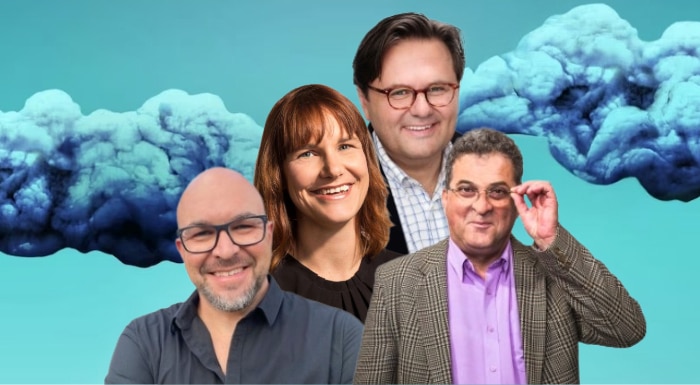
The big news for Christians is that this year we had BOTH a new Pope and – for the Anglican communion – the announcement of a new Archbishop of Canterbury.For Catholics, of course, Leo was the surprise choice at the papal conclave in May. The first pope from the United States. And the first from the Order of Saint Augustine. And Dr Sarah Mullally will be the first woman to be enthroned as the Church of England’s senior bishop at Canterbury Cathedral in March next year.Anglicanism is reaching what could be an emerging global schism in the church. Next March the bishops of the conservative Global Anglican Future Conference or GAFCON have been summoned to meet in Nigeria. This could well be one of the most eventful Anglican assemblies in history.This year saw fundamental change in the power of Artificial Intelligence. For centuries we've defined ourselves by capacities we thought were uniquely human — reasoning, language, creativity, pattern recognition. We are now at the stage where Artificial Intelligence makes decisions and generates ideas that we can't fully explain or understand. It may well be a paradigm shift at least as big as evolution.And...the Zionist Israeli historian Yuval Noah Harari famously said this year – 2025 – may be the biggest turning in Jewish history since the Romans destroyed the Second Temple in Jerusalem in the year 70 CE. Harari says Judaism has survived every catastrophe imaginable – even the Holocaust – but never until now has it faced a spiritual catastrophe.GUESTS:Andrew West from the Religion and Ethics ReportMeredith Lake from Soul Search Senior religious reporter and Editor, Religion and Ethics, Noel DebienScott Stephens from The Minefield
A bohemian journalist who found God in the slums — and built a movement that unsettled both Church and State.Born in Brooklyn in 1897, Dorothy Day lived many lives: radical writer, suffragist, single mother, and eventually Catholic convert. In the midst of the Great Depression, she co-founded the Catholic Worker movement, opening houses of hospitality for the poor and protesting every war America fought. To admirers, she was a saint in street clothes; to critics, a communist in disguise. Can holiness and revolution coexist? Day’s life suggests that faith and rebellion may be closer than we think.GUESTS:Paul Elie — author of The Life You Save May Be Your Own: An American PilgrimageMartha Hennessy — granddaughter of Dorothy Day and lifelong member of Catholic Worker Movement.Robert Ellsberg — former editor of Dorothy Day’s Catholic Worker newspaper. He worked closely with her in the final years of her life and is the editor of her published diaries and selected letters, The Duty Of Delight and All the Way to Heaven. Rev Simon Moyle — ordained Baptist Minister and elder at the Grace Tree Christian community in Coburg Melbourne.This is the sixth and final episode of God Forbid's Religious Rebels, a six-part special series exploring the lives of spiritual revolutionaries who defied empires, reshaped traditions — and sometimes paid with their lives.
A street hustler turned minister whose faith transformed Black politics — and himself.Born Malcolm Little in 1925, Malcolm X rose to fame as a fiery preacher in the Nation of Islam, calling for Black self-determination “by any means necessary.” But after his pilgrimage to Mecca, he embraced Sunni Islam and a universal vision of justice that transcended race. Weeks later, he was assassinated. Was Malcolm X a prophet of liberation or a threat to the powerful? His journey from militant separatism to spiritual reformer still forces America — and the world — to confront the cost of conviction.GUESTS:Tamara Payne — co-writer and principal researcher of Pulitzer prize winning biography “The Dead Are Arising: The Life of Malcolm X” Assistant Professor Jimmy Butts — specialist in Malcolm X Studies at Trinity university in San Antonio Texas This is the fifth episode of God Forbid's Religious Rebels, a six-part special series exploring the lives of spiritual revolutionaries who defied empires, reshaped traditions — and sometimes paid with their lives.
A French lawyer-turned-theologian who split from Rome — and built his own city of God.John Calvin fled Catholic France to lead a new Protestant movement in Geneva during the 1500s. His ideas about predestination and the absolute authority of Scripture reshaped Christianity and inspired the Reformed and Presbyterian traditions. Yet under his rule, dissenters were exiled, imprisoned, and violently executed. Was he a reckless heretic or a visionary thinker centuries ahead of his time — and what does his death say about the danger of new ideas?GUESTS:Randall C. Zachman Professor Emeritus of Reformation Studies, at Lancaster Theological Seminary in Pennsylvania, after many decades at University of Notre Dame. Professor Ben Myers at Alphacrucis University College in Brisbane - author of The Apostles’ Creed: A guide to the ancient catechism Dr Constance Lee is Lecturer in Law at Adelaide University, and author of a forthcoming book Natural Law and the Nature of Government: John Calvin’s Constitutional Theology This is the fourth episode of God Forbid's Religious Rebels, a six-part special series exploring the lives of spiritual revolutionaries who defied empires, reshaped traditions — and sometimes paid with their lives.
A Persian poet and scholar who tore off her veil — and announced the dawn of a new religious age. In the 1840s, Táhirih became one of the first women to preach in public in Iran. As a leading figure in the Bábí movement — a precursor to the Bahá’í faith — she argued that revelation had not ended and that women should be free to study, speak, and lead. Her defiance of clerical and royal authority terrified the establishment. In 1852, she was executed in secret, her body buried in silence. Was Táhirih a prophet of liberation or a heretic undone by her own courage?GUESTS:Professor Negar Mottahedeh — cultural critic and film theorist specialising in interdisciplinary and feminist contributions to the fields of Middle Eastern Studies at Duke UniversityRaya M Hazini — doctoral candidate with her Masters from the Graduate Theological UnionDr Zara Moballegh — PhD from Tehran University, she’s now visiting Assistant Professor at Harvard Divinity School. This is the third episode of God Forbid's Religious Rebels, a six-part special series exploring the lives of spiritual revolutionaries who defied empires, reshaped traditions — and sometimes paid with their lives.
A former Dominican friar who dared to say the universe had no centre — and paid with his life.Born in 16th-century Italy, Giordano Bruno broke with Church teachings to imagine an infinite cosmos filled with countless worlds. To him, God was not confined to heaven or hierarchy but alive in every corner of creation. The Inquisition saw it differently. After years of imprisonment and interrogation, Bruno was burned alive in Rome in 1600. Was he a reckless heretic or a visionary thinker centuries ahead of his time — and what does his death say about the danger of new ideas?GUESTS:Ingrid Rowland — Emeritus Professor of History at the US University of Notre Dame. Dilwyn Knox — Emeritus Professor of Renaissance Studies at University College, London Dr Shaun Blanchard — Lecturer in Theology at Notre Dame University Australia.This is the second episode of God Forbid's Religious Rebels, a six-part special series exploring the lives of spiritual revolutionaries who defied empires, reshaped traditions — and sometimes paid with their lives.
A teenage peasant who claimed to hear the voice of God — and changed the course of European history. At just seventeen, Joan of Arc convinced the French prince to let her lead an army against the English, turning the tide of the Hundred Years’ War. But her victories came at a price: captured, accused of heresy, and burned alive at nineteen. Was she a divinely inspired saviour or a dangerous fanatic? Centuries later, her story still provokes questions about faith, gender, and power — and how belief can turn an ordinary girl into a national saint.GUESTS:Dr Charlotte Millar — Senior Lecturer in Early Modern History at the University of Melbourne. Author Witchcraft, the Devil & Emotions in Early Modern EnglandDr Stephanie Downes — Lecturer at La Trobe University, an expert on the history of English and French, and of books and writing of the periodDr Shaun Blanchard — Lecturer in Theology at the University of Notre Dame Australia. His anticipated fifth book – Catholicism and Enlightenment.This is the first episode of God Forbid's Religious Rebels. A six-part special series exploring the lives of spiritual revolutionaries who defied empires, reshaped traditions — and sometimes paid with their lives.
What’s on the other side of the near-death experience?
Only half of all Australians understand Jesus to be a real person who lived at a time and place in history, according to the latest Australian Community Survey.Two in 10 Australians said Jesus was a mythical or fictional character while three out of 10 didn’t know.Their doubts stand in contrast to those of ancient historians, classicists and New Testament scholars, who universally accept that Jesus was a real person in time and place in history.The question here is ontological: what makes “Jesus” Jesus? Is it enough that a man called Jesus (or Joshua or Yeshua), who became a charismatic teacher, was born around the turn of the millennium in Palestine? GUESTS:Dr John Dickson, Anglican cleric, historian and author of Is Jesus History?Professor Vrasidis Karalis, Professor of Greek at the University of SydneyRev Dr Karen Pack, lecturer in history at Notre Dame Australia Sound Engineer: Antonia Gauci, Music by Russell StapletonThis program was made on the lands of the Gadigal People
What separates humans from other animals? It’s not our brain hardware. It’s our always changing brain software.For so long, humans believed our brain power separates us from animals: since the earliest human species, our brain size has tripled.But our brains haven’t grown for 30,000 - probably 300,000 years.So, why are we the ones who build cities and fly to space? Michael Muthukrishna calls it our collective culture.As every generation passes our operating system gets a free upgrade, and we build on the knowledge of the generation before.GUEST:Professor Michael Muthukrishna is at the London School of Economics and, in January 2026, will take up a professorship at New York University This program was made on the lands of the Gadigal People of the Eora Nation
In the Pacific Ocean right now grey, humpback and southern right whale populations are increasing.This is important for us all ecologically. But for some of us, even more is at stake.Because around the world, from the equator to the Arctic, from Russia to New Zealand, throughout history and today, humans revere whales, as spiritual ancestors and as harbingers of fortune and protection.And as we’ll learn, some communities and traditions even worship whales as gods. Which makes their near extinction in the 20th century nothing less than deicide.GUESTS:Aike Peter Rots is principal investigator of the Whales of Power project at the University of Oslo.Mere Takoko is a leading Maori whale conservationist and founder and CEO of the Pacific Whale Fund.
 1
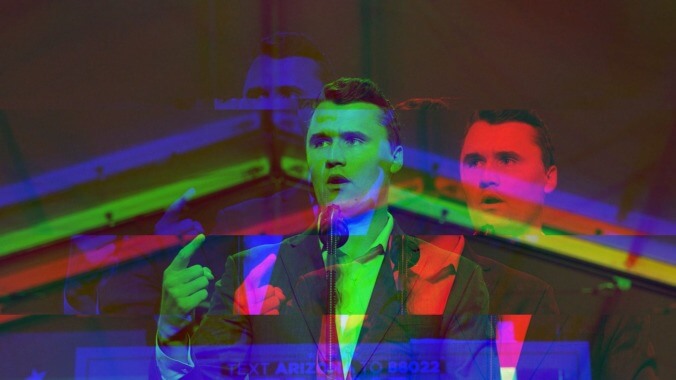
1Two days prior to the assassination of right-wing political activist Charlie Kirk, a group of writers at US-based feminist magazine, Jezebel, published an article stating that they 'Paid Some Etsy Witches to Curse Charlie Kirk’. The magazine has since pulled the article, on the advice of their lawyers, so as not to cause any confusion about their stance on political violence of any kind. Is it ever ethical to wish harm on someone, even if that harm is theoretical or supernatural? What code of ethics are witches bound to? And why do witches have such a complex relationship with right-wing politics? GUESTSDr Caroline Tully – witchcraft maven, archaeologist, writer, tarot reader, and scholar of modern Pagan religions Dr Kenneth Freeman – Adjunct Professor of social work at North Carolina Central University, author of the research paper Ethical parallels: an exploration of the NASW code of ethics, Wiccan Rede, and the growing influence of Wicca in the United StatesDr Megan Goodwin – scholar of politics, and American religions, senior editor of Religion Dispatches, and author of Religion is Not Done With YouThis episode of God Forbid was made on Gadigal land, in Naarm, and on the land of the Eno, Tuscarora and Occcaneechi peoples.
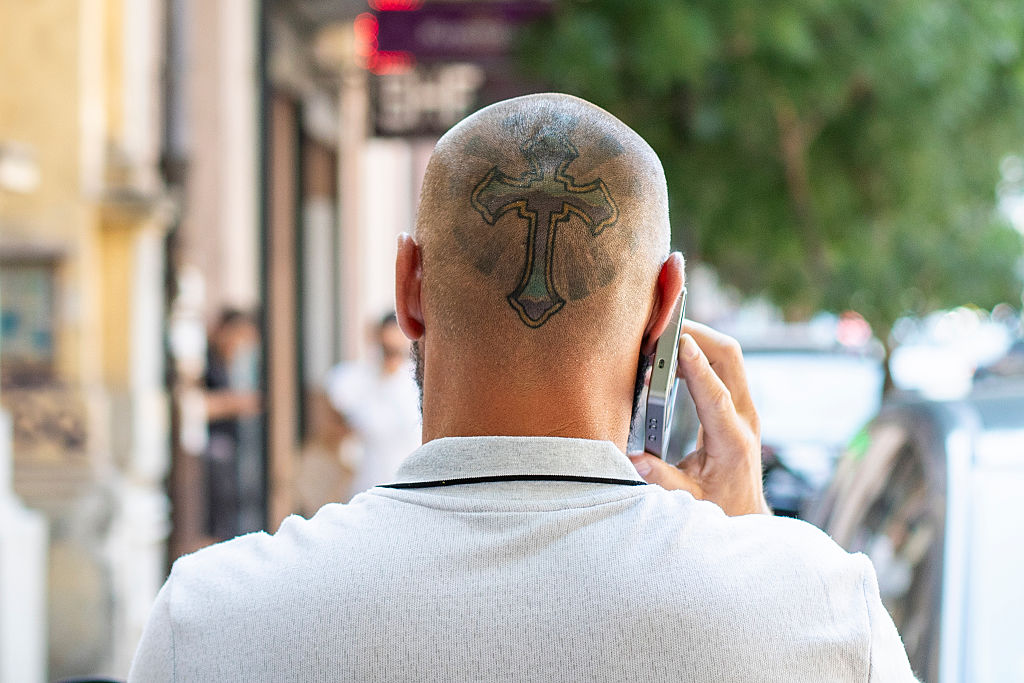
The art of marking the body, by piercing the flesh and pushing ink into the wound, the tattoo, has had an uneasy relationship with religion.It's sometimes seen as a desecration of the body, but equally, the tattoo is venerated as a rite of passage and as a form of worship.Then there are tattoos in the secular context. They are so common in Australia now, it’s actually hard to find a body under the age of 40 NOT permanently marked by ink. It’s a fascinating form of human expression, both in existence for millennia, and changing before our eyes.GUESTS:LARS KRUTAK is an anthropologist and documentary maker who specialises in tattoos and their cultural significance. . His new book Indigenous Tattoo Traditions (Princeton University Press) explores the role of tattooing cross-culturally. JULIA MAGEAU GRAY is a researcher, documentary maker, and tattoo artist. Julia is credited with revitalising women's tattoo traditions across Melanesia
Two thousand years ago, Christianity was an obscure movement with no wealth, power, or friends in high places. Yet within a few centuries, its radical commitment to human dignity, charity and non-violence transformed the Roman world and helped shape the civilisation we live in today.How did a powerless sect became the most influential religion on Earth? From ancient plagues and persecution to today’s debates about faith and society: can Christianity still turn the world upside down?GUESTS:Greg Sheridan – Foreign editor of The Australian and author of several books on Christianity’s modern relevance, including How Christians can succeed today – reclaiming the genius of the early church.Dr Karen Pack – Historian at the University of Notre Dame, ordained minister specialising in the early church and author of Queer Omissions: Unmarried Women and Social Justice Activism in the ChurchThis episode of God Forbid was made on Gadigal land and in Naarm.

It’s hard to believe that one in three young Australian adults go regularly to worship services – more than any other age group. But it’s true and men are leading the charge.It’s a puzzle, because it breaks two longstanding rules of religion: believers are typically female and old.Remember back in 2000. Even the most optimistic priest wouldn’t have predicted that would change. The Cold War was over, religion was set to fade way – replaced globally with rationalism, liberalism and democracy. Generation Xers were finishing the work of their baby boomer parents - rejecting once and for all church moralising, hypocrisy, and dogma.But the children of Generation X are now young adults themselves. And just as the hippie boomers rebelled, Gen Y and especially Gen Z are rebelling against their atheist parents by turning to God.Remembering too, what the so-called rationalist generation bequeathed today’s young adults – a world of debt, insecurity, and climate chaos. Why not look elsewhere for meaning and purpose?GUESTS:Dr Intifar Chowdhury Lecturer in Government at Flinders University, where she studies the political attitudes of young Australians.Dr Anna Halafoff Associate Professor of Sociology at Deakin University, coordinator of their Spirituality and Wellbeing Research Network.Emelia Haskey Undergraduate at the University of Divinity Adelaide where she’s in training to become a minister of the Uniting Church.

We live in a universe that sustains life – but what are the chances of that? And scientists now believe that if the laws of physics were different by just a fraction – our universe would be either empty, simple, or long ago extinct.If the strength of gravity or the mass of an electron was different by even the tiniest amount, the universe as we know it would not exist. So tiny even that the difference itself is almost beyond comprehension.Why has this cosmic fine tuning come about? The philosophical and even religious implications are so profound, that this is one of the most exciting questions in astrophysics.Which is why it’s so exciting that this week on the God Forbid panel, we have two internationally acclaimed astrophysicists. GUESTS:Luke Barnes - Senior Lecturer and astrophysicist at Western Sydney UniversityGeraint Lewis - Professor of astrophysics at The University of SydneyThis program was made on the land of the Gadigal People of the Eora Nation

Truth used to be something we argued about. Now we can’t even agree on what it is. In a world of fake news and alternate facts, we each claim our personal truth, our own competing version of reality.So, how does science, religion, and philosophy help us navigate truth when certainty is elusive?What does it mean to live in a time when truth itself feels fractured? When the world is so complex – that we yearn for trust as much as truth? And how do we navigate moral or epistemic disagreement without falling into hostility or relativism?GUESTS:DR CAROLYN FOSTER is an astro-physicist at the University of NSW.Prof ALAN DUFFY from Swinburne university of Technology in Melbourne, where he’s pro-vice chancellor too.DR VICTORIA LORRIMAR is a Senior Research Fellow at the University of Notre Dame.This program was made on Warrang, Naarm, and Walyalup

Can celibacy actually make us purer and closer to God? What is it about sex that gets in the way of our divinity?What do some of the world’s major religions say about celibacy or even require of it’s devotees?And, with the very noticeable global decline in the birth rate, are we already seeing a trend towards a more chaste life? If so, can abstinence draw us closer to our spiritual selves?GUESTS:Dawn Eden Goldstein is a theologian, canon lawyer and author of TheThrill of The Chaste: Finding Fulfillment While Keeping Your Clothes OnDr Maeve Heaney is also a theologian, author, musician and composer and has written on the subject of celibacy and the Catholic Church and author of Suspended God: Music and a theology of doubtDr Samishka Goyal is a philosopher and teacher at Monash University and has written extensively about Hinduism and JainismThis program was made on the lands of the Gadigal People of the Eora Nation, and Naarm


Download from Google Play

Download from App Store
 United States
amazing show, so interesting!
Excellent guests
" I became an atheist at the age of reason"
The motivated reasoning on this podcast is constant and unquestioned. Very superficial examination of what is actually a very interesting topic. An opportunity missed.
It's frightening to hear the leader of our country say he believes in miracles but not the consensus of the worlds scientists. We need rational leadership not the likes of Abbott or Scotty from marketing.
Good podcast, a youth group may be welcoming but to belong you have to abide by the group rules and often this comes at a personal price hence why people leave