


 Claim Ownership
Grey Matter Pathways
Subscribed: 0Played: 0
Subscribe

© Dr Nishen Gokal
Description
We take a deep dive into study technique and answering technique. This channel is designed for candidates preparing for postgraduate fellowship exams. The principles are easily extrapolated to any exam. Paving pathways between the finite short term memory and the infinite long term memory.
19 Episodes
Reverse

This episode explores the development of resilience and growth mindsets in demanding medical training environments, emphasizing that adversity and discomfort are essential catalysts for personal and professional advancement. It contrasts the adaptability of a growth mindset with the limitations of a fixed mindset, while introducing the Goldilocks principle to illustrate how traits like grit and prior achievement must be carefully balanced to foster genuine learning instead of burnout or complacency. Additionally, it provides detailed biochemical feedback on cellular respiration processes, specifically addressing common student errors regarding hydrogen atom yields, molecular formulas, and structural representations for glycolysis, pyruvate, and acetyl CoA. Through these psychological and biochemical insights, this episode underscores how overcoming targeted academic and professional struggles ultimately builds stronger, more capable clinicians.

The episode the author emphasize the educational power of rapid revision, a retrieval practice technique where learners reconstruct topics entirely from memory to strengthen neural pathways and transform conscious effort into automatic procedural memory. This active recall method is contrasted with passive re-reading, likened to the muscle memory of a tennis serve, and shown to efficiently highlight knowledge gaps for targeted study. Additionally, the materials include specific biomedical content regarding lipoproteins, detailing the origin, composition, and physiological roles of chylomicrons, VLDLs, LDLs, and HDLs. Feedback from a related assessment underscores common student misconceptions about these particles, particularly regarding reverse cholesterol transport and why HDL is considered beneficial. Ultimately, the sources bridge effective cognitive study strategies with precise medical knowledge of lipid transport systems.

This episode serves as a study guide and feedback summary for medical candidates focusing on carbohydrate metabolism. It provides formal definitions for essential biological processes like glycolysis and gluconeogenesis while outlining the chemical transitions of pyruvate. It provides a structural breakdown of NAD and a visual performance analysis of students who completed these assessments. Visualizing molecular structures is a vital tool for understanding metabolic logic rather than just a memorization task. The episode concludes with detailed feedback to help learners correct common errors in biochemical equations and terminology.

This episode provides a comprehensive educational overview of chemical and physiological buffer systems, specifically focusing on their role in maintaining pH stability. Through a series of questions and professional feedback, the episode explains that an ideal buffer operates most effectively when its pKa matches the surrounding pH, a relationship mathematically defined by the Henderson-Hasselbalch equation. The sources highlight the importance of haemoglobin and the bicarbonate system, noting how the body uses respiratory and renal mechanisms to compensate for acidity. Additionally, the episode evaluates student performance, emphasizing the need for precise mechanistic explanations and a deep understanding of how oxygenation affects the buffering capacity of blood. Overall, episode serves as both a technical guide and a performance assessment for FCA candidates studying acid-base physiology.
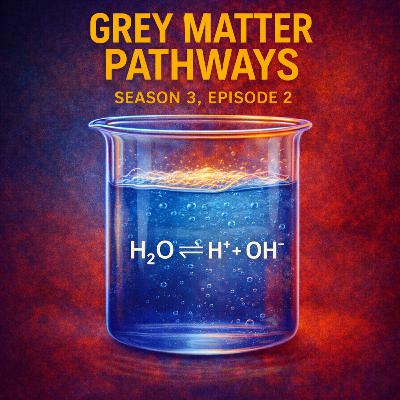
These sources provide a pedagogical guide for medical students on how to master the strong ion difference (SID) as part of Stewart’s physicochemical model of acid-base balance. The author introduces the "Framing Statement" as a strategic communication tool to help examinees demonstrate a comprehensive understanding of how specific variables influence extracellular fluid pH. Key technical requirements for a successful explanation include defining strong ions, presenting the water dissociation equation, and accurately calculating the difference between cations and anions. Through a review of common errors, the text emphasizes that electroneutrality is the fundamental driver behind the shifts in hydrogen ion concentration. Ultimately, the material serves as both a scientific overview of metabolic acidosis and alkalosis and a practical rubric for academic excellence in medical examinations.

Comments

Download from Google Play

Download from App Store
 United States