


 Claim Ownership
Groktopus Newsletter
Subscribed: 0Played: 0
Subscribe

© 2025 Groktopus LLC
Description
Content for business and technology leaders to thrive in the shift to a human/AI hybrid workforce.
30 Episodes
Reverse
88% of AI code generation pilots fail. The winners treat it as process transformation, not tool implementation—achieving 3x better adoption rates.
Show Notes: The Agile Coach's Secret Weapon for AI TransformationEpisode OverviewIn this episode, we explore Magnus Hedemark's groundbreaking presentation to the Agile RTP community, where he revealed why agile practitioners are uniquely positioned to lead the $4.4 trillion AI transformation opportunity. Drawing from research by MITRE, Deloitte, and Prosci, Magnus demonstrates how human-centered approaches achieve 95% success rates while 82% of AI projects fail due to poor strategic planning.Key Themes & InsightsThe Hidden Advantage of Agile PractitionersWhy transformation expertise matters more than AI technical knowledgeHow agile principles directly map to successful AI adoption patternsThe strategic alignment challenge that scores 95/100 in importanceWhy change management skills (92/100) outweigh technical implementationThe $4.4 Trillion Reality CheckUnderstanding the scale of AI transformation opportunityWhy "half-cocked" implementations create 82% failure ratesThe emergence of AI snake oil salespeople in trillion-dollar marketsHow systematic approaches achieve 95% success in foundational phasesResearch-Backed Framework for SuccessMITRE Corporation's findings on human-centered AI transformationDeloitte's analysis of 10,000 global leaders revealing familiar patternsProsci's 25+ years of change management research applied to AIWhy collaborative AI approaches show 90% success ratesEnhanced Agile Ceremonies for AI ContextEvolving daily standups to include AI collaboration questionsRetrospective frameworks for resistance patterns and skill developmentReframing work discussions: "What would you attempt with an AI teammate?"Building psychological safety for human-AI team formationThe 90-Day Accelerated TimelineCompressing traditional 3+ year timelines into focused incrementsLevel 1 Awareness (95% success rate) - building human infrastructureLevel 2 Exploring (70% success rate) - managing experimentation realityEarly Level 3 Implementation - structured deployment of proven patternsHuman-First Philosophy in PracticeAI as collaborative partner, not replacement toolMaximizing work NOT done by AI (echoing agile simplicity principles)Managing the 85/100 implementation difficulty of human dynamicsCreating 88/100 business impact through human-centered approachesCompetitive Advantage Timeline6-18 month head start over organizations taking traditional approachesLevel 4 maturity (24-36 months): agentic AI and ecosystem collaborationRole evolution from Agile coach to AI transformation architectIndustry standard setting while competitors figure out tool selectionReal-World Applications DiscussedPattern recognition from meeting recordings and documentationModel selection strategies for enterprise environmentsCustomer feedback analysis balancing AI efficiency with human nuanceEnriched meeting notes that research frameworks and create action itemsNotable Quotes"You don't need to become AI experts. You need to stay human experts with research-backed frameworks.""You all are already experts at the hardest part of AI transformation.""Most efficient communication varies by person AND task—human-to-human, human-to-AI, or AI-facilitated collaboration.""Don't implement AI—implement research-validated better ways of working, with AI as a powerful teammate."Research Sources ReferencedMITRE Corporation AI transformation researchDeloitte analysis of 10,000 global leadersProsci change management methodology (25+ years)Industry failure rate statistics (82% AI project failures)Collaborative approach success rates (90% with partnership positioning)Practical TakeawaysAgile practitioners already possess the critical skills for AI transformation successHuman infrastructure building precedes tool implementationPsychological safety and change management drive sustainable AI adoptionEnhanced ceremonies integrate AI naturally into existing workflowsCompetitive advantage comes from systematic foundation buildingConnect with Magnus HedemarkNewsletter: groktop.us - Human-first AI transformation insightsEmail: magnus@groktop.usLinkedIn: linkedin.com/in/hedemarkCompany: Groktopus LLC - Chief Tentacle OfficerAbout AgileRTPAgile RTP is a community of agile practitioners in the Research Triangle Park area, meeting monthly to explore leadership and organizational dynamics. The July 8, 2025 presentation attracted 37 attendees eager to understand their role in AI transformation.Next meeting: August 5, 2025 - First Tuesday of every month
Show Notes: The Executive Enthusiasm GapEpisode Topic: Why Leadership Vision Outpaces Implementation Reality in AI TransformationFeatured Research: Magnus Hedemark's analysis from GroktopusThe Critical StatisticsThe 38-Point Gap64% of senior executives recognize AI's importance for cost savings and enhanced servicesOnly 26% have successfully integrated AI across their organizationsGap projected to widen to 70% vs 20% within 18 months without systematic preventionTimeline Reality CheckExecutive expectation: "Transformational results in 6 months"Implementation reality: 12-18 months for meaningful progress including workforce developmentOnly 15% of employees embrace AI enthusiastically without proper supportThe Four-Stage Disappointment CycleEnthusiasm and Aggressive Goal Setting - Leadership sets ambitious timelines without assessing workforce readinessEarly Implementation Reality Checks - Teams encounter unexpected training needs and integration complexityResource Constraint Discovery - Technology-focused budgets prove insufficient for human developmentLeadership Attention Shifting - As challenges mount, leadership moves to other prioritiesCommon Vision-Reality GapsTimeline ExpectationsExecutive: 6-month transformationReality: 12-18 months with proper workforce developmentResource RequirementsExecutive assumption: Existing teams can handle integration with minimal trainingReality: Significant investment needed in human capability developmentSuccess MeasurementExecutive focus: Immediate ROI through efficiency gainsReality: Human empowerment metrics predict long-term successChange ManagementExecutive assumption: Teams will embrace AI once they see benefitsReality: Systematic support needed, with only 15% initially enthusiasticSuccess Stories and EvidenceLenovo's ApproachAchieved 10-15% productivity gains through structured, human-centered methodsBalanced technology deployment with comprehensive workforce developmentResource Allocation Framework from Successful Organizations40% technology investment35% human development (training, change management, career development)25% integration support and ongoing coachingMarket Learning TrendsFinancial markets beginning to recognize workforce development metrics as AI success predictors"AI buzzword mentions insignificant for long-term investor response" (Federal Reserve research)Human-Centered Success MetricsInstead of focusing solely on efficiency gains, successful organizations track:Employee confidence with AI augmentation toolsSkill development progress and capability enhancementRole evolution success and career pathway advancementProfessional growth opportunities created through transformationWarning Signs for LeadersExecutive timelines without workforce development phasesBudget allocation primarily focused on technology acquisitionSuccess metrics based solely on efficiency and cost reductionExpecting automatic employee enthusiasm without systematic supportKey Research SourcesMagnus's analysis draws from EY surveys, Federal Reserve economic research, Harvard Business School studies, and implementation data from organizations including BMW, Mercedes-Benz, Microsoft, and other enterprises that have successfully navigated AI transformation.The Bottom LineThe gap between executive vision and implementation reality isn't inevitable. Organizations that systematically align leadership expectations with human-centered implementation approaches achieve superior outcomes while avoiding predictable disappointment cycles.
The Complex Reality of AI Transformation LeadershipThis briefing synthesizes critical insights from "The Complex Reality of AI Transformation Leadership," analyzing the emergent patterns of systematic AI transformation across industries. It highlights key themes, important facts, and strategic implications for leaders navigating the intersection of technological advancement, regulatory pressure, and workforce dynamics.Main Themes and Most Important Ideas:The central premise of the analysis is that systematic AI transformation, while delivering superior business and technical outcomes, is fundamentally reshaping the relationship between technological progress and human welfare within organizations. This transformation is not merely about adopting new tools but about deeply reconfiguring organizational structures, processes, and human capital strategies.1. The Normalization of Workforce Displacement as a Strategic CapabilityA core observation is that organizations are increasingly viewing workforce displacement not as an unfortunate side effect but as an integrated component of their strategic AI transformation.Key Insight: "Organizations implementing systematic AI transformation are increasingly normalizing workforce displacement as a core strategic capability rather than treating it as an unfortunate side effect of technological progress."Evidence: Examples include Salesforce (10%+ workforce reduction), Shopify (20% single restructuring), and Wells Fargo (4.7% ongoing reductions).Implication: Systematic methodologies, while enabling technical excellence, also provide "sophisticated change management capabilities for workforce reduction," making displacement more efficient and comprehensive. This raises "fundamental questions about the relationship between systematic business improvement and human welfare in organizational change."2. The Productivity Ceiling of Human-AI CollaborationThe analysis suggests that the initial productivity gains from human-AI collaboration may be reaching a plateau, pushing organizations to prioritize further automation and workforce optimization over continuous human augmentation.Key Insight: "Evidence suggests we're approaching a productivity plateau where human-AI collaboration improvements begin to level off, forcing organizations to choose between maintaining workforce size or pursuing additional efficiency gains through further automation."Observation: Despite initial "30% productivity gains" at companies like Salesforce, "continued workforce reductions...suggest that collaboration enhancement has limits."Implication: This "diminishing returns on human-AI collaboration capability development" means systematic transformation increasingly relies on "workforce optimization rather than pure capability enhancement" for competitive advantage.3. The Healthcare Industry's Mandate for Systematic AI ImplementationHealthcare faces unique pressures, where systematic AI implementation is becoming a regulatory necessity, not just a strategic option, even amidst existing workforce shortages.Key Insight: "Your healthcare subscribers face a particularly acute version of systematic implementation requirements due to converging regulatory pressures that will make ad-hoc AI approaches legally non-compliant within healthcare delivery systems."Regulatory Context: AI in healthcare is categorized as "high-risk" under emerging EU frameworks, requiring "systematic documentation, governance structures, and compliance processes." US-EU Trade and Technology Council is developing voluntary codes likely to become mandatory.Paradox: The AI in healthcare market is projected to grow from "$2.1 billion in 2018 to $36.1 billion by 2025," yet this expansion occurs in an industry already "struggling with human resource capacity." Systematic implementations "may accelerate workforce transition."4. Workforce Development Bifurcation: The "AI-Augmented" vs. "Displaced Traditionalist" DivideSystematic transformation is exacerbating existing workforce skill gaps, leading to a significant stratification of the labor force.Key Insight: "Our analysis indicates the workforce is beginning to split into 'AI-augmented professionals' who successfully adapt to systematic transformation environments and 'displaced traditionalists' who cannot make the transition, creating unprecedented skills-based employment stratification."Mechanism: Systematic approaches, while enhancing capabilities for adaptable employees, "more efficiently identify and transition those who cannot adapt to human-AI collaboration requirements."Warning: This suggests that "transformation success depends increasingly on sophisticated human capital strategy that includes both capability enhancement and workforce transition management." Those who struggle to adapt face "potential exclusion from employment in systematically transformed organizations."Strategic Questions for Further Exploration (Critical Uncertainties):The analysis identifies critical unanswered questions that leaders must address:The Knowledge Preservation Crisis: "How do organizations maintain institutional knowledge during systematic workforce reduction while achieving transformation benefits?" There's a risk of "trading long-term institutional capability for short-term operational efficiency."Regulatory Arbitrage Acceleration: "Will countries and regions with less restrictive transformation regulations gain competitive advantages, forcing global policy harmonization?" This is particularly relevant for healthcare, potentially undermining patient protection standards.Systematic vs. Human-First Reconciliation: "Can systematic methodology be redesigned to achieve business excellence without requiring substantial workforce displacement?" This is the "most critical question," exploring whether superior outcomes necessarily demand workforce optimization or if alternative frameworks exist.Conclusion: Navigating Transformation Complexity with IntegrityThe briefing emphasizes that these findings are "analytical observations about complex systems under pressure rather than normative judgments." Leaders are urged to acknowledge the "complexities" and "contradictions" inherent in systematic AI transformation.Core Message: "Success requires transformation leaders who can navigate technical excellence, business performance, regulatory compliance, and workforce transition with equal sophistication."Responsibility: Transformation analysts have a "responsibility to provide strategic intelligence that enables informed decision-making, even when the patterns we identify challenge comfortable narratives about technological progress and human welfare."In essence, while systematic AI transformation offers clear advantages in efficiency and outcomes, it simultaneously introduces profound ethical and societal challenges related to workforce stability, knowledge retention, and equitable human development. Leaders must proactively develop sophisticated strategies that account for these intertwined dimensions.
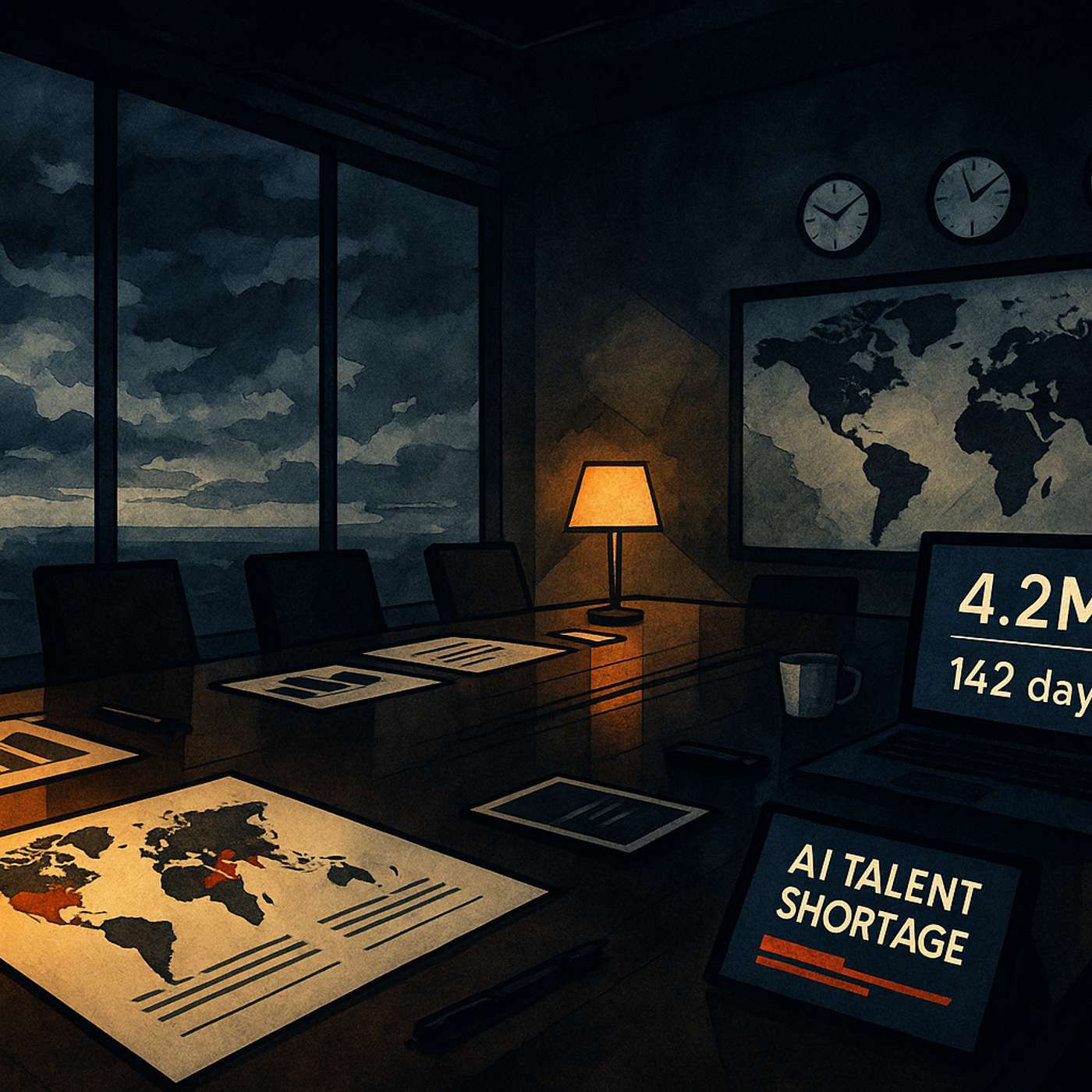
Episode Notes: AI Strategy in an Uncertain WorldCore ThemesStrategic Intelligence Over SpeculationMaking data-driven decisions in uncertain timesWhy quality intelligence beats prediction in volatile marketsThe binary choice facing organizations: aggressive talent strategy or competitive declineThe Great AI Talent Bifurcation4.2 million unfilled positions vs. 320,000 qualified developersCorporate "wartime" vs. "peacetime" talent strategiesMeta's 3,600 strategic layoffs as talent reallocation, not cost-cuttingPolicy as Competitive AdvantageH-1B modernization creating compliance costs vs. opportunitiesCongressional AI regulation moratorium favoring incumbentsGeographic hedging strategies for talent accessKey Data Points142 days: Average time to fill AI positions$2.8 million: Annual cost per company from AI talent delays87%: Organizations struggling to hire AI talent32%: Year-over-year increase in AI developer compensation50%: Reduction in new graduate hiring by major tech companies since 201940%: Shortfall in AI-ready graduates vs. industry demandStrategic Frameworks DiscussedTalent Concentration StrategyAnthropic's 80% retention rate vs. OpenAI's 67%Culture and mission alignment over pure compensationPerformance management as talent reallocation toolGeographic and Policy HedgingCanada, Singapore, UK as regulatory arbitrage opportunitiesOffshore operations as H-1B constraint hedgesFederal vs. state regulatory positioningMarket Timing IntelligenceQ3-Q4 2025 wage reversal predictionsCorporate-university partnership strategiesEconomic uncertainty creating hiring windowsResources and CitationsPrimary Analysis SourceMagnus Hedemark's Strategic Intelligence Brief (Groktopus)Human-first AI methodology frameworkSupporting Data SourcesFullScale AI developer shortage analysisVeritone Q1 2025 labor market reportSignalFire State of Talent Report 2025TechCrunch layoffs trackingCongressional AI regulation updatesUSCIS H-1B modernization implementationForward-Looking Indicators90-Day Monitoring FrameworkJuly Q2 earnings: AI talent ROI measurementAugust Congressional action: Regulatory landscape clarificationSeptember academic data: Pipeline shortage assessmentWild card: Talent-focused acquisition strategiesMagnus's Methodology HighlightsIntelligence-based decision frameworks over reactive speculationHuman-centered approach to AI transformationStrategic positioning during market uncertaintySystematic analysis of competitive advantages

Show Notes: Year One Multi-Agent StrategySource Article: Year One Multi-Agent Strategy: McKinsey's Agentic Framework Meets Microsoft's Orchestration Platform by Magnus HedemarkKey Themes ExploredThe Infrastructure Trap Oracle's $25B projected fiscal 2026 capex represents infrastructure-first thinking that creates expensive dependencies without strategic ROI. Their client ordering "all available capacity" exemplifies premature scaling before understanding agent requirements.The AI-First Messaging Disaster Duolingo CEO Luis von Ahn's forced retreat from "AI-first" strategy after public backlash validates the importance of human-partnership messaging over replacement rhetoric.McKinsey's Agentic Evolution Jorge Amar's framework progression: "An AI agent is perceiving reality based on its training. It then decides, applies judgment, and executes something." Five architectural principles: Composability, Distributed Intelligence, Layered Decoupling, Vendor Neutrality, Governed Autonomy.Strategic Implementation Success Wells Fargo: 35,000 bankers, 10 minutes → 30 seconds for procedure searches, 75% of queries through AI agents while maintaining human oversight. T-Mobile: 500,000+ monthly launches across 83,000+ endpoints with PromoGenius system.The Year One Framework 30-Day Foundation: Agentic assessment in controlled environments. 60-Day Implementation: Human-agent collaboration optimization. 90-Day Validation: Strategic deployment proving ROI before infrastructure dependency.Key Statistics & ExamplesOracle: $21.2B fiscal 2025 → $25B+ fiscal 2026 projected capexMicrosoft's Azure AI Foundry: 1,800+ models in unified catalog71% of Frontier Firm workers report thriving vs. 37% globallyHCLTech: 40% faster case resolution, 30% of 500-person support staff redeployedMagnus's Strategic InsightWhile competitors make expensive infrastructure mistakes and suffer messaging disasters, the McKinsey-Microsoft synthesis provides a Year One roadmap that prevents both Oracle's scaling errors and Duolingo's communication failures—building agentic capability before infrastructure dependency.Upcoming EventJuly 8 Global AgileRTP Presentation: "Human/AI Hybrid Workforce: Year One" - Complete implementation roadmap with week-by-week milestones.About the AuthorMagnus Hedemark, Chief Tentacle Officer of Groktopus, specializes in human-first AI methodology and enterprise transformation patterns. Known for identifying strategic failures before competitors recognize their implications.

Show Notes: The $29 Billion MistakeEpisode ThemesThe Deploy-First Disaster PatternWhy "move fast and break things" breaks everything in AI transformation85% AI project failure rate - up from 17% just one year agoAverage failure cost: $12.9 million per projectDuolingo's Communication CrisisCEO's "AI-first" announcement triggers user revolt"AI first means people last" - stakeholder backlashComplete social media blackout and brand damageHumiliating public retreat: AI becomes "just a tool"Lost: years-long learning streaks from most loyal usersMeta's $29 Billion Desperation Buy78% of original Llama team fled to competitorsScale AI acquisition as expensive damage controlPattern repeat: Metaverse billions, now AI billionsBuilding vs. buying - when acquisition signals strategic failureThe Hidden PatternRAND Corporation finding: "miscommunication and misunderstanding of project purposes"Deployment before readiness assessment = predictable disasterStakeholder validation ignored until it's too lateThe Readiness-First AlternativeStrategic foundation before external acquisitionsStakeholder validation before messagingPilot before scalePlan before pivotKey Insight: Speed vs. Intelligence Not about moving slowly - about moving intelligently. Competitive advantage goes to leaders who validate before they deploy.Call to Action Join Magnus Hedemark's July 8 AgileRTP global presentation for proven readiness frameworks that prevent both messaging disasters and reactive capital deployment.Based on analysis by Magnus Hedemark, Chief Tentacle Officer of Groktopus, expert in human-first AI transformation strategies.
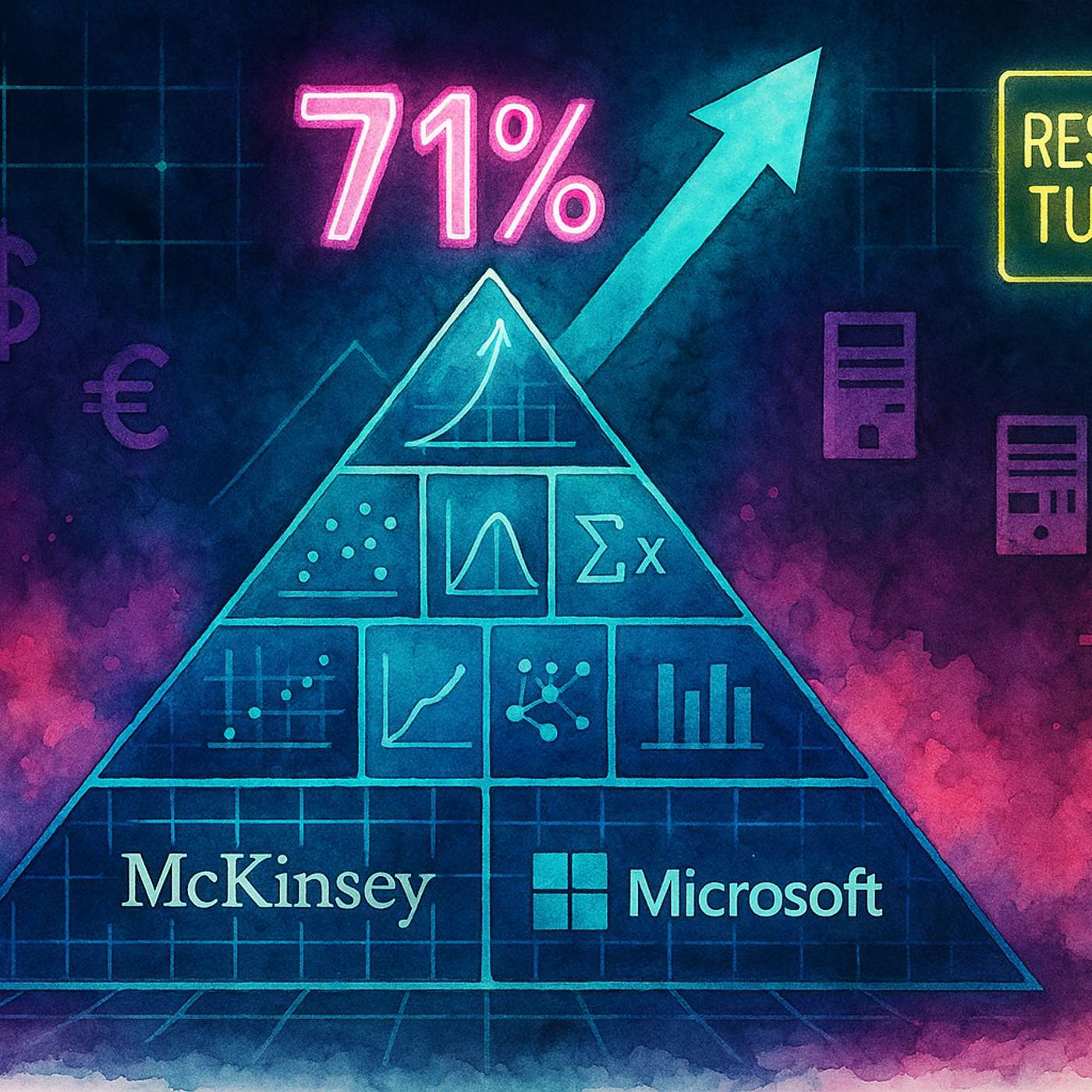
Podcast Episode Notes: Academic Evidence for Strategic AI ImplementationCore Theme: The Academic-Enterprise DisconnectBig Picture: While Oracle spends $25B and Meta spends $29B on AI infrastructure, academic research shows strategic implementation consistently outperforms capacity-focused approaches. The disconnect between what research proves and what enterprises actually do is costing billions.Key Research FindingsMcKinsey's Agentic AI Framework (Jorge Amar)Core Definition: "An AI agent is perceiving reality based on its training. It then decides, applies judgment, and executes something. And that execution then reinforces its learning."Critical Requirement: Organizations succeed by "deploying agentic AI in controlled, deterministic environments where clear processes exist"Strategic Insight: Success requires systematic foundations, not maximum capacityMicrosoft's Frontier Firm DataSuccess Gap: 71% of Frontier Firms report thriving vs. 37% globallyKey Differentiator: Human-agent ratio optimization, not computational capacity maximizationImplementation Pattern: Strategic integration into existing workflows rather than wholesale replacementInfrastructure-First Failure PatternsOracle's Capacity ObsessionLarry Ellison: "The demand right now seems almost insatiable""All available capacity" orders suggest reactive scaling vs. strategic planning$25B capex explosion without strategic framework validationMeta's Acquisition Desperation$29B Scale AI acquisition represents buying capability vs. building integrationPattern of reactive spending rather than methodical developmentValidates replacement thinking over partnership approachesEnterprise Failure Statistics42% of companies scrapping most AI initiatives in 2025 (up from 17% in 2024)85% cite data quality as biggest challenge—exactly what infrastructure-first ignoresAcademic research predicted these failures; enterprises ignored the studiesThe Academic Research Volume vs. Enterprise Learning GapOver 400 AI research papers published monthly with careful methodologiesEnterprises making billion-dollar bets without reading the academic evidenceMethodical research emphasizing strategic planning vs. panic infrastructure responsesMagnus's Year One Framework ValidationResearch-Backed PhasesControlled Environment Identification (McKinsey's requirement)Map deterministic business processes firstIdentify suitable workflows before technology deploymentHuman-Agent Ratio Optimization (Microsoft's pattern)Build hybrid team structures that enhance human capabilityFocus on collaboration, not replacementStrategic Scaling (Academic best practices)Expand based on validated outcomesInfrastructure investment follows strategic proof, not precedes itWhy This Matters for LeadersThe Choice PointAcademic evidence provides proven success frameworksBut only for leaders willing to prioritize strategic thinking over spending announcementsNext 18 months will separate evidence-based organizations from infrastructure gamblersPractical ApplicationMcKinsey's controlled environment requirements are actionableMicrosoft's success patterns are replicableMagnus's framework bridges academic research with business transformationAuthority Building ContextMagnus predicted Oracle/Meta infrastructure mistakes in previous analysesHis Duolingo AI-first disaster analysis proved prescient when CEO publicly retreatedTrack record of identifying enterprise AI failures before they become headlinesJuly 8 AgileRTP presentation offers practical implementation of these research findingsBottom LineThe academic evidence is decisive: strategic implementation beats infrastructure spending. While some chase headlines with massive investments, research-validated approaches build sustainable AI capabilities without expensive upfront commitments. The question isn't whether AI will transform business—it's whether leaders will apply proven frameworks or repeat expensive mistakes.

Oracle and Meta's AI Infrastructure Spending Spree: A Strategic Misstep AnalysisEpisode OverviewTech giants are making expensive bets on AI infrastructure, but are they doing it wrong? Oracle's $25 billion spending explosion and Meta's $14.8 billion Scale AI acquisition reveal the hidden costs of capacity-first strategies. Meanwhile, companies focusing on strategic human-AI collaboration are achieving breakthrough results. We explore why infrastructure-first approaches often fail and what works instead.Key Topics DiscussedOracle's Infrastructure CrisisExplosive spending: Capital expenditures surged from $7B to projected $25B annuallyCapacity management failure: Unprecedented client demand for "all available cloud capacity"Financial impact: Negative $400M free cash flow despite strong revenue growthEfficiency concerns: AI infrastructure typically achieves only 35-45% of theoretical performanceMeta's Talent Hemorrhage and Expensive ResponseResearch team exodus: 78% of original Llama team departed (11 of 14 researchers)Talent destinations: Many joined competitors like Mistral AI, Anthropic, Google DeepMindRecruitment crisis: CEO Mark Zuckerberg in "founder mode," offering 7-9 figure compensation packagesAcquisition strategy: $14.8B investment in Scale AI to rebuild lost capabilitiesProject delays: Flagship Llama 4 "Behemoth" model delayed indefinitelyIndustry-Wide Implementation ChallengesRising failure rates: 42% of companies abandoned AI initiatives in 2025 (up from 17% in 2024)Proof-of-concept struggles: Average organization scrapped 46% of AI pilots before productionMassive spending: Industry capex projected at $325B in 2025C-suite division: 68% of executives report AI adoption causing company divisionStrategic Implementation Success StoriesWells Fargo: 35,000 bankers supported, 75% agent usage, 10 minutes → 30 seconds query timeDow: Millions in first-year savings from logistics and billing optimizationBayer: Researchers save 6 hours weekly through AI enhancement vs. replacementMicrosoft Frontier Firms: 71% thriving vs. 37% globally through systematic human-AI collaborationKey InsightsMcKinsey's "Agentic AI" FrameworkStrategic definition: AI agents that perceive, decide, apply judgment, and execute with reinforced learningImplementation requirement: "Controlled, deterministic environments where clear processes exist"Evolution focus: From reactive generative AI to autonomous agentic systemsThe Infrastructure-First ProblemBackwards approach: Building capacity before understanding implementation requirementsFinancial risk: Massive spending without strategic ROI validationTalent costs: Premium compensation to rebuild lost expertise vs. retention strategiesEfficiency gaps: Underutilized infrastructure despite record investmentsStrategic Alternative ApproachHuman-AI collaboration: Systematic integration vs. replacement thinkingProcess-first methodology: Identifying workflows before scaling capacityMeasured implementation: Controlled pilots with clear success metricsRetention focus: Building internal capability vs. external acquisitionNotable QuotesLarry Ellison (Oracle CEO): "The demand right now seems almost insatiable. I mean, I don't know how to describe it. I've never seen anything remotely like this."Jorge Amar (McKinsey Senior Partner): "An AI agent is perceiving reality based on its training. It then decides, applies judgment, and executes something. And that execution then reinforces its learning."Magnus Hedemark (AI Transformation Consultant): "Oracle's capacity grab and Meta's acquisition spree represent exactly the backwards approach that leads to expensive failures."Resources and LinksPrimary SourceOriginal Analysis: Oracle and Meta's AI Infrastructure Spending Spree Reveals Strategic Missteps by Magnus HedemarkSupporting ResearchOracle Q4 2025 Earnings: CNBC AnalysisMeta Scale AI Investment: Reuters CoverageMcKinsey Agentic AI Research: The Future of Work is AgenticAI Project Failure Rates: CIO Dive AnalysisRelated Groktopus ContentThe 55% Regret Club: How AI-First Companies Are Learning the Hard WayMulti-Agent AI Orchestration: Microsoft's Platform StrategyAbout the ExpertMagnus Hedemark is an independent AI transformation consultant and founder of Groktopus LLC. He specializes in human-centered AI implementation strategies that avoid the infrastructure-first mistakes plaguing many enterprises. Magnus has extensively tracked patterns of AI transformation success and failure across industries.Upcoming Presentation: "AI Transformation: Year One" at AgileRTP meetup on July 8, 2025 - Free and globally accessible online.Key TakeawaysInfrastructure-first strategies often fail: Oracle and Meta's experiences show that building capacity before strategic planning creates expensive dependencies without guaranteed ROI.Talent retention beats acquisition: Meta's $14.8B investment to rebuild lost expertise could have been prevented with better retention strategies.Strategic implementation works: Companies like Wells Fargo, Dow, and Bayer achieve measurable results through systematic human-AI collaboration.Process beats capacity: McKinsey research confirms that controlled, deterministic implementation environments outperform maximum capacity approaches.Human-AI collaboration is key: The most successful organizations enhance human capabilities rather than replacing them entirely.Questions for ReflectionIs your organization prioritizing infrastructure capacity or strategic implementation?How can you avoid Oracle's capacity management crisis and Meta's talent retention failures?What processes in your organization are ready for "controlled, deterministic" AI implementation?How might systematic human-AI collaboration transform your...

Episode: Meta's $14.8 Billion AI Crisis Signals the Business Model RevolutionEpisode SummaryThis week, Meta shocked the business world with a $14.8 billion acquisition of Scale AI—but this isn't the strategic masterstroke it appears to be. After 78% of Meta's core AI team fled to competitors, Zuckerberg's desperate acquisition reveals how toxic company culture can destroy billions in value while validating the AI-native business model revolution happening around us.This episode breaks down why this deal represents crisis management, not innovation leadership, and what it reveals about the fundamental transformation separating AI-native winners from expensive failures.Published: June 12, 2025Key Topics CoveredMeta's Desperate AI AcquisitionBreaking down the $14.8 billion Scale AI deal announced TuesdayWhy this represents crisis management, not strategic visionThe 78% talent exodus that forced Meta's handScale AI's meteoric growth: $870M to $2B+ revenueThe Academic Evidence Behind AI-Native SuccessStanford/MIT study: 14% productivity gains for 5,000+ workersWhy inexperienced workers benefit most from AI toolsMIT's 721-company research on AI maturity stagesThe performance gap: 8.7-10.4 percentage points above industry averageWinners vs. Losers in the AI-Native EconomyMidjourney's $4.5 million per employee achievementMicrosoft's "customer zero" transformation strategyAmazon's agentic robotics vs. Meta's expensive acquisitionsWhy venture capital is flowing to organic AI-native developmentThe Toxic Culture Behind Meta's CrisisZuckerberg's personal recruitment drive at Lake Tahoe and Palo AltoHow management culture drives away top AI talentThe connection to Meta's $60+ billion Metaverse lossesReference to previous analysis of Meta's pattern of failuresWhat Business Leaders Must UnderstandThe infrastructure vs. tool distinction that defines successWhy traditional consulting approaches are becoming obsoleteThe 18-month window for competitive positioningRegulatory validation: FDA approvals up 15x since 2015Quotable Moments"When 78% of your core AI team flees to competitors, buying someone else's team becomes survival strategy, not innovation leadership.""AI-native business models excel by amplifying human capability rather than replacing human judgment—something Meta's toxic culture systematically prevented.""The $14.8 billion rescue operation validates that AI-native transformation is no longer optional—it's survival.""Companies that understand AI-native transformation are building competitive advantages, while those that don't are paying premium prices to catch up."Featured Companies & Case StudiesCrisis Management Examples:Meta Platforms - $14.8B Scale AI acquisition after talent exodusScale AI - From $13.8B to $30B valuation overnightAI-Native Success Stories:Midjourney - $50M revenue with 11 employees (2022)Microsoft - "Customer zero" operational transformationAmazon - Proactive agentic robotics developmentAcademic Research:Stanford Digital Economy Lab - 14% productivity studyMIT CISR - 721-company AI maturity researchKey Statistics Referenced78% - Meta's original Llama AI team exodus to competitors$14.8 billion - Meta's Scale AI acquisition price$4.5 million - Midjourney's revenue per employee (2022)14% - Average productivity gain from AI tools (Stanford/MIT)721 companies - MIT's AI maturity research sample size8.7-10.4% - Performance advantage of advanced AI-mature companies$109.1 billion - U.S. AI investment in 202415x increase - FDA AI device approvals vs. historical averageResources MentionedMagnus's Previous Analysis:Meta's Pattern of Failed Big Bets: From Metaverse Meltdown to AI Brain DrainAcademic Sources:Stanford/MIT Generative AI at Work StudyMIT AI Maturity Model ResearchBusiness Intelligence:Stanford AI Index 2025Microsoft Enterprise AI Transformation ReportDiscussion QuestionsStrategy Assessment: Is Meta's $14.8 billion acquisition a smart strategic move or expensive crisis management?Cultural Impact: How does company culture influence AI talent retention and business model transformation success?Competitive Positioning: What should traditional companies do when AI-native competitors achieve 22x higher productivity?Investment Strategy: How should VCs and corporate investors evaluate AI-native vs. AI-enhanced business models?Leadership Implications: What does the contrast between Microsoft's proactive transformation and Meta's reactive acquisition reveal about executive decision-making?AboutThis analysis comes from an independent consultant specializing in human-first enterprise AI transformation through Groktopus LLC. Based in Raleigh, North Carolina, the focus is on helping business leaders navigate AI-native business model transformation while avoiding the costly mistakes that have plagued companies like Meta.Learn more: https://www.groktop.usSubscribe & ShareIf this analysis helped you understand the strategic implications behind this week's biggest AI business story, please:Subscribe to stay ahead of AI transformation trendsShare with leaders wrestling with AI strategy decisionsRate & Review to help other business professionals find strategic AI insightsThe future belongs to organizations that combine AI efficiency with human wisdom—don't let your competition get there first.

Episode: Breaking Free from Single-Agent Thinking - Microsoft's Multi-Agent AI RevolutionEpisode DescriptionMost enterprises are stuck building one "super-agent" to handle everything—and hitting massive productivity walls as a result. But what if the secret isn't making AI smarter, but making it more collaborative?In this episode, we dive deep into Magnus Hedemark's groundbreaking framework for multi-agent AI orchestration, exploring how Microsoft's Build 2025 announcements are reshaping enterprise AI deployment. From Wells Fargo's 95% efficiency gains to T-Mobile's 20-system integration, we unpack real-world examples of what happens when you stop trying to build the perfect AI and start orchestrating specialized AI teams.Key Insights:Why the $40 billion enterprise AI signal validates multi-agent approaches over single-agent strategiesMagnus's four-layer implementation model that addresses both technical requirements and organizational realitiesHow 69% of organizations cite AI-powered data leaks as their top concern—and what multi-agent security governance actually looks likeThe 30-60-90 day roadmap for moving from pilot to production-scale transformationWhether you're an enterprise leader wrestling with AI implementation challenges or a tech professional trying to understand the next evolution beyond simple automation, this episode breaks down the complexity into actionable insights.Featured ExpertMagnus Hedemark - Chief Tentacle Officer, Groktopus LLCIndependent consultant specializing in human-first AI methodologyExpert in enterprise AI transformation and implementation strategyBased in Raleigh, North CarolinaKey Topics CoveredThe Multi-Agent AdvantageWhy orchestration beats omnipotence in enterprise AIResearch validation from PegaWorld 2025 and Harvard studiesReal-world case studies: Wells Fargo, T-Mobile, HCLTechMicrosoft's Platform EvolutionBuild 2025 multi-agent orchestration capabilitiesAgent2Agent (A2A) protocol for cross-platform collaborationIntegration with Microsoft 365, Azure AI, and Copilot StudioMagnus's Four-Layer Implementation ModelWorkflow Architecture DesignPlatform Integration StrategySecurity Governance FrameworkHuman Orchestration ProtocolsEnterprise Implementation Strategy30-60-90 day deployment roadmapOvercoming legacy system challengesROI measurement and success metricsSecurity implementation checklistKey Statistics MentionedWells Fargo: Reduced search time from 10 minutes to 30 seconds (95% improvement)HCLTech: 40% faster case resolution, redeployed 30% of 500-person support staff69% of organizations cite AI-powered data leaks as top security concern47% of organizations lack AI-specific security controls68% of IT leaders say legacy systems block modern tech adoptionResources ReferencedMicrosoft Build 2025 announcementsHarvard research on human-AI collaborationPegaWorld 2025 enterprise AI researchMicrosoft Copilot Studio capabilitiesAzure AI Foundry model accessConnect with MagnusWebsite: Groktopus.comNewsletter: Subscribe for enterprise AI implementation insightsConsulting: Groktopus LLC specializes in multi-agent system implementation with proper security governanceEpisode TakeawaysFor Enterprise Leaders:Stop trying to build one perfect AI—orchestrate specialized teams insteadSecurity governance must be built in from day one, not added laterHuman oversight makes the difference between successful collaboration and chaotic automationFor Implementation Teams:Use Magnus's four-layer model to address both technical and organizational realitiesLeverage Microsoft's ecosystem but focus on integration strategy firstPlan for 90-day implementation with clear milestones and success metricsThis episode explores cutting-edge enterprise AI strategy based on real-world deployment experience and academic research validation. Perfect for leaders ready to move beyond pilot projects to production-scale AI transformation.
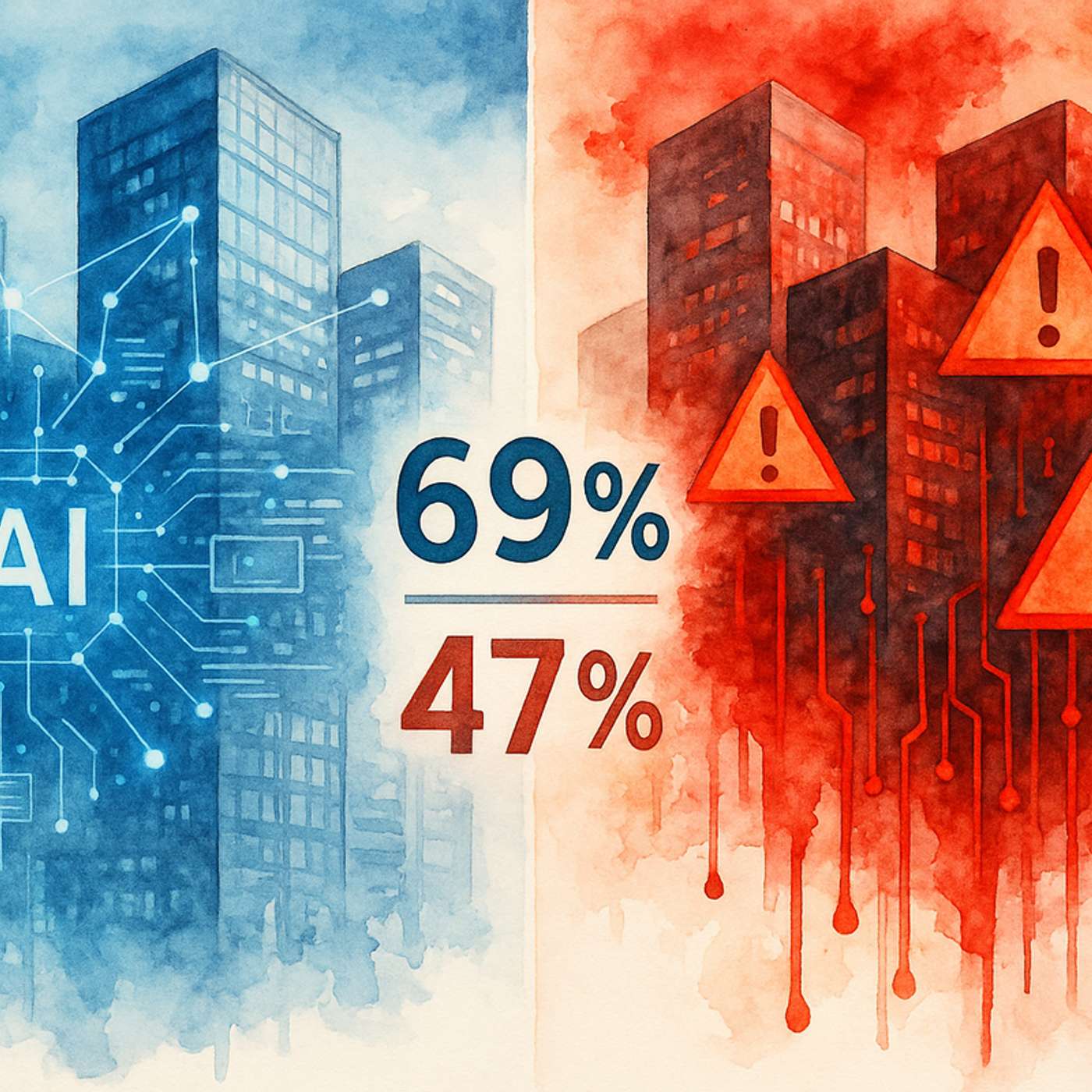
69% of enterprises cite AI data leaks as their top concern, yet 47% have no security controls. This isn't just a gap—it's organizational cognitive dissonance at enterprise scale.
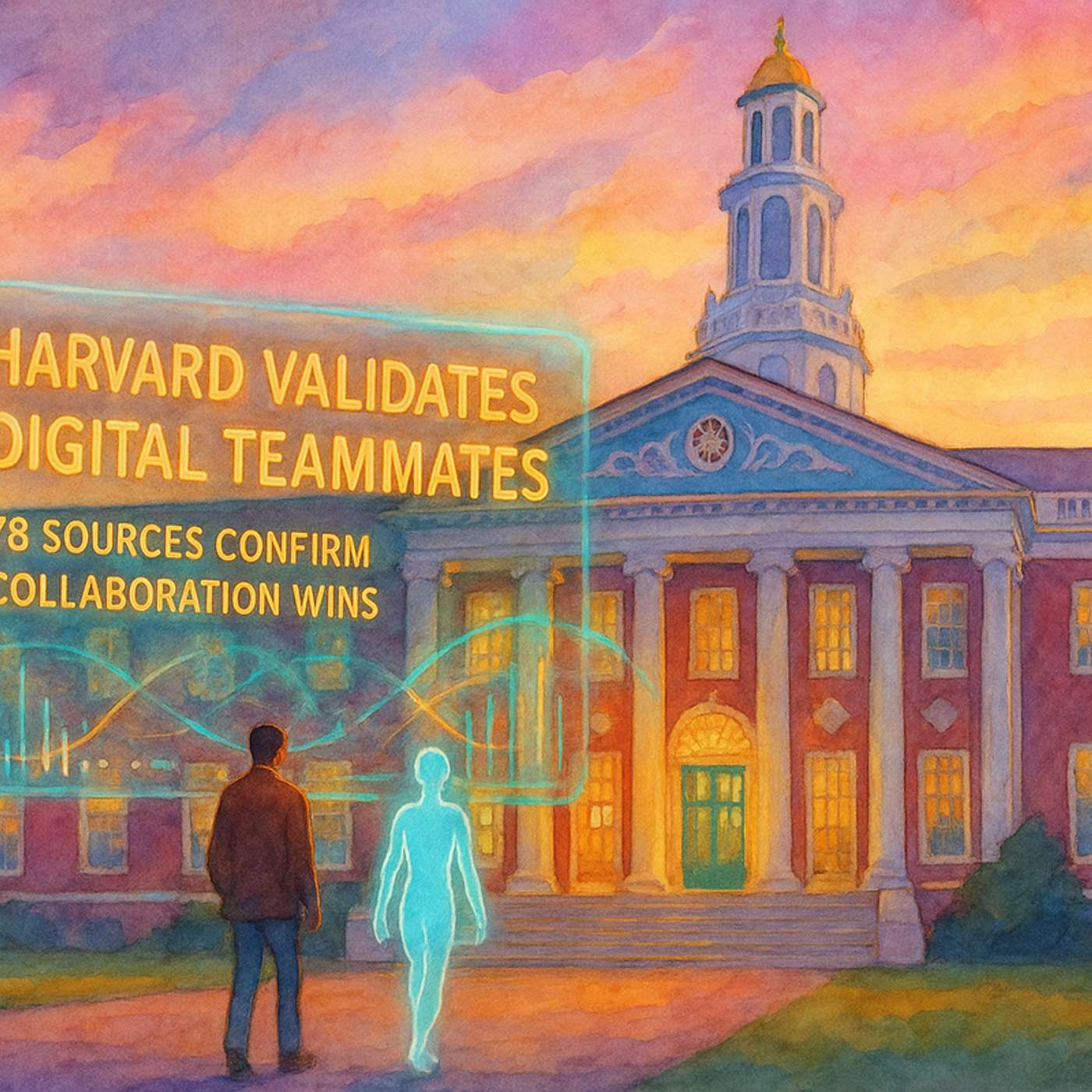
Harvard confirms it: one human with AI matches the output of two without. Backed by 78 academic sources, the research is clear—collaboration beats replacement. Digital teammates aren’t a future concept. They’re today’s competitive advantage.
OpenAI's $40B funding validates AI transformation as competitive necessity. With $644B in global AI spending expected this year, organizations have 18 months to move from pilots to systematic implementation or risk displacement.

Episode DescriptionThe Definitive Collection: How to Lead the Human-First AI Revolution in Your OrganizationThis special comprehensive episode brings together the most profound insights and breakthrough frameworks from Magnus Hedemark's complete body of work on human-centered AI transformation. As Chief Tentacle Officer of Groktopus, Magnus has been documenting the failures of traditional "AI-first" approaches while developing proven alternatives that put humans at the center of technological advancement.In this definitive guide, you'll discover why 42% of AI implementations fail, how worker anxiety and skills gaps are undermining transformation efforts, and most importantly—the practical playbook for getting it right. From the cautionary tales of companies like Duolingo to the success stories emerging from forward-thinking organizations, this episode synthesizes years of research into actionable intelligence for enterprise leaders.Key Topics Covered:The fundamental flaws in "AI-first" thinking and why human-centered approaches consistently outperformHow to navigate the critical 18-month inflection point that will determine competitive advantageThe emerging role of "agent boss" leadership and managing human-AI hybrid teamsProven frameworks for implementation that avoid the costly mistakes plaguing most organizationsWhy your employees are ready for AI transformation—but leadership needs to catch upWhether you're just beginning your AI journey or looking to course-correct existing initiatives, this comprehensive collection provides the strategic foundation every leader needs to build a truly transformative, sustainable AI-enhanced organization.About Magnus Hedemark: Chief Tentacle Officer at Groktopus, independent consultant, and the leading voice on human-first AI methodology. Magnus combines deep enterprise experience with a polymath's perspective to help organizations navigate AI transformation without sacrificing their most valuable asset—their people.

"Just put it in ChatGPT." Those seven words marked the end of her dream job. Now 800 million workers worldwide face the same threat—and their anxiety predicts business failure.

McDonald's AI failed. Yum Brands AI thrived. Same technology, opposite outcomes. The difference? McDonald's tried to replace humans while Yum Brands augmented them. Real proof that human-first AI wins while AI-first joins the 42% failure rate.

Grammarly's $1B bet isn't just about one company—it's a test case for whether AI platforms can scale without losing their human-centered foundation. The next 18 months will reveal if they pass the 3 critical tests that separate transformation success from expensive disasters.
Your AI investments aren't delivering results. New academic research reveals why: only 2% of firms are ready for AI implementation. The problem isn't technology—it's the human-machine interaction skills organizations aren't developing.

Your best workers are burning out—and it's not the workload you think. New survey data reveals the hidden leadership crisis driving 68% of burned-out workers toward the exit.

Comments

Download from Google Play

Download from App Store
 United States