


 Claim Ownership
Grüezi Amerika. Views from the Sister Republic
Subscribed: 21Played: 174
Subscribe

© Copyright 2025 Claudia Franziska Brühwiler
Description
Since January 20, 2025, we are officially in the era of Trump 2.0. But is it, will it be any different from Trump 1.0? And what do the events across the Atlantic mean for us in Europe?
My name is Claudia Franziska Brühwiler, and I am a professor of American Political Thought and Culture at the University of St.Gallen.
This podcast will take a closer look at current events through the lens of American history, politics, and culture. Sometimes, I will keep it short and share with you my analysis, thoughts, or some background story to what is happening. At other occasions, we will hear from guests from across the HSG community and beyond, who give us new insights into US politics, business, culture, and society.
We will look at the US from the perspective of its sister republic Switzerland. We often get hung up on what separates the US from Switzerland, while in fact we share not only great economic relations. Did you know, for instance, that America’s longest serving finance minister was born in Geneva – and one of our past Federal Councillors had fought in the Civil War?
There’s a lot to discover – so I hope you’ll join us!
Cover Art: Anne Fritsch
My name is Claudia Franziska Brühwiler, and I am a professor of American Political Thought and Culture at the University of St.Gallen.
This podcast will take a closer look at current events through the lens of American history, politics, and culture. Sometimes, I will keep it short and share with you my analysis, thoughts, or some background story to what is happening. At other occasions, we will hear from guests from across the HSG community and beyond, who give us new insights into US politics, business, culture, and society.
We will look at the US from the perspective of its sister republic Switzerland. We often get hung up on what separates the US from Switzerland, while in fact we share not only great economic relations. Did you know, for instance, that America’s longest serving finance minister was born in Geneva – and one of our past Federal Councillors had fought in the Civil War?
There’s a lot to discover – so I hope you’ll join us!
Cover Art: Anne Fritsch
35 Episodes
Reverse
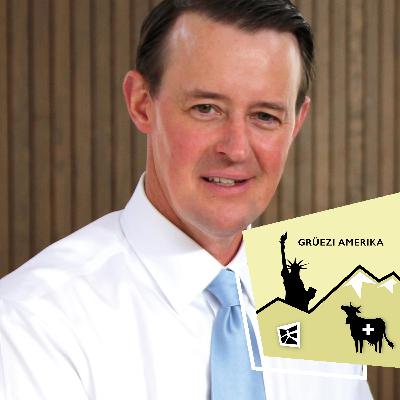
"The Free Market" has been a dominant concept in 20th century political and economic discourse – so dominant in fact that it has remained unquestioned. It has become both ambition and panacea as is reflected by the conditionalities of development banks. Let the "invisible Hand" reign supreme and all shall be well, seems to be the mantra. Yet in the 21st century, even the US right, once stalwart defenders of libertarianism, have fallen out of love with "the free market." We dissect the history of the "free market" with historian Jacob Soll whose recent book "The Free Market: History of an Idea" busts many a myth.Jacob Soll is Professor of Philosophy, History, and Accounting at the University of Southern California. He received a BA from the University of Iowa, a D.E.A. from the École des Hautes Études en Sciences Sociales in Paris, France, and a Ph.D. from Magdalene College, Cambridge University. He has taught at Cambridge University, Princeton University, Rutgers University, and the European University Institute in Fiesole, Italy, and USC. Soll has been awarded numerous prestigious prizes including the Jacques Barzun Prize from the American Philosophical Society, two NEH Fellowships, a Guggenheim Fellowship, and, in 2011, the $500,000 MacArthur "Genius Prize" Fellowship. His book "The Reckoning: Financial Accountability and the Rise and Fall of Nations" (2014) has been a global best seller.
"As Ohio goes, so goes the nation," thus the old saying: Ohio is reputed to be a microcosm of the US. Since 1896, the majority of Ohioans voted for the presidential winner on all but three occasions. The last time the nation decided differently was in 2020 when Trump won Ohio by 8 points but lost overall. Political observers were quick to declare that Ohio was no longer a representative state, ignoring the reasons why the state currently appears solidly red. Generally, Ohio deserves our attention: America’s 7th largest economy, comparable in fact to Switzerland, holds many clues as to what is ailing the nation, as explains guest Chris Redfern.Chris Redfern served as Chair of the Ohio Democratic Party from 2005 to 2014 and was a Member of the Ohio House of Representatives for twelve years. Nowadays, he runs an inn and winery on Lake Erie and dives into both national and state politics on his podcast "Pinot and Politics."

Owning a home, surrounded by a white picket fence – that’s what many consider part of the proverbial American dream. However, Americans are increasingly pessimistic that they will ever become homeowners - they are aware that significantly more people are looking for houses than the market has on offer: there is a shortage of over 4.7 million homes. In addition, nearly a third of American households are “cost burdenend,” meaning that they need to spend at least 30% of their incomes on housing. In Chicago, the third largest city in the US, the percentage is even higher, at 43%. Why has housing become such a thorny subject in a country with abundant land? And how can the housing shortage be addressed?Joshua Bandoch, PhD, is working on this issue as Head of Policy at the Illinois Policy Institute (IPI). Prior to joining IPI, Josh was a Research Fellow at the Competitive Enterprise Institute and a speechwriter for numerous senior government officials. He started his professional career in academia, with postdoctoral fellowships at Brown University and the University of Wisconsin-Madison. He earned his Bachelor’s in Government and Politics from the University of Maryland, College Park, and his Ph.D. in Political Science from the University of Notre Dame. His first book The Politics of Place: Montesquieu, Particularism, and the Pursuit of Liberty (University of Rochester Press, 2017) has received numerous positive reviews. His second book, How to Get What You Want, will come out next year with Simon & Schuster.Further reading: Center for Poverty Solutions Archives - Illinois PolicyAEI Housing Center | American Enterprise Institute - AEI

«I’m in the business of human emotion,» erklärte sie letztens im Podcast ihres Verlobten – ein Business, das sie beherrscht wie niemand zuvor: Taylor Swift ist die erste Person, die mit ihrer Musik allein eine Milliarde Dollar verdient hat; kein Musiker hat mehr American Music Awards gewonnen; als einzige durfte sie viermal einen Grammy für das Album des Jahres entgegennehmen; kein Song auf Platz 1 der US-Charts war länger als das zehnminütige «All Too Well»; und selbst die Podcastepisode mit ihrem Verlobten brach Rekorde. Die Liste mit Swifts Rekorden und Erfolgen liesse sich noch lange fortsetzen und wird wohl mit dem Erscheinen ihres 12. Albums «The Life of a Showgirl» noch weiter fortgeschrieben. Höchste Zeit, sich des Phänomens Taylor Swift anzunehmen!Kaum einer kann einen im deutschsprachigen Raum besser ins «Taylorverse» einführen als der Bamberger Professor Jörn Glasenapp: Der Medienwissenschaftler und bekennende Swiftie befasst sich nicht nur aus musikalischem, sondern gerade auch aus wissenschaftlichem Interesse mit Taylor Swift. Einer breiten Leserschaft vermittelt er in der Reclam-Reihe 100 Seiten, warum Swift mehr ist als Pop und Kommerz.

«This is not who we are – we are good people», war nicht nur Präsident Joe Bidens Reaktion auf Auswüchse politischer Gewalt, sondern ist ein vielgehörter Satz, wann immer es in den USA zu Massenschiessereien oder politischen Attentaten kommt. Seit der Ermordung des Politaktivisten Charlie Kirk dominiert jedoch die Angst vor zunehmender Gewaltbereitschaft: Zwar lehnen in beiden politischen Lager eine überdeutliche Mehrheit der Amerikanerinnen und Amerikaner politisch motivierte Gewalt ab, doch gerade die jüngere Generation droht gegenüber deren Gefahr abzustumpfen. Insbesondere meint mehr als ein Drittel der GenZ, Gewalt sei ein probates Mittel im Kampf gegen politische Rede an Universitäten. Völlig überraschend sind diese Zahlen nicht: «Amerika hat eine Geschichte der Gewalt,» hat Professor em. Dr. Dr. hc. Elisabeth Bronfen jüngst im Bieler Tagblatt erklärt. Diese Geschichte loten wir in dieser Episode von «Grüezi Amerika!» weiter aus.Elisabeth Bronfen war während dreissig Jahren Lehrstuhlinhaberin für amerikanische Literatur und Kultur an der Universität Zürich, und ist nach wie vor Gastdozentin an der New York University. Neben vielen weiteren Auszeichnungen ist sie Ehrendoktorin der Friedrich-Alexander-Universität Erlangen-Nürnberg. Ihr Schaffen geht weit über die Wissenschaft hinaus und reicht von Büchern über die Diva, eine Kulturgeschichte der Nacht bis hin zu einem ersten Roman und mehreren Kochbüchern – ganz neu: «Kochen nach Laune. Meine Stimmungsküche.»LesetippsHerman Melville, The Confidence-Man – auf Deutsch: MaskeradenF. Scott Fitzgerald, The Great Gatsby – Der grosse GatsbyFoto von: Jialu Zhu

2025 is a special year in the history Christianity. Not only is it a holy year for Roman Catholics, it also marks the 500th anniversary of a movement that has its roots in Switzerland. While many took note of the Reformationsjahr 2017, the 500 year-celebration of the reformation, few are aware of the 2.1 million people worldwide who are celebrating an event that took place in Zurich: on January 21st in 1525, people witnessed the first adult baptism, or re-baptism. This marked the beginnings of the anabaptist movement, der Täuferbewegung. Nowadays, only 2000 anabaptists call Switzerland their home. By contrast, more than half a million Americans are anabaptists, with one group having a particular historic bond with Switzerland: the Amish. Founded by Jacob Ammann in the 17th century, the Amish even sound a bit Swiss as they still speak a particular form of German, called Pennsylvania Dutch or Amish Shwitzer. Though a relatively small group, the Amish continue to fascinate Americans as numerous reality TV shows and romantic novels set in Amish country underline. We are exploring Amish history and present with Prof. Steven M. Nolt, the director of the Young Center for Anabaptist and Pietist Studies at Elizabethtown College. He received his Ph.D. in history from the University of Notre Dame and holds a graduate theology degree from Associated Mennonite Biblical Seminary. He is the author or coauthor of sixteen books on Amish, Mennonite, and Pennsylvania German history and contemporary life. His titles include The Amish: A Concise Introduction (Johns Hopkins University Press, 2016) and People of Peace: A History of the Virginia Mennonite Conference (Masthof Press, 2025), with Elwood Yoder. With Donald Kraybill and Karen Johnson-Weiner, he wrote The Amish (Johns Hopkins University Press, 2013), the definitive study of Amish society and cultural diversity.Further linksAmish Studies at the Young Center for Anabaptist and Pietist Studies
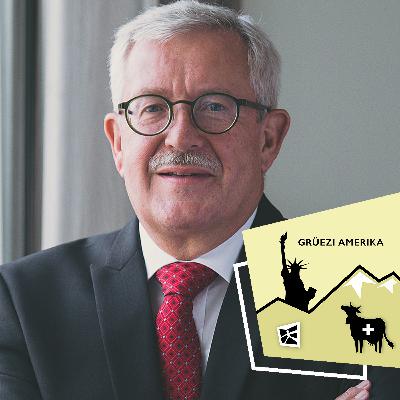
39 Prozent. Ausgerechnet am Vorabend des Schweizer Nationalfeiertags verkündete die Regierung Donald J. Trumps, dass die Schweiz seinen «Zollhammer» zu spüren bekommt und nur vier andere Länder mit noch höheren Zöllen auf Exporte in die USA konfrontiert sind. Die Tageszeitung «Blick» färbte die Titelseite schwarz, es hagelte Anschuldigungen gegen Bundespräsidentin Karin Keller-Sutter und ihr Verhandlungsteam, man habe zu wenig keck und mutig verhandelt, privatwirtschaftliche Netzwerke ungenügend genutzt. «Schwesterrepublik» Amerika? Daran glauben im Moment wohl nur wenige Schweizer.Einer, der auch nach seiner Zeit als Botschafter in Washington, D.C., gerne über die Idee der Schwesterrepubliken spricht und nachdenkt, ist Martin Dahinden: Der promovierte Betriebswirt wirkte von 2014 bis 2019 in der amerikanischen Hauptstadt und traf mehrfach mit Präsident Trump zusammen. Zuvor war er Chef der Direktion für Entwicklung und Zusammenarbeit (DEZA) und hatte Stationen in Frankreich, Nigeria sowie bei der UNO in New York hinter sich. Schon bei seinem Eintritt in den diplomatischen Dienst 1987 war er unter anderem Mitglied der Schweizer Delegation beim Allgemeinen Zoll- und Handelsabkommen GATT (General Agreement on Tariffs and Trade) und in der Folge Direktor des Internationalen Zentrums für humanitäre Minenräumung in Genf (GICHD). Wir sprechen mit ihm über die Zollverhandlungen, die Veränderungen zwischen Trump 1.0 und 2.0 – und die weiteren Perspektiven der Schweiz.
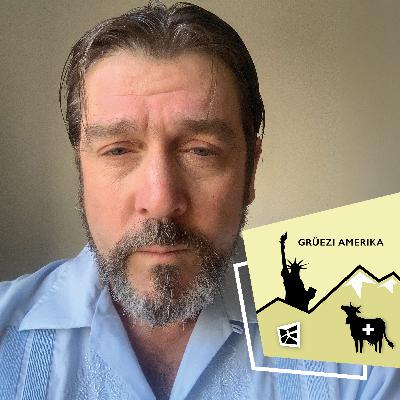
Schlagzeilen über Amerikas Politik und Gesellschaft sind meist laut und schrill, besonders seit Donald J. Trumps zweitem Amtsantritt. Und sie sind paradoxerweise lauter und schriller diesseits des Atlantiks, wie auch der freie Journalist und Autor Marc Neumann bemerkt. In seinen Beiträgen, u.a. für die Neue Zürcher Zeitung und seinen LinkedIn-Blog Neumanns Whisper, fokussiert er stattdessen auf die Realität hinter den vereinfachenden Erzählungen und horcht auf die Zwischentöne. Im Gespräch mit «Grüezi Amerika!» teilt Marc Neumann seine Eindrücke, nicht nur zur Lage der Nation, sondern auch zu deren Beurteilung durch das deutschsprachige Europa.Marc Neumann hat ursprünglich an der Universität St.Gallen Philosophie, Deutsche Literatur und Linguistik studiert. Zudem hat er ein Master-Studium in Sozialanthropologie an der New York University (NYU) abgeschlossen. Nach langjähriger Tätigkeit in der Unternehmenskommunikation in der Schweiz und in den USA hat er sich als Journalist selbständig gemacht und schreibt für verschiedene deutschsprachige Medien. Zuletzt befasste er sich mit der medialen Verklärung von Luigi Mangione, der den CEO von United Health Care mitten in Manhattan erschoss.Marc Neumanns Lesetipps:Racket News The DispatchMarc Neumann auf LinkedIn
American Compass is, at 5 years, a relatively young think tank, but it has already become well-known for mapping an alternative to right-wing economic orthodoxy. Its founder, Oren Cass, has tirelessly explained the reason why American Compass believes the US economy – and, above all, US workers, will benefit from an overall tariff of 10 percent and why the initial pains will be rewarded with substantial gains. Vice President JD Vance has embraced the course of American Compass, Secretary of State Marco Rubio has contributed to its publications and events, and Senator Josh Hawley (Missouri) is among its many supporters. What do these New Conservatives, as the title of their new book goes, want? What is their vision beyond economic protectionism? We are tackling these questions with American Compass policy director, Chris Griswold. Before joining the think tank, he was a senior advisor in the U.S. Senate Committee on Small Business and Entrepreneurship and Deputy Chief of Staff, U.S. Representative Tom MacArthur (New Jersey). Before working on Capitol Hill, Griswold helped launch and run a nationwide youth development nonprofit in South Africa. He is a graduate of Princeton Theological Seminary (M.Div.) and Wheaton College.LinksRerum Novarum: Rerum Novarum (May 15, 1891) | LEO XIII"In God They Trust: Understanding the Catholic Moment in American Politics" by Claudia Brühwiler
We already seem to have forgotten it, but it has only been weeks that President Donald J. Trump federalized the National Guard to re-establish order in the city of Los Angeles amidst protests against deportations of undocumented immigrants. What L.A. mayor Karen Bass and California’s Governor Gavin Newsom condemned as a presidential abuse of power, Republican lawmakers in California considered a necessary step to prevent further escalation. Few issues are as divisive in US politics as immigration – and on few issues do voters see so little progress and true reform. What is the situation at the border really like? What steps could and should Congress take to reform the migration system? We discuss these questions with Kristie De Peña, Senior Vice President for Policy and Director of Immigration Policy at the Niskanen Center, a think tank headquartered in Washington, D.C. Before joining Niskanen Center, Kristie held various positions in the public and nonprofit sectors. She earned her LL.M. in national security and foreign policy from George Washington University School of Law and her law degree (J.D.) from the University of Iowa College of Law. De Peña has written for various media outlets, including The New York Times and Time magazine, and is frequently cited in, CNBC, The New York Times, USA Today, Bloomberg, Newsweek, and others. She was named one of the most influential people shaping policy in 2024 by the Washingtonian.Reading recommendation: "In Our Interest: How Democracies Can Make Immigration Popular" by Alexander Kustov.
Today, Americans celebrate the signing of the Declaration of Independence in 1776 - or do they? As you can suspect from such a rhetorical question, the answer is "not quite." In fact, the Declaration of Independence was adopted on July 4, 1776, but it was only signed later, on August 2, 1776. In this very short episode, we take a look at the history of Independence Day.Further reading: The Declaration of Independence
It’s one of America’s most popular political myths: the idea that George Washington considered the Senate necessary as a “legislative cooling saucer.” Just as tea or coffee had to be poured on the saucer to get its temperature down, the Senate was needed to reflect on legislation and be the wiser of the chambers. The idea seems more appealing today than ever, but one wonders how much the Senate still lives up to its wise reputation. With 53 seats, the Republicans are the majority, making a net gain of four seats in the 2024 election. We are in luck that one of the key architects of the victorious campaign is a guest at this year’s St.Gallen Symposium and can take us behind the scenes of the US Senate: Jason Thielman.Jason Thielman is the Principal Founder of S2R Public Affairs. He previously served as Chief of Staff to Senator Steve Daines, a member of the United States Senate Committee on Foreign Relations. During the 2024 election cycle, he was Executive Director of the National Republican Senatorial Committee (NRSC), where he played a pivotal role in securing the Republican Senate majority.

Since the early 18th Century, an estimated 300,000 Swiss emigrated across the Atlantic and settled in the United States. Thus, more than a million American citizens claim Swiss roots. There’s hardly a place that more proudly celebrates its Swiss ancestry than a small town in Wisconsin: New Glarus. Founded in 1845, the town was founded by emigrants from the Canton of Glarus with which it maintains a close bond. If you are craving for Rösti or the – so we are told – best beer of the region, New Glarus is the place that serves it all! Bekah Stauffacher helps preserve the Swiss spirit of New Glarus: an archeologist by training and a graduate of the University of Wisconsin-Madison, she is the president and CEO of The Swiss Center of North America, a nonprofit organization located in New Glarus, Wisconsin, that shares the stories of the Swiss in America and Canada through its museum and archives.

It was a watershed moment: Vice President JD Vance’s speech at this year’s Munich Security Conference shook European observers. Instead of reaffirming transatlantic ties, the Vice President scolded European governments for what he perceived as the marginalization of dissident voices. The Oval Office confrontation between Presidents Zelenskyj and Trump further fanned fears that the United States might abandon its long-time commitment to European security. And, most recently, a Signal chat between Cabinet members further revealed a disconcerting level of disdain for Europe. While anti-American reflexes are nothing new in transatlantic relations, many observers consider anti-Europeanism as a new phenomenon. But is that true? What might be historical precursors of Trump’s foreign policy? And are we indeed witnessing a transatlantic divorce?Jack Thompson is the perfect person to the current changes in foreign policy as his career not only crisscrosses the Atlantic but also practice and academia: prior to joining the University of Amsterdam as a Lecturer in American Studies, he worked as a Team Head and Senior Researcher at the Center for Security Studies, ETH Zurich, Senior Strategic Analyst at The Hague Centre for Strategic Studies, and Lecturer at The Clinton Institute, University College Dublin. His first monograph, Great Power Rising: Theodore Roosevelt and the Politics of U.S. Foreign Policy (Oxford University Press), won the 2020 Theodore Roosevelt Association Book Prize. He also co-edited three books, including Progressivism in America: Past, Present, and Future (Oxford University Press). He holds a Ph.D. in history from the University of Cambridge and a M.A. in American Foreign Policy and International Economics from The Johns Hopkins University SAIS.Links to recommended podcasts:The Ezra Klein Show, ‘The Ezra Klein Show’ - The New York TimesKnow Your Enemy, Know Your Enemy Archives - Dissent MagazineRoss Douthat, "Interesting Times," Opinion | Introducing ‘Interesting Times’ - The New York TimesThe Joe Rogan Experience, JRE - 10 Years in ReviewTheo Von, This Past Weekend, Theo Von - YouTubeSteve Bannon's War Room, „Bannon`s War Room“-Podcast –Apple Podcasts
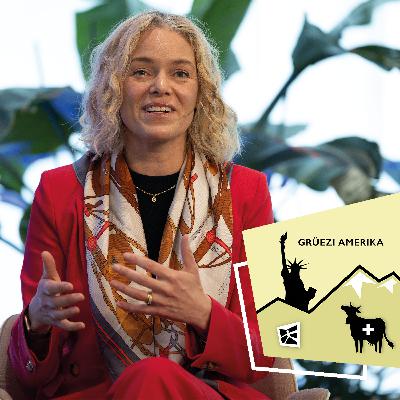
For Europeans, they are a staple of their media habits: public media. Whether it’s the grand old lady BBC in the United Kingdom, or the many different stations run by Switzerland’s SRG/SSR, many Europeans rely on public broadcasting for news and entertainment. According to the EU, 48% of its citizens select public TV and radio stations as a news source they trust most. While funding cuts are not unknown to European public broadcasters, few are subject to constant political battles as seen in the United States: since they went on air in the 1970s, Public Broadcasting Service (PBS; 1969) and National Public Radio (NPR; 1970) have always been under scrutiny by Republican presidents. Now, President Donald J. Trump has issued an executive order to withdraw federal funding entirely. What does this mean for public media in the United States? We discuss this with none other than NPR’s CEO, Katherine Maher.Katherine Maher has served as President and CEO of National Public Radio since 2024. She also worked for seven years as CEO of the Wikimedia Foundation, and before gained experience at Access Now, the World Bank, the National Democratic Institute, and UNICEF. Alongside numerous other engagements, Ms Maher is the Chair of the Board of Signal Foundation, and from 2022 to 2024 served as an advisor to the U.S. Secretary of State's Foreign Affairs Policy Board regarding issues of technology, governance, and human rights. In 2023, she was briefly the CEO of Web Summit and served on its Board of Directors. Katherine Maher holds a degree in Middle Eastern and Islamic studies from New York University.We thank the St. Gallen Symposium for making this episode possible.
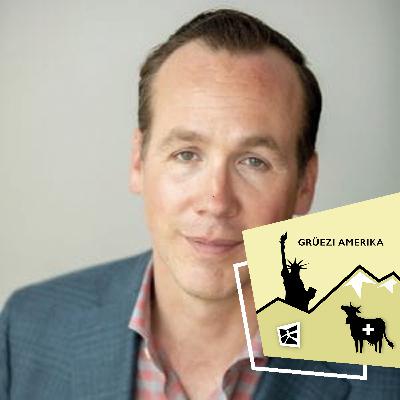
Few Harvard professors have been as outspoken against the Trump Administration’s attack against their University as he has: Ryan Enos has spoken at rallies, given interviews, and written in defense of academic freedom. This isn’t a new quest for him, as he was critical of Harvard’s leadership in the wake of October 7. We take Professor Enos’s attendance of the St.Gallen Symposium as an opportunity to discuss the state of the union, and of the Democratic Party in particular.Professor Enos’ research is situated at the intersection of psychology, geography, and politics in the United States and other countries. He is Professor of Government and Director of the Center for American Political Studies (CAPS), Working Group on Political Psychology and Behavior (WoGPop), and the Harvard Digital Lab for the Social Sciences (DLABSS). Before joining Harvard University, he graduated from the University of California, Berkeley, and received his PhD from the University of California, Los Angeles (UCLA). His first book, The Space Between Us: Social Geography and Politics (2017), won the American Political Science Association Experimental Research Section Best Book Award. Recommendations:John R. Zaller, The Nature and Origin of Mass Opinion, The Nature and Origins of Mass OpinionDaniel J. Hopkins, The Increasingly United States, The Increasingly United States: How and Why American Political Behavior Nationalized, HopkinsJim Sidanius & Felicia Pratto, Social Dominance, Social Dominance | Cambridge University Press & Assessment

Disney turned its beloved Snow White into a live action movie – and no one seems happy: some criticize the casting with a Latina star whose skin is not “white as snow,” while others take issue that the color of skin is a topic of controversy at all. And then there’s the problem of the seven dwarves who are, this time around, not dwarves at all which, again, doesn’t please anyone either. The list goes on, and it is exemplary of the way some movies get caught up in the U.S. culture wars. But is this an entirely new phenomenon? How political is Hollywood these days? And might the studios be reigned in by the Trump Administration?We dive into these questions with Suzanne Enzerink, HSG’s Assistant Professor of American Studies. A Dutch native, she did most of her American Studies coursework at the University of Groningen, with an exchange at the University of North Carolina at Chapel Hill, before pursuing a PhD at Brown University. Before joining HSG, she served as an Assistant Professor at American University in Beirut. Her first book, Give Me Color, is scheduled to appear later this year.Suggestions:The ApprenticeAdolescence90 Day Fiancé "Hollywood's Embassies How Movie Theaters Projected American Power Around the World"
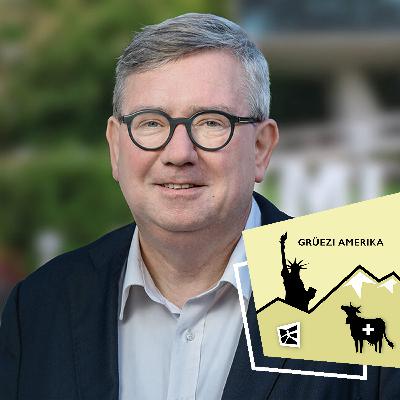
Many tried to predict what Donald J. Trump’s first 100 days in office would amount to. The best advice stemmed from Karl Rove, long-time Republican strategist and political legend: “Buckle up, buttercup!” And yes, a wild ride it has been, particularly since “liberation day” which brought tariffs for America’s friends and foes alike, even uninhabited islands. While some have dismissed Trump’s economic agenda as sheer madness, others claim to detect method and believe it all part of a larger plan to plunge the US into recession. But is there any truth to these claims? What to make of the economic rollercoaster we have been dragged onto by Trump?Generations of HSG students have been introduced to international economics by Professor Simon J Evenett who will kindly give us a survey in Rollercoaster Economics. After nearly two decades at the University of St.Gallen, Simon Evenett has joined IMD as Professor of Geopolitics and Strategy. He also serves as Co-Chair of the World Economic Forum’s Global Future Council on Trade and Investment and he founded the St Gallen Endowment for Prosperity Through Trade (SGEPT). SGEPT currently hosts three leading independent commercial policy monitoring initiatives: the Global Trade Alert, a key resource for trade monitoring and assessing trade tensions, the New Industrial Policy Observatory, and the Digital Policy Alert. Launched in 2023, Evenett created the Crux of Capitalism initiative which provides valuable insights into the performance of firms and sectors in 21 major economies. Additionally, he has served as a World Bank official twice, on the UK Competition Commission, was a Member of the Trade and the Economy Panel at the UK Department of International Trade, and has sat on several high-profile commissions relating to the future of world trade.

“But – it can’t happen here!” many Americans asserted in light of the Nazi takeover in Germany. Novelist and muckraker Sinclair Lewis ran with this line and sentiment, outlining a scenario in It Can’t Happen Here (1935) in which it did happen: an authoritarian turn in the United States. Similarly, Philip Roth imagined The Plot against America (2004) in which Franklin Delano Roosevelt would lose the election to “America First Committee” candidate Charles Lindbergh. Scholars and journalists now claim that it has indeed happened here and the plot against America was successful. The “coup from within” succeeded in ringing in “technofascist” age. Is all hope lost?We discuss these different diagnoses of the present political moment with the first “repeat offender” on the podcast, political theorist Lee Trepanier. Professor Trepanier joined Assumption University in July 2024 as the Dean of the D’Amour College of Liberal Arts & Sciences. Previously, he was Chair and Professor of Political Science at Samford University in Birmingham, Alabama, which he joined after serving in the same roles at Saginaw Valley State University in Michigan. With a PhD from Louisiana State University, he established himself as a specialist of Eric Voegelin and has published extensively on conservative thought in the USA and beyond, with books on Canadian Conservative Political Thought (co-edited with Richard Avramenko) and on political conversion in Walk Away: When the Political Left Turns Right (co-edited with Grant Havers).

Emil Frey (1838-1922) war bislang nicht nur der einzige Bundesrat aus dem Kanton Basel-Land, sondern auch – laut der NZZ – «der abenteuerlichste Bundesrat, den die Schweiz je hatte»: Ausgerechnet im amerikanischen Schicksalsjahr 1860 reiste er gemeinsam mit seinem Cousin in die USA, ursprünglich, um sich als Agronom weiterzubilden. Letztlich blieb er fünf Jahre, um im Bürgerkrieg für die Nordstaaten zu kämpfen. Bei Gettysburg geriet er als Major in Kriegsgefangenschaft. Ein Stoff, der in den USA verfilmt würde – in der Schweiz wurde er zum Roman: «Der Amerikaner im Bundesrat. Stationen im Leben des Emil Frey» von Markus Wüest, mit dem wir über diesen ungewöhnlichen Wanderer zwischen den Welten sprechen. Markus Wüest ist Mitglied der Chefredaktion der Basler Zeitung, pendelte mehr als drei Jahrzehnte lang zwischen Basel und Maine, und arbeitet mittlerweile an seinem vierten Roman. Die ersten drei sind allesamt beim Verlag Zytglogge erschienen, darunter jener zu Emil Freys Leben. Diese Episode wurde live am OPEN SQUARE der Universitität St.Gallen am 22. März 2025 aufgenommen.

Comments

Download from Google Play

Download from App Store
 United States