


Happy Space Podcast with Clare Kumar
Subscribed: 7Played: 126
Subscribe

© Streamlife Ltd.
Description
🙂 Welcome to the Happy Space® Podcast where we explore the intersection of productivity & inclusivity through the lens of a highly sensitive productivity coach, speaker, and brand collaborator - that's me!
Tune in for conversations with authors, culture-shapers, space designers, and creators of products, services, and customer experience as we highlight astonishing contributions tempting a more tender world.
We know that diversity leads to richer results, so let’s accept that #productivityispersonal and commit to designing with greater respect for humanity.
I aim to leave you with ideas to better support your colleagues, customers, community, and not least of all, yourself and those who matter most. For, everyone, including you, deserves a Happy Space.
🙂 If you or someone you know will enjoy exploring this topic with a supportive community, check out or share https://www.HappySpacePod.com
🙂 If you're wondering if you might be an HSP, take the HSP quiz at https://clarekumar.com/hsp-quiz/
🙂 sign up for Clare's the Happy Space "museletter" - a monthly email full of good stuff about productivity & inclusivity
🙂 Find out more about your host at https://clarekumar.com/
Tune in for conversations with authors, culture-shapers, space designers, and creators of products, services, and customer experience as we highlight astonishing contributions tempting a more tender world.
We know that diversity leads to richer results, so let’s accept that #productivityispersonal and commit to designing with greater respect for humanity.
I aim to leave you with ideas to better support your colleagues, customers, community, and not least of all, yourself and those who matter most. For, everyone, including you, deserves a Happy Space.
🙂 If you or someone you know will enjoy exploring this topic with a supportive community, check out or share https://www.HappySpacePod.com
🙂 If you're wondering if you might be an HSP, take the HSP quiz at https://clarekumar.com/hsp-quiz/
🙂 sign up for Clare's the Happy Space "museletter" - a monthly email full of good stuff about productivity & inclusivity
🙂 Find out more about your host at https://clarekumar.com/
73 Episodes
Reverse
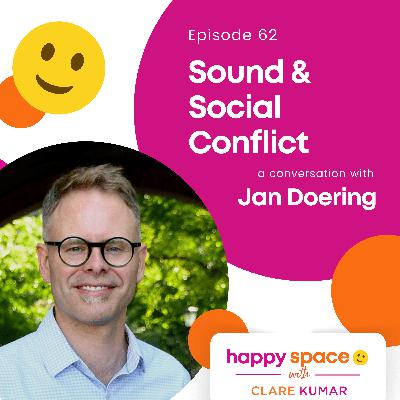
Jan Doering, Assistant Professor of Sociology at the University of Toronto explores the complex relationship between sound, behavior, and social conflict, unpacking the social, cultural, and neurological dimensions of sound, and discussing how we can move toward a more considerate coexistence in our shared environments.Sound that delights one person can deeply distress another. Clare and Jan explore how our appreciation of sound is deeply subjective and why this gap often turns into tension in urban life. Through examples from everyday environments, they discuss how noise reflects culture, how it can become a form of power and resistance, and why some people respond to it with frustration or even aggression.The conversation challenges policymakers, urban planners, and designers to take sound seriously as an issue of well-being issue and accessibility, highlighting how neurological safety and collective responsibility can help create more peaceful and inclusive soundscapes.Clare and Jan also reflect on the deeper psychological and emotional layers behind how we relate to sound, revealing that finding peace in a noisy world might start with changing how we listen.Jan Doering is an Assistant Professor of Sociology at the University of Toronto. His research explores social control and conflict in urban neighborhoods, as well as how individuals experience and respond to discrimination. He has received research funding from the National Science Foundation, the Fulbright Commission, and the Social Sciences and Humanities Research Councils.His first book, “Us Versus Them: Race, Crime, and Gentrification in Chicago Neighborhoods” (Oxford University Press, 2020), examines the dynamics of community conflict and identity during the era of Trayvon Martin and Michael Brown.Key TakeawaysHearing is a sense we cannot turn off, making sound a constant, shared experience.Noise is not just about volume - there are more elements to consider Urban “vibrancy” often comes at the expense of rest and recovery, highlighting a policy blind spot.Municipalities, designers, and leaders can promote neurological safety by designing environments that support well-being and reduce sensory stress.CHAPTERS03:00 Introduction06:05 Tension Around Noise09:10 Defining Noise and Perception12:16 Reframing Noise Experiences18:05 Joy in Noise: Machines and Gender22:18 Noise and Cultural Responsibility29:08 Government and Policy Failures36:50 Consequences of Noise Stress45:50 Allergic to Peace?51:31 Sadism, Pleasure, and Noise-Making Behavior58:45 Emotional vs. Intellectual Arguments for Quiet01:04:40 Density, Well-being, and Cultural Vision01:08:00 Creative Solutions and Happy SpacesSourcesClamor by Chris Berdik — https://www.chrisberdik.comGolden: The Power of Silence in a World Full of Noise by Justin Zorn & Leigh Marz — https://www.amazon.com/Golden-Power-Silence-World-Noise/dp/0063027607Just Think: The Challenges of the Disengaged Mind – Wilson, T.D. et al., Science (2014) — https://pmc.ncbi.nlm.nih.gov/articles/PMC4330241Epstein, M. J. (2020). Sound and noise: A listener's guide to everyday life. McGill-Queen's Press-MQUP....
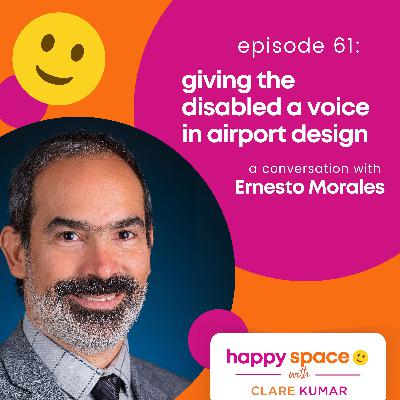
Dr. Ernesto Morales discusses evidence-based research for accessible airports and airplanes, emphasizing co-design, sensory needs, and the need for accountability in aviation accessibility.In episode 61 of the Happy Space Podcast, I spoke with Dr. Ernesto Morales, Full Professor at Université Laval, about two federally funded projects on accessible aviation in Canada. One focuses on airport accessibility, while the other addresses aircraft lavatories. Ernesto shares how involving 72 participants with diverse disabilities through walking interviews and mockups helped surface nuanced barriers and identify improvements. We also discuss the challenges of coordination between stakeholders, the need for sensory-friendly spaces, and the importance of dignity in travel. Ernesto stresses the value of co-design and inclusive research methods, calling for regulatory clarity and deeper accountability in delivering equitable air travel experiences.Ernesto Morales studied architecture and finished a Masters’ Degree in Industrial Design in Mexico City. He obtained a grant from the Government of Mexico to study his Ph.D. in Design at the Faculté de l’aménagement, of the University of Montreal. He did his first post doc in “Environmental Gerontology” at the Research Centre from the Institut universitaire de gériatrie de Montréal and a second post-doc at the Research Centre for Innovation in Health Care at Utrecht, the Netherlands on “Healing Environments”. He is Full Professor at the School of Rehabilitation Sciences of the Faculty of Medicine at the Universté Laval and he is a Researcher at the Centre interdisciplinaire de recherche en réadaptation et intégration sociale in Quebec City. He is also a member of the Quebec government's Advisory Committee on Accessibility and Safety of Buildings for Persons with Disabilities. His research interests fall into the following areas: Inclusive design and adaptation of the physical environment. Design solutions to improve the quality of life of people with permanent or temporary disabilities (either cognitive, motor or sensory) in terms of objects, home spaces or urban design. Working and care environments in health institutions (acute and long-term care) and accessibility in emergency situations.CHAPTERS[00:00] Meeting Ernesto Morales and Project Overview[02:00] Walking Interviews at Airports[04:00] Designing Solutions Collaboratively[06:00] Challenges in Airport Coordination[08:00] Public and Private Reporting[09:00] Ernesto’s Personal Motivation[11:00] Co-Design as a Core Practice[13:00] From Heritage Sites to Airports[14:00] Merging Qualitative and Quantitative Data[16:00] Why Canada is Leading in Accessibility[18:00] Federal and Ministry Involvement[20:00] Autism, Sensory Input, and Airport Design[23:00] Stress at Security Checkpoints[26:00] Benefits of Hidden Disability Lanyards[28:00] Advertising and Sensory Overload[30:00] Sensory Zones, Not Just Rooms[33:00] Washroom Accessibility and Service Dogs[36:00] Dignity in Air Travel[38:00] Future Reports and Timelines[39:00] Centralizing Responsibility for Accessibility[41:00] Systemic Change Through Procurement and TrainingLINKSRick Hansen Accessibility CertificationAccessibility Standards CanadaAirports Quebec CityCalgary Airport Ernesto’s WebsiteIMAGE CREDITS (see images on Youtube video)LOGO - Hidden Disabilities SunflowerPlane Mockup Photos -...
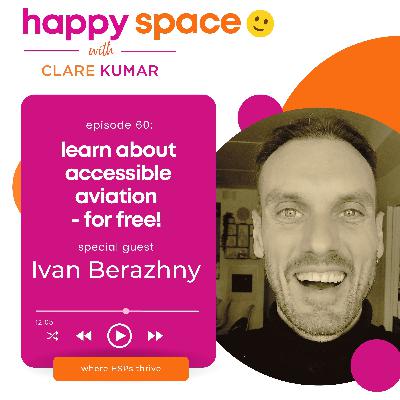
Ivan Berazhny, Senior lecturer at Haaga-Helia University of Applied Sciences and accessibility advocate, shares how INCLAVI, an EU-funded initiative, equips aviation professionals with certified training to better support diverse travellers across the full journey.In this episode of the Happy Space Podcast, host Clare Kumar speaks with Ivan Berazhny, Senior lecturer at Haaga-Helia University of Applied Sciences, about INCLAVI, an EU-funded initiative to improve accessibility in aviation and tourism. Ivan shares the development of a free, multi-module training curriculum designed to educate industry professionals on best practices for supporting travellers with disabilities. Built through a wide consortium of partners, the program covers the full travel journey, from planning to post-arrival, and includes accredited modules with formal certification. During the conversation, they explore the importance of language in accessibility, the value of humility in learning, and the potential to apply this framework across industries.Ivan Berazhny is a senior lecturer at Haaga-Helia University of Applied Sciences (Finland), where Ivan has been developing and leading research projects and courses on topics including leadership, entrepreneurship, aviation business environment, corporate social responsibility and others. Prior background includes studies of international economic relations, communication, and vocational pedagogy. Ivan also holds several professional certifications in aviation and hospitality industries.In Haaga-Helia, Ivan has been engaged actively in curriculum development, export of education, RDI cooperation with industry partners, internationalisation, and other activities. Particularly, Ivan is committed to advocate inclusive society for people with disabilities.CHAPTERS00:00 – Introduction and Welcome02:15 – Origins of the INCLAVI Project05:45 – Building a Practical, Multi-Stakeholder Curriculum10:10 – Implementation and Early Impact14:05 – Language, Translation, and Accessibility17:30 – Clarifying Terms: Accessibility vs. Inclusion21:00 – Beyond Labels: Focusing on Needs24:40 – Expanding Awareness Through Storytelling27:50 – Encouraging Curiosity in Accessibility30:25 – Ivan’s Happy SpaceLINKSFor active links, visit www.clarekumar.com/podcastIMAGE CREDITS (see images on Youtube video)Mediterranean Sea Video - CanvaHorizon Video - CanvaLearn more about and follow Ivan:Haaga-Helia UniversityINCLAVI (Inclusive aviation curriculum) Hidden Disabilities Sunflower program😀😃😄😁😆Everyone deserves a Happy Space. It might sound frivolous, but what I’m talking about is creating environments for each person to be able to perform at their best. Too often, people are invited to burn out or opt out of spaces, cultures, or experiences that are at best uncomfortable and at worst, toxic. Inclusion is a design opportunity. I hope to shine a light on those craftive more inclusive spaces, cultures, and experiences, leading the way to a more hospitable world because everyone deserves a Happy Space.Believing that productivity is personal, the podcast is produced in a variety of formats so you can enjoy it in the medium you prefer:Listen to the audio right here or on your fave podcast platform.If you prefer to watch video, check out the episode on YouTube. And look for the Shorts playlist for clips.If you prefer to read, please see the...

Leadership expert Jason Lauritsen tackles the question of whether we really need check-in meetings addressing barriers like discomfort, skill gaps, and the drive for workplace efficiency. Don’t miss the four key steps for effective check-ins.In this episode of the Happy Space Podcast, Clare speaks with leadership expert Jason Lauritsen about the role of check-in meetings. They explore why regular, intentional conversations between leaders and team members matter—not just for accountability, but for connection and well-being. Too often check-in meetings are discarded in the belief they are not serving real value. But it is perhaps because they are not being well implemented. Jason offers an easy-to-implement process for delivering check-ins that make a difference, making them more comfortable and worthwhile. The episode invites leaders to slow down, get curious, and prioritize relationships as the foundation for more human and productive work environments.A dynamic keynote speaker, Jason Lauritsen is a true thought leader in the world of work and employee engagement dedicated to revolutionizing the way we Lead With Relationship™.He fearlessly challenges traditional norms to reshape the employee experience by consistently placing authentic human connection at the heart of leadership.Jason is the author of two books, Unlocking High Performance and Social Gravity. His thought leadership has been featured in Forbes, Fast Company, Talent Management magazine, HR Executive magazine, and SHRM publications.CHAPTERS00:00 – Intro: The Power of Conversation03:30 – What’s Driving Interest in Check-Ins?07:50 – Relationship Building is the Work11:45 – The Four Steps of an Effective Check-In18:10 – Frequency & Flexibility: What Works Best?24:00 – Making Space for Connection in Hustle Culture28:40 – The Role of Comfort in Performance34:15 – Relearning How to Connect Post-Pandemic40:00 – Final Thoughts & How to Connect with JasonLINKSIMAGE CREDITS (see images on Youtube video)WorkHuman Logo - WikipediaLearn more about and follow Jason:LinkedinYoutubeWebsite😀😃😄😁😆Everyone deserves a Happy Space. It might sound frivolous, but what I’m talking about is creating environments for each person to be able to perform at their best. Too often, people are invited to burn out or opt out of spaces, cultures, or experiences that are at best uncomfortable and at worst, toxic. Inclusion is a design opportunity. I hope to shine a light on those craftive more inclusive spaces, cultures, and experiences, leading the way to a more hospitable world because everyone deserves a Happy Space.Believing that productivity is personal, the podcast is produced in a variety of formats so you can enjoy it in the medium you prefer:Listen to the audio right here or on your fave podcast platform.If you prefer to watch video, check out the episode on YouTube. And look for the Shorts playlist for clips.If you prefer to read, please see the transcript below.Ready to learn more, or want to find out more about coaching with Clare or hiring her for your next engaging event? Contact Clare here.😀😃😄😁😆If you enjoyed this episode, please leave a heartfelt review as this will help other listeners discover the podcast. Please invite your colleagues, friends, and family to listen as well. Together we can design a more inclusive world where everyone can make...

In this episode, Happy Space Podcast host, Clare Kumar, speaks with Kay Sargent, principal designer at HOK, about their latest release, Neuroinclusive Workplace Design. Clare and Kay discuss the need to move beyond universal design toward more inclusive, actionable strategies for creating workspaces that support diverse sensory and cognitive needs. The conversation explores the evolution of language around neurodiversity, the importance of continual learning, and the challenges of designing spaces that acknowledge human complexity. Kay emphasizes that thoughtful, inclusive design benefits everyone by removing barriers and enabling people to perform at their best.BIOWith 35 years of experience, Kay is a recognized expert on workplace design and strategy. She is an award-winning designer who has worked with Fortune 500 companies to optimize their global real estate portfolios and create innovative work environments. As director of HOK’s WorkPlace team, a practice that supports organizations undertaking multiple projects in various locations, and a member of HOK’s Board of Directors, Kay is responsible for helping clients redefine how, when, and where their people work, working in tandem to support a holistic design approach that integrates an organization’s people, processes and technology.Kay is considered an industry thought leader in the workplace. She has authored multiple white papers and articles on topics including well-being; the next-gen workforce; technologies’ impact on the workplace; space fusion and the rise of the human factor.CHAPTERS00:00 Introduction to Sensory Processing and Cognitive Wellbeing00:22 Guest Introduction: Kay Sargentfrom HOK01:03 The Inspiration Behind Neuroinclusive Workplace Design01:44 Practical Applications of Neuroinclusive Design01:58 Exploring Sensory Sensitivity and Inclusive Design02:32 The Importance of Intersectionality in Design03:50 The Launch of NeuroinclusiveWorkplace Design04:45 The Journey of Writing the Book07:02 Challenges and Evolution in Workplace Design08:40 Understanding Neurodiversity and Sensory Sensitivity13:22 Inclusive Design vs. Universal Design15:48 Embracing Complexity and Individual Needs17:05 Real-World Impact of Inclusive Design21:38 Simple Adjustments for Better Productivity22:17 Personal Story: Managing ADHD23:55 The Spoon Theory and Energy Management24:40 The Impact of Sound and Environment25:19 Six Modalities of Work31:16 The Importance of Neurological Safety33:11 Designing Inclusive Workspaces40:02 Final Thoughts and Book PromotionIMAGE CREDITS (see images in Youtube video)Kay Sargent headshot - Kay Sargent"Neuroinclusive Workplace Design" Book Cover - WileyOther Images and Graphics - CanvaLearn more about and follow Kay:InstagramYoutubeXLinkedInWebsite😀😃😄😁😆Everyone deserves a Happy Space. It might sound frivolous, but what I’m talking about is creating environments for each person to be able to perform at their best. Too often, people are invited to burn out or opt out of spaces, cultures, or experiences that are at best uncomfortable and at worst, toxic. Inclusion is a design opportunity. I hope to shine a light on those craftive more inclusive spaces, cultures, and experiences, leading the way to a more hospitable world because everyone deserves a
![[Encore] Google’s Take on Neuroinclusive Event Design – with Megan Henshall](https://s3.castbox.fm/65/88/9d/92ee49137fd2c26ac6e1831d42e41fbd7f_scaled_v1_400.jpg "[Encore] Google’s Take on Neuroinclusive Event Design – with Megan Henshall")
In this curated selection from the Happy Space Podcast, I’m bringing back voices that challenge, inspire, and expand our thinking about designing for inclusion and accessibility. These encore episodes highlight conversations that continue to resonate—on neurodiversity, workplace design, and the small shifts that can make a big difference. Whether you’re tuning in for the first time or revisiting a favourite, I hope these episodes offer fresh insight into how thoughtful design can help everyone show up and perform at their best.Having had to leave numerous experiences because of sensory overwhelm, I was immediately drawn to the work of Google’s The NEU Project which shares rich resources evolved from Google’s Experience Institute. After learning about the Google Experience Institute (Xi) and The NEU Project, I knew I had to speak with the Strategic Lead of Global Event Solutions for Google, Megan Henshall. Hear what brought Megan to do this important work, why it matters, and her simple advice to leaders who want to make a difference for their own teams. She’ll also let you in on the three futures she spends 60% of her time thinking about.Megan (she/her) joined Google in April 2019 and serves as the Global Events Solutions, Strategic Lead. She partners across Google to understand how events drive business, build communities, and promote cultural continuity, informing strategy for a global team of amazing event professionals. She leads an internal/external innovation effort called the Google Experience Institute (Xi), focused on the future of human-centered, multi-modal experience design. CHAPTERS00:03:41 Megan's journey to this important work00:06:01 Global Event Solutions - today and tomorrow00:07:19 Pandemic effects on work culture00:08:50 The pandemic boosted sensitivity00:10:00 Sensitivity and neurodivergence may be evolutionary00:13:10 The definition of neurodivergence00:16:38 Neurodivergent people speaking up00:18:57 Leadership resistance to being inclusive00:21:00 Museum concept event00:23:09 The Experience Institute (Xi) and The NEU Project00:28:36 The error in fundamental attribution00:30:24 The three futures00:38:12 What a leader can do LINKSEpisode 10 - Hiring for Neurodiversity - with Keith Isaac, TD BankEpisode 15 – A Fresh Look at Sensitivity – with Andre SóloEpisode 27 – The Undeniable Value of Neurodiversity – with Theo SmithGoogle Experience InstituteMarcus BuckinghamLove + Work by Marcus Buckingham - GoodreadsNewton Cheng - Director of Health + Performance, Google Belonging by Geoffrey L. Cohen - GoodreadsIMEX America IMAGE CREDITS (see images on Youtube video)Megan and Otis - credit Megan HenshallHappy Space Podcast ep 10...
![[Encore] Inclusive Design: Exploring Respite, Place Attachment & Hoteling - with Ryan Anderson](https://s3.castbox.fm/b0/89/7d/1c6aca5918371227f61ea15da51c1cf01c_scaled_v1_400.jpg "[Encore] Inclusive Design: Exploring Respite, Place Attachment & Hoteling - with Ryan Anderson")
In this curated selection from the Happy Space Podcast, I’m bringing back voices that challenge, inspire, and expand our thinking about designing for inclusion and accessibility. These encore episodes highlight conversations that continue to resonate—on neurodiversity, workplace design, and the small shifts that can make a big difference. Whether you’re tuning in for the first time or revisiting a favourite, I hope these episodes offer fresh insight into how thoughtful design can help everyone show up and perform at their best.MillerKnoll’s Ryan Anderson shares his research and talks about the benefits of respite spaces, place attachment, recognizing your own belonging cues at work, and how being intentional about usable designs makes for the most beautiful workspaces. You're listening to Episode 37 of the Happy Space Podcast. Today, I speak with MillerKnoll’s Global Research lead, Ryan Anderson, about opportunities for organizations to create more inclusive workspaces that support sustainable performance.Ryan Anderson, VP of Global Research and Insights at MillerKnoll, shares his research, deep passion, and appreciation for inclusive design. Ryan suggests that we must dramatically rethink our workspaces in order to better reflect our biological, mental, and emotional needs at work. Ryan talks about the current need for “spaces for everyone”, including those who identify as neurodivergent. In addition, he discusses place attachment, the human tendency to form connections with physical spaces, and the challenges and limited opportunities offered by the practice of hoteling. The discussion underscores Clare’s often made point that if you design for wellbeing performance will flow. Ryan Anderson serves as Vice President of Global Research and Insights at MillerKnoll, renowned workspace and furniture design company. Ryan’s team leads MillerKnoll’s research, shares insights publicly across the world, and provides workplace strategy and design services to MillerKnoll customers.With nearly thirty years of industry experience, Ryan’s work has centered on how the places we inhabit can be better designed to support healthy, inclusive, and productive communities. Ryan hosts MillerKnoll’s “About Place” podcast on the future of the workplace and regularly speaks at public events about MillerKnoll’s historical and current research.He is a member of the SHRM (Society for Human Resource Management) Executive Network, an Executive Fellow at Woxsen University in Hyderabad India, and has been featured in a wide variety of publications such as The Wall Street Journal, NPR, the BBC, Fortune, Bloomberg, and beyond.CHAPTERS00:00 Introduction 05:49 The role of belonging cues in inclusive design11:28 The business case for inclusive design19:24 The future of workspace design and commercial real estate22:55 Respite spaces in the workspace26:34 The impact of diversity and culture on workspace design28:49 Sustainable productivity30:40 The role of leadership in promoting wellbeing and preventing burnout35:08 Hotelling and depersonalization of office space40:27 The importance of team-based workplace design42:13 The need for empathy in the workplaceLINKSHerman Miller MillerKnollHarkin Institute for Public PolicyNigel OselandBill Stumpf
![[Encore] Respect: a strategy for inclusion - with Gena Cox](https://s3.castbox.fm/6b/48/60/2dae2f57ca4a65ec4ce7b8ea54b85b7218_scaled_v1_400.jpg "[Encore] Respect: a strategy for inclusion - with Gena Cox")
In this curated selection from the Happy Space Podcast, I’m bringing back voices that challenge, inspire, and expand our thinking about designing for inclusion and accessibility. These encore episodes highlight conversations that continue to resonate—on neurodiversity, workplace design, and the small shifts that can make a big difference. Whether you’re tuning in for the first time or revisiting a favourite, I hope these episodes offer fresh insight into how thoughtful design can help everyone show up and perform at their best.Exploring a seemingly old-fashioned and often overlooked key ingredient necessary for workforce inclusion, organizational psychologist Gena Cox reminds us that the way we make people feel matters. As a highly sensitive person able to quickly assess whether respect is present in interactions… or not, Gena encourages leaders to make compassionate action the norm. She shares the 3 C’s every leader needs to adopt and encourages everyone to get an “Inclusion MBA”. Dr. Gena Cox is an Organizational Psychologist, Leadership Impact Strategist, Executive Coach, Speaker, and award-winning author. She is known for her nuanced, multi-disciplinary insights and honest-but-supportive style.Gena spent decades working in and consulting to global companies, including the Fortune 500. Now, in her private practice, she works with leaders personally to optimize their impact and influence, and to build respect-first, inclusive organizations. Tune in to Gena’s insights for a more inclusive tomorrow. CHAPTERS00:00:00 Intro00:03:38 Change you can feel00:09:50 The key to inclusive leadership00:11:58 Deciphering respect00:16:57 Understanding culture00:19:23 Gena's generosities00:20:29 Response to DEI initiatives00:25:13 The Global South has had enough00:28:30 The Inclusion MBA LINKSBlog post - Four Step P.L.A.N. to Get Organized™"Five Love Languages" by Gary ChapmanMichael J Fox on CBS News IMAGE CREDITS (see images on Youtube video)George Floyd - credit Wiki CommonsMaya Angelou - credit Depositphotos“Five Love Languages” by Gary Chapman - credit Clare KumarThai people smiling - credit Envato ElementsJapanese commuters not engaging with each other - credit Envato ElementsMichael J Fox - credit Wiki CommonsLisa Whited - credit LinkedIn“Work Better: Save The Planet” by Lisa Whited - credit Clare KumarJamie Dimon - CEO JP Morgan Chase - credit LinkedInREDI “Respect to Lead” Model and eBook - credit Gena Cox Learn more about and follow Gena:InstagramYoutubeTwitterLinkedInWebsite😀😃😄😁😆Highly sensitive executive coach and productivity catalyst, Clare Kumar, explores the intersection of productivity and inclusivity continually asking how can we invite the richest contribution from all. She coaches individuals in sidestepping burnout and cultivating sustainable performance, and inspires leaders
![[Encore] Unlocking the Power of Neurodiversity at Work - with Ludmila Praslova](https://s3.castbox.fm/fc/9d/89/11a6d2d8e9ef4ff7c6455c7ff18ff7f69b_scaled_v1_400.jpg "[Encore] Unlocking the Power of Neurodiversity at Work - with Ludmila Praslova")
In this curated selection from the Happy Space Podcast, I’m bringing back voices that challenge, inspire, and expand our thinking about designing for inclusion and accessibility. These encore episodes highlight conversations that continue to resonate—on neurodiversity, workplace design, and the small shifts that can make a big difference. Whether you’re tuning in for the first time or revisiting a favourite, I hope these episodes offer fresh insight into how thoughtful design can help everyone show up and perform at their best.Author of the Canary Code, Ludmila Praslova discusses how moral injury can cause autistic burnout, and how dignity plays a part in setting boundaries in neurodiverse workplaces. Ludmila Praslova, the author of The Canary Code, discusses the common misconceptions about autism, the importance of recognizing female and high-functioning presentations of autism, and the challenges faced by those seeking diagnosis and acceptance. This episode touches on authenticity, moral injury, and the need for accommodations at work. She also shares about her work on the concept of dignity and how it’s imperative to setting boundaries and better understanding social situations involving neurodivergent individuals. Finally, she talks about the implications of the DSM-V's categorizations, and practical advice for organizations to move forward in their DEI evolution. Ludmila N. Praslova Ph.D., SHRM-SCP is the author of “The Canary Code: A Guide to Neurodiversity, Dignity, and Intersectional Belonging at Work” (Berrett-Koehler Publishers, April 2024) and the member of the Thinkers50 Radar 2024 cohort of global management thinkers most likely to impact workplaces. She is a Professor of Graduate Industrial-Organizational Psychology and Accreditation Liaison Officer at Vanguard University of Southern California. With over 25 years of experience in developing talent-rich organizations, she is a global inclusive talent strategy expert with deep knowledge of global diversity and neurodiversity. Her current consulting is focused on creating organizational systems for inclusion and wellbeing and providing neuroinclusion training and support to organizations such as Amazon, Bank of America, and MIT. Dr. Praslova is also the editor of “Evidence-Based Organizational Practices for Diversity, Inclusion, Belonging and Equity” (Cambridge Scholars, 2023) and the special issue of the Consulting Psychology Journal: Practice and Research, “Disability inclusion in the workplace: From “accommodation” to inclusive organizational design.” She regularly writes for Fast Company, Harvard Business Review and Psychology Today, and is the first person to have published in Harvard Business Review from an autistic perspective.CHAPTERS7:00 Clare’s self-diagnosis of autism8:15 Women and the misunderstanding of autism 10:48 Autistic and neurodiverse traits12:00 Masking and Ludmila’s journey with autism17:47 Why there are so many autistic actors19:50 How moral injury affects autistic burnout21:58 The consequences of moral injury for neurodivergent individuals24:11 Autistic burnout vs. regular burnout28:20 What can leaders do to create a better work culture?32:30 What is behind a leader’s need to control?36:45 The need for more conscious social interactions in the workplace39:10 Socializing and masking with autism43:02 How to honor your own dignity44:19 How dignity can help establish boundaries at work46:12 How do we navigate the growing neurodivergent population?48:53 Autistic people and how empathy is expressed57:12 The medical model of diagnosis in autism01:06:04 The Canary Code and where you can find itLINKSa...
![[Encore] Redesigning Work for People and the Planet - with Lisa Whited](https://s3.castbox.fm/25/0a/ac/b93e4d3c3dad68fba6022c30bae975f374_scaled_v1_400.jpg "[Encore] Redesigning Work for People and the Planet - with Lisa Whited")
In this curated selection from the Happy Space Podcast, I’m bringing back voices that challenge, inspire, and expand our thinking about designing for inclusion and accessibility. These encore episodes highlight conversations that continue to resonate—on neurodiversity, workplace design, and the small shifts that can make a big difference. Whether you’re tuning in for the first time or revisiting a favourite, I hope these episodes offer fresh insight into how thoughtful design can help everyone show up and perform at their best.Exploring how to change the way we think about business and work to respect both people and the planet, with workplace expert and award-winning author Lisa Whited.With the planet on fire and burnout an epidemic, we need to do things differently. Yet, until we reach the tipping point for social change, if only 8% of people can be counted on to do the “right thing”, what can we do to close the gap? Workplace expert Lisa Whited shares practical actions leaders can take to create more inclusive ways of working and treat resources with greater respect. With her holistic outlook on work, Lisa believes that when work is better, our world is better. Lisa Whited is an award-winning author and workplace expert. Her book, “Work Better. Save the Planet”, is a guide for building employee engagement while positively impacting climate change. Lisa is also an advocate for improving work and the workplace for people with invisible disabilities. Being the granddaughter of a potato farmer and the daughter of an engineer informs her work ethic and love of solving problems. CHAPTERS00:03:31 Drawing hope00:06:59 Patagonia and Conscious Capitalism00:12:04 The circular economy00:17:44 Fear of managing expectation and a path forward00:21:13 Work Style Profile00:24:07 The challenge of managing the abstract00:28:18 Sprinkle rest and leisure throughout the day00:35:00 AsoebiLINKSFor active links, visit www.clarekumar.com/podcastEpisode 16 – Still in Search of Excellence – with Tom PetersEpisode 31 – Make Your Work-life Bloom – with Dan PontefractHow to Achieve Sustainable Remote Work | The New Yorker by Cal NewportDRiVE: The Surprising Truth About What Motivates Us by Daniel PinkJohn MackeyRaj SisodiaEileen Fisher, clothing brandEILEEN FISHER Renew - lightly used clothingWaste No MoreBundles, clothing brandCommunity: The Structure of Belonging - Kindle edition by Block, Peter. Politics & Social Sciences Kindle eBooks @ Amazon.com.Work Style ProfileAtomic Habits: An Easy & Proven Way to Build Good Habits & Break Bad Ones by James ClearDeep Work: Rules for Focused Success in a Distracted World by Cal NewportOutlive: The Science and Art of Longevity by Bill Gifford and Peter AttiaIMAGE CREDITS Lisa Whited Headshot - Lisa WhitedLisa and Family wearing their Asoebi - Lisa WhitedDRiVE: The Surprising Truth About What Motivates Us by Daniel Pink - GoodreadsGirl eating pizza - CanvaWoman trying on clothes - CanvaRotating earth graphic - CanvaWoman browsing used clothes - CanvaTeen browsing clothes on phone - CanvaWoman donating clothes - CanvaPerson tossing bottle from car - CanvaWoman corporate leader - CanvaGroup of young workers - CanvaFemale leader interacting with group - CanvaBoy looking at phone - CanvaWoman looking at phone - CanvaMan sitting, isolated - CanvaForest fire, aerial view - CanvaMelted polar ice caps - CanvaLearn more and follow Lisa on:LinkedInWebsite😀😃😄😁😆Highly sensitive executive coach and productivity catalyst, Clare Kumar, explores the intersection of productivity and...
![[Encore] Creating a Speak-Up Culture - with Stephen Shedletsky](https://s3.castbox.fm/ec/30/50/7f9f1cf5a1c1e4372f7ca504b4b4262898_scaled_v1_400.jpg "[Encore] Creating a Speak-Up Culture - with Stephen Shedletsky")
In this curated selection from the Happy Space Podcast, I’m bringing back voices that challenge, inspire, and expand our thinking about designing for inclusion and accessibility. These encore episodes highlight conversations that continue to resonate—on neurodiversity, workplace design, and the small shifts that can make a big difference. Whether you’re tuning in for the first time or revisiting a favourite, I hope these episodes offer fresh insight into how thoughtful design can help everyone show up and perform at their best.Stephen Shedletsky is a Leadership Speaker, Author, and Coach. He has spent years helping leaders make it safe and worth it for people to speak up. Inspired by the work of Simon Sinek, Shed became the fourth person to join his team where for more than a decade, he contributed as Chief of Staff and Head of Brand Experience, Training & Development, and headed a global team of speakers and facilitators. Shed graduated from the Richard Ivey School of Business with a focus on leadership, communication, and strategy. He also received his coaching certification from The Co-Active Training Institute.I’m not sure entirely why but I’ve been speaking up for most of my life, but not everyone speaks up and not in every situation. I have been wondering about why that is and was thrilled when I learned that Stephen Shedletsky, aka Shed, was also deeply curious about this topic, especially in the workplace. Join us in this conversation as we explore why he felt the need to write this book now, how our environment can pressure us into being unethical, and the value of transitioning to a speak-up culture.CHAPTERS00:05:27 Why this book and why now?00:08:37 The value of transitioning to a speak-up culture00:10:22 Personality versus environment00:14:07 Combatting apathy00:15:00 Low safety but high impact00:17:00 A bad pickle00:18:59 Leaders who listen 00:21:59 Environment can pressure us into being unethical00:24:45 Human attributes rather than soft skills00:29:30 Nelson Mandela on sitting in a circle and speaking last00:32:30 Advice for speaking upLINKSFor active links, visit www.clarekumar.com/podcastSimon SinekIf Your Employees Aren't Speaking Up, Blame Company Culture, Hemant Kakkar and Subra TangiralaHemant KakkarAmy Edmonson Happy Space Podcast episode 16 - Still in Search of Excellence - with Tom PetersAlan MulallyIndra NooyiScott SonensheinNelson MandelaCraig FergusonIMAGE CREDITS (see images on Youtube video)Simon Sinek - credit Simon Sinek websiteAmy Edmonson - credit Amy Edmonson's websiteHappy...
![[Encore] Calm the Open Concept Office - with Nook's David O'Coimin](https://s3.castbox.fm/9f/61/b3/94c4f4f1f98fbe0f4acbf8bfbe5d6b7eb8_scaled_v1_400.jpg "[Encore] Calm the Open Concept Office - with Nook's David O'Coimin")
In this curated selection from the Happy Space Podcast, I’m bringing back voices that challenge, inspire, and expand our thinking about designing for inclusion and accessibility. These encore episodes highlight conversations that continue to resonate—on neurodiversity, workplace design, and the small shifts that can make a big difference. Whether you’re tuning in for the first time or revisiting a favourite, I hope these episodes offer fresh insight into how thoughtful design can help everyone show up and perform at their best.As the open-concept office proliferated, people took work away from the office to find quieter places where they could think. It's no surprise to me that millions of people have fallen in love with working from home. But, if we need to be in the office, shouldn't we have the option of neurologically safe spaces. You will have heard a lot about that with HoK design principals in episode 2. In this episode, I am thrilled to have Nook Director, David O'Coimin joining me to bring the Nook furniture experience to life.David is the founder & CEO of The DO Company, a product innovation organization delivering bold solutions to better integrate work and life.Enjoy our conversation as we explore how Nook helps calm an open-concept office and more:00:03:16 Meet David O'Coimin00:07:14 What is Nook?00:10:25 What does Nook look like?00:14:40 Different brains work in different ways00:19:00 The importance of lighting00:23:32 Productivity is personal 00:25:02 Hackability is they key 00:28:35 Fear of investing in workspaces00:31:20 Implementation in hospitals00:32:54 Citi Field New York 00:35:42 One size doesn’t fit all00:37:21 Total cost of ownershipLINKSNook The British Standards InstituteTrauma-Informed Design SocietyWiltshire Health and CarePods in the Wiltshire hospitalHoKKay SargentEpisode 2 – How to Design with Sensitivity in Mind – HoK’s Kay Sargent and Mary Kate CassidyPodcastYoutube versionLearn more about and connect with David and Nook:Website: https://nookpod.com/ LinkedIn: https://www.linkedin.com/in/davidocoimin/Twitter: https://twitter.com/nookpodFacebook: https://www.facebook.com/nookwellnesspodsInstagram: https://www.instagram.com/nookwellnesspods/YouTube:
![[Encore] The Case for Including the Disabled - with Denis Boudreau](https://s3.castbox.fm/be/47/f1/ab8f93667148bcc625757d7b0ef2c6a050_scaled_v1_400.jpg "[Encore] The Case for Including the Disabled - with Denis Boudreau")
In this curated selection from the Happy Space Podcast, I’m bringing back voices that challenge, inspire, and expand our thinking about designing for inclusion and accessibility. These encore episodes highlight conversations that continue to resonate—on neurodiversity, workplace design, and the small shifts that can make a big difference. Whether you’re tuning in for the first time or revisiting a favourite, I hope these episodes offer fresh insight into how thoughtful design can help everyone show up and perform at their best.We have a declared global intent to be more inclusive of those with disabilities as expressed in the UN Convention on the Rights of Persons with Disabilities. Despite being created in 2006 and with 183 countries on board, there is much work to do. Furthering this work is my guest today, Denis Boudreau. Find out how Denis connected his own feelings of being marginalized as a young boy to empathy and compassion for the disabled community and why there is such a strong business case to create more inclusive organizations. He also shares his perspective on what is getting in the way of leaders from taking action and what to do about it.Denis Boudreau has been bringing his talent to inclusive design in the online world since the early 2000s. Today he is a consultant, trainer, coach and speaker helping organizations create truly inclusive digital experiences for everyone, especially those who are marginalized. Denis founded Inklusiv Communication to work with leaders who want to develop inclusive communication skills online or from the stage, and remove barriers for the up to 40% of the population who struggle with technology. CHAPTERS00:03:06 What brought Denis to what he does now00:06:10 Acts of compassion for others00:15:08 UN Convention for Rights with People with Disabilities00:21:53 Why businesses should consider the disabled00:28:14 What is holding leaders back?00:31:51 Asking others what they need to work best00:37:33 Is it safe to speak up?00:39:26 Navigating around our disabilities00:42:35 Denis’ 15 KeysLINKSFor active links, visit www.clarekumar.com/podcastOntario ADAAccessibility for Ontarians with Disabilities ActThe Americans with Disabilities ActAccessible Canada ActHow Can a Watermark be a Human Rights Issue?Happy Space Work Style ProfileEpisode 30 – Creating a Speak-Up Culture – with Stephen ShedletskyUnlock your 15 keys to a diverse and empowered workplaceThe Inclusive Speaker: How to Truly Connect With All of Your Audience Without Leaving Anyone BehindIMAGE CREDITS (see images on Youtube video)A blind person using a computer - creditColorblind test - creditPolice car chase -...
![[Encore] Championing accessibility at work - with Majorie Aunos](https://s3.castbox.fm/30/d4/1d/8cca40997367e6a8cd3d9d436e16966920_scaled_v1_400.jpg "[Encore] Championing accessibility at work - with Majorie Aunos")
In this curated selection from the Happy Space Podcast, I’m bringing back voices that challenge, inspire, and expand our thinking about designing for inclusion and accessibility. These encore episodes highlight conversations that continue to resonate—on neurodiversity, workplace design, and the small shifts that can make a big difference. Whether you’re tuning in for the first time or revisiting a favourite, I hope these episodes offer fresh insight into how thoughtful design can help everyone show up and perform at their best.If we want our world to be more inclusive, we need to pay close attention to accessibility - the ease with which individuals can participate - at work, at home, and in daily life. Disability consultant Marjorie Aunos shares her highly relevant personal and professional lived experience. We explore what compelled Marj to dedicate her life to supporting adults with intellectual disabilities at a tender 20 years old, what motivated her when she became a paraplegic as a single mom to her 16-month-old son, and how to be a better ally to those who have accessibility challenges.Marjorie Aunos, Ph.D. is a researcher, speaker, and consultant on accessibility and inclusion. She teaches organizations and educators to solution-find and build environments that are accessible, inclusive, and welcoming to families with disabilities. Marjorie is an internationally award-winning speaker, author of Mom on Wheels: The Power of Purpose as a Paraplegic Parent and contributing author to We Got This: Essays By Disabled Parents. Her TEDx talk “What we can learn from disabled parents” has over 150,000 views. CHAPTERS00:03:20 Marjorie's journey00:08:00 Building support networks00:14:40 An invitation for greater empathy00:16:47 Purpose from a young age00:21:00 What has shifted in recent years?00:24:30 Visible vs. invisible challenges00:27:55 How and when to help00:30:14 Do we treat those with disabilities differently?00:34:00 Acknowledge the disabled as experts LINKSFyre FestivalBenny & Joon (1993)UN Convention on the Rights of Persons with DisabilitiesHow Can a Watermark be a Human Rights Matter?Hidden DisabilitiesRick Hansen FoundationHold That Door…! Opportunities to Improve Accessibility are Closer Than You ThinkRemembering Air India Flight 182What we can learn from parents with disabilities | Marjorie Aunos | TEDxWesternU IMAGE CREDITS (see images on Youtube video)Marjorie and Thomas - credit Marjorie AunosAccessible space - Envato ElementsOld wheelchair symbol - Wiki CommonsSunflower lanyard - credit Hidden...
![[Encore] How DEI Betters Business - with Subha Barry](https://s3.castbox.fm/c5/b1/71/188925a63733d048dd4eac9f04b8c116e9_scaled_v1_400.jpg "[Encore] How DEI Betters Business - with Subha Barry")
In this curated selection from the Happy Space Podcast, I’m bringing back voices that challenge, inspire, and expand our thinking about designing for inclusion and accessibility. These encore episodes highlight conversations that continue to resonate—on neurodiversity, workplace design, and the small shifts that can make a big difference. Whether you’re tuning in for the first time or revisiting a favourite, I hope these episodes offer fresh insight into how thoughtful design can help everyone show up and perform at their best.President & CEO of Seramount, Subha Barry tells us about her connections with neurodiversity, her widely recognized Autism Intern program, and gives practical advice on how to advance your DEI efforts in today’s corporate world.A trailblazer in diversity, equity, and inclusion, Subha Barry shares a wealth of insights through her work as President and CEO at Seramount. Barry shares her personal and professional journey from India to the United States, and her pioneering initiatives at Merrill Lynch and Freddie Mac, including her widely recognized Autism intern program at Freddie Mac. Key topics include the importance of embedding DEI into business strategies without relying solely on HR, understanding neurodiversity, and practical ways to create inclusive workplaces. She also gives her take on how she thinks leaders should approach DEI and foster better relationships with employees.Subha Barry is a C-suite leader and an advisor who brings a unique perspective on the alignment of corporate culture to talent strategy and business results. As a transformational change agent, she has a proven record of identifying and accelerating new business creation, driving sales, and increasing profitability.Subha is president of Seramount where she drives the firm’s vision, strategy, and business development. Subha joined Working Mother Media (WMM) in 2015 and during her tenure she dramatically improved margins, expanded its portfolio through growth in high-value consulting and learning and development, exponentially grew their client roster, and recruited talented executive leaders to amplify subject matter and functional expertise. In 2021, Subha oversaw the brand’s transformation from WMM to Seramount, a leading strategic professional services and research firm dedicated to building high-performing, inclusive workplaces. Today, Seramount works with 450+ organizations globally, including half of the Fortune 500, to help our partners navigate today’s talent and DEI landscape.Previously, Subha was senior vice president and chief diversity officer at Freddie Mac, where she served on the firm’s management committee and led their foundation. Prior to her time at Freddie Mac, Subha spent 20+ years at Merrill Lynch as managing director and their first global head of diversity & inclusion where she built their D&I strategy, infrastructure and execution plans from the ground up. She also created a highly successful Multicultural Business Development Group to focus their wealth management business on diverse and multicultural communities bringing in over $8 billion in new assets and $50+ million in annual revenues in just three years. She began her career at the firm as a financial advisor where she was a top 100 advisor among 16,000 in the firm.Subha is a former adjunct professor at Columbia University’s SIPA, and currently serves on the Boards of SHRM Foundation, Rice 360, Rutgers Cancer Center and the Rutgers Institute of Women’s Leadership. She is also a Board Advisor at PE-owned Snowden Lane Partners. In the past, Subha has served on a variety of Boards as Board Chair, Head of Nominating & Governance, Finance, and HR and DEI Committees.A native of India, Subha holds a BA from Bombay University and an MBA and MS in Accounting from Rice University. She enjoys golfing, reading poetry and rallying for social change. She has two grown children and lives in...

Message Master, Tamsen Webster shares powerful ways to communicate and say what they can’t unhear. Messager Master, Tamsen Webster discusses the pivotal role of effective messaging in achieving transformational change. She explores the dichotomy of messaging from recent political conventions, and the importance of framing messages positively. Tamsen delves into the science behind persuasion, the necessity of aligning with shared values, and the broader implications of these principles in both personal and professional spheres. The conversation emphasizes the potential of strategic communication to foster meaningful and sustainable change, urging listeners to adopt a more thoughtful and empathetic approach to messaging.BIOPart message designer, part English-to-English translator, part magpie, Tamsen Webster helps leaders craft their case for large-scale change. A sought-after speaker and consultant, she’s spent more than 25 years developing the field and practice of persuasive message design, with a particular focus on the principles and processes that build buy-in that lasts.In addition to her work in and for major organizations such as Harvard Medical School, Fidelity Investments, and Klaviyo, she built and delivers the message design curriculum for Elemental Excelerator, a leading investor in impact startups. She’s a judge and mentor for the Harvard Innovation Labs and a professional advisor at the Martin Trust Center for MIT Entrepreneurship. She’s also spent over 10 years as the Idea Strategist for one of only nine legacy-level TEDx events and was named to the Thinkers50 Radar in 2022. She published her first book, Find Your Red Thread: Make Your Big Ideas Irresistible, in 2021. Her next book, Say What They Can't Unhear: The 9 Principles of Lasting Change is available in bookstores everywhere in October 2024.Tamsen was a reluctant marathoner… twice; is a champion ballroom dancer (in her mind); and learned everything she knows about messages, people, and change as a Weight Watchers leader. True story.She lives in Boston with her husband, two sons, and her two brindle Greyhounds, Hazel and Walnut.CHAPTERS00:09:04 How to use Tamsen's book and possible resistance to it.00:14:00 Have we lost optimism bias?00:20:34 It's about change communications00:27:00 Mindset and ego00:33:45 Finding common ground00:39:42 Primal beliefs and squandering human potential00:47:39 Stories in messaging00:53:02 People are not willing to go back into the machine00:56:16 Benefits of adult learningLINKSJer Clifton - Primal World BeliefsTamsen Webster’s WebsiteThe Ladder of Inference - Chris Argyris and Donald SchoenFind Your Red Thread by Tamsen WebsterSay What They Can’t Unhear - by Tamsen WebsterHarvard Innovation LabsThe Martin Trust Centre for MIT EntrepreneurshipIMAGE CREDITS (see images on Youtube video)Book graphics - Amazon.caOther Images and Graphics - CanvaHarvard Innovation Labs logo - Harvard...

Organizational Disruptor, Dr. Lauran Star shares her journey from dyslexic student, to trauma medic, to DEI advocate. Dr. Lauran Star, an organizational disruptor and advocate for neurodiversity and accessibility, shares her journey from being a dyslexic student, to becoming a veteran, trauma medic, and a leading figure in diversity, equity, and inclusion. She discusses the importance of accommodations for neurodivergent individuals, the evolution from equality to equity in the workplace, and how organizations can better support all employees. Lauran emphasizes the need for leaders to recognize and value the unique strengths each employee brings and the business benefits of doing so. The conversation also touches on personal stories, practical solutions, and the importance of authentic leadership in fostering an inclusive environment.BIODr. Lauran Star understands organizations culture and the impact and challenges of Inclusion, Diversity, and Equity your organization may be facing and has evidence-based solutions with proven outcomes. She is known for uncovering blind spots to achieve optimal performance and enhanced retention. Dr. Star dives in where others tread lightly yet is insightful, warm, and approachable. Dr. Lauran Star has over two decades driving evidence-based inclusion, diversity, and equity in STEM and Healthcare. She has worked with executive/senior leadership, human resource management, and employees with several Fortune 500 companies; helping them create an inclusive organizational culture that thrives in today’s business.CHAPTERS3:45 - How did you come to be an organizational disruptor?9:30 - Dyslexia diagnosis18:20 - Why blue paper?20:40 - Lauran’s history of dyslexia and the authorities’ right to diagnose24:10 - There’s no such thing as a perfect child30:22 - The reluctancy to honor accommodations36:12 - How to make organizations listen?43:33 - Catering to everyone, not just the majority45:00 - Equity vs. Equality49:34 - Why speaking up matters57:00 - How DEI affects productivity59:20 - Formula for DEILINKSEvidence Based Inclusion It’s Time to Focus on the Right Needle - by Dr. Lauran StarUltranauts CompanyDr. Lauran Star’s WebsiteIMAGE CREDITS (see images on Youtube video)Rajesh Anandan Headshot - Clare KumarClare Kumar Hidden Disabilities pose - Clare KumarHidden Disabilities cards - Clare KumarEvidence-Based Inclusion: It’s Time to Focus on the Right Needle - Amazon.caOther Images and Video - CanvaSpeechify logo - SpeechifyLauran Star photo pose - drlauranstar.comKamala Harris - WikiLearn more about and follow Lauran:TwitterLinkedInWebsite😀😃😄😁😆Highly sensitive executive coach and productivity catalyst, Clare Kumar, explores the intersection of productivity and inclusivity exploring how we can invite the richest contribution from all through improvements in design and culture. She works bottom-up - coaching individuals in sidestepping burnout and cultivating sustainable performance, and top-down – working with leaders to design inclusive performance thereby inviting teams to reach their full potential....

CEO of Virtual Work Insider, Sacha Connor discusses the challenges of remote work and how distance bias affects professional teams. Marketer turned remote work advocate, Sacha Connor, shares about her journey and insights into leading distributed, hybrid, and remote teams. Sacha shares her experiences from working at advertising agencies to leading teams at Clorox and starting Virtual Work Insider in 2018. They discuss the challenges of remote work, including distance bias, creating team agreements, the importance of flexibility, and the necessity of evolving leadership skills for the modern workplace. The conversation also highlights practical solutions for improving productivity and connection within remote teams.BIOSacha Connor is the CEO of Virtual Work Insider, a consultancy that provides training programs and content on how to lead, communicate, collaborate, and build culture in hybrid, distributed, and remote teams. Sacha has 18 years of business leadership experience in marketing, sales, and new product innovation roles, including over 13 years of experience leading hybrid & distributed teams while working fully remotely. As one of the first remote marketing directors at The Clorox Company, she led brands worth over $250M and was the first fully remote member of the leadership team for a $1 billion business unit. Since the launch of Virtual Work Insider in late 2018, VWI has delivered over 300 skills training workshops, executive team sessions, and speaking engagements about hybrid and remote work to audiences of 10 to 1,000+. VWI has worked with clients that span a range of industries, including Toyota, Sephora, Vanguard, Under Armour, Allstate, Eventbrite, and Optum Health. CHAPTERS05:38 Sacha’s remote work story08:18 Sacha’s views on remote vs. in-person work13:10 How leaders reacted to Sacha’s remote work experiment15:43 Becoming an omnimodal leader 17:50 Leading remote teams vs. in-person teams19:32 The value of remote work management skills22:24 Leadership skills and managing the abstract nature of people26:47 The importance of communicating preferences31:31 The mindset shift required to embed connection in work34:00 Is it necessary to meet in person?37:10 Building connections continuously38:53 Focusing on goals and roles and creating team agreements42:31 Flexibility in omnimodal environmentsLINKSNarnia WestmountEp. 1 - The Secret Super Powers of HIghly Sensitive People - with Clare KumarVirtual Work InsiderThe Clorox CompanyOrbit ERGDave UlrichInvested Leader ProgramHot Topics PlaylistHappy Space Work Style Profile™a...

CEO of Hidden Disabilities Sunflower, Paul White shares his journey so far in forming a global symbol for those with hidden disabilities. CEO of the Hidden Disabilities Sunflower, Paul White shares the origin and growth of the Sunflower initiative, which started in 2016 at Gatwick Airport to support people with non-visible disabilities. Paul shares how the Sunflower lanyard has helped individuals, including a mother traveling with her son and a man with dementia who regained his independence. The conversation delves into why the program operates as a for-profit business, supporting inclusion and accessibility worldwide, and the impact it makes on both customers and employees. He also touches on the importance of creating sunflower-friendly environments and the cultural nuances of implementing the program globally.BIOCEO, Paul White, is a passionate and dedicated advocate for disability rights, driving real change as the global CEO of the Hidden Disabilities Sunflower. With an unwavering commitment to inclusivity, accessibility and championing equal opportunities for individuals with disabilities, Paul has a genuine desire to ensure that the wearers of the Sunflower receive the patience, care and understanding they may need throughout their day from whoever they meet, wherever they may travel. CHAPTERS00:06:34 Origins of The Sunflower00:12:40 Is The Sunflower a charity organisation, why or why not?00:17:27 The Sunflower and Pride00:19:15 How The Sunflower can help employees00:23:15 How corporations can use The Sunflower in the workplace00:25:24 Language and Hidden Disabilities00:31:02 Sunflower-friendly environments around the world00:35:00 How companies can become allies of hidden disabilities + the purple pound00:41:33 Where to find out more about Hidden Disabilities SunflowerLINKSHidden Disabilities Sunflower WebsiteBayley House, AustraliaEuropean Pride Organization AssociationThe Purple PoundHDSunflower training videoZayed HigherEuropean Pride Organisers AssociationEp. 27 - The Undeniable Value of Neurodiversity - with Theo SmithEp. 44 - The Need for Clear Language around Neurodiversity - with Judy SingerEp. 49 - The Language of Neurodiversity - with Pasha MarloweIMAGE CREDITS (see images on Youtube video)Gatwick Airport - WikiThe Purple Pound logo - This is Me AgencySunflower logo - HDSunflower.comSuflower lanyards - HDSunflower.comSunflower...

Color Expert, Laura Guido-Clark discusses the transformative power of color in design and the emotional and physiological impacts of color in communities and workspaces. Designer and color expert, Laura Guido-Clark talks about the transformative power of color in design. She discusses how color acts as a conduit for human connection, its physiological impacts, and the influence it has on mood and productivity. Laura shares insights from her work with renowned organizations and her nonprofit, Project Color Corps, which uses color to bring hope and joy to underprivileged school communities. The conversation also covers practical advice for incorporating color into workspaces and the importance of creating environments that respect and nurture human needs.BIOLaura Guido-Clark is the world’s foremost color expert, Laura Guido-Clark – their color, materials, and finish. Throughout her twenty-plus year career, Laura has analyzed the conscious and unconscious influences that drive buying decisions. She has been dubbed an 'Experience Consultant' because of her ability to translate those influences into prescient forecasting and concrete applications of color and finish for new products.In 2017, Laura launched her groundbreaking color methodology called LOVE GOOD COLOR. LOVE GOOD COLOR integrates science and the senses, enabling designers to factor in emotive response when using color. It is a language-based system that facilitates selection confidence and efficacy while simplifying and reducing iterations. The digital tool is currently in development. LOVE GOOD COLOR has been used by designers from various firms including Gensler, IA, Adobe, Rockwell Group, Atlassian, and Studio O+A.Laura has helped companies such as Herman Miller, HP, Samsung, and Toyota use color and materials on their products that resonate with consumers and succeed in competitive markets. Her textile and pattern design includes work for HBF, Pallas, Carnegie, and FLOR. Laura’s expertise ranges from textiles to consumer products such as automotive, electronics, and major household appliances. Learn more about Laura’s design work at Laura Guido-Clark Design.In 2011, Laura founded Project Color Corps™, a nonprofit organization dedicated to painting urban neighborhoods with color and pattern that impart positive messages of optimism and hope. The organization is now flourishing in four cities across the country.Laura was honored as the IIDA Northern California Chapter recipient of the 2014 Leadership Award of Excellence. As a result of her expertise, Laura speaks both nationally and internationally on design and the creative process and was an expert design blogger for Fast Company.CHAPTERS05:40 Why color is so important in design08:50 The effect of color on physiology and mood10:45 Colors in schools13:51 Punitive colors and the humanity of color16:04 Project Color Corps and transforming underprivileged schools21:50 Students’ reactions and impact23:49 Transforming “grown up” spaces with color26:30 How leaders can interact with color31:55 Color dosage and why do certain colors look better on us than others38:18 The relationship between light and color43:00 How to achieve a sense of belonging through color44:50 Bringing personality back to retail environments and logos48:35 Designing to contrasting preferences51:39 The importance of programming and Adobe Founders TowerLINKSProject Color CorpsLove Good Colora...

Comments

Download from Google Play

Download from App Store
 United States